
Ladarcha Festival Spiti 2026: Dates, Kaza Venue, Kibber-Chicham History & Complete Travel Guide
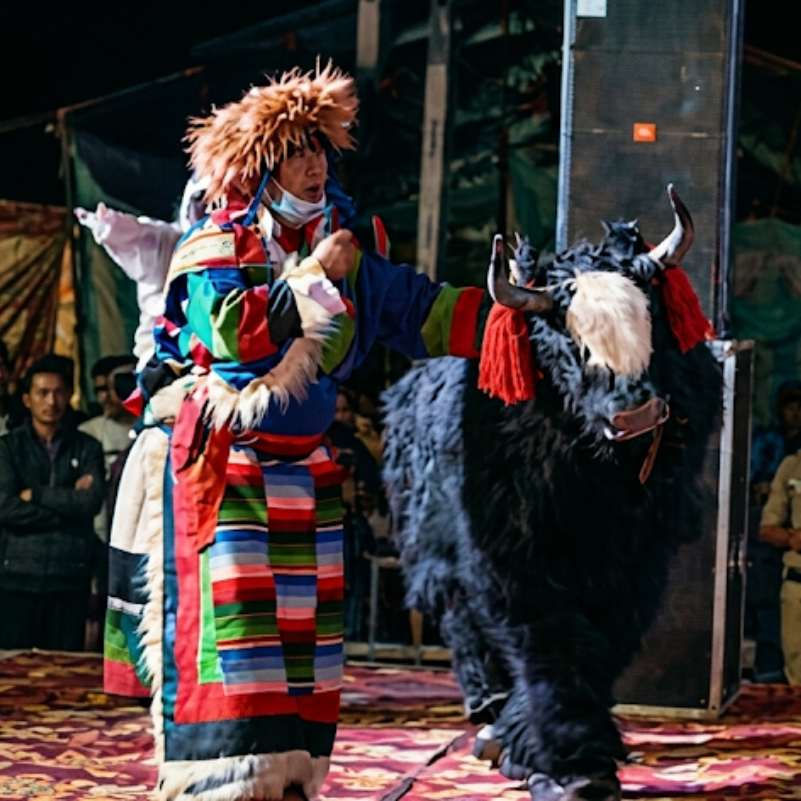
If you are planning to catch the Ladarcha Festival Spiti 2026, the first thing you need to know is that this is not a polished tourist show.
It is a real local fair with roots in old Himalayan trade, now held on the Kaza ground every August.
We have sent travellers to Spiti during this week for years, and the ones who enjoy it most are the ones who come for the culture, not for a stage performance.
This guide by Travel Coffee gives you the dates, the venue, the full Kibber and Chicham backstory, and everything you need to actually plan the trip right.
Quick Answer
The Ladarcha Festival is held every year on the Kaza ground in Spiti Valley, in the third week of August. Local reports in late July 2026 confirmed preparations for this year's state-level fair are underway, with three cultural evenings planned, though the exact calendar dates are announced locally close to the event. For reference, the 2024 edition ran from 21 to 23 August, so a similar late-third-week window is the sensible one to plan around.
It happens on the main Kaza ground. It used to be held at Kibber Maidan before the old Tibetan trade routes shut down.
You can reach Kaza from Shimla (the longer, gentler route) or from Manali (the shorter, higher route over Kunzum Pass). Both are open in August, but this is peak monsoon, so check our Spiti road status guide before you travel and keep a buffer day.
Tourists are welcome. Expect Cham dances, archery, Buddhist sermons, local handicrafts, and food stalls.
What Is the Ladarcha Festival?
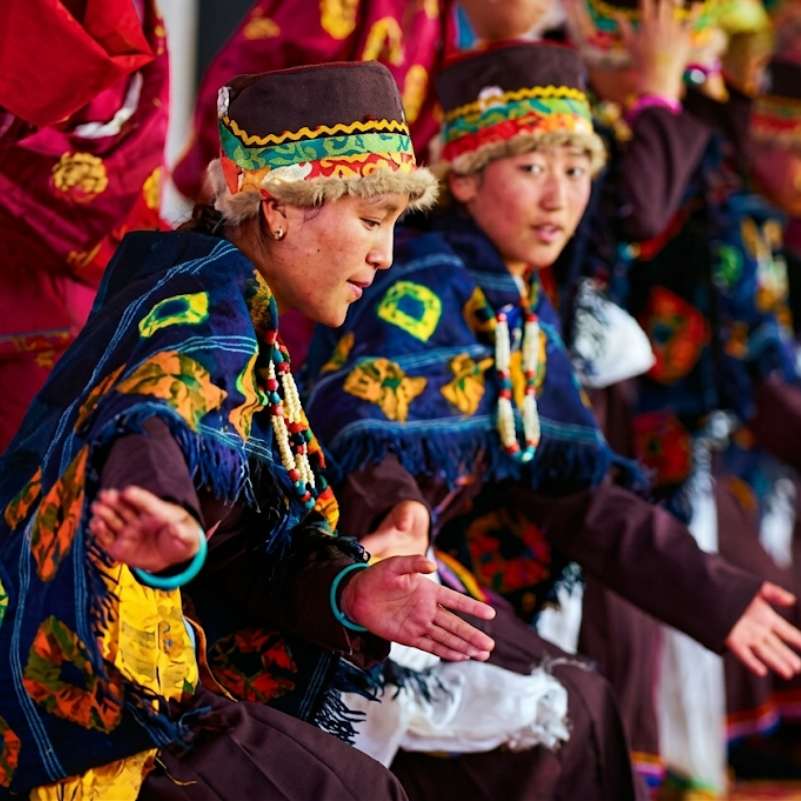
Ladarcha started as a trade fair, not a tourist event. Long before roads and tunnels, traders walked into Spiti carrying goods to barter.
Traders from Ladakh, Rampur Bushahr, and Spiti met at one ground to swap wool, salt, dried fruit, butter, and household goods.
This was the one time of year when communities cut off by snow for months could trade, talk, marry off children, and settle deals.
So the Ladarcha Fair is really a meeting point. A place where three different trading cultures came together in one spot in the Himalayas.
That trading history is why locals still treat it as their fair first, and a tourist attraction second. In our experience, that is exactly what makes it worth seeing.
Why It Still Matters Today
The trade is gone now. Trucks and tunnels killed the old barter system decades ago.
But the festival kept going because it carries the memory of that exchange. The handicrafts, the food, the gathering of villages, all of it points back to the trade days.
When you stand on the Kaza ground watching this, you are watching a centuries-old habit that simply refused to die.
Ladarcha Festival 2026 Dates
The festival traditionally lands in the third week of August. That has held true across most recent years.
The exact 2026 calendar dates are usually confirmed only a few weeks before the event. The local administration in Kaza fixes the schedule and announces it locally.
Here is the honest part most blogs will not tell you. Do not book non-refundable flights or fixed leave around a guessed date.
What most tourists get wrong is treating the dates as fixed months in advance. They are not. The fair shifts by a few days year to year, and a confirmed date comes late.
What we tell our travellers is simple. Plan your trip for the third week of August, keep your travel flexible, and confirm the dates with a local contact before you lock anything.
If you want us to track the exact 2026 dates for you, just message us and we will confirm them as soon as the Kaza administration announces.
Where Is Ladarcha Festival Held?
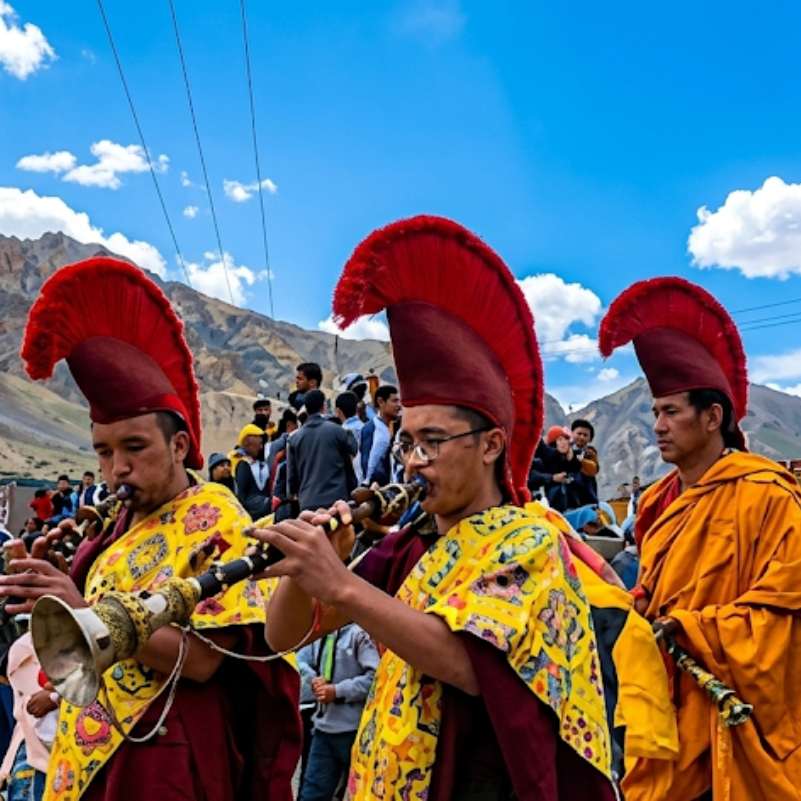
The Ladarcha Festival Spiti takes place on the main ground in Kaza, the biggest town in Spiti Valley.
This is the same Kaza that works as the base for almost every Spiti trip. So the festival venue is easy to reach once you are in the valley.
Kaza Ground Venue
The fair sits on the open ground in Kaza, close to the town centre. You will find the stalls, the performance space, and the crowds all in one walkable area.
Kaza already has homestays, guesthouses, fuel, a hospital, and shops. That makes it a far more practical festival base than a remote village would be.
During festival week, the whole town picks up energy. Stalls go up, villagers pour in from nearby areas, and the usually quiet Kaza ground turns busy.
Why It Shifted From Kibber To Kaza
The festival did not always happen in Kaza. It began at Kibber Maidan, a high meadow above the valley.
Once the old Tibetan trade routes closed, the reason for meeting at that remote high ground disappeared. The trade that filled Kibber Maidan was gone.
So the fair moved down to Kaza, where more people lived and where it was easier for everyone to gather.
Today Kaza makes sense as the venue. It is the administrative and travel hub of Spiti, with the space and facilities to host a crowd.
Kibber-Chicham History Behind Ladarcha Festival
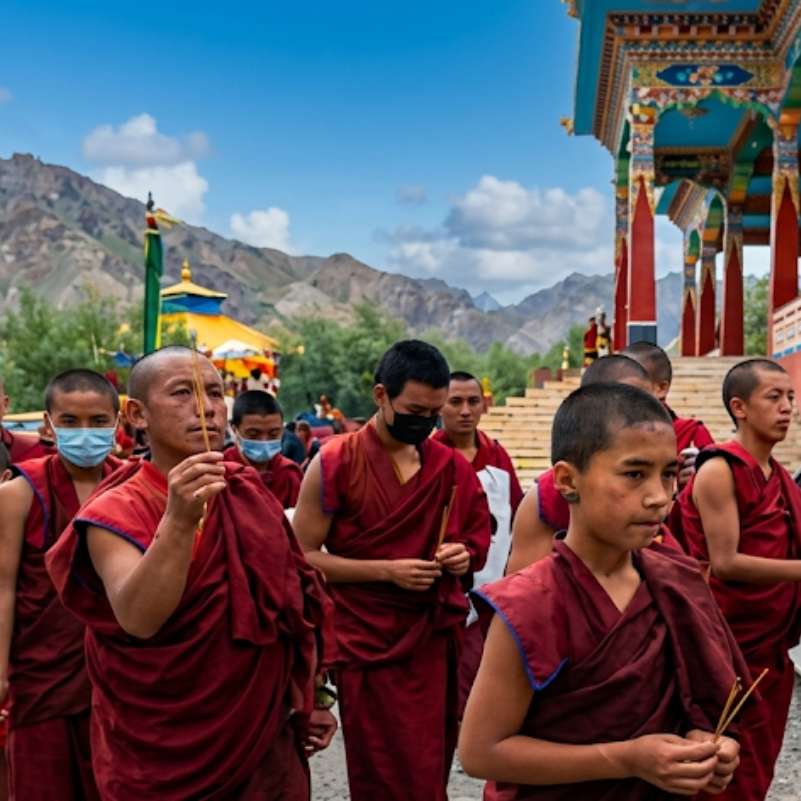
To understand Ladarcha, you have to understand the two villages above Kaza and the routes that once ran through them.
The Original Kibber Maidan
Kibber sits high above Kaza and was, for a long time, called one of the highest villages in the world connected by a motorable road.
The open meadow near Kibber, the maidan, was the original Ladarcha ground. Traders gathered here because of where it sat on the old routes.
It was high, exposed, and cold, but it worked as a meeting point for caravans coming from different directions.
Chicham And Ancient Trade Routes
Chicham is the village across the deep gorge from Kibber. For generations, crossing that gorge meant a terrifying ropeway and a slow climb.
Today the Chicham Bridge spans that gorge and is often called Asia's highest suspension bridge. Before it existed, this crossing was part of the hard path traders had to manage.
The Chicham trade route and the tracks around it fed into the larger network that brought goods through Spiti. These were not roads. They were mule paths over brutal terrain.
In our experience, standing on Chicham Bridge and looking down at that gorge does more to explain the festival's history than any signboard. You instantly get why a yearly gathering mattered so much.
Indo-Tibet Trade Network
Spiti sat on the Indo-Tibet trade route. Goods, people, and ideas moved between Tibet, Ladakh, and the Indian plains through these mountains.
Salt and wool came one way. Grain, sugar, and household goods went the other way. Spiti was a stop and a marketplace on this chain.
Ladarcha was the festival where this Himalayan trade fair culture peaked each year. It pulled the whole network into one place for a few days.
When the borders closed and the Tibet trade ended, the network broke. The festival survived as a cultural memory of what used to flow through here.
Why The Festival Was Suspended
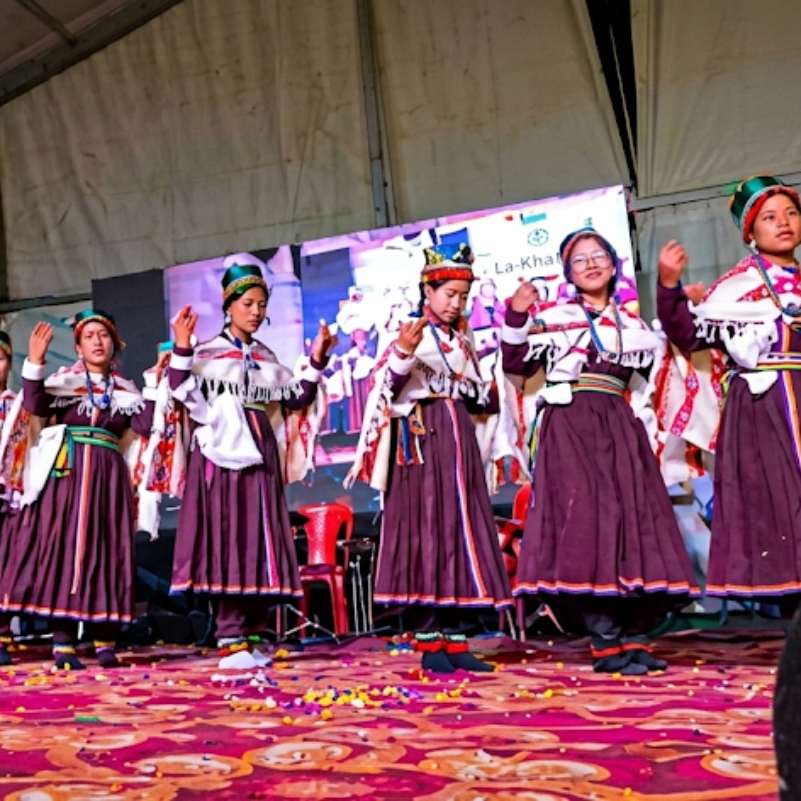
The 1962 Indo-China War changed everything for this region. The border closed and the old trade with Tibet stopped completely.
With the trade gone and the border tense, the reason for a big trade fair vanished. Ladarcha was suspended.
For years there was no fair. The routes that fed it were shut, and the gathering simply did not happen.
Then, around 1980, the festival came back. By then it was reborn as a cultural and religious event rather than a working trade fair.
The revival kept the name, the spirit, and many of the old customs. It just dropped the actual cross-border trade that started it all.
Main Attractions At Ladarcha Festival
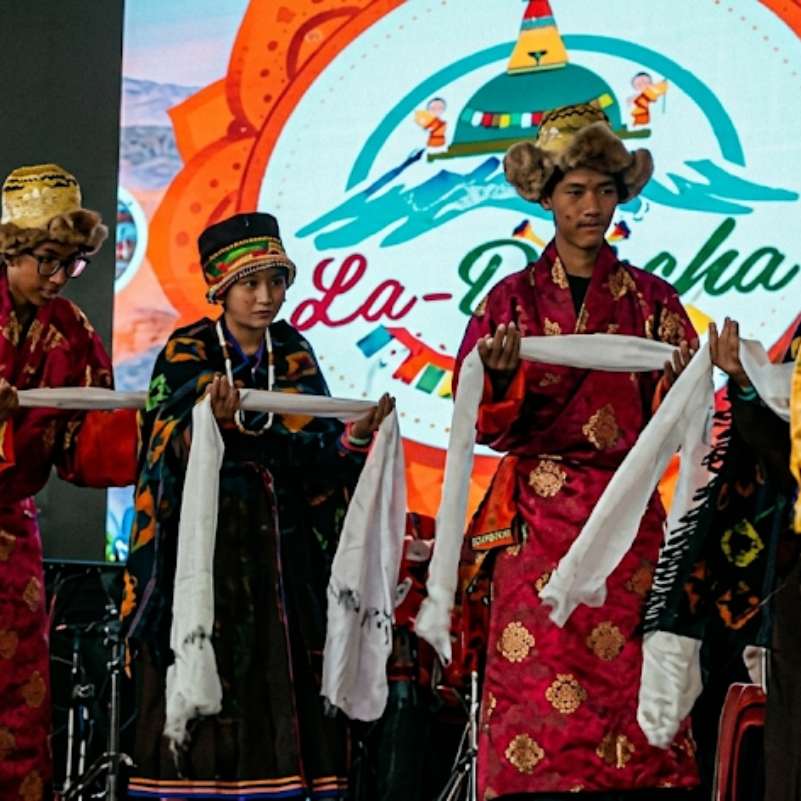
The festival packs a lot into a few days. Here is what actually fills the ground.
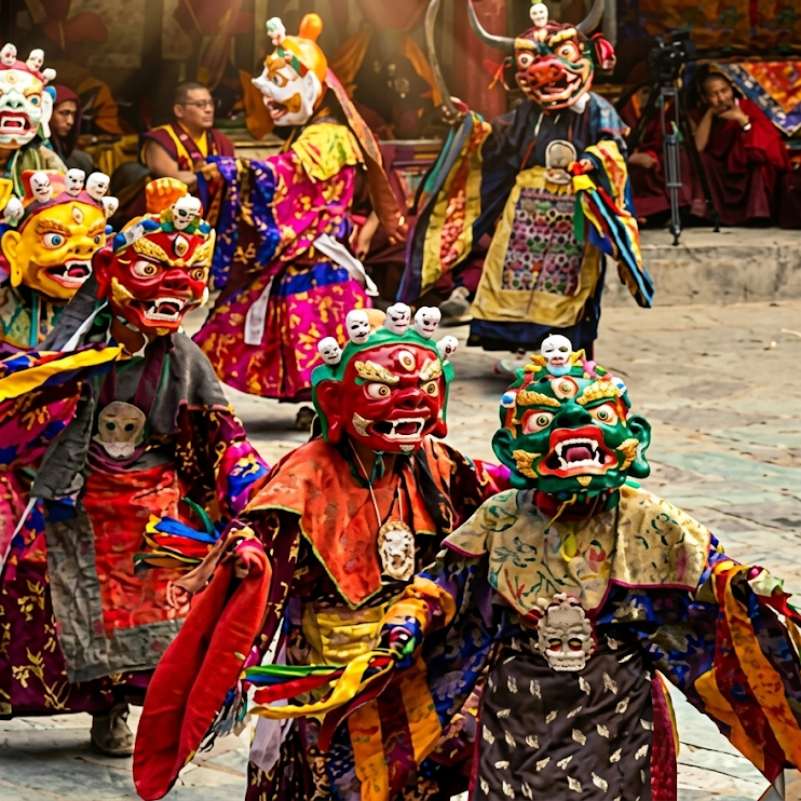
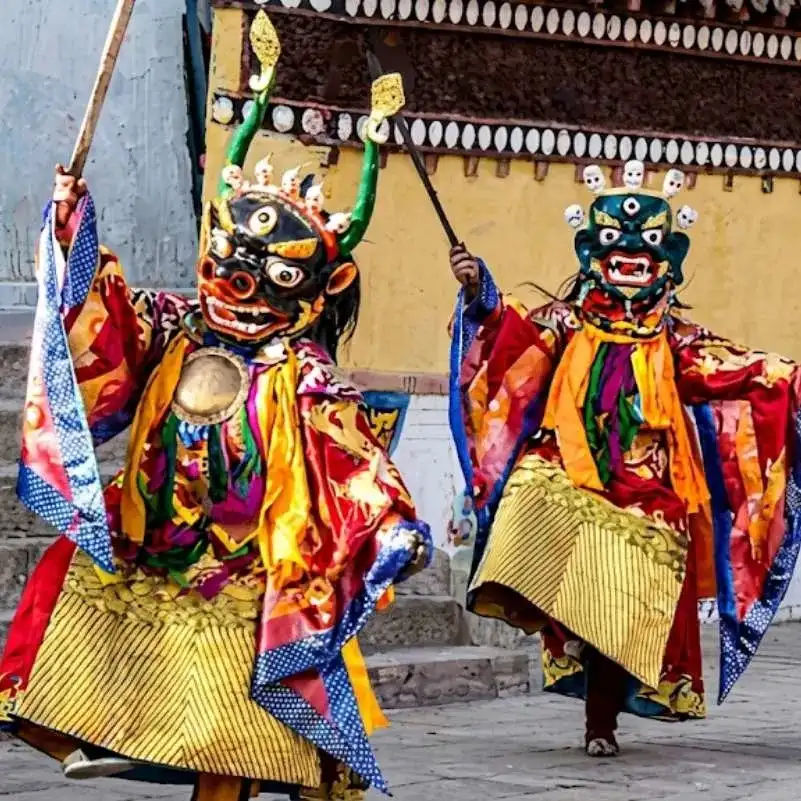
The Cham dances are the highlight for most visitors. Monks in heavy robes and large painted masks perform slow, powerful ritual dances tied to Buddhist belief.
Watching a Cham dance in Spiti is different from watching it anywhere touristy. The crowd here is mostly local, and the meaning is real to them.
There are archery competitions, a traditional sport across the high Himalayas. Local men compete, and the crowd gets into it.
Monks give Buddhist sermons and prayers, which sit at the heart of the event. This is a religious gathering as much as a fair.
Stalls sell local handicrafts, woollens, jewellery, and goods made in the region. Food stalls serve hot local fare to a cold, hungry crowd.
The Food On The Ground
The food stalls are where you should eat. During the fair, the Kaza ground fills with stalls serving momos, thukpa, and butter tea.
The butter tea, the salty gur gur chai, is the honest local drink here. It tastes strange the first time and then it grows on you at altitude.
A local insider tip most guides miss. Eat at the festival stalls in the morning when everything is freshly made, not in the late evening when the best stuff has run out.
One Thing To Skip
Some stalls will push "old Tibetan antiques" at high prices. Most are not old and not Tibetan.
Skip these. The genuine value is in the local woollens and handicrafts made in Spiti itself. Those are honest buys, and your money stays in the valley.
What To Expect During Ladarcha Festival 2026
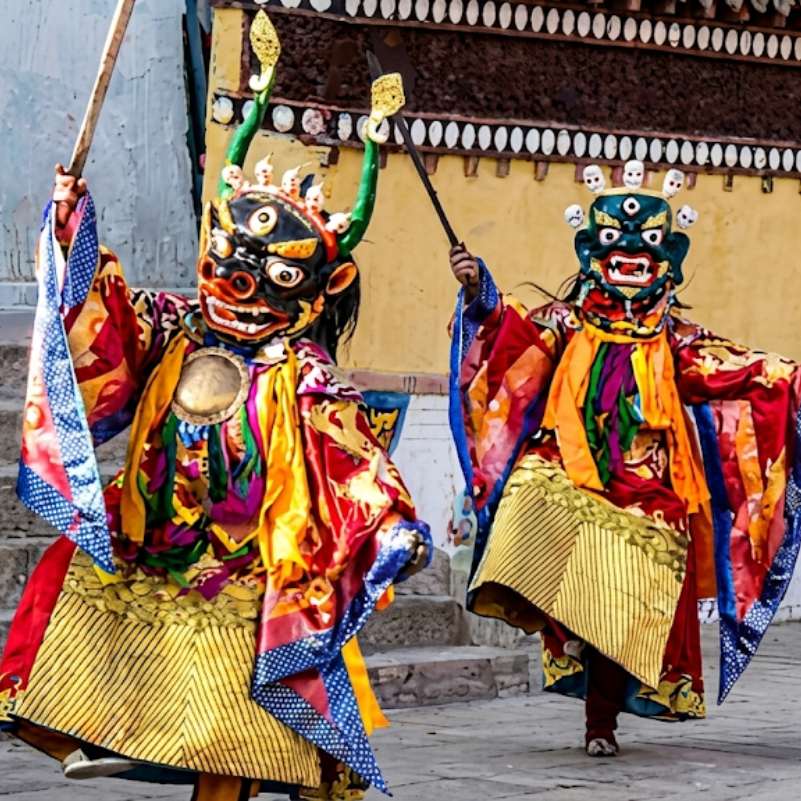
Set your expectations right and you will love this. Set them wrong and you will be disappointed.
This is not a slick, ticketed cultural show with seating and a printed schedule. It is a community fair on a high mountain ground.
The honest negative. Some years the fair feels smaller and more low-key than the photos online suggest. It depends on the year, the weather, and how the dates fall.
Crowds are mostly local, which is the whole point. You are a guest at someone else's celebration, so behave like one.
A timing tip that changes your experience
The main ceremonies and Cham dances usually happen during the day, so reach the ground early and do not roll in at lunchtime expecting the action to wait for you.
In our experience, travellers who treat it as a window into Spiti culture come away happy. Those who came for entertainment leave underwhelmed.
How To Reach Kaza
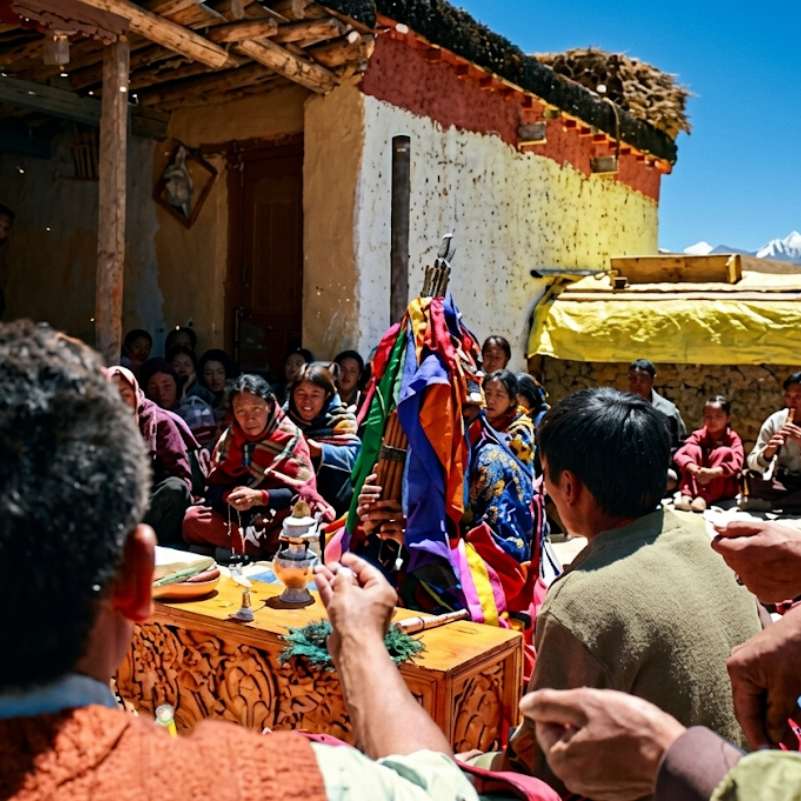
Kaza sits deep in Spiti Valley at around 12,500 feet. There is no quick way in. Both routes take real effort.
Via Shimla
The Shimla route is the longer one, but it is gentler on your body because you climb slowly.
You go from Shimla through Narkanda, Rampur, Kalpa, Nako, and Tabo before reaching Kaza. This is usually a two-day drive with a night stop on the way.
This route stays open longer through the year and gives your body time to adjust to altitude. For a first Spiti trip, we usually suggest entering from here.
If you want to understand the Kinnaur leg of this drive, our Kinnaur travel pages cover the region you pass through on day one.
Via Manali
The Manali route is shorter but harder. You cross the Atal Tunnel, then push through Gramphu and over Kunzum Pass before dropping towards Losar and Kaza.
This route gains altitude fast and only opens in summer once the snow clears. In August it is usually open and busy.
The catch is the altitude jump. You climb very high very quickly, which raises the risk of altitude sickness if you have not adjusted first.
If you plan to add a high-altitude stop on this side, our Sissu travel pages cover the Lahaul stretch you drive through.
Public Transport
HRTC runs buses into Spiti, including the Manali to Kaza service in season and buses on the Shimla side.
These buses are cheap and an experience in themselves, but they are slow, crowded during festival week, and not for everyone. Book or reach the stand early.
A money-saving tip a local would tell you. Skip the third-party online "festival packages" that mark up basic homestays. Call homestays in Kaza directly, or come through a local operator, and you pay closer to the real rate.
Self Drive
You can self drive, but the roads demand a high-clearance vehicle, especially the Manali side and the rough patches near Batal and Kunzum.
A sedan will struggle on the worst stretches. Take an SUV with good ground clearance, fill fuel at every chance, and carry cash because there are no reliable ATMs out there.
A safety warning with real consequences
During festival week, taxi and room rates in Kaza spike with demand. Fix every price before you commit, because the surge is real and drivers know you have few options.
Weather During Ladarcha Festival
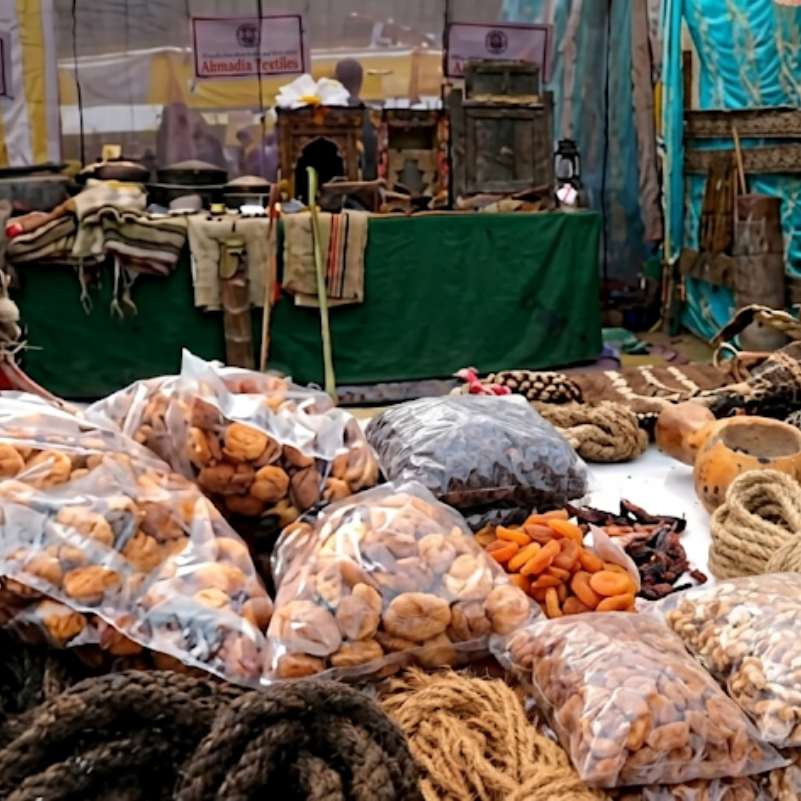
August in Spiti is one of the warmer windows, but warm here is relative.
Days feel pleasant when the sun is out. You can walk the festival ground comfortably in a light layer at midday.
Nights are cold. The temperature drops fast after sunset because the thin air at this altitude does not hold heat.
August can bring some rain and the odd road delay, mostly on the Manali side. The Spiti side stays drier, but landslides can still block the approach.
Pack for both extremes on the same day. A warm jacket, thermals for the night, and strong sun protection for the day. The UV up here burns you faster than you expect.
We cover the wider season in detail in our guide on when Chandratal opens in 2026, which also explains August conditions across the valley.
Where To Stay In Kaza
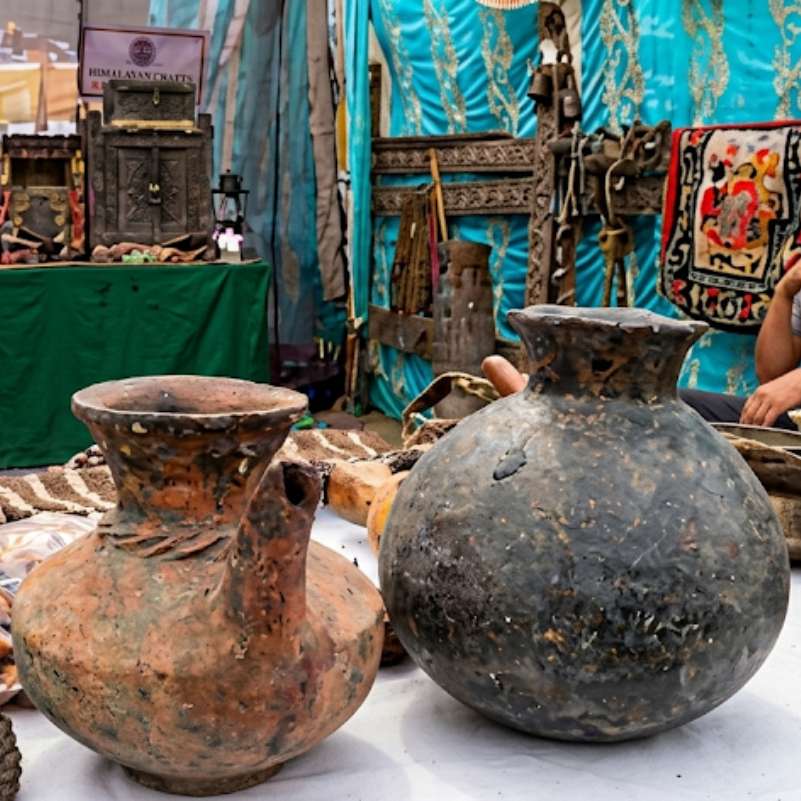
Kaza has the best spread of stays in all of Spiti. You get guesthouses, homestays, and a few basic hotels.
During the Ladarcha Festival Spiti 2026 week, rooms fill up fast. This is the busiest time Kaza sees, so book ahead.
Homestays are the better choice here. You eat home-cooked Spiti food, you meet a local family, and the warmth makes the cold nights easier.
The honest reality. None of these are luxury stays. Expect simple rooms, basic bathrooms, and patchy hot water. That is normal for Spiti, not a problem with the place.
If you want the logistics handled, our Spiti Valley packages include vetted stays, a local driver, and a team that picks up the phone when plans change.
Places To Visit Alongside The Festival
The festival lasts a few days, but you came all this way. Spend a week and see the valley properly.
Key Monastery
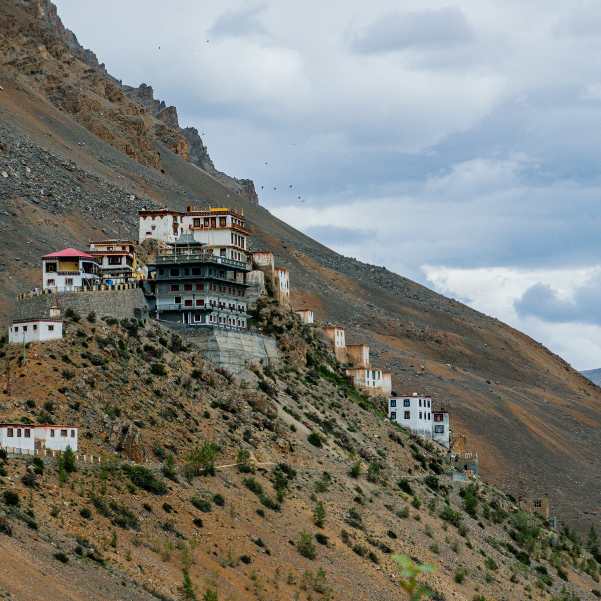
Key Monastery is the postcard image of Spiti. The white monastery stacked on a hill above the river is the most photographed spot in the valley, and it earns it.
Kibber
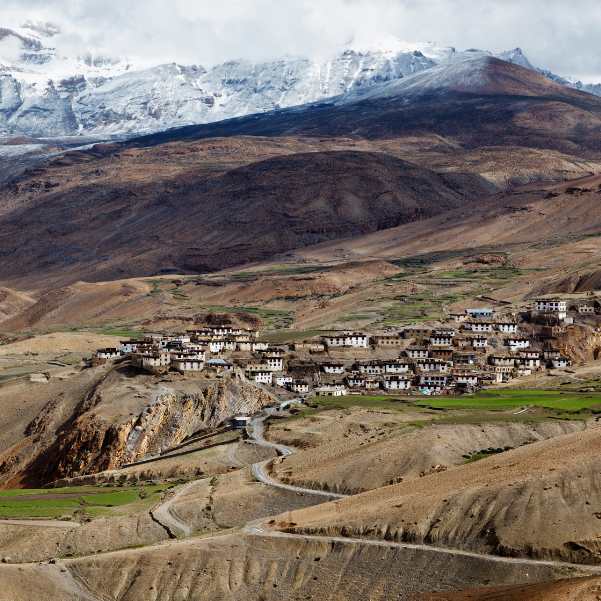
Kibber is the old festival village, high above Kaza. Visit it and you stand where Ladarcha began on the original maidan.
Chicham Bridge
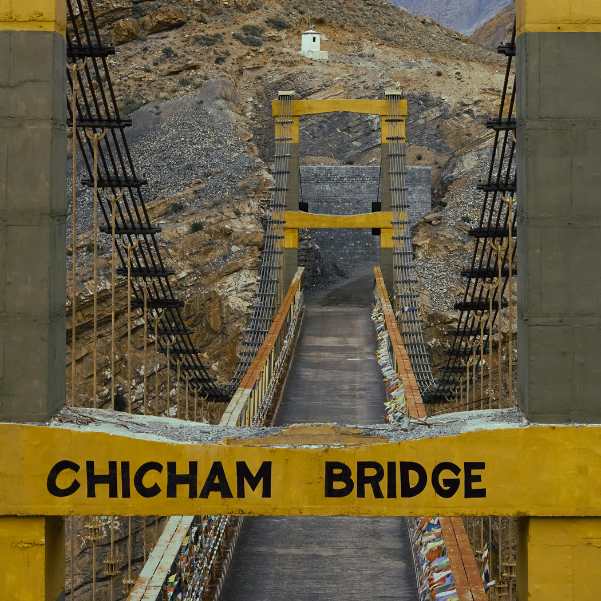
Chicham Bridge is the deep-gorge crossing near Kibber, often called Asia's highest suspension bridge. Walk out and look down. It explains the trade history better than words.
Langza
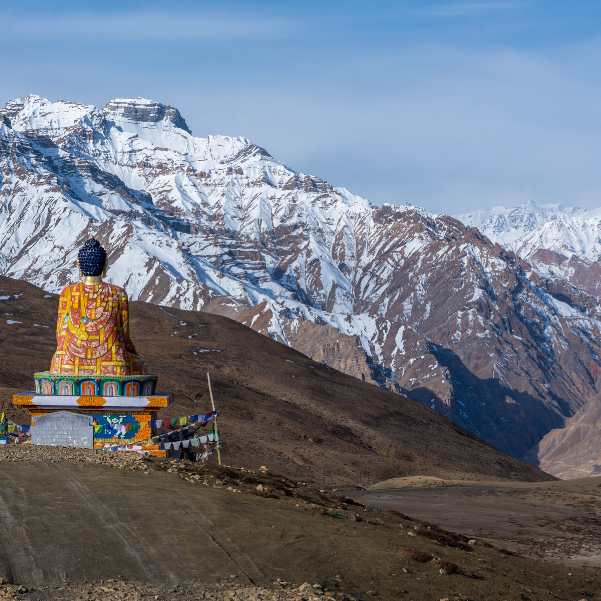
Langza is the fossil village, marked by the big Buddha statue with the valley spread below. People here find marine fossils in the soil, proof this was once under a sea.
Hikkim
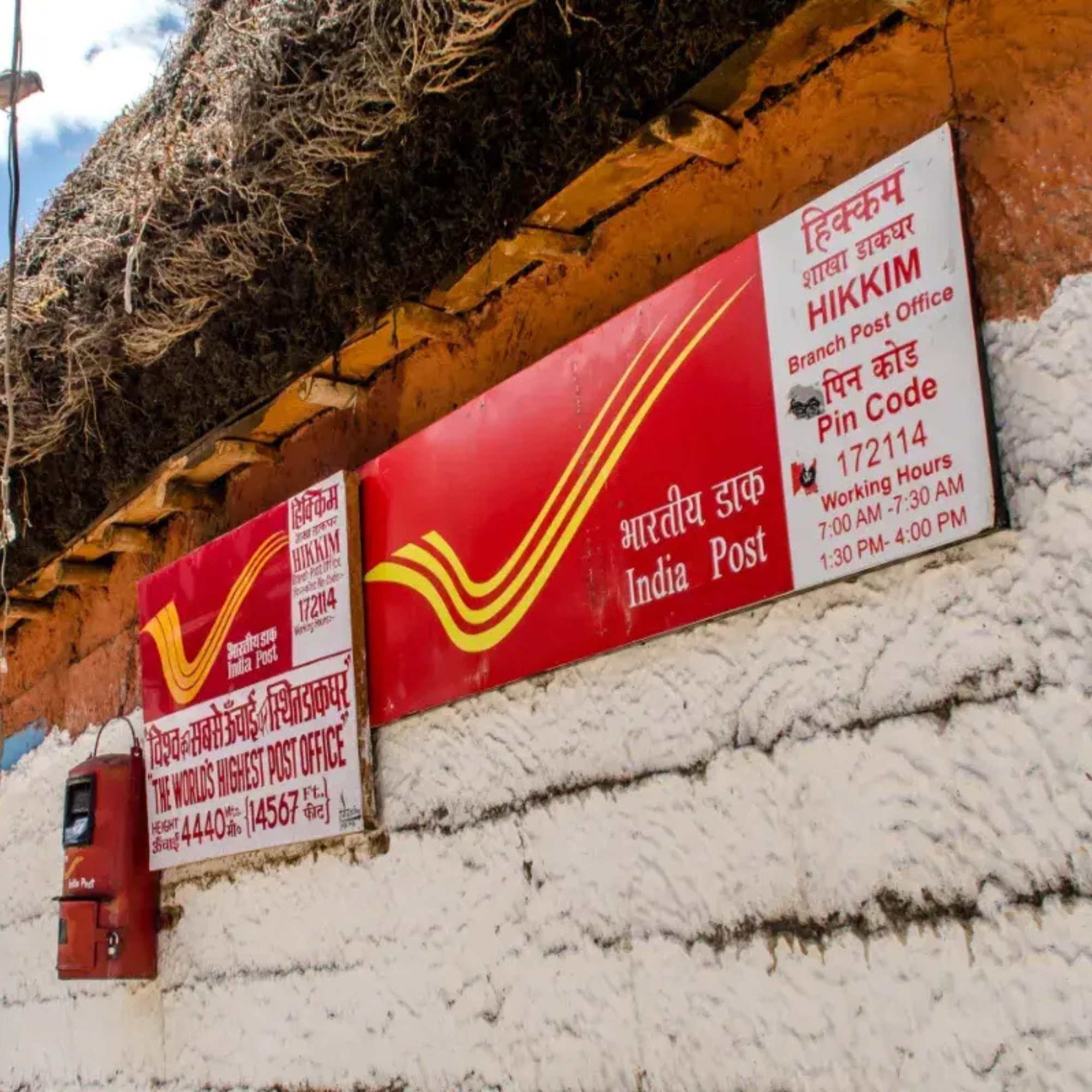
Hikkim holds the world's highest post office. Send a postcard home from here. It is touristy, but it is a genuinely fun thing to do.
Komic
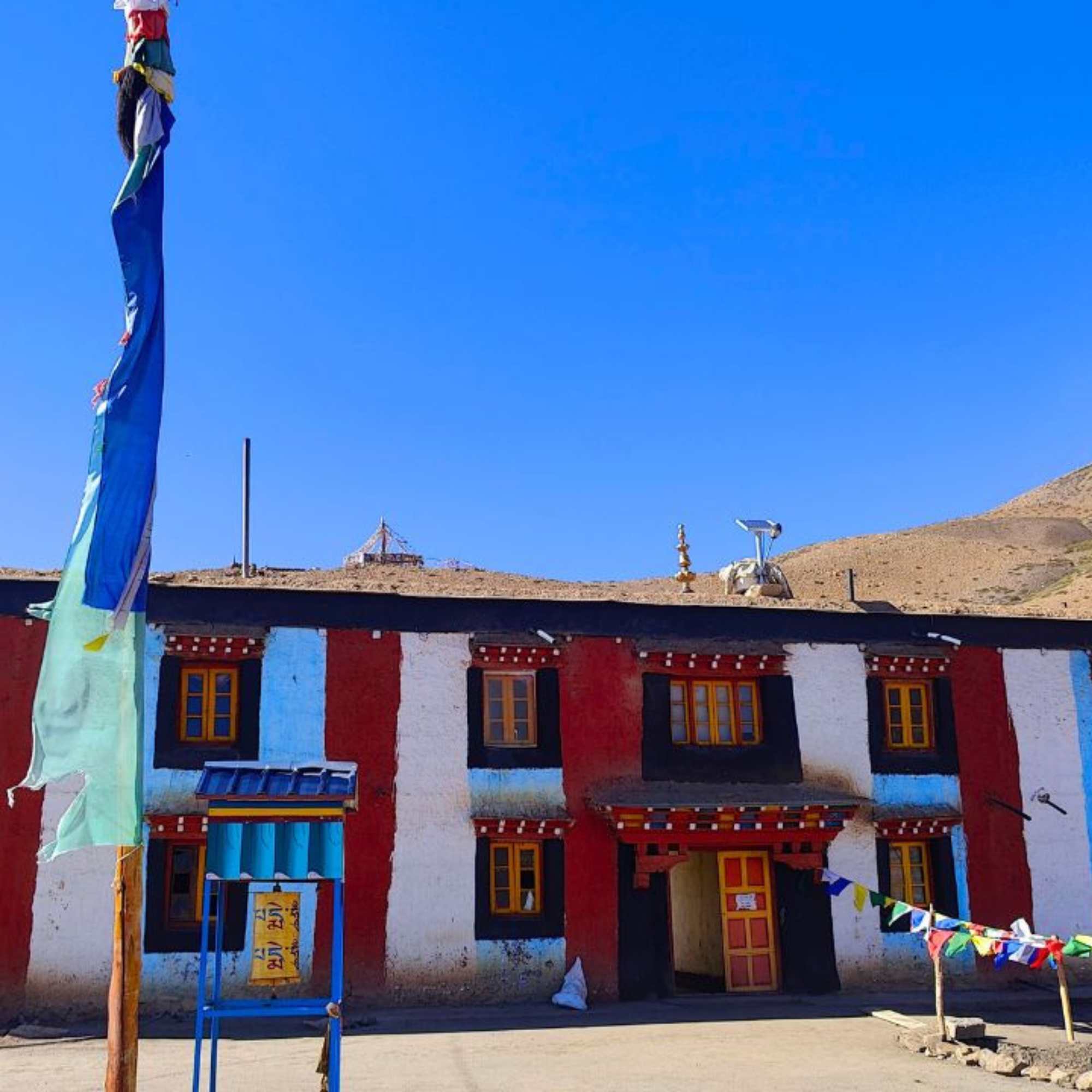
Komic claims to be one of the highest villages with a road and a monastery. The drive up alone is worth it.
Pin Valley
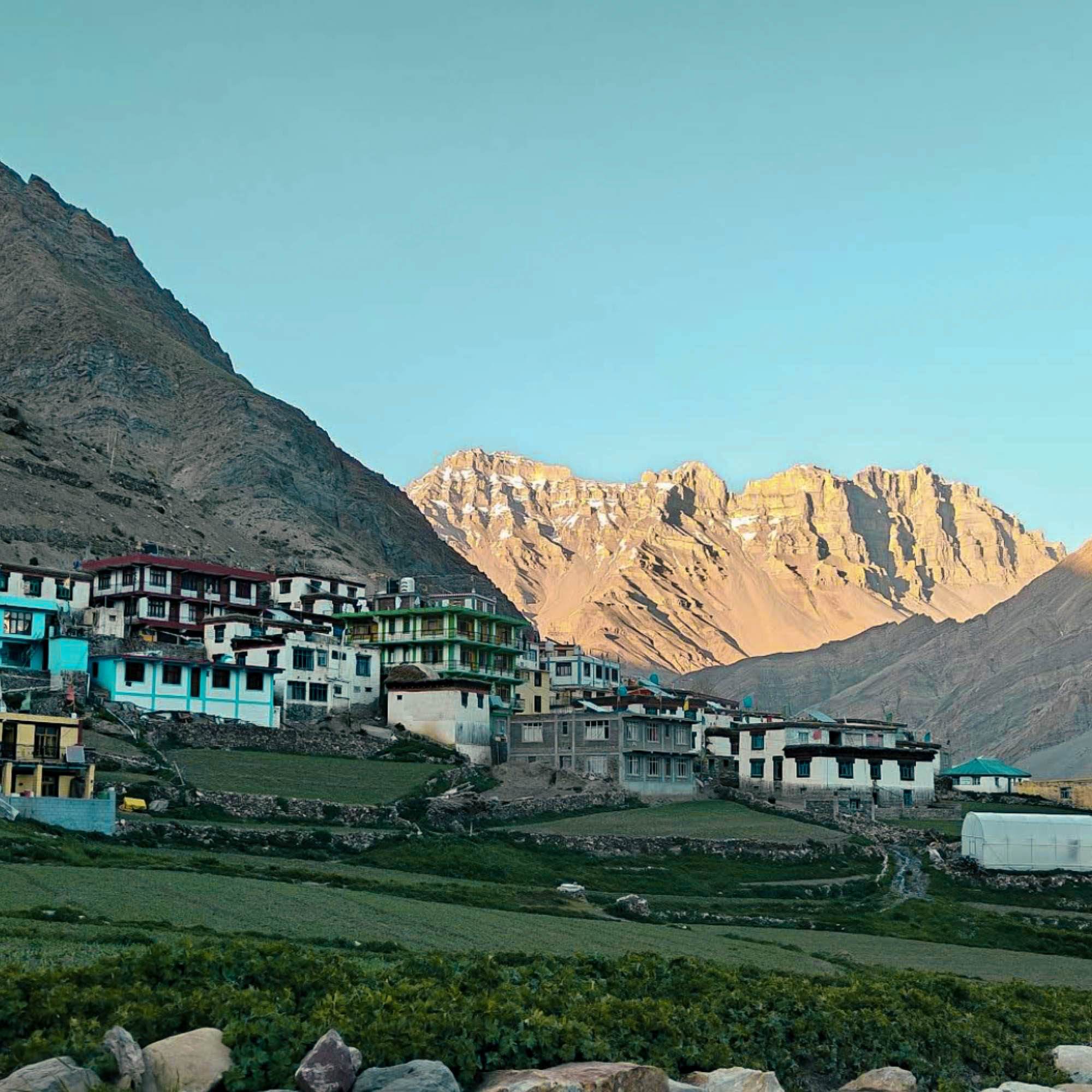
Pin Valley branches off the main route and feels wilder and greener than the rest of Spiti. If you have a spare day, it rewards you.
Solo travellers, especially women, often ask us how safe this all is. We wrote an honest answer in our guide on whether Spiti is safe for solo female travellers.
Sample 4 Day Itinerary
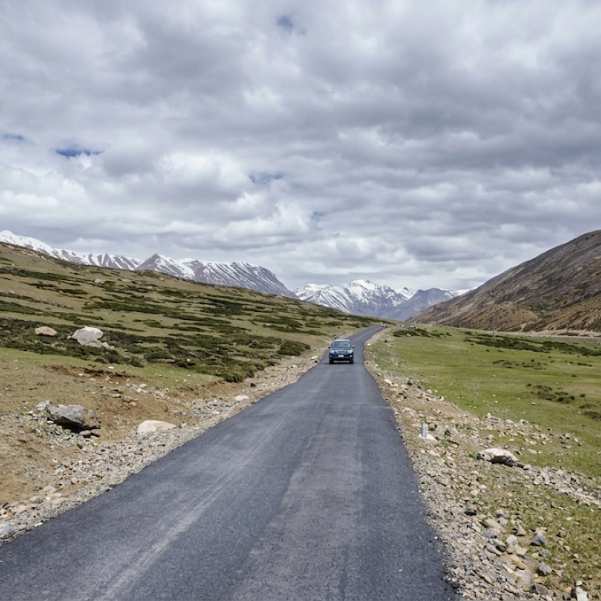
Here is a tight but workable plan built around the festival, assuming you are already near Spiti.
Day 1
Reach Kaza and rest. Do almost nothing. Let your body adjust to the altitude and walk the market slowly in the evening.
Day 2
Spend the day at the Ladarcha Festival ground. Catch the Cham dances, eat at the stalls, watch the archery, and soak in the crowd.
Day 3
Drive the Kaza loop. Hit Key Monastery, Kibber, and Chicham Bridge in the morning, then Langza, Hikkim, and Komic in the afternoon.
Day 4
Head out the way you plan to exit, or add Pin Valley if you have the time and energy.
This is the bare minimum to enjoy both the festival and the valley. Four days is fine. A week is far better.
If you want Chandratal added on at the end of this loop, our summer Spiti circuit with Chandratal builds it in with proper acclimatisation.
Travel Tips
A few things that actually make or break a Spiti trip in August.
Acclimatise before you push high. Spend a night or two at a mid-altitude point before reaching Kaza, and another quiet day in Kaza before any high side trips.
Carry cash in small notes. ATMs in Spiti are unreliable, and during the fair the cash machines run dry fast.
Keep your fuel tank topped up. Petrol stops are few, and the Kaza pump can see long queues during festival week.
Build a buffer day. Roads here close without warning for landslides or weather. One spare day saves your whole plan.
Respect the festival. This is a religious and community event. Ask before photographing people up close, dress modestly, and follow the lead of the locals around you.
What we tell every first-timer. The cold after dark catches people off guard even in August. Carry one more warm layer than you think you need, and you will sleep well.
👉 Planning to attend the Ladarcha Festival? WhatsApp us, and we'll help you plan your trip.
Explore Our Curated Spiti Tours
Ready to build your Spiti trip around Ladarcha? These curated circuits include our dedicated Ladarcha Festival group tour, plus flexible Spiti options with vetted stays, a local driver, and safe Shimla-side acclimatisation before Kaza, with Chandratal built in toward the end.
Spiti Tours for the Ladarcha Season
Our dedicated Ladarcha Festival group tour, plus flexible Spiti circuits with vetted stays, a local driver, and Chandratal built in when conditions allow.
 Group Tour10D/9N
Spiti Ladarcha Festival Group Tour With Chandratal
1D Sangla•1D Kalpa+3
₹19,999₹25,999SAVE INR 6,000/ person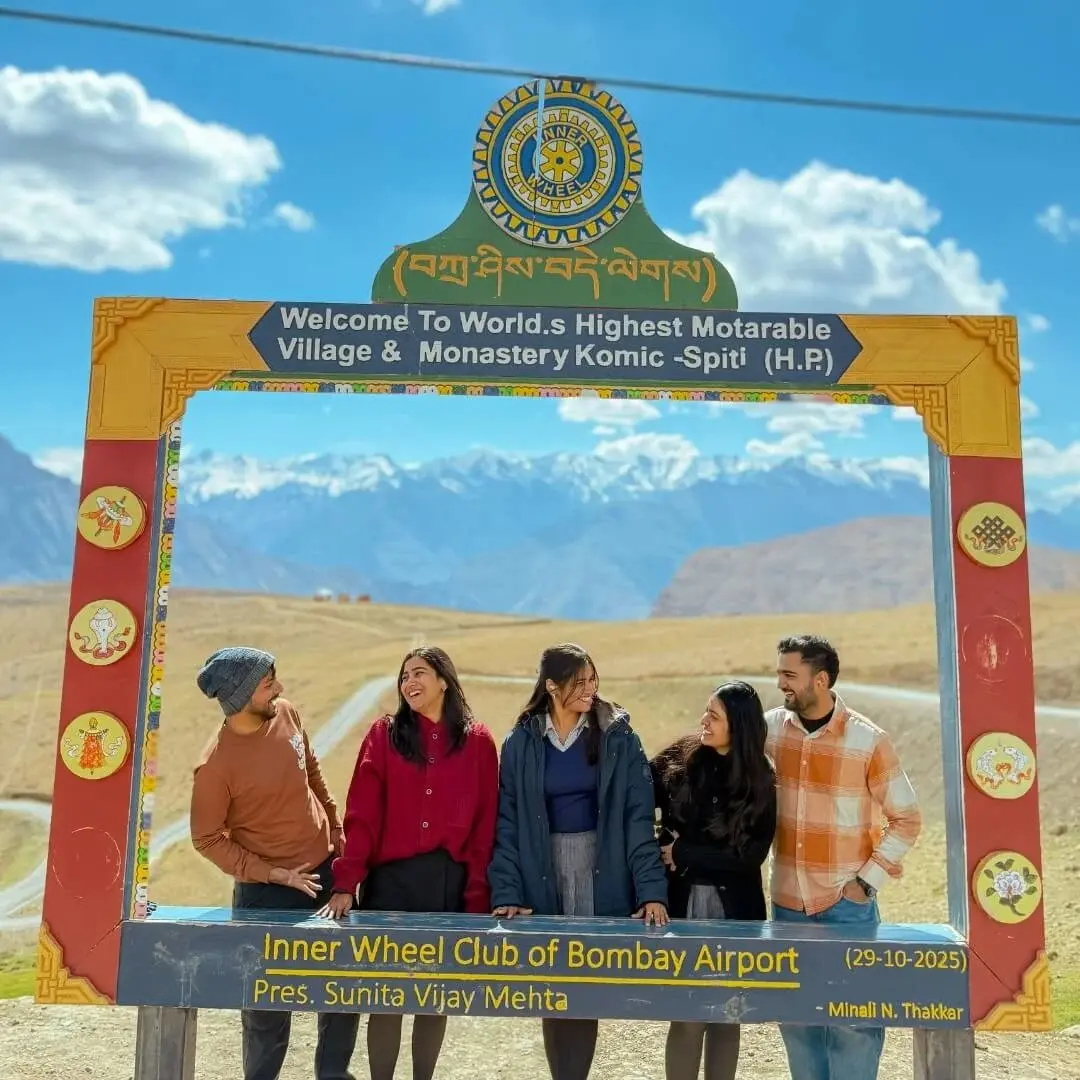 Group Tour9D/8N
Best Selling Summer Spiti Circuit With Chandratal
1D Sangla•1D Kalpa+3
₹18,999₹19,999SAVE INR 1,000/ person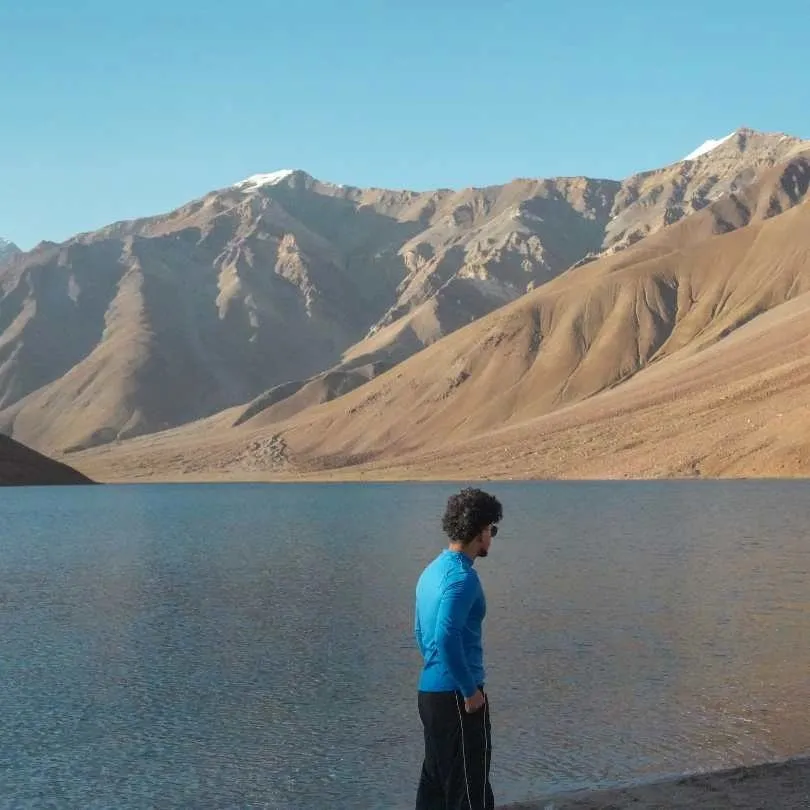 Group Tour10D/9N
Most Loved Shimla To Manali Spiti Circuit With Chandratal Lake
1D Shimla•1D Sangla+4
₹21,999₹25,999SAVE INR 4,000/ person
Related topics
Frequently Asked Questions
What is Ladarcha Festival?
It is an old Himalayan fair in Spiti that began as a trade meeting between traders from Ladakh, Rampur Bushahr, and Spiti, and is now a cultural and religious event.
When is Ladarcha Festival 2026?
It is held in the third week of August on the Kaza ground. Local reports in late July 2026 confirmed preparations for this year's state-level fair are underway, but the exact calendar dates are announced locally close to the event. The 2024 edition ran from 21 to 23 August, which is the window most travellers plan around. Confirm the final dates with a local contact before booking non-refundable travel.
Where is Ladarcha Festival celebrated?
On the main ground in Kaza, the largest town in Spiti Valley. It is easy to reach once you are in the valley.
Why was it shifted from Kibber to Kaza?
The fair began at Kibber Maidan during the trade era. After the Tibetan trade routes closed, it moved down to Kaza, which had more people and better facilities.
What is the history of Ladarcha Fair?
It was a key stop on the Indo-Tibet trade network, where caravans gathered to barter goods. The 1962 war shut the trade and suspended the fair, which was revived around 1980.
Can tourists attend?
Yes. Tourists are welcome at the Ladarcha Festival. Just remember it is a local community event, so behave as a respectful guest.
What are the main attractions?
Cham dances, archery competitions, Buddhist sermons, local handicraft stalls, and traditional food stalls on the Kaza ground.
How many days does it last?
The Ladarcha Festival usually lasts around 3 days. In 2024, the local administration held it from 21 to 23 August, so the 2026 edition is also likely to run for a few days, but the exact duration should be confirmed locally once official dates are announced.
What should visitors wear?
Dress warmly and modestly. Carry thermals and a warm jacket for the cold nights, light layers for the day, and strong sun protection for the high-altitude sun.
How do I reach Kaza during the festival?
Drive or take a bus from Shimla via Kinnaur, or from Manali over Kunzum Pass. The Shimla route is gentler for acclimatisation, the Manali route is shorter but higher. Both are open in August, but check the Spiti road status before you travel, as this is peak monsoon.
Is August a good time for Spiti?
Yes. August is one of the warmer, more accessible windows, though it can bring some rain and road delays on the Manali side. Keep buffer days in your plan.
What other places should I visit nearby?
Key Monastery, Kibber, Chicham Bridge, Langza, Hikkim, Komic, and Pin Valley are all within reach of Kaza and worth the time.
More about Lahaul and Spiti
 Lahaul and Spiti
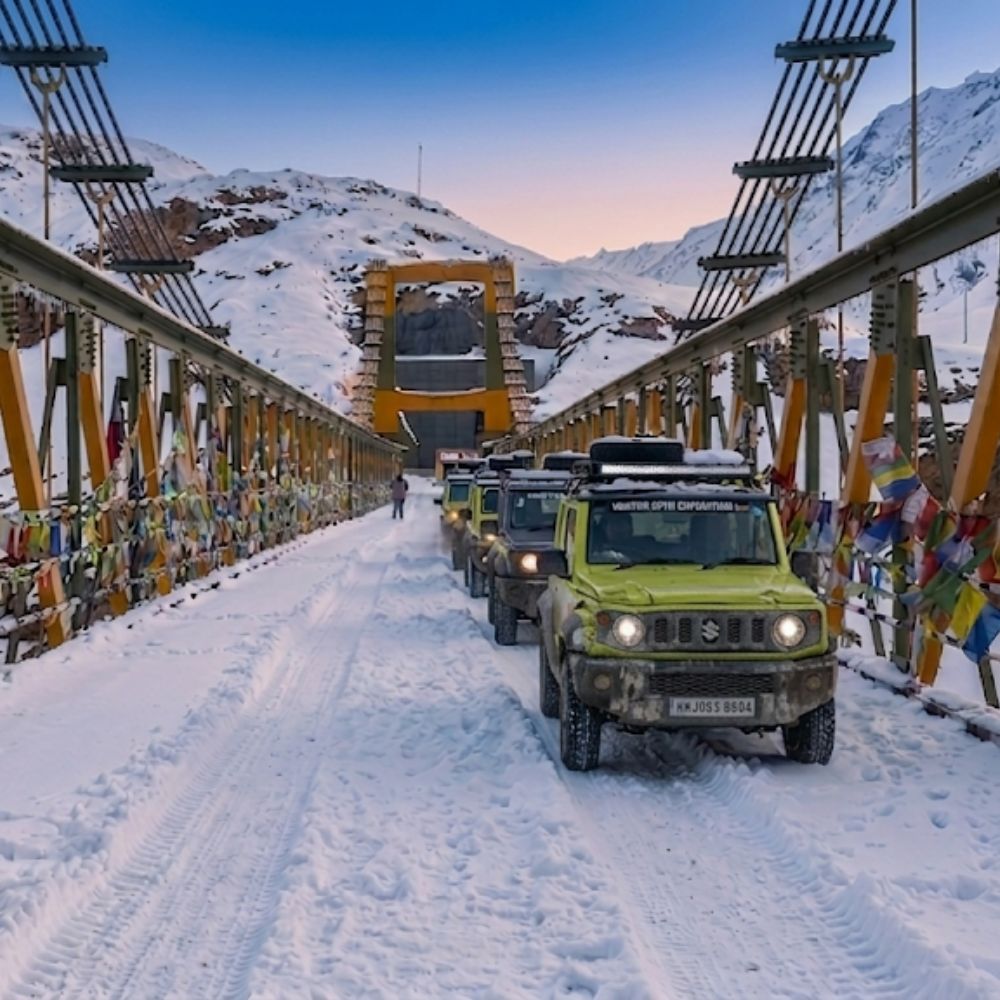
Rent or Buy Winter Gear for Spiti in 2026? Jackets, Boots, Costs and Pickup Options
Planning a Winter Spiti trip in 2026? Compare the cost of renting vs buying jackets, snow boots, thermals and other essential winter gear, along with practical tips on what to rent, what to buy and where to arrange it before your trip.
- First-Time Travellers
- Snow Travel
 Lahaul and Spiti
Winter Spiti 4×4 Seating Guide 2026: Jimny, Scorpio N, Thar and Hilux for Passengers and Luggage
Planning a Winter Spiti trip in 2026? This practical 4×4 seating guide compares the Jimny, Scorpio N, Thar and Hilux for passenger comfort, luggage space, winter roads and long mountain drives, helping you choose the right vehicle for your group size and travel style.
- Road Trips
- Snow Travel
 Lahaul and Spiti
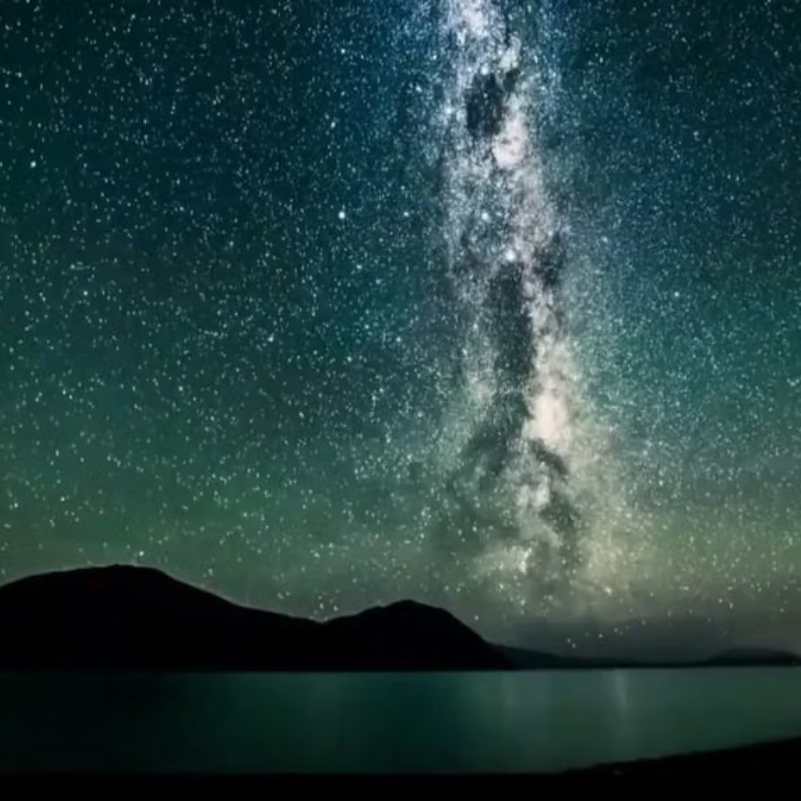
Stargazing in Winter Spiti 2026: Where to Stay, Moonlight and What You Can See
Discover the best places for stargazing in Winter Spiti 2026, where to stay for darker skies and how moonlight affects visibility. Learn what you can realistically see from Kaza, Tabo and nearby villages during the winter months.
- Things to Do
- Snow Travel