
Is Sangla Holi Safe for Solo Travellers? Real Experience Guide (2026)
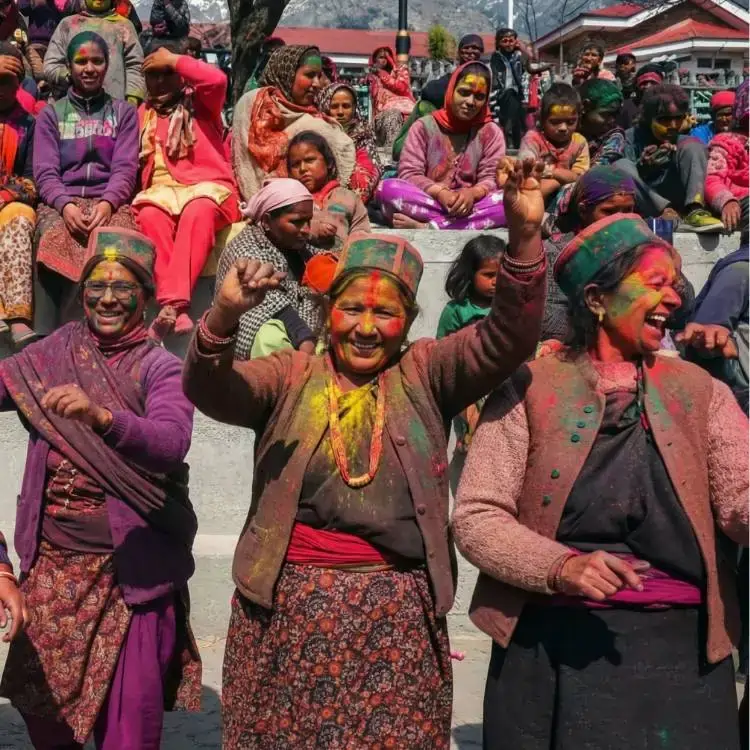
Let's be real. If you're Googling "is Sangla Holi safe for solo travellers" right now, you've probably already half-decided to go. But something's holding you back — the thought of rowdy crowds, colour being shoved in your face, sketchy roads after dark, freezing cold nights, and doing all of it alone.
Those are fair worries. But here's what most blogs won't tell you — Sangla Holi isn't your typical chaotic, big-city Holi. It's a community-led, deeply cultural celebration in a small Kinnauri village. And that one difference changes the entire safety equation.
This guide is built from real on-ground experience, not copy-paste travel advice. If you just want a quick itinerary or last-seat availability, WhatsApp us directly — we'll sort you out in minutes.
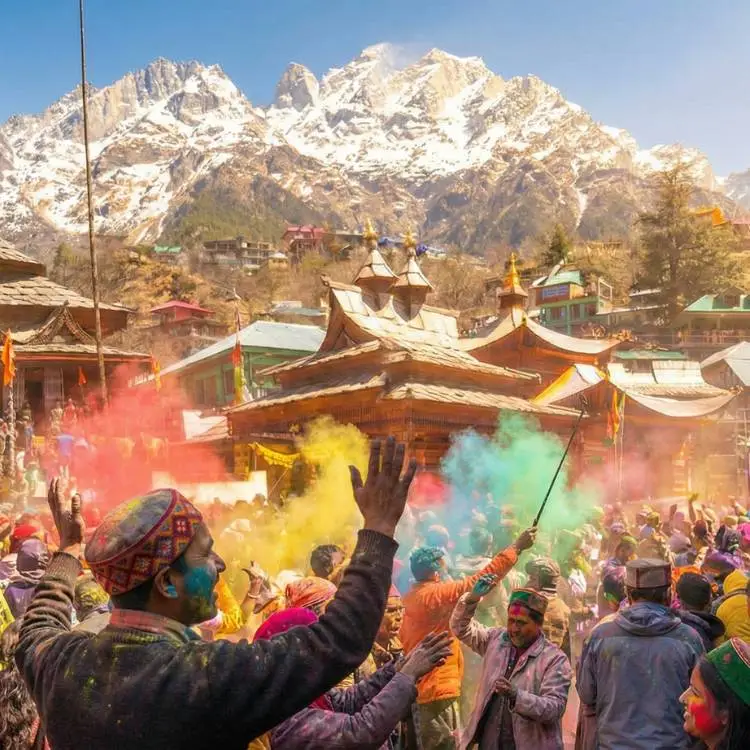
Is Sangla Holi safe for solo travellers?
Short answer — yes, it's generally safe when you plan it right. The festival is a village-level cultural event, not a wild street party.
Locals are warm, the crowd stays small enough that you'll recognise faces by afternoon, and the vibe is way more folk music and community bonding than aggressive colour-throwing.
With a decent stay, daylight travel, and basic consent awareness, most solo travellers — women included — come back saying they felt genuinely welcome.
- Safe when you've got a central stay booked, you travel in daylight, you respect local customs, and you have a backup contact or travel operator you can reach.
- Risky when you show up without a booking, drive mountain roads after dark, underpack for freezing nights, or ignore personal boundaries during colour play.
- Best option for first-timers who are nervous: join a small group departure with coordinated transfers and vetted stays — logistics and safety are handled, and you still get the full experience.
What Sangla Holi actually feels like (and why that matters for safety)
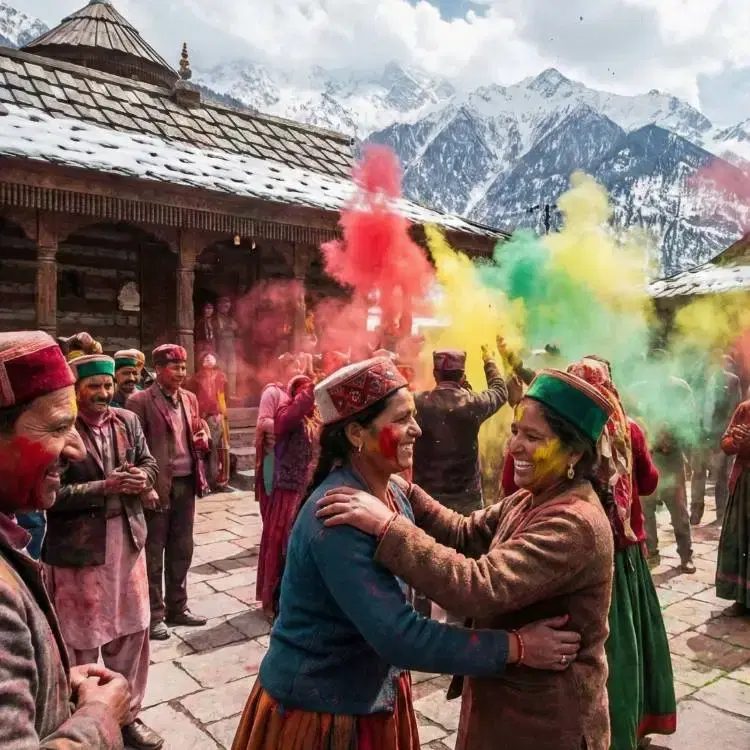
Most people hear "Holi" and picture Vrindavan or Pushkar — massive crowds, strangers grabbing at you, water balloons flying out of nowhere. Sangla? Nothing like that.
This is a celebration rooted in Kinnauri tradition. Everything centres around the village temple — folk dances, local music, people from nearby hamlets gathering together. Colour play happens, sure, but it's smaller, calmer, and honestly just more respectful.
The village itself is compact. You'll keep running into the same faces all day. That built-in familiarity is what makes it feel so much safer than the anonymous chaos of big-city Holi.
Now, does alcohol show up? Yes — mostly among younger guys by afternoon. But it rarely gets aggressive the way you might be imagining. Stick near the main gathering area and you'll be just fine.
Respect and consent — the unwritten rules
These aren't suggestions. They're how you stay safe and welcome here.
- Always ask before putting colour on someone. Wait for a nod or a smile first.
- If someone doesn't want to play, step back. Immediately. No pushing it.
- Dress warm and respectful — layers work both practically and culturally in a village setting.
- If something feels off — a group getting too rowdy, someone not respecting your space — just leave that spot. Trust your gut over politeness every single time.
The real risks for solo travellers in Sangla (and how to avoid them)
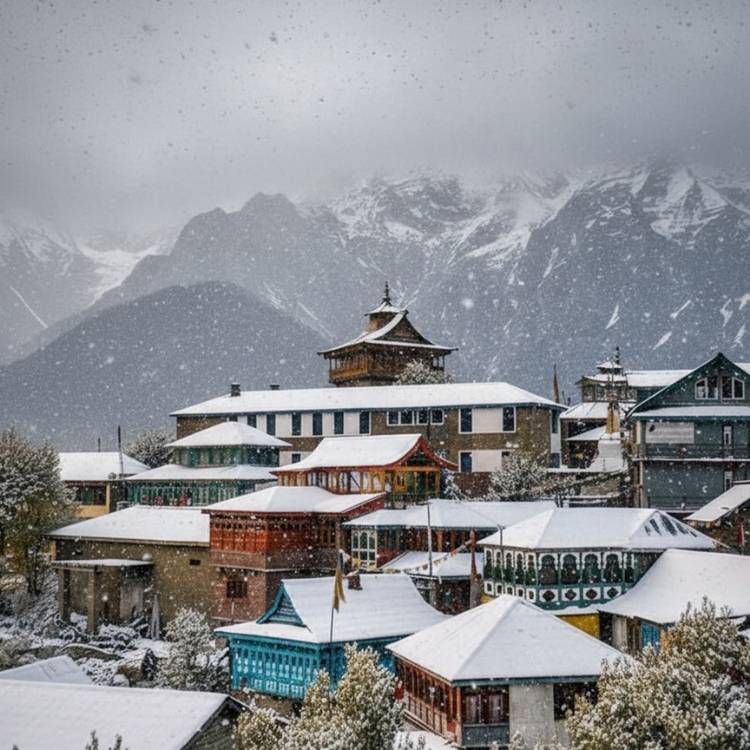
Here's the thing about Sangla Holi safety — most of the actual risk has nothing to do with the festival. It's the logistics around it that trip people up.
Let's break down what actually goes wrong and how you dodge it.
Risk #1 — Road travel and late-night driving
This is the single biggest safety concern, full stop. And it has zero to do with Holi. The road from Shimla to Sangla via Karcham is narrow, winding, and sometimes hit by landslides or ongoing construction. Driving these roads at night? Genuinely dangerous.
How to dodge it:
Only travel during daylight. Leave Shimla or Rampur early morning. If you're coming from Delhi, break the journey with a night halt in Shimla or Narkanda. Don't even think about doing Delhi to Sangla in one shot.
Risk #2 — Cold, wet weather and underpacking
Sangla Holi weather in March is sneaky. The daytime sun feels pleasant enough to trick you into packing light. Then the sun drops, you're standing around in damp, colour-soaked clothes, and suddenly it's absolutely freezing. If your stay doesn't have decent heating, you're in for a rough night — or worse, mild hypothermia.
How to dodge it:
Pack like the nights will be brutal, because they might be. Thermals, a proper down jacket, waterproof outer layer, warm socks. Non-negotiable. We've got a full packing list further down.
Risk #3 — Last-minute stays and getting stranded
Sangla doesn't have hundreds of hotels. During Holi, the limited rooms fill up fast. Solo travellers who show up without a booking sometimes end up in poorly located guesthouses way out on the edges of the village — or with no room at all.
How to dodge it:
Book at least two to three weeks in advance. Go for centrally located places. If you're not sure what's available, drop us a WhatsApp and we'll share vetted stay options with real-time availability.
Risk #4 — Boundary issues (rare, but you need to know)
Let's not dance around this. During any Holi celebration anywhere, some people use the festival as an excuse to push boundaries. In Sangla, it's uncommon because of the tight-knit community setting — but it's not zero.
How to dodge it: Stay with groups during the peak colour play hours. Learn one firm refusal line in Hindi — "Nahi chahiye, please" works perfectly. Walk away from anyone who doesn't respect a "no." And keep a local contact or your travel operator on speed dial.
Solo safety verdict by traveller type
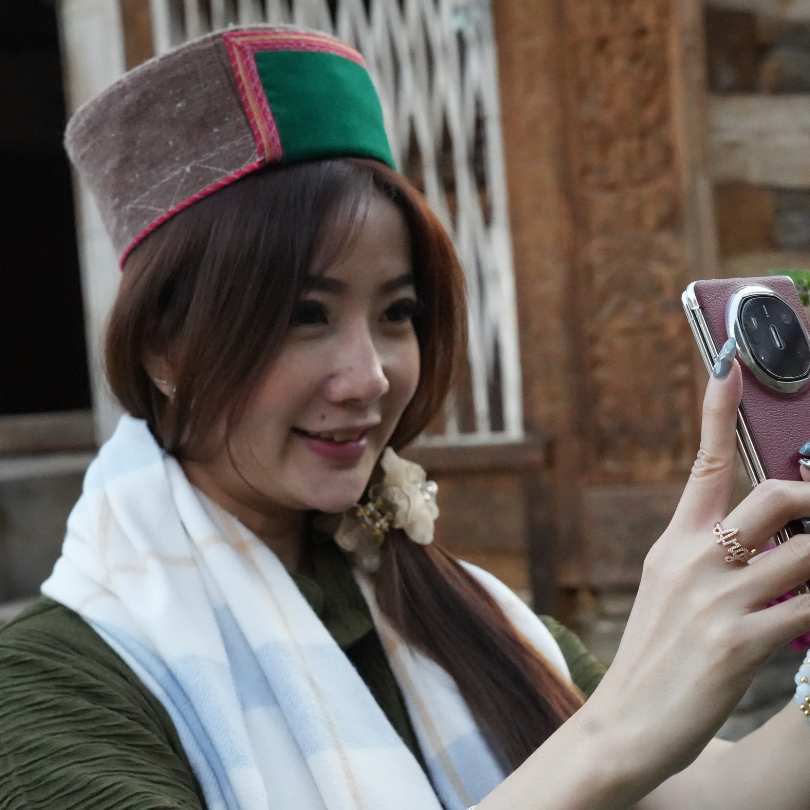
Your experience at Sangla Holi depends partly on who you are and where you're coming from. Here's an honest take for each type.
Solo female traveller
Sangla is one of the more comfortable Holi destinations for a solo female traveller in India. The village setting, smaller crowds, and cultural rather than party-style atmosphere all work in your favour.
That said, the usual precautions still apply — stay central, don't wander to isolated spots after dark, and have a local contact saved. Joining a small group departure is hands down the most stress-free option for solo women.
Solo male traveller
Pretty straightforward, honestly. Your main concerns are road safety and not underpacking for the cold. One thing to be mindful of — respect boundaries during colour play.
Being a solo guy doesn't automatically earn you trust with locals, so lead with courtesy and you'll have a great time.
First-time in Himachal or Kinnaur
If this is your first mountain trip, the roads alone are going to be a learning curve. Don't try to stack "first mountain drive" with "first solo trip" with "first Holi celebration" all at once without solid planning.
A group departure or pre-arranged transfers take out most of the stress so you can actually enjoy the festival.
Budget solo traveller
Doable, but it needs extra planning during Holi. The cheapest stays get snapped up first, public transport schedules can be unreliable, and last-minute options disappear fast.
Book early and carry more cash than you think you'll need — ATMs in Sangla aren't always working.
Sangla Holi rules for tourists (do this, avoid that)
These Sangla Holi rules for tourists are practical, not preachy. Follow them and you'll have a genuinely amazing time.
Do this:
- Ask before putting colour on anyone — especially elders and kids.
- Wear layers you don't mind getting stained. Dark, old clothes are your best friend.
- Carry a waterproof pouch for your phone, cash, and ID.
- Respect the temple area — shoes off, voice down, follow the locals' lead.
- Stay hydrated. Cold weather tricks you into thinking you don't need water. You do.
- Greet people warmly. A simple "Namaste" or "Julley" goes a long way.
- Write down your accommodation details and a local emergency number on paper, not just on your phone.
Avoid this:
- Don't force colour on anyone who's said no or stepped away.
- Don't get heavily intoxicated in public. It makes you both vulnerable and disrespectful.
- Don't walk into private homes or restricted temple zones without being invited.
- Don't litter. This is a mountain village, not a festival ground with cleanup crews.
- Don't drive or ride after drinking. Full stop.
- Don't rely on Google Maps alone — ask locals and your host for directions.
Where should a solo traveller stay in Sangla during Holi?
One rule above all else: central stays win.
A centrally located guesthouse or homestay means you're walking distance from the main celebration, the market, and other travellers. You're not stuck on some dark road at night trying to find your way back to a property out in the middle of nowhere.
Look for places where the host lives on-site or nearby. A present host is your unofficial safety net — they know the village, they know who to call if something comes up, and they'll notice if things seem off.
Five questions to ask before you book
- Is the place within walking distance of the main village or temple area?
- Does the room have proper heating or enough blankets for sub-zero nights?
- Is there hot water — and will it actually work during the festival rush?
- Does the host live on-site, or is there a caretaker around?
- Can they help arrange local transport or share emergency contacts?
If the answer to the first two is no, keep looking.
How to reach Sangla safely as a solo traveller
Three realistic options. Each comes with trade-offs.
Option 1 — Join a group departure (best for solo travellers)
Small group trips from Delhi or Chandigarh handle all the road logistics for you — coordinated transfers, daylight-only driving, planned halts along the way. You don't have to stress about navigation, vehicle condition, or whether your driver is exhausted. Easiest and safest option, especially if it's your first time. Delhi to Sangla Trip Plan
Option 2 — Private cab from Shimla or Chandigarh
More flexibility, but it'll cost more. Make sure your driver knows the route well and agrees to daylight-only driving. Leave Shimla by 6 or 7 AM so you reach Sangla comfortably before it gets dark.
Option 3 — Public transport (HRTC bus)
Budget-friendly but slow and unreliable on timing. Buses run from Shimla to Reckong Peo, and from there you grab a local bus or shared cab to Sangla. Not ideal if you're on a tight Sangla Holi itinerary and need to be somewhere on time.
One rule that isn't negotiable:
Avoid night driving on the Shimla to Sangla route. It's a mountain road with blind turns, missing guardrails in stretches, and near-zero visibility after dark. It's not worth it, no matter how tight your schedule feels.
What to pack for Sangla Holi (March cold plus colour day)
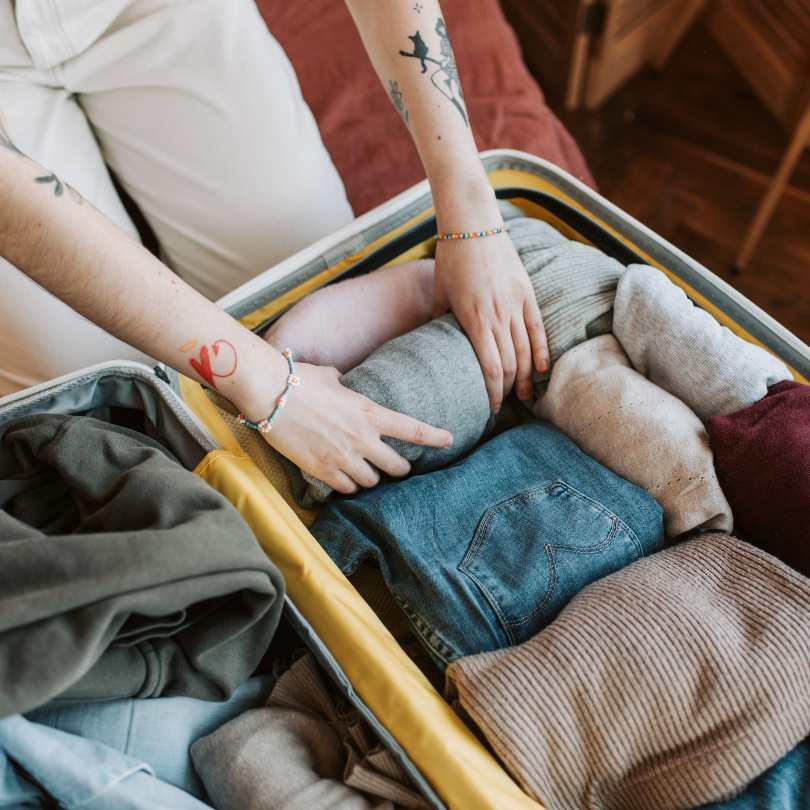
Sangla Holi weather in March will fool you. Sunny mornings make you feel like you overpacked. Then night hits, you're in damp clothes, and suddenly you're shivering and regretting every packing decision you made. Pack for the worst-case cold nights, not the best-case sunny afternoons.
Clothing:
- Thermal inner top and bottom — wear these under everything
- Down or insulated jacket — this is your lifeline once the sun sets
- Waterproof shell or poncho — you'll need it for colour play and possible rain or snow
- Old, dark-coloured clothes for Holi day — white is a terrible idea here, it stains permanently and does nothing for warmth
- At least three pairs of warm socks
- Sturdy shoes with good grip — trails and paths get slippery
- Beanie or warm cap, and gloves
Essentials:
- Waterproof phone pouch
- Sunscreen — mountain sun burns fast, even in March
- Moisturiser and lip balm — the dry mountain air cracks everything
- Basic first-aid kit: band-aids, paracetamol, cold medicine, any personal meds
- More cash than you think you'll need — ATMs are unreliable out here
- Power bank — cold weather kills phone batteries way faster than you'd expect
- A small daypack for festival day
Want a 1-page packing checklist? WhatsApp "HOLI PACKING" to +91-7018537498.
What a solo day at Sangla Holi looks like (hour-by-hour)
Here's what a typical festival day actually looks like if you're there solo.
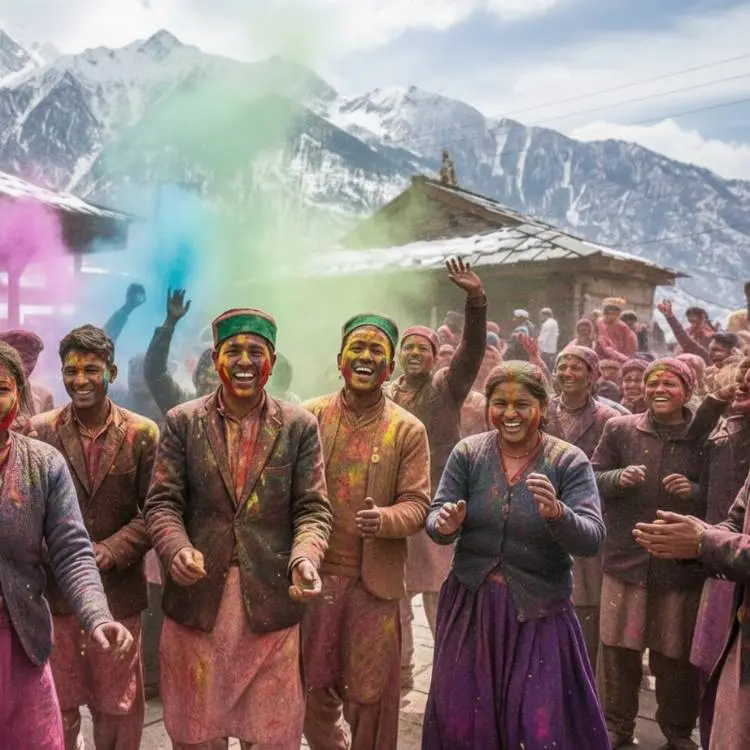
Morning (8 AM to 11 AM)
The village wakes up slowly. Head to the temple area early and you'll catch the preparations — flowers being arranged, colours laid out, musicians warming up. This is the best window to soak in the cultural side of things.
Grab a chai from a local shop, chat with the people around you. The morning crowd is calm — mostly families and elders.
Midday (11 AM to 3 PM)
This is when the colour play really kicks off. Drums start up, folk dances begin, and the energy builds. Stay near the main gathering if you want to jump in.
But before you head out — leave your valuables locked at your stay. Carry only a little cash, your phone in the waterproof pouch, and your ID. That's it.
Evening (4 PM to 7 PM)
Things wind down. People head home to clean up and eat. This is your time to grab a hot meal, warm up, and maybe swap stories with other travellers or your host family.
Don't wander too far after dark — paths are unlit and the temperature drops fast.
Three quick tips for the day
- Phone and cash safety: Waterproof pouch on your body at all times. Leave backup cash locked in your room.
- Polite refusal line: "Thank you, but I'm done playing" — said with a smile, it works every single time.
- When to leave: If the crowd starts shifting from joyful to rowdy (usually late afternoon when the drinking peaks), just head back. You've already seen the best of it.
If anything goes wrong, do this (simple emergency plan)
Most solo trips to Sangla Holi go completely smooth. But having a plan matters more than needing one. Here's yours.
- Stay calm. Seriously — panicking makes everything ten times harder to sort out.
- Contact your host or homestay owner first. They know the village, they know people, and they can act faster than you can.
- If you're with a travel operator like Travel Coffee, call or WhatsApp your on-ground contact right away.
- For medical issues, ask your host to point you to the nearest health centre. Sangla has a primary health centre, and Reckong Peo has a district hospital.
- If you feel unsafe because of someone's behaviour, move to a public or crowded area and ask a local family or shop owner for help.
- Keep local police station info handy — your host can give you this when you arrive.
- If roads are blocked due to landslides or weather, don't try to force it. Wait it out. Your host or travel operator can help figure out the logistics.
- Always carry a charged phone and a power bank. Cold weather drains batteries much faster than you'd expect.
Why travellers feel safer with Travel Coffee (and our local on-ground team)
Let's talk about what actually makes a mountain trip feel safe — it's not just a good itinerary on paper. It's having real people on the ground who know the terrain, speak the local language, and can step in the moment something doesn't go as planned.
That's exactly what Travel Coffee's local on-ground team does. We're not a booking portal sitting in some city office forwarding you confirmation emails.
We have people in the Kinnaur belt — folks who've grown up on these roads, who know the village dynamics, who have relationships with homestay owners and local authorities. When you travel with us, there's always someone a phone call away who can actually do something if you need help.
Here's what that looks like in practice:
Pre-trip briefing — Before you even leave home, you get a clear rundown on what's coming: current weather, road conditions, festival etiquette, packing essentials, and a direct contact for your on-ground person. No unpleasant surprises.
Vetted stays in central areas — We book places we've personally checked. Central location, working heating, host on-site. The basics that make or break any trip in the mountains.
Coordinated transfers, daylight only — Nobody's navigating mountain roads at midnight. Every leg of the journey is timed to happen in daylight, with drivers who know these routes inside out.
Real-time on-ground support — Road blocked? Weather turned? Someone feeling unwell? Your local contact handles it — rerouting, finding alternatives, coordinating with the stay, or getting you to the nearest medical facility. You're never figuring things out alone.
How our team takes care of solo female travellers
This is something we take seriously, not as a marketing line but as a responsibility. For solo women joining our Sangla Holi departures, here's what's different:
- You're paired with a group that's been vetted and briefed — everyone knows the ground rules around respect and consent before the trip starts.
- Your stay is always centrally located with an on-site host, so you're never isolated or in an unfamiliar corner of the village after dark.
- Our on-ground contact checks in with you, not just the group. If something feels off at any point — a fellow traveller, a local interaction, anything — you have a direct line to someone who will act on it immediately.
- During the festival itself, our team is present in the area. You're not relying on strangers for help if you need it.
We can't promise that nothing will ever go wrong anywhere. But we can promise that if it does, you won't be handling it alone.
How our team takes care of families with kids
Mountain travel with kids needs a different kind of planning. Roads are long, cold hits harder on little ones, and festival crowds can be overwhelming for children.
- We plan shorter driving stretches with proper breaks so kids aren't stuck in a vehicle for eight hours straight.
- Stays are chosen with families in mind — rooms with enough space, reliable heating, hot water, and hosts who are used to having children around.
- Our on-ground team briefs you on which parts of the Holi celebration are family-friendly and which hours to avoid (late afternoon when energy and alcohol both peak).
- If a child falls sick or needs medical attention, our local contact knows exactly where the nearest health centre is and can get you there fast. No Googling in panic.
How our team takes care of couples
Couples often want a mix of adventure and comfort — you want to experience Sangla Holi but you also want some peace, a good room, and not having to argue with a cab driver about routes.
- We handle all the logistics that usually cause stress between partners on a trip — transfers, bookings, route planning, backup options if weather changes.
- Stays are chosen for comfort and location. You get a well-heated room in a central property without having to scroll through fifty listings and hope for the best.
- Our on-ground person is available but not hovering. You have the freedom to explore on your own terms, with the safety net of someone local you can call anytime.
- If you're joining a group departure as a couple, the vibe is relaxed and social — not a rigid tour group with a megaphone. You set your own pace within the framework.
The bottom line is simple: Travel Coffee exists so you can focus on the experience while someone local handles everything that could go wrong in the background.
>> Sangla Holi Package by Travel Coffee
Last few seats for this season. Check availability on WhatsApp.
Final verdict
So, is Sangla Holi safe for solo travellers? Yes — with the right preparation, it's honestly one of the most rewarding Holi experiences you can have anywhere in India.
If you're the cautious type, join a small group departure. Road travel, accommodation, on-ground support — it's all taken care of, and you've got company and backup built right in.
If you're confident and experienced with mountain travel, book a central stay well in advance, follow the practical rules in this guide, and you'll do great.
And if you're still not sure which route is right for you — just ask. We've been sending solo travellers to Sangla for years, and we're happy to help you figure out the trip that fits.
Message Travel Coffee on WhatsApp — last few seats this season.
Related topics
Frequently Asked Questions
Is Sangla Holi safe for solo female travellers?
Yes, with smart planning it absolutely can be. Sangla's community-led celebration is smaller and more respectful than big-city Holi events. Book a central stay with an on-site host, stay near the main gathering during colour play, and keep a local contact on speed dial. For solo women who want zero logistics stress, a small group departure is the easiest way to do it.
Is Sangla Holi a party scene like Pushkar Holi?
Not even close. Sangla Holi is a cultural village celebration rooted in Kinnauri tradition — it revolves around the local temple, folk music, and community dances. The crowd is mostly locals and a small handful of travellers. Think intimate and grounded, not DJ stages and massive gatherings.
How cold is Sangla during Holi season?
March temperatures in Sangla can vary a lot from year to year, so confirm locally before packing. Expect warm-ish daytime sun but sharp drops once the sun sets — nights can potentially dip below freezing. Pack thermals, a down jacket, and warm socks as a bare minimum. The cold is totally manageable when you dress for it. Miserable when you don't.
Should I avoid night driving to Sangla?
Yes, absolutely. The mountain roads between Shimla and Sangla are narrow, winding, and completely unlit after dark. Night driving massively increases your accident risk on these routes. Always plan travel so you arrive before sunset. If it's a long drive, break the journey with an overnight halt in Shimla, Narkanda, or Rampur.
What are the rules tourists must follow during Sangla Holi?
Ask before putting colour on anyone. Respect the temple area. Don't get heavily intoxicated in public spaces. Dress warmly and appropriately for a village setting. Don't litter. Don't force colour play on someone who's said no. Basically, follow the locals' lead — they'll show you what's welcome and what isn't.
What should I pack for Sangla Holi?
Thermals, a down jacket, waterproof outer layer, old dark clothes for colour day, warm socks, sturdy shoes, sunscreen, lip balm, waterproof phone pouch, plenty of cash (ATMs out here are unreliable), a power bank, and basic first-aid supplies. The golden rule: pack as if the nights will be freezing, because they very well might be.
Where should I stay in Sangla as a solo traveller?
Go for a centrally located guesthouse or homestay within walking distance of the main village and temple area. Prioritise places with an on-site host, reliable heating, and hot water that actually works. Stay away from isolated properties on the outskirts — especially during Holi, when you want easy access to the celebration and other people nearby.
Can I join a group departure as a solo traveller?
Absolutely, and honestly it's one of the smartest moves for solo travellers heading to Sangla Holi. Operators like Travel Coffee run small group departures with daylight-only transfers, vetted central stays, and on-ground support. The whole thing is designed so solo travellers don't have to figure out mountain logistics on their own.
How do I reach Sangla from Delhi or Chandigarh safely?
From Delhi, the usual route goes through Shimla and then onward via Karcham to Sangla. Always break the journey with an overnight stop — don't try Delhi to Sangla in a single day. From Chandigarh, you can drive via Shimla or take an HRTC bus to Reckong Peo and grab a local connection to Sangla from there. Daylight travel only, no exceptions.
How many days are enough for a Sangla Holi trip?
Plan at least four to five days for a comfortable Sangla Holi itinerary from Delhi. That gives you a day to travel to Shimla or Narkanda, a day to reach Sangla, the Holi celebration itself, a buffer day for exploring or weather delays, and a day for the return. Trying to rush it just increases road risk and ruins the experience.
More about Kinnaur
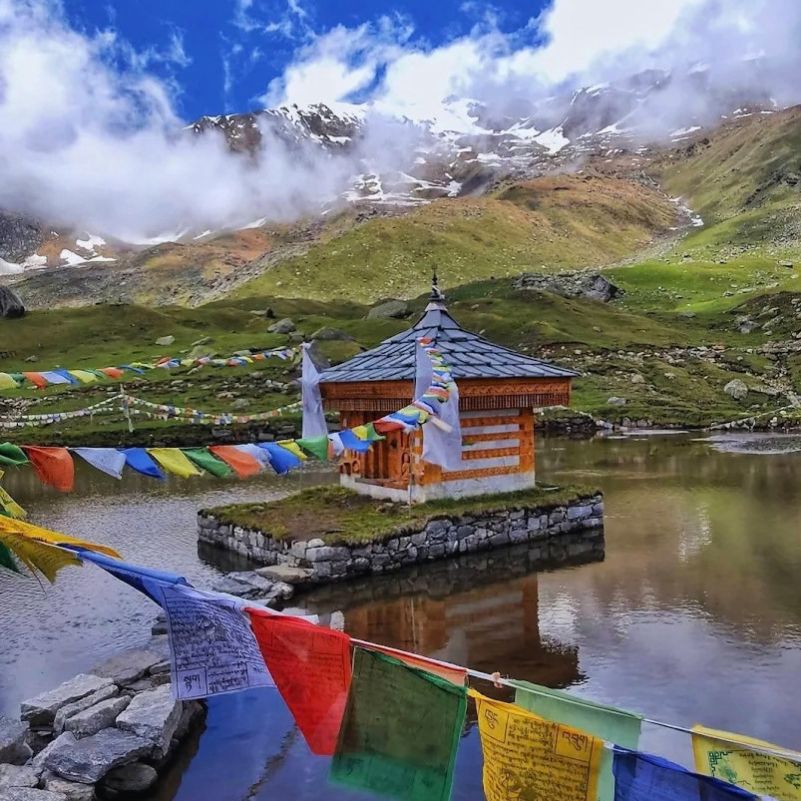 Kinnaur
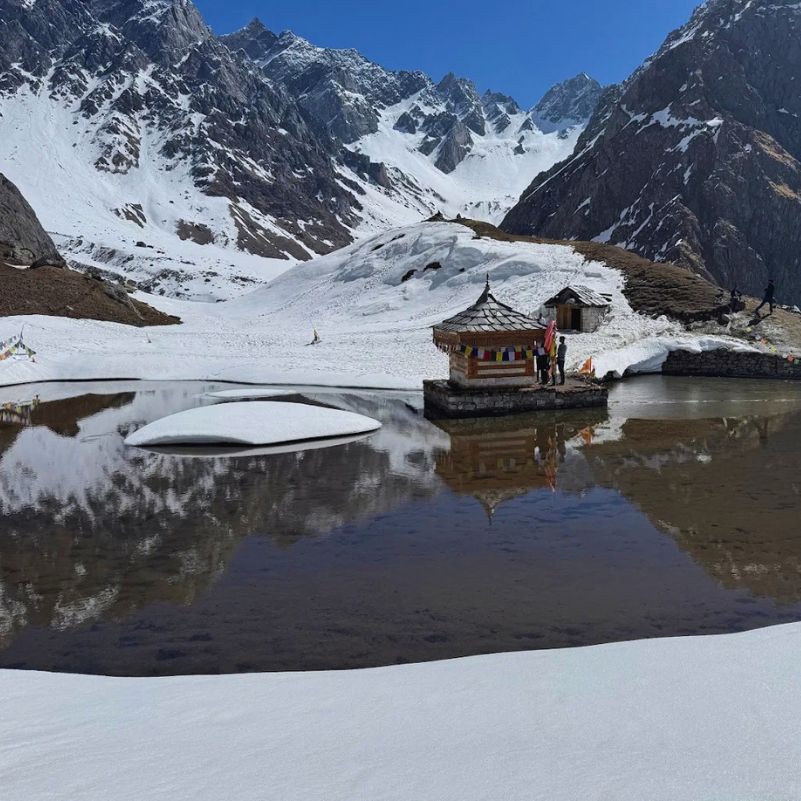
Yulla Kanda Trek Guide 2026: Route, Best Time, Cost and Planning
Planning the Yulla Kanda trek in 2026? This practical guide covers the trekking route from Yulla village in Kinnaur, distance and difficulty, the best time to visit, expected costs, camping options, and essential preparation tips. Discover how to plan this high-altitude Himalayan trek to the sacred Krishna Lake with realistic expectations and local travel insights.
 Kinnaur
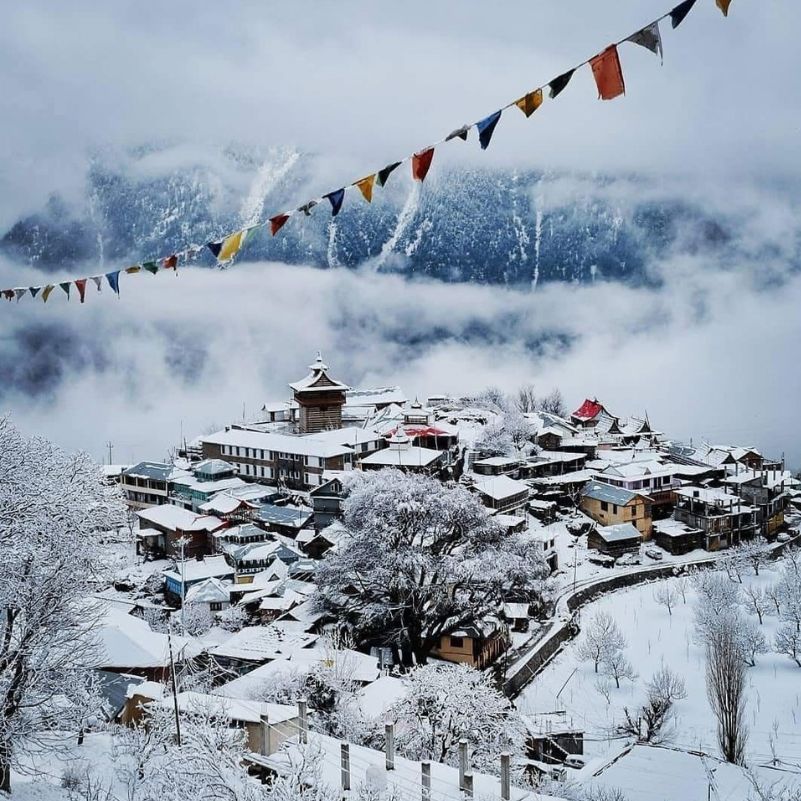
Kinnaur Snowfall Guide 2026: When & Where to Look for Snow
Planning a snow trip to Kinnaur in 2026? This guide explains the best months for snowfall, the top places to find snow in Kalpa, Sangla and Chitkul, and what weather and road conditions to expect during winter.
 Kinnaur
Christmas & New Year in Kinnaur: A 2026-27 Winter Trip Guide
Planning Christmas and New Year in Kinnaur for 2026-27? Explore winter weather, snowfall chances, road conditions, stay options and a practical festive-season itinerary for Kalpa, Sangla and nearby areas.