
Yulla Kanda Krishna Temple in 2026: Location, Beliefs & Visiting Etiquette
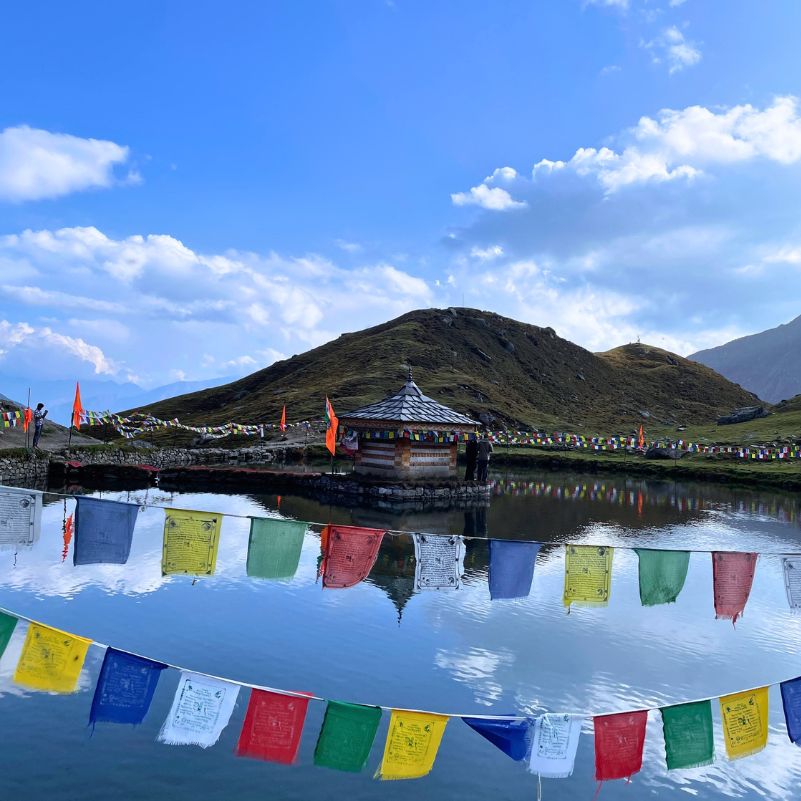
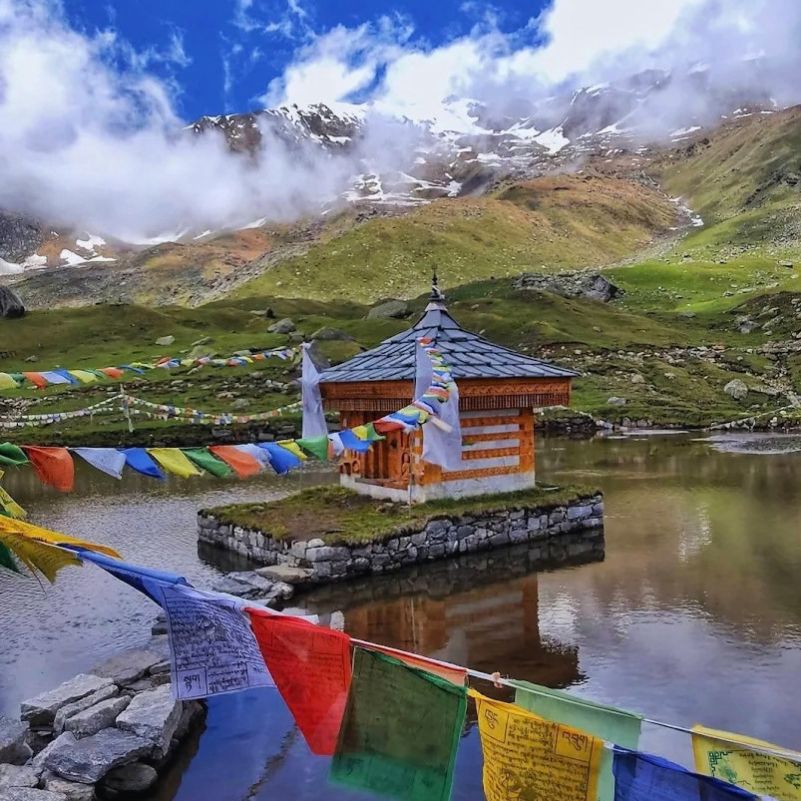
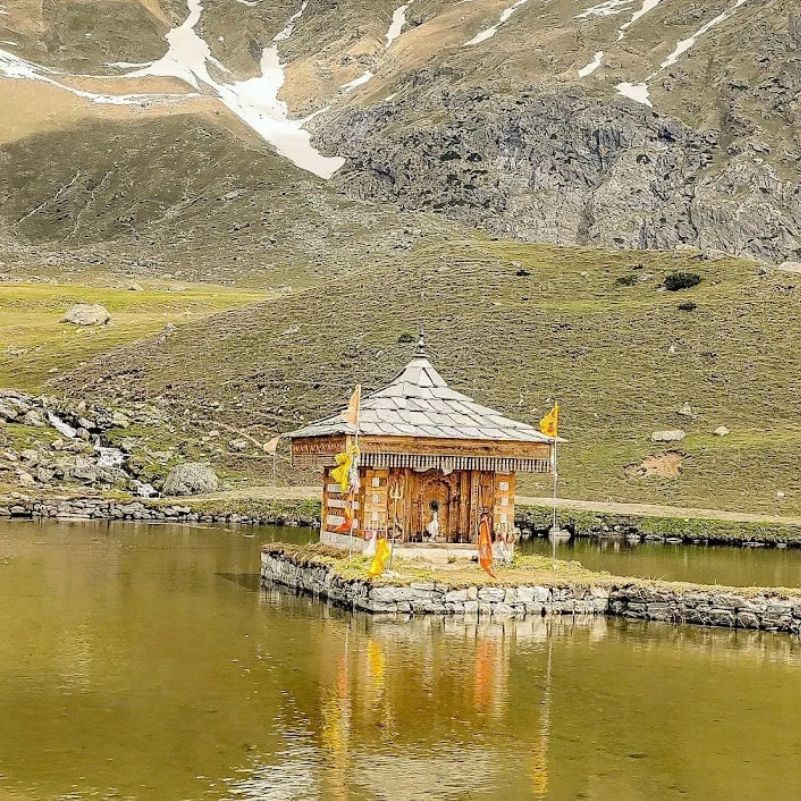
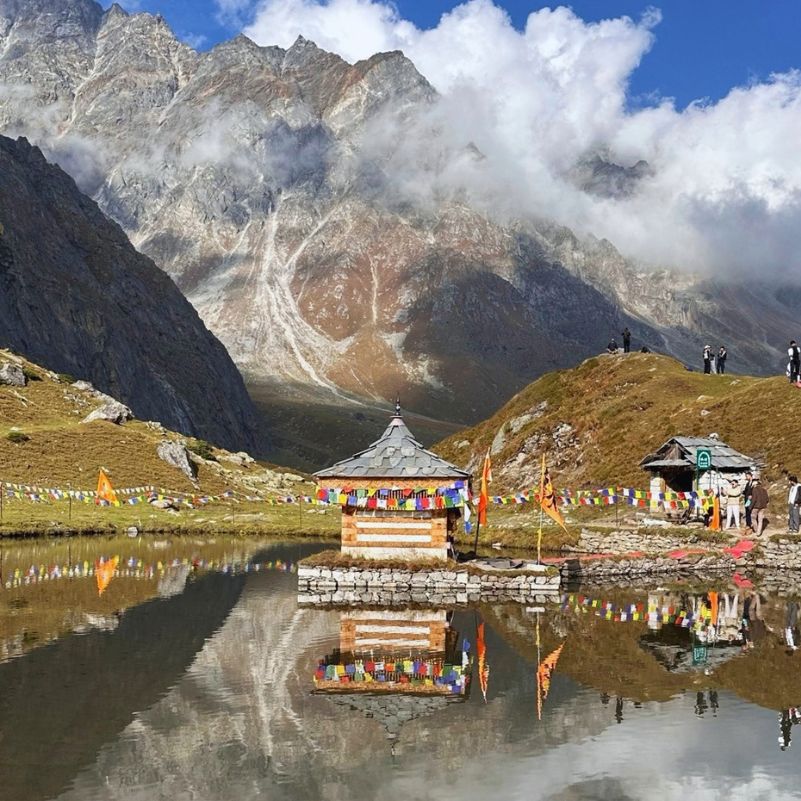
Yulla Kanda Krishna Temple is a sacred mountain shrine located beside the high altitude Yulla Kanda lake in Kinnaur.
The temple is closely connected with local beliefs and traditions, which makes the trek meaningful not only for adventure travellers but also for pilgrims visiting the area.
This guide to Yulla Kanda Krishna Temple by Travel Coffee explains its location, local beliefs and the basic etiquette visitors should follow. It will help you understand the cultural importance of the temple and how to visit the site respectfully while exploring Yulla Kanda.
Quick Answer
The Yulla Kanda Krishna Temple is a small Lord Krishna shrine beside a sacred lake in the Rora Valley of Kinnaur, Himachal Pradesh.
Most sources put the shrine at about 3,895 metres (12,778 ft), and many people describe it as the world's highest Krishna temple.
You cannot drive to it. You walk up from Yulla Khas village near Tapri, roughly 12 km one way.
Where Is Yulla Kanda Krishna Temple Located?
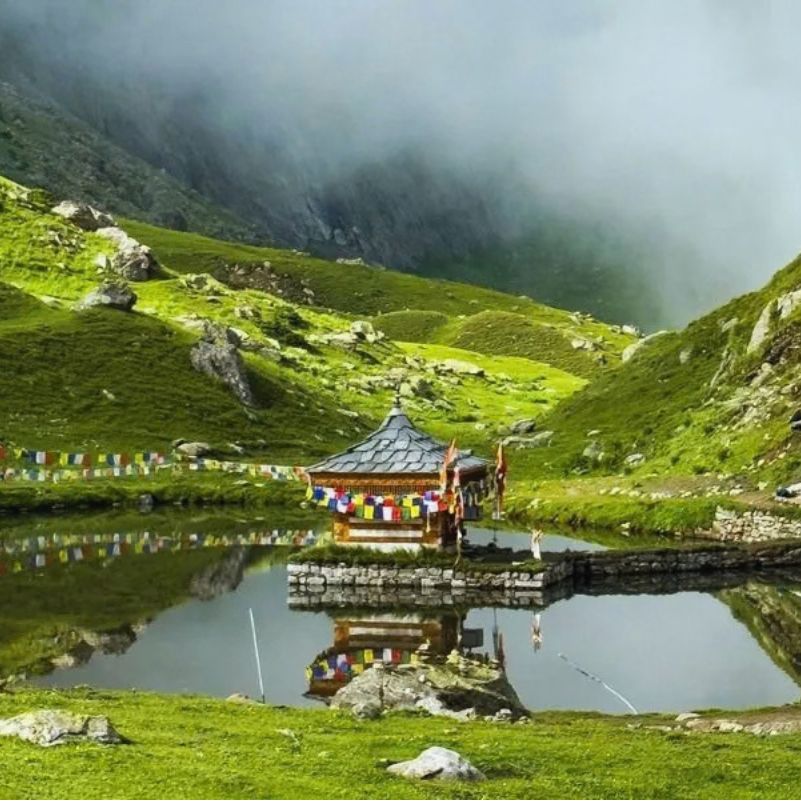
The temple sits in the Nichar area of Kinnaur district, high above Yulla Khas village.
You will see the name spelt Yulla Kanda and Yula Kanda. You will also see the village written as Yulla, Yulla Khas or Yulla village. All of these names point to the same trek.
The shrine stands right beside Yulla Kanda Lake. The trail climbs out of the village through forest, then opens onto high meadows before the lake appears.
Here is what most tourists get wrong: They search for Yulla Kanda on a map, see Yulla Khas, and assume the village and the temple share the same spot.
They do not. Yulla Khas is where the drive ends and the walking starts. The temple sits a long uphill trek above it.
If you plan your day as if a car will drop you at the temple, your whole schedule falls apart by noon.
Which village is the starting point?
Yulla Khas is the usual trailhead. Many people simply call it Yulla village.
You reach it from the Tapri side of Kinnaur. From Tapri you head up to the village, and from there you continue on foot.
When we plan a Kinnaur itinerary with this trek, we treat the village night as part of the trip, not a rest stop. You meet your guide, hear the latest about the trail, and start the climb fresh the next morning.
If you want Yulla Kanda as one stop on a longer trip through the district, our Kinnaur tour packages show how it fits with the rest of the valley.
Is Yulla Kanda the World's Highest Krishna Temple?
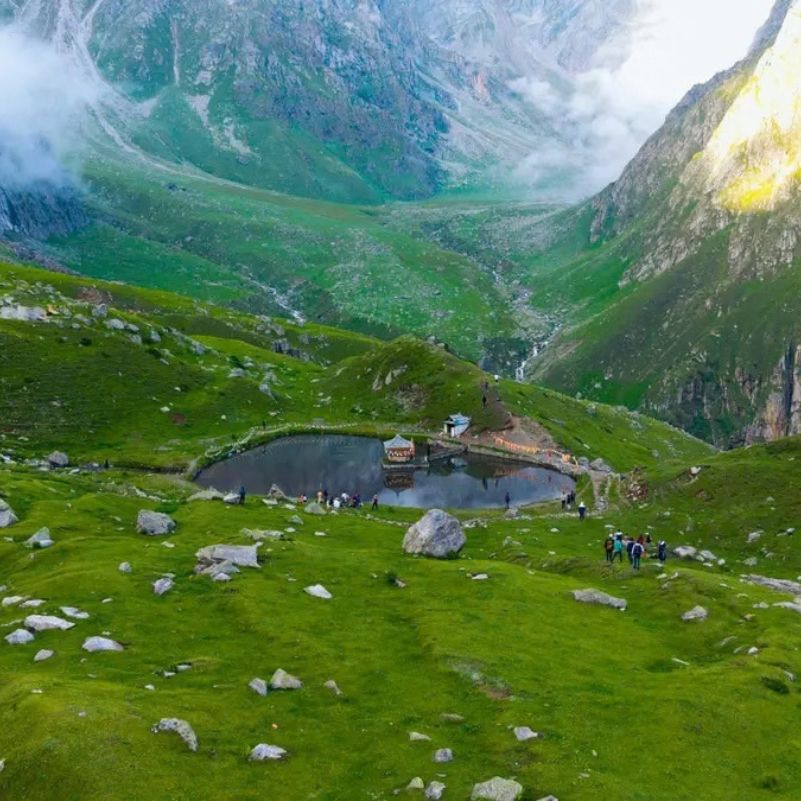
Most travel and pilgrimage sources give the shrine's height as about 3,895 metres, or 12,778 feet. That figure shows up again and again, and it is the one we quote when travellers ask us.
The official Himachal trekking portal lists the Yulla Trek at 4,114 metres. That number may refer to a different point on the route, not the temple building.
So keep the two numbers apart. The shrine's height and the trek's highest point answer two different questions.
As for the title, almost every page about Yulla Kanda calls it the world's highest Krishna temple. It is a popular and widely repeated description.
We have not seen any independent survey that compares it with every Krishna temple in the world. Treat the title as what locals and travellers commonly say, not a certified record.
None of that takes away from the place. A shrine and a lake at this height, reached only on foot, speak for themselves.
What Are the Local Beliefs and Stories Behind Yulla Kanda Temple?
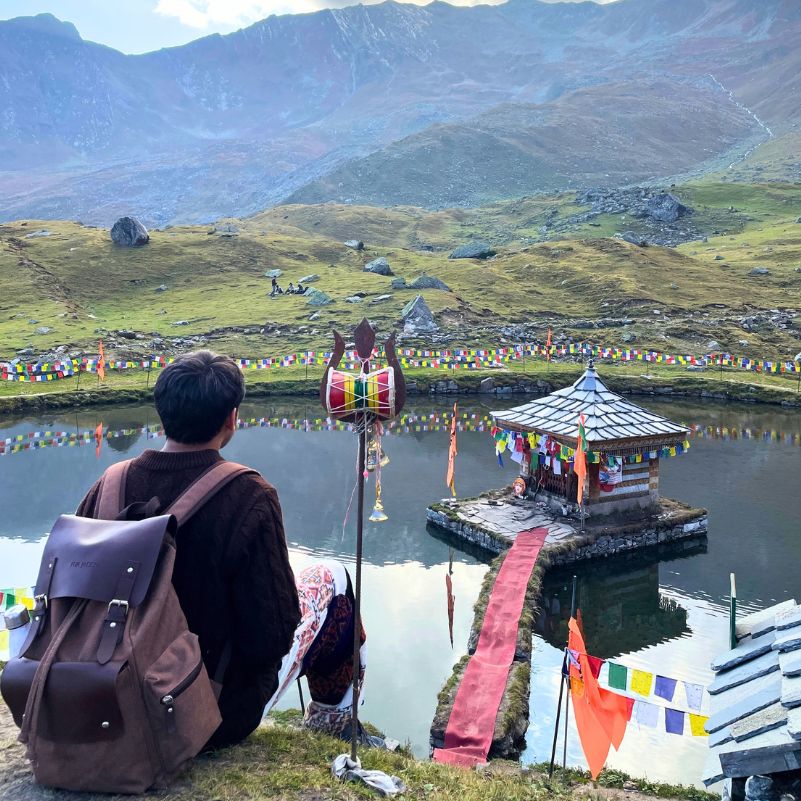
Local tradition links the lake and the shrine to the Pandavas. The story says the five brothers came here during their exile, created the lake and built a temple to Lord Krishna beside it.
This story lives in the valley's oral tradition. No archaeological work has been established when anyone built the shrine, and nobody has fixed a founding date.
You can respect the story deeply and still understand it as belief rather than documented history. Most people in the valley hold both ideas comfortably.
The lake carries its own meaning. Many devotees walk around it, and local belief connects this circuit with purification and blessings.
If you watch pilgrims at the lake, you will notice how unhurried the walk feels. Give them room, and if you join the circuit, match the pace of the people around you rather than overtaking them.
What is the connection with King Kehari Singh?
Some regional accounts credit Raja Kehari Singh of the former Bushahr state with starting the Janmashtami celebrations at Yulla Kanda.
The exact year when Janmashtami celebrations began at Yulla Kanda is not clearly documented. Raja Kehari Singh's connection to the festival is based on regional traditions, and independent historical records confirming his role are not readily available.
It forms part of how the community remembers the festival's beginnings. That memory matters to people here, even where paper records stay silent.
What Is the Floating Kinnauri Cap Ritual?
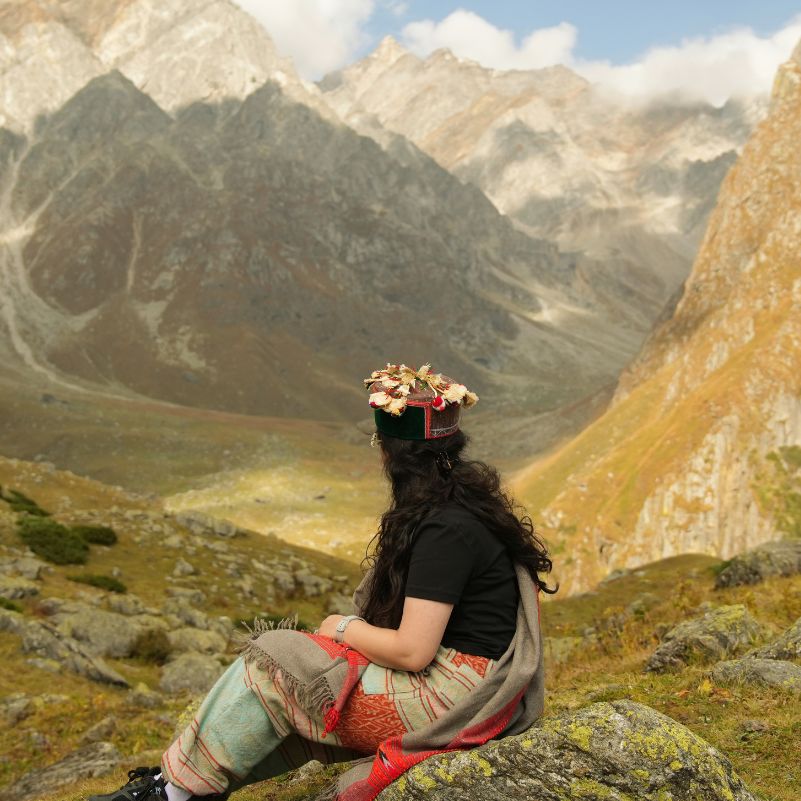
The Kinnauri topi is the traditional woollen cap people wear across the district. At Yulla Kanda, people place this cap upside down on the water.
The traditional reading is simple. If the cap floats, people see good fortune or an answered prayer. If it sinks, they take it as a cautionary sign.
Sources disagree on one detail. Some articles describe caps floating across the lake itself.
Detailed local reporting from September 2026 instead mentions the flowing water channels next to the lake. We cannot settle that difference from Shimla.
Only the temple custodians can tell you where the ritual happens today. Ask them on the spot rather than trusting any single blog, including ours.
Can tourists take part in the ritual?
Our team recommends watching first. This ritual carries real meaning for the families who perform it.
Copying it for a reel or a laugh misses the point and can genuinely offend. Skip the camera here, at least until you have asked.
If you feel drawn to take part, ask a local custodian or your guide whether visitors may join, and how. Never put a cap, coin or any object into sacred water without permission.
Go in with the right expectation too. The cap does not predict your future. For the people of the valley it carries faith and tradition, and that alone deserves gentle handling.
How Is Janmashtami Celebrated at Yulla Kanda?
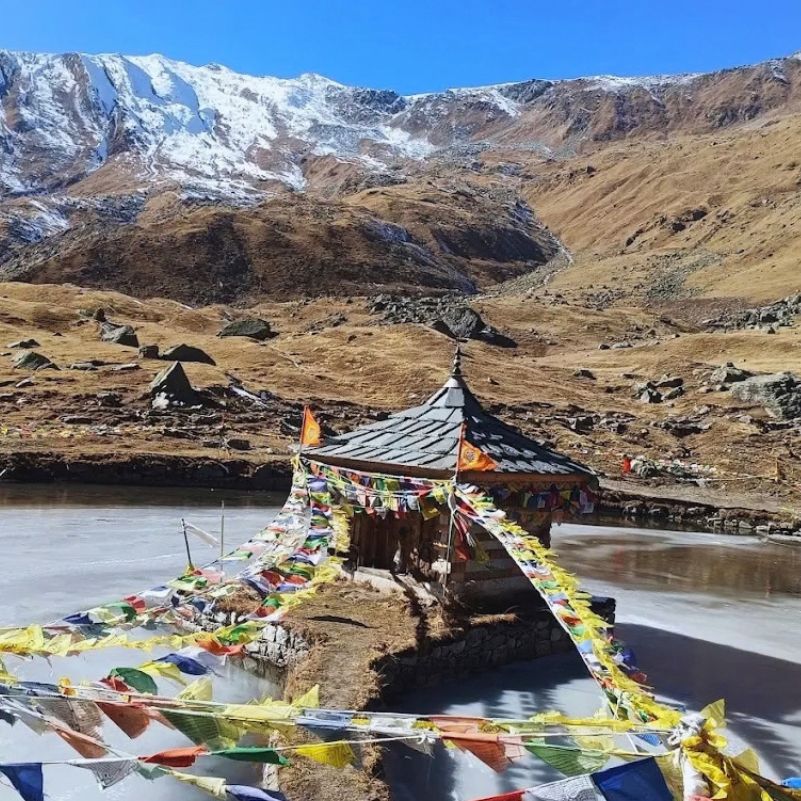
Janmashtami is the biggest day of the year at Yulla Kanda. In 2026, the celebration took place on 4 September.
Local coverage described a district level festival. The local temple committee and the administration both took part in running it.
Reports described thousands of pilgrims making the climb. Buddhist lamas joined in, devotional singing filled the day, people shared prasad, and groups performed Kinnauri dances.
The detail that stays with us from that coverage is how communities travel up together. Families and neighbours walk as a group, and the climb itself becomes part of the worship.
That mix of Hindu and Buddhist participation says a lot about Kinnaur. The shrine belongs to the whole valley, not to one group.
Here is a timing tip that changes your entire trip
If you want to see the festival, plan around Janmashtami and expect heavy crowds on the trail and at the lake.
If you want quiet time at the shrine, avoid the festival dates. The weeks after Janmashtami, through September and into early October, usually feel far calmer.
If you do visit on a festival day, remember you are a guest. You do not have to join every custom, and nobody expects you to.
Watch respectfully, accept prasad if someone offers it to you, and keep clear of processions and the shrine doorway.
What Visiting Etiquette Should You Follow at Yulla Kanda Temple?
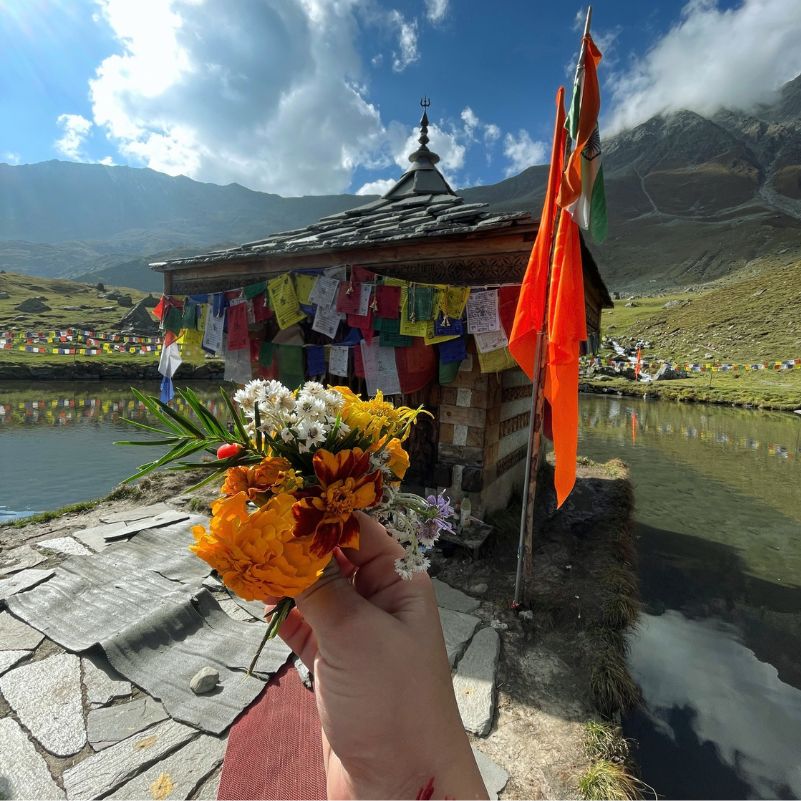
This is the section we most want you to read. Yulla Kanda is a living place of worship first and a trekking destination second.
Remove your footwear before you enter the temple. Himachal tourism guidance asks visitors to do this at temples across the state.
Dress modestly. At this height you will wear long trousers and a covered top anyway, so this rarely needs any extra effort.
Speak softly. People walk about 12 km uphill to pray here. A loud group arriving with music on a speaker ruins that moment for everyone.
Let devotees finish their prayers before you step in front of the shrine. Wait your turn and do not crowd the entrance for a photo.
Ask before you touch any religious object, offering or idol. Something that looks like decoration to you may hold deep meaning for someone else.
Keep the place clean. Government trekking guidance asks trekkers to avoid litter, noise, intoxication, disturbing wildlife and polluting natural water.
All of that matters twice over at a sacred lake. Do not wash clothes, utensils or yourself in the lake or the streams around it.
Carry every wrapper, bottle and tissue back down to Yulla Khas. A small plastic bag in your daypack solves this in seconds.
Leave alcohol behind. Drinking near a shrine shows disrespect, and the same trekking guidance discourages intoxication on the trail.
Finally, follow the instructions of temple custodians, forest staff and your local guide. If they ask you to wait, move or stop, do it without argument.
They know rules that shift from season to season. No blog, including this one, can track every change.
Is photography allowed inside the temple?
Ask before you photograph the deity, an active ritual, a prayer ceremony or any worshipper. Many religious sites restrict cameras near the inner shrine.
We have not verified a specific camera ban at Yulla Kanda, and we have no information on any photography fee.
Wide shots of the lake and meadows rarely bother anyone. Close portraits of people praying feel very different to the person in the frame.
Lift your camera, catch the person's eye, and wait for a nod. If you do not get one, put the camera away.
Can you swim, bathe or camp beside the sacred lake?
Do not enter the lake to swim or bathe unless local custodians clearly permit it.
This starts with respect. People treat this water as holy. It is also practical, because soap, sunscreen and food scraps pollute a small mountain lake quickly.
Camping follows the same logic. A news report from 18 May 2026 said forest authorities had moved the upper camping accommodation about 2 km away from the temple.
That report does not confirm a permanent camping ban. It does mean you should stay only at authorised campsites and check the current arrangement before you leave.
Insider tip: when you book any Yulla Kanda trek, ask exactly where the camp sits this season. A camp 2 km below the shrine changes your summit day, your timing and how much water and food you carry up.
How Do You Reach Yulla Kanda Krishna Temple from Shimla?
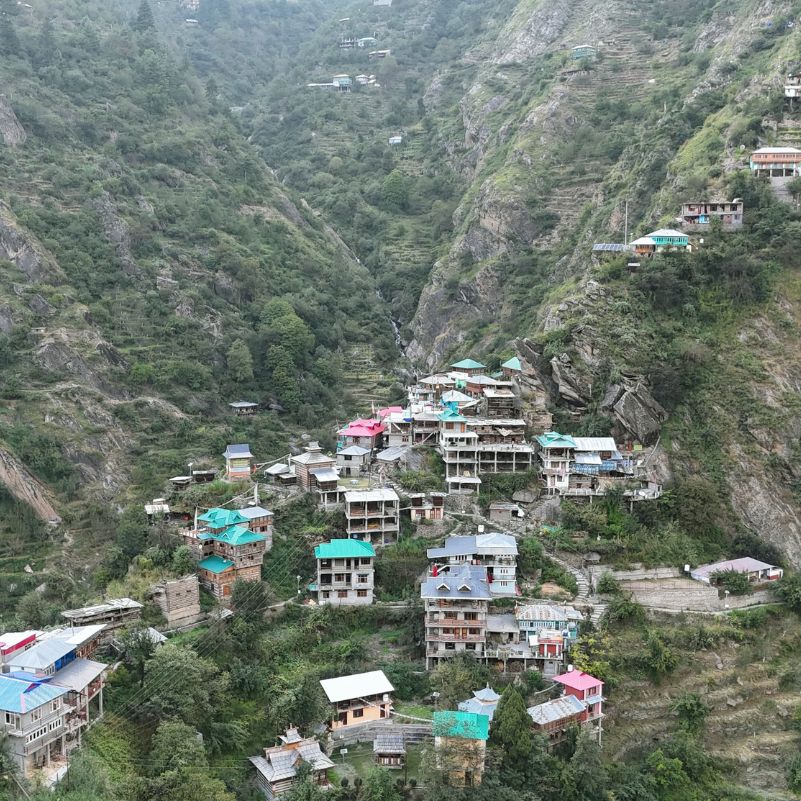
The usual route runs from Shimla through Narkanda and Rampur to Tapri, then up to Yulla Khas. From the village you walk.
The last stretch from the highway toward Yulla village may need a local vehicle. Arrange it in advance instead of hoping to find one waiting at Tapri.
Road distances and drive times shift with road conditions, so confirm them for your date rather than trusting a fixed number online.
What we tell our travellers is simple: never plan the drive and the climb for the same day. Reach Yulla Khas, sleep, and start walking with fresh legs.
If you prefer to start from Shimla with transport sorted, our Shimla travel packages can work as the base for this trip.
What should travellers know about NH-05 in 2026?
On 27 September 2026, The Tribune reported that mudflow and falling stones blocked NH-05 near Tapri. That is the same stretch you drive to reach Yulla Khas.
Read that as a warning sign, not a live update. It shows how fragile this road can be. It does not prove the road is closed today.
Check current district traffic notices before you leave Shimla, and again on the morning you drive.
Our Kinnaur in October travel guide covers road conditions for this month in more detail.
One point from it matters here. The traffic windows announced in September have already expired, so do not plan an October drive around those old timings.
How Difficult Is the Yulla Kanda Trek?
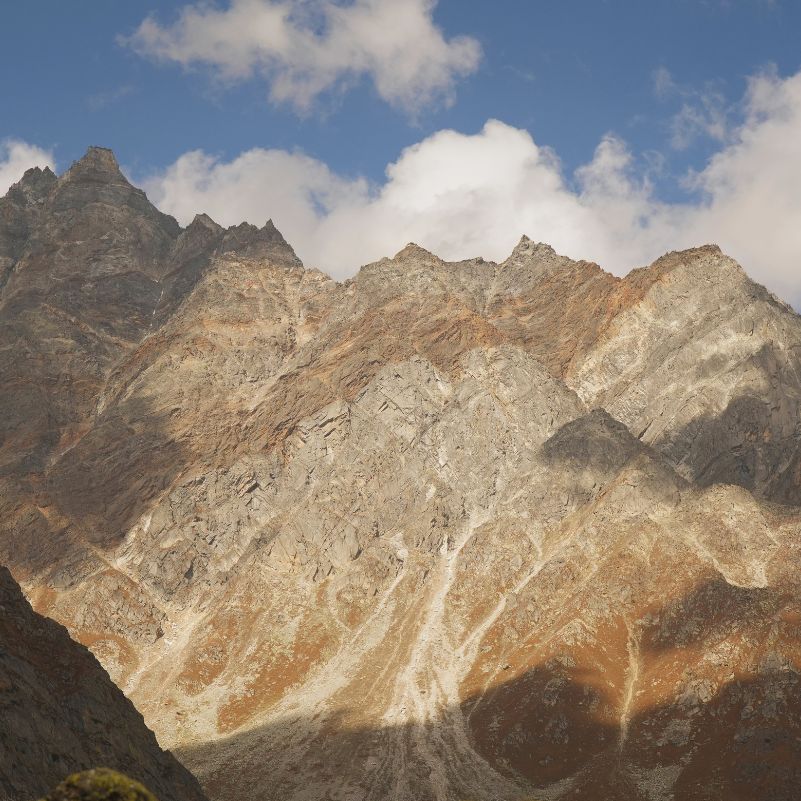
Several sources, including our own trip page and local festival reporting from September 2026, put the walk from Yulla Khas at about 12 km one way.
The real figure depends on where your vehicle stops, which variation of the trail you take and where your camp sits. Some websites quote very different round trip numbers.
So treat 12 km as a planning guide, not a measured fact.
The trail climbs steadily. You walk through the village, then along forest paths, then across exposed meadows higher up, with some steep sections along the way.
Now an honest warning: The official state portal grades Yulla Trek as easy. Many visitor guides, and our own team, describe it as moderate or physically demanding.
Both views come from different grading methods. A system built around seasoned trekkers sees a clear trail with no technical climbing.
A first timer from the plains feels hours of uphill walking at altitude. Plan for that second experience, not the label.
This is also why we tell people to skip the idea of a same day dash from Shimla to the temple and back. A long highway drive plus roughly 24 km of mountain walking leaves no room for weather, tired legs or a slow descent.
Can beginners or families complete the trek?
Some can. It depends on fitness, age, past hiking experience, how well you have acclimatised and how the trail looks that week.
If you rarely hike, our team recommends regular walking or stair climbing in the weeks before your trip. Your legs will thank you on the second hour of uphill.
Go with a local guide who knows the route and can turn the group around when needed.
We cannot promise that every beginner or every child will reach the shrine. Some groups stop at the camp, and that is a sensible decision, not a failure.
Whatever happens on the day, aim to finish your descent in daylight. Steep, uneven paths feel very different after dark.
What Is the Best Time to Visit Yulla Kanda in 2026?
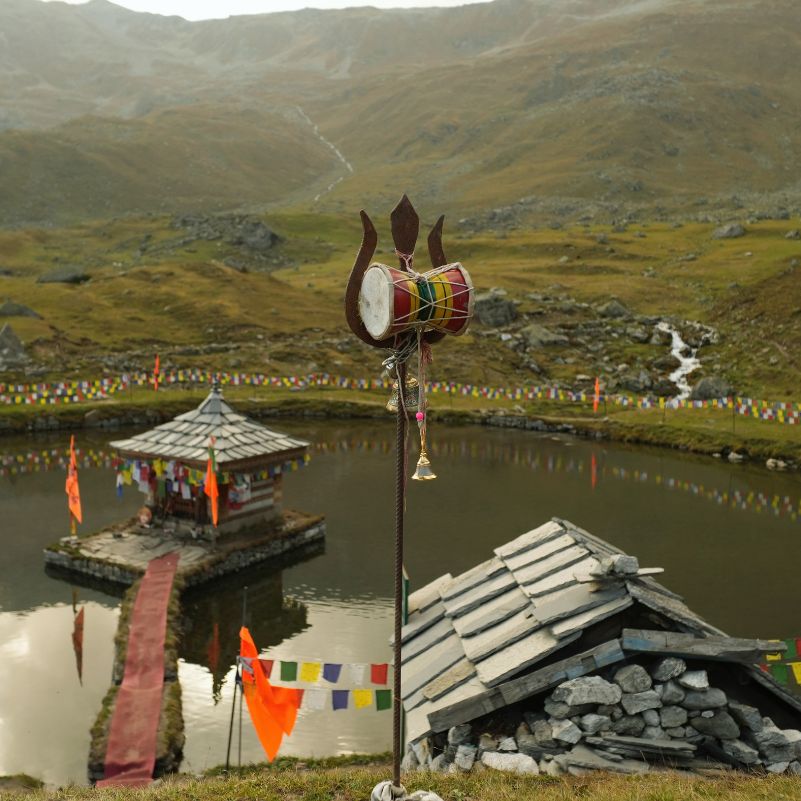
The broad trekking season runs from about mid May to October, depending on snowmelt and weather. In 2026, the May news report said Yulla Kanda reopened after winter.
May and June usually bring easier summer walking. July and August bring monsoon rain, and the forest and meadow paths turn slippery.
September and early October are the months most trekkers prefer, once the monsoon eases. Even then, nobody can promise clear skies, snow free paths or an open highway every day.
The state trekking portal listed a Yulla Trek programme for 22 to 24 June 2026. That was one organised event, not the full season, so do not mistake those dates for the only window.
Is Yulla Kanda accessible during winter?
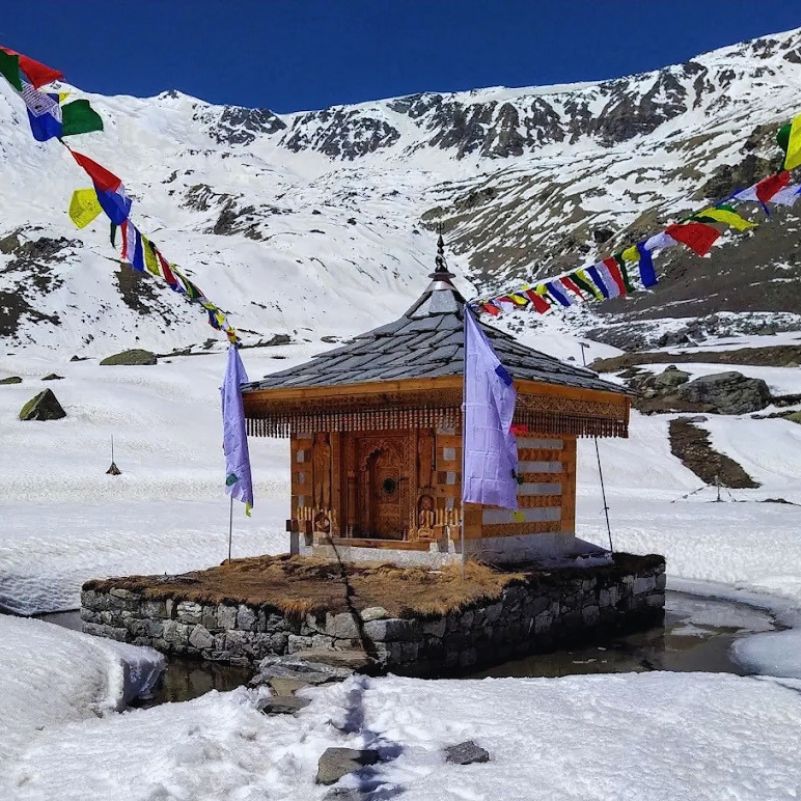
Heavy snow can shut the route completely, and access changes from season to season.
Our published package states that late October and November departures depend on the condition of the road, the trail and the campsite.
We would rather confirm conditions with you than sell a date the mountain may not allow. If your plan falls late in the year, check before you book anything.
Do You Need a Permit, Entry Fee or Fixed Darshan Timings?
Yulla Kanda lies in lower Kinnaur. Indian travellers do not ordinarily need an Inner Line Permit for the normal route.
Foreign nationals heading onward into notified protected areas of upper Kinnaur may need a Protected Area Permit.
Here is a warning about fees
District Kinnaur publishes an Inner Line Permit fee of ₹200 per person at its e-Governance Centre, subject to change.
That fee covers protected area permissions. It is not a ticket to Yulla Kanda Temple. If anyone asks you, as an Indian traveller on the normal route, to pay ₹200 for a temple permit, ask for official paperwork before you hand over money.
Himachal Pradesh also runs an online trekking notification system for treks across the state. Additional registration or campsite permissions may depend on the route, camping location and current local regulations.
Ask your trekking operator to confirm any applicable requirements in writing before travelling.
Temple entry fee: No officially confirmed entry fee is available for Yulla Kanda Krishna Temple. Check with local authorities or temple caretakers before visiting to find out whether any charges apply.
Official darshan opening and closing hours: No verified fixed darshan schedule is available for Yulla Kanda Krishna Temple. Check with local villagers or temple caretakers for visiting arrangements, and plan your trek to reach the shrine safely during daylight hours.
Some commercial blogs print daily timings, but we have not seen an official schedule, so we will not repeat them as fact. In practice, you reach the shrine when your trek gets there, so plan around daylight and weather.
If you want to continue beyond lower Kinnaur after the trek, our Spiti Valley tours cover the onward route.
Where Can You Stay, and What Does a Yulla Kanda Trip Cost?
Your realistic options are a stay in Yulla Khas village and a permitted campsite on the approach.
Do not plan to pitch a tent next to the shrine without authorization.
Here is the one meal you should not rush. Eat a proper hot breakfast and drink your chai at your Yulla Khas homestay before you start walking.
Lunch is not part of our standard package, so pack your trail lunch and snacks in the village too.
If you want the transport, stay and trek handled together, we run a Yulla Kanda Trek & Camping Group Tour.
These are our published rates. They are advertised prices, not final ones, and you need a fresh written quote before booking.
From Delhi or Chandigarh, triple sharing costs ₹7,499 per person and double sharing costs ₹8,999 per person.
The Shimla start costs ₹1,000 less per person than the matching Delhi or Chandigarh option.
Two easy ways to save money. If you already plan to reach Shimla, take the Shimla start and save ₹1,000 each.
If you travel with two friends, triple sharing saves each of you ₹1,500 compared with double sharing.
The trip includes one village homestay night and one alpine camp night, with two breakfasts and two dinners.
Lunch, snacks, personal porter support and travel insurance sit outside the standard package. Budget for them yourself, and ask us before departure if you want help carrying your bag.
What Should You Pack and How Can You Trek Safely?
Start with sturdy trekking shoes that grip on wet ground. Add warm layers and a waterproof jacket or poncho, because mountain weather here can turn within an hour.
Carry a headlamp, a reusable water bottle, trail snacks, a charged power bank and a small kit with your personal medicines and basic first aid.
Mobile networks can drop out on this route. Download offline maps, share your plan with someone at home, and never rely on online navigation alone.
Tell your trek leader straight away if you feel a headache, nausea, dizziness or anything unusual. These can signal altitude trouble and deserve attention.
Never push higher while feeling unwell. Turning back early costs you a view. Pushing on can cost far more.
The headlamp deserves its own mention. A traveller who wrote online about their Yulla Kanda trek in October 2026 described a hard evening descent after forgetting a proper torch.
That is one person's account, not official guidance. Still, it is the easiest mistake on this trek to avoid.
Insider tip
Keep your headlamp in your daypack, not your main bag. If your main bag stays at camp, you still have light when the sun drops behind the ridge.
Respect the land as you walk. Carry all your waste back down, and do not light open fires unless someone with authority clearly allows it.
What Would a Practical Three-Day Yulla Kanda Visit Look Like?
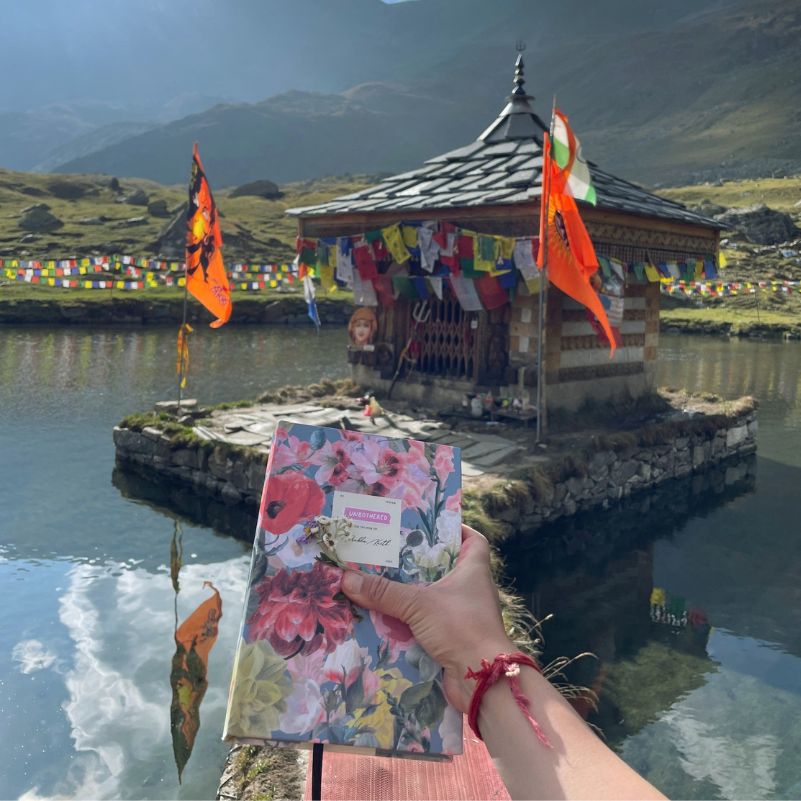
This plan follows our Shimla start model, which runs three days and two nights.
Day 1: Shimla to Yulla Khas
Leave Shimla early and drive via Narkanda and Rampur to Tapri, then up to Yulla Khas.
Use the evening well. Settle into your homestay, meet your guide, get the latest on the trail and camp, and pack your daypack for the climb.
Day 2: Yulla Khas to the shrine and approved camp
Start after breakfast and climb through the village and its orchards, into the forest, and up onto the open meadows.
Visit the Krishna temple only if weather, route and group fitness allow. Your trek leader may change the final approach on the day, and that call comes down to safety.
Spend the night only at an authorised campsite along the trekking route. Confirm the designated camping location with your local guide or trekking operator before departure, as campsite availability and permissions may vary depending on weather conditions and local regulations.
Day 3: Descend and return towards Shimla
Walk back down to Yulla Khas and drive toward Shimla. Keep buffer time for the highway, given what happened near Tapri in late September.
If you start from Delhi instead, our published option runs five days and four nights, including overnight travel connections.
Explore Our Curated Yulla Kanda Tour Packages
- Group Tour5D/4N
Yulla Kanda Trek & Camping Group Tour
1D Yulla Khas•1D Yulla Kanda Campsite
₹7,499₹9,999SAVE INR 2,500/ person
Frequently Asked Questions
Where exactly is Yulla Kanda Krishna Temple located?
It sits beside Yulla Kanda Lake in the Rora Valley of Kinnaur district, in the Nichar area. You reach it on foot from Yulla Khas village near Tapri.
Is Yulla Kanda really the world's highest Krishna temple?
Many sources call it that and give the shrine's height as about 3,895 metres. No independent global comparison confirms the title, so treat it as a popular description.
Who built Yulla Kanda Krishna Temple?
Local tradition says the Pandavas built it during their exile. This is oral belief, not proven history, and nobody has established an exact founding date.
What is the floating Kinnauri cap ritual?
People place a Kinnauri cap upside down on the water. Tradition reads floating as good fortune and sinking as a caution. It is a belief, not a guaranteed prediction.
Can tourists participate in the cap ritual?
Ask a local custodian or your guide first. Never put a cap or any object into sacred water without permission, and do not perform it for social media.
What happens during Janmashtami at Yulla Kanda?
The 2026 festival took place on 4 September. Reports described thousands of pilgrims, Buddhist lamas, devotional singing, prasad and Kinnauri dances at a district level celebration.
How do you reach Yulla Kanda Temple from Shimla?
Drive from Shimla via Narkanda, Rampur and Tapri to Yulla Khas, using a local vehicle for the last stretch if needed. From the village, you trek up.
How long and difficult is the Yulla Kanda trek?
Most sources say about 12 km one way from Yulla Khas, with steady uphill walking. The state portal calls it easy, but many trekkers find it moderate or demanding.
What is the best time to visit Yulla Kanda?
The usual season runs from about mid May to October. Monsoon months make paths slippery, and late October or November depends on snow and road conditions.
Is any permit or entry fee required?
Indian travellers on the normal route do not ordinarily need an Inner Line Permit. Foreigners going deeper into upper Kinnaur may need one.
What should you wear and how should you behave at the temple?
Wear modest, warm clothing and remove your footwear before entering. Speak softly, let devotees pray first, ask before touching anything, and carry all your waste back.
Is camping, swimming or photography allowed near Yulla Kanda Lake?
Assume nothing. Stay only at authorised campsites, do not enter the sacred lake without permission, and ask before photographing rituals, the deity or worshippers.
More about Kinnaur
- Kinnaur
Yulla Kanda Trek Distance and Route 2026: Yulla Khas to the Lake
Planning the Yulla Kanda trek in 2026? Explore the route from Yulla Khas village to the sacred Krishna Lake, with practical details on trekking distance, estimated duration, trail difficulty, elevation gain, and key landmarks along the way. This guide helps you prepare for the high-altitude ascent with realistic expectations and essential route-planning tips.
- Kinnaur
Yulla Kanda Trek in November 2026: Is It Open and Should You Go?
Planning the Yulla Kanda trek in November 2026? Find out whether the trail is accessible, how early snowfall and freezing temperatures affect trekking conditions, and whether camping is still practical near the sacred Krishna Lake. This guide covers seasonal risks, local access considerations, essential winter gear, and safer alternatives if conditions make the trek inadvisable.
 Kinnaur
Kinnaur in December 2026: Weather, Roads & a Safe Winter Itinerary
Planning Kinnaur in December 2026? This guide covers winter weather, road conditions, snowfall chances and a practical itinerary for Kalpa, Sangla and nearby areas. It also explains how to plan safely around snow, closures and changing mountain conditions.