
Delhi to Chandratal by Road in 2026: Distance, Route, Travel Time and Best Way to Go

Most people searching Delhi to Chandratal want one clean number for distance and one simple route to follow. The internet gives them neither. One site says 609 km. Another says 681 km. A third gives some random figure in between.
And none of them mention that the last 14 km is a dirt track that makes you question every life decision.
Here is the honest version. We have been sending travellers from Delhi to Chandratal for years, and this guide covers the real distances, the two routes that actually work, how many days you need, and what the road looks like when you get past the comfortable part.
Quick Answer
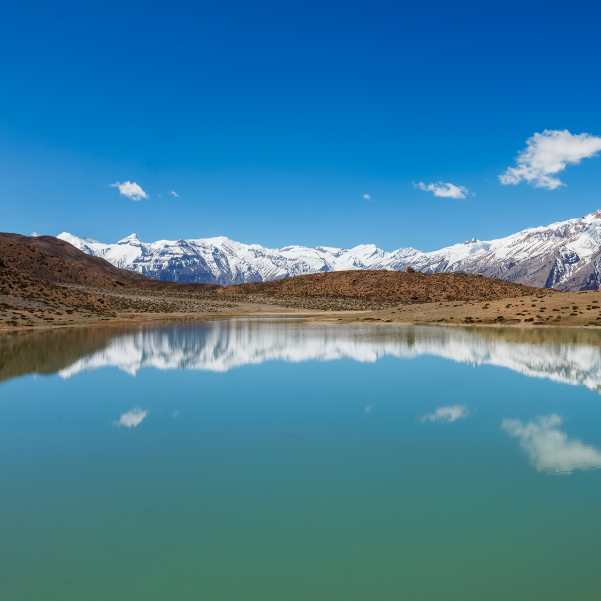
The fastest route from Delhi to Chandratal goes via Manali. The practical one-way road distance falls somewhere between 600 and 700 km depending on which source you check and where exactly you measure to.
The variation exists because some endpoints are the campsite, some are the parking area, and some are the lake itself, which you reach on foot.
Chandratal is seasonal. The road usually opens between late May and mid-June, and stays accessible until early October. Outside that window, everything is buried under snow.
The drive from Delhi is not something you do in a day. You need a minimum of 4 days for the round trip, and 5 days if you want to actually enjoy it instead of just surviving it.
Planning this trip can get confusing with routes and road conditions. Talk to our team on WhatsApp and get clear answers quickly.
👉 WhatsApp us for clear answers on routes and road conditions
What Is the Distance from Delhi to Chandratal?
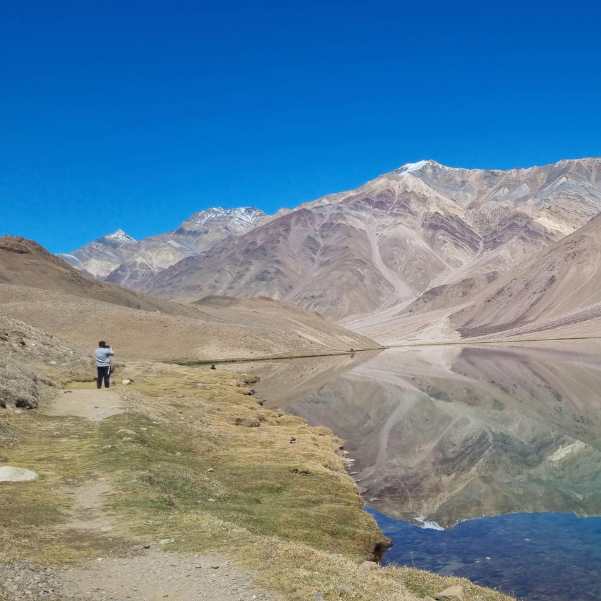
The reason you find different numbers everywhere is simple. There is no single fixed endpoint.
Delhi to the Chandratal campsite area via Manali is roughly 600 to 700 km by road. One mapping source shows 609.4 km to the lake foot-route endpoint. Another shows 681 km via a slightly different routing. Both are technically correct for their specific endpoints.
What most travellers actually do is drive to the campsite or the parking zone near the lake and then walk.
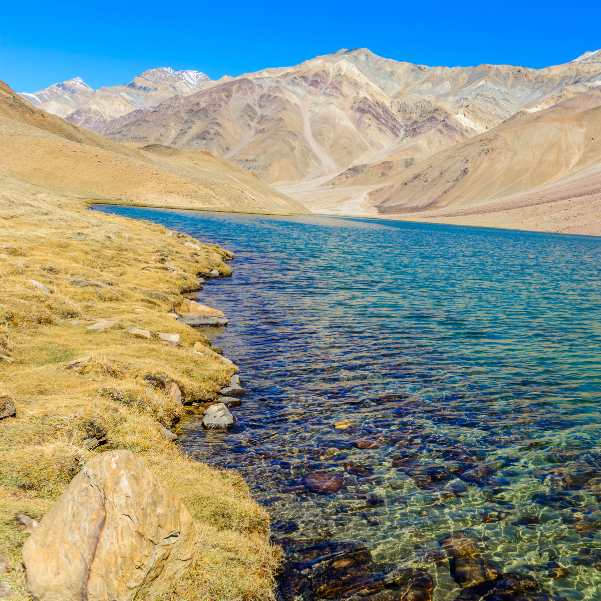
That walk is 1.5 to 2 km one way to reach the water. So the "distance to Chandratal" depends on whether you mean the last point you can drive to or the lake itself.
For planning purposes, treat it as a 600 to 700 km one-way drive from Delhi, followed by a short walk at altitude. Do not obsess over exact figures. Obsess over road conditions, because those matter far more than the kilometre count.
Which Is the Best Route from Delhi to Chandratal by Road?
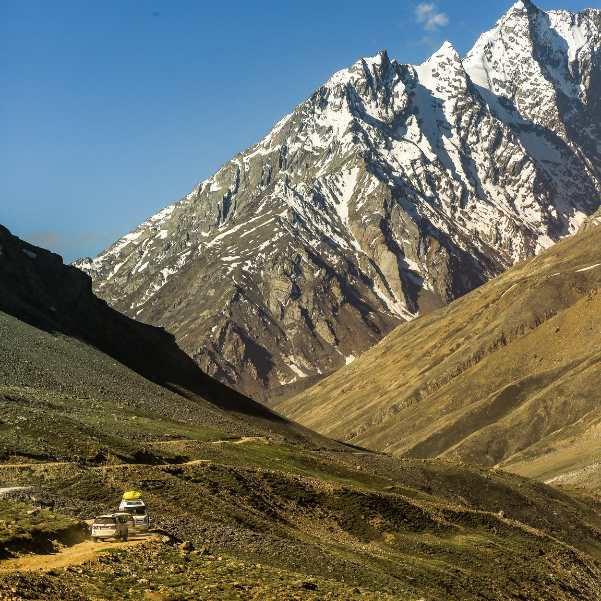
Two main routes connect Delhi to Chandratal. Each one suits a different kind of trip.
Route 1: Delhi to Manali to Chandratal.
This is the shorter, faster option. You drive to Manali first, then push through the Atal Tunnel and continue to Chandratal. Best for travellers with 4 to 5 days who want a focused trip to the lake.
Route 2: Delhi to Shimla to Kinnaur to Spiti to Chandratal.
This is longer, slower, and far more rewarding. You enter Spiti from the Shimla side, explore Kinnaur, Kaza, and the high villages, and finish with Chandratal before exiting toward Manali. This route takes 8 to 10 days but gives your body time to adjust to altitude gradually.
If you have less than a week, go via Manali. If you have 8 days or more, the Shimla-Spiti circuit is the better trip in every way. Explore our Spiti Valley tour packages if you want the full circuit handled for you.
Delhi to Chandratal via Manali: Fastest Route Breakdown
Here is the route split into sections so you know exactly what you are getting into.
Delhi to Manali is about 500 to 530 km and takes 12 to 14 hours by road. Most people do this overnight, either by bus or by driving through the night. The highway is decent up to Manali. Nothing unusual.
Manali to the Atal Tunnel entrance is about 25 km. Quick, smooth, and the last stretch of good road you will see for a while.
Atal Tunnel to Gramphu is about 20 km. You come out on the Lahaul side. The road is still manageable here. Gramphu is where the road splits, one way to Keylong and Leh, the other toward Batal and Chandratal.
Gramphu to Batal is about 30 km, and this is where the road starts testing you. The surface breaks down. Water crossings appear. Loose gravel, potholes, and narrow stretches become normal. In our experience, this section alone takes 2 to 3 hours despite being just 30 km on paper.
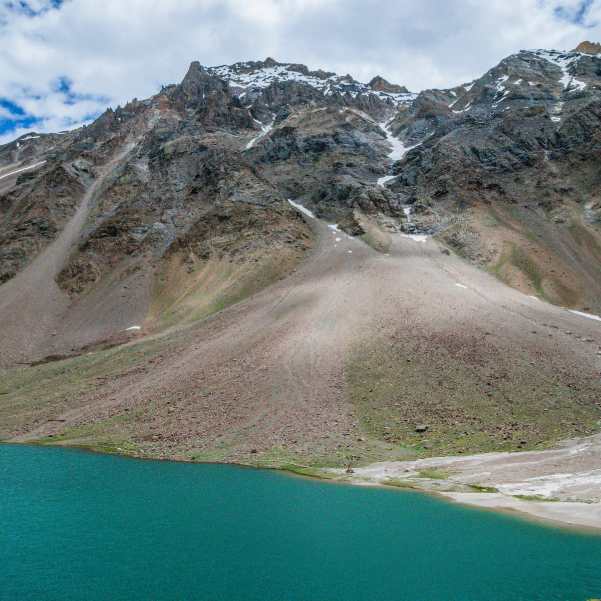
Batal to the Chandratal campsite is about 14 km. This is the section that most travel blogs underplay. The road is a rough, unpaved track with sharp turns, loose stones, and occasional water crossings.
Your average speed drops to 10 to 15 km per hour. A sedan will struggle here. A proper SUV with high ground clearance handles it much better.
Campsite to the lake is a 1.5 to 2 km walk. At an altitude of over 4,300 metres, even this short walk feels harder than it looks. Walk slowly. Give yourself 20 to 40 minutes each way.
What most tourists get wrong about this route is assuming the 14 km from Batal is a quick drive. It is not. That stretch alone takes 1.5 to 2 hours and rattles everything inside your car, including you.
If you want to pair this with a couple of days in Manali itself, check our Manali tour packages for options that include transport and stays.
Delhi to Chandratal via Shimla and Spiti: When Does This Route Make More Sense?
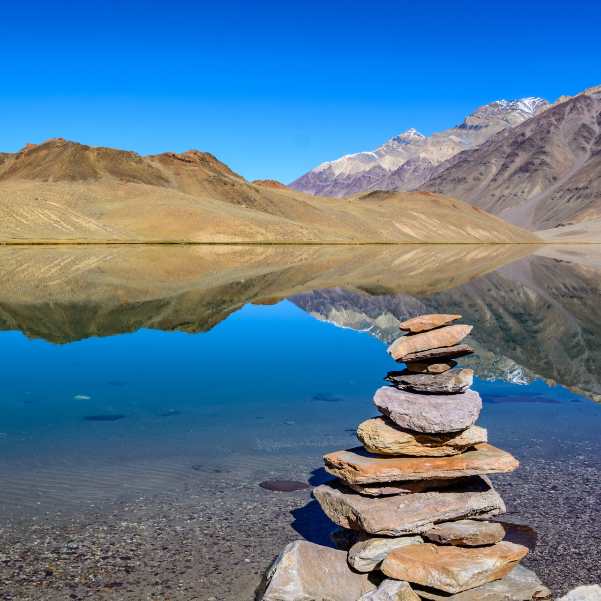
If you have 8 to 10 days, forget the Manali shortcut and do the full circuit.
You drive from Delhi to Shimla or Chandratal bike trip from Chandigarh, then continue into Kinnaur through the Sutlej valley. The road climbs gradually. You pass through Narkanda, Sarahan, Kalpa, and Nako before entering Spiti.
Then you spend a few days around Kaza, visiting Key Monastery, Kibber, Langza, and Hikkim.
Chandratal becomes the finale. You drive from Kaza over Kunzum Pass, stop at the lake, and then exit toward Manali.
This way, you see the best of Spiti and hit Chandratal when your body is already adjusted to 12,000 to 14,000 feet.
The gradual altitude gain on this route is a huge advantage. Coming directly from Delhi to Manali to Chandratal means jumping from around 200 metres to 4,300 metres in about 36 hours. That is a recipe for headaches, nausea, and a miserable time at the lake.
The Shimla route gives you days to acclimatise before you reach the highest point. Our drivers always say the travellers who come via this route enjoy Chandratal twice as much because they are not fighting altitude sickness.
For route planning, it helps to understand where Chandratal actually sits. It is technically in the Lahaul region, not Spiti, though everyone thinks of it as a Spiti destination. If you want to explore the Kinnaur side of this route, our Kinnaur tour packages cover that section well.
How Long Does a Delhi to Chandratal Road Trip Take?
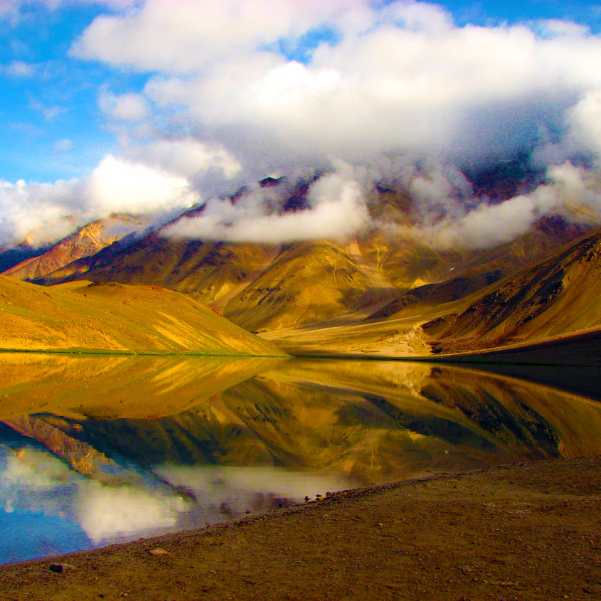
Google Maps will show you a travel time for Delhi to Chandratal that looks manageable. Ignore it.
Map algorithms do not account for the road quality after Gramphu, the slow crawl between Batal and the campsite, the water crossings, or the fact that mountain driving averages 20 to 30 km per hour on rough sections.
Delhi to Manali alone is a 12 to 14 hour drive. After Manali, you are looking at another 6 to 9 hours to reach the Chandratal campsite, depending on road conditions and how many stops you take.
In total, the drive takes roughly 18 to 22 hours of actual seat time spread across two days. Nobody should attempt this in one shot. The altitude gain is too fast and the fatigue makes the rough roads dangerous.
What we always tell our travellers is to think of this trip in two legs. Leg one is Delhi to Manali, which is a normal highway drive.
Leg two is Manali to Chandratal, and that is a completely different kind of driving. Treat them as separate journeys and plan separate days for each.
Can You Do Delhi to Chandratal in 4 Days?
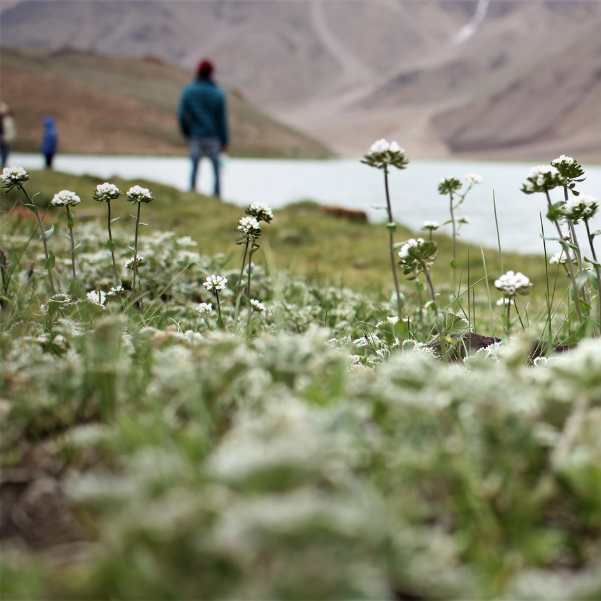
You can. But "can" and "should" are different conversations.
A 4 day Delhi to Chandratal trip looks like this. Day 1 is an overnight drive or bus from Delhi to Manali. Day 2 is Manali to Chandratal campsite, with a few hours at the lake. Day 3 is Chandratal back to Manali. Day 4 is Manali to Delhi.
This works on paper. In practice, it means two long driving days back to back on rough roads, very little time at the lake, zero buffer for road closures or bad weather, and almost no time to adjust to the altitude before you are sleeping at 4,300 metres.
A 5 day trip is significantly better. You add one night in Manali or Sissu on the way up, which gives your body a chance to adjust and gives you a buffer day if the road throws a surprise.
If you have 8 days, do the full Spiti circuit from Delhi. Enter via Shimla, spend time in Kinnaur and Kaza, visit Chandratal near the end, and exit via Manali. This is the version of the trip that people remember for years.
One money-saving tip that most travellers from Delhi miss. If you are booking a bus from Delhi to Manali, book HRTC Volvo directly from the HRTC website instead of through aggregators. The price difference can be ₹300 to ₹500 per seat, and the bus is exactly the same.
Send us your dates and group size on WhatsApp and we will help you build a smooth Chandratal trip.
Is Chandratal Road Open in 2026?
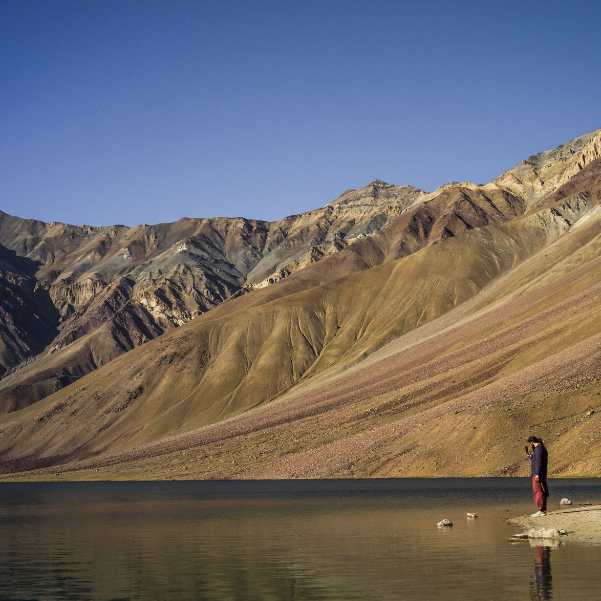
As of now, the official district road status shows Delhi to Manali open, Manali to Keylong open, and Keylong to Kaza closed.
Chandratal is expected to open between late May and mid-June 2026, depending on how fast the BRO clears Kunzum Pass and the diversion road from Batal. The Kaza side usually opens first. The Manali side takes longer.
The critical thing to understand is that "Spiti road is open" does not mean "Chandratal road is open." The Chandratal diversion from Batal is a separate stretch that gets cleared on its own timeline. Many travellers reach Batal only to find the last 14 km still blocked.
Always recheck the latest road status before leaving Manali or Kaza. Conditions change overnight in this region. A stretch that was open on Monday can be blocked by a landslide on Tuesday.
We have covered the opening timeline in detail in our Chandratal opening dates and season guide. Read that before you lock your dates.
👉 WhatsApp us your dates and group size for a smooth Chandratal trip
Do You Need Any Permit for Delhi to Chandratal by Road?
This confuses a lot of people, and the information online is messy.
If you are taking the Atal Tunnel route toward Chandratal, the official e-Aagman portal requires an E-Permit per vehicle for the Atal Tunnel Rohtang-Koksar-Chandertal circuit. You register your vehicle and get the permit online before you travel.
The old confusion around Rohtang Pass permits does not apply if you are going through the Atal Tunnel. The tunnel has its own system.
That said, permit rules in Himachal change more often than people expect. What was valid last season may not be valid this season. Before your trip, verify the latest requirements on the e-Aagman portal or contact us directly and we will tell you what is current.
One safety warning here. There are current restrictions on stopping, parking, and tourist activity in avalanche-prone zones near the north portal of the Atal Tunnel.
Do not stop your car there for photos or chai. The restrictions exist because the area is genuinely dangerous. Drive through, stop later.
Can You Go in Your Own Car or Bike?
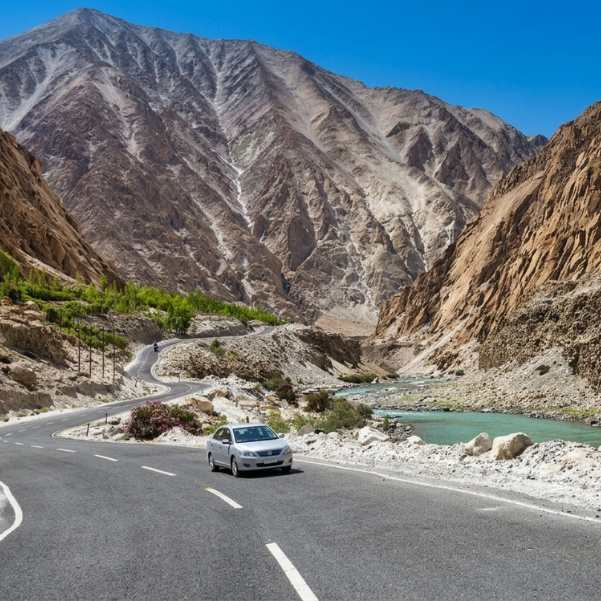
The Delhi to Manali highway is straightforward. Any car handles it fine. The problems start after Manali.
Gramphu to Batal and Batal to Chandratal demand a vehicle with high ground clearance. The road has potholes deep enough to scrape the underbody of a sedan, water crossings that can flood your exhaust, and loose gravel that gives low-profile tyres no grip.
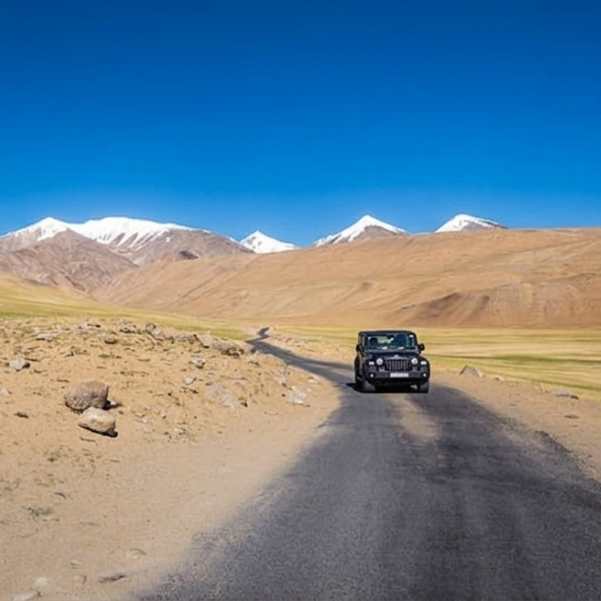
A Thar, Bolero, Fortuner, or any proper SUV with good ground clearance is what you want.
In our experience, about one in every five self-drive travellers we talk to has tried the Batal stretch in a sedan or a low-clearance car. Almost all of them say they would not do it again.
Bikes work if you are experienced. The route is popular with Royal Enfield riders. But the gravel, water crossings, and altitude combine to make it physically demanding.
If you have ridden in Ladakh or done mountain passes before, you will manage. If this is your first mountain ride, this is not the route to learn on.
Skip the rented scooters and 125cc bikes. You need something with at least 350cc and proper tyres for this terrain.
If you are a first-time mountain driver, seriously consider hiring a local driver with an SUV from Manali. It costs more but removes the stress of navigating roads you have never seen before.
What we tell first-timers is simple: enjoy the views from the passenger seat. Drive the mountain roads on your second trip, when you know what you are dealing with.
Public Transport Option: Delhi to Chandratal by Bus
You can get most of the way by bus, but not all of it.
Delhi to Manali has excellent overnight bus connectivity. HRTC Volvo and private Volvo buses run daily and take about 12 to 14 hours. Book HRTC for better value, private for slightly more comfort.
Manali to Kaza has a daily HRTC bus during the season. It runs via the Atal Tunnel and Kunzum Pass when the road is open. The journey is long, rough, and beautiful.
Here is the problem. There is no public bus from Batal to Chandratal. The 14 km diversion road to the campsite is not covered by any scheduled bus service. You either hitch a ride, hire a local vehicle at Batal, or walk the entire stretch, which is not practical with luggage.
So public transport gets you to Batal or Kaza, but the last bit to Chandratal needs a private arrangement. If you are on a budget and travelling solo, joining a group tour is the most practical option. You share transport costs and someone else handles the logistics.
Where Does the Road End and How Much Do You Walk to Chandratal Lake?
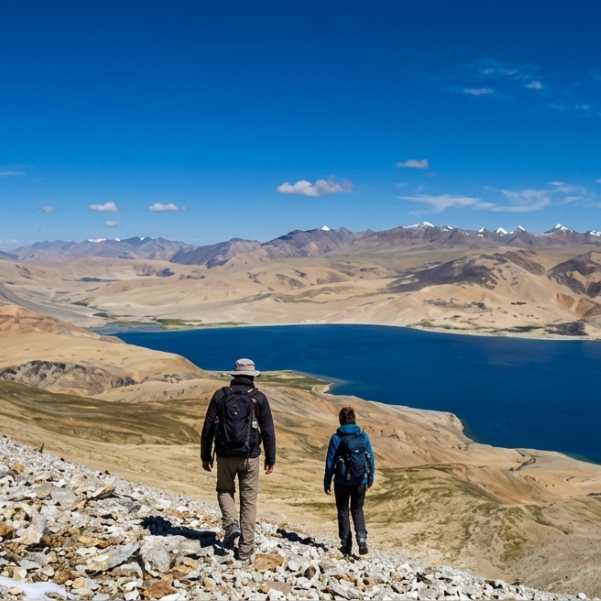
The drivable road ends at the campsite area or the parking zone near Chandratal. From there, you walk 1.5 to 2 km to reach the lakeshore.
This sounds easy. At sea level, it would take you 20 minutes. At 4,300 metres, it takes 20 to 40 minutes because the thin air slows you down. Even fit people feel the altitude. Walk slowly, breathe deeply, and do not rush.
The walk itself is mostly flat with gentle undulations. No technical terrain, no scrambling. Just a dirt path through open landscape with mountains on all sides. Carry a small daypack with water, sunscreen, and a warm layer. The weather at the lake can change fast.
A timing tip that changes the entire experience. Reach the lake before 7 AM. The early morning light on the water is completely different from what you see at noon.
The surface is still, the reflections are sharp, and you will likely have the shore to yourself. By 10, the day-trippers from Kaza start arriving and the trail turns into a queue.
Best Time for a Delhi to Chandratal Road Trip
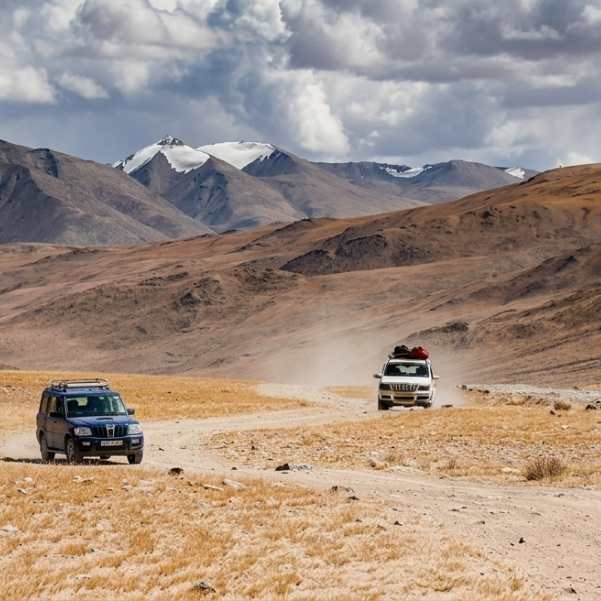
Late June to early July
Late June to early July is the earliest reliable window. Roads have just cleared, snow patches may still be visible around the lake, and camps are freshly set up. The landscape is dramatic but the roads can be unpredictable. Best for experienced mountain travellers.
July and August
July and August are peak seasons. Roads are in their best shape, camps are fully operational, and the weather is the warmest it gets at this altitude.
July brings some rain to the Manali side, but the Spiti side stays largely dry. Tourist crowds peak during these months, especially on weekends.
September
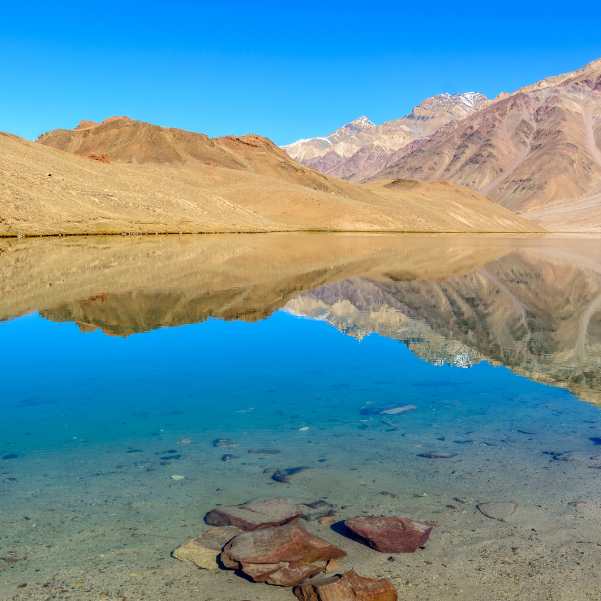
September is quietly the best month for many travellers. Skies are clearer, crowds thin out, the landscape turns golden-brown, and the lake colours are at their deepest. Nights get seriously cold, sometimes dropping below minus 5. But if you pack right, September is hard to beat.
Early October
Early October is a gamble. Some camps try to stay open until October 10. But snow can arrive any day, and Kunzum Pass can close without warning. Only plan an October trip if your dates are completely flexible.
November through May
November through May, Chandratal is buried under snow. The roads are not maintained and no camps operate. Do not attempt it.
For a detailed month-by-month breakdown, read our Chandratal opening and best time guide.
Practical Tips Before Leaving Delhi
Download offline maps before you leave. Network coverage disappears after Manali and does not come back until you are well past the Chandratal area. Google Maps offline or maps.me both work. Do not rely on live GPS.
Fill your fuel tank in Manali. There is no reliable fuel station between Manali and Chandratal. If you are self-driving, top up completely. Carry extra fuel if your vehicle has space for a jerry can.
Carry warm clothes even if you are going in July. At 4,300 metres, nights drop to zero or below. A down jacket, thermals, warm socks, gloves, and a beanie are not optional. The biggest regret we hear from travellers is not carrying enough warm layers.
Rest before pushing to altitude. If you arrive in Manali after an overnight drive from Delhi, do not start the Chandratal route the same morning. Your body needs a few hours of proper rest. One night in Manali or Sissu makes a real difference to how you feel at the lake.
Do not stop near the Atal Tunnel north portal. Current restrictions prohibit stopping, parking, and tourist activity in avalanche-prone zones near the north portal. This is not a suggestion. The area has genuine avalanche risk. Drive through without stopping.
Carry cash. ATMs do not exist between Manali and Chandratal. Dhabas and campsites run on cash. UPI coverage is patchy at best.
If you are planning a trip in late April or May and wondering about conditions closer to Manali, our guides on Rohtang Pass in April and Rohtang Pass in May cover the early season reality.
The momos at the small dhaba just past the Batal checkpoint are the last proper hot meal before Chandratal.
The guy running it sets up every season from June to September. Do not skip it. The food is basic but exactly what your body needs after hours on a rough road.
Suggested Itineraries
4 Day Quick Getaway
Day 1. Overnight bus or drive from Delhi to Manali. Arrive by morning.
Day 2. Early start from Manali. Drive via Atal Tunnel, Gramphu, and Batal to the Chandratal campsite. Reach by afternoon. Walk to the lake before sunset. Camp overnight.
Day 3. Early morning lake visit for sunrise light. Drive back to Manali by evening.
Day 4. Manali to Delhi by bus or car.
This works but leaves no room for error. If the road is blocked even for a few hours, your entire schedule collapses. Only do this if you are a fast, confident mountain traveller.
5 Day Better-Paced Trip
Day 1. Overnight Delhi to Manali.
Day 2. Rest in Manali until noon. Drive to Sissu or Chhatru in the afternoon. Stay overnight. This gives your body a half-day to adjust.
Day 3. Drive to Chandratal campsite. Spend the afternoon and evening at the lake. Camp overnight.
Day 4. Early morning at the lake. Drive back to Manali.
Day 5. Manali to Delhi.
This version feels completely different. The extra day in the middle turns the trip from a race into an experience.
8 Day Spiti Circuit from Delhi
Day 1. Delhi to Shimla or Chandigarh.
Day 2. Drive to Narkanda or Rampur.
Day 3. Continue to Kalpa in Kinnaur.
Day 4. Kalpa to Tabo, entering Spiti.
Day 5. Tabo to Kaza via Dhankar.
Day 6. Explore Kaza, Key Monastery, Kibber, Langza, Hikkim.
Day 7. Kaza to Chandratal via Kunzum Pass. Camp overnight near the lake.
Day 8. Chandratal to Manali. Overnight bus or drive to Delhi.
This is the trip we recommend most often. You see everything Spiti has to offer, your body adjusts gradually to the altitude, and Chandratal feels like the perfect finale rather than a rushed stop.
Our best-selling summer Spiti circuit with Chandratal follows a similar route with built-in buffer days and local driver support. You can also browse our popular tours page for other itinerary options.
Explore Our Curated Chandratal Tours
 Group Tour10D/9N
Full Spiti Valley Circuit With Chandratal
1D Narkanda•1D Sangla+5
₹29,999₹32,999SAVE INR 3,000/ person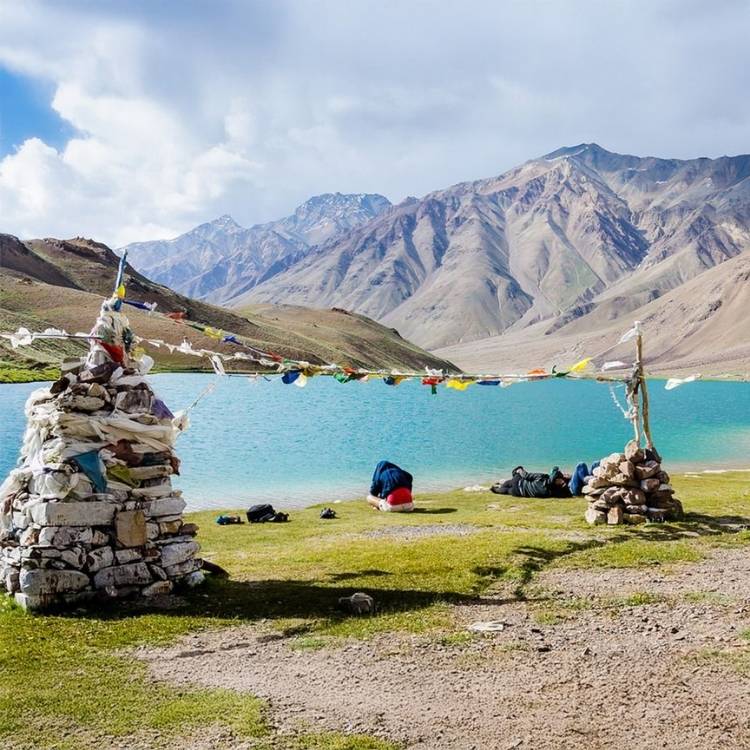 10D/9N
Summer Spiti Circuit With Chandratal
1D Narkanda•1D Sangla+5
₹29,999₹38,999SAVE INR 9,000/ person
Related topics
Frequently Asked Questions
What is the exact distance from Delhi to Chandratal?
The practical road distance is 600 to 700 km one way via Manali, depending on which mapping source and endpoint you use. One route engine shows 609 km, another shows 681 km. Treat it as a range, not a fixed number.
Which route is shorter from Delhi to Chandratal?
The Manali route is shorter. The Shimla-Kinnaur-Spiti route is longer by a full day or more but better for acclimatisation and overall experience.
Can I do Delhi to Chandratal in a sedan?
Delhi to Manali is fine in any car. The Batal to Chandratal stretch is not. The road has deep potholes, water crossings, and loose gravel. A high-ground-clearance SUV is strongly recommended for the last section.
Is Chandratal open right now?
As of April 2026, the road from Keylong to Kaza is closed. Chandratal is expected to open between late May and mid-June 2026. Check the latest district road status or WhatsApp us before finalising plans.
Do I need a permit for Chandratal?
The e-Aagman portal requires an E-Permit per vehicle for the Atal Tunnel Rohtang-Koksar-Chandertal circuit. Rules can change by season, so verify before you travel.
Can I reach Chandratal by bus from Delhi?
You can reach Manali by bus from Delhi. From Manali, a daily HRTC bus runs to Kaza when the road is open. But there is no bus for the 14 km diversion from Batal to the Chandratal campsite. You need a private vehicle or shared ride for that stretch.
How far is Chandratal from Manali?
The Manali to Chandratal road distance is roughly 120 to 140 km via the Atal Tunnel, Gramphu, and Batal. The drive takes 7 to 9 hours because of road conditions.
How far is Chandratal from Kaza?
The Kaza to Chandratal distance is roughly 80 to 100 km via Losar and Kunzum Pass. The drive takes about 4 to 5 hours.
Is 4 days enough for Chandratal from Delhi?
Technically yes, but it is tight. You spend most of two days driving, get very little time at the lake, and have zero buffer for delays. Five days is a much better plan.
How long is the walk from parking to the lake?
The walk is about 1.5 to 2 km one way. At the altitude of 4,300 metres, it takes 20 to 40 minutes each way. Walk slowly and stay hydrated.
Which month is best for Chandratal from Delhi?
September is the best overall month for clear skies, fewer crowds, and stunning lake colours. July is the safest and most comfortable choice for first-time visitors and families.
Is the road safe for first-time mountain drivers?
The Delhi to Manali highway is straightforward. The Gramphu to Batal and Batal to Chandratal sections are not. First-time mountain drivers should seriously consider hiring a local driver from Manali. The roads demand experience with loose gravel, water crossings, and single-lane mountain tracks.
More about Chandratal
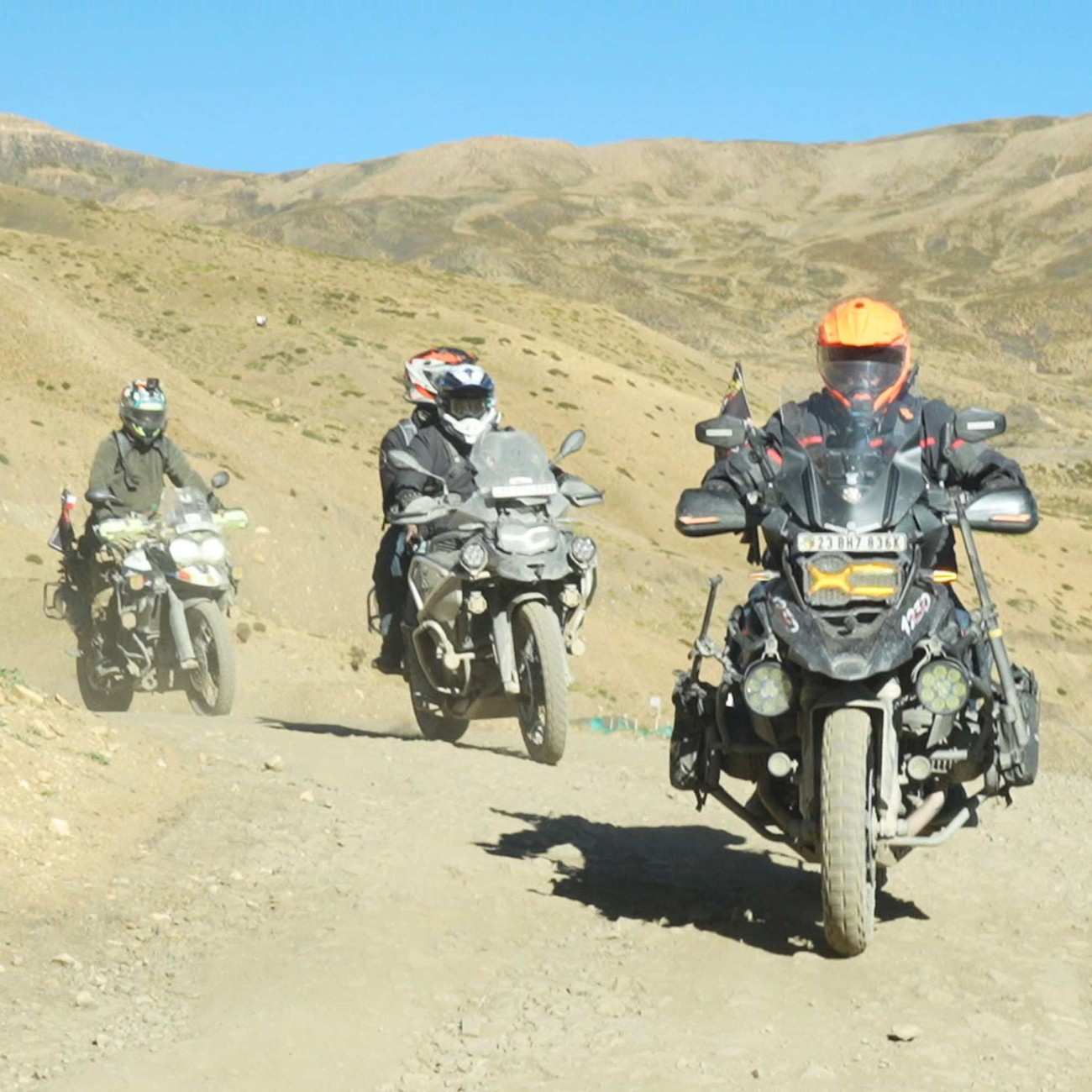 Chandratal
Chandratal by Bike Safety in 2026: Road Difficulty, Timing & Pillion Tips
Planning to ride to Chandratal by bike in 2026? This complete guide covers road difficulty, riding conditions, the best time to visit, safety precautions, water crossings, and pillion tips to help you enjoy one of Himachal Pradesh's most iconic high-altitude rides with confidence.
- Bike Trips
- Altitude & Health
- +1
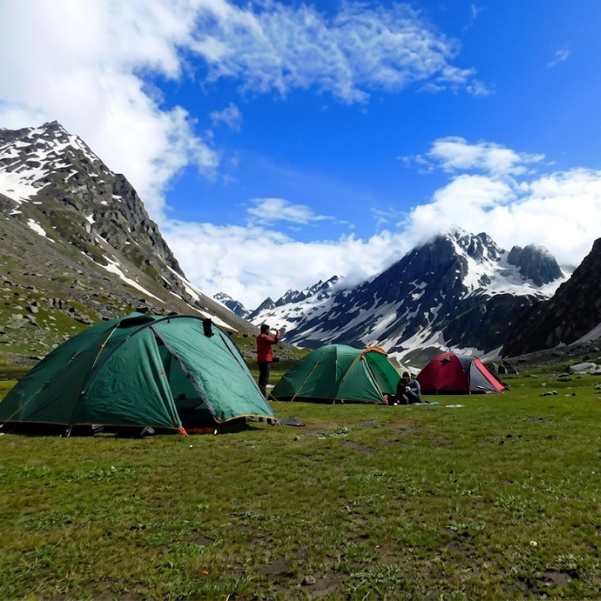 Chandratal
Where to Stay If Chandratal Camps Are Not Available in 2026
If Chandratal camps are not available in 2026, stay at nearby alternatives like Batal, Losar, or Kaza. Since camping is not allowed at the lake itself and designated camps operate a few kilometers away, these villages are the safest backup options for travelers planning a Spiti Valley trip.
- Itinerary
- Best Time to Visit
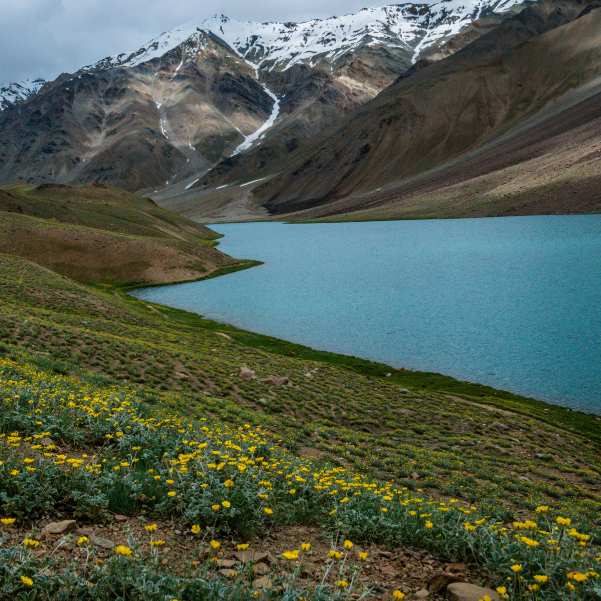 Chandratal
Is Chandratal Crowded in June 2026? Honest Crowd, Road and Camp Guide
Planning Chandratal in June 2026? Here’s an honest guide to crowds, road opening chances, campsite availability, lake access, and the best time to visit without chaos.
- Best Time to Visit