
How to Check Himachal Road and Weather Updates Before Your Winter Trip (2026-27)
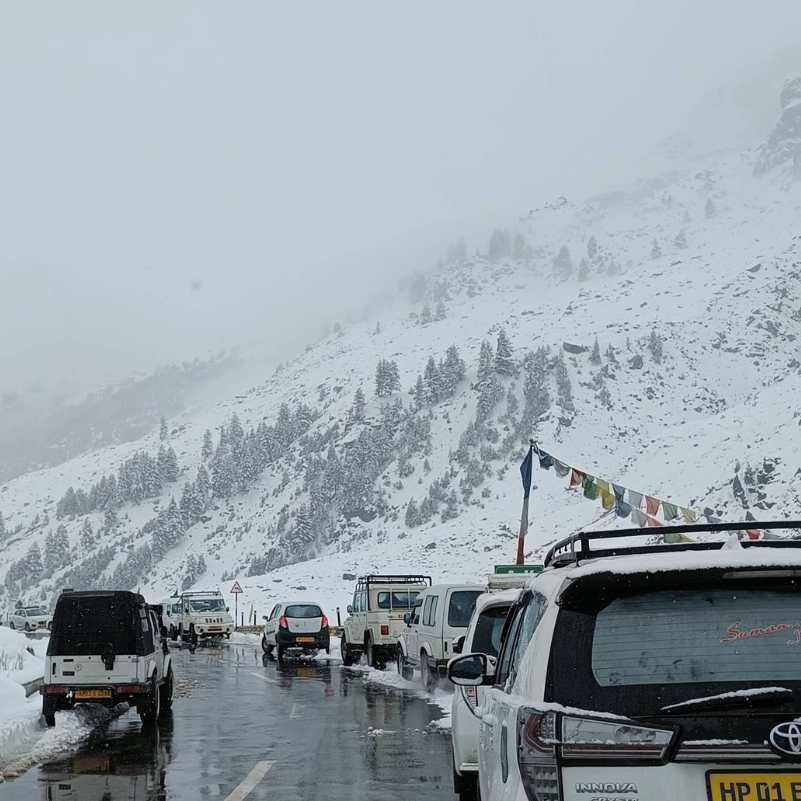
Checking road and weather updates before travelling to Himachal Pradesh in winter 2026 to 2027 is essential for planning a safe and comfortable journey.
Heavy snowfall, icy roads, sudden weather changes and temporary road closures can affect access to popular destinations like Shimla, Manali, Kinnaur and Spiti Valley, making it important to stay informed before and during your trip.
This guide by Travel Coffee explains how to check Himachal road conditions and weather updates, including reliable information sources, snowfall forecasts, road closure alerts and important winter travel precautions.
It will help you understand where to find the latest travel updates, when to check road conditions and how to adjust your itinerary if snowfall or unexpected weather affects your planned route.
Quick Answer
Here is how to check Himachal roads and weather updates before your winter trip. Start with IMD Shimla for district weather warnings.
Then check the district administration or police notice for your exact road. Look at HPSDMA for disaster alerts. Finally, reconfirm that stretch with a reliable local authority or operator before you drive. A forecast alone never proves a road is open.
Here is the mistake most tourists make
They check one weather app, see "light snow," and assume the road is fine. Or they see a green "Open" label on a government page and stop there.
Weather tells you what the sky may do. A road notice tells you what the authorities allow. You need both, and you need them for your exact stretch and your exact date.
Which Official Websites Should You Check for Himachal Weather Updates?
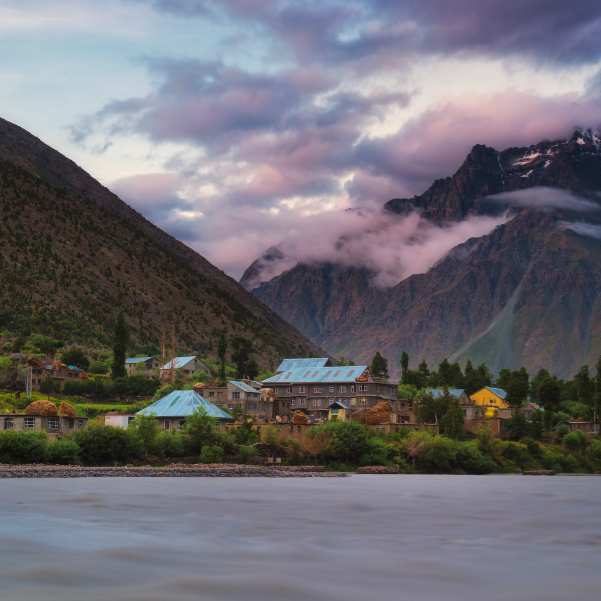
Your weather check starts with one source: the India Meteorological Department's Shimla centre. Everything else builds on it.
How to Check Weather Warnings on IMD Shimla
Open the IMD Meteorological Centre Shimla website. You will find district-wise warnings, nowcasts, city forecasts, highway weather forecasts and tourism weather information.
Start with the district warning for the place you plan to drive through, not just where you plan to sleep. Shimla city and the hills above it can get very different weather on the same day.
Then look at the nowcast. A nowcast covers the next few hours, so it matters most on the morning you leave.
The IMD Shimla weather forecast also includes highway forecasts. These help you spot trouble along a route, not just at a single town.
Now the key point. A forecast of snowfall tells you snow may fall. It does not tell you whether the snow has fallen, how deep it lies, or whether machines have cleared it.
A road can stay blocked a day after the snow stops. And a road with "heavy snow" in the forecast can still run normally if the snow misses that stretch.
What Do Yellow, Orange and Red Weather Alerts Mean?
IMD uses colours to show different levels of concern and action. Think of them as a traffic signal for your attention.
Green means you generally don't need to act on any warning. Yellow means stay updated and watch conditions closely.
Orange means get ready to act. Keep a backup plan, recheck road notices, and don't lock in a long high-altitude drive.
Red means act on the official warnings. Follow what the authorities and the warning tell you to do.
Remember this: a colour is a weather alert, not a road closure order. An orange alert does not automatically shut a road, and a green day does not automatically open one.
Can Highway Weather Forecasts Confirm Whether a Road Is Open?
No. Highway weather forecasts flag possible weather hazards along a route. They help you decide when to travel.
They do not certify that snow clearance is done, that the road is safe, or that the police allow vehicles through. For that, you need a road notice.
How Can You Check Whether a Himachal Road Is Actually Open?
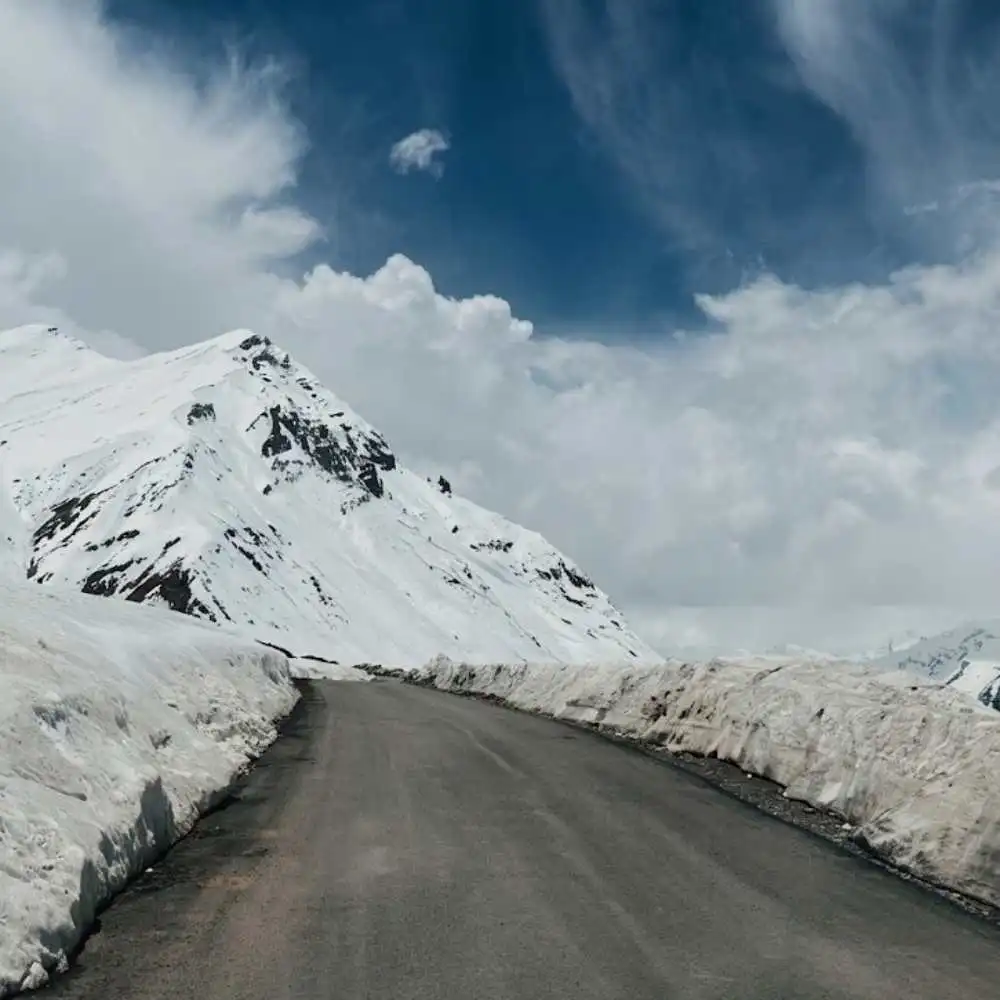
This is the step most first-timers skip. The question you really need answered is "Does the authority allow my vehicle on this stretch today?"
Find the Relevant District Administration or Police Advisory
The right district matters. Himachal runs road management district by district, so a Shimla notice won't cover a road in Kullu.
If you're heading towards Kullu, Lahaul, Spiti, Kinnaur or upper Shimla, look for the notice that covers your exact route and your travel date.
Then read the notice properly. Check whether the restriction applies to all traffic or only to certain vehicles. Some notices stop only heavy vehicles. Some allow only 4×4s. Some apply only at night or during certain hours.
Also check the exact stretch. A notice may block a road beyond one point while the road before it runs normally.
Our team recommends checking the district advisory on the morning of departure, not only the night before. Notices change after fresh snowfall.
Check HPSDMA for Disaster Alerts and Incident Information
The Himachal Pradesh State Disaster Management Authority publishes disaster alerts and incident information for the state.
This helps you understand the bigger picture after heavy snow, avalanches or landslides. But it does not replace the route-specific notice for your road.
Use HPSDMA to know whether something serious is happening. Use the district or police notice to know whether your road is affected.
The Danger of Outdated Government Road-Status Pages
Here is a real example every winter traveller should see. The Lahaul-Spiti district road-status page shows routes with open and closed labels.
But the page itself says "Last Updated: 14.05.2024." Those labels describe the roads as of May 2024. They tell you nothing about winter 2026-27.
So even an official government page can be out of date. A green "Open" label from 2024 is not your road status today.
Our insider rule: before you trust any status page, find the date first. If you can't find a date, treat the page as background reading, not confirmation.
Which Apps, Maps and Social Media Sources Are Worth Checking?
Apps help you get alerts faster. They don't replace official road notices, but they can tell you when to go and check one.
SACHET, MAUSAM and Aapda Rakshak
NDMA runs SACHET, which gives you official disaster warning information for your location. SACHET weather alerts are a good early nudge to recheck your plans.
IMD's weather services give you forecasts and warnings on your phone. HPSDMA runs the Aapda Rakshak app for disaster information in Himachal.
Install them before your trip and allow location alerts. But none of these apps guarantees minute-by-minute road clearance information. Treat an alert as a reason to check further, not as the final word.
Can Google Maps or Travel Groups Confirm a Road Is Open?
Google Maps, recent local photos, hotel staff, drivers and travel groups all help. They give you a ground-level feel for the road.
Your hotel manager in Manali or your driver often knows whether vehicles moved past a point that morning. That's useful.
But crowdsourced updates can be incomplete or late. Google Maps traffic data is not a police restriction notice. If an official restriction exists, it overrides every map, photo and group message.
How to Spot an Outdated Road Update
Before you trust any update, ask five quick questions. When did someone post it? Which exact stretch does it cover? Which vehicles does it affect?
Who issued it, the police, the district administration or just a person in a group? And what time period does the restriction cover?
Here's a hypothetical example: Snow falls on a Monday and someone posts "Road closed beyond the tunnel" with a photo. By Wednesday, machines clear it.
But people keep forwarding the same post for a week. A traveller sees it on Friday and cancels a trip for nothing. Another traveller sees an old "road open" post and drives into fresh snow.
Both made the same mistake. They trusted a forward instead of a dated notice.
When Should You Check Road and Weather Updates Before Departure?
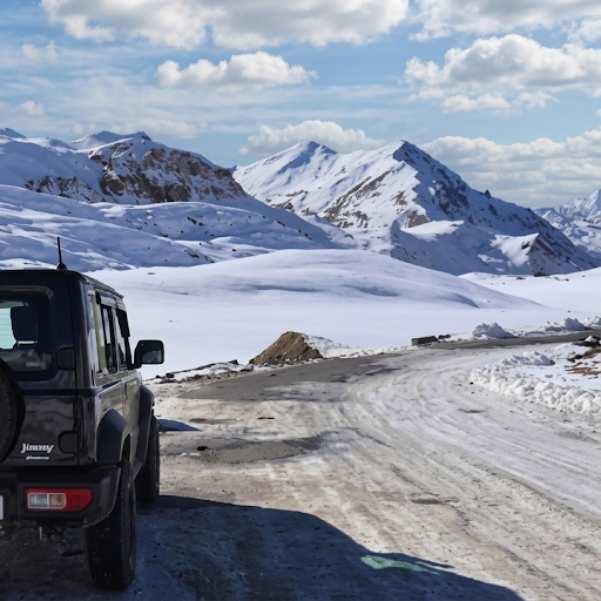
What we tell our travellers is simple: check in four stages. This is Travel Coffee's suggested planning routine, not an official rule.
About 48 hours before you leave, read the IMD Shimla district warnings and note any yellow, orange or red alerts on your route. This gives you time to shuffle your plan.
The evening before, check the district or police notices for your exact stretch. Message your hotel and driver to ask what they're seeing on the ground.
On the morning of departure, check again. This is the check that matters most, especially after overnight snowfall or a sudden weather change.
Our timing tip: do this check early, before you load the car. Restrictions sometimes come out early in the day, and you want to know before you're stuck in a queue.
While travelling, check again if the weather turns. The network often drops in the hills, so recheck whenever you reach a town with a signal.
Which Himachal Routes Need Special Attention in Winter?
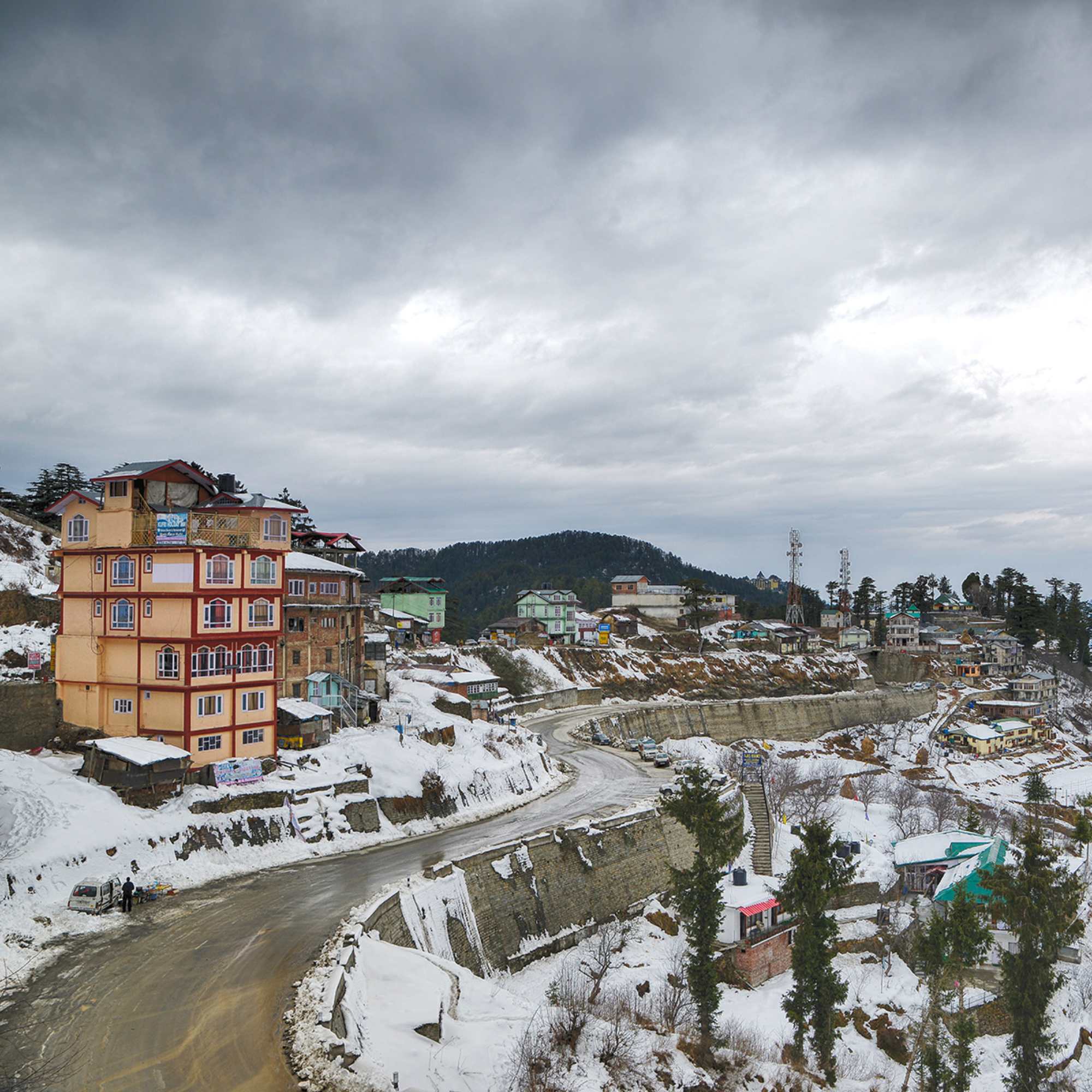
Every winter route in Himachal behaves differently. Here are the ones our team asks travellers to check separately.
Shimla, Kufri, Fagu and Narkanda
Shimla city weather and upper-hill road conditions can differ a lot. A clear morning on the Mall Road tells you little about the road beyond town.
In January 2026, snowfall disrupted routes near Kufri, Fagu and Narkanda. Treat that as history, not current status. But it shows why the Shimla to Kufri road status and the Shimla to Narkanda road condition need their own check.
If you plan to see snow near Shimla, keep Kufri and Narkanda as flexible half-day options. Don't build your whole trip around one snow point. Our Shimla itineraries keep this kind of flexibility in mind.
Manali, Solang Valley, Atal Tunnel and Sissu
Reaching Manali doesn't mean you can go further. Solang, the Atal Tunnel and the road onward to Sissu each depend on their own conditions.
Snow, police restrictions and vehicle-specific instructions can stop traffic on one stretch while Manali town runs normally. So the Manali road status in winter and the answer to "Is the Atal Tunnel open or closed?" are two separate questions.
Check whether vehicles can go through the tunnel that day, and whether your vehicle type is allowed. Ask about the Sissu road status today separately too. You can explore options through our Manali winter trips.
Here's one chai recommendation that doubles as a safety habit. If you get through the tunnel, stop at the small dhabas in Sissu for chai. Sissu usually has a mobile network, so recheck conditions before you go further.
Our Sissu and Lahaul trips build in these pauses.
Kinnaur and the Shimla to Kaza Route
The Lahaul-Spiti district's "How to Reach" page, last updated on 3 October 2026, calls the Shimla to Kaza route via Kinnaur almost all-weather. But the same page adds that it depends on actual road conditions.
"Almost all-weather" is not "always open." Landslides and snow can still stop traffic for a time.
Kinnaur district issued NH-5 traffic advisories in August and September 2026. You can see them in the Kinnaur district notifications archive. These dated notices show what a real restriction looks like. They don't prove any closure applies now.
Before a winter drive, check the latest Kinnaur notice for Kinnaur NH-5 road status. If you want help, see our Kinnaur holiday plans.
Kunzum Pass and the Manali to Kaza Route
The same district page describes Kunzum Pass as a high-altitude pass that usually stays closed through winter. It gives a rough window of October/November to June/July, depending on snow.
That's a seasonal estimate, not a calendar. Nobody can promise you an exact Kunzum Pass winter closure or opening date in advance.
For a Spiti Valley winter route, plan around the Kinnaur side and treat Kunzum as closed unless a fresh official notice says otherwise. Our Spiti Valley tours follow the route that conditions allow.
Jibhi, Tirthan Valley and Jalori Pass
This is a classic trap. The main highway can move normally while the last approach road to your stay struggles with snow.
So check the final approach road to Jibhi or Tirthan separately. Ask your homestay what the last few kilometres look like that morning.
Jalori Pass needs its own check. Don't assume it's open or closed on any date without a current advisory. You can plan around this with our Jibhi and Tirthan trips.
Does "Road Open" Mean It Is Safe for Every Tourist Vehicle?
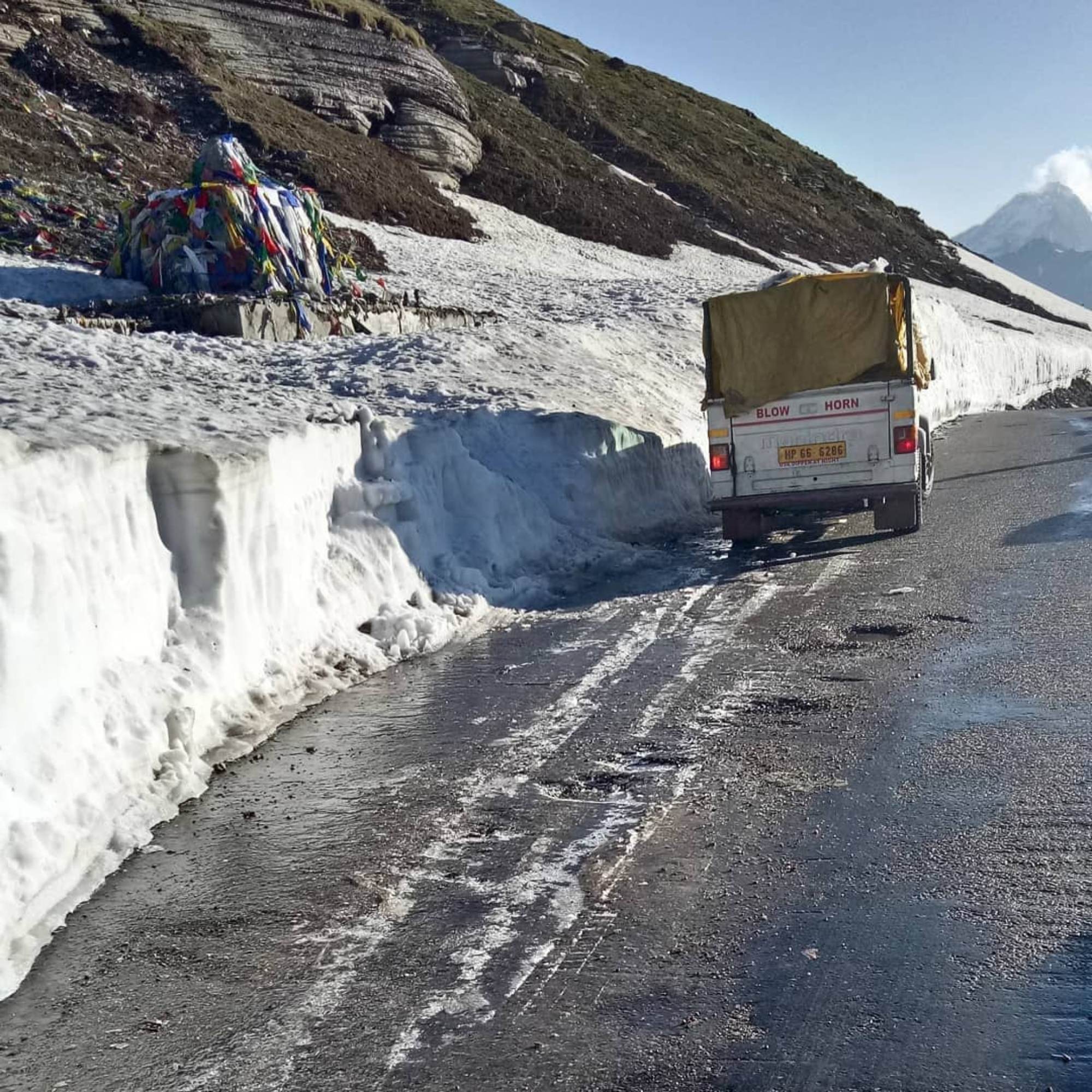
Not always. Three things can look the same but mean different things.
A passable road is one vehicle can physically move on. A permitted road is one the authorities allow traffic on. A suitable road is one your particular vehicle can handle safely.
A road can be permitted but still carry black ice in shaded corners. Black ice looks like a wet road but has almost no grip.
Fresh snow, slush and low visibility all reduce traction and slow you down. A small hatchback with ordinary tyres handles these very differently from a high-clearance vehicle.
Some temporary orders allow only certain vehicles. Don't assume all Himachal winter routes legally require snow chains in Himachal or a 4×4. Rules and temporary restrictions vary, so check them locally for your route and date.
Our team recommends asking one extra question every time: "Is my type of vehicle allowed and practical on this stretch today?"
How Do You Check Rohtang Pass Status and Permits?
First, clear up a common mix-up. Rohtang Pass and the Atal Tunnel are not the same route. The tunnel lets you reach Lahaul without crossing Rohtang.
The Lahaul-Spiti district page says the Rohtang route can stay closed in winter, roughly October to April. That's a seasonal pattern, not a guaranteed date for Rohtang Pass winter road status.
The official permit portal is rohtangpermits.hp.gov.in. The older .nic.in permit address now points to this newer portal, so use the new one.
A valid permit never lets you ignore a closed road, a police checkpoint or a weather restriction. The permit covers permission to enter. It does not override safety orders.
Permit fees, daily limits and winter opening dates change, so confirm them fresh on the portal. For how the pass behaves as winter ends, read our guide to Rohtang Pass in March.
What Did the January 2026 Snowfall Disruptions Teach Travellers?
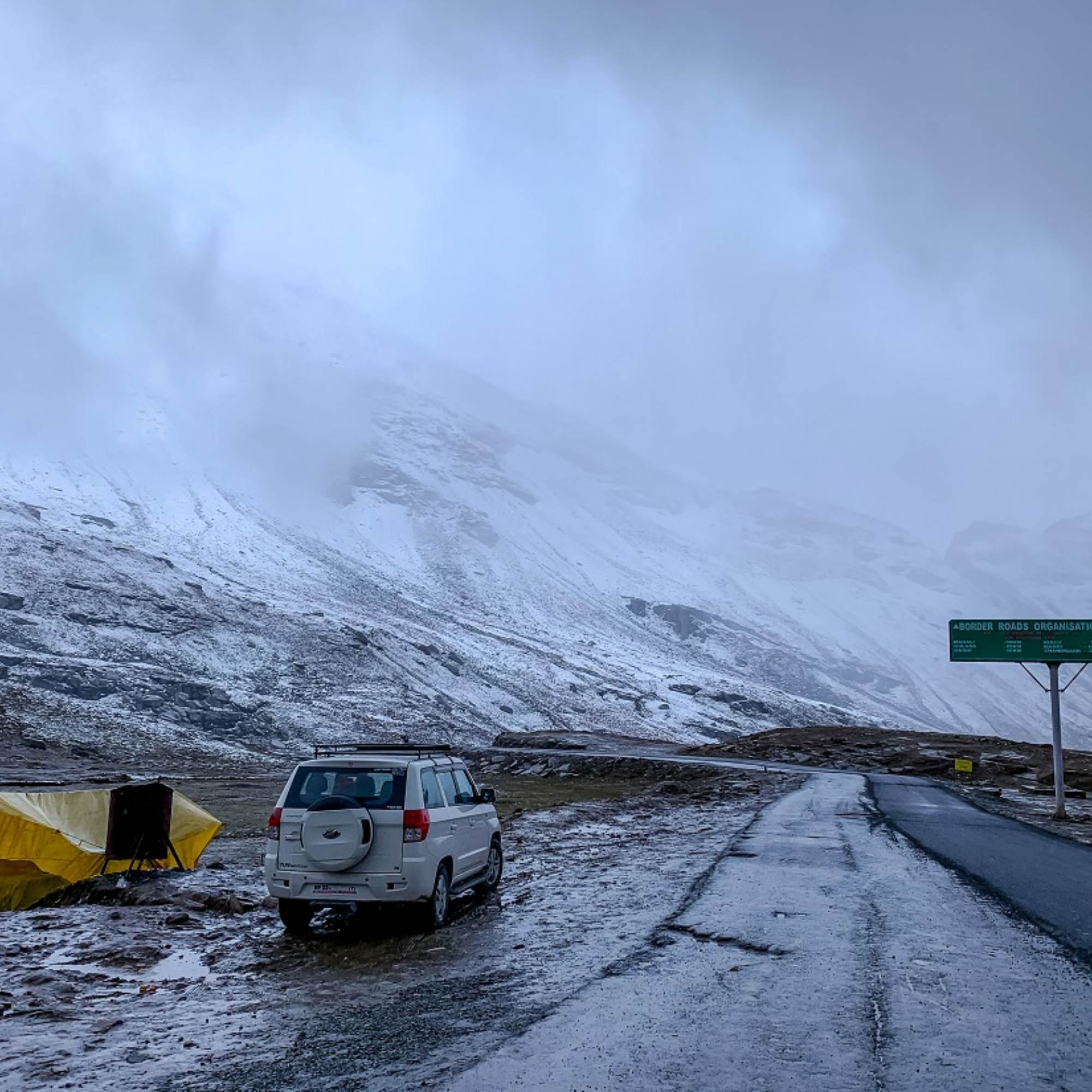
On 24 January 2026, Akashvani News reported that heavy snowfall had blocked 1,291 roads across Himachal. The state had put 385 machines to work restoring them.
Those numbers describe that day only. They are not a closure count for winter 2026-27, and you shouldn't read them that way.
But the lesson still holds. One heavy snowfall can block a huge number of roads in a single day, including small link roads to hotels and villages.
Restoration also takes time and happens road by road. Your main highway may clear before the side road to your homestay.
So build your trip with flexible days. A plan with no spare time breaks the moment snow falls.
How Should You Decide Whether to Travel, Delay or Change Your Route?
Here are three common situations and how we suggest you handle each.
A Weather Warning Without a Road Restriction
Say IMD shows an orange alert for your district, but you can't find any road notice. Don't treat that as a green light.
Snow may not have fallen yet. Check the nowcast, ask your hotel and driver, and consider leaving earlier or waiting a day. Keep your drive short and stay below high passes until things settle.
An Active Police or District Closure
If the police or district administration has closed your route, don't enter it. No shortcut, no "local road" and no permit changes that.
Switch to your backup plan or wait. Here's a warning we repeat often: be wary of anyone near a barrier who offers to take you around it by another road. Follow the official instructions instead.
An "Open" Page That Hasn't Updated in Years
Say you find a government page with "Open" next to your route, but the timestamp is years old. That label tells you nothing about today.
Treat it as missing information. Go back to the district notice, police updates and ground reports.
A Simple Four-Step Rule
Check the weather. Check the latest restriction for your route. Verify your exact stretch and your vehicle's permission. If you can't confirm all three, pick a safe alternative.
What Should Self-Drivers, Taxi Passengers and Bus Travellers Prepare?
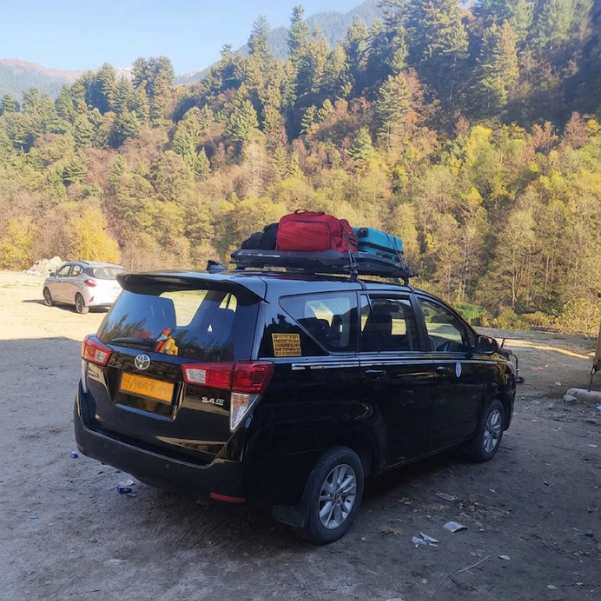
Whatever way you travel, prepare for a delay. A short wait can turn into several hours after fresh snow.
Carry charged phones and a power bank. Pack warm layers inside the car, not buried in the boot. Keep your essential medicines, some snacks and water within reach.
Save your hotel's phone number offline. If you get delayed, you'll want to call them before the signal drops.
If you're self-driving, be honest about your vehicle and your experience. Driving on snow and slush takes practice. Follow every local authority instruction, even if other cars seem to ignore it.
If you're in a taxi, ask your driver before you leave whether they've checked the latest notice. A good driver won't mind the question.
If you're taking a bus, confirm your service with the operator or depot when the weather turns. The official site for HRTC is hrtchp.com.
A ticket or a published timetable doesn't guarantee the bus will run during snowfall. Call or check before you head to the bus stand.
What Should You Do if Heavy Snowfall Blocks Your Route?
First, follow police directions. Stay with your vehicle unless authorities tell you otherwise, and never cross a barrier or try an unsafe shortcut.
If you need help, call 112 for emergency response. For disaster help, call 1070, the state disaster helpline, or 1077, the district disaster helpline. The Himachal government publishes these on its official helpline page.
When you call, give your location clearly. Share your last known location, the nearest landmark or village, the road you're on, and exactly what help you need.
Say how many people are with you and whether anyone needs medical help. Clear details help responders reach you faster.
Save these numbers in your phone before the trip. You won't want to search for them with one bar of signal.
How Can You Keep a Winter Himachal Itinerary Flexible?
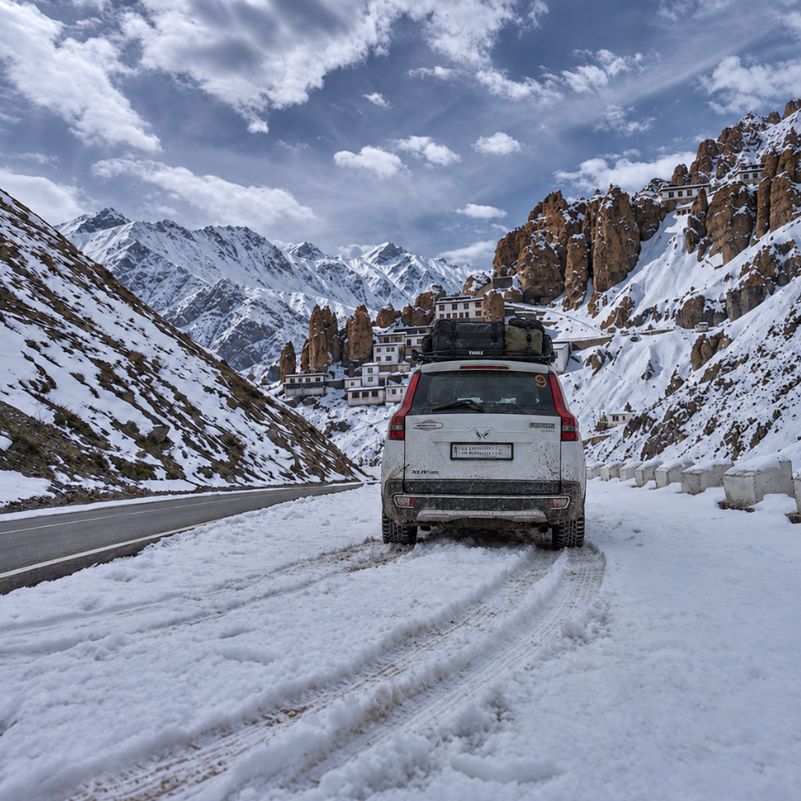
The best winter itineraries have a Plan B for every high-altitude day. You don't cancel the trip; you swap the day.
Before you pay, read the hotel, taxi and transport cancellation terms. Our money-saving tip: for any high-altitude leg, prefer stays and transport with clear date-change or cancellation terms. A cheaper non-refundable booking often costs you more when snow blocks the road.
Here's an example. If the road beyond Manali is restricted, spend that day in Manali town or another stretch the authorities have kept open. Then try the high-altitude day later if conditions allow.
Similarly, if the road towards Narkanda is shut, keep a lower-altitude day near Shimla ready. Just remember, no alternate route comes with a guarantee either. Check it too.
One honest piece of advice: skip forcing a snow-point trip on an orange or red alert day. Sitting in a long queue on a risky road rarely gives you good snow time. Wait for a calmer day.
Which Official Himachal Road and Weather Links Should You Save?
Save these before you leave home. Each has a job, and each has a limit.
IMD Shimla gives you district weather warnings, nowcasts and highway forecasts. It tells you about weather, not whether a road is open.
HPSDMA gives you disaster alerts and incident information for Himachal. It shows the bigger picture but may not cover your exact stretch.
SACHET sends official disaster warnings for your location. It's a useful early alert, not a road clearance service.
District administration pages, like those for Lahaul-Spiti and Kinnaur, publish dated notices and route information. Always check the date, because some pages go years without updates.
The Rohtang permit portal handles Rohtang permits. A permit doesn't override any closure or police instruction.
HRTC covers state bus services. Reconfirm your service during snowfall, since a schedule doesn't promise the bus will run.
Put together, these sources show you exactly how to check Himachal roads and weather updates before your winter trip. Use weather sources to plan, road notices to decide, and local reports to confirm.
Not sure how to plan your Himachal trip around changing weather and road conditions? Explore our Himachal Tour Packages for itinerary ideas.
Explore Our Curated Himachal Pradesh Tour Packages
 10D/9N
Best of Himachal Tour Package with Shimla, Manali, Dharamshala and Dalhousie
2D Shimla•3D Manali+2
₹37,999₹47,999SAVE INR 10,000/ person 7D/6N
7D/6NMcLeodganj, Bir, Jibhi & Tirthan Valley Scenic Private Tour
Delhi to Dharamshala (overnight Volvo)•1D McLeodganj or Bhagsu+4
₹14,999₹18,999SAVE INR 4,000/ person 6D/5N
6D/5NBest Jibhi Tirthan Valley & Shangarh Meadows Trip
1D Delhi •2D Tirthan Valley+2
₹15,999₹19,999SAVE INR 4,000/ person
Frequently Asked Questions
How can I check live road status in Himachal Pradesh?
Check the latest district administration or police notice for your exact route, then confirm with your hotel, driver or a reliable local operator. Always check the date on any notice.
Which official website gives Himachal snowfall and weather alerts?
The IMD Meteorological Centre Shimla website gives district warnings, nowcasts and highway forecasts. SACHET and HPSDMA add official disaster alerts.
Can Google Maps show whether a Himachal road is closed after snowfall?
Not reliably. Google Maps may show traffic, but it doesn't replace an official police or district restriction notice.
What does an orange weather alert mean in Himachal Pradesh?
Orange means get ready to act. It's a weather alert, not a road closure order, so check road notices separately.
Is the Shimla to Kufri and Narkanda road open during snowfall?
It depends on that day's conditions and restrictions. Snow disrupted these routes in January 2026, so check the current notice before you go.
Is the Atal Tunnel to Sissu road open in December or January?
Nobody can confirm this in advance. Check the current police and district instructions for the tunnel and the Sissu stretch on your travel day.
Does Rohtang Pass remain open in winter?
The district describes the Rohtang route as one that can stay closed roughly from October to April. Check the permit portal and current notices for actual status.
Can tourists visit Spiti Valley via Manali during winter?
Kunzum Pass usually stays closed through winter, roughly October/November to June/July. Winter Spiti trips generally use the Kinnaur route, subject to conditions.
Are snow chains or a 4×4 vehicle compulsory in Himachal?
No single rule covers every route. Temporary orders may restrict certain vehicles, so check local instructions for your stretch.
How often should I check road and weather updates before travelling?
We suggest checking about 48 hours before, the evening before, the morning you leave, and whenever the weather changes on the way.
What should I do if snowfall closes the road during my trip?
Follow police directions, don't cross barriers, and switch to your backup plan. Stay warm and keep your phone charged.
Which emergency helpline should tourists call if stranded in Himachal?
Call 112 for emergencies, 1070 for the state disaster helpline, or 1077 for the district disaster helpline.
More about Himachal Pradesh
 Himachal Pradesh
How to Compare Himachal Tour Packages in 2026: Hotels, Inclusions & Hidden Costs
Planning a Himachal trip in 2026? Learn how to compare Himachal tour packages by checking hotel quality, sightseeing, transport, inclusions, exclusions and hidden costs. This Travel Coffee guide helps you understand package pricing, avoid unexpected charges and choose the right Himachal holiday package for your budget and travel needs.
 Himachal Pradesh
How Many Days Do You Need for Himachal in 2026? Choose a 5, 7 or 10-Day Route
Planning a Himachal Pradesh trip in 2026? Find out whether 3, 5, 7 or 10 days are enough to explore destinations like Shimla, Manali, Dharamshala and Spiti Valley. Compare realistic itineraries, travel times and trip durations to plan your perfect Himachal holiday.
 Himachal Pradesh
Things to Do in Himachal in Winter 2026-27: Activities to Check Before You Book
Discover the best things to do in Himachal in winter 2026-27, from snowfall experiences and skiing to scenic drives, winter sightseeing and family-friendly activities. Learn where to go, what to expect and how to plan around weather and road conditions.