
Best Stops Between Manali and Chandratal for a Scenic Road Trip (2026 Guide)

The Manali to Chandratal road trip is not one long stretch of bad road. It is a series of completely different landscapes strung together, and the stops you choose to make along the way shape the entire experience more than the lake itself.
Most travellers treat this drive as a means to an end. Get to Chandratal, take a photo, come back.
But the route has six genuinely distinct stops, and knowing which ones deserve your time (and which ones do not) makes the difference between a road trip you remember and a drive you just survive.
Quick Answer
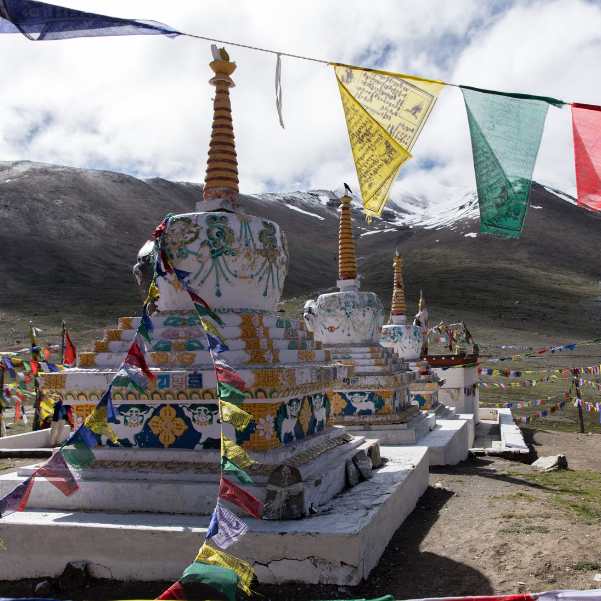
The best stops between Manali and Chandratal are Atal Tunnel, Sissu, Gramphu, Chatru, Batal, and Kunzum Pass. Sissu is the best comfort halt with proper food and guesthouses. Chatru has the most dramatic open valley landscape on the route.
Batal is the last practical food stop before the final push. And Kunzum Pass at 4,551 metres is the panoramic high-altitude moment that makes the drive feel bigger than just reaching a lake.
If you are short on time, stop at Sissu for tea, push through to Batal for a meal, and save your energy for the lake. If you have an extra day, Chatru or Sissu overnight changes the whole trip.
What Is the Route from Manali to Chandratal?
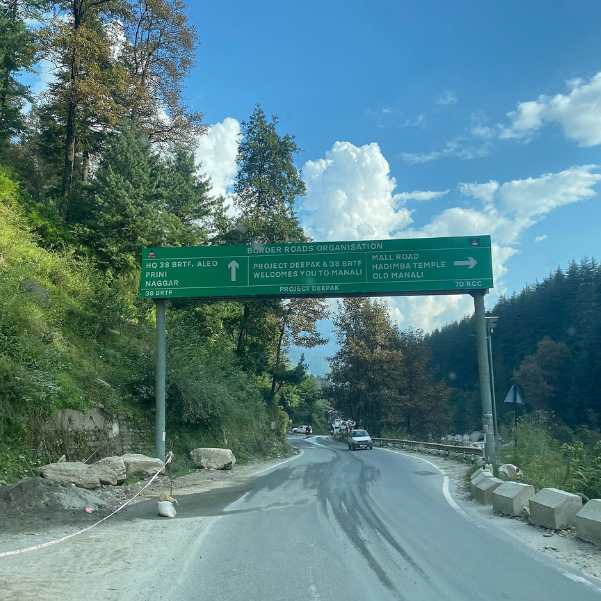
The main route runs from Manali through the Atal Tunnel to Sissu, then continues to Gramphu, where the road splits. You take the fork towards Spiti, passing through Chatru and then Batal.
From Batal, a rough 14 km diversion road leads to the Chandratal campsite zone and parking area, from where you walk the last 1 to 2 km to the lake itself.
The total one-way distance is roughly 120 to 135 km, but the travel time is usually 7 to 9 hours and often more with stops and bad road stretches.
The first half through the Atal Tunnel is fast and smooth. Everything after Gramphu slows down hard.
What most travellers get wrong is planning this drive based on kilometres. On paper, it looks like a half-day thing. On the ground, it is a full day.
The road after Gramphu is a different animal entirely, and if you leave Manali after 9 AM, you are already behind.
Which Stops Are Actually Worth It Between Manali and Chandratal?
Atal Tunnel
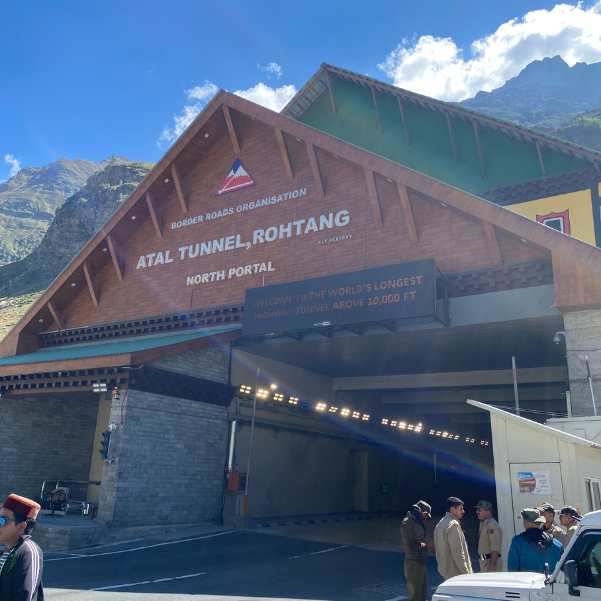
The Atal Tunnel is 9.02 km long and it changed this route completely. Before it opened, you had to cross Rohtang Pass, which added hours of uncertainty, traffic jams, and snow closures.
Now you drive through the tunnel in about 15 minutes and come out on the other side in a completely different world.
The Manali side is green, wet and full of trees. The north portal side opens into the dry, wide Lahaul valley. That transition is sudden and worth noticing. Many travellers do not even register it because they are focused on getting ahead.
One practical note: in early 2026, there were tourist movement restrictions near the north portal because of avalanche risk.
Do not casually stop or park near the tunnel exit when conditions are active. Follow what the authorities on-site are saying.
The tunnel is not a "stop" in the traditional sense. But it is where the road trip actually begins. Everything before this is just a Manali drive.
Sissu
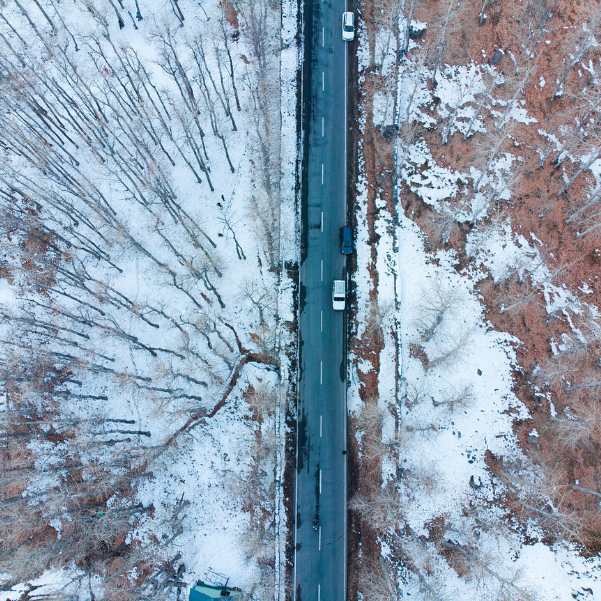
Sissu is the first proper halt that feels worth your time. The valley here opens up wide, and you can see the Palden Lhamo Dhar waterfall from the road. There is a small lake, a few dhabas, and enough flat ground that the whole place feels calm after the tunnel.
We send a lot of families through this route, and Sissu is almost always where we tell them to take their first real break.
The chai is hot, the views are open, and there are actual washrooms here, which becomes relevant later when you realise there is nothing proper between Sissu and Batal.
If you are doing this road trip with kids or older family members, Sissu is also the best place for an overnight halt before pushing towards Chandratal the next morning. There are guesthouses and homestays here with real beds and running water. You will not find that anywhere else on this route.
Our drivers always say the same thing: "Sissu mein chai nahi piya toh aage pachtaaoge." And they are right.
Gramphu
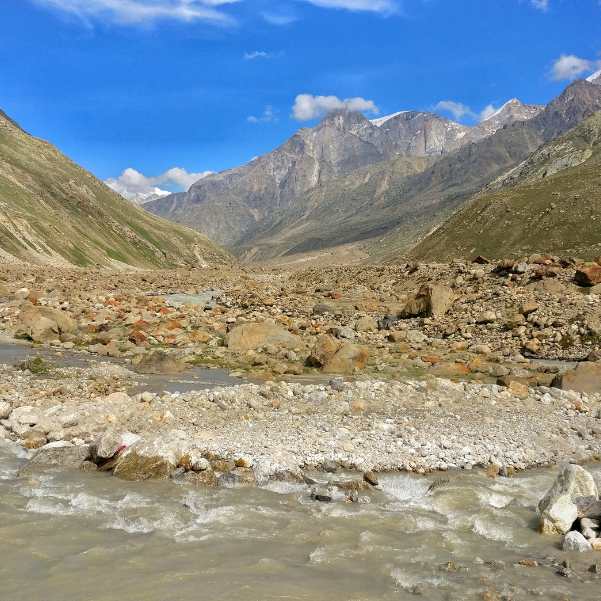
Gramphu is not pretty. It is not comfortable. But it is an important stop to understand.
This is the junction where the road splits. One fork goes towards Keylong and eventually Leh. The other fork drops towards Chatru, Batal, and Chandratal.
The moment you take that Chandratal fork, the road quality changes. The smooth tarmac ends. The potholes begin.
Gramphu itself is a few structures, maybe a checkpoint, and nothing worth photographing. But mentally, this is where you shift gears. If your car has 4x4, engage it here.
If you have been cruising at 60, slow down to 30. If you need to use the bathroom one last time in a reasonably civilised setting, do it here.
We do not recommend stopping long at Gramphu. Just pause, acknowledge that the drive is about to change, and move on.
Chatru
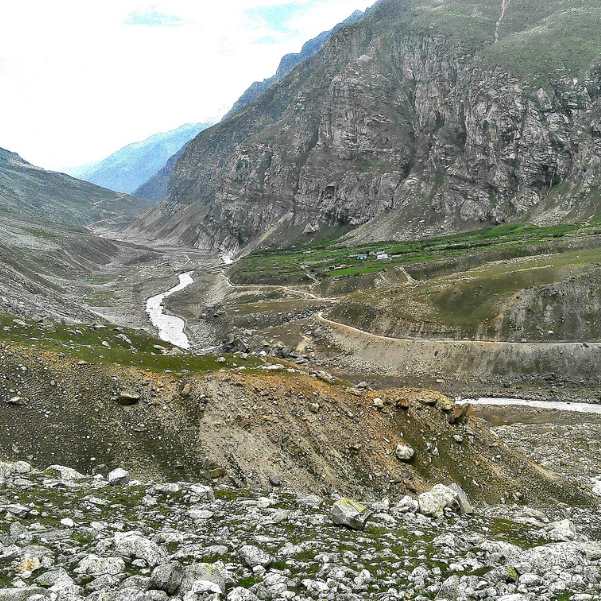
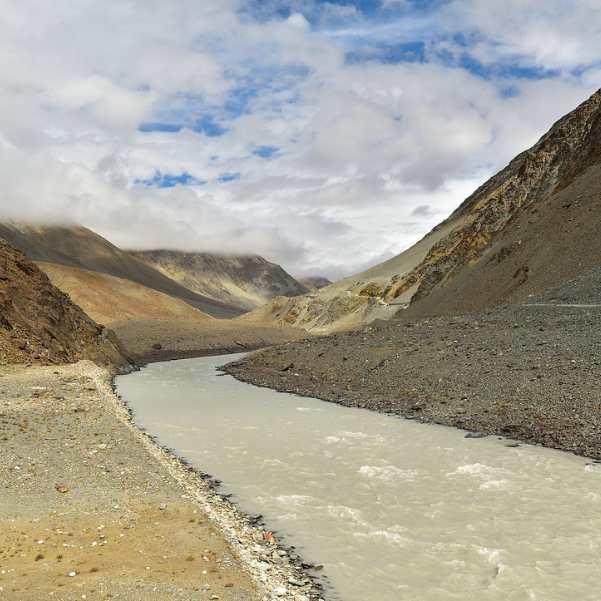
Chatru is where the route starts to feel properly remote. The valley here is wide, flat, and surrounded by brown and grey mountains with almost no vegetation. A river runs through it. There are a few seasonal camp setups and basic tents.
Skip this if you are in a rush. But if you have even 20 minutes, pull over and look around. This is one of the most photogenic spots on the entire Manali to Chandratal route, especially in the morning light when the shadows are long and the river catches the sun.
Chatru also works as a night halt if you are doing the 3-day version of this trip. The camping here is basic but the setting is dramatic. You fall asleep hearing the river. You wake up to mountains on all sides and not a single other sound.
In our experience, travellers who stop at Chatru for the night enjoy the drive to Chandratal the next day far more than those who push through in one shot.
The honest downside: facilities are minimal. Expect basic tents, basic food, and no charging points. If comfort matters to you, Sissu is the better overnight choice.
Batal
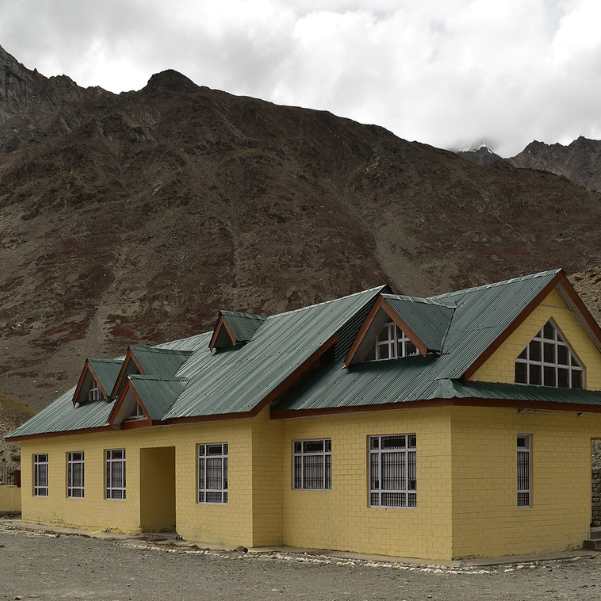
Batal is a road trip legend. Not because it is beautiful. Not because the food is great. But because it is the last thing before Chandratal.
The famous Chacha Chachi dhaba has been feeding travellers on this route for years. The food is simple: dal, rice, chai, Maggi. But when you have been bouncing over rocks for hours and the wind is cutting through your jacket, that hot chai feels like the best thing you have ever had.
Batal sits at the point where the Chandratal diversion road branches off from the main route. From here, the final 14 km to the Chandratal parking area is the roughest stretch of the entire drive.
Potholes, loose gravel, water crossings, and a road so narrow that two vehicles passing each other feels like a negotiation.
We always tell our travellers to eat a proper meal at Batal before that last stretch. Your body needs the fuel, and there is nothing at the campsite zone that will be as warm or as filling.
What we tell our groups: "Batal mein kha lo, aage sirf hawa milegi." It is not entirely true, but it is true enough.
Do not plan Batal as an overnight halt unless you have no other option. The tin-roof dhabas here offer basic shelter but nothing resembling a comfortable stay.
If you can push to the Chandratal campsite zone, do that. If you need a proper night's rest, you should have stopped at Chatru or Sissu.
Kunzum Pass
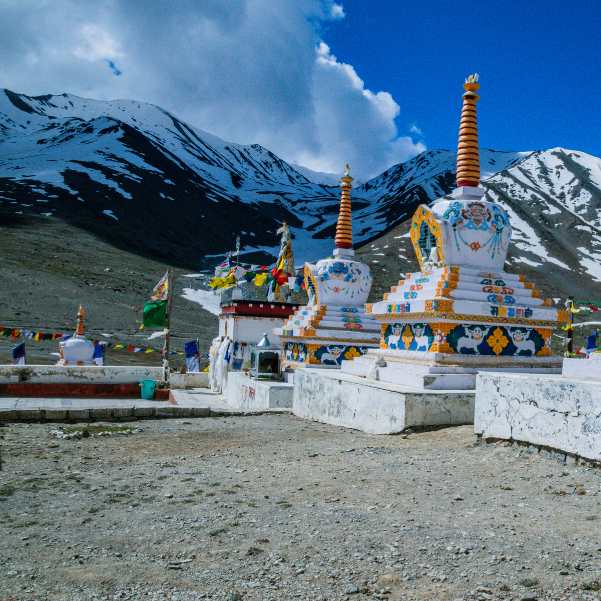
Kunzum Pass sits at 4,551 metres and it is about 21 km from Chandratal. Not everyone includes it on the way to the lake because the main diversion road from Batal takes you towards Chandratal without going over the pass.
But if Kunzum is open and you have the time, the detour is worth it. The views from the top are some of the widest you will get on this entire route. You can see mountain ranges stretching in every direction.
There is a small temple at the top where travellers stop, and the prayer flags snapping in the wind make the whole place feel like you have crossed into a different world.
This stop works especially well for travellers doing the full Spiti Valley circuit, where Kunzum Pass is the natural crossing point between Lahaul and Spiti.
If you are entering from Manali and heading to Kaza after Chandratal, you will cross Kunzum anyway.
One warning: Kunzum Pass can be closed even when the rest of the route is open. The pass sits high enough that the weather changes fast. Do not count on it being open until you are physically there or have confirmed status the same morning.
Chandratal Campsite Zone and the Final Walk
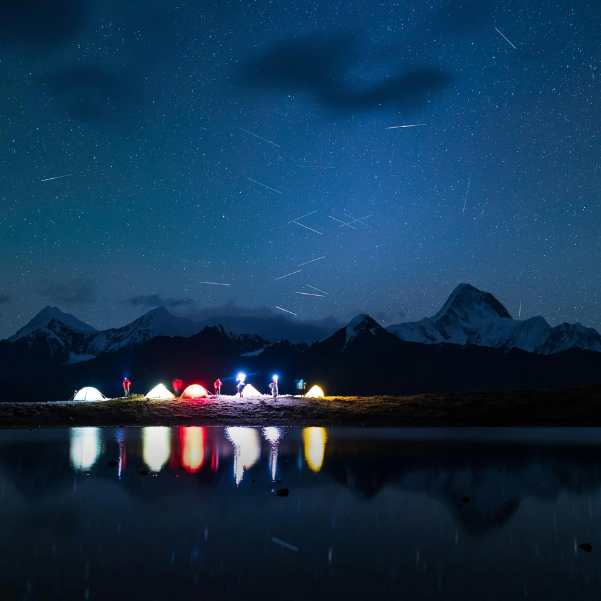
Vehicles do not go to the lake. This is something first-time travellers do not always realise.
You drive to the campsite zone or the parking area, and then you walk the remaining 1 to 2 km to the lake shore. The walk is mostly flat but the altitude makes it feel harder than it looks.
Chandratal sits at roughly 4,250 to 4,300 metres, so even a gentle walk can leave you breathless if you have come straight from the plains.
Camping happens only in designated zones away from the shore. You cannot pitch a tent next to the water. The lake area is ecologically sensitive, and the restriction is what keeps it looking the way it does.
If you want to understand why the camps are where they are, our Chandratal camping guide covers it in detail.
The best time to walk to the lake is early morning, before 7 AM. The light on the water is completely different at sunrise. By 10, the first wave of day-trippers arrives from Kaza side and the trail turns into a queue.
Best Stop by Travel Style
If you are travelling with family, Sissu is your stop. Proper food, guesthouses, washrooms, and a pace that does not exhaust kids or older members. Break the drive here and reach Chandratal fresh the next day.
If you are a photographer, Chatru and Kunzum Pass are your two best pauses. Chatru gives you the wide valley and river light. Kunzum gives you the high-altitude panorama. Both reward anyone carrying a camera.
If your main concern is food, Batal is the last real meal stop. But Sissu has better options. Eat properly at Sissu, carry snacks from there, and then eat again at Batal. That way you are never relying on a single dhaba.
If you need the best overnight halt before Chandratal, Chatru hits the sweet spot between distance covered and quality of the experience. Sissu is more comfortable but leaves a longer drive the next day. Batal is too basic for a good night's sleep.
If you are short on time and doing this in one push, stop only at Sissu for 15 minutes of chai and Batal for a meal. Skip everything else and save your energy for the lake.
Share your dates on WhatsApp and we will help you build a smooth Chandratal trip.
Should You Stop at Sissu, Chatru, or Batal for the Night?
This is the question we get asked most by travellers planning the Manali to Chandratal trip.
Sissu
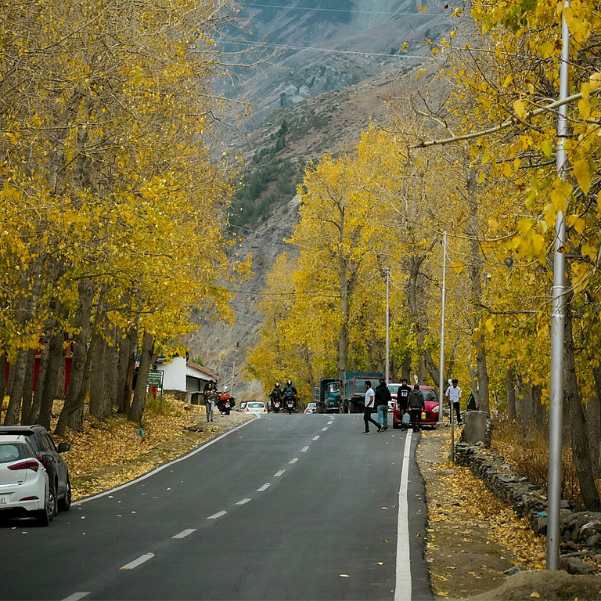
Sissu is the comfort choice. Real rooms, running water, phone network, and a town that functions like a town. The trade-off is that you still have 4 to 5 hours of rough driving ahead the next morning.
For families, first-timers, or anyone who does not want to camp before reaching Chandratal, Sissu is the right call.
Chatru
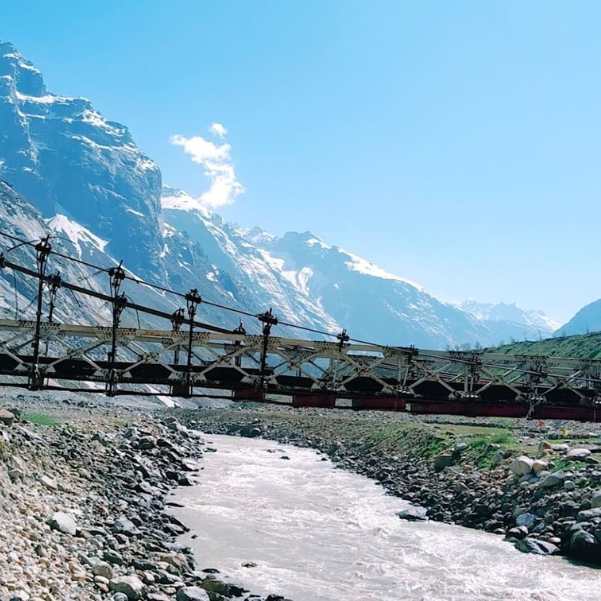
Chatru is the rhythm choice. It splits the drive into two manageable halves and puts you closer to Chandratal for the next day. The landscape is stunning. The facilities are basic.
If you are comfortable sleeping in a tent without electricity and eating whatever the camp cook has prepared, Chatru is the most rewarding overnight on this route.
Batal
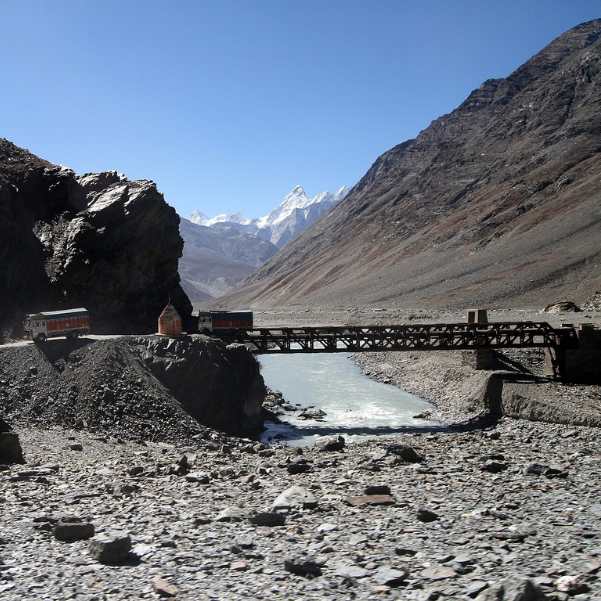
Batal is the "I had no choice" stop. We do not recommend planning an overnight here. The dhabas offer shelter but not comfort.
If road conditions or timing force you to stop at Batal, you will survive. But if you have a choice, choose Chatru or Sissu.
In our experience running this route every season, about 70% of our travellers who chose Chatru for the night rated it as one of the highlights of their Spiti trip. It is that kind of place.
Can You Do Manali to Chandratal in One Day?
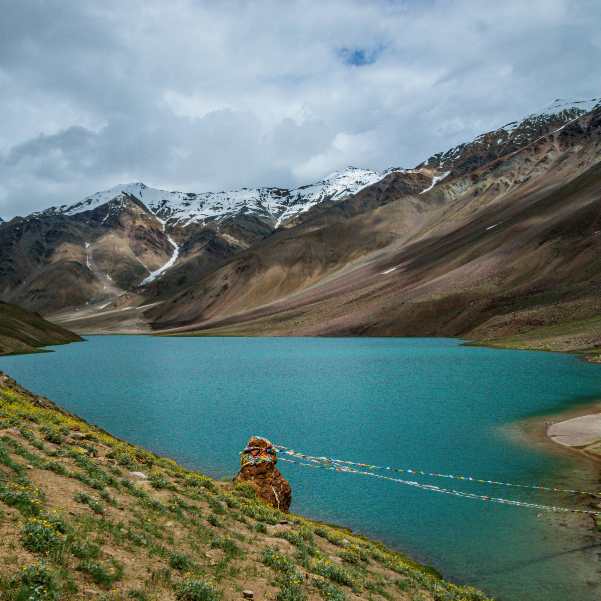
Physically, yes. Some people do it. But it is not how you should plan this trip.
The distance on a map looks small. 120 to 135 km one way. But the road after Gramphu eats time. The stretch from Batal to Chandratal alone can take 1.5 to 2 hours for just 14 km.
Add altitude fatigue, unpredictable road conditions, and the fact that you still have to walk to the lake after parking, and a single-day push turns into an exhausting slog.
You arrive tired, your head hurts from the altitude, and you have maybe an hour at the lake before you need to think about driving back or settling into camp. That is not a road trip. That is a punishment.
If you have only 2 days, leave Manali by 5:30 AM, push straight to Chandratal with stops only at Sissu and Batal, camp overnight, and return the next day. Tight but doable.
If you have 3 days, the trip actually feels good. More on that below.
What Are the Road Conditions Like After Gramphu?
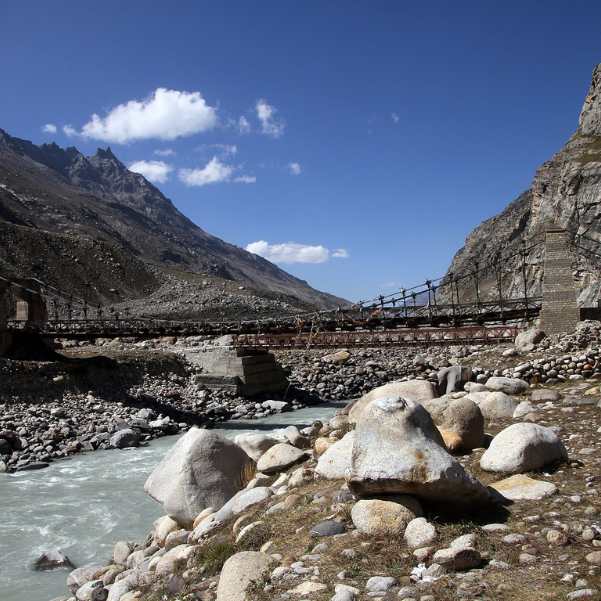
The road from Manali to Gramphu through the Atal Tunnel is smooth. You will be comfortable. You might even think the whole route will be like this.
It will not.
After Gramphu, the road surface changes to broken tarmac, dirt tracks, and stretches with no surface at all. The section from Gramphu to Batal is the roughest and slowest part of the entire drive.
Water crossings from snowmelt, loose rocks, narrow single-lane sections, and damage from the previous winter are standard.
A high-clearance vehicle handles this fine. A sedan does not. An Innova will manage with an experienced driver, but it is not comfortable. If you are renting a vehicle, go for a Thar, Bolero, or any proper SUV.
The final 14 km from Batal to the Chandratal parking area is even worse. This stretch alone can take 1.5 to 2 hours. Potholes deep enough to swallow a tyre, sharp turns on narrow roads, and gravel that makes your vehicle slide sideways.
Drive slow, keep windows up for dust, and do not try to overtake on this section.
The paid viewpoint near the Chandratal parking lot charges for the same view you get free from the trail a short distance away. Save that money for a hot chai instead.
Best Time for This Scenic Road Trip in 2026
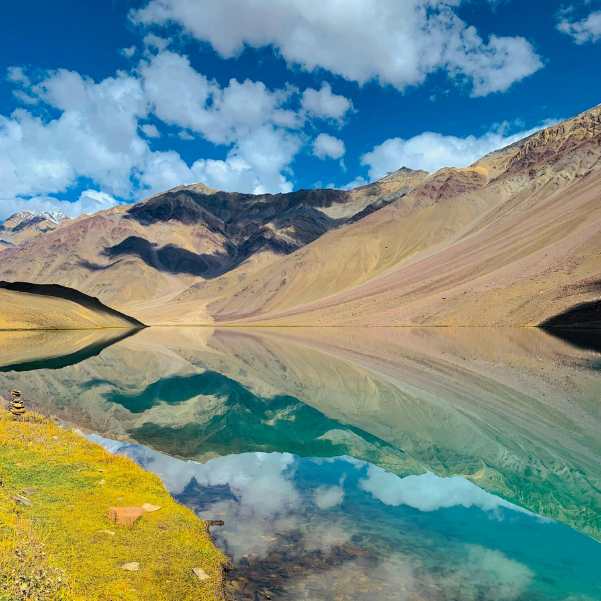
Chandratal is not an all-year destination. The route opens seasonally, and the timing changes every year based on snowfall and road clearance.
For 2026, our Chandratal opening dates guide covers this in full detail, but here is the short version: the realistic opening window from the Manali side is early to mid-June 2026.
The Kaza side may open slightly earlier, sometimes by late May. The route stays open until early October in most years.
Do not treat any fixed date as guaranteed. The official Lahaul and Spiti road status page currently shows Manali to Keylong open and Keylong to Kaza closed as of early April 2026. This will change as BRO clears the roads through May and June.
September is quietly the best month for this drive. The roads are at their most stable, skies are the clearest, and the tourist rush from July and August has thinned out. If your dates are flexible, September is the month to aim for.
Permits, Camping Rules, and Planning Notes for 2026
You need an e-permit for this route. The official e-Aagman portal requires a vehicle permit for the Atal Tunnel Rohtang-Koksar-Chandertal circuit. Sort this out before you leave Manali. It is an online process, but do not leave it for the last minute.
Camping is not allowed on the Chandratal lake shore. All camping happens in designated campsite zones away from the water.
The restriction protects the lake's fragile ecosystem, and honestly, once you see how clean and untouched the shore still looks, you understand why it exists.
If you want to know exactly where the camps sit and what to expect, our detailed Chandratal location guide explains the geography clearly.
Phone network disappears on this route. You might get a patchy BSNL signal near Batal in some spots, but do not count on it.
Download offline maps before you leave Manali. Tell someone your plan and expected return date. You will be unreachable for at least 24 to 48 hours.
Carry enough cash for the entire trip. No ATMs exist between Manali and Chandratal. Many dhabas and camps do not accept UPI or cards.
And leave early. We cannot stress this enough. A 5:30 to 6 AM departure from Manali gives you maximum daylight for the rough sections. Every hour you delay past 7 AM makes the drive harder and the experience worse.
Suggested 2-Day and 3-Day Scenic Itineraries
2 Days, 1 Night
Day 1: Leave Manali by 5:30 AM. Drive through the Atal Tunnel to Sissu. Quick tea stop, 15 minutes max. Push through Gramphu and Chatru to Batal.
Eat a proper meal at Batal. Continue the final 14 km to the Chandratal campsite zone. Settle in. Walk to the lake before sunset if energy allows. Camp overnight.
Day 2: Wake early. Walk to the lake at sunrise. Spend time at the shore. Return to camp, pack up, and drive back to Manali via the same route. Expect to reach Manali by evening.
This plan works but it is tight. No buffer for bad weather, road blocks, or a flat tyre. Only choose this if you are experienced on mountain roads and comfortable with long driving days.
3 Days, 2 Nights (Recommended)
Day 1: Leave Manali by 6 AM. Drive to Sissu for a proper tea break. Continue to Chatru. Stop, explore, take photos. Camp overnight at Chatru. The evening here, with the river and the mountains and the silence, is worth the extra day.
Day 2: Leave Chatru in the morning. Reach Batal in about 2 hours. Eat at the dhaba. Drive the final 14 km to Chandratal campsite zone. Walk to the lake. Spend the afternoon at the shore. Camp overnight near Chandratal.
Day 3: Early morning lake visit. The sunrise light on the water is the single best visual moment of this entire trip.
Return to camp, pack up, and drive back to Manali. Alternatively, continue towards Kunzum Pass and into Kaza if you are doing the full Spiti circuit with Chandratal.
The 3-day version gives your body time to adjust to the altitude, gives you two shots at the lake in different light, and turns the drive itself into part of the experience instead of just a means to reach the destination.
Travel Tips That Make This Route Smoother
Leave by 5:30 AM from Manali. The Atal Tunnel can get crowded later in the morning, and you want maximum daylight for the rough sections.
Fill your fuel tank in Manali. There is no reliable fuel station between Manali and Chandratal. If your vehicle has extra tank capacity, fill it.
Carry dry snacks, water, and a thermos. Energy bars, biscuits, nuts, and a flask of hot ginger tea. At 14,000 feet, a warm drink does more for altitude adjustment than any tablet from a chemist.
This is what we always tell first-timers and the feedback is always the same: "Thank god you told us to bring the thermos."
Warm layers even in July. Evenings and nights at Chandratal drop to near zero or below. Pack thermals, a fleece, a windproof jacket, warm socks, and gloves. Do not underestimate how fast the temperature falls once the sun dips.
Power bank, fully charged. There is no reliable electricity at the campsites. Your phone is your camera, your map, and your only light source after dark.
High-clearance vehicle. A Thar, Bolero, Fortuner, or any SUV with good ground clearance handles this route well.
A sedan will not make it past Batal without damage or stress. If you do not have the right vehicle, rent one in Manali or join an organised trip.
Want help planning this trip the right way? Share your dates on WhatsApp
Explore Our Curated Chandratal Tours
 10D/9N
Summer Spiti Circuit With Chandratal
1D Narkanda•1D Sangla+5
₹29,999₹38,999SAVE INR 9,000/ person 6D/5N
6D/5NMini Spiti Circuit With Chandratal From Manali
2D Kaza•1D Chandratal Camp
₹26,999₹29,999SAVE INR 3,000/ person
Related topics
Frequently Asked Questions
What is the best stop between Manali and Chandratal?
Sissu for comfort, chai, and a proper break. Chatru for landscape and overnight camping. Batal for the last hot meal before the final stretch.
Is Sissu worth staying overnight?
Yes, especially for families or first-timers. It has guesthouses, running water, phone network, and a pace that makes the next day's drive much more manageable.
Is Chatru better than Batal?
For an overnight halt, absolutely. Chatru has a dramatic valley setting and basic camping. Batal is a functional food stop but not a place you want to sleep unless you have no choice.
How far is Batal from Chandratal?
The diversion road from Batal to the Chandratal parking zone is about 14 km, but it takes 1.5 to 2 hours because of the road condition.
Can I reach Chandratal from Manali in one day?
Technically yes, but it is exhausting. You spend the entire day driving and arrive tired with barely any time at the lake. A 2-day plan is the minimum. Three days is better.
Is the road from Gramphu to Batal dangerous?
It is rough, not dangerous in the dramatic sense. Broken surfaces, water crossings, and slow speeds are standard. A capable vehicle and an experienced driver make it manageable. A sedan makes it stressful.
Do I need a permit in 2026?
Yes. The e-Aagman portal requires a vehicle e-permit for the Atal Tunnel Rohtang-Koksar-Chandertal circuit. Complete this before leaving Manali.
Is Chandratal open in May or June 2026?
Partial access from the Kaza side may open by late May. The Manali side realistically opens by early to mid-June. Full access with operational camps is safest from mid-June onward.
Can I take a self-drive car?
Only if it is a high-clearance SUV and you are confident on bad mountain roads. Sedans and hatchbacks are not suitable for the stretch after Gramphu. If in doubt, hire an SUV with a local driver from Manali.
Is there mobile network on this route?
The network works until Sissu. After that, it becomes patchy and disappears entirely near Chandratal. BSNL has the best chance of a faint signal in a few spots, but do not rely on it.
Is camping allowed at the lake?
No. Camping on the Chandratal lakeshore is restricted. All camping happens in designated zones 1.5 to 2 km from the lake. You walk to the shore during the day and return to camp.
Which stop is best for families?
Sissu. It has the best facilities, the calmest pace, and actual accommodation options. Use it as your overnight halt and push to Chandratal the next morning with rested kids and rested adults.
More about Chandratal
 Chandratal
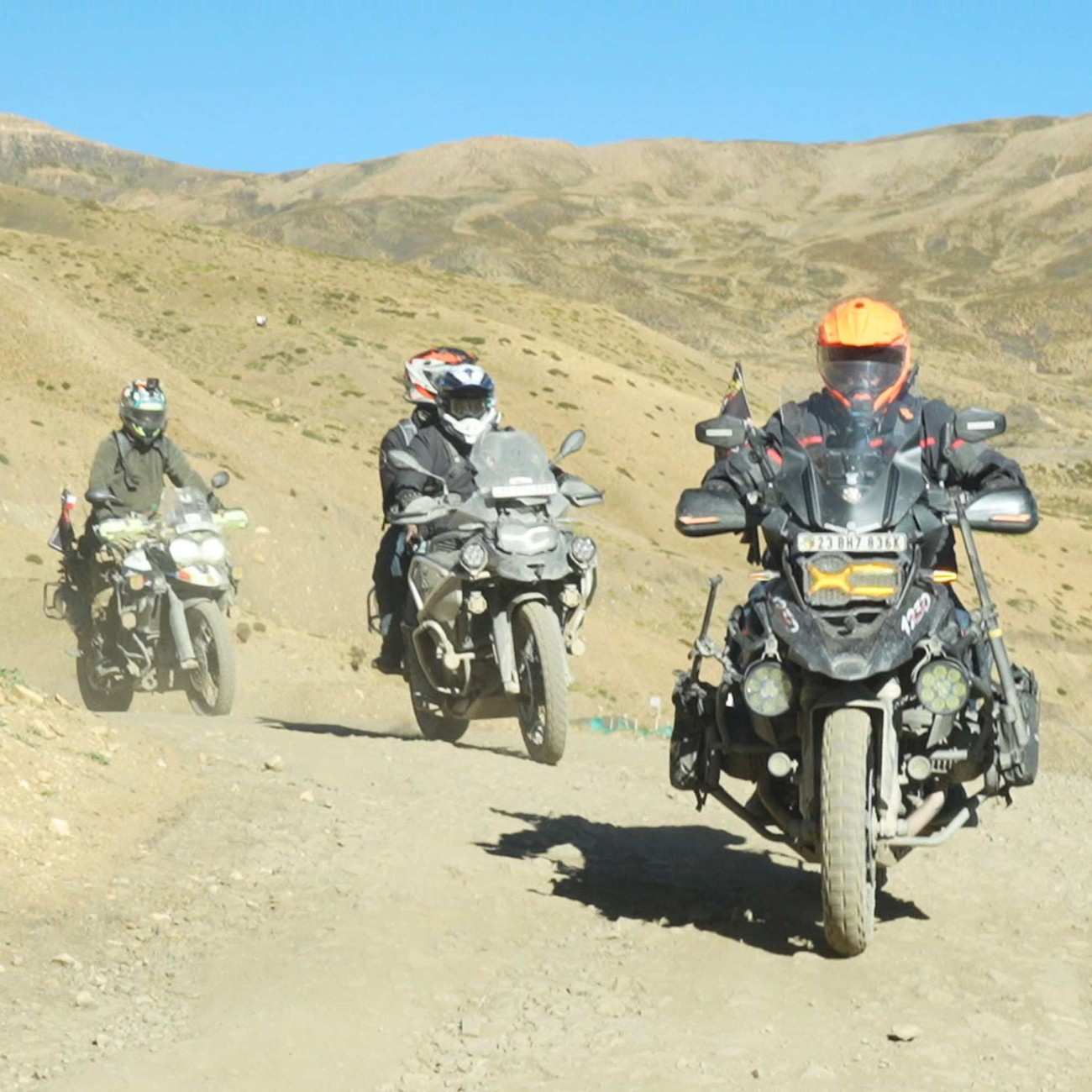
Chandratal by Bike Safety in 2026: Road Difficulty, Timing & Pillion Tips
Planning to ride to Chandratal by bike in 2026? This complete guide covers road difficulty, riding conditions, the best time to visit, safety precautions, water crossings, and pillion tips to help you enjoy one of Himachal Pradesh's most iconic high-altitude rides with confidence.
- Bike Trips
- Altitude & Health
- +1
 Chandratal
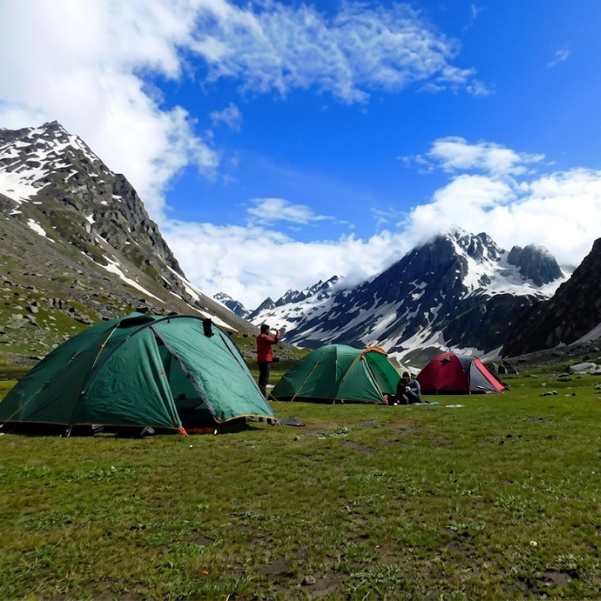
Where to Stay If Chandratal Camps Are Not Available in 2026
If Chandratal camps are not available in 2026, stay at nearby alternatives like Batal, Losar, or Kaza. Since camping is not allowed at the lake itself and designated camps operate a few kilometers away, these villages are the safest backup options for travelers planning a Spiti Valley trip.
- Itinerary
- Best Time to Visit
 Chandratal
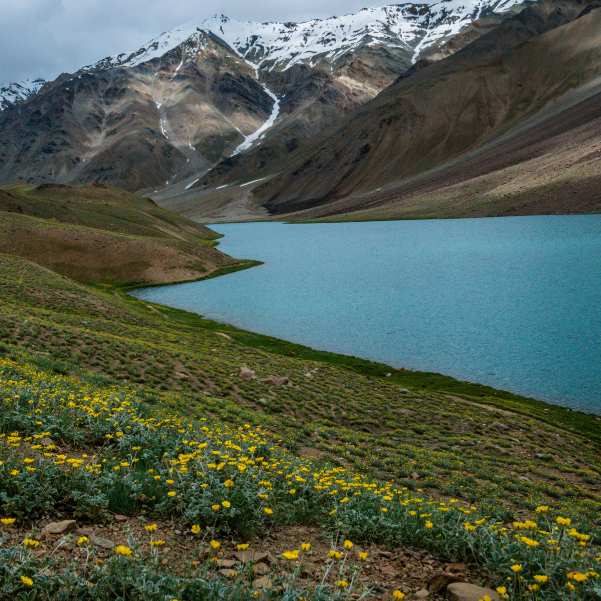
Is Chandratal Crowded in June 2026? Honest Crowd, Road and Camp Guide
Planning Chandratal in June 2026? Here’s an honest guide to crowds, road opening chances, campsite availability, lake access, and the best time to visit without chaos.
- Best Time to Visit