
Vashisht Hot Springs
Natural sulphur rich hot water springs at 40 to 50 degrees Celsius, next to an ancient temple dedicated to Sage Vashisht in a village 3 km from Manali. Free public baths with separate sections for men and women, a traditional Kath Kuni style temple with centuries of mythology, and the starting point for the Jogini Waterfall trek.
- Manali · hot springs
- ~2,050 m / ~6,730 ft
- ~3 km from Mall Road
- 1 to 2 hour visit
- No entry fee
What makes it special
Vashisht is a small village about 3 km from Manali's Mall Road, sitting across the Beas River at roughly the same altitude of 2,050 metres. The two things that bring people here are the ancient temple dedicated to Sage Vashisht and the natural hot water springs right next to it. The springs are the real draw. Hot, sulphur rich water coming out of the ground at around 40 to 50 degrees Celsius, channelled into public bathing areas with separate sections for men and women. You strip down, step in, and for 20 to 30 minutes the heat works its way through muscles and joints in a way that a regular bath simply does not. The water smells faintly of sulphur. Your skin feels different afterwards. People have been doing this here for centuries.
The temple is believed to be over 4,000 years old, though the exact age is difficult to verify. It is dedicated to Sage Vashisht, one of the seven great Vedic sages (the Saptarishis), who was the family priest of the Raghu dynasty and the teacher of Lord Rama. The mythology is vivid. Vashisht's ongoing conflict with King Vishwamitra led to the killing of all his children. Grief stricken, he tried to end his life by jumping into a river, but the river refused to take him and carried him to safety instead. He started a new life in this village. The river was named Vipasha, meaning "freedom from bondage," and is now known as the Beas. The temple is built in the traditional Kath Kuni style of Himachali architecture, with wooden beams, stone walls, and intricate carvings. Inside, there is a black stone idol of the sage wearing a dhoti. The adjacent Rama Temple, a smaller stone structure, houses idols of Lord Rama, Goddess Sita, and Lakshman.
Honest framing. This is a 1 to 2 hour stop, not a full day destination. The hot springs take 20 to 40 minutes if you actually bathe. The temple takes 15 to 20 minutes. The village itself, with its small market, traditional Himachali houses, and a few cafes, adds another 30 minutes of walking around. If you are coming from Old Manali or Mall Road, the trip out and back with some time at the springs fills a comfortable half day, especially if you continue on to the Jogini Waterfall trek. That combination, Vashisht hot springs followed by Jogini Falls, is one of the better morning plans in Manali.
One thing most travel pages do not tell you: the bathing areas are public, basic, and can get crowded. These are not spa facilities. There are no plush robes or private tubs. You are standing in a stone pool with other people, some locals who come daily and some tourists having their first experience. The water is genuinely hot and the minerals are real, but the infrastructure is what you would expect at a free public bathhouse in a Himalayan village. If you go in with that expectation, you will enjoy it. If you are expecting a wellness retreat, you will be disappointed.
Quick answers
- Are the Vashisht Hot Springs worth visiting?
- Yes, if you want a genuinely different experience from the usual Manali sightseeing. The hot springs are natural, free, and the sulphur rich water at 40 to 50 degrees feels genuinely therapeutic. The ancient temple adds historical depth. Combined with the short Jogini Waterfall trek that starts right here, it fills a comfortable half day. Go early morning for the cleanest water and the fewest people.
- How much time do you need at Vashisht?
- 1 to 2 hours for the hot springs, both temples, and a walk through the village. Add 1.5 to 2 hours if you continue to the Jogini Waterfall trek. A half day from Manali including travel time is comfortable.
- What is the best time to visit the Vashisht Hot Springs?
- March to June for pleasant weather and a comfortable bathing experience. December to February for the genuinely special experience of soaking in hot water while the village is covered in snow. The springs and temple are open year round. Early morning, any season, is always the best time of day.
Quick facts
Everything you need to know at a glance.
At a glance
- Altitude
- Approximately 2,050 m / 6,730 ft. Same as Manali town.
- Location
- Vashisht village, Kullu district, Himachal Pradesh. About 3 km from Mall Road and the Manali Bus Stand, along the Beas River.
- Nearest town
- Manali town centre, about 3 km. Reachable by auto, taxi, or a 30 to 40 minute walk.
- Timings
- Temple: generally 7 AM to 9 PM. Hot springs bathing: generally 7 AM to 1 PM and 2 PM to 9 PM. Timings can vary, confirm locally.
- Entry fee
- None. Both the temple and the hot springs are free for all visitors.
- Time needed
- 1 to 2 hours for the springs, temples, and village. Add 1.5 to 2 hours for the Jogini Waterfall trek.
- Known for
- Natural sulphur rich hot water springs with traditional medicinal reputation, an ancient temple dedicated to Sage Vashisht, and the starting point for the Jogini Waterfall trek.
- Difficulty
- Easy. Paved road from Manali to the village. Temple and springs area is mostly flat. The Jogini trek is moderate.
On the ground
- Mobile network
- Jio, Airtel, and BSNL all work. 4G coverage is good. Same as Manali town.
- ATMs
- No ATM in Vashisht village. Nearest ATMs are on Mall Road, about 3 km away. Carry cash.
- Food
- A few cafes and restaurants in the village. Local Himachali food, momos, thukpa, and basic continental. A few tea stalls near the temple. More options on Mall Road and in Old Manali.
- Parking
- Limited roadside parking near the village entrance. The village lanes are narrow. Auto or taxi from Manali is easier.
- Washrooms
- Basic public facilities near the bathing area. Cleanliness varies. Carry tissue.
- Permits
- None required.
- Drones
- Not appropriate near the temple complex. It is a religious site in a residential village.
- Photography
- Exterior and village photography is fine. Photography inside the temple sanctum is generally restricted. Do not photograph people bathing without their permission.
- What to bring
- A towel and a change of clothes for the springs. Comfortable walking shoes. Modest clothing for the temple, remove shoes before entering. Sandals for the bathing area.
Seasonal weather
- Mar to Jun25°10°Spring and Summer (Mar to Jun)
- Jul to Sep22°12°Monsoon (Jul to Sep)
- Oct to Feb15°-2°Autumn and Winter (Oct to Feb)
Suitable for
- Couples — suitable
- Families — suitable
- Seniors — suitable
- Solo — suitable
- First-timers — suitable
- Pet-friendly — with some care
How to reach Vashisht Hot Springs
1 approach route, with seasonal access.
From Manali Mall Road
Year round- Distance
- About 3 km
- Time
- 30 to 40 minutes on foot, 10 minutes by auto or taxi
- Road
- Paved road running along the Beas River. Drivable to the village entrance.
- Last fuel
- Not applicable for this short distance.
The standard approach. Drive or take an auto from Mall Road along the road that runs beside the Beas River, heading towards Vashisht. The road is paved and climbs gently. An auto costs roughly Rs 100 to 150 one way. A taxi is Rs 200 to 300. Walking takes about 30 to 40 minutes and is pleasant, following the river for most of the way. Cars can reach the village entrance but the inner lanes are narrow. If you are walking from Old Manali, the route crosses the Beas and takes about 30 minutes on a different path.
Best time to visit
Season by season, so you can plan around the weather rather than hope.
- Recommended
Spring and Summer
March to June
Warm days, strong waterfall, the most comfortable season for a first visit
- Day temperature
- 15 to 25 C
- Crowds
- Moderate to high, especially May and June weekends
- Springs experience
- Pleasant, refreshing, good for a first visit
- Jogini trek
- Clear trails, strong waterfall flow
The most comfortable season for both the temple visit and bathing. Mornings are warm enough to walk to Vashisht without heavy layers, and the hot springs feel refreshing rather than essential. The Jogini Waterfall trek is at its best in this window, with clear trails and the falls running strong from snowmelt. May and June bring peak tourist crowds to Manali, and the springs can get busy on weekends. Weekday mornings are significantly calmer.
Monsoon
July to September
Green and quiet, rain possible, Jogini trek gets slippery
- Day temperature
- 15 to 22 C
- Crowds
- Low
- Conditions
- Rain likely, Jogini trail can be slippery
- Springs experience
- Quieter pools, green surroundings
Green hills, fewer tourists, and a moodier atmosphere. The downside is rain, which can make the walk to Vashisht and especially the Jogini Waterfall trek slippery. The springs are less crowded in monsoon, which is a plus. The village looks its greenest. If you catch a clear morning between rain spells, the combination of hot springs and the misty green surroundings is atmospheric. Carry an umbrella and wear shoes with grip.
- Recommended
Autumn and Winter
October to February
Snow on the ground, steam rising from the pools, the most memorable version of the hot springs
- Day temperature
- 0 to 15 C
- Night temperature
- -5 to 0 C
- Snow
- Generally present December to February
- Springs experience
- The best, hot water against cold air and snow
- Jogini trek
- Difficult, snow and ice on the trail
This is when the hot springs are at their most memorable. Stepping into water at 40 to 50 degrees when the air outside is near zero and the village is covered in snow is a genuinely special experience. December through February brings snow to Vashisht, and the contrast of hot water and cold air creates visible steam rising from the pools. Fewer tourists, quieter village. The Jogini trek is harder in winter (snow, icy trail) and not recommended without proper gear. But for the springs alone, winter is the best season.
Things to see & do
4 things worth your time at Vashisht Hot Springs.
Bathe in the hot springs
20 to 40 minutesThe main reason most people come. The hot springs are channelled into public bathing areas with separate sections for men and women. The water temperature is generally around 40 to 50 degrees Celsius, rich in sulphur and glacial minerals. Bathing hours are generally 7 AM to 1 PM and then 2 PM to 9 PM. Go early morning for the cleanest water and the fewest people. Carry a towel and a change of clothes. Do not use soap or shampoo in the springs. The experience takes 20 to 40 minutes. Do not rush it. Let the heat work. Your muscles will genuinely feel different afterwards. The water has been traditionally believed to have medicinal properties, particularly for skin conditions, though this is folklore rather than clinically verified.
Visit the Vashisht Temple and Rama Temple
15 to 20 minutesThe Vashisht Temple is built in the Kath Kuni style with wooden beams, stone walls, and carved panels that repay a close look. Inside, the black stone idol of Sage Vashisht in a dhoti is the main object of worship. Remove shoes before entering. Photography inside is generally restricted. The adjacent Rama Temple, a smaller stone structure, has idols of Lord Rama, Sita, and Lakshman. Together, the two temples take 15 to 20 minutes. The carvings on the wooden beams and doors are the architectural highlight.
Trek to Jogini Waterfall
1.5 to 2 hours round trip from VashishtThe Jogini Waterfall trek starts from Vashisht village, about 2 km uphill through pine forest, small hamlets, and a trail that gets progressively steeper and narrower. The waterfall sits at around 2,700 metres. The trek takes roughly 30 to 45 minutes each way, depending on your pace. The falls are worth going all the way to the top for. There is a halfway point with flat rocks where people stop, but the final view is the reward. Wear proper shoes. The trail gets muddy in monsoon and can be slippery after rain. The combination of hot springs in the morning followed by the Jogini trek is one of the better half day plans in the Manali area.
Walk through Vashisht village and its market
20 to 30 minutesVashisht village has a small market selling woollen shawls, scarves, Tibetan jewellery, and local handicrafts. A few cafes and restaurants serve food ranging from Himachali dishes to continental. The village itself, with its traditional wooden and stone houses, is worth walking through for 20 to 30 minutes. The atmosphere is quieter than Mall Road and less backpacker heavy than Old Manali. It sits in an interesting middle ground.
Know before you visit Vashisht Hot Springs
The practical bits, from people who have been.
The mythology of Sage Vashisht and the Beas RiverDedicated to Sage Vashisht, one of the seven great Vedic sages. The Beas River is named after the legend connected to this site.
According to Hindu mythology, Sage Vashisht was one of the seven great sages (Saptarishis) and the family priest (Kula Guru) of the Raghu dynasty. He is known as the teacher of Lord Rama and his brothers. The mythology that connects him to this village is dramatic. Vashisht had a long running conflict with King Vishwamitra. In one episode, Vishwamitra killed all of Vashisht's children. Overcome with grief, the sage tried to end his life by jumping into a river. The river refused to take him, and instead carried him to safety.
Vashisht started a new life in the village that now bears his name. The river that saved him was named Vipasha, meaning freedom from bondage. That river is now known as the Beas, the same river that runs through Manali today. The temple marks the place where the sage is believed to have settled, meditated, and lived. The village was historically a centre of Vaishnava traditions, and that influence is still visible in the local festivals and rituals, particularly during Dussehra, which is celebrated here for seven days with processions and folk events.
What the hot springs are actually likeSulphur rich water at 40 to 50 degrees Celsius. Separate sections for men and women. Go early for the cleanest, quietest experience.
The hot springs emerge from deep underground through the Himalayan granite, rich in sulphur and glacial minerals. The water temperature generally ranges from 40 to 50 degrees Celsius, though it can feel hotter or cooler depending on the season and exact spot. The water has a faint sulphur smell, which some people notice immediately and others barely register after a few minutes.
There are government managed bathing areas with separate sections for men and women. These are stone pool structures, basic but functional. You stand or sit in hot water that reaches roughly waist to chest height. The experience takes 20 to 40 minutes. Go early morning (around 7 AM or soon after) for the cleanest water and the fewest people. By mid morning on a busy day, the pools can get crowded.
The water has traditionally been believed to help with skin conditions, joint pain, and general fatigue. Locals bathe here daily and many swear by the effects. This is a tradition backed by centuries of use, not a medical claim. Treat it as a genuine natural experience, not a guaranteed cure. Do not use soap, shampoo, or oil in the springs. Carry your own towel and a change of dry clothes.
The temple architecture and what to see insideKath Kuni style wood and stone architecture. Black stone idol of the sage. Adjacent Rama Temple with Rama, Sita, and Lakshman.
The temple is built in the traditional Himachali Kath Kuni style, with alternating layers of wooden beams and stone. The roof follows the pagoda pattern common across the region. The wooden doors and beams feature carvings of deities and mythological figures that are worth examining closely. Inside, the main idol is a black stone figure of Sage Vashisht in a dhoti. The atmosphere is quiet and devotional.
Adjacent to the Vashisht Temple is the Rama Temple, a smaller stone structure housing idols of Lord Rama, Goddess Sita, and Lakshman. The two temples sit close together near the hot spring outlets and can be visited together in 15 to 20 minutes. Remove shoes before entering either temple. Photography inside is generally restricted. Dress modestly.
Who should visit and who can skip itGood for all ages. Gender segregated baths. Easy access compared to Old Manali. Skip if you dislike public bathing.
Everyone visiting Manali for the first time. Yes. The hot springs are a unique experience that you will not get at any other standard Manali stop. Combined with the temple and a walk through the village, this is a solid 1 to 2 hour addition to your trip.
Families. Yes. The road is paved and cars can reach the village entrance. The temple area is mostly flat. Children can handle it easily. The hot springs bathing areas are open and social, not private. Younger children may need supervision around the hot water.
Seniors. Yes. The village is easier to access than Old Manali or the Manu Temple because the road goes right up to the entrance. The temple and springs area is mostly flat. The Jogini Waterfall trek is steeper and may not suit all seniors.
Couples. Yes, but know that the bathing areas are gender segregated. You will not be bathing together. The village walk and the Jogini Waterfall trek, however, work well for couples.
Skip it if. You are uncomfortable with public bathing in a basic, shared pool. Or if you have limited time and have to choose between this and the Hadimba Temple. Hadimba is the more visually impactful stop. But if you have a full day, doing both is easy.
Common mistakes and practical tipsBring a towel. Go early. Do not use soap. Continue to Jogini Falls if you have time.
Not bringing a towel and change of clothes. The single most common mistake. The springs are free but there is no towel service. You will be wet and need dry clothes afterwards.
Going at midday on a weekend. The pools get crowded. Go early morning for the best experience.
Expecting a spa. These are public bathhouses, not a wellness centre. The experience is genuine and the water is real, but the facilities are basic stone pools. That is the charm, but you need to know it going in.
Using soap in the springs. Do not. It is disrespectful to other bathers and to the spring. Keep the water clean.
Skipping the Jogini Waterfall trek. If you are already at Vashisht and have time, the trek is right there, about 2 km uphill. The combination of hot springs and the falls is genuinely the best version of this visit.
Nearby attractions
Other places worth the detour.
Jogini Waterfall
~2 km trek uphill from Vashisht
A waterfall at about 2,700 metres, reached by a 2 km uphill trek through pine forest from Vashisht village. Takes 1.5 to 2 hours round trip. The natural extension of a Vashisht visit. Go all the way to the top for the best view.
Old Manali
~3 km via auto or walk
The backpacker and cafe quarter of Manali, with narrow cobbled lanes, international cafes, the Manu Temple at the top, and a completely different energy from Mall Road. A natural pairing on the same day as Vashisht.
Hadimba Temple
~4 km from Vashisht
The 16th century wooden cave temple in the Dhungri cedar forest, dedicated to Hadimba Devi. The most architecturally significant site in Manali. A natural afternoon addition if you do Vashisht in the morning.
Manu Temple
~5 km from Vashisht via Old Manali
The only temple in India dedicated to Sage Manu, at the top of Old Manali. Combine with a walk through Old Manali's cafe lanes for a half day loop.
Solang Valley
~14 km from Manali, 30 to 40 min drive
Manali's main adventure valley with ropeway, paragliding in summer, and snow play in winter. A natural half day plan if you do Vashisht in the morning and Solang in the afternoon.
Atal Tunnel
~25 km north of Manali
The 9 km highway tunnel connecting Manali to the Lahaul valley. A full day plan combining a Vashisht morning with an Atal Tunnel and Sissu afternoon.
Our packages with Vashisht Hot Springs
Curated trips that include a visit to Vashisht Hot Springs.
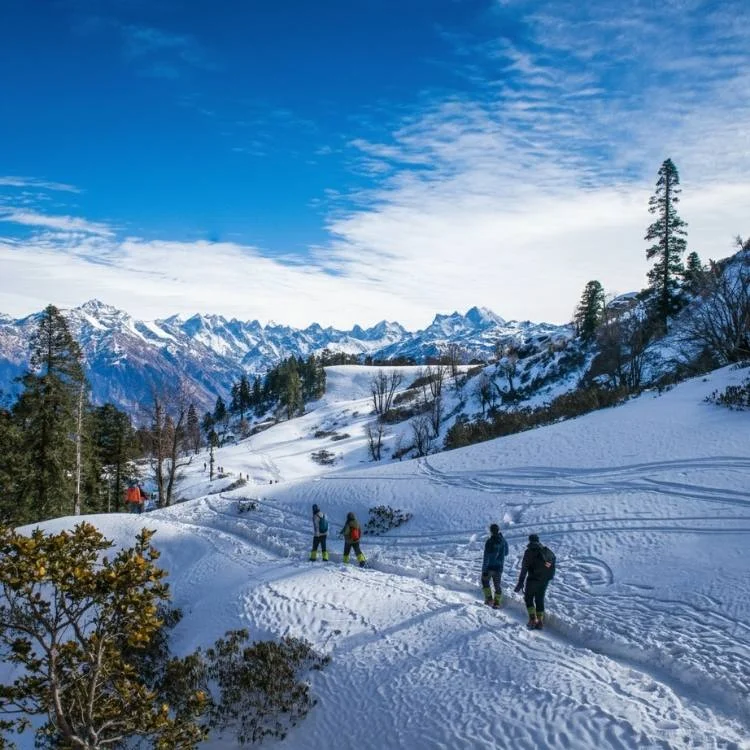 5D/4N
5D/4NWeekend Manali Getaway From Delhi
1D Delhi•2D Manali+2
₹10,999₹15,999SAVE INR 5,000/ person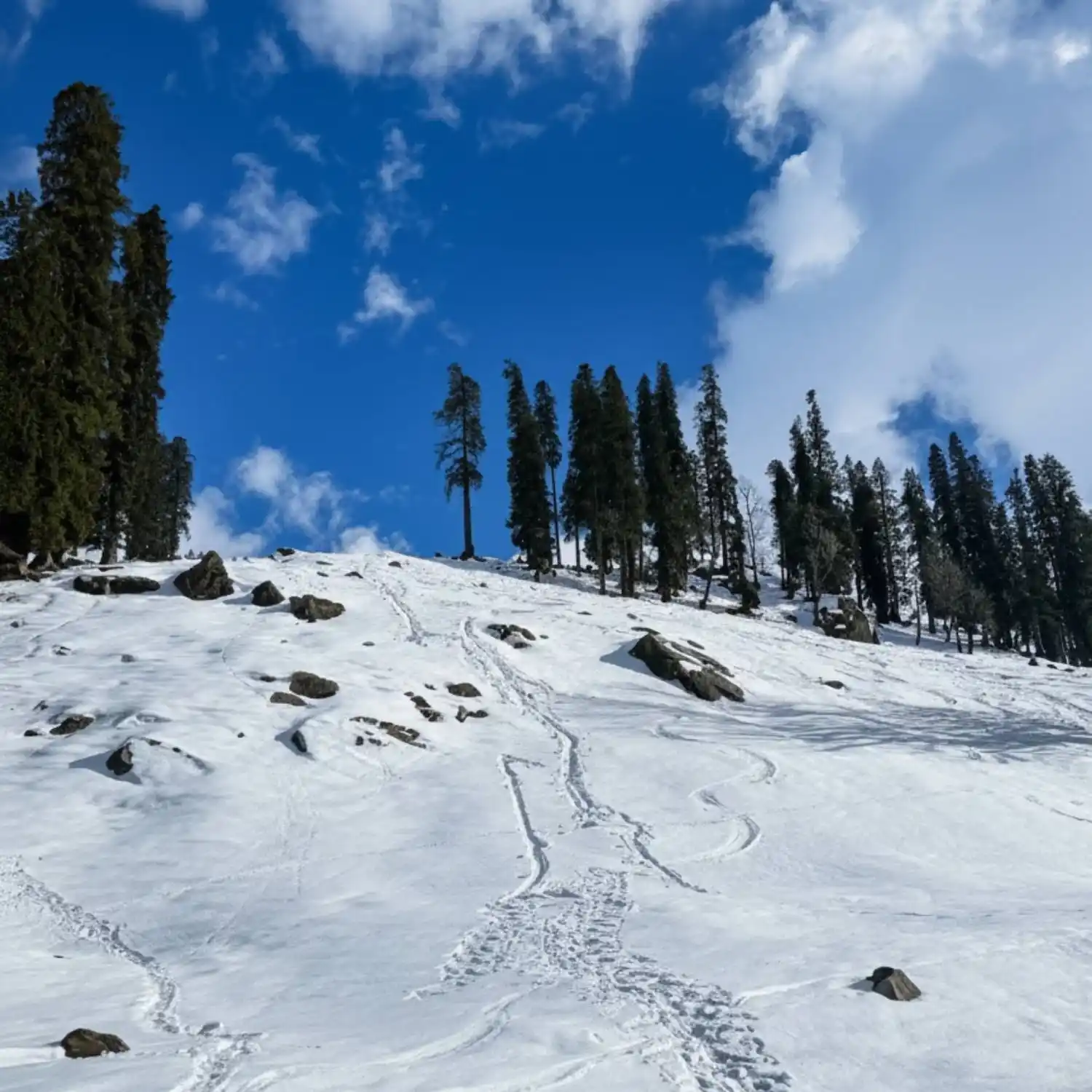 6D/5N
6D/5NManali Solang Sissu & Snow Village Sethan Budget Trip
1D Delhi•3D Manali+2
₹12,999₹19,999SAVE INR 7,000/ person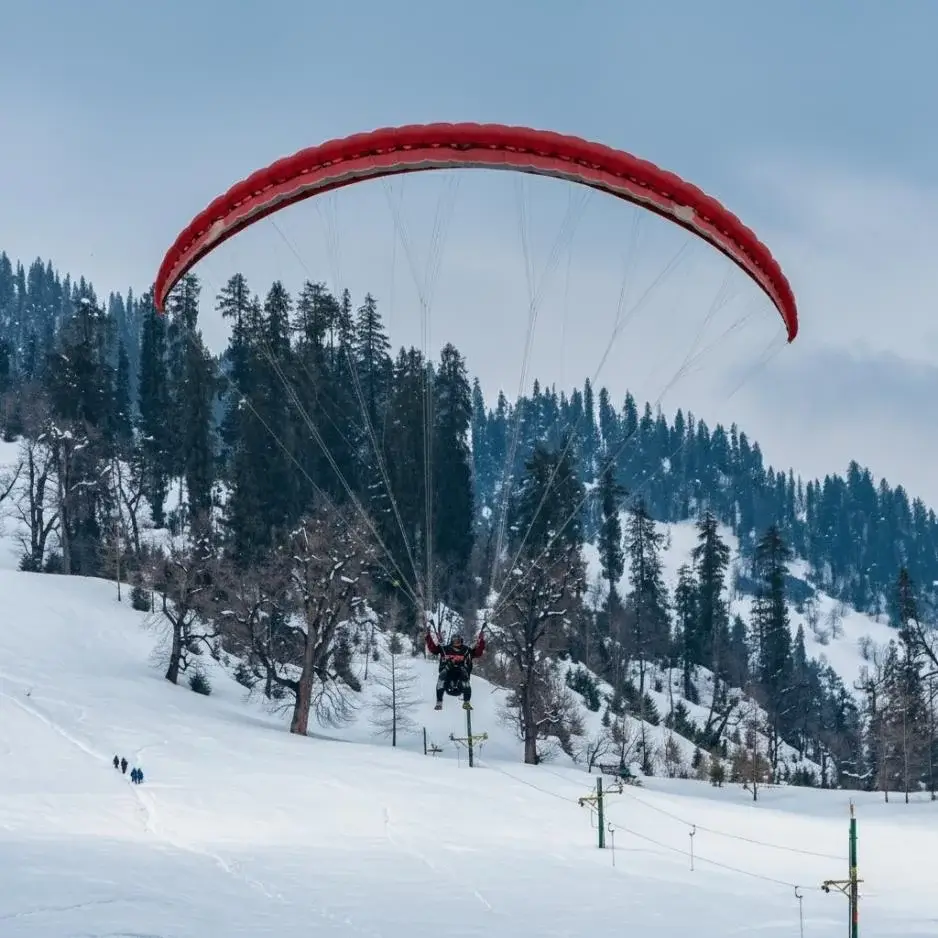 5D/4N
5D/4NManali Solang Sissu Budget Trip
1D Delhi•2D Manali+2
₹13,999₹17,999SAVE INR 4,000/ person
Common questions about Vashisht Hot Springs
Where are the Vashisht Hot Springs?
In Vashisht village, about 3 km from Manali Mall Road and Manali Bus Stand, on the road running along the Beas River towards Rohtang Pass. Reachable by auto, taxi, or a 30 to 40 minute walk from Manali town. Cars can drive right up to the village entrance.
How hot is the water in the Vashisht springs?
The water temperature generally ranges from 40 to 50 degrees Celsius. It is sulphur rich and has a faint sulphur smell. The water comes from deep underground, through the Himalayan granite. It is genuinely hot, not lukewarm.
What are the Vashisht Hot Springs timings?
The temple is generally open from 7 AM to 9 PM. The hot springs bathing areas generally operate from 7 AM to 1 PM and then 2 PM to 9 PM, though timings can vary. Confirm locally if you are planning an early morning or late evening visit. Early morning is the best time for the baths.
Is there an entry fee?
No. Both the temple and the hot springs are free for all visitors. No ticket, no entry charge. Voluntary donations at the temple are accepted.
Are there separate bathing areas for men and women?
Yes. There are separate bathing areas for men and women. The arrangements are managed by the government. Both sections have hot water piped from the same springs. Carry your own towel and a change of clothes.
Do the hot springs have medicinal properties?
Traditionally yes. The sulphur rich water has been believed for centuries to help with skin conditions and joint pain. This is based on local tradition and long use, not clinical verification. Many regular bathers, both locals and visitors, report that the water helps. Treat it as a genuine experience with a long tradition rather than a guaranteed medical treatment.
How much time do you need at Vashisht?
1 to 2 hours covers the hot springs, both temples, and a short walk through the village. Add 1.5 to 2 hours if you continue to the Jogini Waterfall trek. A half day from Manali including travel time is comfortable.
What is the best time to visit Vashisht Hot Springs?
March to June for pleasant weather and comfortable bathing. December to February for the genuinely special experience of soaking in hot water surrounded by snow. The springs and temple are open year round. Early morning is always the best time of day.
Can I combine Vashisht with the Jogini Waterfall trek?
Yes, and you should. The Jogini Waterfall trek starts from Vashisht village, about 2 km uphill through pine forest. Takes roughly 1.5 to 2 hours round trip. The hot springs followed by the falls is one of the better morning plans in Manali.
What should I bring to the hot springs?
A towel, a change of clothes, and sandals for the bathing area. Do not use soap or shampoo in the springs. Carry cash for any shopping or food in the village. Modest clothing for the temple, remove shoes before entering.
Is Vashisht suitable for seniors?
Yes. The road to the village is paved and cars can reach the entrance. The temple compound and spring area are mostly flat. Seniors with reasonable mobility can manage it. The Jogini trek is steeper and may not suit everyone.
Is there a festival at Vashisht?
If you visit during the Dussehra festival, usually in September or October, the village celebrates for seven days with folk music, processions, and community gatherings. Vashisht was historically a centre of Vaishnava traditions, and Dussehra is the biggest local festival here.
Related guides
Posts about Manali
- Medical Help in Manali for Tourists 2026: Hospitals, Pharmacies and Emergency Steps
- Vegetarian and Jain Food in Manali 2026: Where to Eat Without Guesswork
- Mobile Network, Internet, UPI and ATMs in Manali 2026: What Works Where
- Shimla to Manali in 2026: Distance, Travel Time, Bus vs Cab and the Best Transfer Plan
- Manali with Pets in 2026: Road Travel, Pet-Friendly Stays, Snow Safety and Practical Rules
- Is Manali Safe for Solo Female Travellers in 2026? Areas, Transport and Winter Safety