
Jogini Falls
A roughly 150 foot waterfall reached by a 3 km trek through pine forest and apple orchards from Vashisht village near Manali. Free, no permit, a small sacred pool at the base, a Jogini Mata temple, and one of the best short treks in the Manali area if you time it right.
- Manali · waterfall trek
- ~2,150 m / ~7,050 ft
- ~3 km trek from Vashisht
- 1.5 to 2.5 hours round trip
- No entry fee
What makes it special
Jogini Falls is one of the better short treks you can do from Manali, and it is surprising how many people miss it. The waterfall sits at roughly 2,150 metres on the northern edge of Vashisht village, about 3 kilometres uphill from the Vashisht Hot Springs and temple. Water drops from a rocky cliff face at a height of approximately 150 feet, landing into a small natural pool at the base. A temple dedicated to Jogini Mata, the local village goddess, stands right next to the pool. The falls are fed by a tributary stream that eventually joins the Beas River below.
Here is the thing about Jogini Falls. The waterfall itself is worth the walk, but the trek is half the reason to go. The trail passes through Vashisht village, then climbs through apple orchards, deodar and pine forest, crosses a couple of small streams, and winds past tiny Himachali hamlets where you can hear the falls before you see them. On a clear morning, you get proper views of the Beas Valley and snow lines on the peaks across. The air changes as you climb. By the time you reach the falls, you are in a completely different world from Mall Road, which is only about 5 kilometres away.
Honest framing. This is not a major trek. It is a short, pleasant walk with a good payoff at the end. The trail is easy to moderate, with one steep section in the final stretch. Most reasonably fit people finish the uphill in 30 to 45 minutes. The combination of Vashisht Hot Springs in the early morning followed by the Jogini trek is one of the best half day plans in the Manali area. You soak in natural hot water, then walk through a forest to a waterfall. That is a genuinely good morning.
One thing worth knowing. The area around the falls is considered sacred by locals. The Jogini Mata temple is an active place of worship, and families from surrounding villages bring children here for their first tonsure ceremony (mundan). Keep noise down near the temple, and treat the space with respect. The pool at the base is swimmable in warmer months, but use your judgement on the water flow, especially during and right after monsoon when it runs heavy.
Quick answers
- Is Jogini Falls worth the trek from Vashisht?
- Yes, if you enjoy a short forest walk with a proper reward at the end. The trek is only about 3 km from Vashisht, takes 30 to 45 minutes uphill, and the waterfall with its pool and temple at the base is genuinely satisfying. Combine it with the Vashisht Hot Springs for a solid half day. Go in the morning for the best light and the fewest people.
- How long does the Jogini Falls trek take?
- About 1.5 to 2.5 hours round trip from Vashisht, including some time at the falls. The uphill takes 30 to 45 minutes for most people. The way back is faster. Add another 30 to 45 minutes if you start from Manali Mall Road instead of Vashisht.
- What is the best time to visit Jogini Falls?
- March to June for pleasant weather and manageable trails. September to November for strong water flow after monsoon and fewer crowds. The monsoon months of July and August bring the heaviest flow but the trail gets slippery. Winter visits are possible but the trail can be icy and snow covered above Vashisht.
Quick facts
Everything you need to know at a glance.
At a glance
- Altitude
- Approximately 2,150 m / 7,050 ft at the waterfall. The trek starts from Vashisht at roughly 2,050 m.
- Location
- Northern edge of Vashisht village, Kullu district, Himachal Pradesh. About 3 km trek from Vashisht Temple and roughly 5 km from Manali Mall Road.
- Nearest town
- Manali, about 5 km including the trek. Vashisht village is the starting point, 3 km from Mall Road.
- Timings
- No official timings or gates. Open throughout the day. Daylight hours recommended, ideally start by 8 to 9 AM.
- Entry fee
- None. The trek and the waterfall are completely free. No tickets, no permits.
- Time needed
- 1.5 to 2.5 hours round trip from Vashisht. Half a day if combining with the Vashisht Hot Springs.
- Known for
- A roughly 150 foot waterfall with a natural pool and Jogini Mata temple at the base, reached by one of the best short forest treks near Manali.
- Difficulty
- Easy to moderate. Mostly a gentle forest trail with one steeper rocky section near the top. Proper shoes recommended.
On the ground
- Mobile network
- Jio and Airtel work for most of the trail. Signal can drop in patches under heavy tree cover and near the falls. Do not rely on maps loading mid trek.
- ATMs
- None on the trail or in Vashisht. Nearest ATMs are on Mall Road, about 3 km from Vashisht. Carry cash.
- Food
- A couple of small cafes and chai stalls along the lower part of the trail and in Vashisht village. Nothing available in the last kilometre before the falls. Carry water and a snack.
- Parking
- Limited roadside parking at Vashisht village entrance. The trek is on foot from there. Auto or taxi from Manali to Vashisht is easier.
- Washrooms
- Basic facilities in Vashisht village near the temple. Nothing on the trail itself.
- Permits
- None required.
- Drones
- Use discretion. The temple area at the base is a sacred site. Flying a drone directly above the falls and temple is not appropriate.
- Photography
- Excellent throughout. The falls, the forest trail, the valley views, and the pool at the base are all photogenic. Morning light is best. Ask permission before photographing locals or any religious activity.
Seasonal weather
- Mar to Jun25°10°Spring and Summer (Mar to Jun)
- Jul to Sep22°12°Monsoon (Jul to Sep)
- Oct to Feb15°-2°Autumn and Winter (Oct to Feb)
Suitable for
- Couples — suitable
- Families — with some care
- Seniors — with some care
- Solo — suitable
- First-timers — suitable
- Pet-friendly — with some care
How to reach Jogini Falls
2 approach routes, with seasonal access.
From Vashisht Temple (standard start)
Year round, though winter trail can be icy and snow covered- Distance
- About 3 km one way
- Time
- 30 to 45 minutes uphill, 20 to 30 minutes downhill
- Road
- Forest trail. Starts as a paved lane through Vashisht village, transitions to a dirt and rock path through orchards and pine forest. One steeper rocky section near the end.
The standard and most popular route. From the Vashisht Hot Springs and temple, take the narrow lane that leads uphill past houses and small shops. Signboards point the way. The lane opens into apple orchards and then a proper forest trail through pine and deodar trees. You will cross a couple of small streams. The last section gets steeper and rockier. Follow the sound of the water. The trail ends at the Jogini Mata temple and the pool at the base of the falls. The path is mostly obvious, but if you lose it, ask any local you see. Everyone knows the way.
From Manali Mall Road
Year round- Distance
- About 5 to 6 km one way (including the trek)
- Time
- 1.5 to 2 hours one way
- Road
- Paved road from Mall Road to Vashisht (3 km), then forest trail to the falls (3 km)
If you are walking from Manali, follow the road along the Beas River towards Vashisht. It is a pleasant walk of about 3 km on a paved road. From Old Manali, the path crosses the river and reaches Vashisht in about 30 minutes on a different route. Most people save energy by taking an auto or taxi to Vashisht (Rs 100 to 200 one way) and starting the trek from there. The full walk from Mall Road to the falls and back is a solid 4 to 5 hour outing.
Best time to visit
Season by season, so you can plan around the weather rather than hope.
- Recommended
Spring and Summer
March to June
Clear trails, warm mornings, the most comfortable season for the trek
- Day temperature
- 15 to 25 C
- Trail condition
- Dry, clear, easy to follow
- Waterfall flow
- Good, fed by snowmelt
- Crowds
- Moderate on weekends, light on weekdays
This is when most people do the trek, and for good reason. The trail is dry, the forest is green, and the weather is warm enough that you do not need layers once you start walking. Snowmelt keeps the waterfall running well through this window. May and June weekends bring more people to Manali generally, but the Jogini trail never gets truly crowded because most tourists stick to Mall Road and Solang. Weekday mornings are the sweet spot.
Monsoon
July to September
Heaviest waterfall flow, but slippery trails and rain risk
- Day temperature
- 15 to 22 C
- Trail condition
- Muddy, slippery, leeches possible
- Waterfall flow
- Strongest of the year
- Crowds
- Low
The falls are at their most powerful after monsoon rains. If you want to see Jogini at full force, this is the window. But the trade off is real. The trail gets muddy and slippery, especially the last rocky section. Leeches are possible in the forest. Rain can start suddenly. If you go, wear shoes with good grip, carry a rain cover, and do not attempt the climb to the top of the falls when the water is running heavy. The pool at the base can have a strong current. Worth it for experienced walkers who do not mind getting muddy. Not the best window for families or first timers.
- Recommended
Post Monsoon
September to November
Strong flow, clearing skies, the most photogenic window
- Day temperature
- 10 to 20 C
- Trail condition
- Mostly dry, some damp patches
- Waterfall flow
- Strong from monsoon runoff
- Crowds
- Low to moderate
Late September through November is arguably the best window if you want both a strong waterfall and manageable trails. The monsoon moisture is still feeding the falls but the rain eases off. Skies clear, and the mountain views from the trail open up. The forest is at its greenest. Temperatures cool down, especially in November, so carry a light layer. This is also a quieter period in Manali generally.
Winter
December to February
Snow on the trail, thinner waterfall, only for prepared trekkers
- Day temperature
- 0 to 10 C
- Night temperature
- -5 to 0 C
- Trail condition
- Snow and ice likely, trekking poles helpful
- Waterfall flow
- Reduced, partially frozen in deep winter
- Crowds
- Very low
The trail above Vashisht can be covered in snow and ice from December through February. The waterfall thins and can partially freeze, which some people find dramatic. But the trek becomes genuinely harder. The rocky section near the top is slippery when icy, and route finding under snow is not straightforward. If you go, wear proper winter shoes, carry trekking poles if you have them, and start early. Do not attempt this in fresh snowfall or after dark. The Vashisht Hot Springs are at their best in winter, so you can still have a good morning in the area without doing the full Jogini trek.
Things to see & do
4 things worth your time at Jogini Falls.
Trek to the falls and back
1.5 to 2.5 hours round trip from VashishtThe main event. The 3 km trail from Vashisht climbs through the village, then into orchards and forest, with the gradient increasing in the last stretch. Most people take 30 to 45 minutes up and 20 to 30 minutes down. The trail is well worn and mostly obvious, though signage is basic. Follow the sound of water when you are close. The payoff is the falls crashing into the rocky pool at the base, with the small Jogini Mata temple right next to it. Spend 15 to 30 minutes here before heading back. Go early for the best light and the quietest experience.
Swim in the pool at the base
15 to 30 minutesThere is a small natural pool formed where the waterfall meets the rocks. In the warmer months of April to June and September to October, the water is cold but swimmable. The current is gentle when the flow is moderate. In monsoon and right after heavy rain, stay out. The water runs hard and the rocks are slippery. Even in calm conditions, the water is cold enough that most people dip rather than swim for long. Bring a towel and a change of clothes if you plan to get in.
Visit the Jogini Mata temple
10 to 15 minutesThe small temple at the base of the falls is dedicated to Jogini Mata, the local village goddess. It is an active place of worship, not a tourist attraction. Locals bring children here for their first tonsure ceremony. The temple is simple and small, but its location next to the roaring water gives it an atmosphere that larger temples often lack. Remove shoes before entering. Keep your voice down. If a ceremony is happening, watch quietly from a respectful distance.
Combine with Vashisht Hot Springs
Half day totalThe best version of a Jogini Falls visit starts at the Vashisht Hot Springs. Soak in the natural hot water early in the morning, visit the Vashisht Temple, then start the trek to Jogini. You are back in Vashisht by late morning, with time for chai and food in the village before heading back to Manali. This combination is one of the best half day plans in the Manali area and covers two genuinely different experiences in one outing.
Know before you visit Jogini Falls
The practical bits, from people who have been.
The trek: what to actually expect on the trail3 km from Vashisht, easy to moderate, one steep section near the top. Proper shoes matter.
The trail starts as a paved lane through Vashisht village, passing houses, tiny shops, and guest houses. After the village, it opens into apple orchards and then enters pine and deodar forest. The first two thirds of the walk is gentle and pleasant. Streams cross the path in a few spots. The last kilometre gets steeper, with loose rocks and uneven ground. This final section is where most people slow down, and it is the part that gets slippery in rain or snow.
Wear proper shoes. Not sandals, not Crocs, not smooth soled sneakers. Anything with grip will do. The trail is obvious for the most part, with occasional signboards and locals to ask. You do not need a guide, despite what some operators advertise. Go at your own pace. If you are reasonably fit, the uphill takes 30 to 45 minutes. Coming back is faster because gravity is on your side.
The mythology of Jogini Mata and the sacred fallsNamed after the local goddess Jogini. Active temple, mundan ceremonies, and a sacred pool.
Jogini Falls gets its name from Jogini Mata, the local village goddess. According to local belief, the goddess resides at the waterfall, and the surrounding forest and stream are considered sacred. One version of the mythology connects Jogini to a daughter of Lord Indra who is said to have bathed at this waterfall. Another local tradition holds that several deities live within the falls, which is why the area carries an unspoken rule about keeping noise low.
The temple at the base of the falls is a working place of worship. Families from surrounding villages bring their children here for their first tonsure (mundan), a Hindu rite of passage. You may see ceremonies in progress, especially on auspicious days. This is not a tourist site dressed up as a temple. Treat it accordingly. Offerings of coconut, flowers, and small cloth pieces tied to trees near the falls are common and should not be disturbed.
Who should go and who should think twiceGreat for most visitors. Families with young kids and seniors should assess the steep final section.
Solo travellers and couples. Yes. This is one of the most rewarding short treks you can do from Manali. The trail is safe, the forest is beautiful, and the waterfall is a proper payoff. You do not need a guide or a group.
Families with older kids (above 8 or so). Yes. Most kids who are used to some walking can handle this trail. The first two thirds are gentle. The steep section near the top needs attention, but it is short.
Families with toddlers or very young kids. Think carefully. The trail is not pram friendly. You would be carrying the child for most of it, and the last section is steep enough that carrying a child while navigating rocks is tiring and potentially risky.
Seniors. Depends on fitness. The gentle part of the trail is manageable for most active seniors. The steep final section may not suit everyone. There is no shame in turning around at the halfway point, which has its own smaller cascade and flat rocks for sitting.
Pets. Dogs on a leash can manage the trail, but be mindful near the temple. The pool and rocks at the base are not ideal for most pets.
Common mistakes people makeWrong shoes, late starts, skipping water, and underestimating the last stretch.
Wearing the wrong shoes. The single most common mistake. Smooth soled shoes have no grip on the rocky upper section, and sandals are genuinely risky on the uneven terrain. Anything with a proper sole and ankle support works.
Starting too late. If you begin the trek after noon, you are walking in the warmest part of the day and the falls will likely have more people. Start by 8 or 9 AM. You will be back before lunch.
Not carrying water. There is nothing to buy in the last kilometre of the trail. The small cafes are only in the lower section near Vashisht. Carry at least one bottle.
Underestimating the last stretch. The first part of the trek is so easy that some people are surprised when the trail steepens near the top. It is not difficult by trekking standards, but if you have been walking at a leisurely pace, the shift in gradient catches you off guard. Take it slow.
Trying to climb to the top of the falls in monsoon. There is a route from the right side of the lower falls that leads to the top. In dry weather, it is doable for confident walkers. In monsoon, the rocks are slippery and the water is strong. Do not attempt it when the flow is heavy.
Nearby attractions
Other places worth the detour.
Vashisht Hot Springs
Right at the start of the trail, 3 km from the falls
Natural sulphur rich hot water springs at 40 to 50 degrees Celsius with free public baths and an ancient temple dedicated to Sage Vashisht. The natural starting point for the Jogini trek and the best combination in the Manali area. Soak first, trek second.
Old Manali
~3 km from Vashisht
The backpacker and cafe quarter of Manali with cobbled lanes, international food, and the Manu Temple at the top. A different energy from the main town. Easy to combine on the same day as Jogini.
Hadimba Temple
~4 km from Vashisht
The 16th century wooden cave temple in the Dhungri cedar forest. The most architecturally significant site in Manali. A natural afternoon stop if you do Jogini and Vashisht in the morning.
Manu Temple
~5 km from Vashisht via Old Manali
The only temple in India dedicated to Sage Manu, perched at the top of Old Manali. Pair it with a walk through Old Manali's lanes for a relaxed afternoon.
Solang Valley
~14 km from Manali
Manali's main adventure valley with ropeway, paragliding in summer, and snow activities in winter. A full day plan could be Jogini in the morning and Solang in the afternoon, though that makes for a long day.
Our packages with Jogini Falls
Curated trips that include a visit to Jogini Falls.
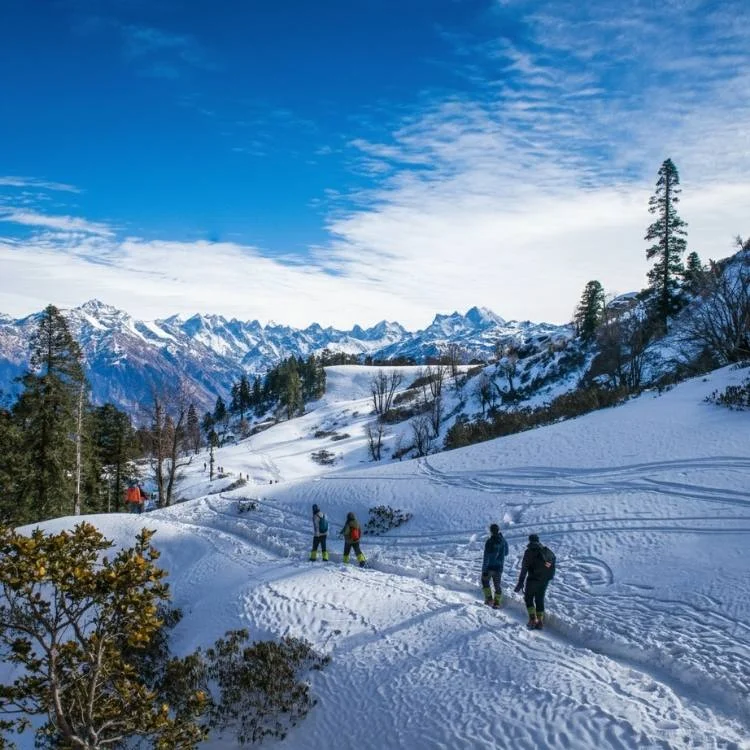 5D/4N
5D/4NWeekend Manali Getaway From Delhi
1D Delhi•2D Manali+2
₹10,999₹15,999SAVE INR 5,000/ person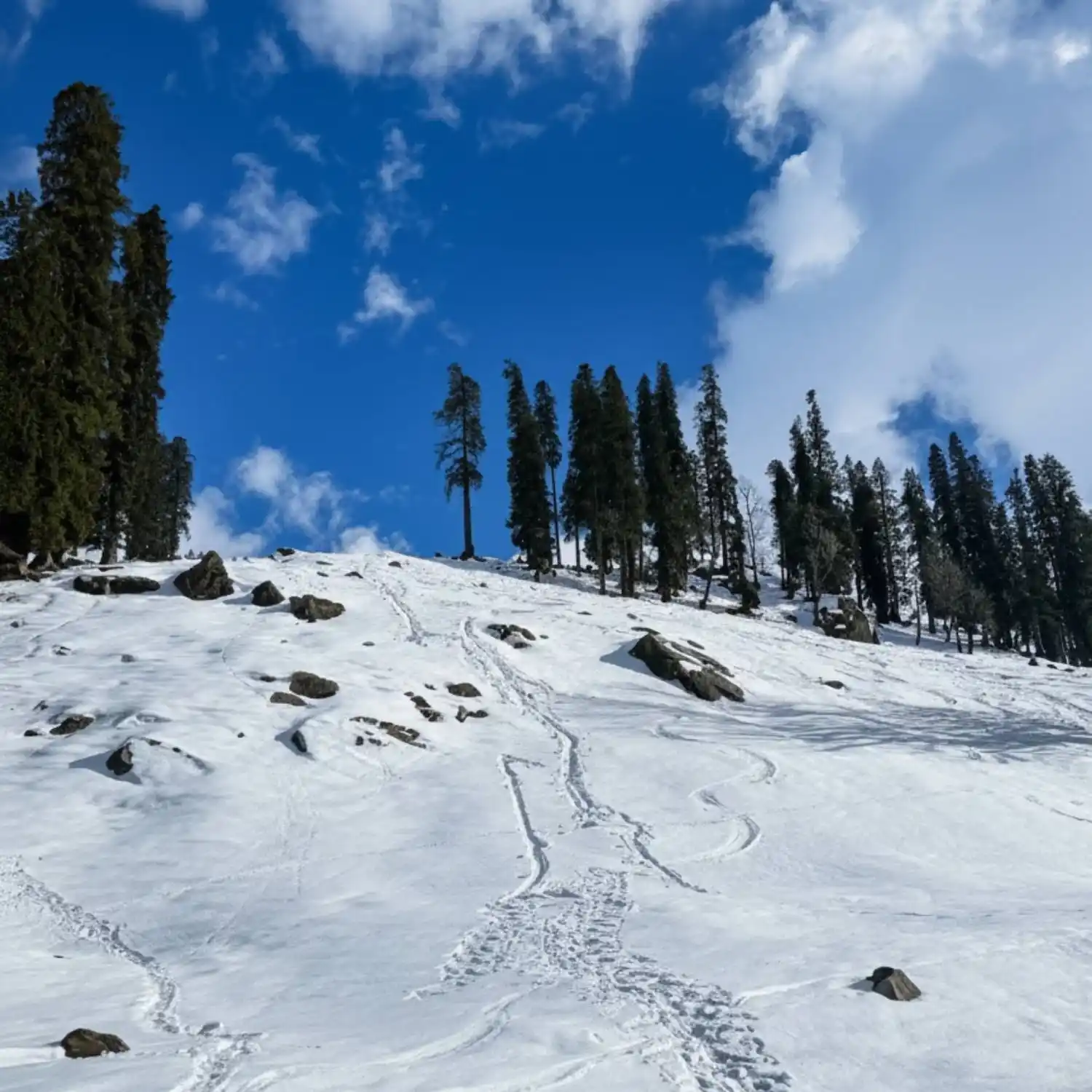 6D/5N
6D/5NManali Solang Sissu & Snow Village Sethan Budget Trip
1D Delhi•3D Manali+2
₹12,999₹19,999SAVE INR 7,000/ person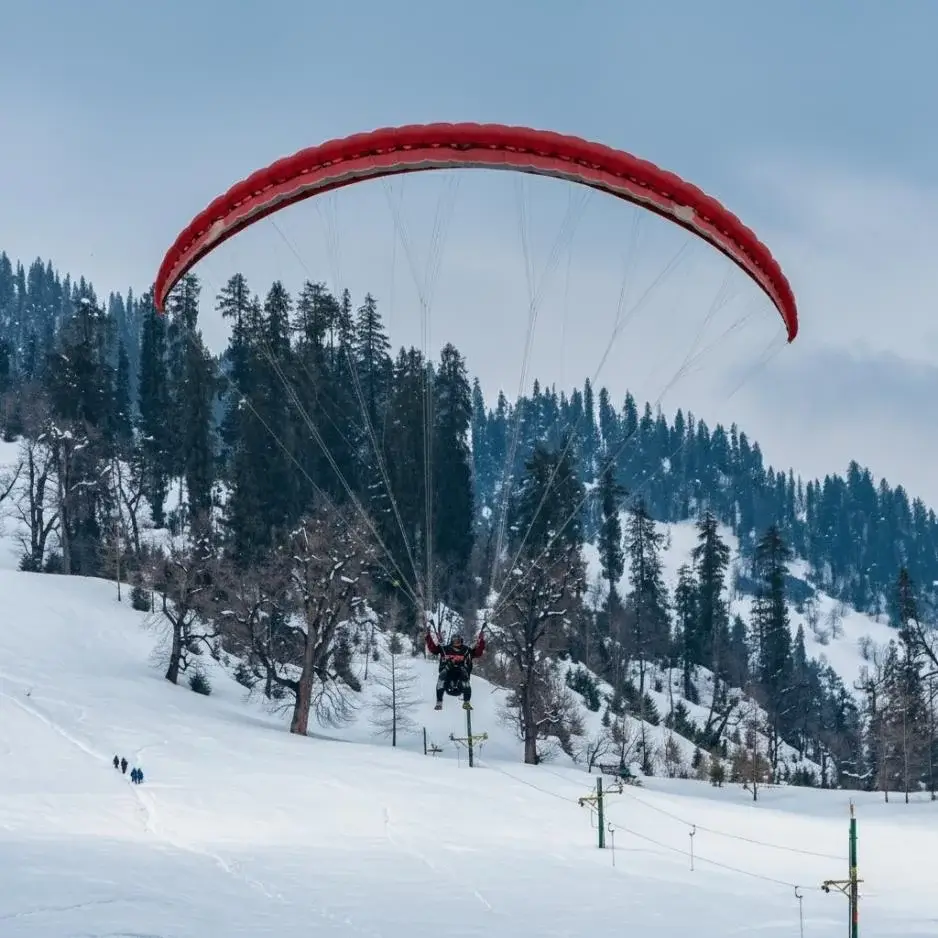 5D/4N
5D/4NManali Solang Sissu Budget Trip
1D Delhi•2D Manali+2
₹13,999₹17,999SAVE INR 4,000/ person
Common questions about Jogini Falls
How far is Jogini Falls from Manali?
The waterfall is about 5 to 6 km from Manali Mall Road, including the 3 km trek from Vashisht. Most people take an auto or taxi to Vashisht (3 km from Mall Road, Rs 100 to 200) and start the trek from there.
Is the Jogini Falls trek difficult?
Easy to moderate overall. The first two thirds of the trail are gentle, through orchards and forest. The last section gets steeper with loose rocks and uneven ground. Anyone with reasonable fitness and proper shoes can do it. The uphill takes 30 to 45 minutes from Vashisht.
Is there an entry fee for Jogini Falls?
No. The trek and the waterfall are completely free. No tickets, no permits, no guides required. Some local operators sell guided treks, but you do not need one. The trail is well worn and obvious.
Can you swim at Jogini Falls?
Yes, in the warmer months when the flow is moderate. There is a small natural pool at the base of the falls. The water is cold. In monsoon or right after heavy rain, the current is too strong and swimming is not safe. Use your judgement and do not go in if the water looks powerful.
What is the best time to visit Jogini Falls?
March to June for pleasant weather and dry trails. September to November for strong waterfall flow and clear skies after monsoon. Avoid monsoon months if you do not like muddy, slippery trails. Winter visits are possible but the trail can be icy.
Do I need a guide for the Jogini Falls trek?
No. The trail from Vashisht is well marked with occasional signboards, and locals along the way can point you in the right direction. It is a popular enough path that you will usually see other walkers. Save your money.
Can families with children do the Jogini trek?
Older children, roughly 8 and above, who are comfortable walking can handle the trail. The lower section is easy. The steep upper section needs some care. Toddlers and very young children would need to be carried, which makes the rocky final stretch tiring and potentially unsafe.
What should I carry for the trek?
Proper shoes with grip (most important), at least one litre of water, a light snack, sunscreen, a hat if it is sunny, and a rain jacket if the sky looks uncertain. Carry a towel and a change of clothes if you plan to swim. Do not overpack. This is a 3 km walk, not an expedition.
Is Jogini Falls open in winter?
It is open year round with no gates or official closures. But the trail above Vashisht can be covered in snow and ice from December to February. The waterfall thins and may partially freeze. Winter treks here require proper shoes, warm layers, and ideally trekking poles. Not recommended for inexperienced walkers in heavy snow.
Can I combine Jogini Falls with Vashisht Hot Springs?
Yes, and you should. The hot springs are right at the start of the Jogini trail. The best plan is to soak in the springs early morning, visit the Vashisht Temple, then do the trek. You will be back in Vashisht by late morning. This combination is one of the best half day outings in Manali.
What is the Jogini Mata temple at the falls?
A small temple dedicated to the local village goddess Jogini, located right at the base of the waterfall. It is an active place of worship. Local families bring children here for their first tonsure ceremony. It is a genuine sacred site, not a tourist attraction. Remove shoes before entering and keep noise low.
Related guides
Posts about Manali
- Medical Help in Manali for Tourists 2026: Hospitals, Pharmacies and Emergency Steps
- Vegetarian and Jain Food in Manali 2026: Where to Eat Without Guesswork
- Mobile Network, Internet, UPI and ATMs in Manali 2026: What Works Where
- Shimla to Manali in 2026: Distance, Travel Time, Bus vs Cab and the Best Transfer Plan
- Manali with Pets in 2026: Road Travel, Pet-Friendly Stays, Snow Safety and Practical Rules
- Is Manali Safe for Solo Female Travellers in 2026? Areas, Transport and Winter Safety