
Chandanwari Pahalgam
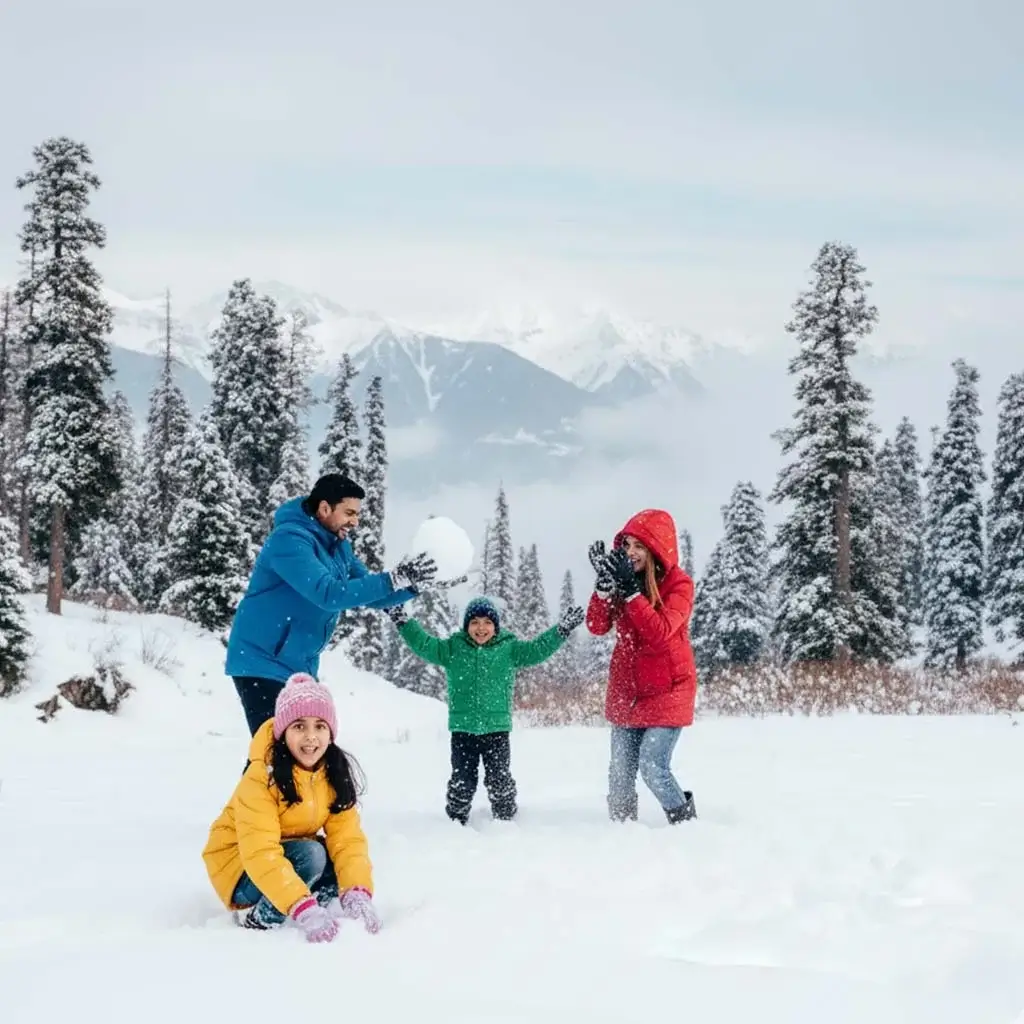
The highest point the road reaches on the Pahalgam side, at about 2,900 metres. Where the Amarnath Yatra trek begins and where tourists come for the thing Kashmir's lower valleys cannot offer: actual snow you can touch, slide on, and throw at each other, even in May. A wide valley at the confluence of two cold rivers, backed by the Sheshnag range. No hotels, no polish, just snow slopes, dhabas, and the kind of mountain scale that makes the other Pahalgam valleys feel gentle.
- About 2,900 m (9,500 ft), 16 km from Pahalgam
- Starting point of the Amarnath Yatra trek
- Snow sledging available April to June
- Lidder river gorge and mountain views
- Part of the Pahalgam union taxi circuit
- No hotels, day trip from Pahalgam
- 1 to 2 hours for casual visitors
- Union taxi only, outside vehicles not allowed
What makes it special
Chandanwari is where the road ends on the Pahalgam side of the Amarnath Yatra route. It sits at about 2,900 metres, roughly 16 km from Pahalgam town, at the point where the Sheshnag stream meets the Lidder river.
For pilgrims, this is where the walking begins. For everyone else, it is the highest, coldest, and most dramatic of Pahalgam's three sub valley stops, and the only one with snow you can actually touch well into early summer.
Travel tip, do not miss this: outside vehicles, including your Srinagar taxi, are not allowed beyond the Pahalgam checkpost. You have to book a local Pahalgam union taxi for the drive up. The combined circuit covering Betaab, Aru, and Chandanwari runs roughly Rs 2,300 to 3,000 for the day, and Chandanwari alone costs less.
The drive up. The ride from Pahalgam takes about 30 to 45 minutes. The road follows the Lidder upstream through pine forest, past waterfalls and traditional Kashmiri houses, and the last stretch is steep and winding.
When you arrive, the valley opens into a wide, exposed bowl with the Sheshnag range towering behind it. Snow sits on the slopes even in late spring, and that is the main draw for non pilgrims.
What to see and do. The snow is the highlight. Local operators run simple wooden sledges on the slopes near the parking area, and it is not a polished adventure sport, just a fast slide and a lot of laughing, at roughly Rs 200 to 500 per run depending on the slope and your bargaining. Snow boots and jackets are available on rent near the entrance if you packed light.
Beyond the snow, you walk by the river, take photos, and drink tea at the dhabas while the peaks do their thing. Quick reality check: if you are not on the Yatra, Chandanwari is a 1 to 2 hour stop, and that is enough. The scenery at this altitude is genuinely different from Betaab or Aru, and the Lidder here is fast, cold, and powerful, but there is not a lot to do beyond that.
For Amarnath pilgrims. Chandanwari is the base camp where the Amarnath Yatra trek begins, covering roughly 32 km to the Holy Cave via Pissu Top, Sheshnag Lake, and Panjtarni. The Yatra typically runs from late June to August, with exact dates set annually by the Shri Amarnathji Shrine Board.
Registration, permits, medical fitness certificates, and RFID tagging are compulsory. This page covers the tourist visit, not the full pilgrimage, so check the official SASB website for current year dates and requirements.
Staying and eating. There are no hotels at Chandanwari, only tented camps for pilgrims during the Yatra season. Tourists visit as a day trip from Pahalgam and return the same day.
Food is limited to dhaba stalls near the parking area. Carry your own water and snacks.
If you are planning a Kashmir trip, our Kashmir package covering Srinagar, Gulmarg, and Pahalgam includes Pahalgam sightseeing that covers the Chandanwari drive.
Quick answers
- What is Chandanwari?
- The highest and most dramatic of Pahalgam's three sub valley stops, at about 2,900 metres, 16 km from Pahalgam town. Known for two things: it is the starting point of the Amarnath Yatra trek to the Holy Cave, and it has snow slopes where tourists can do sledging even in spring and early summer. There is no hotels, no overnight infrastructure for tourists, and not a lot to do beyond snow play, riverside walks, and photography. For most visitors, 1 to 2 hours is enough.
- How much time do I need at Chandanwari?
- 1 to 2 hours for casual tourists. That covers the snow sledging, some photos, tea at the dhabas, and a walk along the river. Factor in 1 to 1.5 hours for the round trip drive from Pahalgam.
- When is the best time to visit Chandanwari?
- April to June for snow sledging and the most dramatic scenery (snow on the slopes, river flowing hard). Late June to August during the Amarnath Yatra season. September for a quiet autumn visit. The road is generally open April to October, weather permitting.
Quick facts
Everything you need to know at a glance.
At a glance
- Location
- 16 km from Pahalgam, Anantnag district. On the Amarnath Yatra route.
- Altitude
- About 2,895 to 2,923 m (roughly 9,500 ft). Noticeably colder than Pahalgam.
- Best season
- April to June for snow sledging. Late June to August for Amarnath Yatra. Road generally open April to October.
- Timings
- Daylight hours. No formal gate or closing time.
- Entry fee
- Nominal parking and entry fees may apply at the checkpost. Cash only.
- Time needed
- 1 to 2 hours for tourists. Factor in the drive from Pahalgam.
- Known for
- Starting point of the Amarnath Yatra trek, snow sledging, Lidder river gorge, dramatic high altitude scenery.
- Difficulty
- Easy near the parking area. The altitude (2,900 m) can cause mild breathlessness. Snow slopes are uneven.
On the ground
- Mobile network
- Weak to none. BSNL may work in patches. Do not rely on mobile data.
- ATMs
- None. Nearest in Pahalgam town. Carry cash.
- Food
- A few dhabas near the parking area. Tea, maggi, and basic snacks. No proper restaurants.
- Washrooms
- Very basic near the parking area.
- Parking
- Union taxi drops you at the parking area. No self drive access.
- Photography
- Allowed. Snow slopes, river gorge, and mountain backdrop are the subjects. Late morning light is best.
- Drones
- Restricted. Military and Yatra security presence in the area.
- Safety
- Safe with caution. Stay away from the river (fast, cold, dangerous). Snow slopes can be slippery. Security presence during Yatra season.
Seasonal weather
- March to May12°0°Spring
- June to August20°6°Summer
- September to November15°0°Autumn
- December to February2°-10°Winter
Suitable for
- Couples — suitable
- Families — suitable
- Seniors — with some care
- Solo — suitable
- First-timers — suitable
- Pet-friendly — not suitable
How to reach Chandanwari Pahalgam
2 approach routes, with seasonal access.
From Pahalgam town
Generally April to October. Road condition depends on weather and snow clearance.- Distance
- About 16 km
- Time
- 30 to 45 minutes by union taxi
- Road
- Narrow mountain road along the river. Steep final approach. Surfaced but winding.
The only road route. Union taxis from Pahalgam follow the Lidder river upstream, passing through the Hajan area (Betaab Valley) and climbing through pine forest. The road is surfaced but narrow and winding, with the last stretch being steep. Outside vehicles are not allowed beyond the Pahalgam checkpost. The combined union taxi circuit (Betaab, Aru, Chandanwari) costs roughly Rs 2,300 to 3,000. Chandanwari alone costs less.
From Srinagar
Year round to Pahalgam. Chandanwari road generally April to October.- Distance
- About 105 to 110 km total
- Time
- 4 to 5 hours including the union taxi
- Road
- National highway to Anantnag, then mountain roads to Pahalgam and Chandanwari.
Drive from Srinagar to Pahalgam (about 90 km, 2.5 to 3.5 hours via Anantnag), then take a union taxi from Pahalgam to Chandanwari. The total journey is about 4 to 5 hours. Most visitors base themselves in Pahalgam for 1 to 2 nights.
Best time to visit
Season by season, so you can plan around the weather rather than hope.
- Recommended
Spring and Early Summer
April to June
Best for snow sledging. Thick snow on slopes, river flowing hard.
- Temperature
- ~0 to 12°C, cold mornings
- Crowds
- Moderate. Growing through May.
- What to carry
- Warm jacket, gloves, sunscreen, sturdy shoes or rented snow boots
The best window for tourists. Snow is thick on the slopes, sledging is at its most fun, and the river is flowing hard from snowmelt. The combination of white slopes and pine forest is the most visually dramatic version of Chandanwari. Mornings are cold (near freezing), so time your visit for mid morning when the sun hits the valley.
Summer and Yatra Season
Late June to August
Amarnath Yatra season. Active pilgrimage. Snow melting on lower slopes.
- Temperature
- ~6 to 20°C, comfortable but can change quickly
- Crowds
- High during Yatra. Pilgrims, security, and infrastructure.
- Honest advice
- If you are not on the Yatra, visit before or after the pilgrimage season for a calmer experience.
The Amarnath Yatra typically runs during this period (exact dates vary). The area is active with pilgrims, tented camps, security checkpoints, and logistical operations. Tourists can still visit, but the atmosphere is very different from the off season. Snow may have melted from the lower slopes by late July. The valley is green where the snow has cleared.
Autumn
September to October
Quiet, golden light, post Yatra calm
- Temperature
- ~0 to 15°C, cold evenings
- Crowds
- Very low.
- What to carry
- Warm layers, rain gear
Quiet and beautiful. The Yatra is over, the pilgrimage infrastructure winds down, and the valley settles into golden autumn light. Snow is gone from the lower slopes but visible on the higher peaks. Fewer visitors, cooler temperatures, and a calmer atmosphere than summer. October is the sweet spot. November is risky for road access.
- Closed
Winter
November to March
Road closed, heavy snow, not accessible
- Temperature
- ~-10 to 2°C, very cold
- Access
- Road generally closed. Inaccessible.
The road is generally closed due to heavy snow. The valley is buried. Not accessible for casual tourists. Some extreme winter trekkers attempt access, but it is not recommended or supported by any infrastructure.
Things to see & do
3 things worth your time at Chandanwari Pahalgam.
Snow sledging on the glacier slopes
15 to 30 minutes per runThe main activity for tourists. Local operators run simple wooden sledges on snow slopes near the parking area. You sit on the sledge and slide down. Available from roughly April to June, sometimes later depending on snowfall. Rates are negotiable, roughly Rs 200 to 500 per run. Snow boots and jackets can be rented nearby.
Riverside walk and photography
30 minutes to 1 hourThe Lidder river at Chandanwari is fast, cold, and runs over large rocks. The surrounding peaks are snow covered for most of the year. The open valley, the river gorge, and the high mountain backdrop make this the most dramatic landscape on the Pahalgam circuit. Late morning light is best for the peaks.
Pony ride toward Pissu Top
30 minutes to 1 hourShort pony rides are available near the parking area. Rates are displayed by the local union. A longer ride takes you up toward Pissu Top (the first ascent on the Amarnath trek route), giving you a taste of the pilgrimage trail without committing to the full trek.
Know before you visit Chandanwari Pahalgam
The practical bits, from people who have been.
Practical tipsCarry warm clothes and cash. Snow gear available for rent. Basic dhabas only.
Carry warm clothes. At nearly 2,900 m, Chandanwari is noticeably colder than Pahalgam. Even in May, the wind off the snow slopes cuts through anything light. A proper jacket is essential, not optional.
Snow boots and jackets for rent. If you did not pack for cold weather, rental gear is available near the entrance. Quality varies. Your own warm clothes are better.
Carry cash. No ATMs. You will need cash for sledge rides, pony rides, food stalls, and gear rentals. Negotiate sledge prices before you start.
No food beyond dhabas. A few basic stalls sell tea, maggi, and snacks. If you want a proper meal, eat in Pahalgam before or after.
How Chandanwari fits the Pahalgam circuitThird stop on the Pahalgam circuit. Most different from the other two. Higher, colder, snow.
Chandanwari is the third and final stop on the standard Pahalgam union taxi circuit (Betaab, Aru, Chandanwari). Most visitors do all three in a single day from Pahalgam.
The drive from Pahalgam passes through Hajan (Betaab Valley area), so you can stop at Betaab on the way to or from Chandanwari. The usual order: Betaab first, then Aru or Chandanwari.
Of the three, Chandanwari is the most different. Betaab is polished and green. Aru is quiet and the trekking base. Chandanwari is high, cold, raw, and has snow. If you skip one, this is usually the one people drop, but it is also the one with the most dramatic landscape.
Who Chandanwari suitsFun for families (watch kids near the river). Manageable for seniors near parking. Pilgrims check SASB for Yatra details.
Families with children: Fun for snow play. Keep children away from the river (fast and dangerous) and be careful on slippery snow slopes. The altitude may make some children uncomfortable.
Seniors: The area near the parking is flat and accessible. Pony rides are available. The snow slopes require good balance. The altitude (2,900 m) can cause mild breathlessness.
Pilgrims: For Amarnath Yatra logistics, check the official SASB website for current year dates, registration, and requirements. This page covers the tourist visit, not the full pilgrimage.
Nearby attractions
Other places worth the detour.
Pahalgam
16 km (30 to 45 minutes by union taxi)
Pahalgam town is the base for all three sub valleys. Hotels, restaurants, and the union taxi stand. Most visitors stay 1 to 2 nights and cover Betaab, Aru, and Chandanwari from here.
Betaab Valley
About 7 km from Chandanwari (on the way back toward Pahalgam)
A wide meadow with paved paths, the Lidder river, and an entry fee. The most accessible and photogenic of the three Pahalgam sub valleys. Usually the first stop on the circuit.
Aru Valley
About 28 km from Chandanwari (via Pahalgam)
A quieter alpine valley 12 km upstream from Pahalgam. Base camp for the Tarsar Marsar and Kolahoi treks. Better for camping and overnight stays.
Sheshnag Lake
13 km trek
A glacial lake at about 3,590 m on the Amarnath Yatra route, roughly 13 km trek from Chandanwari via Pissu Top. Not a casual day trip. For experienced trekkers and pilgrims only.
Srinagar
About 105 to 110 km
Srinagar's main city. About 105 km from Chandanwari. Most Kashmir itineraries pair Srinagar with 1 to 2 nights in Pahalgam.
Our packages with Chandanwari Pahalgam
Curated trips that include a visit to Chandanwari Pahalgam.
 5D/4N
5D/4NBest Of Kashmir – Srinagar, Gulmarg & Pahalgam Tour Package
1D Srinagar•1D Gulmarg (day trip)+3
₹12,500₹28,999SAVE INR 16,499/ person 4D/3N
4D/3NThe Perfect 4 Day Kashmir Getaway
1D Srinagar•1D Gulmarg +2
₹8,999₹24,999SAVE INR 16,000/ person
Frequently Asked Questions about Chandanwari Pahalgam
How far is Chandanwari from Pahalgam?
About 16 km from Pahalgam town (30 to 45 minutes by union taxi). About 105 to 110 km from Srinagar.
What is the altitude of Chandanwari?
About 2,895 to 2,923 metres (roughly 9,500 feet). Noticeably colder than Pahalgam. Carry warm clothes even in summer.
What is the best time to visit Chandanwari?
April to June for snow sledging and scenery. Late June to August for the Amarnath Yatra season (dates vary annually). September and October for quiet autumn visits. The road is generally open April to October, weather permitting.
Is Chandanwari the starting point of the Amarnath Yatra?
Yes. It is the traditional starting point of the trek from the Pahalgam side. The trek covers roughly 32 km from Chandanwari to the Holy Cave via Pissu Top, Sheshnag Lake, and Panjtarni. The Yatra runs typically late June to August. Registration, permits, and medical fitness certificates are compulsory.
What can I do at Chandanwari?
Snow sledging on the glacier slopes (roughly Rs 200 to 500 per run), riverside walks, photography, pony rides toward Pissu Top, and tea at the dhabas. There is not a lot to do beyond these, so 1 to 2 hours is enough for most tourists.
Are there hotels at Chandanwari?
No. There are no hotels. During the Yatra season, tented camps operate for pilgrims. Tourists visit as a day trip from Pahalgam, where accommodation is plentiful.
How do I reach Chandanwari?
Union taxis from Pahalgam. Outside vehicles, including your Srinagar taxi, are generally not allowed beyond the Pahalgam checkpost. Chandanwari is covered as part of the standard Pahalgam sightseeing circuit (Betaab, Aru, Chandanwari). Combined fare roughly Rs 2,300 to 3,000.
Is snow sledging available year round?
Snow sledging is available from roughly April to June, sometimes into July depending on snowfall. By late summer, the snow may have melted from the lower slopes. Conditions vary year to year.
Chandanwari or Betaab Valley?
Betaab Valley is a wide, managed meadow with paved paths, entry fee, and the Lidder river. More immediately photogenic and easier. Chandanwari is higher, rawer, colder, and has snow. It is less polished but more dramatic. If you are doing the standard Pahalgam circuit, you visit both on the same day.
Is Chandanwari suitable for families?
Yes, with caution. The valley is flat near the parking area, and pony rides are available for those who do not want to walk. The main concern is the altitude (about 2,900 m), which can cause mild breathlessness, and the cold. The snow slopes are uneven and slippery. Keep children close near the river, which is fast and dangerous.
Related guides
Posts about Kashmir
- Kashmir in January 2027: Snowfall, Weather, Itinerary and Travel Guide
- Kashmir in February 2027: Weather, Snowfall, Places, Cost and Itinerary
- Kashmir Honeymoon Guide 2026: Itinerary, Cost, Best Time and Romantic Places
- Kashmir Houseboat Stay: Dal Lake vs Nigeen Lake, Prices and Booking Guide
- Gulmarg Gondola Guide 2026: Tickets, Phases, Timings and Booking
- Kashmir in December 2026: Snowfall, Weather, Itinerary and Cost