
Spiti Valley in April 2026: Weather, Snow, Road Status, What's Open, Itinerary and Honest Travel Tips

Yes, you can visit Spiti Valley in April. But the trip looks very different from the classic summer full-circuit that most travel blogs show you.
April is a transition month. Winter is loosening its grip on the valley, but it has not let go completely. The Shimla-Kinnaur route is your only reliable way in. The Manali-Kaza road via Kunzum Pass is still buried under heavy snow and will not open until late May at the earliest. You cannot do the full Spiti circuit in April, and Chandratal Lake is completely off the table.
That said, April has its own rewards. The valley is quiet, the peaks are still snow-covered, the air is crisp, and you get to experience a version of Spiti that very few tourists ever see. It sits in that sweet spot between harsh winter and the tourist rush of summer.
If you are someone who values solitude over convenience, is comfortable with slightly basic conditions, and can plan around the Shimla-Kinnaur approach, April can be a genuinely rewarding time for a Spiti trip.
Looking for a well-planned package that accounts for the realities of April travel? Browse Travel Coffee's Spiti Valley trip options or keep reading for the full picture.
Quick Answer: Can You Visit Spiti Valley in April?
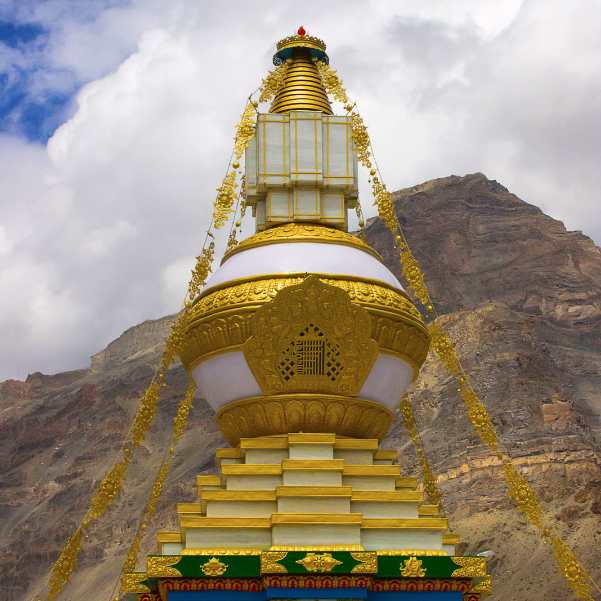
Is Spiti open in April?
Yes. Spiti Valley is reachable in April via the Shimla-Kinnaur route (Hindustan-Tibet Highway). The valley does not "close," but access depends on road and weather conditions.
Which route works?
Only the Shimla side. The road runs through Narkanda, Rampur, Reckong Peo, Nako, Tabo, and into Kaza. This route stays open year-round with occasional weather-related disruptions.
Is the Manali side open?
No. The Manali-to-Kaza road via Kunzum Pass typically remains closed until late May or early June. BRO begins snow clearance operations in March-April, but the road does not become motorable for tourist traffic until much later. In 2025, it opened around late May.
Is the full circuit possible?
Not in April. You enter and exit via the same Shimla-Kinnaur route. The loop through Manali is not available.
Is Chandratal part of an April itinerary?
No. Chandratal Lake is located near Kunzum Pass on the Manali stretch and remains inaccessible until mid-June.
Who should consider April?
Travellers who prefer fewer crowds, are fine with slightly basic facilities, enjoy snow-covered landscapes, and can handle cold nights.
Is Spiti Valley Open in April?
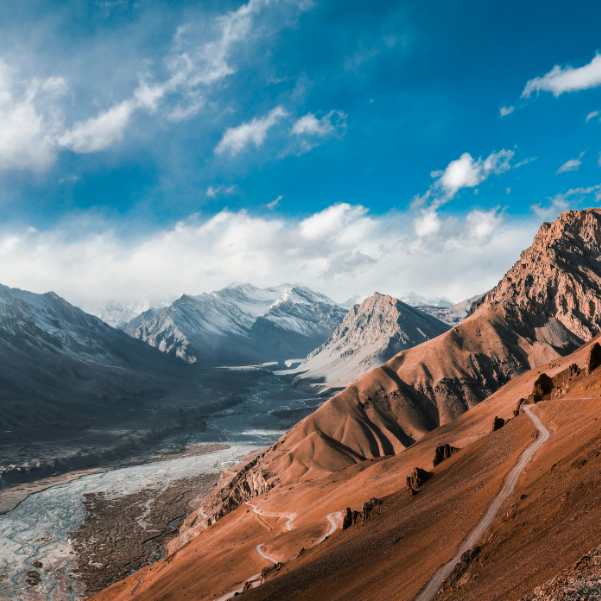
The word "open" means different things in different months. In April, here is what it actually means.
The Shimla-Kinnaur highway, which is the lifeline for winter and early-spring access to Spiti, is generally operational.
This route follows the Sutlej River through Kinnaur and then climbs into the Spiti Valley. BRO and HPPWD crews maintain this stretch throughout the year, and snow clearance happens promptly after any fresh fall.
However, "open" does not mean "smooth." Sections between Pooh and Nako can still have ice patches and slush in early April. The road near the Kinnaur-Spiti border zone, particularly around Sumdo, can be tricky. Landslide-prone zones exist along the Sutlej gorge. An experienced mountain driver and a capable vehicle make a real difference.
What "open" definitely does not mean in April: the Manali route, the Kunzum Pass, Chandratal, or the full circuit. Those open later, typically June onward.
The practical reality is this: in April, you access Spiti from Shimla, explore the core valley around Kaza and its nearby villages, and return the same way. It is a focused trip, not a sprawling loop.
Spiti Valley Weather in April
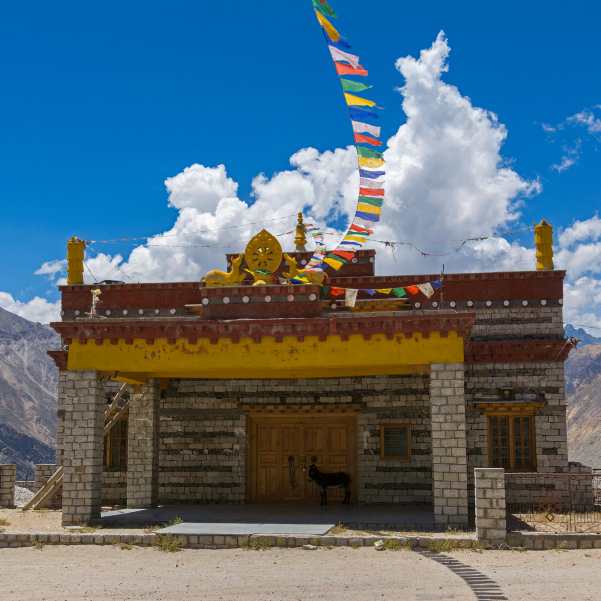
April weather in Spiti is best described as cold spring with winter flashbacks. The valley is transitioning, but at 12,500 feet and above, transitions are slow.
Daytime
When the sun is out, and it usually is (Spiti is a cold desert with plenty of sunshine), daytime temperatures in Kaza hover between 5 and 15 degrees Celsius.
In direct sunlight around noon, especially in the second half of April, it can feel almost pleasant. You might be comfortable in just a fleece and a light jacket.
But the moment you step into shade or a gust of wind hits, the cold is immediate and sharp. The dry air at this altitude means the sun warms your skin fast, but the ambient temperature remains low.
Nighttime
Nights are still firmly in winter territory. Expect temperatures between minus 5 and minus 10 degrees Celsius in Kaza. Early April nights can dip lower. Higher villages like Langza, Komic, or Kibber will be colder still, sometimes touching minus 12 or below.
The Sun Factor
UV intensity at this altitude is fierce, even when it feels cold. Sunburn in sub-zero conditions is absolutely real in Spiti. SPF 50+ sunscreen and good UV-protection sunglasses are essential gear, not optional accessories.
Wind Chill
The Spiti Valley funnels wind through its narrow gorges. On exposed stretches, especially between Tabo and Kaza, wind chill can make the effective temperature feel 5 to 8 degrees lower than what the thermometer reads.
Weather Summary Table
Factor | Early April | Late April |
Daytime high (Kaza) | 5 to 10°C | 10 to 15°C |
Nighttime low (Kaza) | -8 to -12°C | -3 to -7°C |
Sunshine | Strong, UV-intense | Strong, UV-intense |
Snow chance | Moderate | Low to moderate |
Wind | Cold, gusty | Less severe |
Road conditions | Icy patches possible | Improving, some slush |
Does It Snow in Spiti Valley in April?
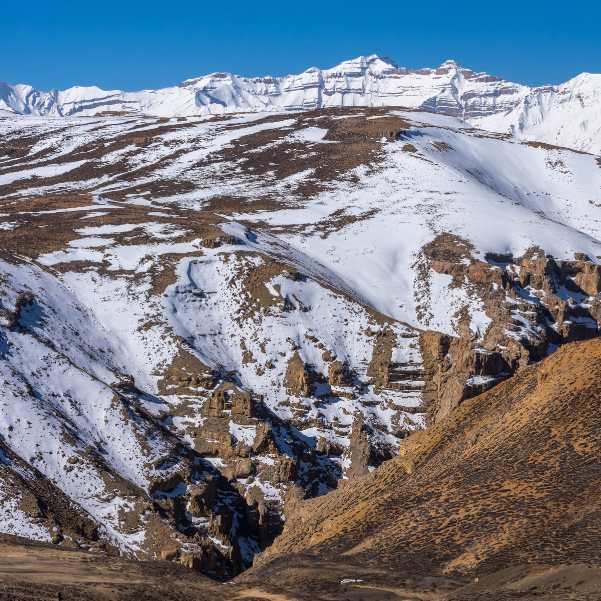
Yes, it can snow in April, but the pattern is very different from deep winter.
Fresh snowfall in Kaza town is less common in April compared to January or February, but it is absolutely possible, especially in the first two weeks of the month.
In March 2026, fresh snow was recorded in the higher reaches of Lahaul and Spiti, and similar late-season snowfall events regularly carry into April.
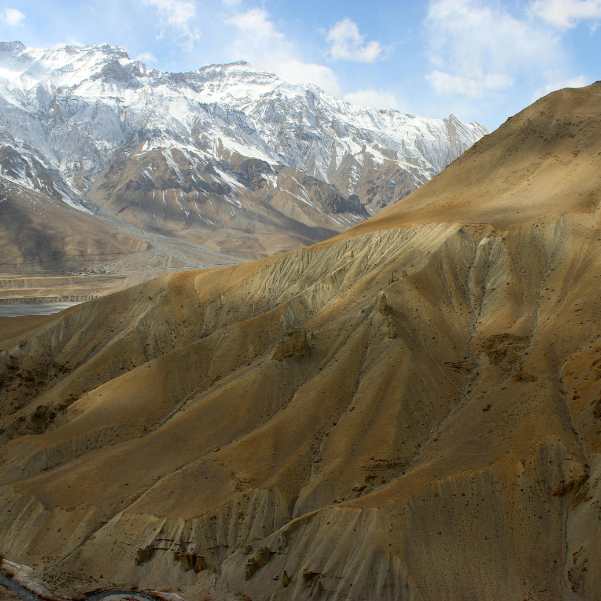
Where you will definitely see snow is on the surrounding peaks and high ridges. The mountains around Kaza, Key, Kibber, and Langza remain white through April and well into May.
Frozen streams begin thawing, and the contrast between snow-covered peaks and the brown desert valley floor is dramatic.
The higher villages like Komic (around 14,500 feet), Hikkim, and Langza sit in a zone where snow persists longer.
If fresh snow falls even once, access roads to these villages can become temporarily difficult until local clearance happens.
For snow-lovers, April offers the best of both worlds: snow-covered landscapes without the extreme minus 20 to minus 25 cold of deep winter.
For photographers, the light is spectacular, with low-angle spring sun hitting white peaks against deep blue skies.
Spiti Valley Road Status in April: Route by Route
This is the section that should influence your planning more than anything else. Road access determines your entire April experience.
Shimla to Kaza via Kinnaur (Your Route)
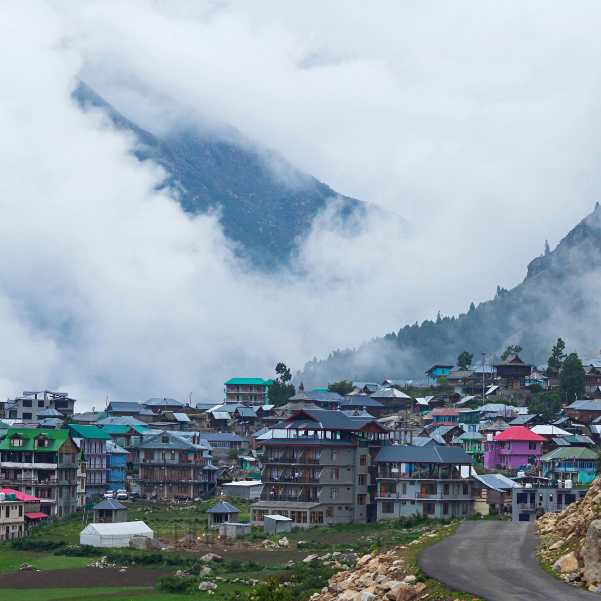
This is the only reliable route to reach Spiti in April. The Hindustan-Tibet Highway (NH-5) runs from Shimla through Narkanda, Rampur Bushahr, Reckong Peo, Pooh, Nako, Tabo, and finally Kaza.
Status in April: Operational, with caveats. Early April can see ice on shadowed sections near Nako and between Pooh and Tabo.
By mid to late April, conditions improve significantly. BRO maintenance keeps the road drivable, but expect rough patches, loose gravel, and the occasional landslide-cleared section along the Sutlej gorge.
Vehicle recommendation: A 4x4 or a high-clearance SUV is ideal in early April. By late April, a regular SUV can manage most sections, but a capable vehicle with a mountain-experienced driver remains the smart choice.
Travel time: Shimla to Kaza takes two days minimum, with an overnight halt at Reckong Peo, Kalpa, or Nako.
Sangla Valley and Chitkul Access
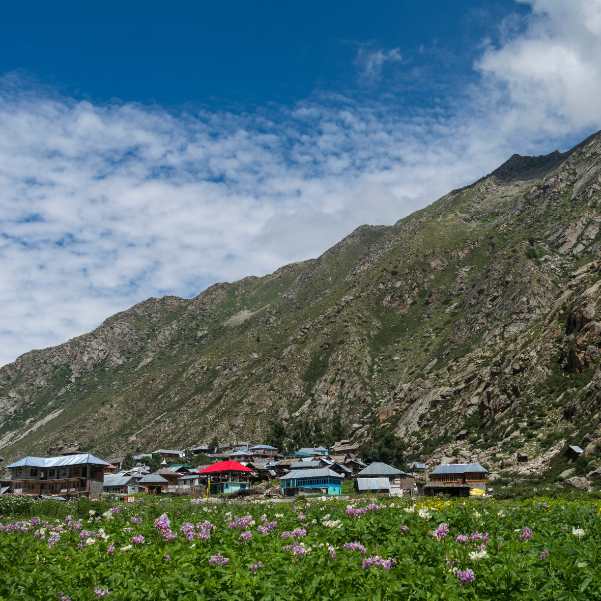
The road to Sangla and Chitkul branches off near Karchham. In winter, this stretch is typically closed due to snow. By April, it starts opening up, but road clearance is weather-dependent.
Status in April: The Sangla road usually becomes passable by mid to late April. Chitkul, being deeper into the valley, may take until the last week of April or even early May.
Do not treat this as a guaranteed stop in early April. Check conditions locally before diverting.
Manali to Kaza via Kunzum Pass (Closed)
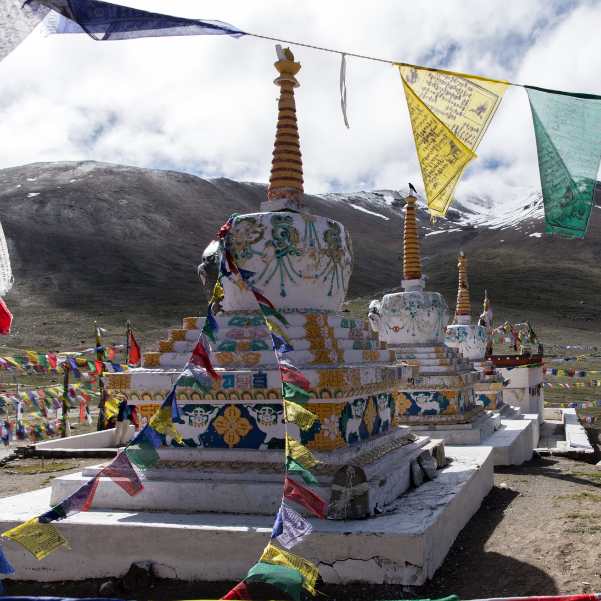
This route passes through Kunzum Pass at over 15,000 feet and is buried under many metres of accumulated snow from November onward.
BRO begins clearance operations sometime in March or April, but the road does not open to traffic until late May or June in most years.
Status in April: Closed. Not drivable. Not "mostly open with some snow." Completely closed. The Atal Tunnel lets you reach Sissu or Keylong in the Lahaul Valley, but travel beyond that towards Kunzum and Kaza is not possible.
If you are reading conflicting information about the Manali route being usable in April, it is outdated or inaccurate. Do not plan your April Spiti trip around this route.
Chandratal Lake Access (Closed)
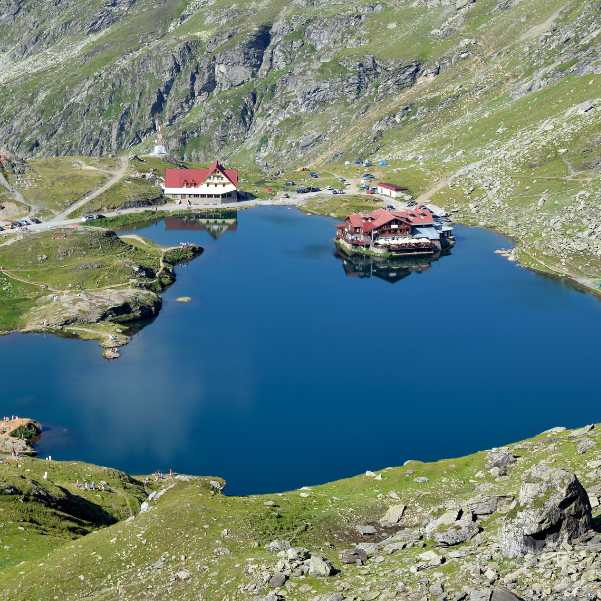
Chandratal sits at approximately 14,100 feet on the Manali-Kaza stretch, near Kunzum Pass. The lake and its access roads remain under snow from late October through mid-June.
Status in April: Completely inaccessible. Travel Coffee has a detailed piece on Chandratal in April that explains this more fully and suggests alternatives.
If Chandratal is central to your Spiti dream, plan a summer Spiti circuit trip for June or later.
Pin Valley Access
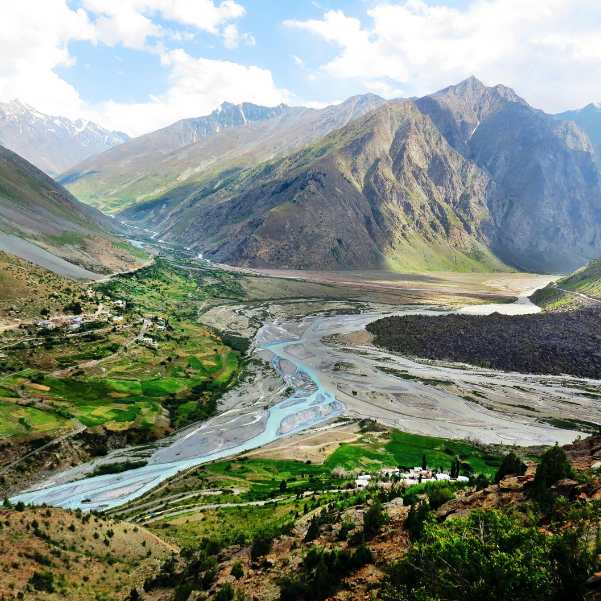
Pin Valley National Park connects via a link road from Attargo on the Shimla-Kaza highway. In winter, this road is often snow-blocked.
Status in April: Variable. The road to Mudh (the main village in Pin Valley) sometimes opens by late April but can remain tricky.
This is a day-of-travel check, not a plan-in-advance certainty. Ask your driver or homestay host for morning updates before attempting it.
Route Status Summary Table
Route / Destination | April Status | Notes |
Shimla to Kaza (via Kinnaur) | Open, drivable | Ice patches possible early April |
Sangla and Chitkul | Opens mid to late April | Weather-dependent, check locally |
Manali to Kaza (Kunzum Pass) | Closed | Opens late May / June |
Chandratal Lake | Closed | Opens mid-June |
Pin Valley (to Mudh) | Uncertain, often late April | Day-of check required |
Kibber | Usually accessible | Icy in mornings |
Langza, Hikkim, Komic | Variable | Post-snowfall closures possible |
Nako | On main highway, accessible | May have slush early April |
Is April a Good Time to Visit Spiti Valley?
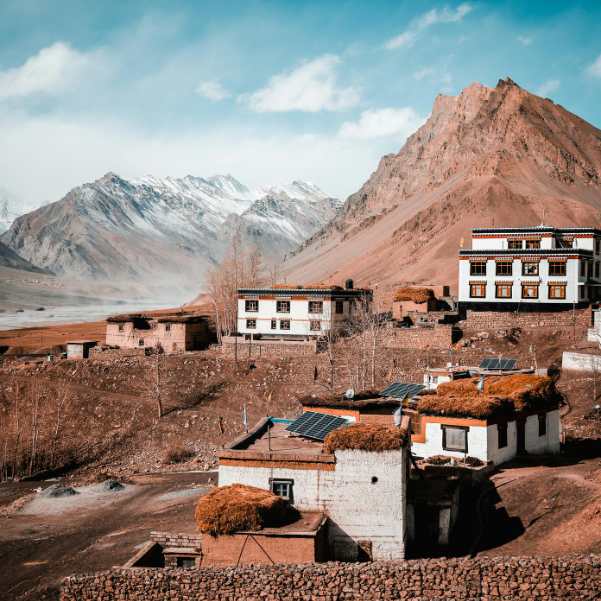
The honest answer: it depends on what kind of traveller you are.
April Is Great For
Photographers and visual storytellers
The snow-covered peaks, frozen-then-thawing rivers, and stark brown-white contrasts of April Spiti produce some of the most dramatic Himalayan photography conditions. Low tourist density means you get clean compositions without crowds in the frame.
Couples who enjoy adventure travel
If you and your partner are the kind who would rather share a quiet homestay dinner with a bukhari crackling nearby than sit in a crowded hotel lobby, April Spiti is romance with an edge. It is intimate, slow, and far from the Instagram-tourist circuit.
Experienced Himalayan travellers
If you have done Ladakh in shoulder season, or a winter trek somewhere at altitude, April Spiti will feel like a natural fit.
People who value solitude
The valley is still largely tourist-free in April. Some weeks you might be the only visitors at Key Monastery or walking the streets of Kaza.
Budget-conscious travellers
April falls in the shoulder season. Accommodation rates, where available, are lower than peak summer. You can often negotiate better deals on private cabs and homestays.
April Is Not Ideal For
First-time mountain travellers who want comfort
If this is your first Himalayan trip and you expect reliable hot water, well-heated rooms, good restaurants, and predictable roads, April Spiti will be frustrating. Wait for late June or July.
Families with young children or elderly members
The cold, basic facilities, altitude, and road conditions make April a challenging month for those who need predictable comfort and medical access.
Bikers
A motorcycle trip to Spiti in April is doable via the Shimla route, but early mornings bring icy roads, and the cold on a bike at 12,000+ feet is punishing. If biking Spiti is the goal, June through September is your window.
Travellers who want the full circuit
The Manali loop and Chandratal are not available in April. If the complete circuit matters to you, come in June.
Self-drive beginners
Driving to Spiti in April is possible, but only for experienced mountain drivers comfortable with narrow roads, black ice, and the occasional unguarded cliff edge. If you have never driven in Himalayan conditions, do not start here in April.
Best Places to Visit in Spiti Valley in April
April access is more limited than summer, but the core of the valley and its most significant sites are reachable.
Kaza
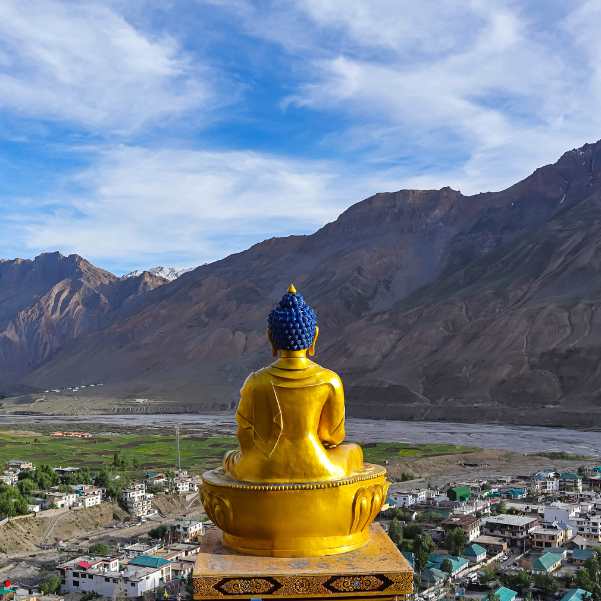
The administrative headquarters and your base for everything in Spiti. In April, Kaza is waking up from winter. A handful of cafes and eateries begin reopening, and the local market starts showing signs of life.
The New Monastery is worth a visit. Spend time just walking around town and adjusting to altitude before heading further.
Key Monastery
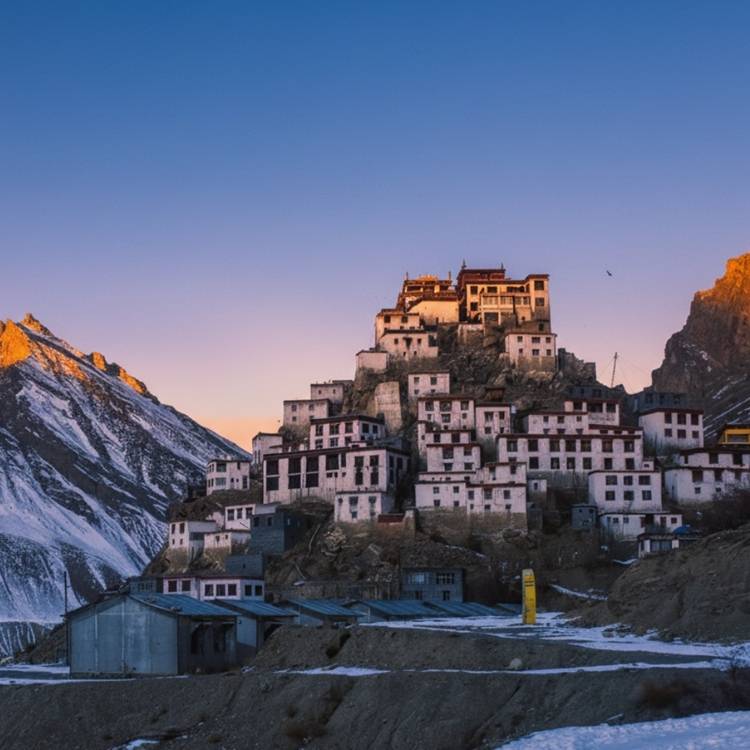
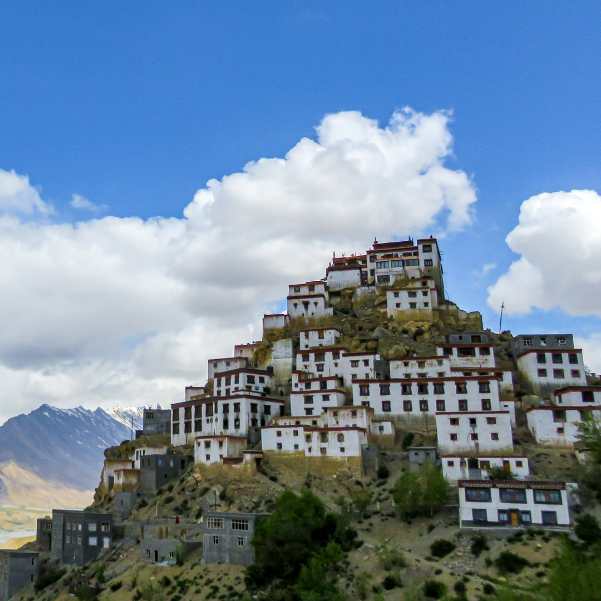
Perhaps the most photographed site in Spiti, Key Gompa sits on a hilltop about 12 km from Kaza. In April, with snow still dusting the monastery and surrounding hills, it looks extraordinary.
The road to Key is on the main highway stretch and is generally accessible. Check with locals about morning ice on the final approach.
Kibber
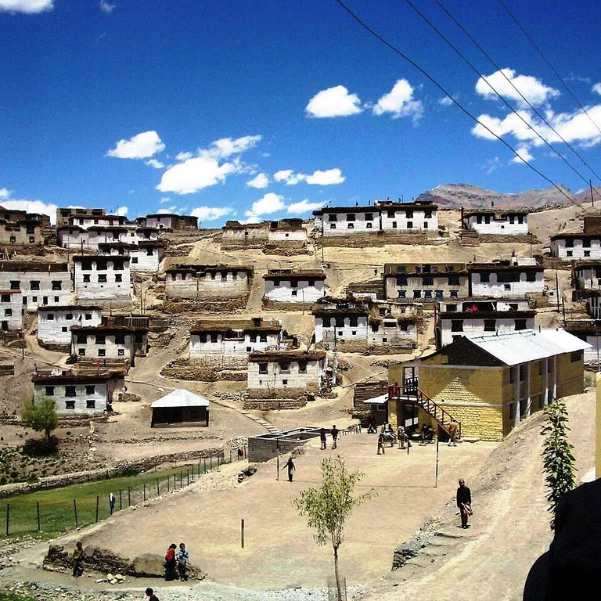
At around 14,200 feet, Kibber is one of the highest motorable villages in Asia. The road from Kaza to Kibber is typically drivable in April, though icy patches on shadowed stretches near the village can form in the early hours.
Kibber is also the base for snow leopard tracking, and late-season sightings have been reported in March and April as the animals track prey on lower slopes.
Chicham
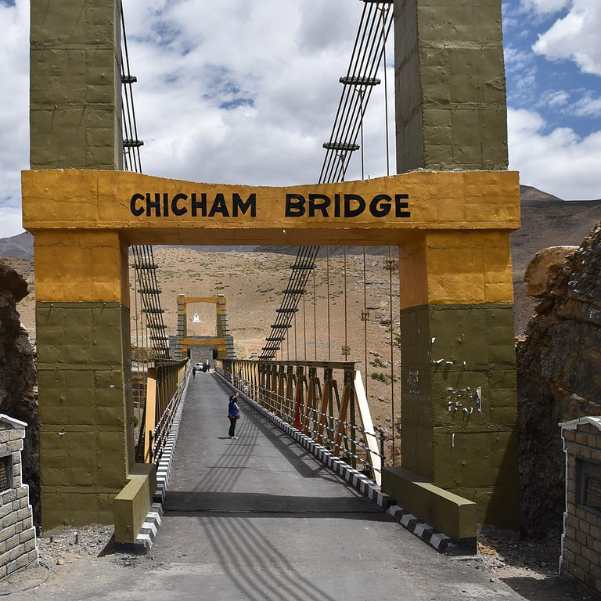
Home to Asia's highest suspension bridge, Chicham is connected to Kibber by a short drive. If Kibber is accessible, Chicham usually is too.
The bridge against a backdrop of snow-covered gorges is a sight that hits differently in April than it does in busy summer months.
Langza
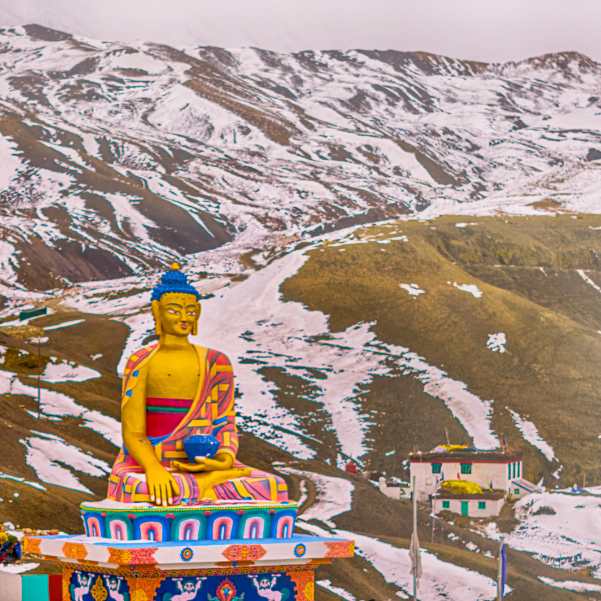
Famous for its giant Buddha statue and fossil-hunting trails, Langza sits at about 14,500 feet. In April, access depends heavily on recent weather.
After late April snowmelt, the trails around Langza start revealing ancient ammonite fossils (remnants from when the Himalayas were under the Tethys Sea).
The access road can be blocked after fresh snow, so treat this as a "check and go" destination.
Hikkim
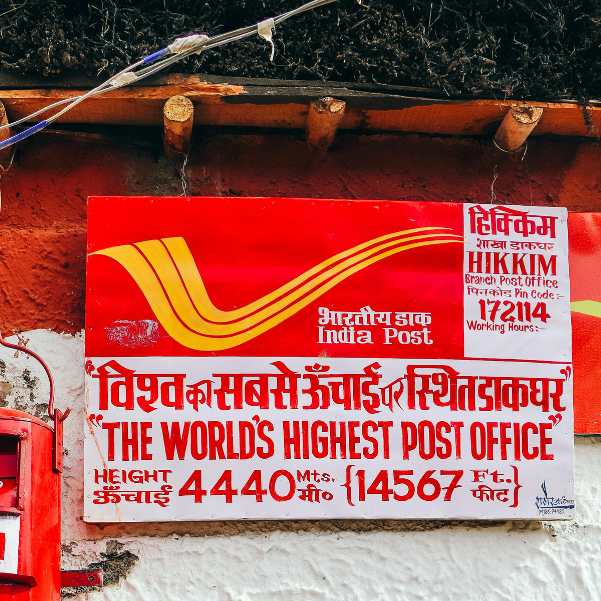
Home to the world's highest post office, Hikkim is a short drive from Langza. If Langza is accessible, Hikkim usually is too.
April access is weather-dependent. The post office may or may not be operational this early in the season, but the village itself is worth the visit.
Komic
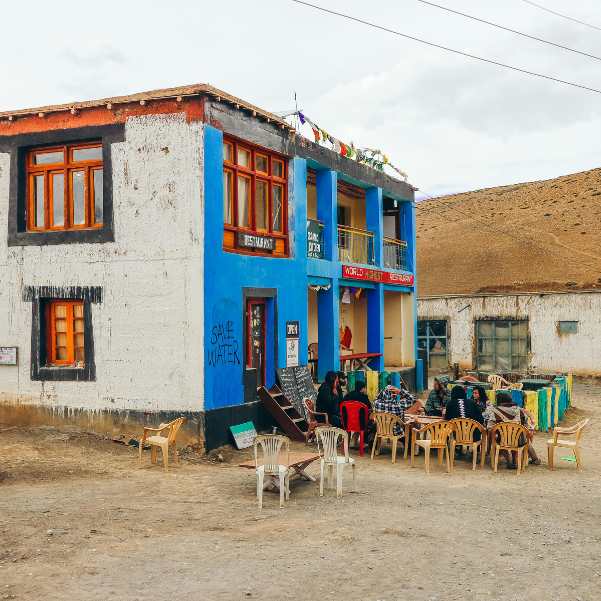
One of the highest villages connected by a motorable road. Similar access profile to Langza and Hikkim.
In April, Komic's monastery and its sweeping views of the Spiti landscape under snow are stunning, but road access needs a same-day check.
Tabo
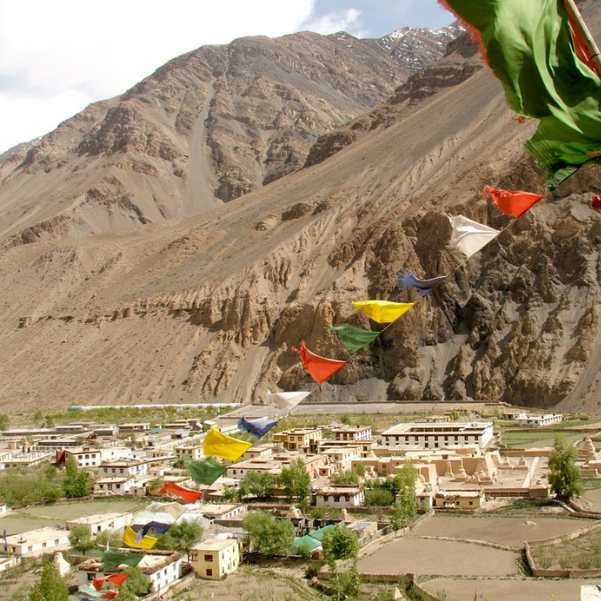
Tabo Monastery is one of the oldest continuously operating Buddhist monasteries in India, founded over a thousand years ago.
It sits on the main Shimla-Kaza highway and is easily accessible in April. The ancient mud-walled monastery complex, with its remarkable murals and meditation caves, feels even more special in the quiet of shoulder season.
Dhankar
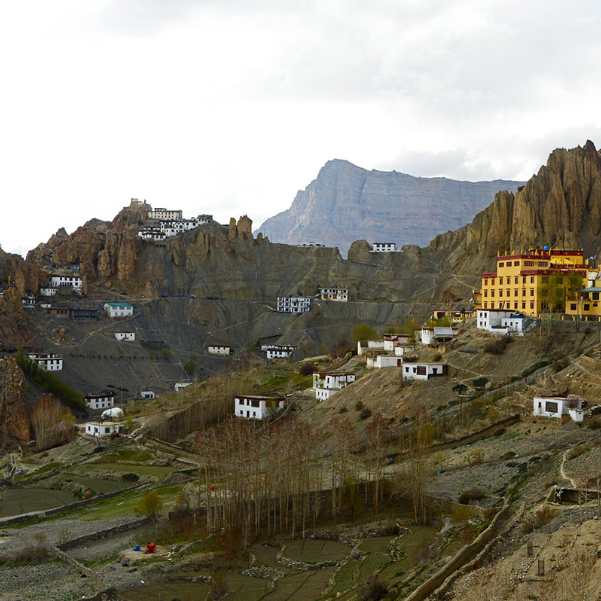
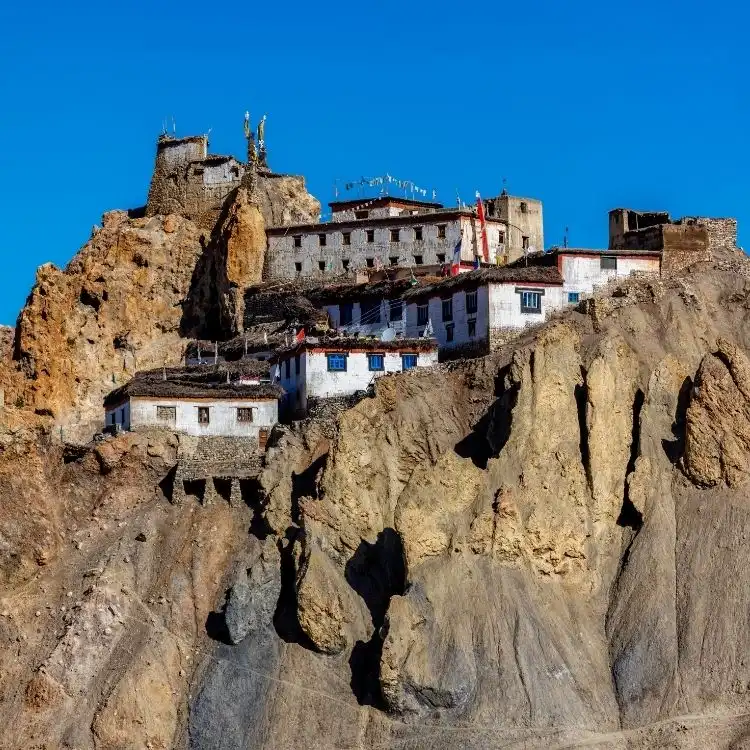
The old Dhankar Monastery perched on a cliff overlooking the Spiti and Pin Valley confluence is a short detour from the main highway.
The road to Dhankar is generally passable in April. The fort-monastery is one of the most dramatic settings in the entire valley.
Nako
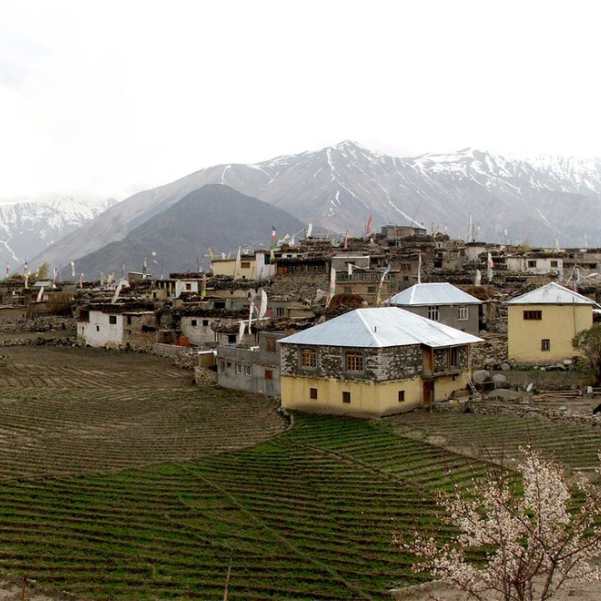
A beautiful village with a sacred lake, Nako sits on the main highway in the Kinnaur-Spiti transition zone.
You will pass through it on your way to Kaza. In early April, Nako Lake may still be partially frozen. The village itself has a quiet charm and makes a good rest stop.
Kalpa
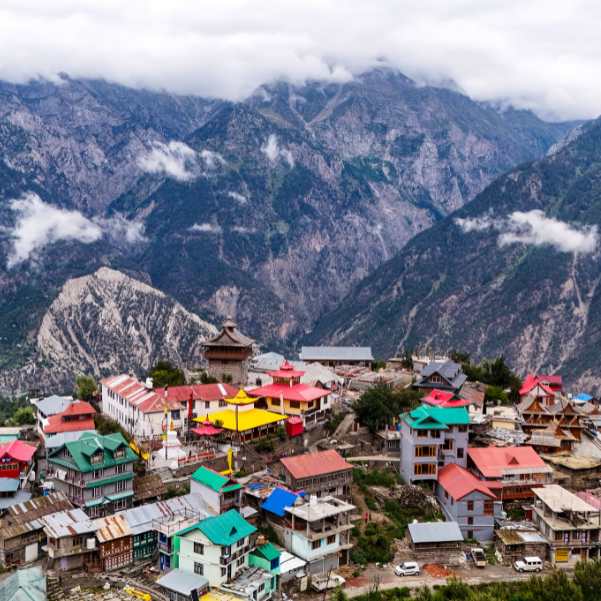
Technically in the Kinnaur Valley rather than Spiti, Kalpa offers spectacular views of the Kinner Kailash range.
It makes a natural overnight halt on the way to Kaza. In April, the apple orchards are not yet in bloom, but the snow-covered peaks are at their most dramatic.
If you want to explore the Kinnaur side further, Travel Coffee has dedicated Kinnaur packages worth looking at.
Places You Should Not Overpromise Yourself in April
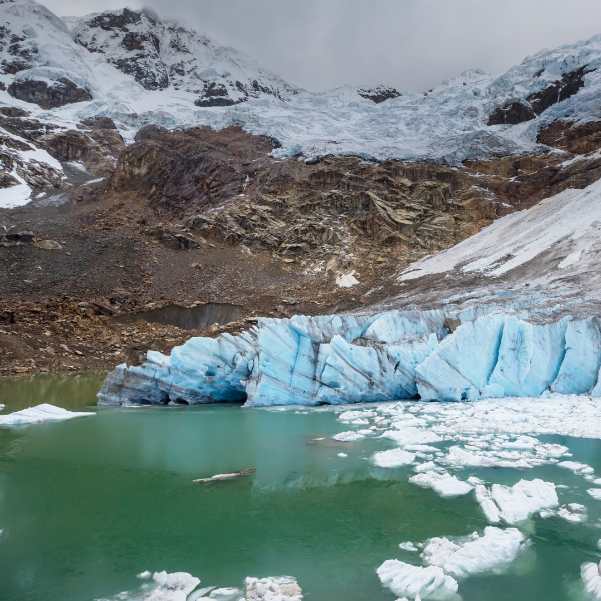
This section exists because too many travel articles set expectations that April cannot deliver.
Chandratal Lake
Completely closed. Under snow. No access until mid-June. If someone is selling you an April trip that includes Chandratal, ask hard questions.
Pin Valley (Mudh and beyond)
Sometimes opens late April, but it is far from guaranteed. Do not build your itinerary around it.
Chitkul
Usually accessible only from mid to late April. In an early or heavy snow year, it can stay closed into May.
The Full Spiti Circuit (Shimla to Kaza to Manali)
Not possible. The Manali side is closed. You go in and come out the same way.
High-altitude village roads after fresh snow
Langza, Hikkim, and Komic can become temporarily inaccessible after even a moderate snowfall. Always have a Plan B day.
Being realistic about these limitations is not negative. It actually helps you enjoy what April does offer instead of spending your trip frustrated about what it cannot.
A Realistic Spiti Valley Itinerary for April (8 to 9 Days)
This itinerary uses the Shimla-Kinnaur route and focuses on what is actually accessible in April.
Day 1
Arrive in Shimla. Settle in. If you are coming from Delhi, either drive (7 to 9 hours) or take an overnight Volvo. Pick up any supplies you need. ATMs, pharmacy, warm layers, snacks.
Day 2
Shimla to Narkanda to Rampur to Reckong Peo. Approximately 7 to 9 hours of driving. The Sutlej River valley starts opening up beautifully after Rampur.
Overnight at Reckong Peo. Alternatively, if time and road conditions allow, push to Kalpa for better views and accommodation.
Day 3
Reckong Peo/Kalpa to Nako. If Sangla-Chitkul road is confirmed open by locals, you can detour here.
Otherwise, continue to Nako (about 5 to 7 hours). Nako's lake and monastery are a peaceful stop. The drive through the Kinnaur-Spiti border zone is among the most dramatic in India.
Day 4
Nako to Tabo to Kaza. Visit Tabo Monastery in the morning. The thousand-year-old murals and meditation caves are remarkable.
Continue to Kaza (about 2 to 3 hours from Tabo). Settle in and rest. The altitude will start making itself felt.
Day 5
Kaza and Key Monastery. Explore Kaza town in the morning. After lunch, drive to Key Monastery.
On a clear April day, Key dusted with snow against a bright blue sky is one of the finest sights in the Indian Himalayas. Return to Kaza for the night.
Day 6
Kibber, Chicham, and attempt Langza/Hikkim. Morning drive to Kibber and Chicham Bridge. In the afternoon, check if the road to Langza or Hikkim is passable. If it is, go.
If not, spend more time around Kibber or return to Kaza for a peaceful evening. Stargazing from Kaza or Kibber on a clear night in April is remarkable.
Day 7
Buffer day or Dhankar. This is your flex day. Use it for Dhankar Monastery (a short drive from the main highway), or for a village that was inaccessible earlier. If everything went smoothly, simply enjoy a slow morning in Kaza.
Visit the local market. Have thukpa. Read a book. The buffer day is what separates a good trip from a stressful one.
Day 8
Kaza to Reckong Peo/Kalpa. Reverse the route. Full day of driving. Overnight at Reckong Peo or Kalpa.
Day 9
Reckong Peo/Kalpa to Shimla (or onward to Delhi/Chandigarh). Drive back to Shimla. Evening bus or train to Delhi if needed, or overnight in Shimla.
This itinerary is honest about what April allows. It does not pretend you can cover Chandratal, the Manali loop, or every high village.
It gives you the heart of Spiti with enough breathing room to actually enjoy it.
Message Travel Coffee on WhatsApp to get a customized April itinerary with real-time road updates and homestay bookings handled for you.
Explore Our Curated Spiti Valley Tours
 Group Tour10D/9N
Full Spiti Valley Circuit With Chandratal
1D Narkanda•1D Sangla+5
₹29,999₹32,999SAVE INR 3,000/ person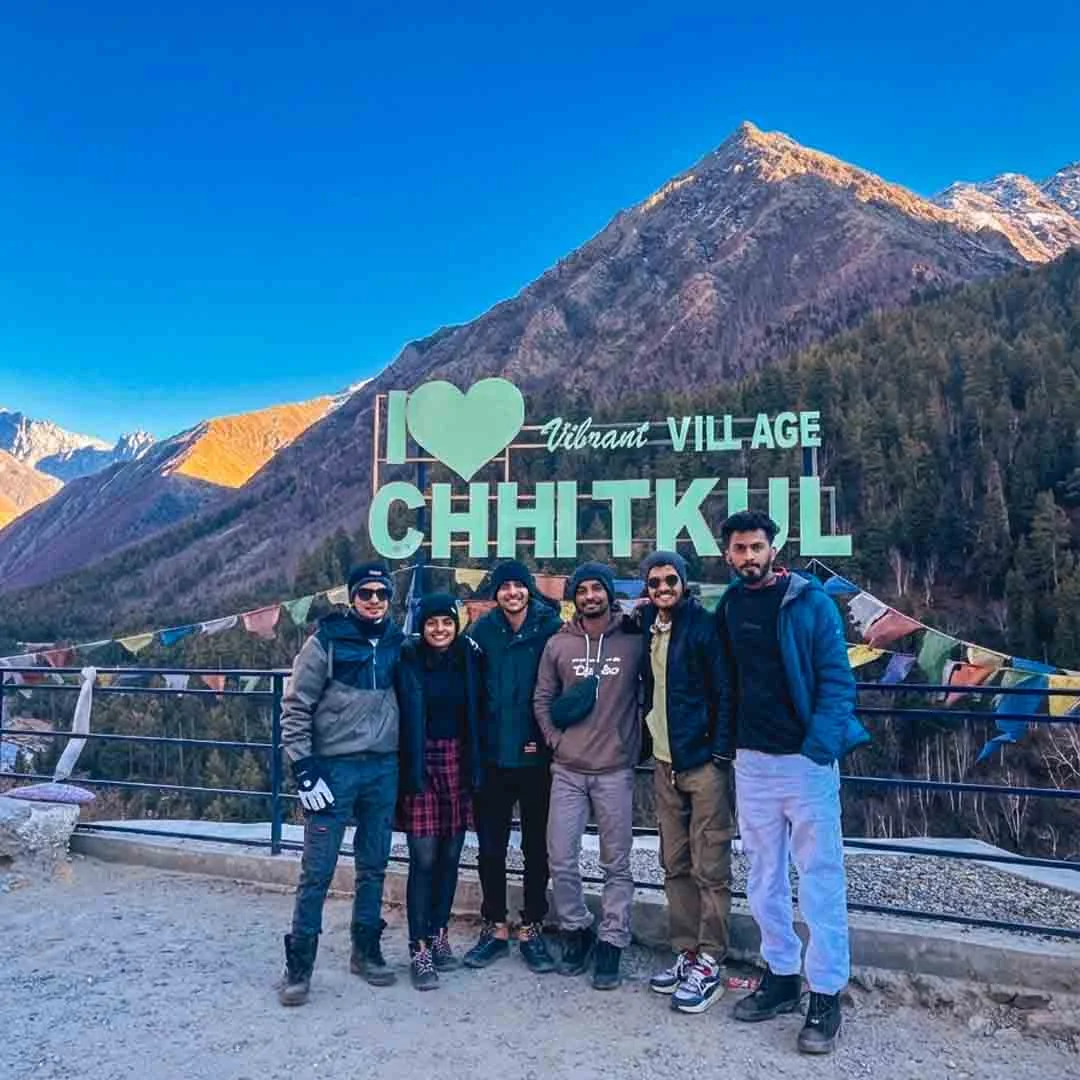 Group Tour9D/8N
Best Selling Winter Spiti Valley Group Tour
2D Sangla•1D Tabo+2
₹18,999₹23,999SAVE INR 5,000/ person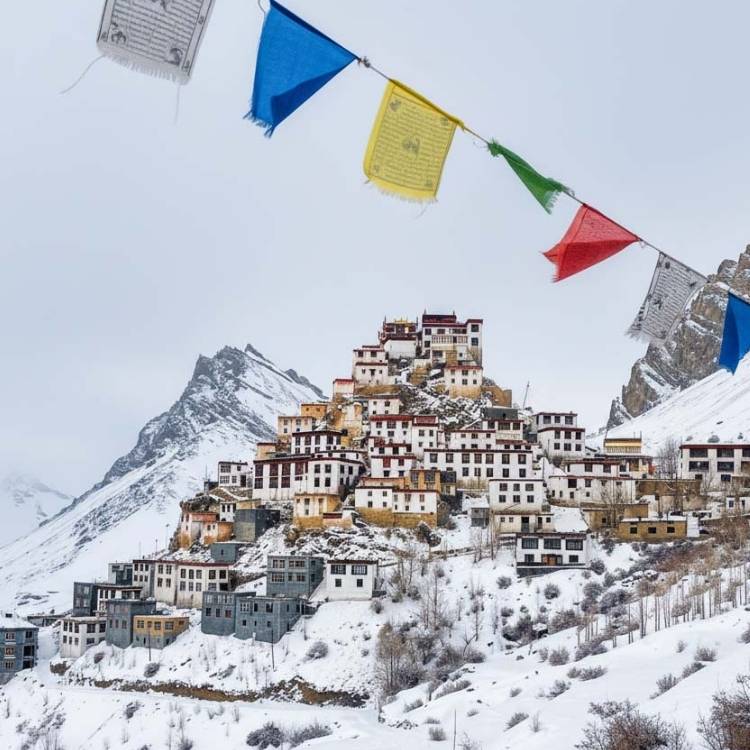 6D/5N
6D/5NCore Winter Spiti Trip
2D Kalpa•2D Kaza
₹15,999₹19,999SAVE INR 4,000/ person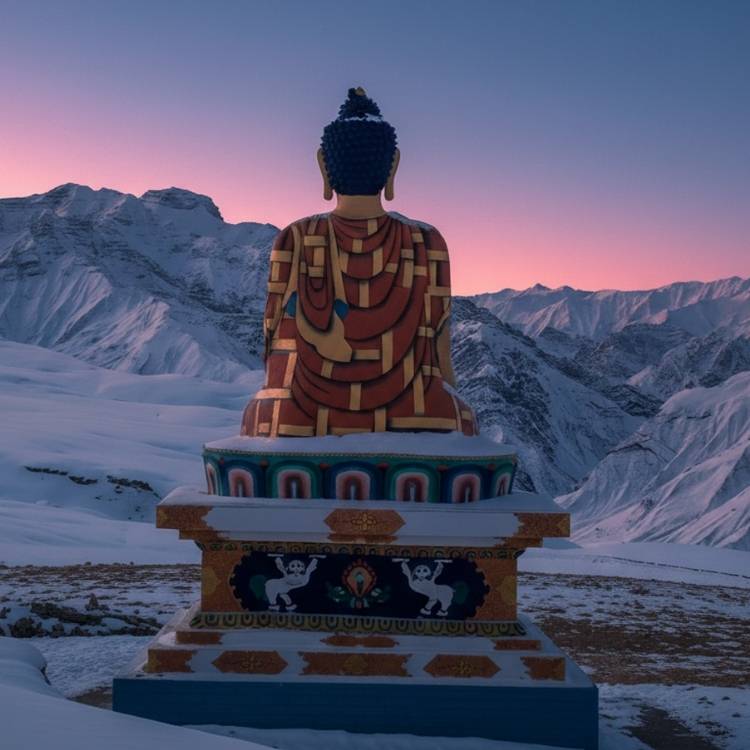 9D/8N
9D/8NWinter Spiti Circuit
2D Sangla•1D Nako+2
₹26,999₹32,999SAVE INR 6,000/ person 7D/6N
7D/6NCore Winter Spiti Circuit
1D Narkanda•2D Kalpa+2
₹17,999₹21,999SAVE INR 4,000/ person
How to Reach Spiti Valley in April from Delhi and Chandigarh
From Delhi
Option 1
Overnight Volvo to Shimla, then private cab to Kaza. Take an evening Volvo from Delhi ISBT to Shimla (9 to 11 hours). From Shimla, a pre-arranged private cab takes you to Kaza over two days.
This is the most popular combination for travellers who do not want to self-drive. Travel Coffee's Spiti Valley tour packages from Delhi handle this entire route.
Option 2
Drive from Delhi to Shimla, then onward. If you are self-driving, the Delhi to Shimla stretch (roughly 350 km) takes 7 to 9 hours via Chandigarh and the Himalayan Expressway. From Shimla, the mountain roads begin.
Option 3
Train to Chandigarh, then cab. Shatabdi or overnight trains reach Chandigarh from Delhi. From Chandigarh, a private cab to Shimla takes about 3 to 4 hours, and then the Shimla-Kaza journey begins.
From Chandigarh
Chandigarh to Shimla is 3 to 4 hours by road. From Shimla, the route to Kaza is the standard two-day drive via Kinnaur.
You can also drive directly from Chandigarh to Narkanda or Rampur on Day 1, skipping the Shimla overnight.
By Bus (Budget Option)
HRTC runs a daily bus from Shimla to Reckong Peo (roughly Rs 500 to 600). From Reckong Peo, another bus or shared cab takes you towards Kaza.
This is budget-friendly but slow and physically tiring in April conditions.
Spiti Valley Trip Cost in April
April falls in the shoulder season, so costs are generally lower than peak summer, but the limited infrastructure means some expenses (like private cabs) stay consistent.
Budget Breakdown (Per Person, Approximate, for 8 to 9 Days)
Category | Budget Traveller | Mid-Range Couple | Private/Premium |
Transport (from Shimla) | Rs 4,000 to 6,000 (bus + shared cab) | Rs 8,000 to 12,000 (shared private cab) | Rs 15,000 to 22,000 (dedicated 4x4) |
Accommodation | Rs 4,000 to 6,000 (homestays, basic rooms) | Rs 7,000 to 12,000 (good homestays, guesthouses) | Rs 12,000 to 20,000 (best available options) |
Food | Rs 2,500 to 4,000 | Rs 4,000 to 6,000 | Rs 5,000 to 8,000 |
Miscellaneous | Rs 1,500 to 2,000 | Rs 2,000 to 3,000 | Rs 3,000 to 5,000 |
Total per person | Rs 12,000 to 18,000 | Rs 21,000 to 33,000 | Rs 35,000 to 55,000 |
Why April can save money: Lower accommodation rates at homestays and guesthouses. Less demand for cabs. No peak-season surge pricing. However, fewer food options mean you sometimes pay a premium for what is available.
Why April needs financial flexibility: If a road closure adds a day to your trip, you need budget for that extra night and meals. Carry more cash than you think you need. ATMs in Spiti are unreliable.
Hotels, Food, Network, ATMs, and Stay Conditions in April
Accommodation
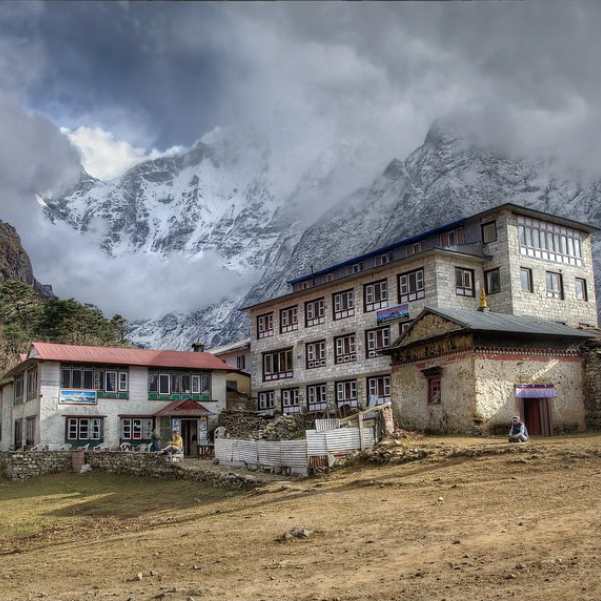
Most of Spiti's hotels remain closed until late May or June. In April, your options are a limited selection of homestays and guesthouses in Kaza, Tabo, and a few along the highway.
Some properties start reopening in mid-April, but do not expect the variety or quality of summer. Pre-booking through a reliable operator is strongly recommended because showing up unannounced in April could mean no room at all.
A few notable Kaza stays like Deyzor Hotel and select homestays open early or stay open through winter. These tend to book fast in April.
Food
Simple, home-cooked meals are the norm. Dal, rice, thukpa (Tibetan noodle soup), momos, and bread. By late April, a few Kaza cafes start coming back to life, but do not count on a wide menu.
Carry energy bars, dry fruits, instant noodles, and biscuits as backup. Fresh vegetables and fruits are limited until supply routes stabilize later in spring.
Mobile Network
BSNL has the most consistent (if still patchy) coverage in Spiti. Jio works in parts of Kinnaur but drops as you enter the Spiti Valley.
Airtel is similarly unreliable past Reckong Peo. In Kaza, you may get intermittent BSNL signal. In villages like Kibber, Langza, or Hikkim, assume you will have no signal.
ATMs and Cash
Kaza has one or two ATMs, but they are frequently out of cash or offline in early season. Withdraw enough cash in Shimla, Chandigarh, or Reckong Peo before entering Spiti.
Rs 5,000 to 10,000 per person is a safe buffer. Card payments are not accepted anywhere in the valley.
Electricity and Hot Water
Power cuts are common, especially in early April. Carry a headlamp and keep your power bank charged. Hot water availability depends entirely on your homestay.
Some provide a bucket of heated water for morning washing. Geyser-style hot showers are rare. By late April, conditions improve slightly, but managing expectations here is important.
Altitude Sickness and Safety Tips for April
Kaza sits at roughly 12,500 feet. Key Monastery is higher. Kibber is around 14,200 feet. Komic and Hikkim push past 14,500 feet. Altitude sickness is a real concern, and April conditions make it slightly more challenging because the cold and dry air strain your body further.
Acclimatize deliberately
Break your journey at Reckong Peo or Kalpa (around 7,500 to 9,000 feet) before pushing to Kaza. Do not rush from Delhi to Kaza in two days if you can help it.
Nako at around 11,800 feet is another good acclimatization halt.
Recognize symptoms early
Persistent headache, nausea, dizziness, shortness of breath, or difficulty sleeping are early signs of AMS (Acute Mountain Sickness). If symptoms appear, do not ascend further. Rest, hydrate, and descend if they worsen.
Carry Diamox
Consult your doctor before the trip. Diamox (acetazolamide) helps with acclimatization for many travellers, but it is not a substitute for gradual ascent.
Stay hydrated
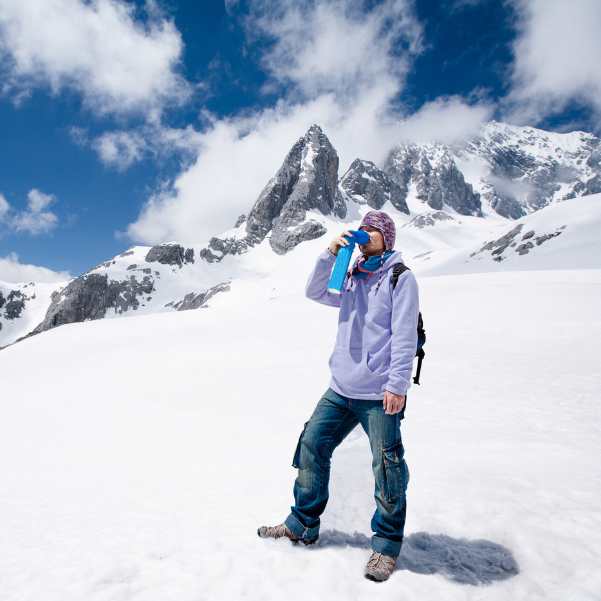
The dry air at altitude dehydrates you faster than you realize. Drink 3 to 4 litres of water daily, even if you do not feel thirsty.
Avoid alcohol
Especially in the first couple of days at altitude. It worsens AMS symptoms and accelerates dehydration.
Know the nearest medical facility
In Kaza, there is a basic government health centre. The nearest proper hospital is in Reckong Peo, many hours away. Carry a personal first-aid kit with painkillers, ORS packets, antiseptic, band-aids, and any personal medications.
What to Pack for Spiti Valley in April

Packing for April Spiti is packing for variable conditions. Warm mornings, cold afternoons in shade, freezing nights, and the possibility of snow.
Clothing
Thermal base layers (top and bottom), at least two sets. A good down jacket or insulated parka. Fleece mid-layers (2 pieces). Windproof and waterproof outer shell. Warm trekking pants or insulated trousers.
Thick wool or merino socks (3 to 4 pairs). Waterproof insulated boots with good grip. Warm gloves and a lighter pair for daytime. Balaclava, neck gaiter, or buff. Beanie or warm cap. UV-protection sunglasses (snow glare is serious).
Essentials
Sunscreen SPF 50+ and lip balm with SPF. Headlamp with extra batteries (cold drains batteries fast, keep them in your jacket pocket). Power bank (20,000 mAh recommended). Enough cash for entire Spiti stay. Basic medicines:
Diamox, paracetamol, Disprin, ORS, anti-nausea tabs, band-aids, antiseptic cream. Personal medications.
Dry snacks: energy bars, trail mix, biscuits, instant soup. Sleeping bag liner or light sleeping bag if you are staying in basic homestays. Reusable water bottle. Toiletries including hand sanitizer and wet wipes.
Photography Gear (If Applicable)
Extra camera batteries (cold kills batteries fast). Microfiber cloth for lens condensation. A sturdy, wind-resistant tripod for astrophotography. Memory cards with plenty of storage.
Final Word: Should You Visit Spiti Valley in April?
April in Spiti is not for everyone. It is not the glossy, full-circuit, cafe-hopping trip that summer brochures promise. But for the right kind of traveller, it is something better.
You get a valley that is still shaking off winter. Snow on the peaks, silence in the monasteries, clean light for photography, and a pace that forces you to slow down and actually be present. The towns are not crowded. The roads are yours. The homestay host has time to sit and talk.
The tradeoff is real: basic facilities, limited food options, cold nights, and route restrictions. If you can accept those, April rewards you with a Spiti that most people never get to see.
And if you need help making it work on the ground, that is what we do.
Travel Coffee is based in Himachal. We plan April Spiti trips with local drivers who know every icy stretch, homestay owners we have worked with for years, and itineraries built around what actually works in spring, not what looks good on a brochure.
Send us a message on WhatsApp with your travel dates, group size, and what you are hoping for. We will tell you honestly whether April is the right month for you, or whether waiting makes more sense.
Related topics
Frequently Asked Questions
Is Spiti Valley open in April?
Yes. Spiti Valley is accessible in April via the Shimla-Kinnaur route. The Manali-Kaza route via Kunzum Pass is closed. You can reach Kaza and explore the core valley, but the full circuit is not possible.
Can I go to Spiti Valley from Manali in April?
No. The road from Manali to Kaza through Kunzum Pass remains closed in April due to heavy snow accumulation. BRO starts clearance operations in March-April, but the road typically opens only by late May or early June.
Does it snow in Spiti Valley in April?
Fresh snowfall is possible in April, especially in early April and at higher elevations. The surrounding peaks are still heavily snow-covered, and villages above 14,000 feet may see snow. Kaza town sees occasional light snow, but heavy accumulation is less likely than in winter months.
What is the temperature in Spiti Valley in April?
In Kaza, daytime temperatures range from 5 to 15 degrees Celsius. Nighttime temperatures range from minus 5 to minus 10 degrees Celsius in early April, improving to minus 2 to minus 5 by late April. Higher villages are colder.
Is Chandratal Lake open in April?
No. Chandratal Lake is located near Kunzum Pass on the Manali-Kaza route and remains completely under snow in April. It typically becomes accessible from mid-June onward.
Is April a good time to visit Spiti Valley?
April is a good time for travellers who enjoy quiet, snow-covered landscapes, fewer crowds, and are comfortable with basic facilities. It is not ideal for those who want the full circuit, reliable comfort, or the complete summer experience. Think of it as Spiti in its raw, transitional form.
How many days are enough for Spiti Valley in April?
A minimum of 8 to 9 days from Shimla and back is recommended. This includes two days of travel each way, 4 to 5 days exploring the valley, and at least one buffer day for weather-related delays.
Is Spiti Valley safe in April?
Yes, Spiti is safe for well-prepared travellers in April. Risks include icy road conditions, altitude sickness, and cold-related issues, all manageable with proper planning, an experienced driver, appropriate clothing, and a flexible schedule.
Can families travel to Spiti Valley in April?
It is not recommended for families with young children or elderly members. The cold, basic infrastructure, altitude, and road conditions make April challenging for those who need predictable comfort. Families would be better served visiting in July or August.
What should I pack for Spiti Valley in April?
Heavy winter layers including thermals, a down jacket, windproof shell, insulated boots, gloves, sunscreen SPF 50+, UV sunglasses, headlamp, power bank, sufficient cash, basic medicines including Diamox, and dry snacks for the road.
Is April good for a bike trip to Spiti Valley?
It is possible via the Shimla route, but not recommended for most riders. Early morning ice, cold wind at 12,000+ feet, and the physical toll of riding in near-freezing temperatures make April a challenging month for biking. June through September is the ideal window for a Spiti bike trip.
Which route is best for Spiti Valley in April?
The Shimla-Kinnaur route is the only practical option in April. It runs through Narkanda, Rampur, Reckong Peo, Nako, Tabo, and into Kaza. It also offers gradual altitude gain, which helps with acclimatization.
Is April better or May for Spiti?
May is generally better if you want warmer weather, more accommodation options, and a higher chance of inner village roads being clear. April is better if you want fewer tourists, snow-covered landscapes, and lower costs. Neither month offers the full Spiti circuit, which opens in late May at the earliest.
Is April or June better for Spiti Valley?
June offers the full circuit (if Kunzum Pass opens on schedule), more hotels and cafes open, Chandratal access, better road conditions, and warmer temperatures. April offers solitude, snow, lower costs, and a raw experience. Choose based on what matters more to you.
More about Lahaul and Spiti
 Lahaul and Spiti
Rent or Buy Winter Gear for Spiti in 2026? Jackets, Boots, Costs and Pickup Options
Planning a Winter Spiti trip in 2026? Compare the cost of renting vs buying jackets, snow boots, thermals and other essential winter gear, along with practical tips on what to rent, what to buy and where to arrange it before your trip.
- First-Time Travellers
- Snow Travel
 Lahaul and Spiti
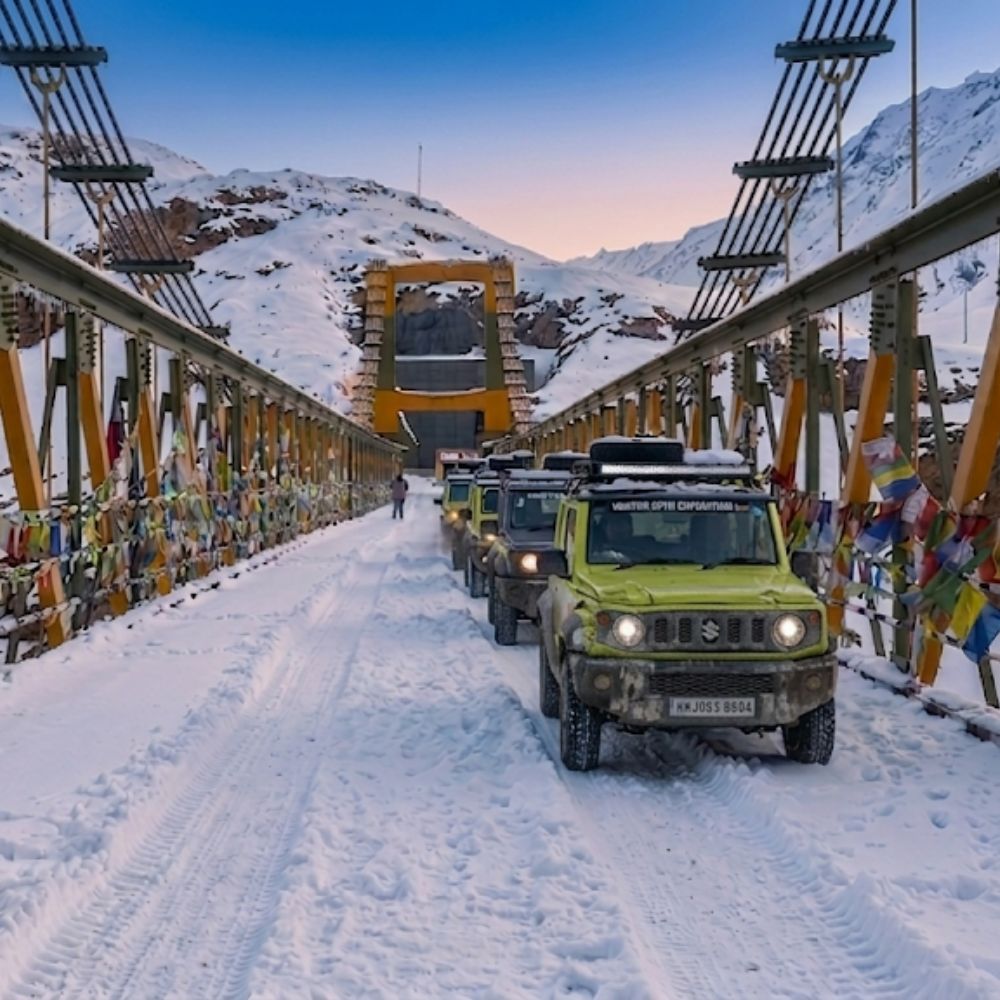
Winter Spiti 4×4 Seating Guide 2026: Jimny, Scorpio N, Thar and Hilux for Passengers and Luggage
Planning a Winter Spiti trip in 2026? This practical 4×4 seating guide compares the Jimny, Scorpio N, Thar and Hilux for passenger comfort, luggage space, winter roads and long mountain drives, helping you choose the right vehicle for your group size and travel style.
- Road Trips
- Snow Travel
 Lahaul and Spiti
Stargazing in Winter Spiti 2026: Where to Stay, Moonlight and What You Can See
Discover the best places for stargazing in Winter Spiti 2026, where to stay for darker skies and how moonlight affects visibility. Learn what you can realistically see from Kaza, Tabo and nearby villages during the winter months.
- Things to Do
- Snow Travel