
Spiti Bike Trip Road Closure Guide 2026: What Happens If Kunzum or Chandratal Closes?
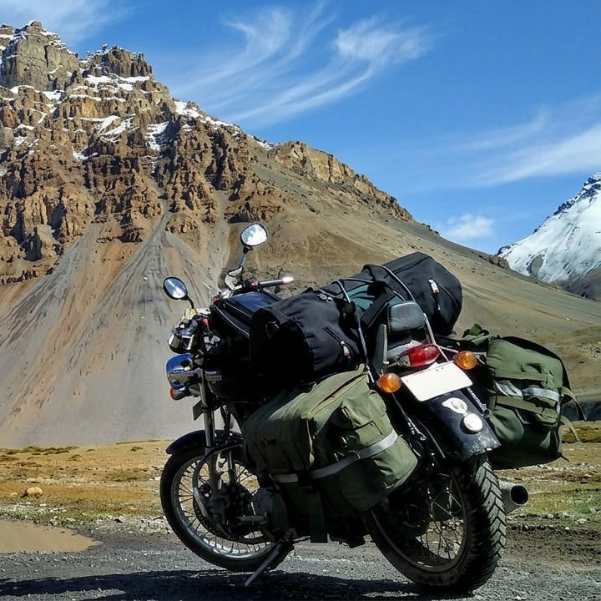
You have planned the route, packed the bags, maybe even told your boss you need 10 days off. And then, the night before you ride out, someone in a WhatsApp group drops the message: "Kunzum closed today."
That one line can throw an entire Spiti bike trip into chaos. And the worst part? Most riders have no Plan B.
They have never thought about what to do if Kunzum Pass shuts down, or if the Chandratal road is not through, or if they are already past Gramphu and the road ahead is blocked.
This Spiti bike trip road closure guide covers exactly that. Not vague advice like "be flexible." Real decisions. What to do if Kunzum closes before you leave.
What to do if it closes while you are already in Kaza. What to do if only Chandratal is blocked but the rest of the circuit is fine. And backup routes that actually work.
What most riders get wrong is this: they plan the perfect Spiti route but never plan for the route failing. The road between Manali and Kaza via Kunzum is not a highway.
It is a high-altitude mountain crossing at around 4,550 metres that closes without warning, sometimes for hours, sometimes for days. Planning around that uncertainty is not pessimism. It is how experienced riders do Spiti.
Quick Answer: What Should You Do If Kunzum or Chandratal Closes?
Kunzum Pass closure blocks the Manali to Kaza crossing entirely. You cannot ride between Lahaul and Spiti. Your options are to wait on whichever side you are on, or reroute via the Shimla Kinnaur route, which does not depend on any high-altitude pass.
Chandratal closure only removes the lake night from your plan. The rest of the Spiti circuit stays intact. You skip the Chandratal diversion, continue through Kunzum (if open), and adjust your overnight stop.
The safest backup in both cases is the Shimla Kinnaur route for entering or exiting Spiti. And the single most important rule: verify the Kunzum Pass road status on the same morning you plan to cross.
The 2026 status has conflicting sources, and yesterday's update means nothing on a road that changes with every snowfall.
First, Understand the Difference Between Kunzum Closure and Chandratal Closure
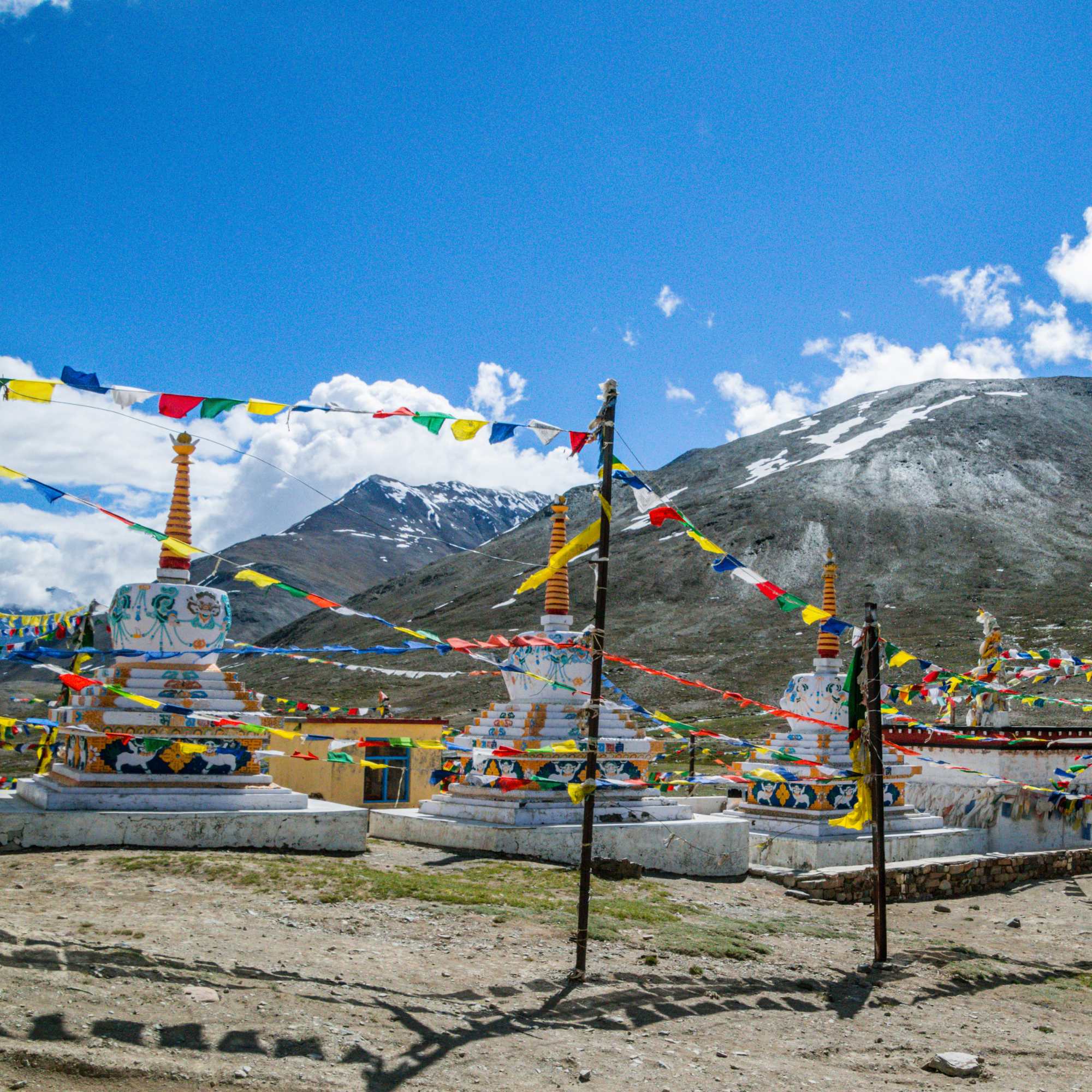
This is where confusion starts for most riders. Kunzum Pass and Chandratal Lake are two different access points, and their closures mean very different things for your trip.
Kunzum Pass sits at around 4,550 metres and connects the Lahaul side (Manali, Gramphu, Batal) with the Spiti side (Losar, Kaza). It is the gateway between two valleys. If Kunzum closes, you cannot cross from one side to the other on this route. Period.
Chandratal is reached by a separate diversion road that branches off near Batal, about 14 km before the lake. This road is narrower, rougher, and clears later than Kunzum itself.
Here is the critical point: Kunzum can open while Chandratal is still blocked. BRO clears Kunzum first because it is the main highway.
The Chandratal diversion is a secondary road and often clears a week or two later. So "Kunzum is open" does not mean "Chandratal is open."
We have covered the full timeline in our Chandratal opening dates and best time to visit guide, and checking that before you finalize dates will save you a lot of frustration.
Also, Chandratal sits in an interesting geographic position. It technically falls on the Lahaul side of the border, not in Spiti. If you are curious about why that matters for route planning, our Chandratal location guide explains it clearly.
What Is the Current 2026 Road Status for Kunzum, Manali to Kaza, and Chandratal?
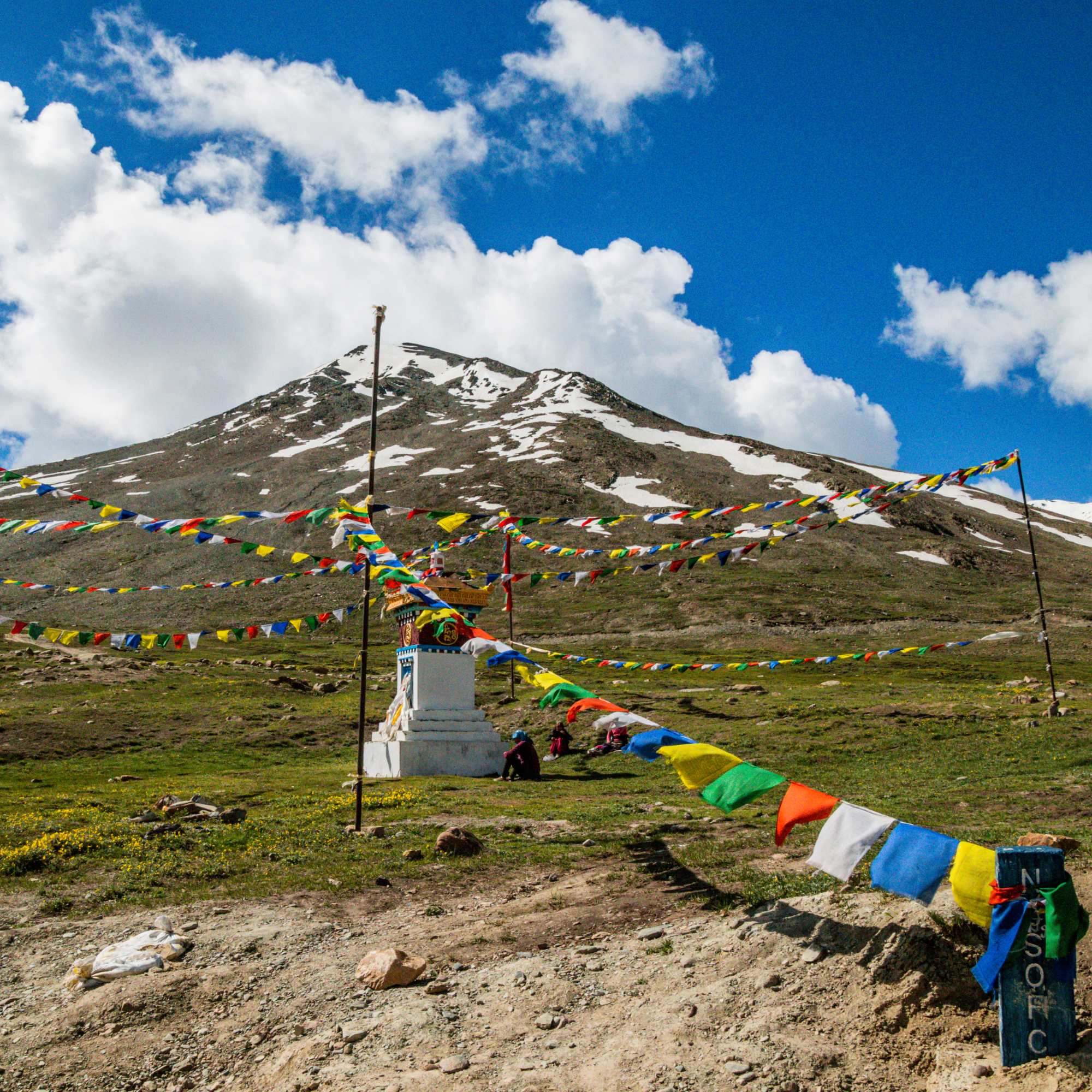
This is where 2026 has been confusing, and we want to be upfront about it.
The official Lahaul and Spiti district road-status page, last updated 24 June 2026, shows the Keylong to Kaza route as closed.
But The Tribune reported on 20 May 2026 that BRO reopened the Sumdo Kaza Gramphu highway via Kunzum for light 4x4 vehicles after more than six months of closure. Heavy vehicles were to be allowed only after full restoration and safety measures.
These two sources do not fully agree. The reopening may have been partial, temporary, or conditions may have changed since late May. Some stretches were reported slippery in the morning and evening because of melting snow.
What this means for you
Do not assume the road is open or closed based on any single source. Verify on the same morning you plan to ride. Call the police checkpost at Koksar or Losar, ask a local driver, or message us. A blog post from last week does not count.
One more thing to know
The e-Aagman portal requires vehicles entering Lahaul and Spiti to apply for an e-pass. An e-permit per vehicle is required for the Atal Tunnel Rohtang Koksar Chandertal circuit, and an e-ticket per vehicle is required for other places. The exact fee and enforcement level should be confirmed before you ride.
Manali to Kaza is about 182 km via the Atal Tunnel or about 202 km via Rohtang Pass. Travel time is roughly 7 to 10 hours depending on conditions.
That "depending on conditions" part is not a disclaimer. It is the whole story. A smooth June day means 7 hours. A day with a landslide near Batal means 12 hours or not at all.
What Happens If Kunzum Closes Before Your Trip Starts?
You are still in Delhi, Chandigarh, or Manali. You check the status. Kunzum is closed. Now what?
Do not cancel the trip. Reroute it.
The Shimla Kinnaur route enters Spiti from the east side and does not depend on Kunzum Pass at all. You ride from Shimla through Narkanda, Rampur, Kalpa, Nako, and Tabo into Kaza.
This route gives gradual altitude gain, which is actually better for your body, and the roads are generally more stable in early season.
In our experience, about a third of the riders we help every year end up using the Shimla route because Kunzum was uncertain at their travel dates.
Most of them tell us later that they are glad they did, because the Kinnaur valley is genuinely gorgeous and the altitude adjustment makes the Kaza days much more comfortable.
If you are set on entering via Manali, do not sit in Manali for three days waiting and hoping. Check with local sources.
If Kunzum has a timeline for reopening (like a small landslide expected to clear in a day), waiting one night makes sense. If it is a fresh snowfall or an official closure with no ETA, shift to the Shimla route.
Our Spiti Valley Bike tour packages build in flexibility for exactly this reason. We do not lock every night into one fixed route.
What Happens If Kunzum Closes While You Are Already in Kaza?
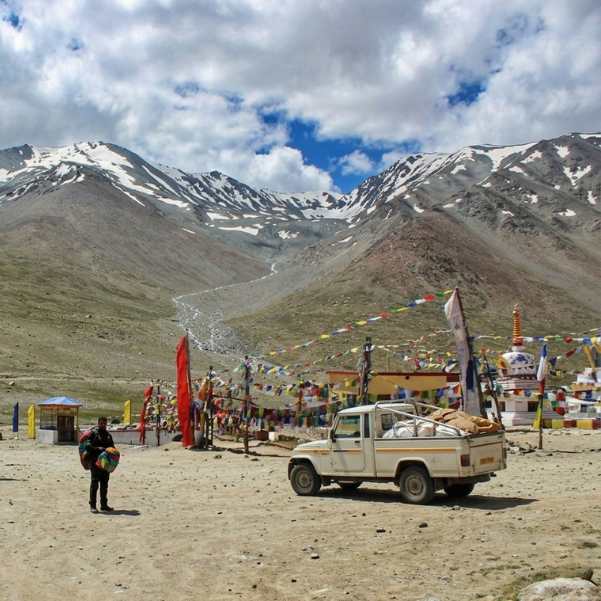
This is the scenario that actually scares riders. You are in Kaza, you have done Key and Kibber, and now you need to exit towards Manali. But Kunzum is closed.
Do not force it. In September 2025, heavy rain and snowfall dumped 23 cm of snow at Kunzum and stopped all movement between Gramphu and Losar. Riders who pushed their luck got stuck between Losar and Kunzum with no shelter, no fuel, and no phone signal.
Your safer exit from Kaza is the Shimla Kinnaur route. Ride from Kaza to Tabo, then to Nako, through Kinnaur, and out via Shimla. It adds distance, but it keeps you on a road that is almost always open during the season.
If locals in Kaza say the closure is likely temporary, like a small slide that BRO is already clearing, and they expect it to open by the next morning, then waiting one night in Kaza is reasonable.
Kaza has food, fuel, and basic accommodation. It is not a bad place to spend an extra day.
But if there is fresh snow on Kunzum, or if the official district page shows closure, or if local drivers say "not today," trust them. Our drivers have been running this circuit for years, and the one thing they all agree on is this: the mountain does not care about your return flight.
What Happens If You Are Stuck on the Manali or Lahaul Side?
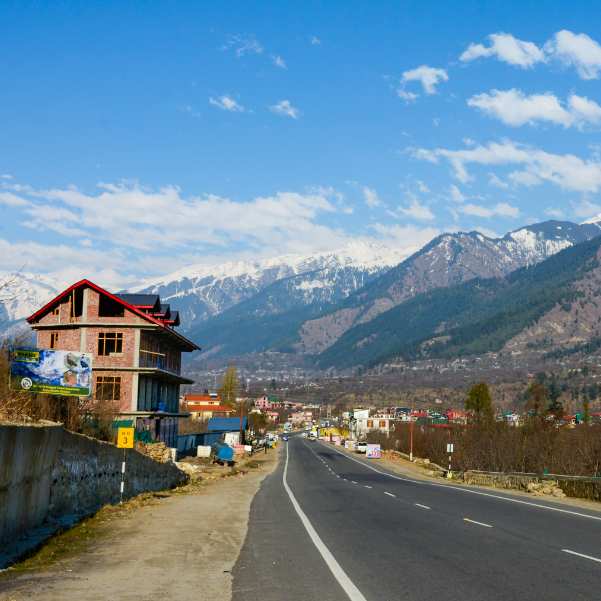
You have crossed the Atal Tunnel, maybe reached Sissu or Koksar, and you hear that the road ahead towards Kunzum is closed. You are now on the Lahaul side with no way into Spiti via this route.
Your money-saving tip here, and something most riders do not think about: Sissu and Keylong are not bad places to wait. Sissu has guesthouses, hot food, and views of the waterfall. Keylong has a market, fuel, and a hospital.
If you need to wait a day, these towns have what you need and they cost much less than Manali hotels.
Do not push beyond Gramphu towards Batal without same-day confirmation that the road ahead is clear. The stretch from Gramphu to Batal has broken roads, gravel, and water crossings.
If you start that section and then find the road blocked ahead, turning around on a loaded bike on that terrain is miserable.
And if you are stuck on the Manali side for more than a day with no reopening in sight, the Lahaul valley itself has plenty to explore. Our Sissu travel packages and Manali packages cover options that most through-riders never consider.
What Happens If Only Chandratal Closes but Kunzum Is Open?
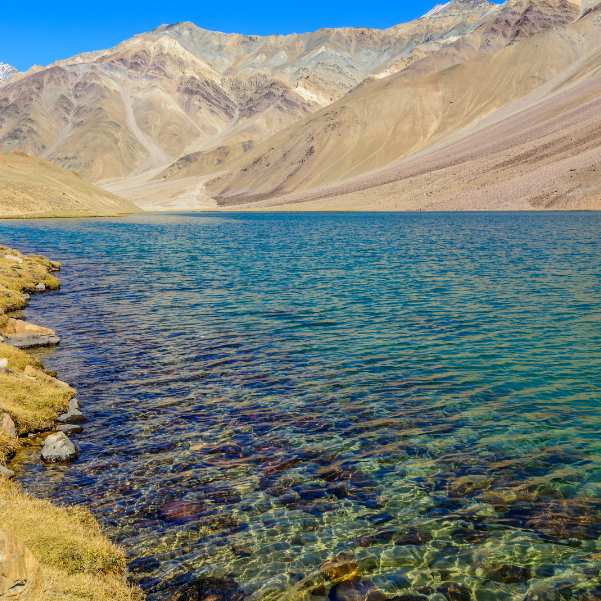
This happens more often than you would think. Kunzum opens. The Manali to Kaza highway is clear. But the Batal to Chandratal diversion road is still blocked because it clears later or because a water crossing washed out a section.
The good news: your Spiti circuit continues. You ride through Kunzum, skip the Chandratal diversion entirely, and adjust your overnight stop.
If you were heading from Kaza towards Manali, replace the Chandratal camp night with a stop at Batal (very basic dhabas), Chhatru (better camping), or push straight to Sissu or Manali if daylight allows.
What we tell our travellers is to not feel like the trip is ruined. Chandratal is one night out of a 7 to 10 day trip. The rest of Spiti, the monasteries, the villages, the passes, is still there.
If you were heading from Manali towards Kaza, you simply skip the Chandratal turn-off near Batal and continue to Kunzum and then down to Losar and Kaza.
Missing Chandratal is disappointing. But it is not the same as the entire Manali to Kaza road being blocked. Treat them as separate problems with separate solutions.
Should You Wait, Turn Back, or Reroute?
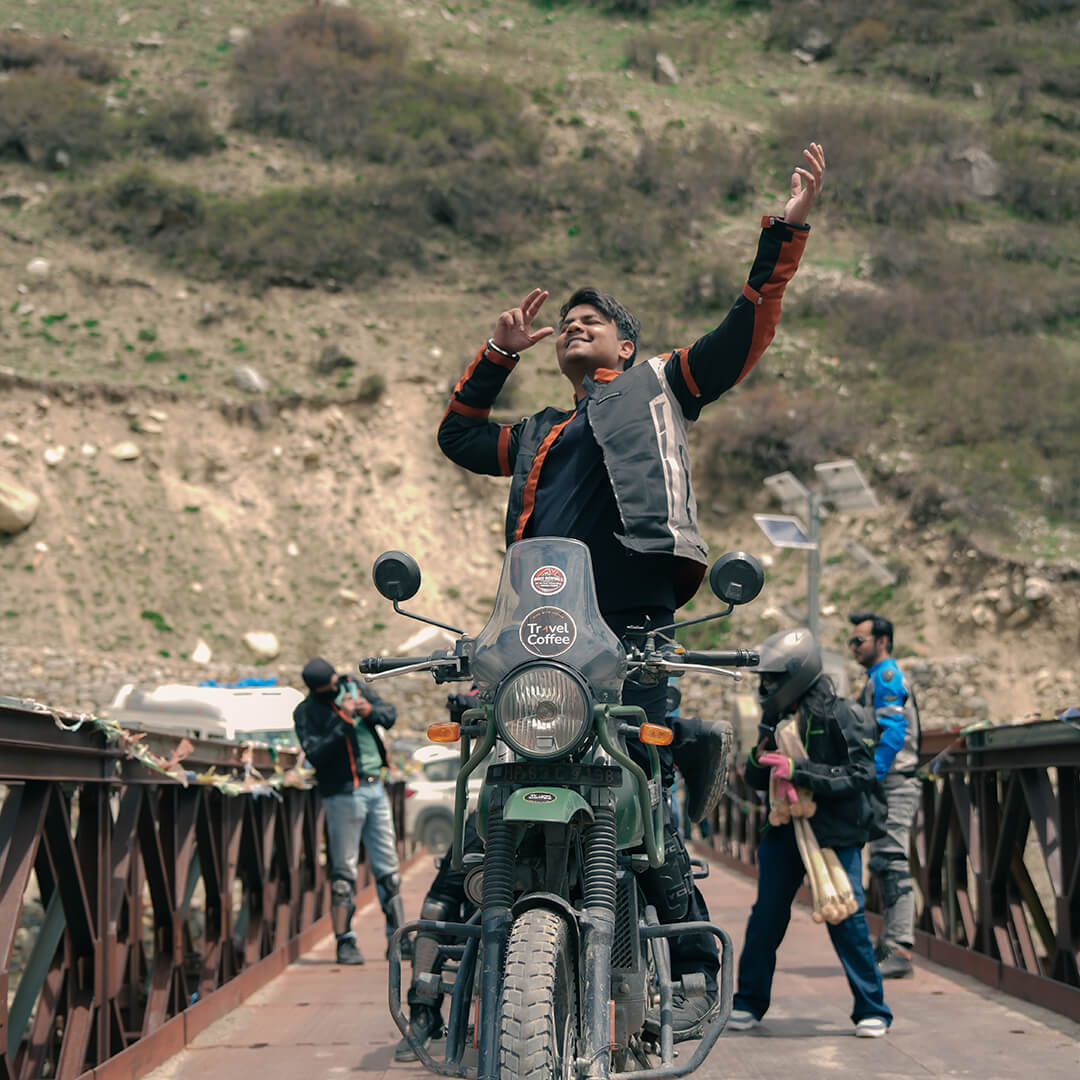
This is the hardest decision on a Spiti bike trip, and there is no universal answer. But here is how to think about it.
Wait
Wait if the closure is a minor landslide and local BRO teams or drivers say they expect it cleared in a few hours. Wait in a town with food, fuel, and shelter, not in the middle of nowhere near Batal.
Waiting makes sense only in daylight hours. If it is past 2 PM and the road is still closed, you are not crossing today.
Turn back
Turn back if there is fresh snow on Kunzum, if the official district page says closed with no reopening timeline, if you have no daylight left, or if camp operators say Chandratal is not reachable.
Turning back feels terrible. It feels like failure. But we have seen enough riders get into serious trouble by pushing closed roads to know that turning back is almost always the right call.
Reroute
Reroute if you have enough buffer days and the Shimla Kinnaur route is open. This is not a defeat. It is a better plan.
The Shimla route gives you Kinnaur valley, Kalpa, Nako, and a completely different side of the mountains. Some of our favourite Spiti memories are from rerouted trips.
One thing we always tell riders
Yesterday's Instagram reel is not a road status update. A video of someone crossing Kunzum yesterday means exactly nothing about whether you can cross today. Same-morning verification from a local source is the only thing that counts.
Backup Itineraries If Kunzum or Chandratal Closes
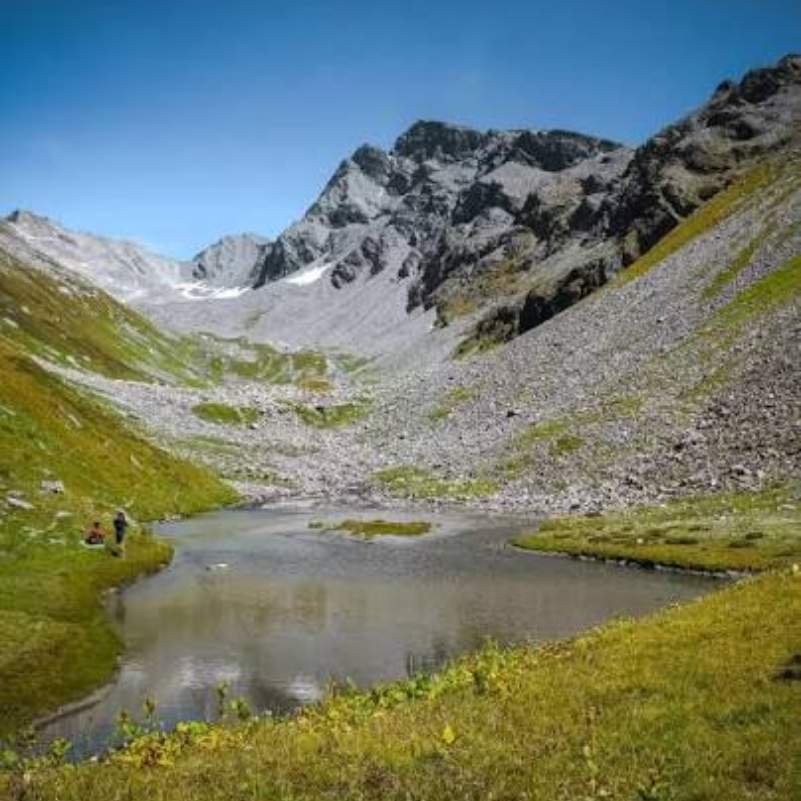
7-Day Spiti Bike Trip Backup Without Chandratal
Enter via Shimla. Ride through Narkanda, Kalpa, and into Spiti via Tabo. Spend your days around Kaza, Key Monastery, Kibber, Langza, Hikkim, and Komic.
Visit Dhankar Monastery and Pin Valley if you have time. Exit the way you came, back through Kinnaur and Shimla.
You miss Chandratal, but you still see every major Spiti highlight. And the Kinnaur valley on the way in and out is worth the ride on its own.
9-Day Spiti Circuit Backup via Shimla Exit
Enter via Manali if Kunzum is open. Ride the full Manali side through the Atal Tunnel, Gramphu, and Batal.
Cross Kunzum into Spiti. Explore Kaza, Key, Kibber, Langza, and the monastery circuit. If Kunzum closes behind you while you are in Spiti, exit via Tabo, Nako, Kinnaur, and Shimla.
This gives you the Manali side experience on the way in and the Kinnaur valley on the way out. Many riders who have done both directions say the Shimla exit is actually the more scenic half.
Manali Side Backup with Sissu and Lahaul
If the road beyond Lahaul is closed and you cannot enter Spiti at all, you still have a solid trip. Sissu has a beautiful waterfall, open meadows, and mountain views that rival anything in Spiti. Keylong is a proper town with monasteries and local culture. Jispa and Darcha are further up and offer stunning river valley riding.
This is not "settling." Lahaul is a proper destination. It just does not get the same Instagram attention as Spiti.
Kaza Side Backup with Local Spiti Villages
If you are stuck in Kaza because Kunzum is closed, use the extra days well. Most riders rush through Spiti's villages. With a closed pass, you have no reason to rush.
Spend a full day at Key Monastery when the morning light hits the walls. Ride to Kibber and walk around the village. Visit Langza for the Buddha statue with Spiti's clearest mountain backdrop.
Post a letter from Hikkim, the world's highest post office. Ride to Komic early morning. Explore Pin Valley if you want a longer ride. Visit Dhankar and walk down to the lake.
If you are looking at a complete Spiti circuit that builds in Chandratal when conditions allow, our summer Spiti circuit with Chandratal includes buffer days for exactly these situations.
Bike-Specific Safety Rules for Kunzum and Chandratal Closure Days
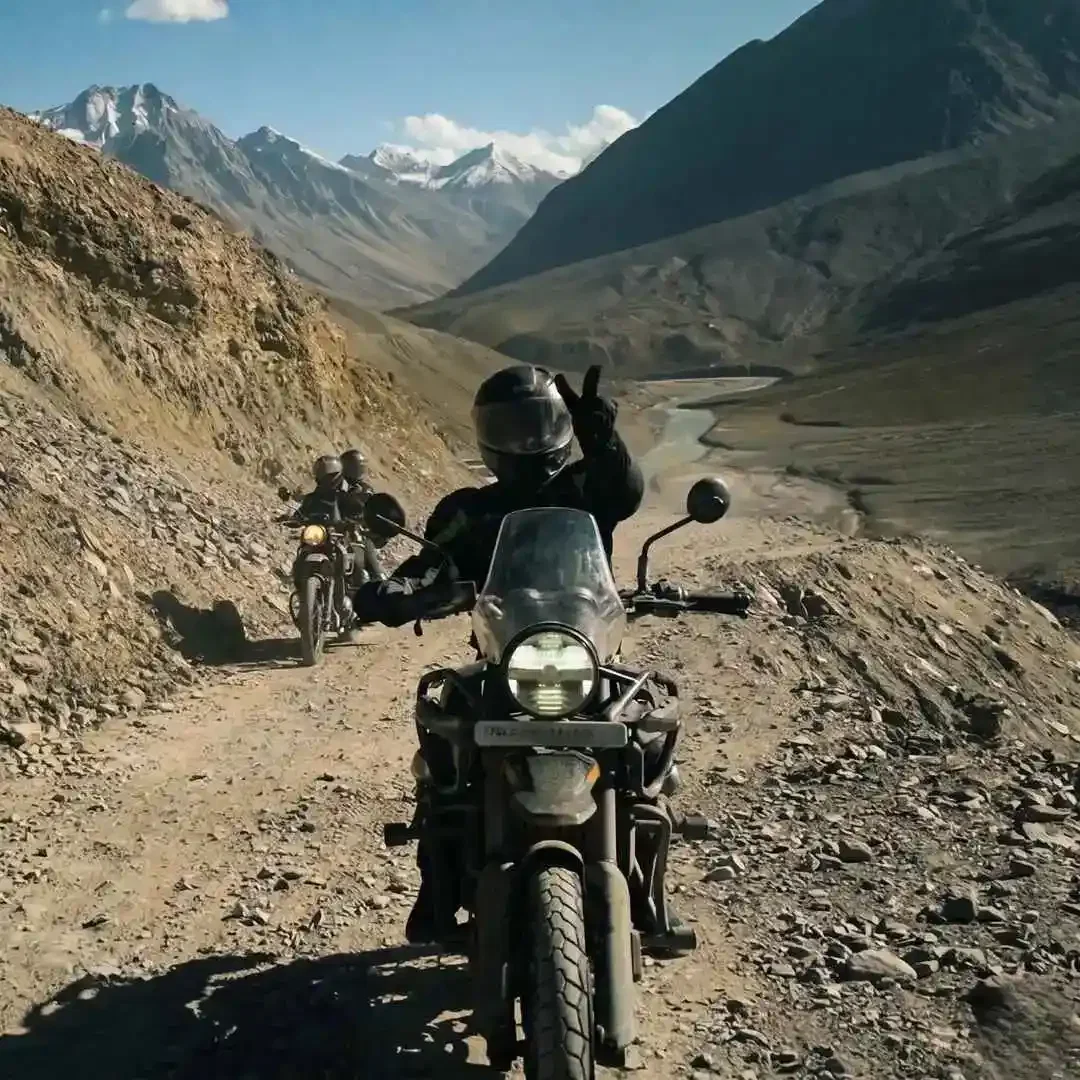
When a road closure is in play, everything becomes more stressful. Riders make impulsive decisions, skip safety steps, and take risks they normally would not. Here are the rules that matter most on closure days.
Start early
If you are attempting Kunzum or the Gramphu to Batal stretch, leave at first light. The roads are firmer in the morning. Water crossings are at their lowest before the afternoon snowmelt peaks.
Never ride after dark on this route
There are no streetlights, no crash barriers, and no help between Gramphu and Losar. If you are not across by 4 PM, stop wherever you are and wait for morning.
Water crossings get worse as the day goes on
A stream you splashed through at 7 AM can be a knee-deep torrent by 2 PM because of snowmelt from Kunzum. Time your rides accordingly.
Carry enough fuel
There is no petrol pump between Manali and Kaza. Kaza is your key refuelling point inside Spiti. If you are heading towards Manali, fill up in Kaza before you leave. Carry a spare fuel can if your bike has a small tank.
Check brakes and clutch before the Gramphu to Batal or Kunzum stretch
The descents are steep, the gravel is loose, and you will use your brakes more in 30 km than in the rest of the trip combined.
Pack warm gloves, a rain layer, and waterproof luggage covers even if the sky looks clear. Weather at 4,550 metres changes in minutes. A puncture kit, basic tools, and a tyre inflator are non-negotiable.
What we tell our bike groups
The best rider on a Spiti road is not the fastest one. It is the one who stops to put on the rain layer before the rain starts.
Where to Verify Road Status Before Riding
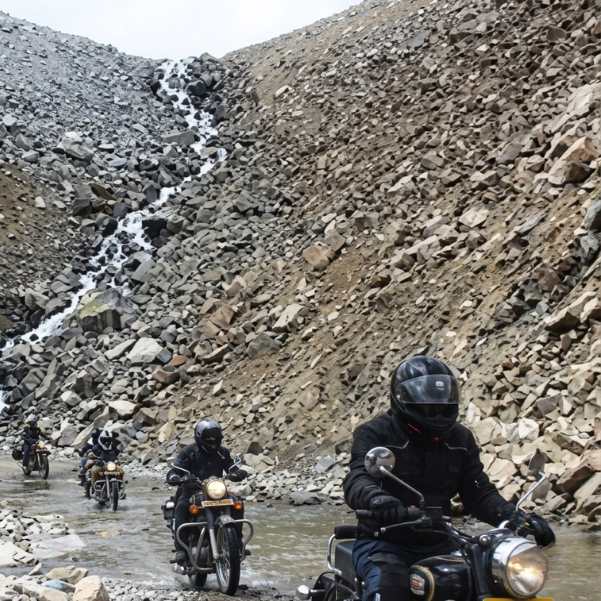
Skip this section at your own risk. Riders who check before riding almost always have a better trip than riders who "wing it."
The official Lahaul and Spiti district road-status page is the most reliable single source. It lists which stretches are open, closed, or restricted. Check it the night before and again on the morning of your ride.
The e-Aagman portal gives permit and entry information. If you are entering via the Atal Tunnel, the e-pass requirement applies to your vehicle.
Police checkposts at Koksar, Losar, and Sumdo (where applicable) will tell you the ground reality. They know what passed through that morning and what did not. Stop and ask.
Local drivers and camp operators based in Kaza, Batal, or Manali know the road before official announcements reach any website. A quick call or WhatsApp message to a local operator gives you real-time information that no blog can match.
Spiti travel groups on Facebook and WhatsApp share rider updates, photos, and real-time conditions. They are useful but verify anything you read there with a local source. A photo from two days ago does not tell you today's reality.
Do not assume "Spiti is open" means "Kunzum is open" or "Chandratal is open." These are three different access points and you need to check each one separately.
Common Mistakes Riders Make When Kunzum or Chandratal Closes
Trusting old blog posts
A blog written in 2024 saying "Kunzum opens by June 1" means nothing in 2026. Snow patterns change every year. Fresh snowfall closed Kunzum in October 2025 without warning. Always check live status.
Assuming Chandratal opens the same day as Kunzum
It does not. The Chandratal diversion road is separate and clears later.
Starting after lunch from Kaza or Manali
The ride to Kunzum takes 3 to 5 hours from either side in good conditions. Starting at noon means you are riding the toughest section in fading light. Leave by 6 AM.
Riding after dark
We already said this but it is worth repeating. Night riding near Kunzum or on the Gramphu to Batal stretch is genuinely dangerous.
Not carrying enough fuel
There is no petrol pump between Manali and Kaza. Riders run dry every season on this route.
Not checking camp status separately
The road to Chandratal might be open, but the seasonal camps might not be set up yet, especially in early June. A road without camps means no food, no shelter, and no backup at 4,300 metres.
Booking fixed, non-refundable stays without a buffer day
If your hotel in Manali is booked for a specific night and Kunzum closes that day, you lose money and gain stress. Always keep one or two buffer days.
The dhaba at the Batal checkpoint, the tin-roof one on your left as you enter, serves the last hot Maggi and chai before the road gets truly rough. Our team stops there every single trip. If you are passing through, do not skip it. There is nothing else for a long time after.
Who Should Avoid the Manali Kunzum Chandratal Route During Uncertain Status?

Not every rider belongs on this road when conditions are uncertain. That is not gatekeeping. It is safety.
First-time riders
First-time riders who have never done a mountain road trip should not attempt the Manali to Kaza route when the Kunzum Pass road status is unclear. The consequences of a wrong decision on this road are serious.
Riders with heavy pillions
Riders with heavy pillions on bikes like the Classic 350 will struggle on the gravel and water crossings between Gramphu and Batal, even on a good day. On a closure day with partial clearance and slippery patches, it is a real risk.
Low-power bikes
Low-power bikes (100cc to 125cc commuters) are not suited for this terrain. The altitude kills engine performance, the gravel demands torque, and the water crossings need ground clearance.
Groups without a backup vehicle
Groups without a backup vehicle have no safety net if a bike breaks down between Batal and Kunzum. One mechanical failure on that stretch can strand the entire group.
Riders with fixed return flights
Riders with fixed return flights and no buffer days should not bet their trip on Kunzum being open. If you must fly out on a specific date, enter and exit via Shimla. The road is more predictable, and you are not gambling your flight on a pass that can close overnight.
If the Kunzum status is uncertain for your travel dates, we always recommend starting with the Shimla Kinnaur entry. It is longer, yes. But it is reliable.
Final Local Advice from Travel Coffee
Kunzum closure changes your route. Chandratal closure changes one night of your trip. Neither cancels the entire experience. Spiti is massive, and there is more to see than any single road can take away.
Same-day verification saves the trip. Not a blog post from last week. Not a YouTube video from last month. A phone call on the morning you plan to ride. That is what separates a good Spiti trip from a disaster story.
In our experience, the best Spiti riders are not the fastest ones. They are the ones who know when to turn back.
We have been running trips on this circuit for years, and the riders who come back happiest are not always the ones who saw everything on their original plan. They are the ones who adapted, stayed safe, and still had the ride of their lives.
If you want help building a Spiti plan that works even if roads change, WhatsApp us We build itineraries with buffer days and backup routes because we know this road better than most.
Explore Spiti Valley Packages
Related topics
Frequently Asked Questions
Is Kunzum Pass open today?
Check the official Lahaul and Spiti district road-status page on the morning of your ride. As of late June 2026, there are conflicting reports, so same-day verification is essential.
Is Chandratal road open today?
The Batal to Chandratal diversion road opens separately from Kunzum, usually a week or two later. Confirm with local camp operators or our team before heading out.
What happens if Kunzum Pass closes during a Spiti bike trip?
If you are on the Kaza side, exit via Tabo, Nako, Kinnaur, and Shimla. If you are on the Manali or Lahaul side, wait in Sissu or Keylong and check for reopening. Do not force a closed pass.
Can I reach Chandratal if Kunzum Pass is closed?
Not from the Kaza side. From the Manali side, you could technically reach the Chandratal diversion near Batal without crossing Kunzum, but only if the Gramphu to Batal road and the Chandratal diversion itself are both open. Always verify both stretches.
What is the alternate route from Kaza to Manali if Kunzum is closed?
There is no direct alternate route from Kaza to Manali. You must reroute via Tabo, Nako, Kinnaur, and Shimla, which adds distance but keeps you on open roads. From Shimla, you can ride to Manali via the main highway.
Should I enter Spiti from Shimla or Manali on a bike?
If Kunzum status is uncertain, enter from Shimla. The Shimla Kinnaur route does not depend on any high-altitude pass and gives you gradual altitude gain. The Manali entry via Kunzum is more dramatic but riskier in early season or unstable weather.
When does Kunzum Pass usually open and close?
Kunzum typically opens between late May and early June and stays open until early to mid October. In 2025, fresh snowfall closed it unexpectedly in October. The exact window changes every year.
When does Chandratal usually open and close?
Chandratal usually opens between early and mid June, after Kunzum. Camps shut down around October 10 most years. The road may stay open a few days longer for day visits, but overnight stays become impractical.
Can bikes cross Kunzum Pass in June?
Yes, once BRO has cleared the road and conditions are stable. Early June can be tricky with slippery patches from snowmelt, especially in the morning and evening. Mid to late June is generally more reliable for bikes.
Is the Manali to Kaza road safe for bikes?
In good conditions during the open season, yes. The Gramphu to Batal stretch has broken roads, gravel, and water crossings that demand riding skill and a bike with decent ground clearance. It is not a beginner route.
What should I do if Chandratal camps are closed?
If the road is open but camps are not running yet (common in early June), do not stay overnight at the lake area. There is no food, shelter, or backup at 4,300 metres without operational camps. Visit as a day trip from Batal if possible, or skip it entirely. Camp prices and refund policies vary by operator.
Is late September or October safe for a Spiti bike trip?
Late September can work but nights get very cold and some camps start winding down. October is a gamble. Kunzum can close without warning from fresh snow. Only attempt October if you have buffer days and are comfortable with the possibility of rerouting via Shimla.
More about Lahaul and Spiti
 Lahaul and Spiti
Rent or Buy Winter Gear for Spiti in 2026? Jackets, Boots, Costs and Pickup Options
Planning a Winter Spiti trip in 2026? Compare the cost of renting vs buying jackets, snow boots, thermals and other essential winter gear, along with practical tips on what to rent, what to buy and where to arrange it before your trip.
- First-Time Travellers
- Snow Travel
 Lahaul and Spiti
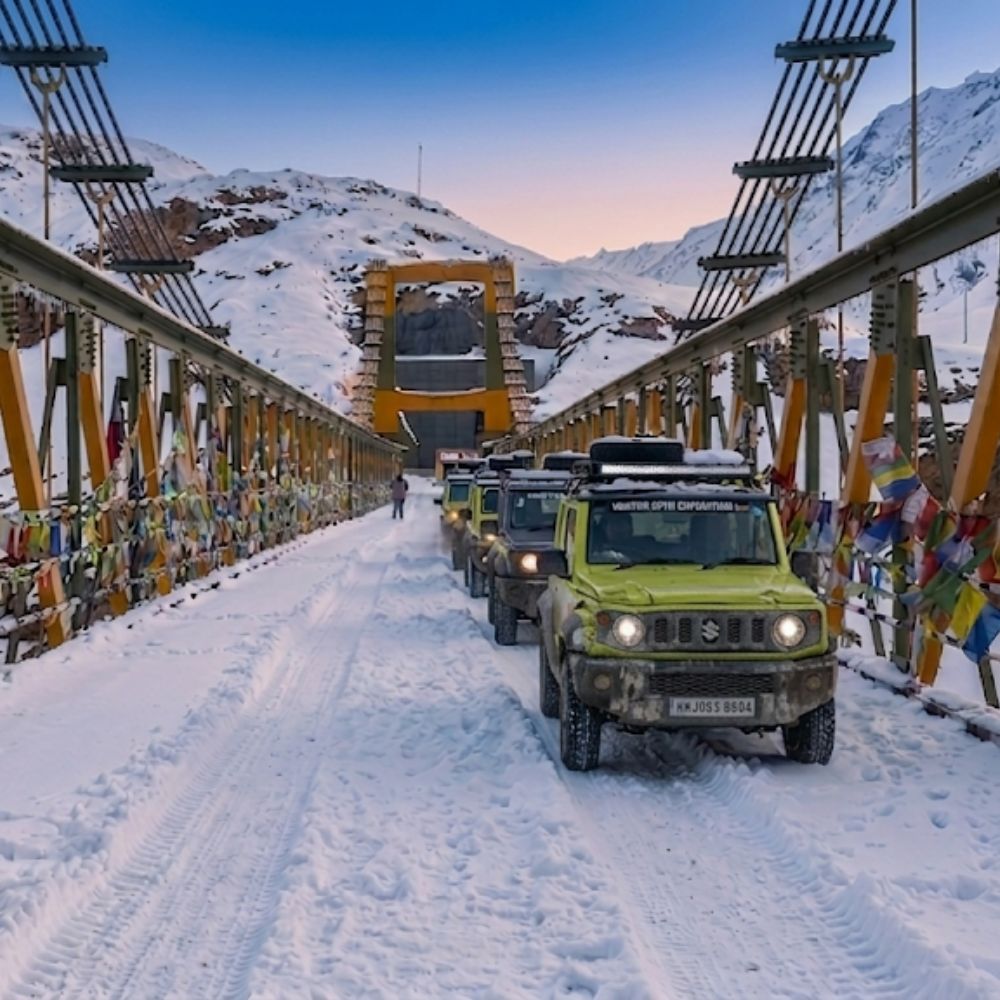
Winter Spiti 4×4 Seating Guide 2026: Jimny, Scorpio N, Thar and Hilux for Passengers and Luggage
Planning a Winter Spiti trip in 2026? This practical 4×4 seating guide compares the Jimny, Scorpio N, Thar and Hilux for passenger comfort, luggage space, winter roads and long mountain drives, helping you choose the right vehicle for your group size and travel style.
- Road Trips
- Snow Travel
 Lahaul and Spiti
Stargazing in Winter Spiti 2026: Where to Stay, Moonlight and What You Can See
Discover the best places for stargazing in Winter Spiti 2026, where to stay for darker skies and how moonlight affects visibility. Learn what you can realistically see from Kaza, Tabo and nearby villages during the winter months.
- Things to Do
- Snow Travel