
Spiti Bike Trip for Short Riders in 2026: Himalayan 450 Seat Height, Water Crossings and Balance Tips
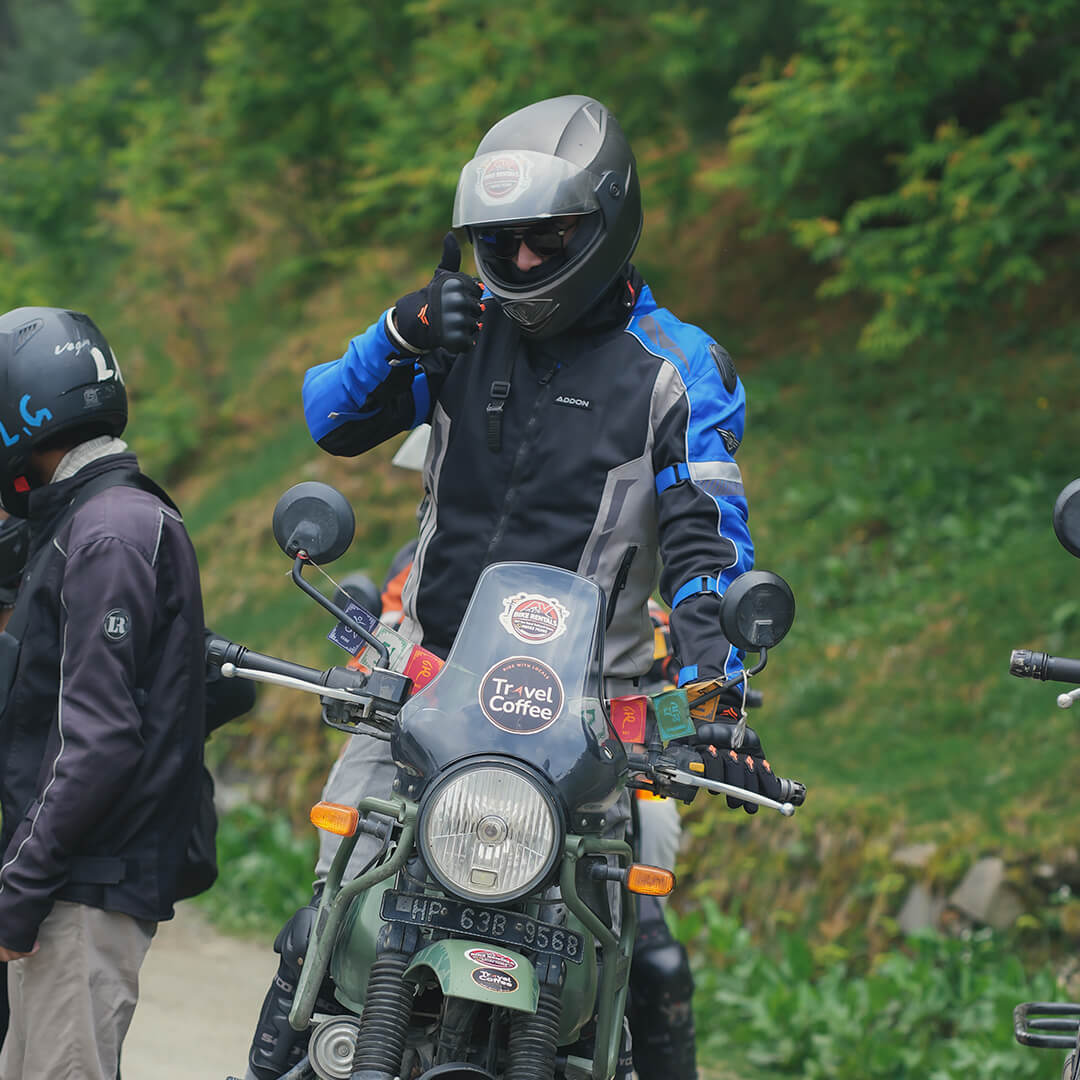
Most guides about riding to Spiti assume you are 5'10", confident on gravel, and have done this before. If you are 5'3" to 5'5" and wondering whether a Spiti bike trip for short riders is even realistic, you are asking the right question.
The honest answer is yes, but only if you stop worrying about height and start thinking about technique, luggage, route choice and ego management.
We have sent riders of all heights through the Spiti circuit over the years. The ones who struggled were not always the shortest.
They were the ones who refused to practise slow-speed control, overloaded their bikes, or entered crossings they should have walked through first.
This guide by Travel coffee covers everything a shorter rider needs to know before committing to the route.
Seat height numbers, the Himalayan 450's actual dimensions, water crossing tactics, balance drills, route choices and the stuff nobody tells you until you are already stuck on a slope near Batal.
Quick Answer: Can Short Riders Do a Spiti Bike Trip?
Yes. Short riders can do Spiti if they can control a loaded motorcycle with one foot down, ride slowly on gravel without panicking, pack light and choose their route carefully.
The Royal Enfield Himalayan 450 works with the low seat option, but it is still a tall and heavy motorcycle at 196 kg kerb weight. Technique matters more than ego here.
If you cannot hold the bike steady on a slope with one foot planted, you are not ready yet. That is not an insult. That is what keeps you safe at 4,000 metres.
What Counts as a Short Rider for a Spiti Bike Trip?
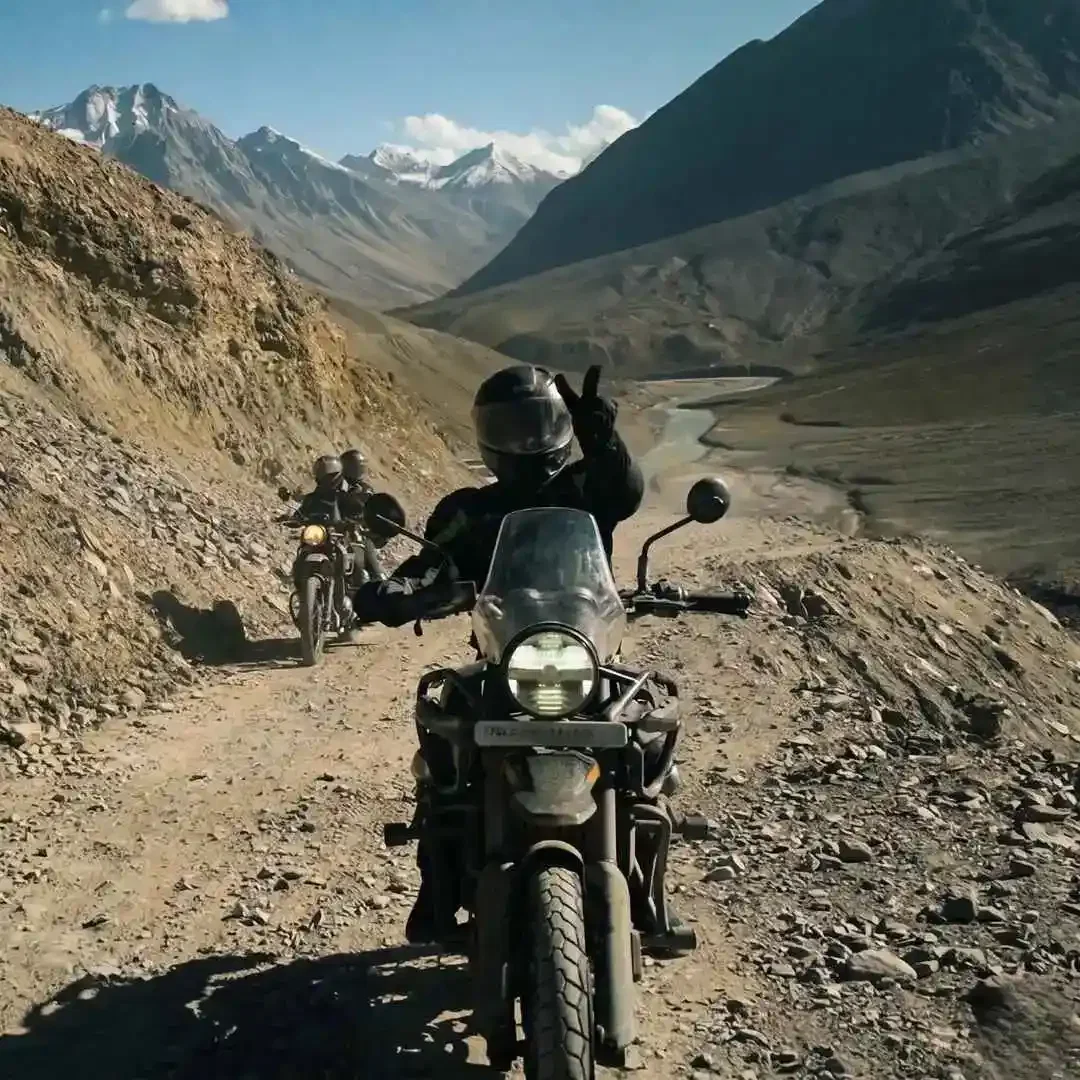
Height alone does not decide whether you can handle a motorcycle on mountain roads. Your inseam, boot sole thickness, leg strength, clutch control confidence and how much luggage you carry all matter more than what the measuring tape says.
A 5'4" rider with strong clutch feel, proper boots and light luggage may handle a loaded Himalayan better than a 5'9" rider who freezes up on gravel. We have seen this happen more times than we can count.
What actually matters is whether you can put one foot firmly on the ground at a stop, hold the bike upright without wobbling, and take off again on a slight incline without stalling. If you can do these three things with a loaded bike, your height is not the problem.
Do not let anyone promise you that every short rider can manage the Himalayan 450 in Spiti. That would be dishonest. But do not let anyone tell you it is impossible either.
Is the Royal Enfield Himalayan 450 Too Tall for Short Riders?
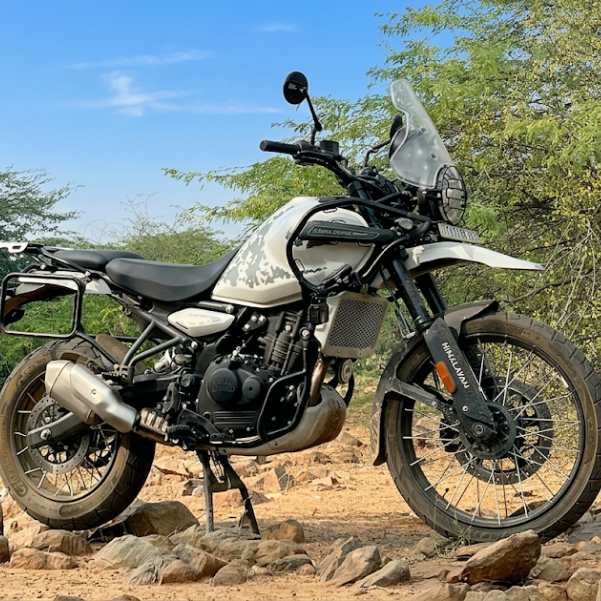
Here is what the numbers actually look like.
The Himalayan 450 standard seat height is 825 mm, adjustable up to 845 mm. The low seat brings it down to 805 mm, adjustable to 825 mm. The rally seat pushes it up to 860 mm, which is firmly in "do not touch this if you are short" territory.
The bike weighs 196 kg kerb weight (with 90 percent fuel and oil). Dry weight is 181 kg. Ground clearance is 230 mm, which is great for rough roads but also means the seat is high off the ground by design. The wheelbase is 1510 mm and the fuel tank holds 17 litres.
What most short riders get wrong is obsessing over the seat height number while ignoring the weight. An 805 mm seat sounds manageable until you load it with 15 kg of luggage, park it on a slope, and try to hold it steady with one toe touching gravel.
The height gets you to the ground. The weight decides whether you stay upright once you are there.
The 805 mm low-seat setting is the friendly starting point for shorter riders. But it does not make the bike lighter, and it does not make gravel smoother. Think of it as one piece of the puzzle, not the whole answer.
If you are planning a Spiti trip and want to sort out vehicle, route and stay logistics without the stress, explore our Spiti Valley Bike tour packages for options that include backup support vehicles.
Himalayan 450 Low Seat: Should Short Riders Use It for Spiti?
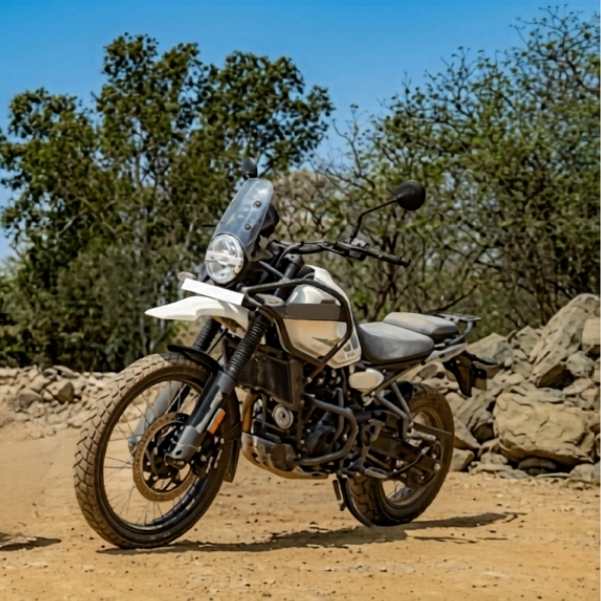
The official Himalayan 450 low rider seat costs ₹3,130 from Royal Enfield and fits the Himalayan 450 directly. It gives you two-step adjustability at 805 mm or 825 mm.
Use it if you tiptoe on the standard seat. Use it if you feel nervous about stopping on slopes. Use it if you are carrying saddlebags and the extra weight makes the bike feel top-heavy at stops.
But understand what it does and what it does not do. A low seat improves your reach to the ground. It does not reduce the 196 kg you are holding up. It does not change how the bike handles on loose gravel. And it does not fix poor clutch control.
Here is a money-saving tip most people miss. The ₹3,130 factory low seat is significantly cheaper than aftermarket lowering kits or suspension modifications, and it does not mess with your ground clearance.
Some rental shops and mechanics will offer to lower the suspension for ₹2,000 to ₹5,000, but that cuts into the 230 mm clearance you desperately need on the Batal stretch. Keep the clearance. Get the low seat instead.
Skip the rally seat entirely. At 860 mm, it is designed for standing riders on open terrain, not for someone who needs to touch the ground confidently at every stop on a mountain road.
Himalayan 450 vs Himalayan 411 vs Classic 350 for Short Spiti Riders
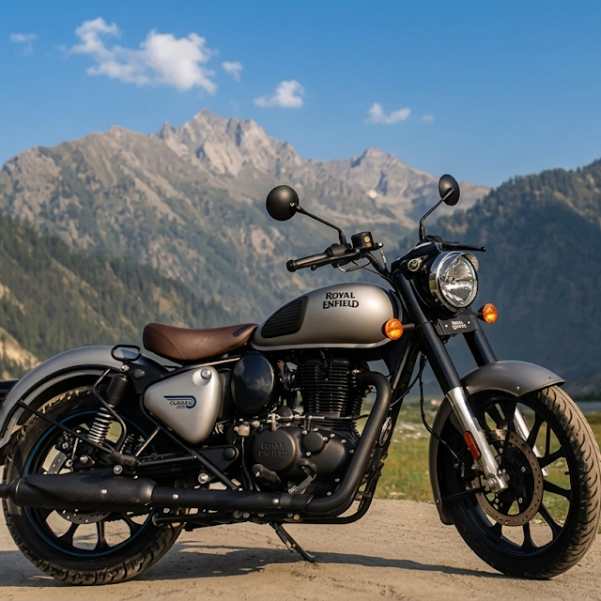
Himalayan 450
The Himalayan 450 gives you modern engine performance, strong ground clearance and proper adventure-bike geometry. But it is tall and heavy. For a short rider, every stop on a slope requires concentration.
Himalayan 411
The Himalayan 411 is still common in rental markets across Manali and Shimla. Many riders find it slightly easier to manage because they have sat on one before and the weight distribution feels familiar.
If your rental shop has a well-maintained 411 and you have ridden one previously, it is a perfectly valid choice for Spiti.
Classic 350
The Classic 350 feels lower and friendlier to many Indian riders because it is the bike they learned on or rode in college. But the Spiti circuit, especially the rough stretches after Gramphu and around Batal, punishes low-clearance bikes.
The suspension is not built for water crossings and broken roads at altitude. You can ride a Classic 350 to Kaza via the Kinnaur route on decent tarmac, but the moment you hit unpaved sections, you will wish you had more clearance and better suspension travel.
Our honest recommendation
If you are short and this is your first Spiti ride, rent a Himalayan (411 or 450) with the low seat option. Test it for a full day in Manali before heading out. If the bike does not feel right after a day of practice, switch it. No shame in that.
Can You Ride Spiti if You Cannot Flat-Foot the Bike?
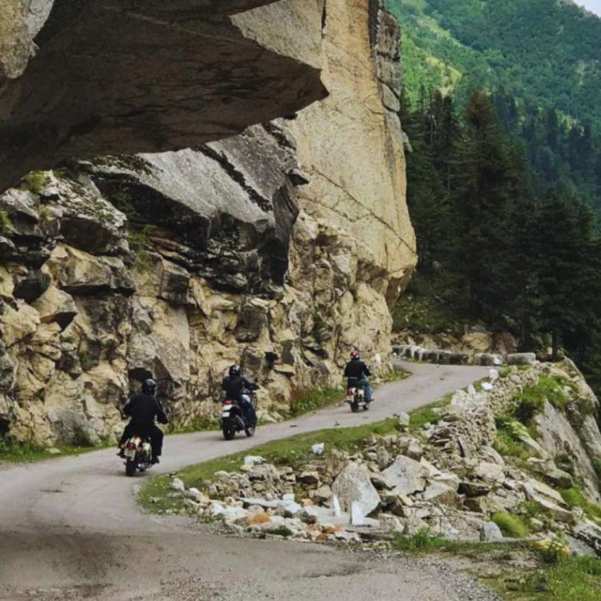
You do not need to plant both feet flat on the ground at every stop. That is a myth that stops short riders from attempting routes they can absolutely handle.
What you need is a controlled one-foot stop. This means you decide in advance which foot goes down, you keep the handlebar straight, and you use the rear brake to hold the bike steady.
Short-rider riding coaches teach single-foot-down balance as a core adventure bike skill, and it works.
The technique is simple in a parking lot and harder on a mountain slope, so practise before you need it. When stopping, keep the handlebar pointed straight ahead.
If you turn the bar and put your foot down on the same side, the bike's weight rolls into the turn direction and you are fighting gravity. Straight bars, one firm foot, rear brake holding. That is the sequence.
Avoid stopping in dips or soft ground. If you see a patch of loose gravel or a slight depression coming up, slow down and stop before it, not inside it. A 196 kg bike sinking into soft ground while you are on your toes is a bad situation.
On steep slopes, use the rear brake before you put your foot down. Hold the bike on the brake first, then plant your foot. Releasing the brake before your foot is stable is how most slow-speed drops happen.
What Balance Skills Should Short Riders Practise Before Spiti?
In our experience running Spiti trips, the riders who have the best time are not the tallest or the most experienced. They are the ones who spent a day practising before leaving.
Here is what to work on. Slow-speed clutch control in first gear, walking pace, without stalling. One-foot stops on flat ground, then on a gentle slope. Hill starts without rolling backward.
Gentle U-turns in a tight space. Stopping on a downhill slope and holding the bike with the rear brake. Pushing the bike from the side while standing next to it, not sitting on it. Reversing by getting off the bike and walking it backward.
And most importantly, checking your balance with luggage loaded exactly the way you plan to carry it in Spiti.
Our team recommends spending at least half a day or a full day on a rental bike before leaving for Spiti.
Travel Coffee recommends testing a loaded bike with luggage on a gentle slope before committing to the trip. If you cannot hold the bike steady on a gentle slope with bags on, you know exactly what to fix before you hit the mountains.
This is the single best thing a short rider can do. Not buying better gear, not watching YouTube videos. Just honest practice on the actual bike you will ride.
How Should Short Riders Handle Spiti Water Crossings?
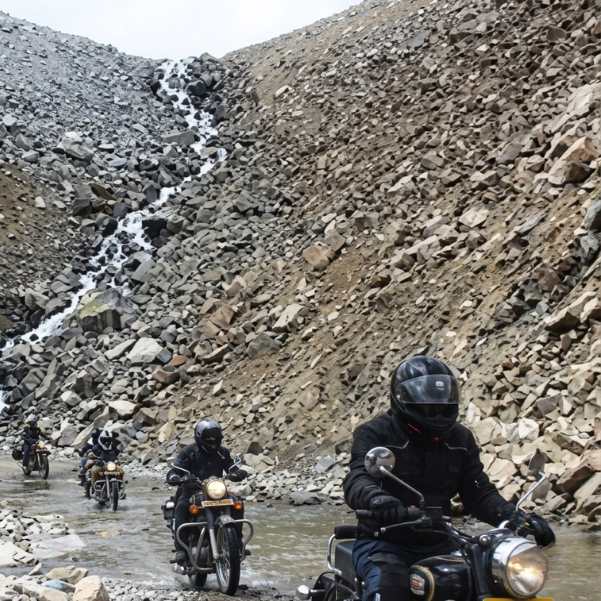
Water crossings are where short riders feel the most pressure, and where ego causes the most damage.
Spiti water crossings on the Manali-Kaza side are glacier-fed and timing-dependent. Water flow is usually lower early in the morning and rises through the day as snowmelt increases.
The Gramphu-Batal stretch is one of the roughest sections with loose gravel, rocks and water crossings that can change same-day.
Here is what we always tell our riders. Reach crossings early, ideally before 8 AM. Stop and watch the water before entering. Look at where other vehicles are crossing and check the depth.
Do not rush just because a group of riders behind you is watching. Choose a smoother line, even if it means going wider. Use steady, constant throttle through the water. Do not grab the front brake inside a crossing.
And if the crossing looks fast, rocky or deeper than your exhaust pipe, ask someone to spot you or walk through it first to check the depth.
Skip hero behaviour completely. The dumbest crashes we have seen in Spiti were not on steep passes. They were at water crossings where someone gunned it to look confident and hit a hidden rock at speed.
If you want to include Chandratal on your route, check our Chandratal opening dates and road status guide before planning. Road and crossing conditions near the lake change weekly in early season.
Should Short Riders Stand or Sit During Water Crossings?
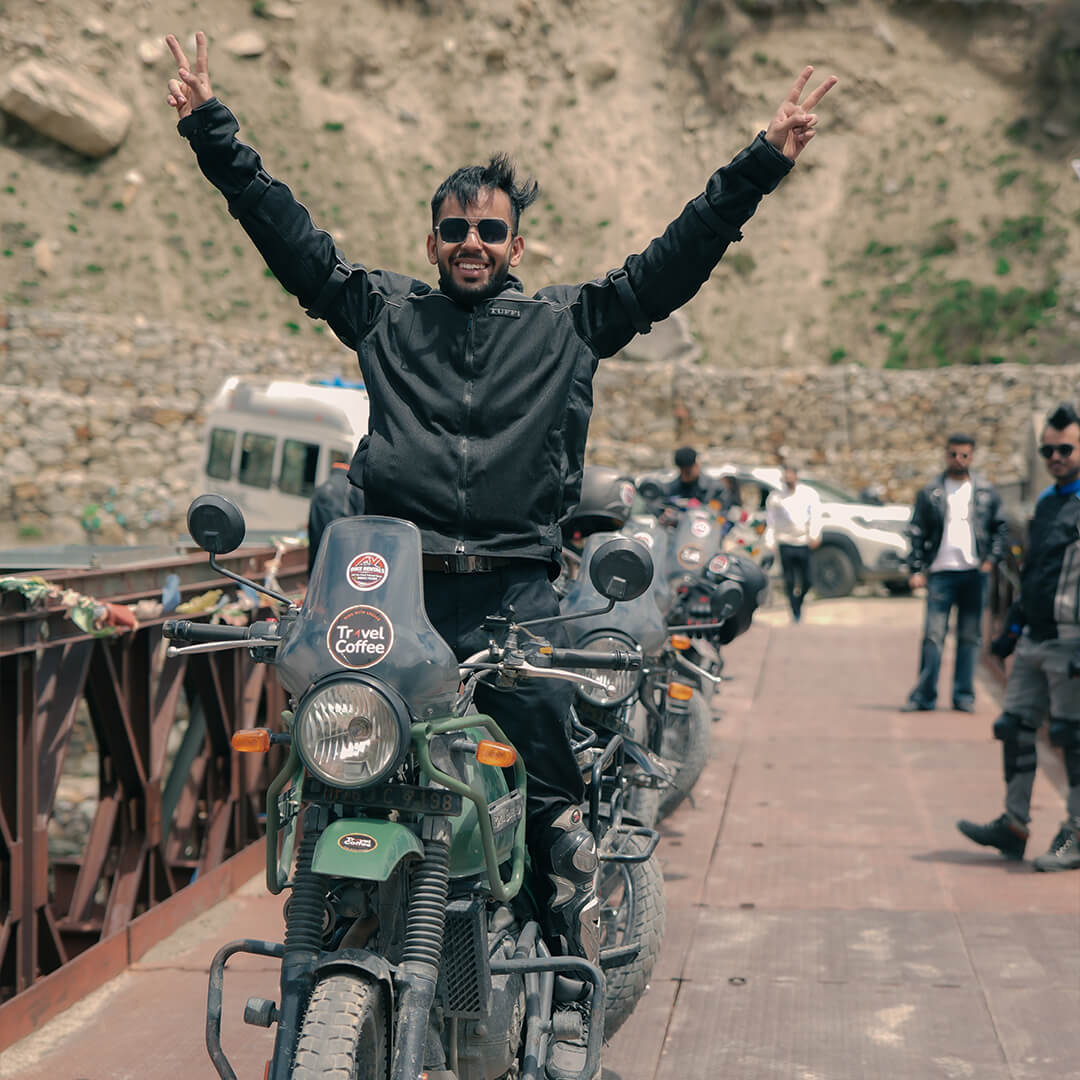
Standing on the pegs can improve visibility, stability and counterbalance on shallow water crossings. Trained riders stand with knees slightly bent, grip the tank with their knees, keep light hands on the bars and look at the exit, not at the water right in front of them.
If you are a nervous beginner, you can sit through very shallow crossings where the water is below your wheel axle.
But do not paddle your feet wildly on the ground. Hidden stones underwater will twist your ankle or catch your boot, and suddenly you are fighting the bike and the river at the same time.
The safer answer is not "stand" or "sit." The safer answer is choosing the right line, keeping calm, maintaining steady throttle and not entering a crossing that already looks beyond your skill.
There is no shame in waiting for a truck or SUV to cross first so you can see the actual depth and line.
Which Spiti Stretches Are Hardest for Short Riders?
The stretches that cause the most trouble are not the high passes. They are the broken, uneven sections where you need to stop and start repeatedly on bad surfaces.
Gramphu to Batal is the stretch everyone warns you about, and the warnings are earned. Loose gravel, broken road, water crossings, and trucks coming from the opposite direction on a single-lane path. This stretch eats time and energy.
The Batal to Chandratal diversion is a rough, narrow dirt road where parking and stopping require care. Kunzum Pass approaches can have loose surfaces, especially early in the season.
Sloped dhaba parking lots are a surprisingly common problem. You park on a lean, walk inside for chai, come back and the bike has either fallen over or feels impossible to straighten.
Loose gravel near active roadwork zones catches riders off guard because the surface changes without warning. And the water crossings on the Manali side are the most unpredictable, with flow and depth changing within hours.
The Shimla-Kinnaur-Kaza route gives more gradual altitude gain and generally better tarmac.
For first-time riders, and especially for short riders, entering from the Shimla side and building confidence over several days of paved road is significantly safer than jumping straight into the Manali side chaos.
If you want a comfortable halt before the rough sections, Sissu in the Lahaul Valley is a solid overnight stop with guesthouses, fuel and phone signals.
Best Route and Season for Short Riders in 2026
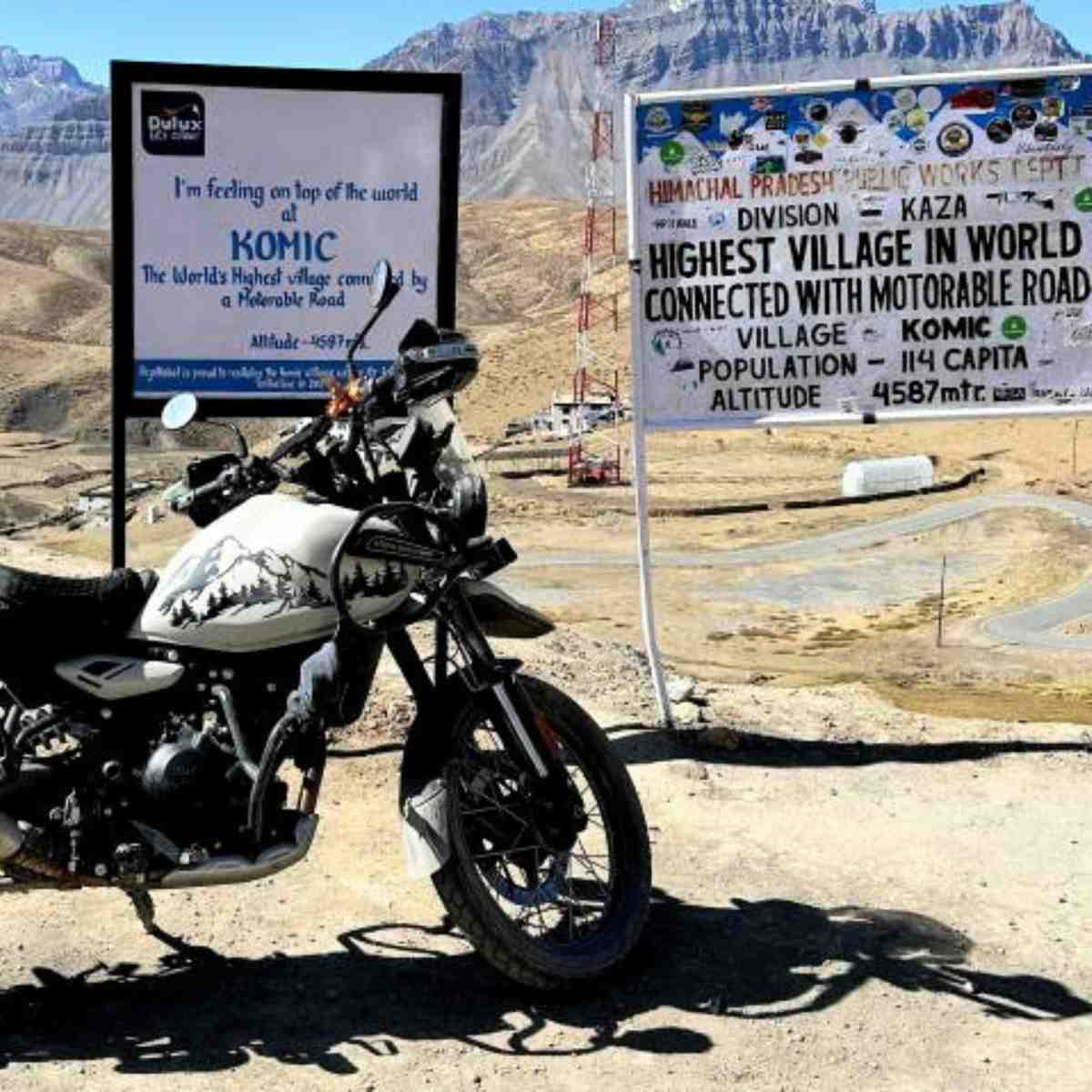
This is where you need to be careful, because the road situation in Spiti changes weekly.
As of 24 June 2026, the official Lahaul-Spiti road status page showed Delhi-Manali open, Manali-Keylong open, and Keylong-Leh open, but Keylong-Kaza was closed.
A separate live road tracker updated 27 June 2026 showed Batal-Gramphoo open, Chandertal open, Kaza-Losar open, and Nako-Kaza open, but Kunzum was open only for chain or 4x4 vehicles.
This is conflicting information. Do not plan your ride based on a status update you read days ago. Verify same-day before attempting any border-pass crossing on a motorcycle.
For short riders, the safest approach is to enter from the Shimla-Kinnaur-Kaza side. This route gives you gradual altitude gain, better roads for the first few days, and time to build confidence before hitting rough terrain.
Attempt the Manali-Kaza crossing or the Chandratal route only after getting same-day local road confirmation from a driver, camp operator or our team.
Vehicles entering Lahaul-Spiti need an e-pass through the e-Aagman system. The Atal Tunnel Rohtang-Koksar-Chandertal circuit also needs a separate e-permit per vehicle.
Indian citizens generally do not need ILP or PAP for normal Spiti tourism, but the vehicle e-pass and e-permit rules still apply. For certain notified areas in Kinnaur, an ILP with a ₹200 fee at the e-Governance Centre may be required.
Carry your driving licence, RC, PUC certificate, insurance and a government ID as physical copies. Digital copies on your phone are useless where there is no signal.
Season-wise, mid-June to September is the realistic window. July gives the most stable conditions for a first-time short rider. September gives better weather and fewer crowds but colder nights. Early June is a gamble on road openings.
What Luggage Setup Helps Short Riders Keep Balance?
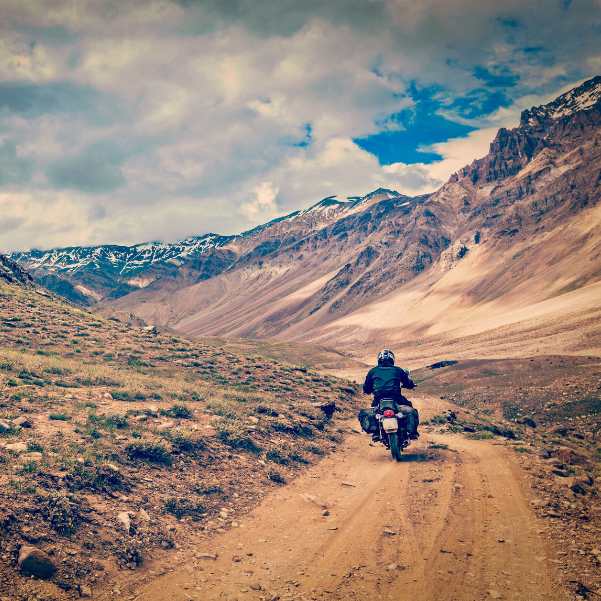
A tall bike becomes dramatically harder for a short rider when the luggage is high and loose. This is not a small detail. This is often the difference between a confident ride and a miserable one.
Keep luggage low, balanced and tight. Soft saddlebags mounted low on both sides distribute weight evenly and keep the centre of gravity where you need it. Equal weight on the left and right side matters more than total weight.
Do not stack a tall tower of bags on the rear seat. Do not strap a heavy backpack to the pillion seat that raises the bike's centre of gravity by half a foot. Do not use loose bungee cords that can slip near the wheels or exhaust.
If you are carrying a big backpack on your own back, the weight pulls you backward on the seat and forces you to reach further for the handlebars. That extra strain gets painful after 5 to 7 hours of riding on broken roads.
The golden rule is simple. If you would not carry it up a flight of stairs comfortably, it should not go on your Spiti bike. Pack light. Then remove one more thing.
Kaza is your key fuel stop. Do not leave Kaza with a half-empty tank. Fill up completely and carry a spare litre if you are heading toward the Chandratal side. Our summer Spiti circuit with Chandratal includes fuel planning in the itinerary so riders do not get caught short.
Should Short Riders Go Solo, With Pillion, or Guided?
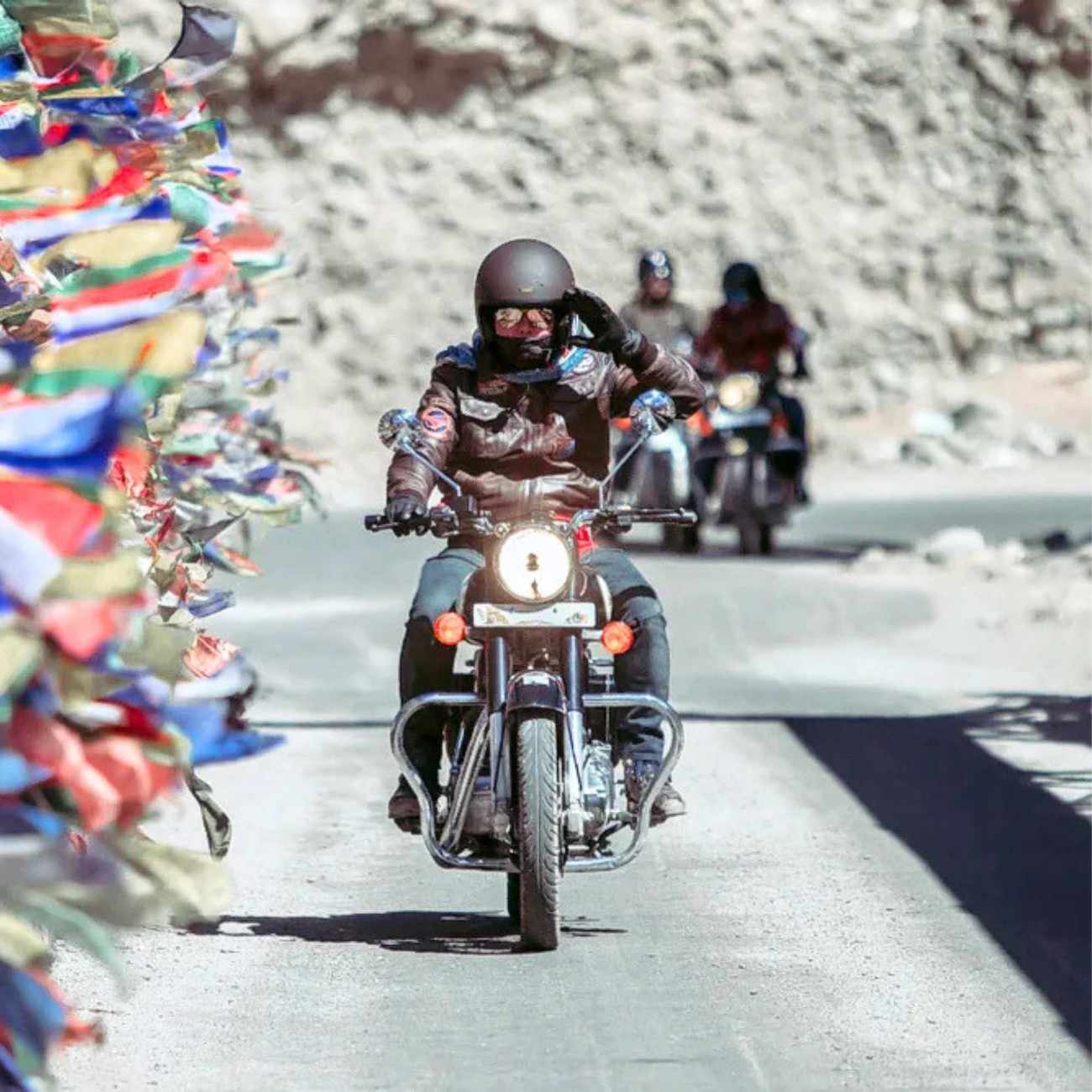
Our strong recommendation for first-time short riders: do not carry a pillion on the Himalayan 450 in Spiti unless you already have mountain riding experience.
A pillion adds 50 to 70 kg to the rear, raises the centre of gravity, changes braking distance and makes every stop on a slope significantly harder. On a bike where you are already working to touch the ground, adding pillion weight is asking for trouble.
Solo riding gives you full control over pace, stops and route decisions. But solo also means no backup if something goes wrong on a remote stretch with no phone signal.
A guided trip is the safest option for a short rider doing Spiti for the first time.
You get a road captain who knows the route and the crossings, a mechanic who can fix a flat or a clutch cable, a backup vehicle that carries heavy luggage so your bike stays light, someone to spot you at water crossings, and local same-day road checks so you are never guessing whether a pass is open.
This is not a sales pitch. It is what we have seen make the difference between a rider who finishes the circuit smiling and one who drops the bike on day two and spends the rest of the trip in the backup car.
Final Verdict: Is a Spiti Bike Trip Worth It for Short Riders?
Yes, if you put in the work before you go.
Use the low seat. Practise one-foot stops and hill starts with luggage loaded. Enter from the Shimla-Kinnaur side for gradual confidence building. Pack light and low. Respect water crossings. Verify road status every single day.
And no, or at least not yet, if you are brand new to geared bikes, cannot manage slow-speed balance in a parking lot, panic on downhill slopes, or want to carry a pillion and heavy luggage on your first mountain ride.
There is nothing wrong with doing a supported Spiti trip in an SUV first, learning the route and the terrain, and coming back the next year on a bike. That is not giving up. That is planning smart.
The ride through Spiti is extraordinary. The barren valleys, the river crossings, the silence at 4,500 metres, the chai at a roadside dhaba where the owner recognises you because only six vehicles passed all day.
It is worth experiencing on two wheels. But only when you are genuinely ready for it.
The momos at the small dhaba just past the Batal checkpoint are the last proper hot meal before the Chandratal turn-off.
The guy running it has been there every season from June to September for years. Order the plate momos and a ginger chai before heading further. You will not find anything this warm for the next several hours.
Whether you're a first-time mountain rider or an experienced motorcyclist, explore our Lahaul & Spiti bike tour packages to find the itinerary that suits you best.
Explore Spiti Valley Packages
Related topics
Frequently Asked Questions
Can a 5'3" rider do Spiti on Himalayan 450?
Yes, but only with the low seat (805 mm), proper boots with thick soles, light luggage, solid one-foot-stop technique and ideally a guided group with a backup vehicle. Height alone does not disqualify you, but you need to be honest about your skill level.
Is Himalayan 450 good for short riders?
It is a capable adventure bike with the clearance and engine Spiti demands. But at 196 kg and 825 mm standard seat height, it is not naturally friendly for short riders. The low seat at 805 mm and proper technique make it workable, not effortless.
What is the lowest seat height of Himalayan 450?
805 mm with the official low rider seat installed at the lower adjustment setting. The standard seat goes down to 825 mm.
Is Himalayan 411 better for short riders than Himalayan 450?
The 411 may feel more familiar to riders who have rented one before. It is still widely available in rental shops. But the 450 offers better ground clearance and modern engine refinement. Neither is dramatically easier for short riders. Choose the one you have spent more time on.
Can I do Spiti if I only tiptoe?
You can, but the margin for error is thin. If you tiptoe on flat ground, a loaded bike on a loose gravel slope will be very difficult to hold. Get the low seat, wear boots with the thickest sole you can find, and practise slope stops before leaving.
Should short riders lower the bike suspension?
No. Lowering the suspension cuts into the 230 mm ground clearance you need for Spiti's rough roads and water crossings. Use the low rider seat instead. It drops seat height without sacrificing clearance.
Are water crossings dangerous for short riders?
They are dangerous for all riders who enter without reading the crossing first. Short riders face the extra challenge of not being able to put a foot down easily if the bike stalls in water. Cross early in the morning when flow is lower, pick a clean line and keep steady throttle.
Which route is safer for short riders, Shimla or Manali?
The Shimla-Kinnaur-Kaza route is safer for short and first-time riders. Better roads, gradual altitude gain and more time to build confidence before the rough sections.
Can short riders ride with pillion in Spiti?
We strongly recommend against it for first-time short riders in Spiti. The extra weight on the rear makes stopping, balancing and crossing water significantly harder on a tall bike.
What boots help short riders on a bike trip?
Riding boots with thick soles and ankle protection. Every extra centimetre of sole height helps your reach. Make sure they grip well on wet rock and loose gravel. Break them in before the trip.
Do I need a permit for a Spiti bike trip in 2026?
Vehicles entering Lahaul-Spiti need an e-pass via e-Aagman. The Atal Tunnel to Chandertal circuit needs a separate e-permit per vehicle. Indian citizens generally do not need ILP for normal Spiti tourism, but certain Kinnaur areas require a ₹200 ILP at the e-Governance Centre. Carry physical copies of your driving licence, RC, PUC, insurance and government ID.
Is Chandratal open for bikes in 2026?
As of late June 2026, road status reports are conflicting. One source showed Kunzum open only for chain or 4x4 vehicles, while another showed Chandertal as open. Do not trust any status update that is more than 24 hours old. Verify same-day with a local operator before attempting the Chandratal route on a bike.
More about Lahaul and Spiti
 Lahaul and Spiti
Rent or Buy Winter Gear for Spiti in 2026? Jackets, Boots, Costs and Pickup Options
Planning a Winter Spiti trip in 2026? Compare the cost of renting vs buying jackets, snow boots, thermals and other essential winter gear, along with practical tips on what to rent, what to buy and where to arrange it before your trip.
- First-Time Travellers
- Snow Travel
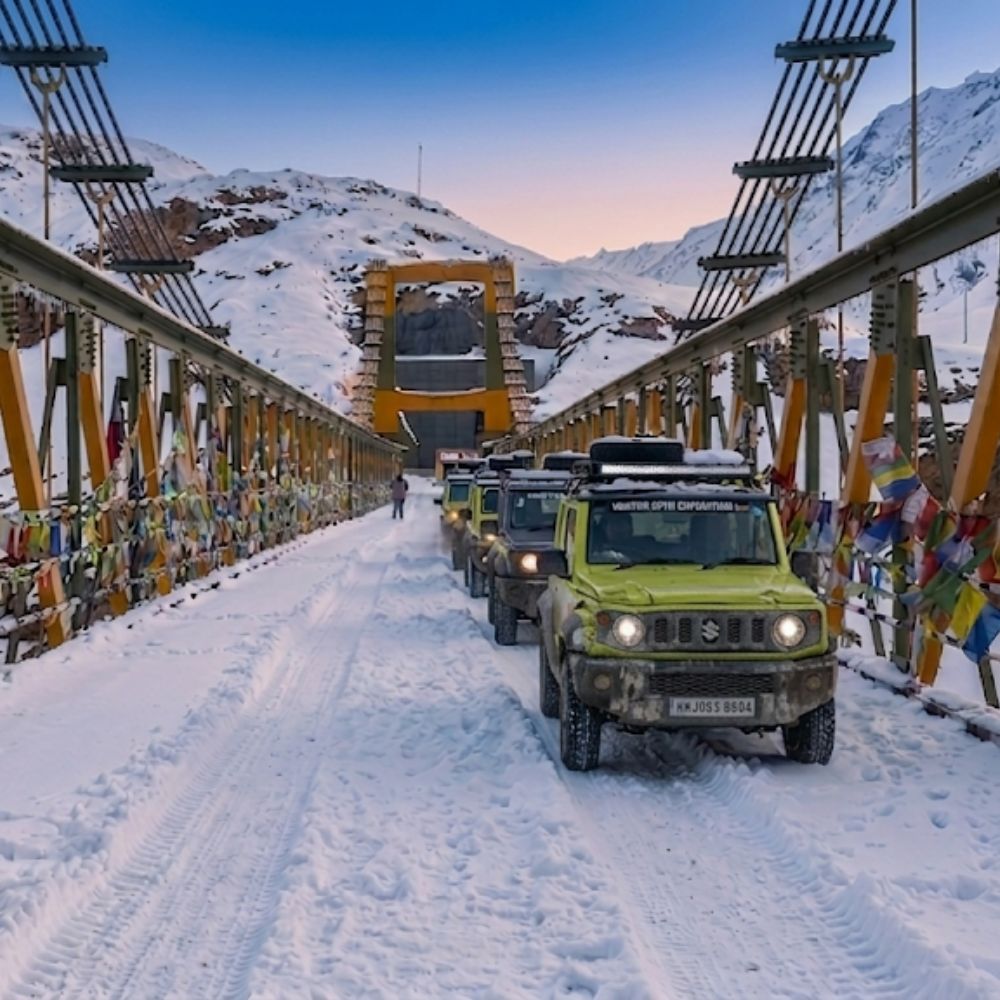 Lahaul and Spiti
Winter Spiti 4×4 Seating Guide 2026: Jimny, Scorpio N, Thar and Hilux for Passengers and Luggage
Planning a Winter Spiti trip in 2026? This practical 4×4 seating guide compares the Jimny, Scorpio N, Thar and Hilux for passenger comfort, luggage space, winter roads and long mountain drives, helping you choose the right vehicle for your group size and travel style.
- Road Trips
- Snow Travel
 Lahaul and Spiti
Stargazing in Winter Spiti 2026: Where to Stay, Moonlight and What You Can See
Discover the best places for stargazing in Winter Spiti 2026, where to stay for darker skies and how moonlight affects visibility. Learn what you can realistically see from Kaza, Tabo and nearby villages during the winter months.
- Things to Do
- Snow Travel