
Spiti Bike Rental Checklist 2026: 25 Things to Check Before Accepting a Bike
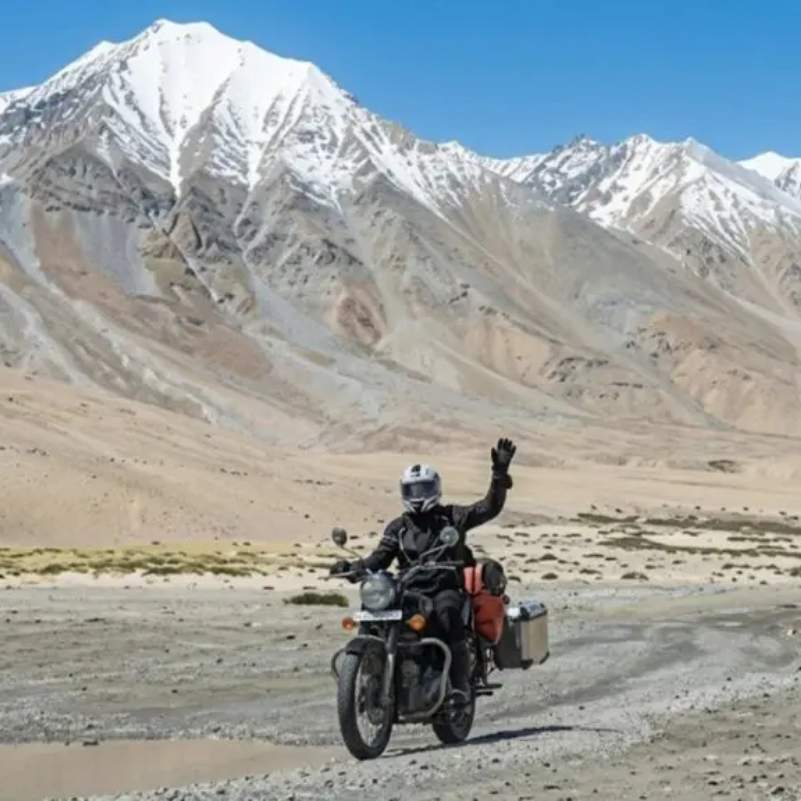
You have booked leave, packed your bags, and found a rental shop in Manali that has a Himalayan with your name on it.
But here is the part nobody talks about enough: the 30 minutes you spend checking that bike before you ride out will decide whether your Spiti trip becomes the best ride of your life or a roadside disaster 200 km from the nearest mechanic.
Spiti is not Goa. You cannot pull over, call a workshop, and get back on the road in an hour. Out there, you are riding through gravel, broken roads, water crossings, and passes above 15,000 feet with no fuel station, no mobile signal, and sometimes no other vehicle in sight for kilometres.
A weak clutch that "felt fine in Manali" will fail you on the climb to Kunzum Pass. A bald tyre that "looked okay" will slide out under you at the first wet gravel patch after Batal.
This is the Spiti bike rental checklist we wish someone had given us before our first ride out of Manali. Use it. Every single point.
Quick Answer: What Should You Check Before Accepting a Rental Bike for Spiti?
Before you accept a rental bike for Spiti, check the tyres, brakes, clutch, gear shifts, chain, lights, horn, battery, oil leaks, RC, insurance, PUC, toolkit, luggage carrier, and scratches. Take a proper test ride around Manali before you commit to leaving.
Spiti is not the place to "adjust later." The roads shift between smooth tarmac, broken patches, gravel, mud and water crossings. Fuel stations are sparse.
Mechanics are almost nonexistent between towns. Mobile network is limited and patchy. If the bike has a problem, you want to catch it in Manali, not at 14,000 feet with no signal and no help for hours.
Why Is a Rental Bike Check So Important for Spiti?
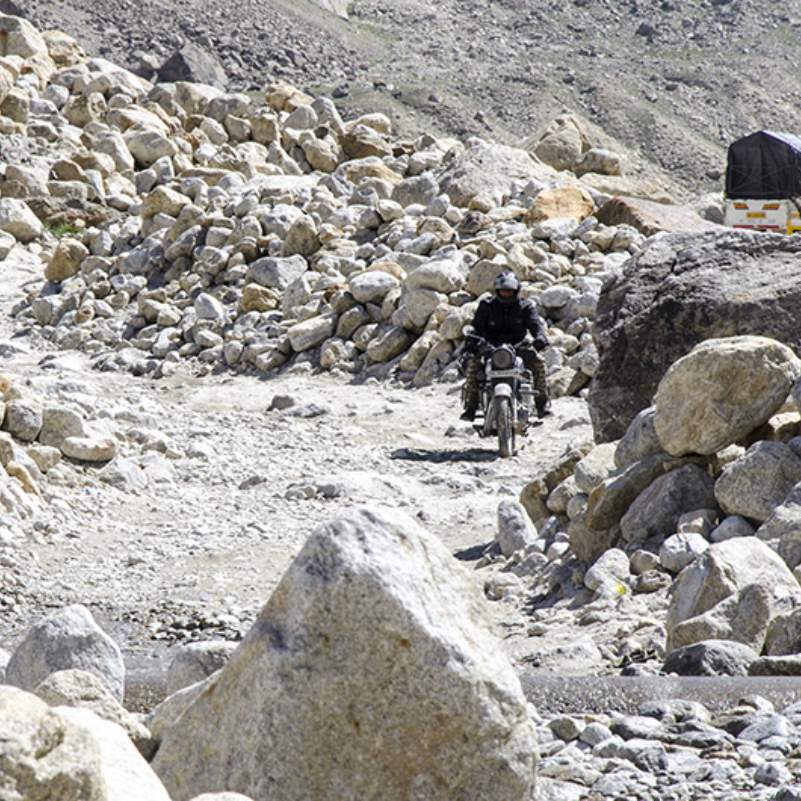
Most rental bikes in Manali have done multiple Himalayan trips. They have been to Leh, Spiti, Chandratal, and back. Some bikes do this loop every two weeks during peak season.
A bike that looks clean on the outside can still have a worn clutch plate, a stretched chain, brake pads ground down to metal, or fork seals that leak oil over every bump.
In our experience, the bikes that fail in Spiti usually give small warnings at pickup. A slightly rough gear shift. A clutch that bites too high. A front brake that feels spongy but "still works." Riders ignore these signs because they are excited to leave. Do not be that rider.
Spiti roads include everything from fresh tarmac near Atal Tunnel to completely broken stretches near Gramphu and Batal, loose gravel climbs, river mud after rain, and water crossings that can soak your engine if you are not careful. Your bike needs to handle all of it.
If you are planning a Spiti Valley trip, whether self-riding or guided, the bike under you matters as much as the route you choose.
What Documents Should You Verify Before Touching the Bike?
Your Rider Documents
You need a valid permanent driving licence. Not a learner's licence. Not a photocopy of someone else's licence.
The actual, valid, permanent DL in your name with the correct vehicle class. If you are a foreign national, you need an International Driving Permit (IDP) along with your home country licence.
Carry a government photo ID (Aadhaar, passport, or voter ID) separately from your licence. Some checkpoints and permit counters ask for it.
Bike Documents
The rental shop must give you copies of three documents: Registration Certificate (RC), valid insurance, and Pollution Under Control (PUC) certificate.
Check the expiry dates on all three. An expired insurance policy is the same as no insurance if something goes wrong on the road.
Keep digital copies on your phone and physical copies in a waterproof pouch. Checkpoints between Manali and Kaza will ask for these, and your phone might not have a signal to download them later.
Permit and Route Documents
Vehicles entering Lahaul and Spiti need an e-Aagman e-pass. Register your bike's details on the portal before departure. If you are taking the Rohtang route instead of the Atal Tunnel, you may also need the Rohtang or Beyond Rohtang permit.
Portal rules and route-specific requirements change frequently, so check the e-Aagman website the day before you leave.
Foreign nationals need a Protected Area Permit (PAP) for protected Spiti areas including Kaza, Tabo, Dhankar and other listed places.
The list of protected areas and the application process can change, so confirm with the district administration or your travel operator before departure.
The 25-Point Spiti Bike Rental Checklist
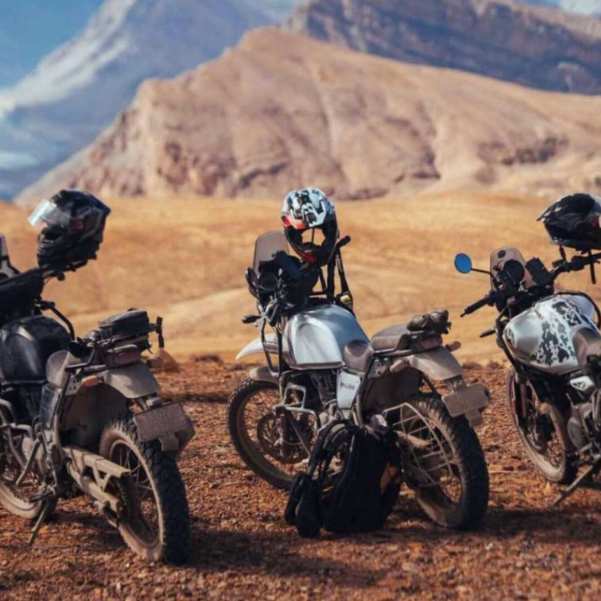
Here is the full checklist, point by point. Go through every single one before you sign anything.
Check number 1: Tyre tread
Look at both tyres closely. Run your hand across the surface. If the tread is flat, worn smooth, or barely visible, the bike will not grip on gravel, slush, or wet patches.
On the Batal to Chandratal stretch and around Losar, grip is the difference between staying upright and going down. Deep, visible tread grooves are non-negotiable.
Check number 2: Tyre pressure
Ask the shop what pressure the tyres are set to. Slightly lower pressure helps on gravel and off-road sections.
Over-inflated tyres bounce on rough roads and reduce grip. Under-inflated tyres overheat on long highway stretches. Make sure the pressure matches the terrain you are riding into.
Check number 3: Sidewall cracks and cuts
Squeeze and inspect the sidewalls of both tyres. Cracks, deep cuts, or bulges mean the tyre is old or damaged.
A sidewall blowout at high altitude on a broken road is one of the worst things that can happen to you. If the sidewalls look questionable, ask for a tyre change before you leave.
Check number 4: Rim bends and spoke condition
Spin both wheels off the ground if possible. Look for wobble. Check spokes for looseness by tapping them. Loose or broken spokes lead to wheel wobble, which gets worse on rough roads and can cause a spoke to snap mid-ride.
Check number 5: Front brake bite
Squeeze the front brake lever. It should bite firmly about halfway through the lever travel. If you can pull the lever all the way to the handlebar, the brake pads are worn or the cable needs adjustment.
Spongy front brakes on a steep downhill with gravel are genuinely dangerous.
Check number 6: Rear brake bite
Press the rear brake pedal. Same test. It should engage firmly without going to the floor. On long Spiti descents, especially from Kunzum towards Batal, you will rely on both brakes constantly.
Check number 7: Clutch play
Pull the clutch lever. It should feel smooth, with clear engagement. If the clutch bites only at the very end of the lever release, the clutch plate is likely worn.
A weak clutch will slip under load on steep climbs. You will feel it first on the climb out of Gramphu. By Kunzum, you might not make it at all.
Check number 8: Gear shifts
Run through all gears standing still and while rolling. Every shift should be clean and positive.
False neutrals between gears, where the gear lever moves but the bike slips into neutral, are a serious red flag. Hard shifting or grinding sounds mean the gearbox needs attention. Do not accept a bike with sloppy gear shifts.
Check number 9: Chain and sprocket
Look at the chain. It should be clean, lubricated, and properly tensioned with about 20 to 25 mm of slack. A rusted, dry, or stretched chain makes noise, loses power, and can snap.
Check the sprocket teeth too. If they are hooked, pointed, or unevenly worn, the chain and sprocket set needs replacement.
Check number 10: Engine cold start
This is important. Ask the shop not to pre-warm the bike before you arrive. A cold start tells you the truth about the engine and battery.
If the bike struggles to start cold, cranks slowly, or needs multiple kicks, it will give you the same trouble at a cold campsite morning in Spiti. A healthy bike should fire up within a couple of attempts.
Check number 11: Idle stability
After the engine warms up, let it idle for a minute. It should hold a steady RPM without stalling, surging, or coughing.
Unstable idle often points to carburettor or fuel injection issues that get worse at high altitude where the air is thinner.
Check number 12: Exhaust smoke
Watch the exhaust while the bike idles and when you rev it. White or blue smoke is a refusal sign. White smoke can mean coolant leak or head gasket issues.
Blue smoke means the engine is burning oil. Either way, do not take that bike. A small puff of white on a cold morning is normal, but continuous smoke is not.
Check number 13: Oil leaks
Get on your knees and look under the engine. Check the fork seals at the front suspension. Check around the engine casing and the oil filter area.
Any fresh oil drips, wet spots, or oily residue means there is a leak. A minor leak in Manali becomes a major problem 300 km into Spiti where there is no oil to top up and no mechanic to fix the seal.
Check number 14: Suspension
Push down on the front forks and the rear suspension. Both should compress smoothly and bounce back without clunking, sticking, or making harsh noises.
Leaking fork seals show up as oily residue on the fork tubes. Bad suspension on Spiti roads will beat your body up and make the bike harder to control on rough patches.
Check number 15: Battery
Check the battery terminals for corrosion. A bike that cranks slowly or dims its headlight while starting has a weak battery. At high altitude, cold temperatures drain batteries faster. A marginal battery in Manali becomes a dead battery at a Chandratal campsite.
Check number 16: Headlight, high beam and low beam
Switch between high and low beams. Both should work. Riders should avoid night riding in Spiti, but you will need lights in the Atal Tunnel, during sudden rain, in fog near passes, and if you are running late into dusk. Non-functional lights are also a challan risk at checkpoints.
Check number 17: Indicators and brake light
Check all four indicators and the brake light. Press both brakes and confirm the rear brake light activates. Other vehicles on narrow mountain roads need to see your signals. A missing brake light on a hairpin with a truck behind you is not a risk worth taking.
Check number 18: Horn
Press it. Make sure it is loud and clear. On single-lane mountain roads with blind turns, your horn is your primary safety tool. A weak or non-functional horn is unacceptable.
Check number 19: Mirrors
Both mirrors should be firmly attached and adjustable. Loose mirrors vibrate on rough roads and become useless. You need clear rear visibility on narrow stretches where trucks and buses come up behind you.
Check number 20: Handlebar alignment
Stand in front of the bike and look at the handlebar relative to the front wheel. They should be perfectly aligned. Misalignment means the bike has likely been dropped or the triple clamp is bent.
A misaligned handlebar makes the bike pull to one side, which is exhausting on a long ride and dangerous on fast descents.
Check number 21: Fuel level and mileage honesty
Check the fuel level and ask about realistic mileage. A Himalayan typically gives 30 to 35 km/l on highways and less on rough terrain. A Classic 350 gives roughly similar. Fuel stations are sparse in Spiti.
Fuel up at Manali, Kaza, and Reckong Peo where available. If the shop claims 45 km/l on a Himalayan, they are being optimistic. Plan your fuel stops based on conservative numbers, not best-case claims.
Check number 22: Luggage carrier bolts
If the bike has a rear carrier, Ladakh carrier, saddle stays, jerry can mount, or bungee points, physically grab each one and try to shake it.
Loose bolts on a luggage carrier will rattle free on rough roads, and your bags will end up on the ground. Tighten everything. Carry a couple of extra bolts and zip ties in your bag.
Check number 23: Toolkit
Ask the shop for a basic toolkit. At minimum, you need a spanner set that fits your bike's bolts, a screwdriver, pliers, a tyre lever, and an adjustable wrench.
Many rental shops hand over a toolkit they have never opened. Open it yourself and check that the tools are actually there and not rusted solid.
Check number 24: Puncture kit or spare tube
Ask for a puncture repair kit and a spare tube that fits your tyre size. Tubeless tyres can sometimes be plugged, but tube-type tyres need a proper patch or replacement.
The nearest puncture shop from Batal could be hours away. Carrying a spare tube is basic preparation, not paranoia.
Check number 25: Scratch and damage video
Before you sign anything, take a slow, detailed video walkaround of the entire bike. Cover every panel, every scratch, every dent, every crack. Record the odometer reading. Record the fuel level.
Send this video to yourself and to the rental shop on WhatsApp so both parties have a timestamped record. This one step prevents 90% of deposit disputes when you return the bike.
How Should the Test Ride Feel Before You Say Yes?
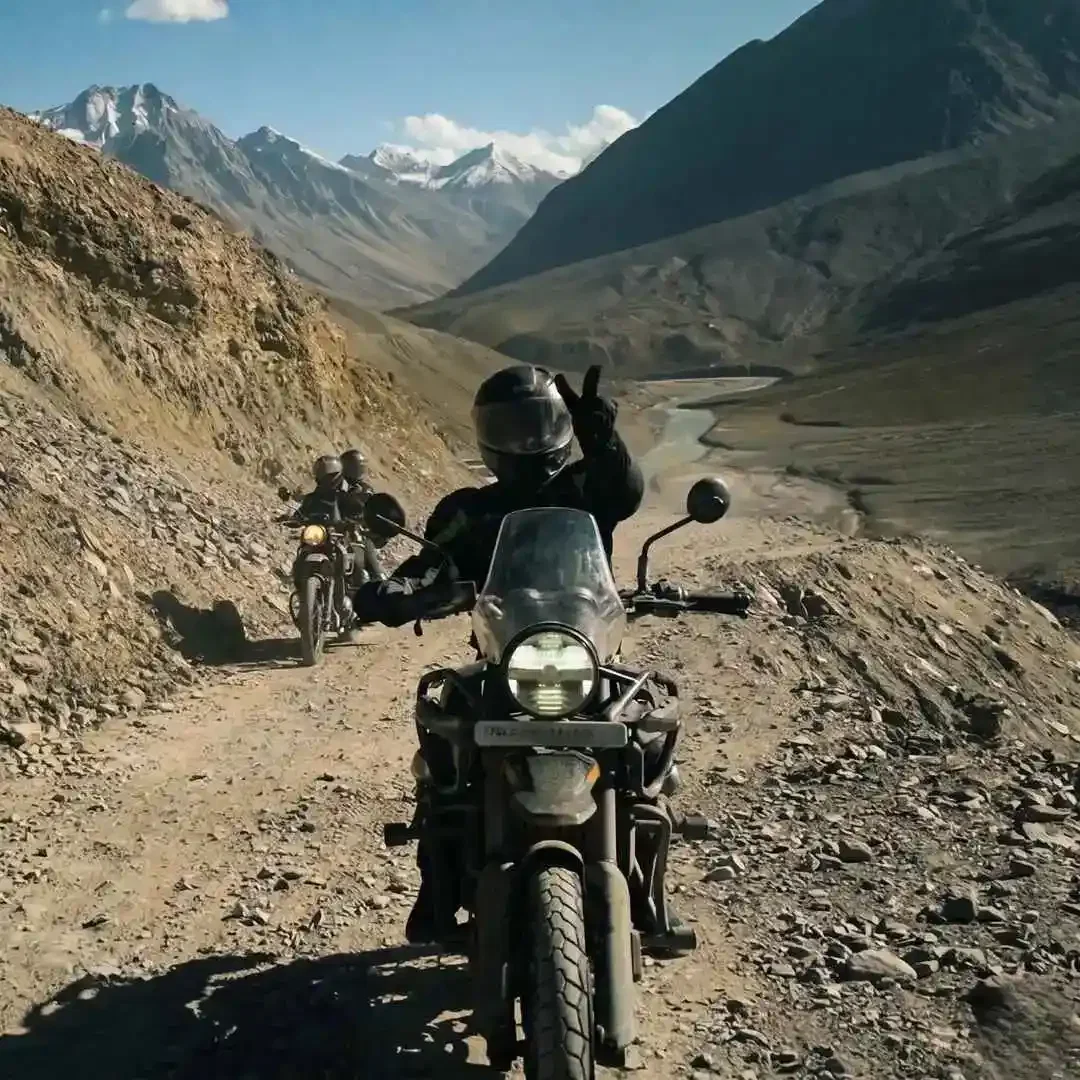
Do not ride straight out of Manali towards Kaza on a bike you have never ridden before. Take a 15 to 20 minute test ride around Manali first. Ride through local traffic, go up a short hill, brake on a slope, and get comfortable with the controls.
The bike should start cleanly, idle without stalling, brake straight without pulling to either side, shift smoothly through all gears, and climb without the clutch slipping. The chain should be quiet. The engine should sound steady, not rattly or harsh.
Reject or replace the bike if it stalls repeatedly, gives false neutrals, smokes from the exhaust, pulls to one side under braking, feels weak on a climb, or has a luggage carrier that rattles.
These are not minor issues. They are signs of a bike that will let you down when the road gets tough.
What most tourists get wrong is accepting whatever bike is handed to them because they are in a rush to leave.
That rush costs them later. We have seen riders push broken-down bikes for kilometres because they did not spend 30 minutes checking before departure.
If you are planning a Manali trip that includes a Spiti ride-out, factor in at least half a day for bike pickup, inspection, and test ride.
Which Rental Bike Is Best for Spiti in 2026?
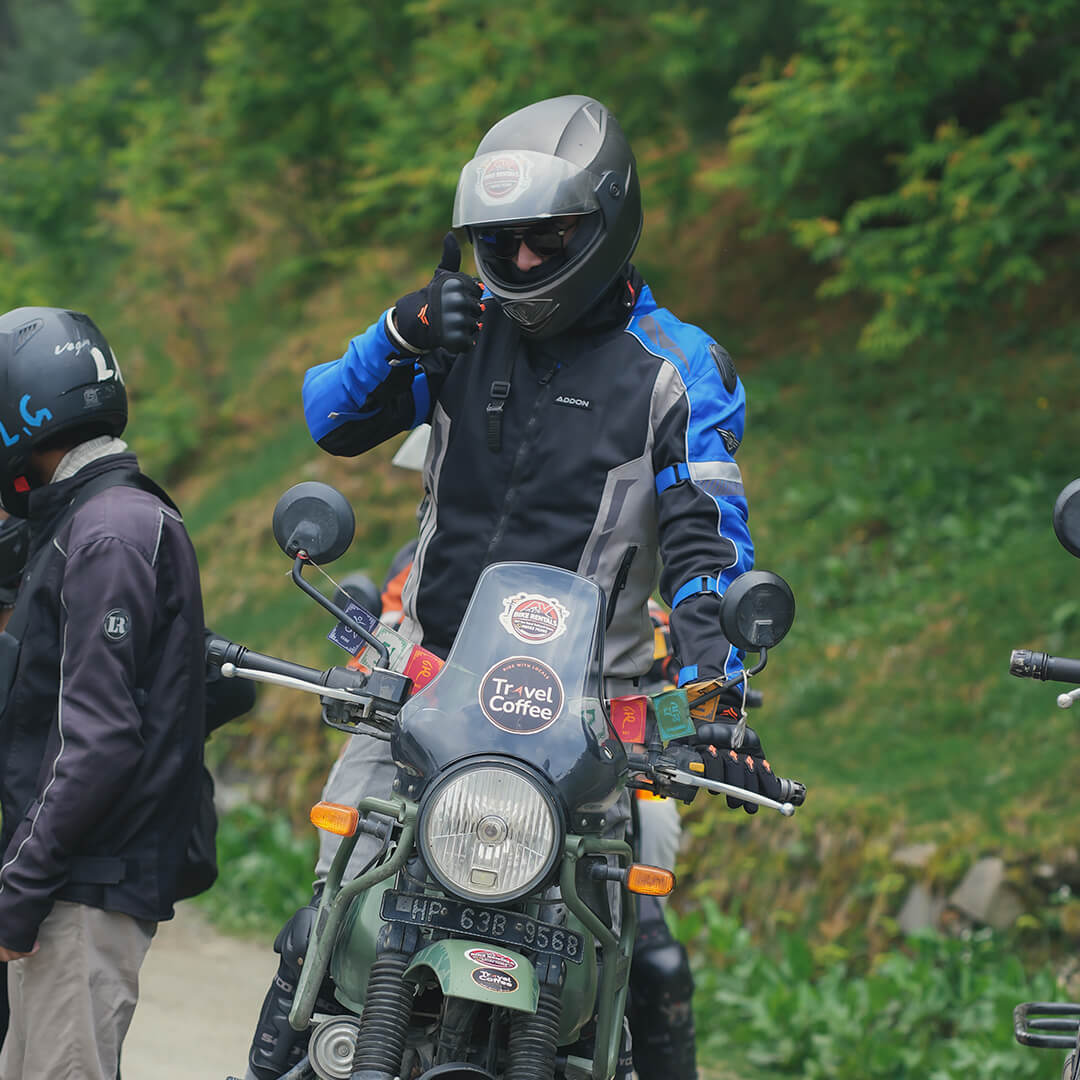
Royal Enfield Himalayan
The Royal Enfield Himalayan is the most popular choice for Spiti, and for good reason.
It has comfortable riding geometry, good ground clearance, a smooth engine for long highway stretches, and it handles rough roads better than most other bikes in the rental market. Typical rental rates in Manali for a Himalayan are around ₹1,500 to ₹2,500 per day.
Classic 350
The Classic 350 is the other common option. It is cheaper to rent, usually around ₹1,200 to ₹1,500 per day, and perfectly capable of handling Spiti roads if maintained well.
The ride is heavier and less agile on gravel, but many riders love the Classic and have done the full circuit on it without issues.
Hero XPulse and RE Scram 411
Bikes like the Hero XPulse and RE Scram 411 are showing up at some rental shops now. Both handle off-road sections well and are lighter than the Himalayan, which helps on technical stretches.
Overall, typical motorcycle rentals in Manali in 2026 range from ₹1,000 to ₹2,500 per day depending on model, condition, and season.
The best bike is the one you can control confidently. If you have never ridden a Himalayan and the only bike you know is a Classic, take the Classic.
Spiti is not the place to learn a new motorcycle. Scooters are only for local Manali rides. Do not attempt a full Spiti circuit on a scooter.
One money-saving tip that most rental shops will not volunteer
Some shops offer a weekly rate that works out significantly cheaper than the daily rate. If you are renting for 8 to 12 days, always ask for a weekly or trip-based quote before accepting the daily price.
What Rental Terms Should You Get in Writing?
Get everything on paper or on a WhatsApp message thread. Verbal promises mean nothing when you are standing in the shop with a scratched bike and a ₹15,000 deposit on the line.
The rental agreement should clearly state the deposit amount, refund conditions, late return charges, who pays for what in case of an accident, how damage liability works, what happens with traffic challans, and whether the shop offers breakdown pickup or a replacement bike.
Long-route deposits for Ladakh or Spiti trips are commonly ₹10,000 to ₹18,000. One well-known Manali rental shop lists ₹10,000 as the high-route deposit. The amount varies by shop, bike model, and route. Ask exactly what the deposit covers and under what conditions you lose it.
Our team always tells riders: "If the shop will not put it in writing, that is your answer." A good rental shop has clear terms. A bad one relies on vagueness and settles disputes by keeping your deposit.
What 2026 Road and Permit Checks Should You Do Before Pickup?
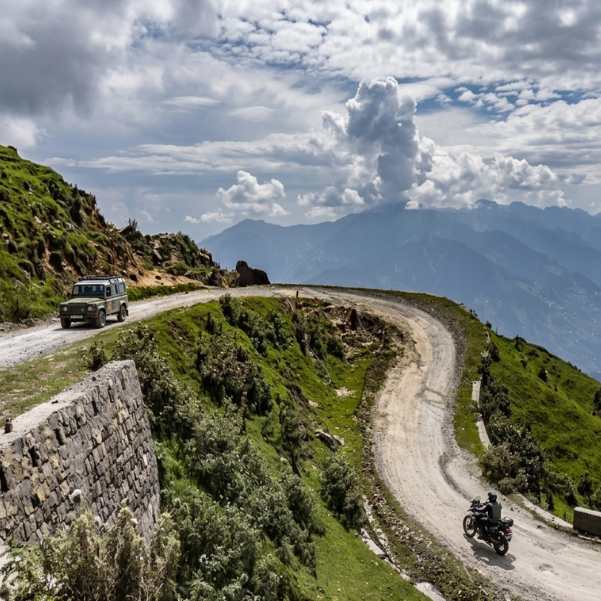
Road status in the Spiti region can be confusing because official sources and ground reports sometimes say different things.
As of June 2026, the official Lahaul and Spiti district road status page shows Keylong to Kaza as closed, while actual ground-level travel reports from riders and operators say the Manali to Kaza route via Kunzum is operational with rough sections, and Chandratal access is open with camps running.
Do not finalise your route based on information that is more than 24 hours old. Check the district administration page. Call a local operator. Check recent posts in Spiti rider groups. And then decide.
e-Aagman is required for vehicles entering Lahaul and Spiti. Register your rental bike's details on the portal before you leave Manali. Carry a screenshot or printout of the approved e-pass.
If you are a foreign national, get your Protected Area Permit sorted before you reach Spiti. The permit covers protected areas including Kaza, Tabo, Dhankar and other listed places.
If your Spiti route passes through Sissu and the Lahaul valley, that stretch is usually the smoothest part of the ride. The real test begins after Batal.
When Should You Refuse the Rental Bike?
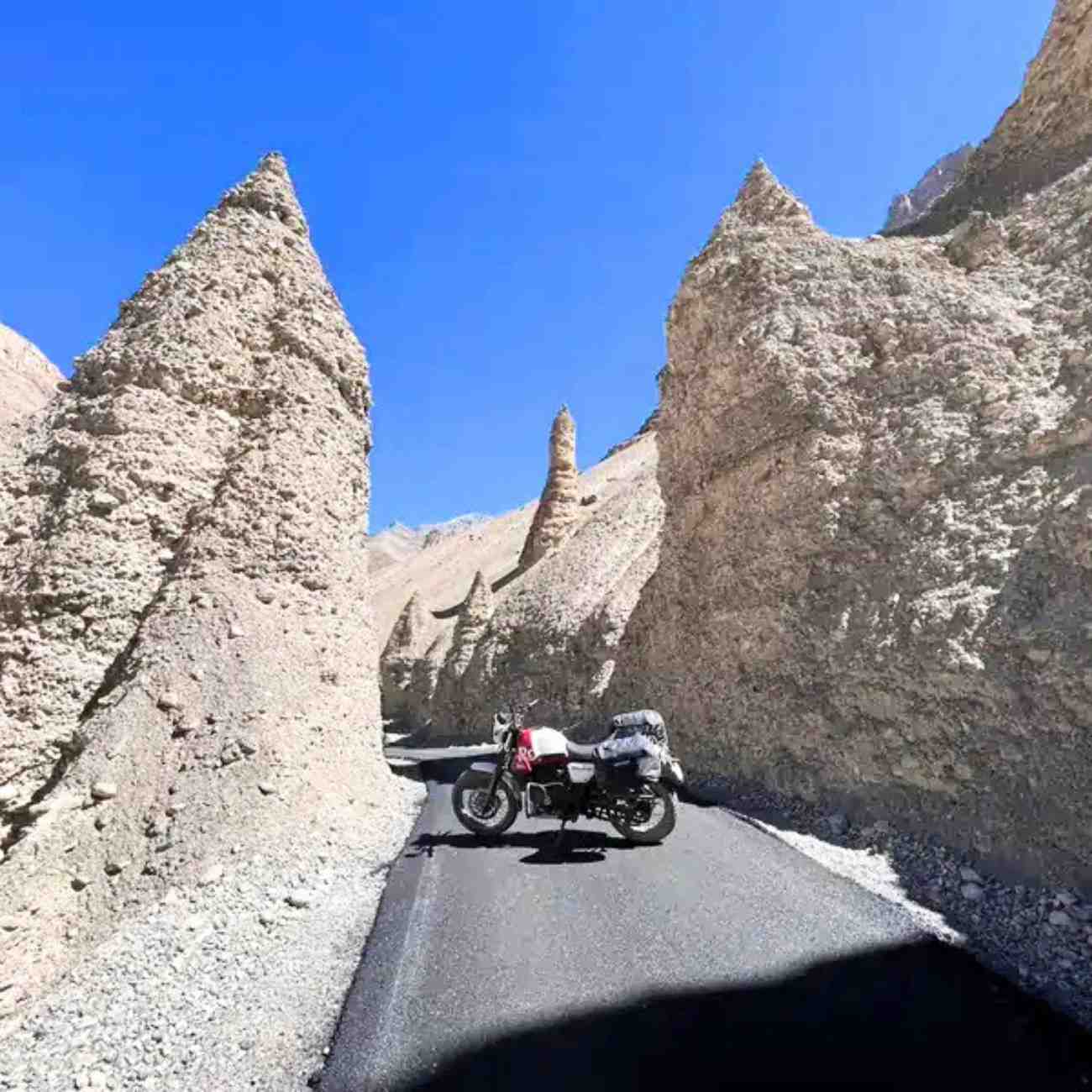
This is the section where you need to be firm and not polite.
Refuse the bike if the tyres are bald or cracked, the brakes feel weak or spongy, the clutch slips on a test hill, the engine smokes white or blue, the chain is noisy or has too much slack, oil is leaking from anywhere, the RC or insurance is expired, the toolkit is missing or empty, the luggage carrier shakes when you push it, or the shop avoids giving you anything in writing.
Do not let the shop pressure you with "it will be fine on the road" or "everyone rides this bike, no complaints." In our experience running trips across Himachal, the riders who refuse a bad bike in Manali have a great trip.
The ones who "adjust" end up stranded, stressed, and spending more on roadside repairs than the rental itself.
There is always another bike. There is always another shop. There is no second chance once you are 8 hours into Spiti on a machine that is falling apart.
Skip the small dhaba at the first rental lane off Mall Road in Manali that overcharges tourists ₹200 for a plate of maggi. Walk 5 minutes to any local dhaba on Old Manali Road instead, and you will pay ₹60 for the same thing with better taste.
What If the Bike Breaks Down in Spiti?
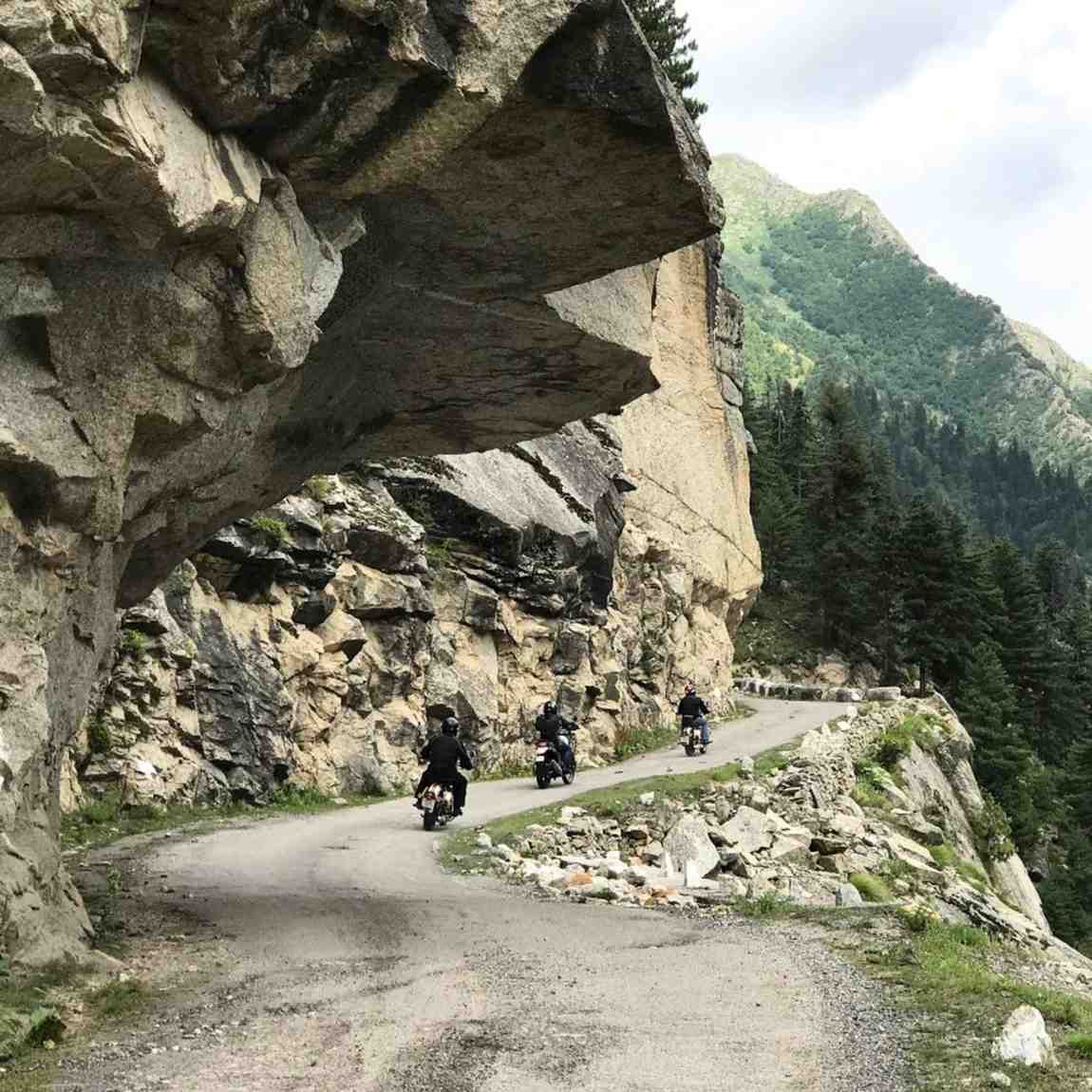
First, do not panic. Second, do not let a random roadside mechanic open up the engine without talking to the rental shop.
Call the rental shop and explain the problem. If you have no signal, ride or get a lift to the nearest town where you can make the call. Share photos and videos of the issue so the shop knows what they are dealing with.
Do not approve major repairs without the shop's written consent. If you authorise a ₹5,000 engine repair on your own, the shop may refuse to reimburse it. Keep every bill, every receipt, and every WhatsApp message.
Ask the shop where the nearest reliable mechanic is. Some shops have tie-ups with mechanics in Kaza and Keylong who know their fleet. If the shop is professional, they will arrange a replacement bike or at least guide you through the repair process.
Here is the hard truth about breakdowns in Spiti. Mobile network is limited and patchy. You might not get signal for hours.
Before you leave Manali, save offline maps (download the Spiti region on Google Maps or Maps.me), save the shop's phone number, and save the numbers of mechanics in Kaza and Keylong if the shop provides them.
Fuel stations are sparse. Fuel up at Manali, Kaza, and Reckong Peo where applicable. Do not assume you will find fuel between these towns.
Carry a small jerry can if the bike has a mount for one. Our drivers on Kinnaur routes always carry extra fuel, and we tell every self-riding traveller to do the same.
A timing tip that saves riders every season
Reach the Tandi fuel station before 2 PM. After that, queues can build up and sometimes fuel runs out on busy days. Top up there even if your tank is half full.
Final Handover Script to Use at the Rental Shop
When you are standing at the shop ready to pick up the bike, here is the conversation to have. Keep it friendly but firm.
Start by asking: "Can I see the RC, insurance, and PUC? I just want to check expiry dates." Then ask: "What is the deposit amount and what are the exact refund conditions? Is there a written agreement I can sign?"
Follow up with: "If the bike breaks down in Spiti, what is the process? Do you have a mechanic contact in Kaza or Keylong? Will you send a replacement bike?"
Then ask about the toolkit. "Can I open the toolkit and check what is inside? Do you have a spare tube for this tyre size?" Check the luggage carrier: "Can I shake this to make sure the bolts are tight? The saddle stays feel loose, can we tighten them now?"
Before you ride out, point to every existing scratch and dent: "I am going to take a video of the bike showing all these marks. I will send it to you on WhatsApp so we both have a record."
Finally, ask about permits: "Do I need e-Aagman for this bike? Have you already registered, or do I need to do it myself?" If you are a foreign national: "I need a Protected Area Permit for Spiti. Can you guide me on how to apply, or is that something I handle separately?"
What we always tell riders who book through us: "Treat the rental shop like a business partner, not a vending machine.
A good relationship with the shop means better support if something goes wrong on the road." If you want that relationship handled for you, our Spiti packages include bikes, backup support, and a team that actually picks up the phone when you need them.
Explore Spiti Valley Packages
Related topics
Frequently Asked Questions
What should I check before accepting a rental bike for Spiti?
Check tyres (tread, pressure, sidewall cracks), both brakes, clutch play, all gear shifts, chain and sprocket condition, engine cold start, exhaust smoke, oil leaks, suspension, battery, all lights, horn, mirrors, handlebar alignment, fuel level, luggage carrier bolts, toolkit, spare tube, and document copies (RC, insurance, PUC). Take a video of all scratches and existing damage. Do a test ride around Manali before committing.
Which bike is best for a Spiti Valley bike trip?
The Royal Enfield Himalayan is the most popular choice for ground clearance, comfort, and handling on rough roads. The Classic 350 works well too if you are comfortable with a heavier bike. Lighter adventure bikes like the XPulse are good options for experienced off-road riders. The best bike is the one you can ride confidently. Scooters are not suitable for a full Spiti circuit.
How much does bike rental cost in Manali for Spiti in 2026?
Typical motorcycle rental rates in Manali in 2026 range from ₹1,000 to ₹2,500 per day depending on the bike model, condition, and season. A Classic 350 usually costs around ₹1,200 to ₹1,500 per day, and a Himalayan costs around ₹1,500 to ₹2,500 per day. Ask for weekly rates if you are renting for more than a week.
What documents are required to rent a bike in Manali?
You need a valid permanent driving licence with the correct vehicle class, a government photo ID, and for foreign nationals, an International Driving Permit. A learner's licence is not accepted. The shop must provide copies of the bike's RC, insurance, and PUC.
What is the security deposit for a Spiti rental bike?
Long-route deposits for Spiti or Ladakh trips are commonly ₹10,000 to ₹18,000. The exact amount depends on the shop, the bike model, and the route. Always get the deposit terms, refund conditions, and damage liability in writing before paying.
Do I need RC, insurance, and PUC copies for a rented bike?
Yes. Carry physical and digital copies of the Registration Certificate, insurance policy, and PUC certificate. Checkpoints between Manali and Kaza will ask for these. If any document is expired, do not accept the bike.
Do I need e-Aagman for a Spiti bike trip?
Yes. Vehicles entering Lahaul and Spiti need an e-Aagman e-pass. Register the bike's details on the portal before departure. If you are taking the Rohtang route, additional permits may apply. Verify the same day because portal rules and route-specific requirements change frequently.
Do foreigners need a Protected Area Permit for Spiti?
Yes. Foreign nationals need a Protected Area Permit for protected Spiti areas including Kaza, Tabo, Dhankar, and other listed places.
Is the Manali to Kaza road open in 2026?
As of June 2026, official and ground reports give conflicting information. The district administration road status page shows some sections as closed, while actual riders and operators report the Manali to Kaza route via Kunzum is operational with rough sections.
What should I do if a rental bike breaks down in Spiti?
Call the rental shop first. Share photos and videos. Do not approve major repairs without the shop's written consent. Keep all bills and receipts. If you have no signal, get to the nearest town to make the call. Before leaving Manali, save offline maps and mechanic contacts in Kaza and Keylong.
Can beginners ride a rented bike to Spiti?
It depends on what "beginner" means. If you have a valid licence and are comfortable riding a motorcycle in city traffic, you can ride to Spiti with preparation. If you have never ridden in mountains, on gravel, or in rain, Spiti is a tough introduction. Consider a shorter mountain ride first, or join a guided Spiti tour where backup vehicles and experienced riders are part of the group.
Should I rent a Himalayan or Classic 350 for Spiti?
If you have ridden both, the Himalayan is generally better for Spiti because of its ground clearance, lighter feel at low speeds, and off-road capability. If you have only ridden a Classic and feel confident on it, take the Classic. Familiarity with the bike matters more than the spec sheet. The worst choice is a bike you have never ridden before on roads you have never seen before.
More about Lahaul and Spiti
 Lahaul and Spiti
Rent or Buy Winter Gear for Spiti in 2026? Jackets, Boots, Costs and Pickup Options
Planning a Winter Spiti trip in 2026? Compare the cost of renting vs buying jackets, snow boots, thermals and other essential winter gear, along with practical tips on what to rent, what to buy and where to arrange it before your trip.
- First-Time Travellers
- Snow Travel
 Lahaul and Spiti
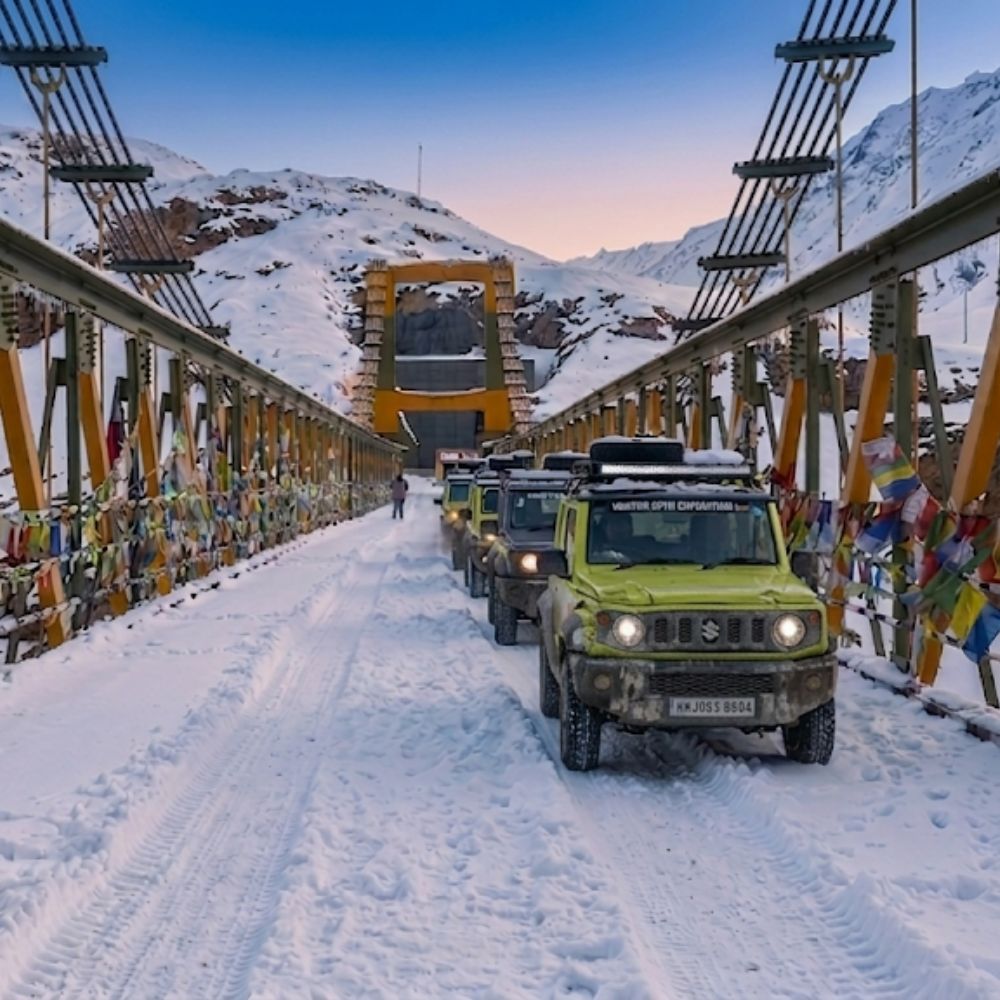
Winter Spiti 4×4 Seating Guide 2026: Jimny, Scorpio N, Thar and Hilux for Passengers and Luggage
Planning a Winter Spiti trip in 2026? This practical 4×4 seating guide compares the Jimny, Scorpio N, Thar and Hilux for passenger comfort, luggage space, winter roads and long mountain drives, helping you choose the right vehicle for your group size and travel style.
- Road Trips
- Snow Travel
 Lahaul and Spiti
Stargazing in Winter Spiti 2026: Where to Stay, Moonlight and What You Can See
Discover the best places for stargazing in Winter Spiti 2026, where to stay for darker skies and how moonlight affects visibility. Learn what you can realistically see from Kaza, Tabo and nearby villages during the winter months.
- Things to Do
- Snow Travel