
Is Winter Spiti Safe for Couples in 2026? Honest Safety Guide
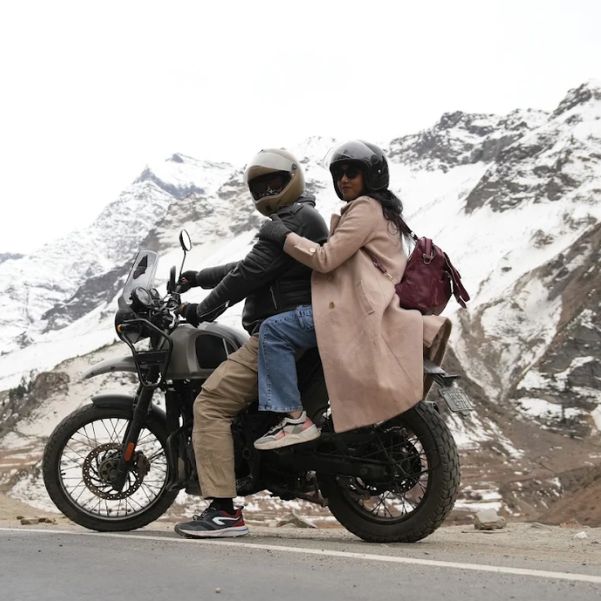
If you are a couple trying to work out whether Winter Spiti is safe for couples to book, you want a straight answer, not a brochure. Here it is, from a Himachal team that runs these trips every season.
It is a safe trip for couples who prepare well and stay flexible. It is not a soft snow honeymoon. Think of it as a high altitude winter road trip and you will plan it right.
Quick Answer
Winter Spiti works for couples who handle high altitude, real cold and flexible plans. The risks are altitude, cold, road closures and limited medical help, not personal safety. Go in through Shimla and Kinnaur, since the Manali side stays shut in winter.
Couples who need luxury, guaranteed hot water or a fixed schedule should pick another winter destination.
If you want the trip shaped around live winter conditions, that is exactly what our Spiti Valley tour packages are for.
Is Winter Spiti Actually Safe for Couples?
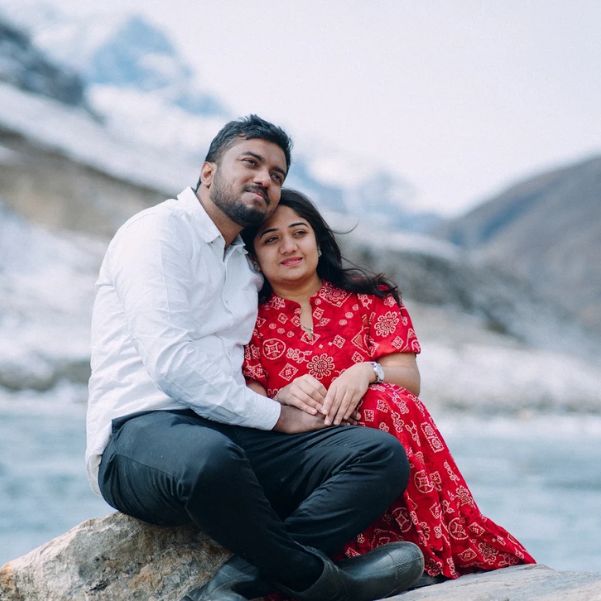
First, separate two different things. Personal security and environmental safety are not the same question here.
On personal security, Spiti in winter is calm and low crime. The thing that can hurt you here is the environment, not the people.
So the honest version of "is Winter Spiti safe for couples" is this. It is safe if both of you can handle altitude, long drives, basic rooms and a plan that bends with the weather.
Being a couple does not make the trip safer on its own. Two people who both hate cold and both want a fixed itinerary will struggle here, together.
In our experience planning Himachal trips, the couples who enjoy Winter Spiti most are the ones who accept that the weather gets the final vote.
Think about how the two of you handle stress and discomfort as a pair. If one person gets anxious the moment plans slip, winter roads will test that more than any city holiday.
The good news is that couples who talk it through beforehand usually do great. Agree now that you will happily lose a day to snow, and half the tension disappears before you even leave home.
Here is what most couples get wrong
They picture a romantic drive in from Manali through the Atal Tunnel. In deep winter that loop is shut, and assuming it is open is the single biggest planning mistake we see.
Which Couples Should Choose Winter Spiti, and Who Should Skip It?

Winter Spiti suits you if...
You like road trips and you do not mind sitting in a vehicle for hours while the scenery does the talking.
You are fine with basic mountain stays, home cooked food and going to bed early, because there is not much to do after dark.
You enjoy cold weather and snow, and the idea of a frozen river and empty white valleys sounds good, not miserable.
You travel slow and you keep your plans loose. If a road shuts for a day, you can shrug and stay put with a book and hot tea.
Consider another winter destination if...
One of you wants a guaranteed hot shower every night. In deep winter, some stays run on bucket water and heating is basic.
One of you needs strong phone signal and steady internet. Network is patchy, and there will be stretches with nothing.
You want fixed sightseeing, resort comfort or a return flight you absolutely cannot miss. Winter roads do not respect schedules.
If either of you has a heart or lung condition, or any other issue that high altitude could affect, talk to a doctor who knows your history before you book. This is not us being dramatic, it is just sensible at this height.
Our team plans plenty of gentler winter trips too, so if Spiti sounds like too much, the Kinnaur tour packages reach lovely snow country with an easier ceiling on altitude.
What Makes Winter Spiti Riskier Than Summer?
High altitude
Kaza sits at 3,660 metres, and you will be sleeping at that kind of height for several nights in a row.
High altitude illness depends a lot on how high you go and how fast you climb. Being fit and young does not make you immune, so do not assume the gym will save you.
Extreme winter cold
Official Himachal Tourism guidance says temperatures in parts of Spiti can fall to around minus 20°C in deep winter.
That kind of cold changes everything. Your phone battery drains fast, water bottles freeze, and standing outside for a long photo shoot is genuinely hard.
It also shapes how you pack and where you stay. You want proper layers, and you want a room with real heating, not a summer hotel room with no plan for the cold.
Plan your outdoor time in short bursts. Step out, get your photos, warm up inside, then go again. Trying to power through hours in the open is how people get miserable and careless.
Mornings are the hardest, since the valley stays in shadow until the sun climbs over the ridges. Most couples find the middle of the day, roughly late morning to early afternoon, is the warmest window for anything outdoors.
Snow, ice and temporary road closures
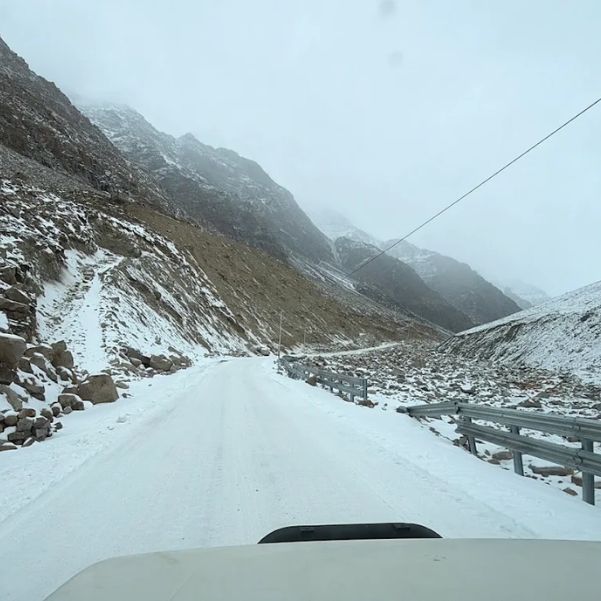
The district administration describes Shimla to Kaza as an almost all weather road. That does not mean it stays open through every snowfall.
Snow and ice can shut a section for hours or even days while crews clear it. So your plan has to stay flexible, with buffer days you never firmly commit to.
When we say flexible, we mean it in a real way. Your booking should have room to add a night wherever you are, without a penalty, if the road ahead shuts.
This is why we never sell a winter couple a trip with zero slack. A plan with no buffer is the one that turns a normal road closure into a real crisis.
Limited medical facilities
Kaza has a Community Health Centre, and there are health facilities at places like Tabo and Kibber too.
Be realistic about this though. Official Himachal Tourism describes medical facilities in Spiti as limited, so anything serious means a long journey to a bigger hospital.
Which Route Should Couples Take to Spiti in Winter?
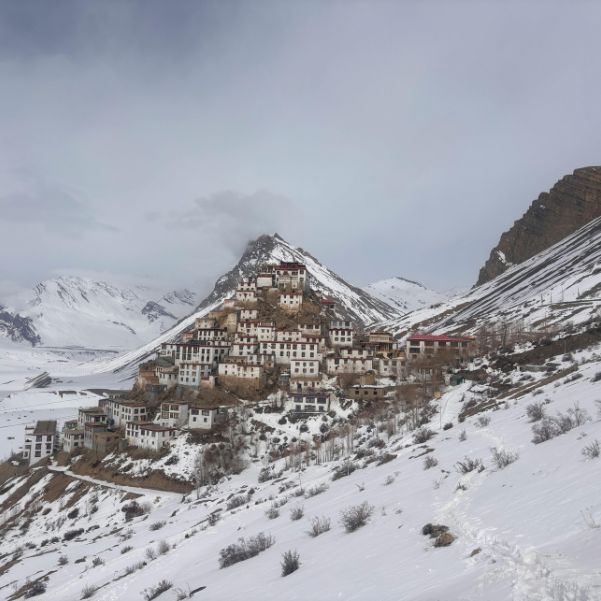
Shimla to Kinnaur to Kaza is the practical winter approach
The district route information lists Shimla to Kaza as 412 km and about 20 hours of driving, not counting an overnight halt.
Please do not read that as "drive it in one go". Twenty hours of winter mountain driving in a single push is a bad idea for anyone, honeymoon or not.
Break the climb into stages up the Kinnaur side instead. A night lower down, then higher, gives your bodies time to adjust and keeps the daily drives sane.
This staged approach is also just a nicer trip. You see Kinnaur properly on the way, and you are not wrecked by the time you reach Kaza.
On the ground the shape is simple. You gain height gradually across the Kinnaur side over a few days, sleeping a little higher each night rather than rocketing straight up to Kaza.
That slow climb is not only about altitude. It also keeps your daily drives short, which matters a lot when the roads are icy and the daylight is limited.
You can start the trip with our Shimla tour packages, and the Kinnaur leg is the natural next stage as you climb toward Spiti.
Why the Atal Tunnel does not make Manali to Kaza a winter route
This one confuses a lot of couples, so let us be clear.
The Atal Tunnel made it much easier to move between Manali and Lahaul. But reaching Kaza from that side still needs the Kunzum Pass connection.
The official Lahaul and Spiti district site says the Keylong to Kaza link closes in winter because of Kunzum Pass and heavy snowfall. The broad closed period runs roughly from October or November toward June or July, depending on when crews clear it.
So no, you cannot count on driving in from Manali in December or January. If a blog promises you that loop in deep winter, treat it with suspicion.
If you are pairing Spiti with a Manali stay in a warmer season, our Manali tour packages cover that side well.
What about Chandratal in winter?
Short answer, skip it. Do not build Chandratal into a normal Winter Spiti plan.
Some blogs hint that you might get lucky and drive up in deep winter. Please ignore that. The roads to Chandratal are not a winter proposition, and chasing it wastes a day and adds real risk.
Chandratal belongs in a summer plan, once the relevant roads officially open. We covered the timing in detail in our guide on when Chandratal opens in 2026.
If seeing that crescent lake is the whole point of your trip, do it right in the warm months. Our summer Spiti circuit with Chandratal puts that lake at the centre of the plan.
How Serious Is Altitude Sickness for Couples in Winter Spiti?
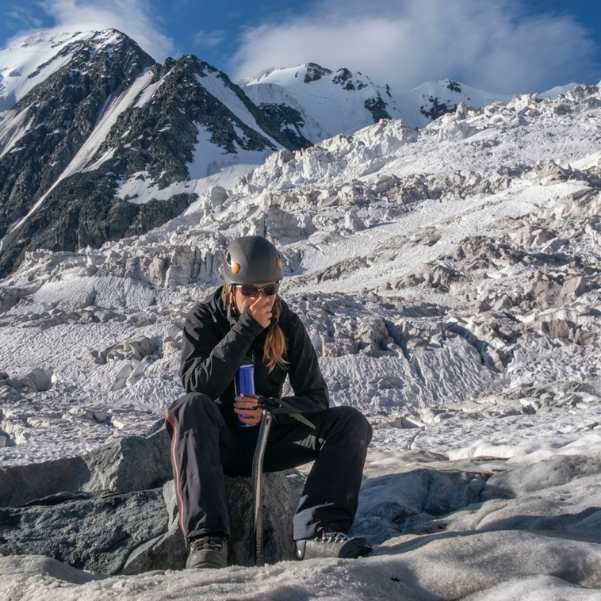
Take this part seriously, because altitude is the risk most couples underestimate.
Remember, Kaza is at 3,660 metres. That is high enough for altitude illness to be a real possibility, not a rare fluke.
CDC guidance says travellers who have not acclimatised and who sleep at around 2,450 metres or higher can be at risk of altitude illness. Where you can, avoid jumping straight from low ground to a sleeping altitude above roughly 2,750 metres in a single day.
Once you are above about 3,000 metres, CDC guidance says raise your sleeping altitude by no more than roughly 500 metres per night. Add an extra night to acclimatise for each further 1,000 metres or so of sleeping height you gain.
This is exactly why the staged Kinnaur climb matters. It lets your bodies catch up instead of shocking them with a fast jump.
Watch each other, not just yourselves. Often one partner feels the altitude while the other feels fine, and the one feeling fine can push the pace without meaning to.
If one of you is struggling, the whole plan slows down. That is not weakness, it is how altitude works, and pretending otherwise is how a headache turns into something worse.
Common signs of altitude sickness are headache, tiredness, low appetite, nausea and dizziness. Vomiting can happen too.
Drinking water keeps you hydrated, which helps, but do not believe anyone who says water alone cures altitude sickness. It does not.
If either of you feels these symptoms, do not climb higher to sleep. Rest at the same height. If symptoms get worse while you are resting, the answer is to go down, not to push on.
CDC also says skip alcohol and hard exercise for the first 48 hours at high altitude. So that celebratory drink on night one is a bad idea, save it for lower ground.
On medicines, we do not prescribe anything. If you want to consider preventive medication, ask a doctor who knows your history and your route.
Our team would rather remove a sightseeing stop than rush a couple higher when one person is not feeling right.
What Are Hotels, Homestays, Water and Connectivity Like in Winter?
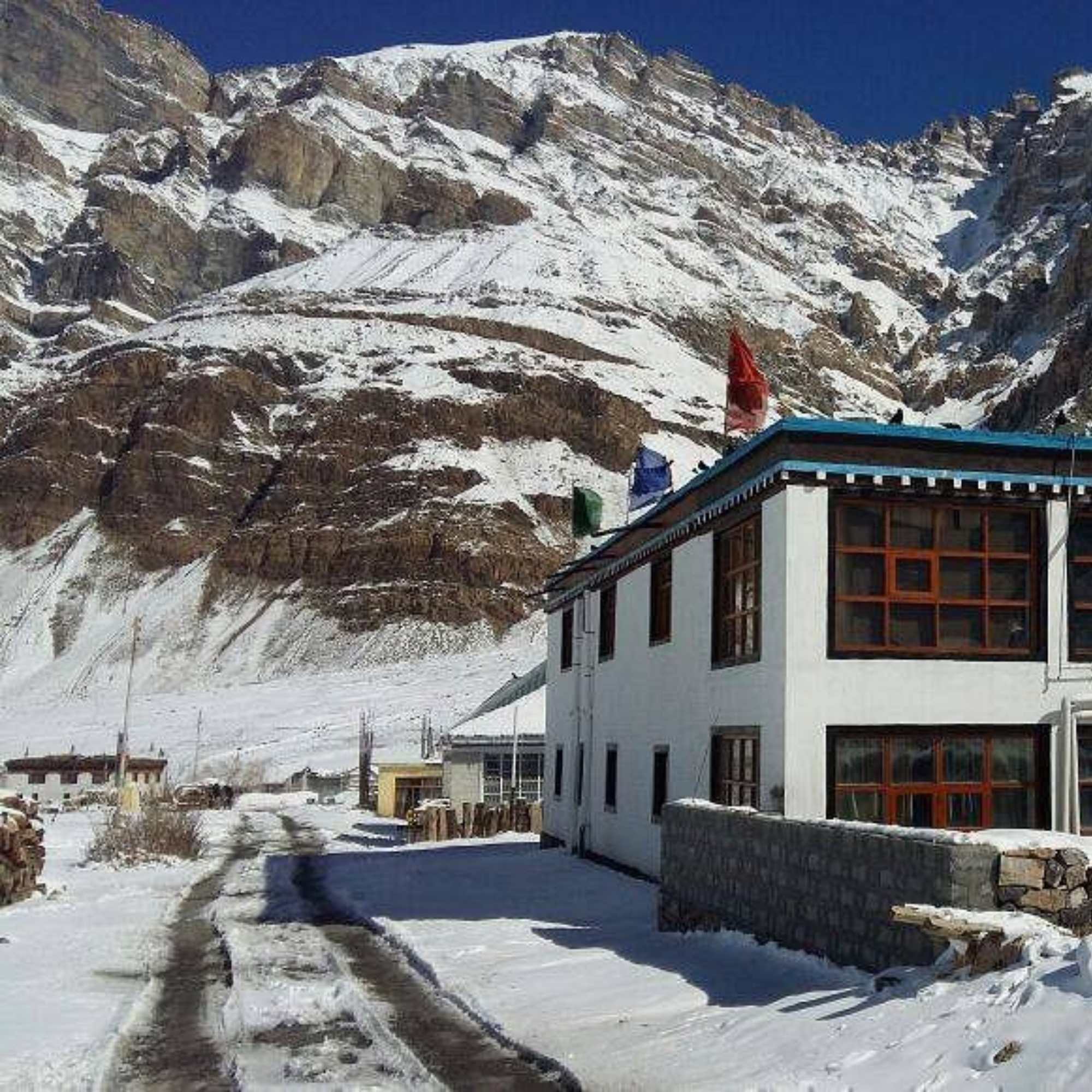
Set your expectations before you book, and the reality will not throw you.
Winter operators tell us the same thing every year. Many seasonal hotels shut for the cold months, and homestays become the main place to stay.
That is not a downgrade. A good homestay is often the warmest, friendliest option, with home cooked meals and a family who actually keeps the place heated.
Here is an honest warning
In deep winter, some stays run on frozen plumbing and bucket water, so you will not get a hot running shower every night. Treat a bucket of hot water as a normal part of the trip, not a disaster.
Before you pay for anything, confirm the details in writing. Ask about heating, the toilet arrangement, hot water, meals, power backup, and whether the property is even open on your exact dates.
Do not assume city hotel standards up here. Luxury stays are not impossible, but a normal Kaza winter room is basic, warm and honest, and that is the right thing to expect.
A small insider tip
Ask your homestay for the room with the bukhari, the traditional wood or diesel stove. It is the warmest spot in the house and where everyone ends up in the evening.
Another one. Charge your power banks fully every night. The cold drains phone batteries fast, and with patchy signal you will lean on offline maps and photos more than usual.
One more practical thing. Ask whether the homestay has power backup, because supply can drop in bad weather, and you want a way to keep phones and power banks topped up.
Keep your expectations kind toward your hosts too. These families open their homes in brutal cold so you can visit, and a little patience with basic facilities goes a long way.
On food, do not count on cafes being open in winter, since many close. Our best money tip here is simple. Homestay tariffs usually include hot dinner and breakfast, so you spend far less on food than a summer traveller who eats out at every meal.
Private Taxi or Group Tour: Which Is Safer for a Couple?
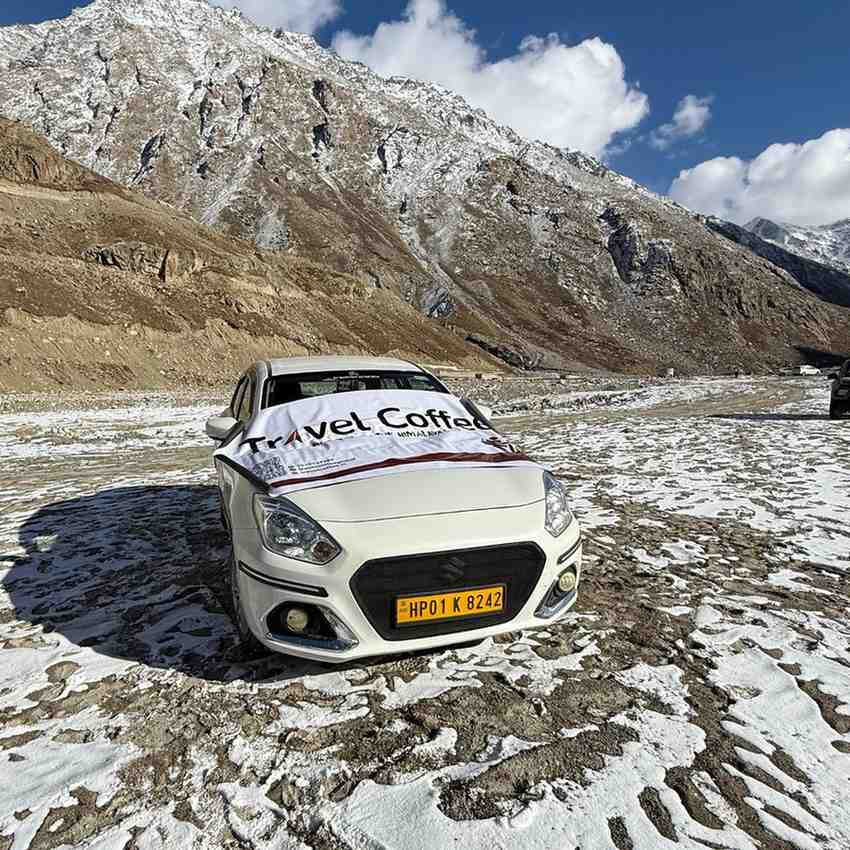
This is one of the most common questions couples ask us, so here is a straight take.
A private vehicle gives you privacy and control. You choose the stops, you set the pace, and if one of you feels unwell or wants to turn back, you just do it.
A well run group brings its own strengths. You get extra logistical support and other travellers around you if something goes wrong on the road.
But a group is not automatically safer, and a private taxi is not automatically risky. That framing misses the real point.
What actually keeps you safe is an experienced winter driver or operator who checks local conditions and is willing to delay or cancel a road movement. That judgement matters more than whether you booked private or group.
For most couples we send in winter, a private vehicle with a seasoned local driver hits the sweet spot. You keep your privacy, and you get someone whose whole job is to read the road and make the safe call.
The one thing we push back on is booking the cheapest option with a driver who does not know these roads in snow. That small saving is not worth it in a Spiti winter.
Do Couples Need a 4x4 for Winter Spiti?
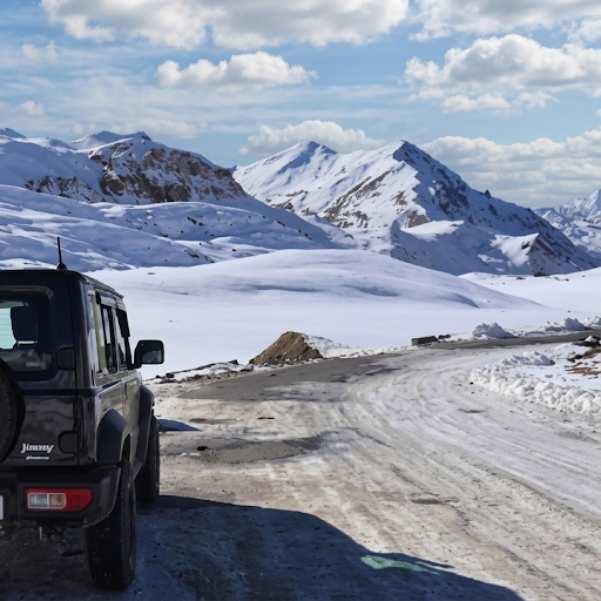
Let us clear up a myth first. No verified rule says a 4x4 is legally mandatory for Spiti.
That said, several experienced Winter Spiti operators strongly recommend a high clearance 4x4 with proper winter recovery gear for the tougher conditions. On icy, snow packed sections, that capability earns its keep.
Do not fixate on the badge though. Live road conditions, the right tyres, the driver's experience and the willingness to turn around matter as much as the vehicle type.
An experienced winter driver in the right vehicle is worth more than a 4x4 chosen just because it looks capable.
If you would rather not sort the vehicle yourself, our Winter Spiti packages run with drivers who know these roads in the cold.
How Many Days Should Couples Keep for Winter Spiti?
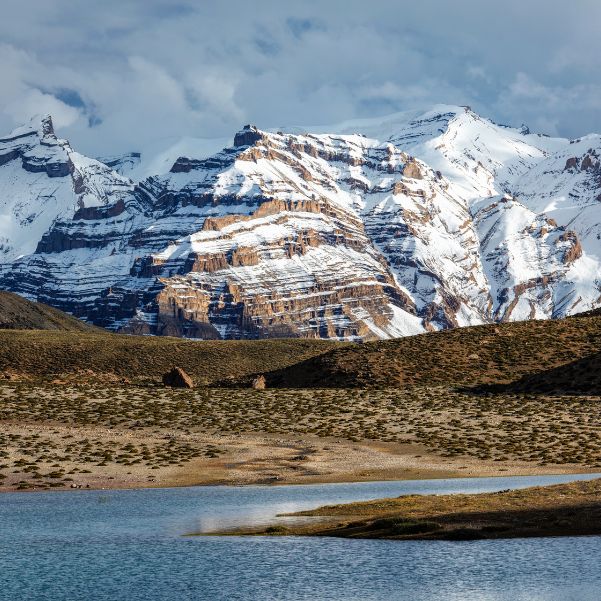
Keep roughly 8 to 10 days from Shimla and back, including weather buffer. Treat that as practical planning, not an official minimum.
Winter specialists suggest this kind of length for good reason. The drives are long, the altitude gain needs pacing, and you want spare days for closures.
Please do not try to squeeze Chandigarh or Delhi to Kaza and back into a rushed four or five day dash. That is how couples end up sick, stressed or stuck.
We are not going to hand you a rigid day by day plan that promises a certain village on a certain date, because winter does not work like that.
The safe shape is simple. Climb gradually through Shimla and Kinnaur, spend a few nights around Kaza if conditions allow, and come back the same way. The Manali winter exit is not something you can assume.
What we always tell couples booking Winter Spiti is to keep two buffer days you never plan to use. If the weather is kind, they become bonus days. If it turns, they save your trip.
If your leave is genuinely tight, be honest with yourselves. A shorter winter trip means a lower, gentler version of Spiti, not the same route rushed. Rushing altitude in winter is the quickest way to spoil the whole thing.
We would rather tell you to wait for a longer window than sell you a hurried dash that leaves one of you sick in a homestay while the other one worries.
What Should Couples Pack for Winter Spiti?
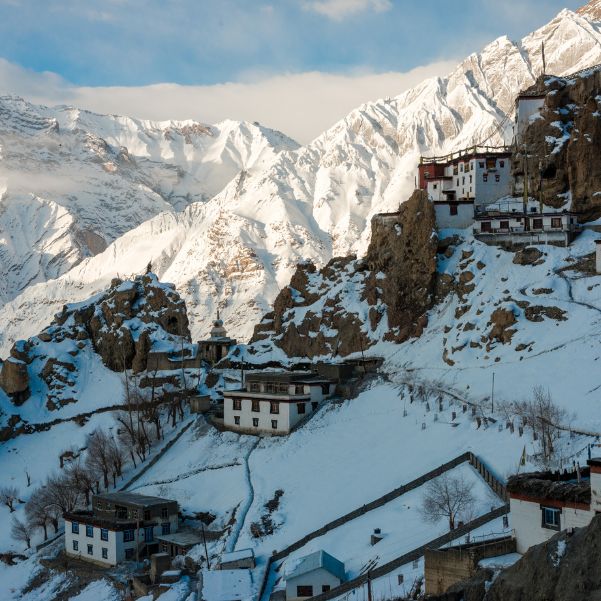
Pack for a serious cold, because this is where comfort and safety meet. Get the layers right and half your problems disappear.
Start with thermal inner layers, top and bottom, worn under everything else. Add a warm mid layer like fleece, then insulated winter outerwear that actually blocks the wind.
Cover the details people forget. Warm socks, insulated waterproof footwear, proper gloves, and a cap plus a neck cover or buff to protect your ears and face.
Bring sunglasses, sunscreen and lip balm, since snow glare and high altitude sun burn you faster than you expect, even in winter.
Carry your personal medicines in enough quantity for the whole trip, plus a little extra. Medical supplies up here are limited, so do not rely on finding your regular tablets locally.
Round it off with power banks, your IDs, some snacks you like, and a good thermos. Fill that thermos with hot water or chai from your homestay each morning, because roadside dhabas are mostly shut in deep winter and a warm drink on the road is gold.
Pack light on everything except warmth. You do not need fancy outfits up here, and nobody is dressing up. Every extra bit of warm, useful kit beats a bag full of clothes you will never wear in this cold.
What Should You Check 24 to 48 Hours Before Leaving?
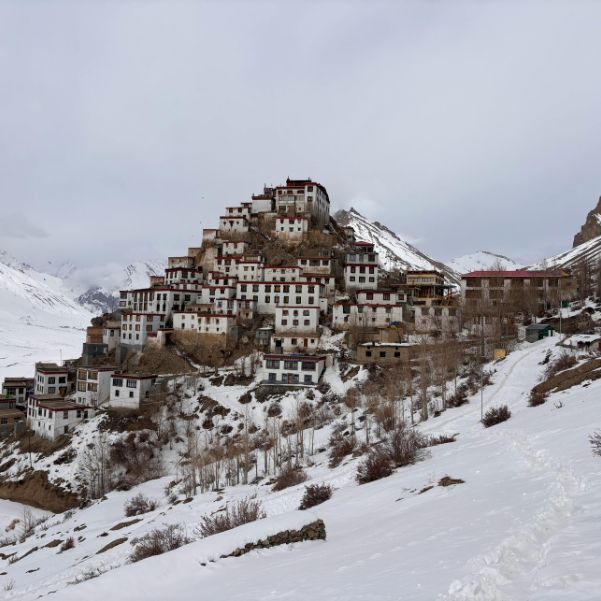
Do these checks in the last day or two before you travel. They take minutes and save entire trips.
Check the official District Lahaul and Spiti road status for the latest picture. Then also check District Kinnaur notices, because your Shimla route runs through Kinnaur and along NH 05.
Here is why that second check matters. In August 2026 the Kinnaur administration put out temporary traffic arrangements around Nigulsari and Nathpa. That shows "the route is open" does not always mean every section is running normally at every hour.
One more note on reading road pages. The official Lahaul Spiti road page updated on 20 August 2026 listed Keylong to Kaza as closed at that moment. That was a snapshot in time, so never treat an old status line as today's road condition. Always look at the current update.
Confirm your next night's stay is actually open and expecting you. Ask your driver whether someone checked the day's road section locally that morning.
Share your full itinerary with family before you leave, so someone at home knows your route and stops.
Save these offline before you lose signal. Kaza Police: 01906-222253 and the district disaster and rescue helpline: 1077.
Also note that the cold can hit around minus 20°C, the network drops out for stretches, and the nearest big hospital is hours away, so staying reachable matters.
If you would rather have a local team handle these daily condition checks for you, that is exactly what we do.
Final Verdict: Is Winter Spiti Safe for Couples?
Here is the honest bottom line. Winter Spiti is safe for couples who are adventurous, prepared, flexible and travelling with sensible local logistics.
It is the wrong pick for couples who mainly want comfort, guaranteed snow sightseeing, resort luxury, or a trip that must run exactly to plan.
Get one thing straight in your heads before you go. Respecting a road closure or dropping a sightseeing day is good planning, not a ruined holiday.
In our experience, the safest Winter Spiti plan is the one that leaves enough room to change. Go in with that mindset, and a winter couple trip to Spiti can be the best one you take.
Explore Our Curated Winter Spiti Tour Packages
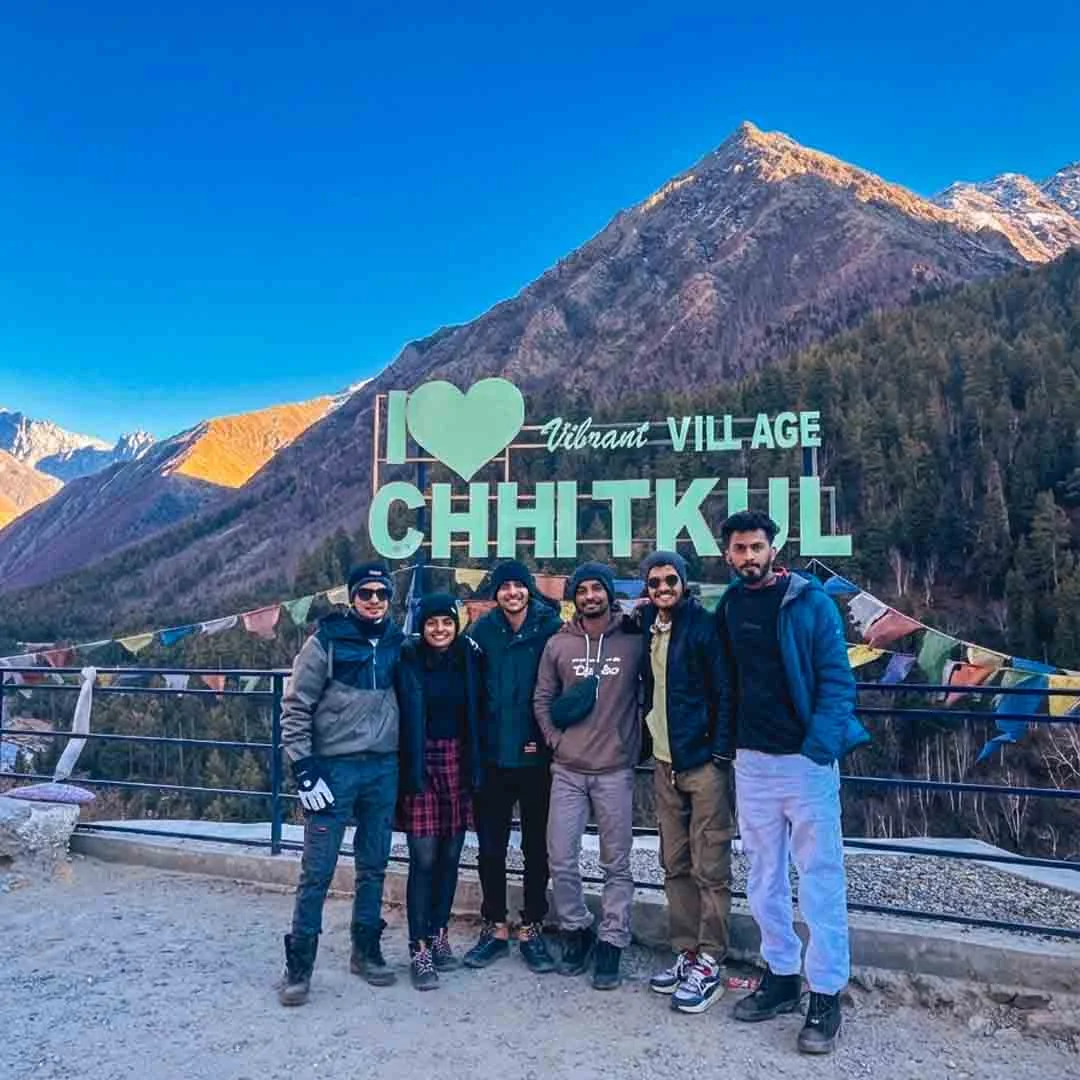 Group Tour9D/8N
Best Selling Winter Spiti Valley Group Tour
2D Sangla•1D Tabo+2
₹18,999₹23,999SAVE INR 5,000/ person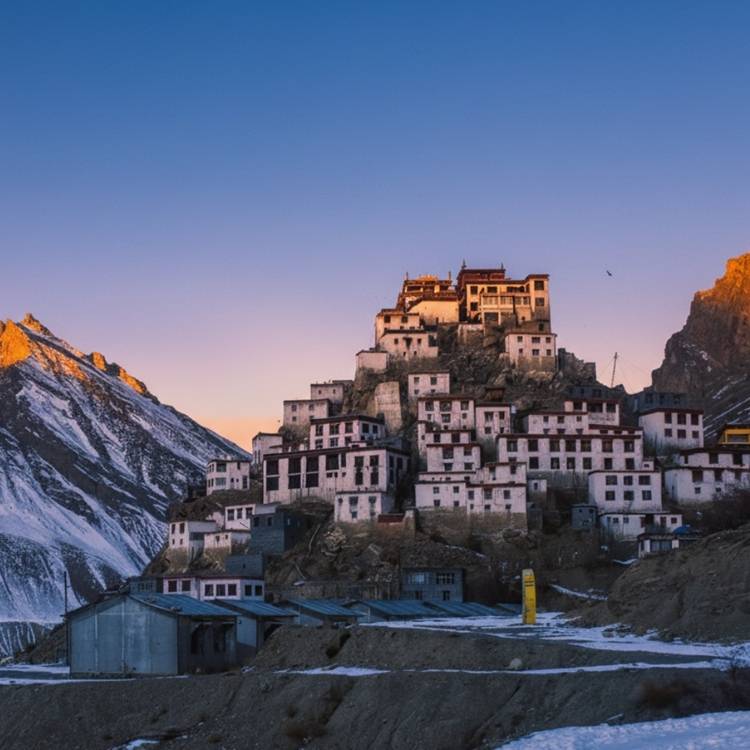 9D/8N
9D/8NWinter Spiti 4×4 Expedition
2D Sangla•1D Nako+2
₹32,999₹44,999SAVE INR 12,000/ person
Related topics
Frequently Asked Questions
Is Winter Spiti safe for couples?
Yes, for couples who are ready for high altitude, cold and flexible plans. The risks are the environment and the roads, not personal safety, so preparation is everything.
Is Spiti safe for couples in December?
It can be, if you go in through Shimla and Kinnaur and keep buffer days. December is cold and quiet, with basic stays and real road closure chances, so stay flexible.
Is Spiti safe for couples in January?
January is deep winter, the coldest and most isolated stretch. It is doable for well prepared couples, but expect harsh cold, bucket baths at some stays and possible closures.
Can we reach Kaza in winter?
Yes, couples reach Kaza in winter through the Shimla to Kinnaur route. It takes several days of staged driving, and your plan has to bend around snow and ice.
Which route is open for Winter Spiti?
The practical winter route is Shimla to Kinnaur to Kaza, which the district lists as 412 km and about 20 hours of driving. Break it over several days.
Is Manali to Kaza open in December or January?
No. The Keylong to Kaza link shuts in winter because of Kunzum Pass and snow, so you cannot count on the Manali side in December or January.
Can couples visit Chandratal in winter?
No, keep Chandratal out of a winter plan. The roads to it are not a winter route, so save it for the summer season when they officially open.
How cold does Spiti get in winter?
Official Himachal Tourism says parts of Spiti can drop to around minus 20°C in deep winter. Plan for freezing nights and pack serious layers.
Do Indian couples need a permit for Spiti Valley?
No. Indian citizens do not need a permit for the standard Spiti tourist route, so you can travel it freely with your usual ID.
Do foreigners need permits for Spiti?
Foreign nationals face extra permit rules in protected border areas, including places like Khab, Samdo, Dhankar, Tabo and Kaza. Check the current rules before you travel.
Is a private taxi better than a group tour for Winter Spiti?
Neither is automatically safer. A private taxi gives privacy and control, a group gives extra support. What matters most is an experienced winter driver who checks conditions.
How many days should couples keep for a Winter Spiti trip?
Keep roughly 8 to 10 days from Shimla and back, including buffer days. The drives are long and the weather is unpredictable, so a rushed trip is a bad idea.
More about Lahaul and Spiti
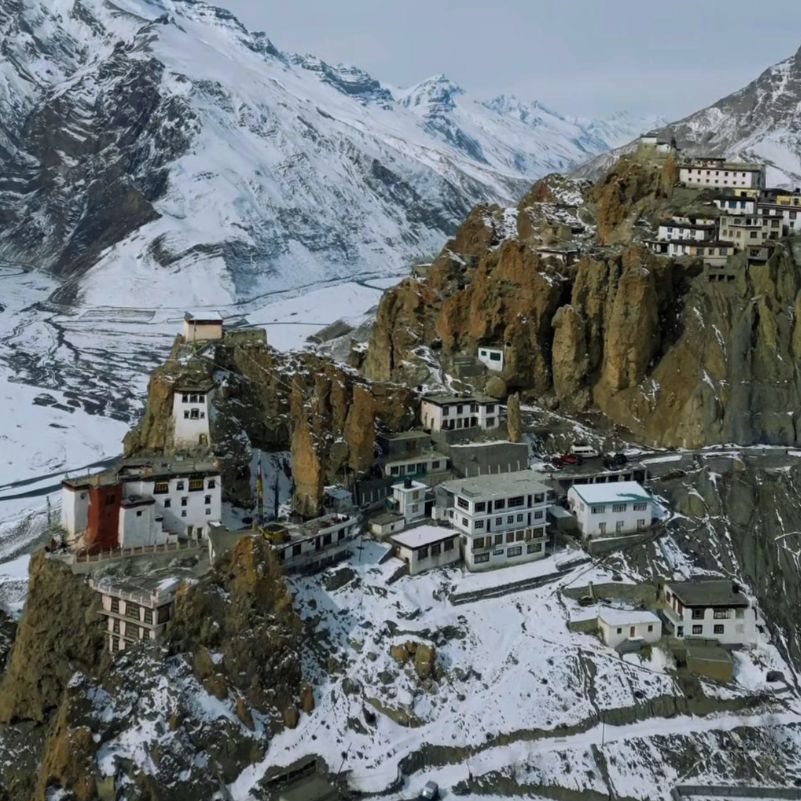 Lahaul and Spiti
Winter Spiti from Bangalore in 2026-27: Flights, Leave Days & Delhi 4x4 Departures
Planning a Winter Spiti trip from Bangalore in 2026-27? Explore flight options, Delhi pickup points, leave requirements, 4x4 group expeditions, travel costs and a practical itinerary to help you plan your Himalayan winter adventure.
- How to Reach
- Snow Travel
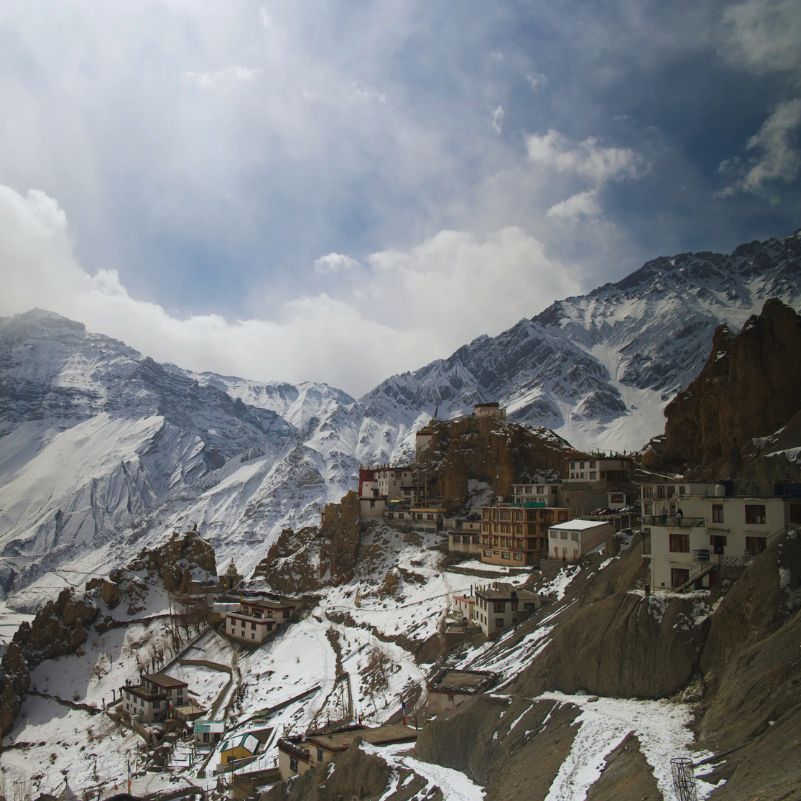 Lahaul and Spiti
What Does a Winter Spiti 4x4 Trip Really Cost in 2026-27? Package Price vs Total Holiday Budget
Planning a Winter Spiti 4x4 trip in 2026-27? Discover the real travel budget, including package prices, transport, meals, winter essentials and hidden expenses. Learn what your package covers, what costs extra and how to plan your Spiti Valley adventure without unexpected spending.
- First-Time Travellers
- Snow Travel
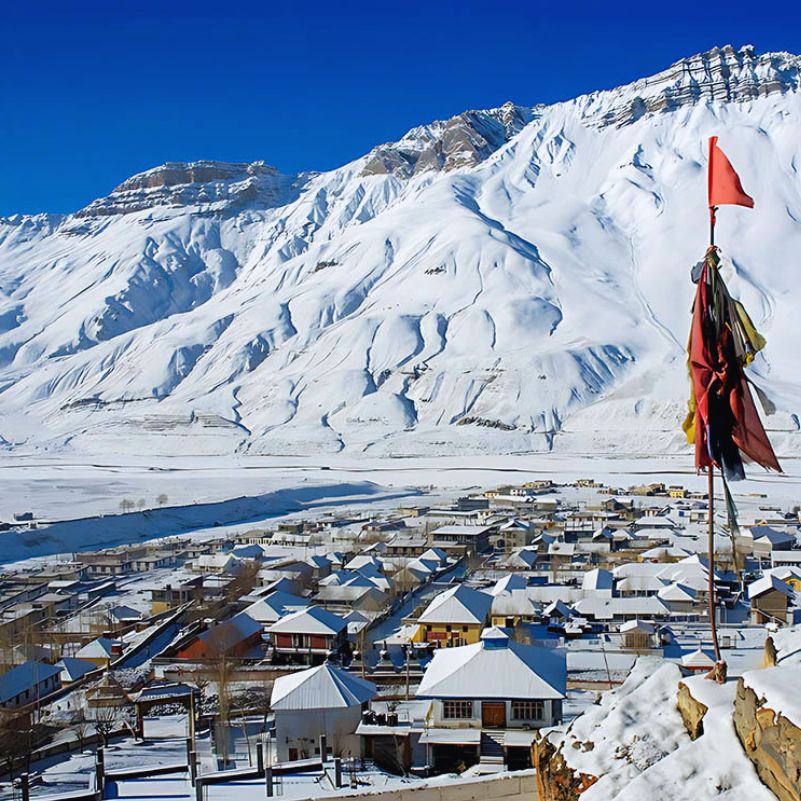 Lahaul and Spiti
How Many Leave Days Do You Need for a 9-Day Winter Spiti Trip in 2026-27?
Planning a 9 day Winter Spiti trip in 2026 to 2027 requires careful leave planning, especially for working professionals travelling from cities like Bangalore, Mumbai, Hyderabad and Delhi.
- Itinerary
- Snow Travel