
Chandratal in June: Weather, Road Status, Camps and Real Travel Tips for 2026

June is when Chandratal goes from locked under snow to suddenly, briefly, almost magically open. But here is what most people planning Chandratal in June do not realise: early June and late June are two completely different trips.
One can mean closed roads, empty campsites, and a long drive that ends in disappointment. The other can mean snow on the peaks, barely any crowds, and a lake so vivid it does not look real. The difference between the two? About two weeks.
We have been sending travellers to Chandratal every season for years. Some of the most beautiful trips we have seen came back from late June. Some of the most frustrating ones were from the first week.
Travel Coffee’s this guide tells you exactly what to expect so you do not end up in the wrong week.
Quick Answer
Chandratal in June is possible, but the month splits into two very different realities.
Early June
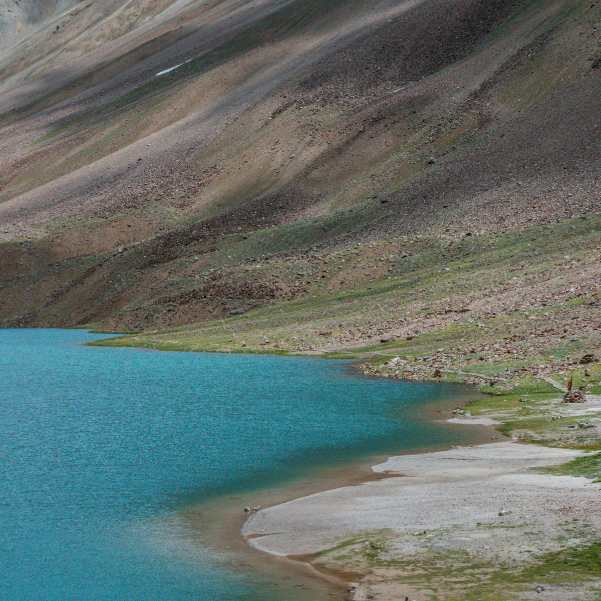
Early June is uncertain. Whether you can reach the lake depends entirely on Kunzum Pass clearance and the condition of the rough diversion road from Batal to the lake. Camps may not be running yet.
Mid to late June
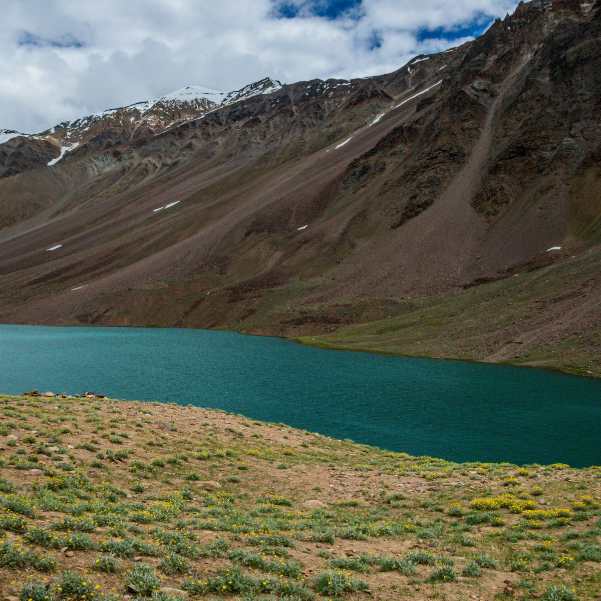
Mid to late June is when things settle. Roads are more likely to be through, camps start operating, and you can plan with more confidence. Days are cool and pleasant, somewhere around 5°C to 10°C, but nights drop to around 0°C or lower. The cold catches people off guard every year.
If you are trying to figure out whether the road is open right now or whether camps are running for your dates, the fastest way is to check with someone on the ground.
👉 WhatsApp us to check live Chandratal road status
Is Chandratal Open in June?
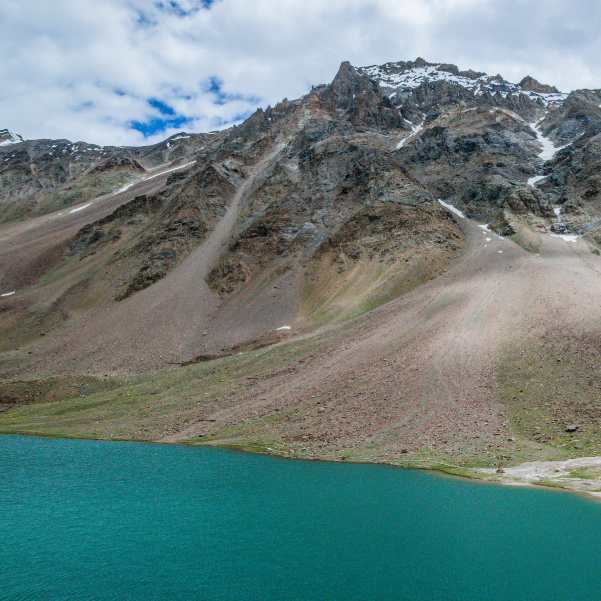
Yes, but not on June 1. And not on a fixed date that anyone can guarantee you months in advance.
June is the transition month. Chandratal goes from being completely snowbound and inaccessible to gradually opening up as the Border Roads Organisation (BRO) clears Kunzum Pass and the roads around it.
The exact date shifts every year depending on how much snow fell during winter and how fast the clearing work progresses.
What we know from recent seasons: the Kaza side of Kunzum Pass tends to open slightly earlier, sometimes by late May. The Manali side takes longer.
And even after the pass itself opens, the 14 km diversion road from Batal to the Chandratal parking area is a separate stretch that needs its own clearance. That last stretch is often the final piece to fall into place.
In the first week of June, access is a coin toss. By mid-June, the odds improve significantly. By late June, both routes are usually functional and camps have started operations.
For a full breakdown of when the roads open and what controls the timing, our Chandratal opening dates and planning guide covers it in detail.
The honest version: do not book non-refundable anything for the first week of June. If your dates fall after June 15, you are in much safer territory.
What Is the Weather Like at Chandratal in June?
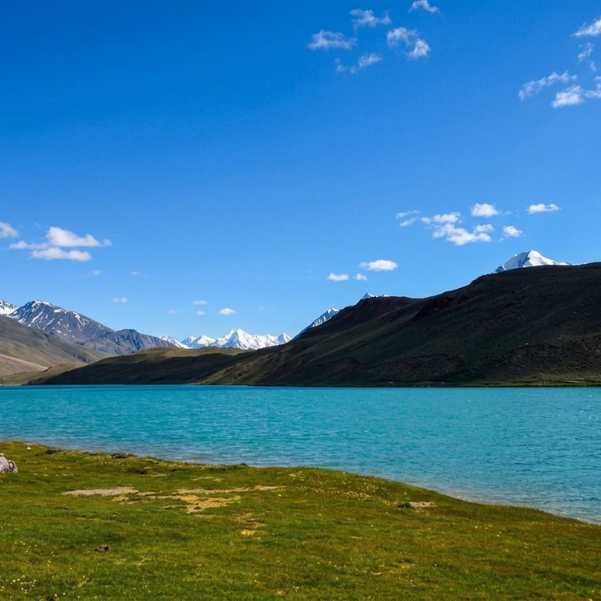
The biggest mistake people make about Chandratal June weather is judging it from daytime photos on Instagram. The photos show blue skies, people in light jackets, snow on distant peaks. It looks pleasant. And during the day, it often is.
Daytime temperatures at Chandratal in June sit somewhere around 5°C to 10°C when the sun is out. That sounds cold on paper, but with direct sunlight at this altitude, it can feel surprisingly warm. You might even roll up your sleeves around noon.
Then the sun dips behind the mountains.
Within an hour of sunset, the temperature drops fast. Nights at Chandratal in June drop to around 0°C, and with wind chill factored in, it feels colder than that.
The camps sit in open terrain with no tree cover, so wind hits you directly. Your tent, your sleeping bag, and your layers are the only things between you and a very uncomfortable night.
UV is another thing most people underestimate. At over 4,300 metres, the sun burns your skin faster than you expect, even on a cool day. Sunscreen and sunglasses are not extras here. They are essentials.
One thing we always tell our travellers: pack for both extremes. You will need sunscreen at noon and thermals by 8 PM. In the same day. Every day.
Chandratal in Early June vs Mid June vs Late June
Chandratal in Early June
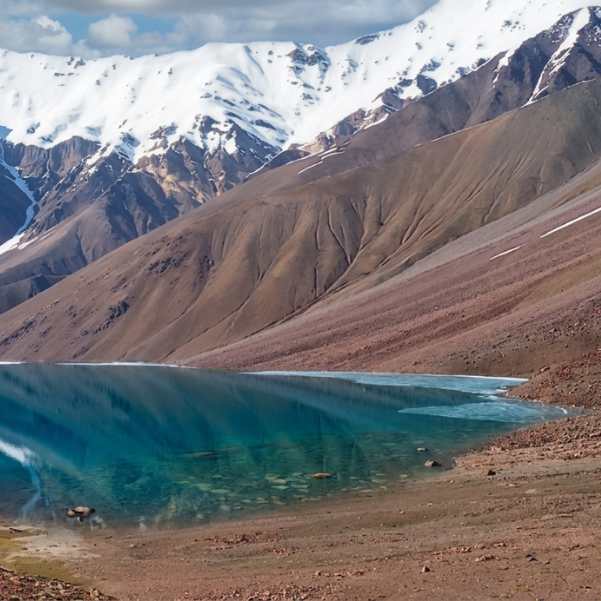
The first week of June is the most unpredictable. Kunzum Pass may or may not be clear. The diversion road from Batal might still have snow patches or water crossings that make it risky.
Camp operators are often still setting up, which means you could arrive to find tents that are not ready or food that is not available.
Snow walls near the pass can be dramatic, and the landscape has a raw, untouched quality you will not see later in the season. But the trade-off is real.
Rough roads, limited infrastructure, and the genuine possibility that you drive 6 to 8 hours from Manali only to find the last stretch is blocked.
Early June suits experienced mountain travellers who carry their own supplies, have flexible return dates, and genuinely do not mind turning back if conditions say no.
Chandratal in Mid June
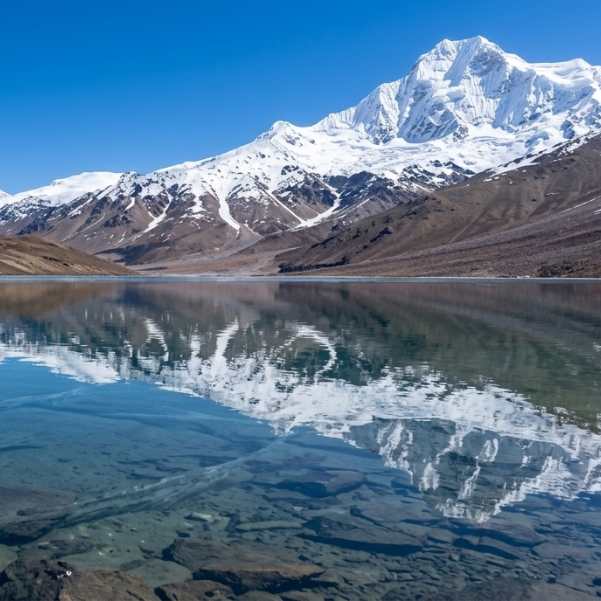
This is when the picture starts to clear. By the second or third week of June, the roads are more likely to be through on both sides. Camp operators begin setting up, and you can realistically expect basic tents, meals, and bedding to be available.
Snow is still visible on the surrounding peaks. The lake colour tends to be especially vivid in mid-June because of snowmelt feeding into it. Crowds are still thin compared to July and August.
In our experience, mid-June is when we start confidently confirming Chandratal stays for our travellers instead of keeping them as "tentative, subject to road status."
Chandratal in Late June
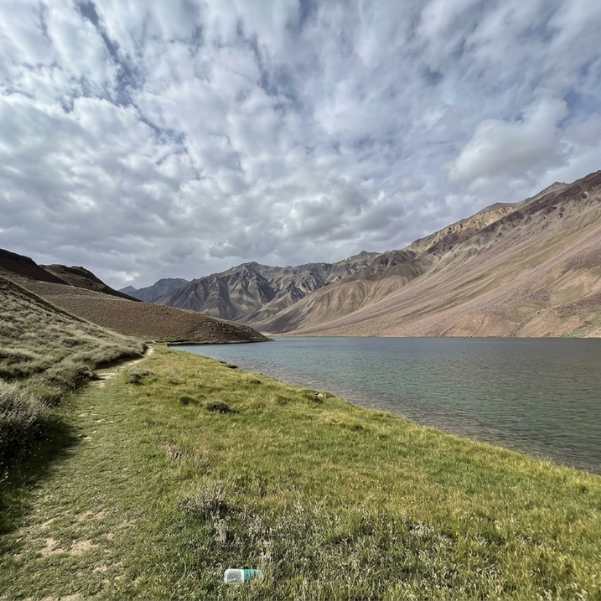
Late June is the best June window for most people. Roads have had a couple of weeks to settle after opening. Camps are more likely to be fully operational with meals, bedding, and basic toilet facilities.
The weather is still cool and pleasant during the day, snow lingers on the higher peaks, and the tourist rush of July has not started yet.
If you are booking leave for a June Chandratal trip and have any flexibility, aim for the last 10 days of the month. You get the drama of early-season landscapes without the stress of uncertain access.
Is June a Good Time to Visit Chandratal?
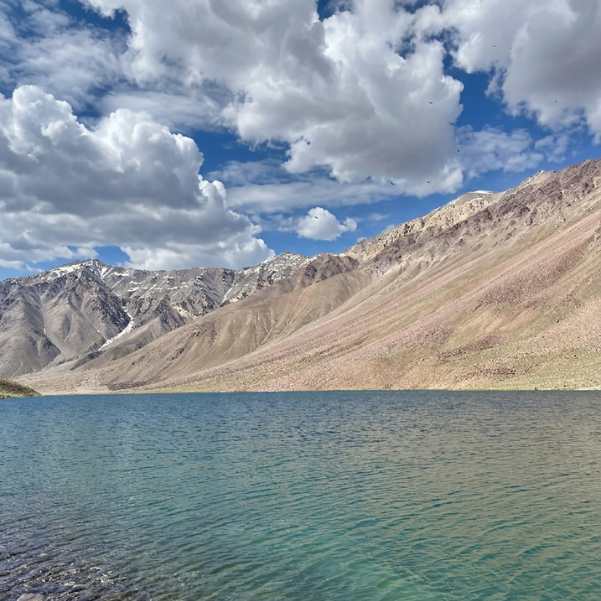
It depends on what kind of traveller you are. Here is the honest version.
June gives you something July and August cannot: snow on the peaks, thin crowds, and a feeling that the season is just waking up. The lake colours are vivid. The air is crisp. And if you enjoy the feeling of being somewhere before the rush starts, June delivers that.
But June also comes with cold nights that will make you question your packing choices. Roads that are rougher than you expected.
Campsites that might still be getting their act together, especially in the first half. And the constant background question of whether the road will actually be open when you get there.
The biggest honest negative about a June Chandratal trip: you are planning around uncertainty. You cannot lock everything down in advance the way you can in July or August.
If you are the kind of traveller who needs everything confirmed and guaranteed, June will stress you out. If you are okay with a bit of "let's see how it goes," June can be one of the most rewarding months to be here.
Can You Camp at Chandratal in June?
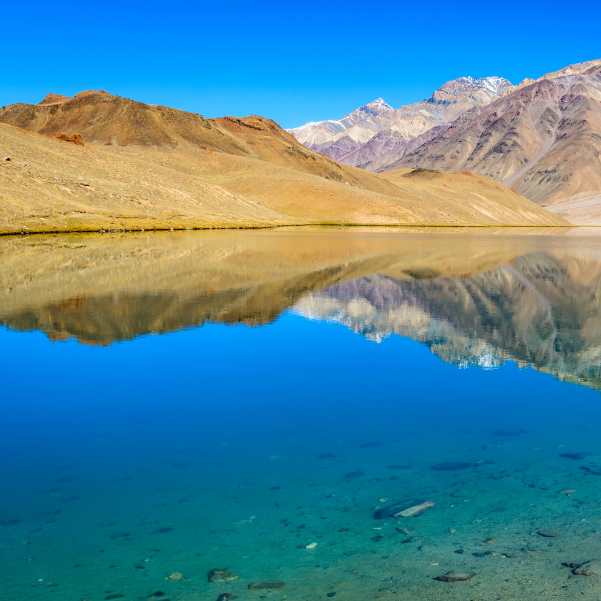
Yes, camping at Chandratal in June is possible, but you need to know two things most guides skip over.
First, you do not camp beside the lake. The camps sit in a designated zone roughly 2 to 3 km before the lake. You walk to the lake from your camp.
The lakeshore is protected, and you cannot camp overnight or cook near the water. Once you see how clean and untouched the area still looks, the restriction makes complete sense.
Second, not all camps are operational in the first half of June. Camp operators set up based on road access and demand. If the roads open late, the camps open late. By mid to late June, most camps are running with basic tents, sleeping bags, and simple meals.
Our detailed guide to camping at Chandratal covers camp types, costs, and what facilities to realistically expect.
Here is a tip that saves a lot of confusion: before you book a camp, ask three things. Is the camp actually set up and running? What is the walking distance to the lake from the camp? Are meals included? These details vary between operators and change every season.
How Cold Does Chandratal Get at Night in June?
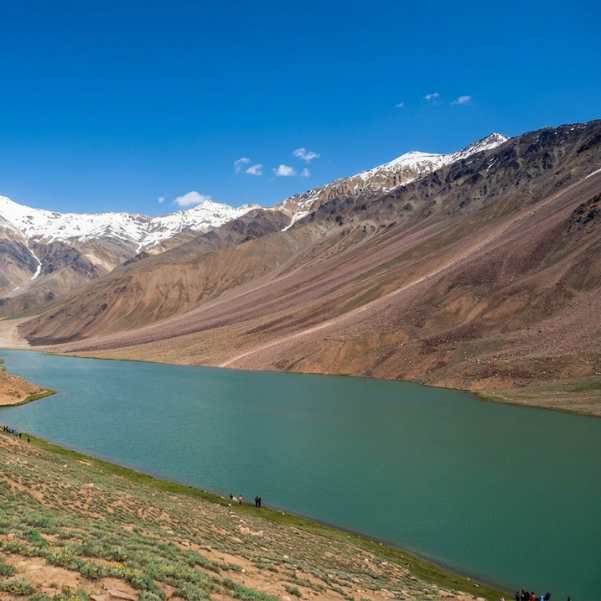
Cold enough that one fleece jacket will not cut it.
Night temperatures at Chandratal in June drop to around 0°C, and with the wind that sweeps across the open terrain, it can feel several degrees colder. The camps have no heating. Your tent walls are thin. The ground underneath you pulls heat away from your body.
Most camps provide blankets and sleeping bags, but the quality varies. The difference between a good night and a terrible one often comes down to what you carry yourself.
A thermal base layer (top and bottom), a fleece mid-layer, a proper insulated jacket, warm socks, a cap, and gloves are not overkill. They are the minimum.
What we tell our travellers who are camping at Chandratal for the first time: carry a sleeping bag liner even if the camp provides a sleeping bag. It adds warmth without adding bulk.
And keep a thermos of hot water or ginger tea ready for the middle of the night. Sounds small. Makes a huge difference at altitude.
If you sleep cold easily, or if you have never camped above 4,000 metres before, be honest with yourself. The overnight stay is not for everyone in June. A day visit from Batal can give you the lake experience without the freezing night.
How to Reach Chandratal in June
Via Manali
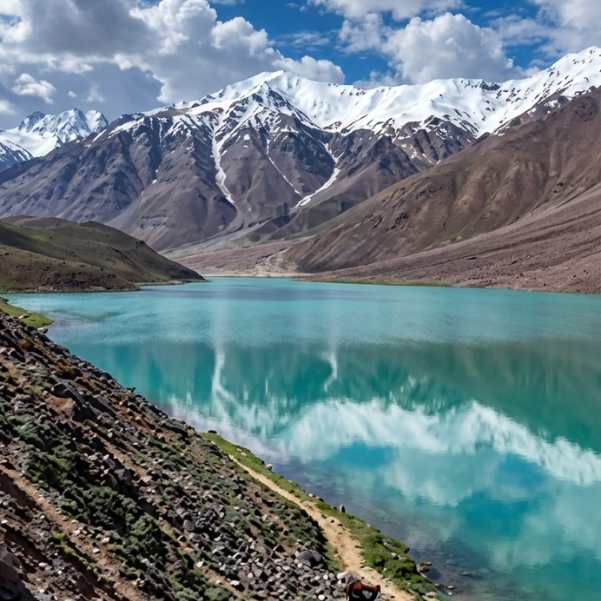
This is the more direct route. You drive from Manali through the Atal Tunnel, continue via Sissu and Koksar, push past Gramphu towards Batal, and then take the diversion road to Chandratal.
The Manali to Chandratal distance is about 120 to 130 km, but do not let that fool you. This drive takes 6 to 8 hours or more depending on road conditions. The first stretch through the Atal Tunnel is fast and smooth.
Everything after Koksar slows down. The last 14 km from Batal to the Chandratal parking area is a dirt track with potholes, loose gravel, and water crossings.
The Manali route works well if you want a focused Chandratal trip without doing the full Spiti circuit. If you are planning from the Manali side, our Manali trip packages include driver and vehicle options that handle this stretch properly.
Via Kaza
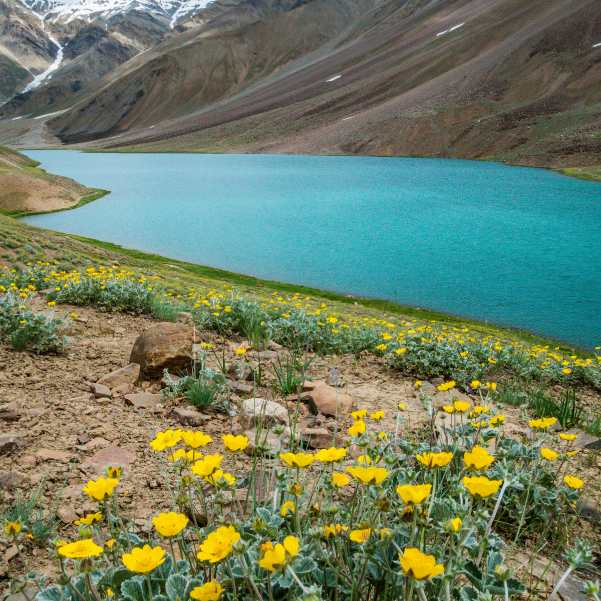
If you are already doing a Spiti circuit, you reach Chandratal from the Kaza side. The route goes from Kaza through Losar and over Kunzum Pass (at 4,551 metres), then down to the Chandratal diversion. Kunzum Pass is about 21 km from Chandratal.
This route feels more natural as part of a longer Spiti trip and means you arrive at Chandratal already somewhat acclimatised after spending days at altitude in Kaza.
Which Route Is Better in June?
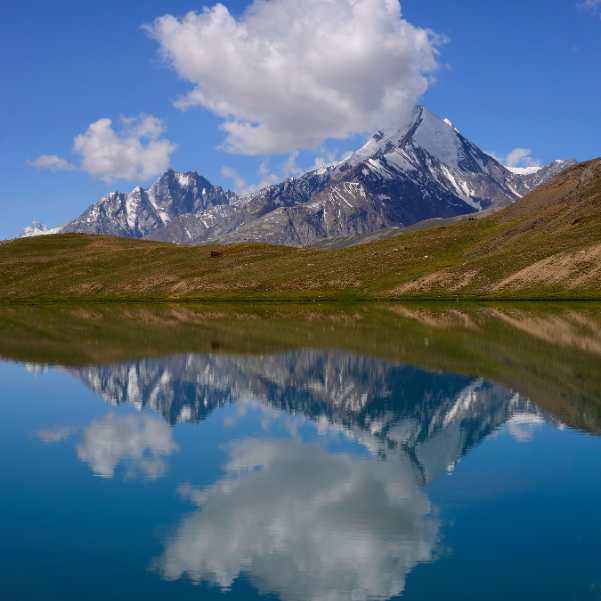
If you are travelling in the first half of June and flexibility is limited, the Manali side is a slightly safer bet because it does not depend on Kunzum Pass being fully clear from the Kaza direction. But the Batal diversion road still needs to be open, so there is no guarantee either way.
If you are travelling in late June and doing a full Spiti circuit, entering from Shimla via Kinnaur and exiting via Chandratal towards Manali is the most popular loop. By late June, Kunzum Pass has usually settled into stable open status.
The one thing we always suggest: do not rely on Google Maps for time estimates on this route. The app has no idea what the road actually looks like between Batal and Chandratal. Add at least 2 hours to whatever it tells you.
Do You Need a Permit for Chandratal in 2026?
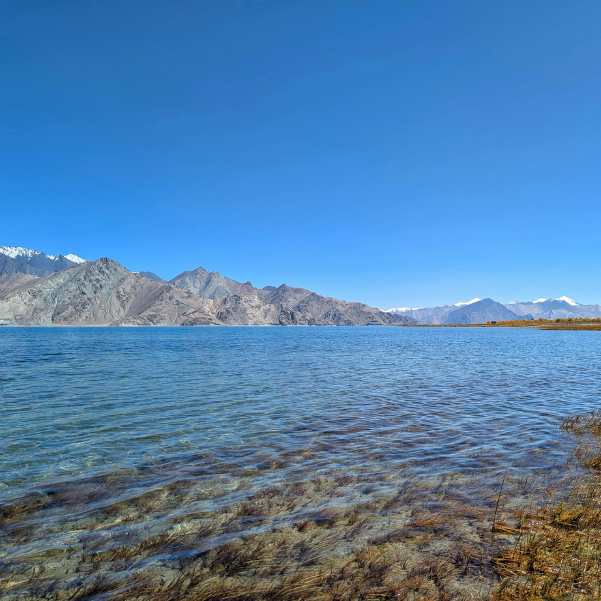
The e-Aagman portal currently states that you need an e-permit per vehicle for the Atal Tunnel Rohtang-Koksar-Chandertal circuit. This applies if you are approaching from the Manali side through the tunnel.
The portal and its requirements can change between seasons, and enforcement on the ground sometimes differs from what the website says.
Our strong advice: check the e-Aagman portal a few days before you leave and carry a printed copy of whatever permit you get. Some checkpoints want to see it, some do not, but having it saves you trouble.
If you are joining a Spiti Valley trip with a local operator, the permit is usually handled for you as part of the package.
Road Conditions and Safety Tips for June
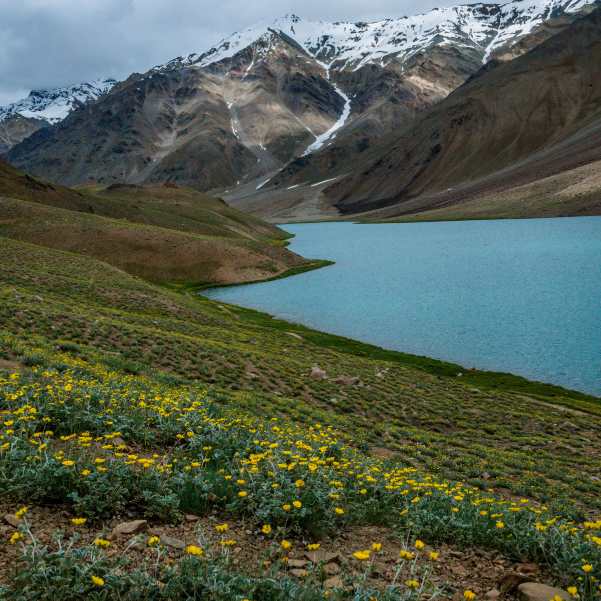
June roads to Chandratal are better than May but still far from casual. Think of it as the mountains slowly waking up after winter. The roads are open, but they are not smooth, and they are not fast.
The 14 km stretch from Batal to the Chandratal parking area is the roughest section you will face. Potholes, loose gravel, water crossings, and sharp turns are standard.
A high-clearance vehicle is not a suggestion here. It is a requirement. Sedans and low-clearance cars should not attempt this stretch.
Water crossings near Batal can be tricky in June because of snowmelt. Early mornings tend to have lower water levels. By afternoon, as the snow melts faster in the sun, the crossings get deeper. Our drivers always prefer crossing before 10 AM when possible.
Carry a spare tyre and a basic puncture kit. The rocks on this road are sharp, and flat tyres are common enough that you should not leave Manali without checking your spare. Also carry enough fuel. There is no fuel station between Manali and Chandratal.
Altitude is the other safety factor. Chandratal sits above 4,300 metres. Even fit people can get headaches, nausea, or breathlessness at this height, especially if they have driven up from the plains without acclimatising.
Drink more water than you normally would, skip the alcohol, eat light, and do not push through symptoms. If you feel seriously unwell, go back down. There is no medical facility at Chandratal.
What to Pack for Chandratal in June
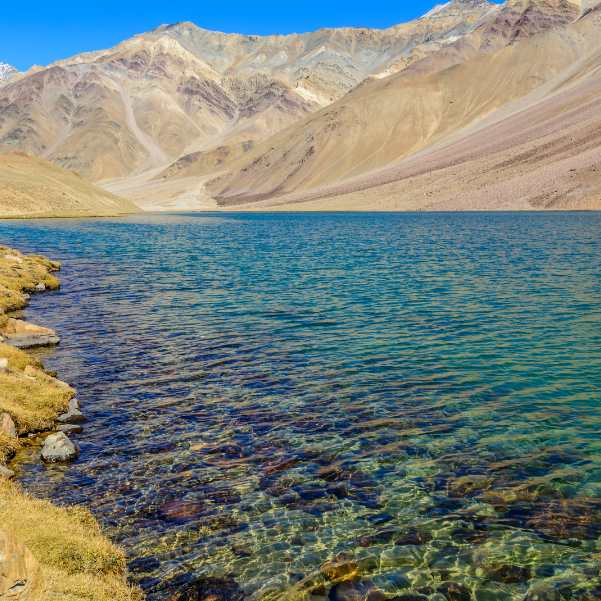
Packing wrong is the single biggest source of regret for June visitors. The weather demands layers, not one big jacket.
Start with thermal inners, both top and bottom. Add a fleece jacket as your mid-layer. Over that, carry a windproof and waterproof outer layer.
The wind near the lake cuts through anything that is not windproof. Warm socks (carry at least two spare pairs), gloves, and a warm cap are non-negotiable after sunset.
Sunscreen with high SPF and UV-blocking sunglasses are just as important as your warm layers. The sun at this altitude burns fast, even when the air feels cool. Lip balm with SPF is another small thing that makes a big difference.
A headlamp is essential. There is almost no ambient lighting at the camps after dark. A fully charged power bank is critical because charging options at camps are limited or nonexistent. Carry cash because no one out there accepts UPI or cards reliably.
For medicines, carry paracetamol, ORS, something for nausea, and basic band-aids. If your doctor recommends Diamox for altitude, take it after a proper consultation, not because someone on the internet said to.
Mobile network around Chandratal is very limited to none. BSNL has the best chance of picking up a faint signal in spots, but do not count on it. Download offline maps before you leave Manali and tell someone your plan before you lose signal.
Here is something most packing lists miss: carry a few plastic bags for your own waste. There are no dustbins on the trail. Whatever you carry in, you carry out.
Who Should Avoid an Overnight Chandratal Stay in June?
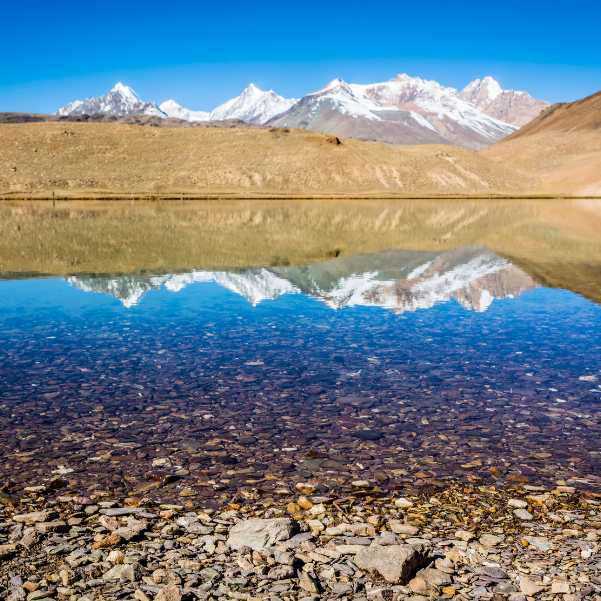
Not everyone should camp at Chandratal in June. That is not us being discouraging. It is us being honest after years of seeing who has a great time and who does not.
Young children under 8 to 10 years should not do an overnight stay. The altitude, the cold, and the complete lack of medical backup make it a risk that is hard to justify. If you are travelling with kids, a day visit from Batal is a much safer option.
Seniors with heart or breathing conditions should also skip the overnight camp. The altitude puts extra strain on the body, and the nearest proper medical help is hours away.
If you have not spent at least one night at a mid-altitude point like Manali or Sissu before heading to Chandratal, your body has had zero time to adjust.
Driving from Delhi or Chandigarh to Chandratal in two days is asking for altitude sickness. Spend a night at Sissu or Manali first. It makes a real difference.
And if your schedule is so tight that missing one day means missing your flight home, do not attempt an overnight. Roads in this region close without warning. One landslide or heavy rain between Batal and Gramphu, and you could be stuck for 12 to 24 hours. Always keep a buffer day.
Sample Chandratal June Itinerary Options
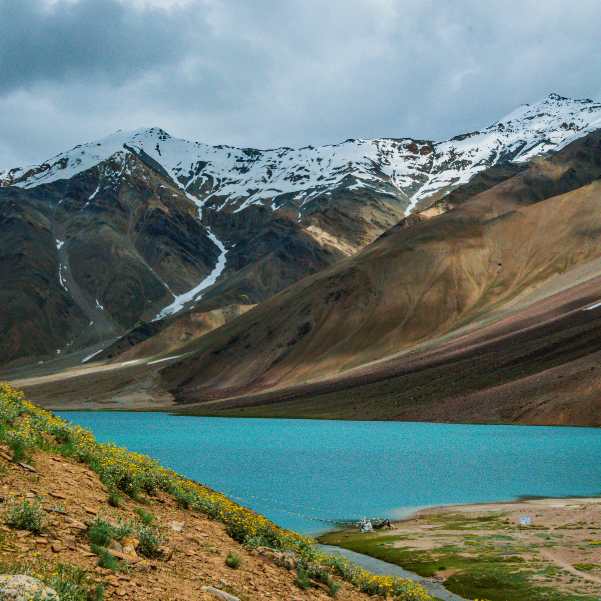
2D/1N Short Chandratal Trip from Manali
Day 1: Leave Manali by 5:30 AM. Drive through the Atal Tunnel, past Sissu and Koksar, to Batal. Continue on the diversion road to the Chandratal camping zone. Reach by afternoon, settle in, and walk to the lake before sunset. Camp overnight.
Day 2: Walk to the lake again early morning for sunrise light. The reflections on the water before 7 AM are completely different from what you see at midday. Drive back to Manali.
This plan is tight. You spend most of both days driving. But it works if you start very early and have a reliable high-clearance vehicle.
4D/3N with Sissu or Manali Buffer
Day 1: Arrive in Manali or Sissu. Rest, acclimatise, eat well. Do not underestimate how much this day helps.
Day 2: Drive to the Chandratal camping zone. Spend the evening at the lake.
Day 3: Morning lake visit. Drive back to Sissu or Manali. This gives you a buffer if the road throws surprises.
Day 4: Buffer day for road delays or a relaxed drive back.
This is the version we recommend for most first-timers doing Chandratal in June. The extra day of acclimatisation at a lower altitude makes the camping experience significantly more comfortable.
Full Spiti Circuit with Chandratal
Enter Spiti from the Shimla side via Kinnaur. Spend 4 to 5 days exploring Kaza, Key, Kibber, Langza, Tabo, and Dhankar. Then drive over Kunzum Pass to Chandratal before exiting towards Manali.
This is the most rewarding way to experience Chandratal because your body has had days to acclimatise by the time you reach the lake. Our summer Spiti circuit with Chandratal follows this exact approach with built-in buffer days.
Chandratal is technically on the border of Lahaul and Spiti, and visiting it as the final stop of a Spiti circuit just feels right. You end the trip at the highest, most remote point, and the drive down to Manali the next day feels like a gentle return to the world.
Our Honest Verdict: Should You Plan Chandratal in June?
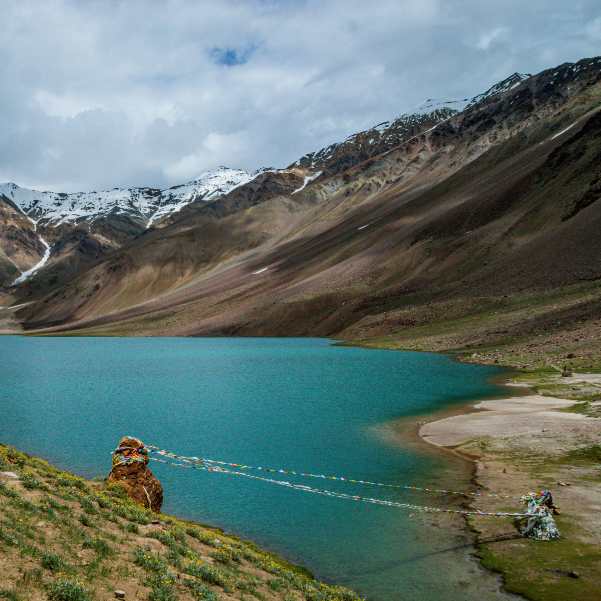
If you have flexibility, late June is the best June window. Roads are more settled, camps are running, and you get the early-season magic of snow on the peaks, vivid lake colours, and almost no crowds. It is genuinely one of the best times to be at Chandratal if you pack right and go in with realistic expectations.
Early June is scenic but uncertain. If the road cooperates, you will see Chandratal at its most raw and dramatic. If it does not, you will spend a long day driving only to turn back.
We only recommend early June to experienced mountain travellers who carry their own supplies and have genuinely flexible dates.
July is easier across the board. Roads are better, camps are fully running, and logistics are simpler. But July also brings more people and the occasional rain on the Manali side. If convenience matters more than exclusivity, July is a solid choice.
In our experience running these trips every season, late June consistently gives our travellers the best combination of access, scenery, and solitude. That is the window we push hardest when someone asks us "when should I go?"
If you want help figuring out the right dates for your group, or if you just want to know whether the road is open before you commit to anything, our team tracks conditions on the ground every day during the season.
Related topics
Frequently Asked Questions
Is Chandratal open in the first week of June?
It depends on the year. Access in the first week of June is uncertain because it relies on Kunzum Pass clearance and the Batal diversion road being drivable. Some years it is open, some years it is not. Do not book non-refundable plans for early June.
What is the best week of June for Chandratal?
The last 10 days of June. By then, roads have usually settled, camps are running, and you get the early-season snow views without the access uncertainty of the first two weeks.
Can I do Chandratal without camping?
You can visit the lake as a day trip from Batal without staying at the camps overnight. But there are no hotels anywhere near Chandratal. Your options are camping in the designated zone or staying at a basic dhaba setup at Batal and driving to the lake and back.
How far is Chandratal from Manali?
The Manali to Chandratal distance is about 120 to 130 km one way. It takes 6 to 8 hours or more depending on road conditions. Do not plan your day based on distance. Plan it based on time.
How far is Chandratal from Kaza?
From Kaza, you drive through Losar and over Kunzum Pass to reach the Chandratal diversion. Kunzum Pass is about 21 km from Chandratal. The total drive from Kaza takes roughly 4 to 5 hours depending on conditions.
What is the night temperature at Chandratal in June?
Around 0°C, sometimes lower with wind chill. It feels significantly colder than the number suggests because of the open terrain and wind exposure. Pack serious warm layers for the night.
Do camps have attached washrooms?
Most Chandratal camps have basic shared toilet facilities, either pit toilets or simple portable setups. Do not expect attached bathrooms or running water. Wet wipes and a basic toiletry kit are your best friends here.
Is there mobile network at Chandratal?
Practically none. BSNL has the best chance of catching a faint signal in certain spots, but do not rely on it. Download offline maps, carry enough cash, and inform someone about your travel plan before you lose signal.
Can I take kids to Chandratal in June?
June is not the best month for children. The cold, the altitude, the rough roads, and the uncertainty of early-season access make it challenging. If you are visiting with older kids (above 10), late June is more realistic. For younger children, a day visit during July or August is safer.
Can I drive my own car to Chandratal in June?
Only if it is a high-clearance vehicle. The 14 km stretch from Batal to the Chandratal parking area is a rough dirt track with rocks, potholes, and water crossings. Sedans, hatchbacks, and most city SUVs cannot handle this stretch. A Thar, Bolero, or similar vehicle with good ground clearance is what you need.
Do I need an e-permit for the Chandertal circuit?
The e-Aagman portal currently requires an e-permit per vehicle for the Atal Tunnel Rohtang-Koksar-Chandertal circuit. Check the portal a few days before departure and carry a printed copy. Rules and enforcement can change between seasons.
Should I choose June or July for Chandratal?
June gives you fewer crowds, snow on the peaks, and early-season drama. July gives you easier logistics, warmer nights, and fully operational camps. If you want the smoother experience, pick July. If you want the quieter, more dramatic one and do not mind some roughness, late June is the better call.
More about Chandratal
 Chandratal
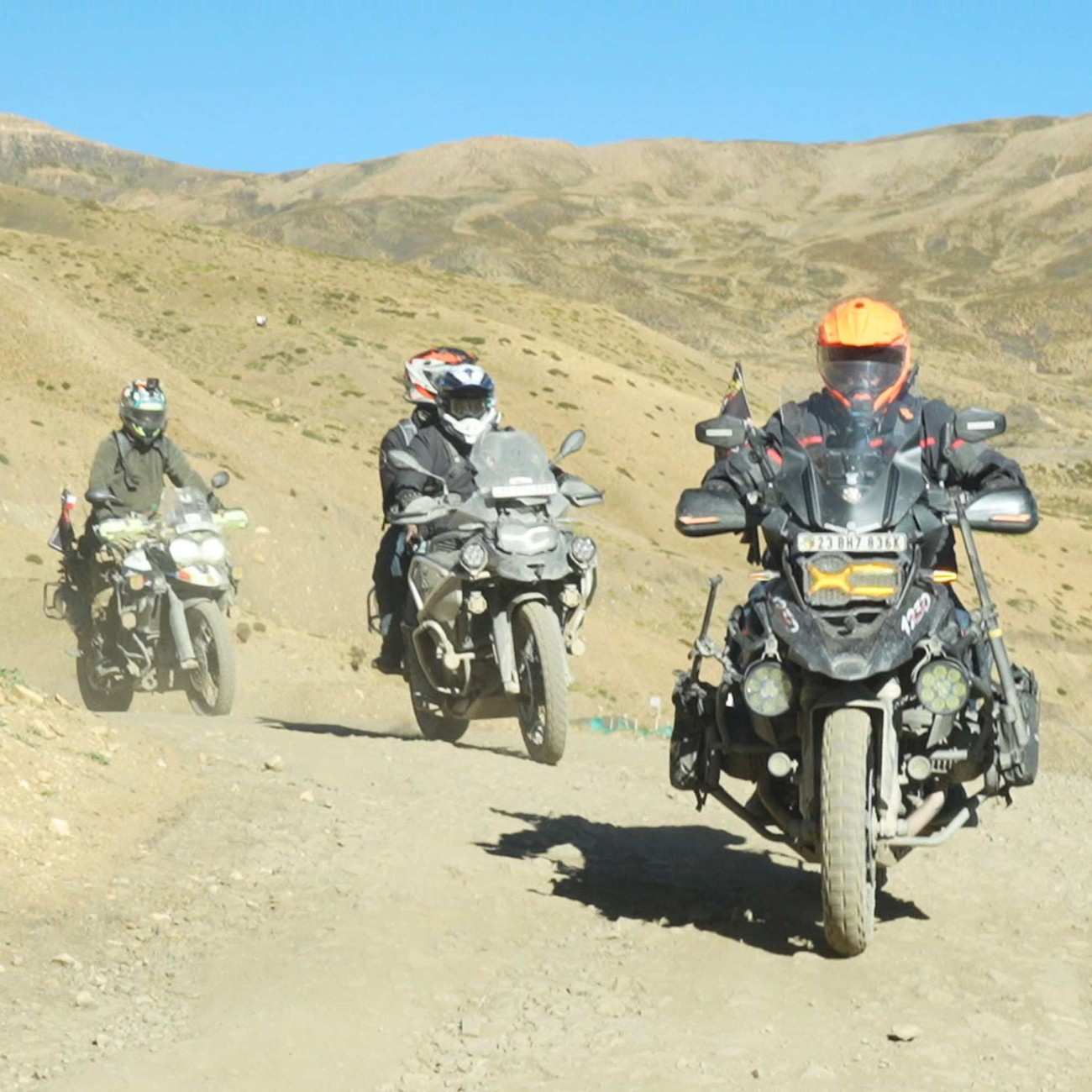
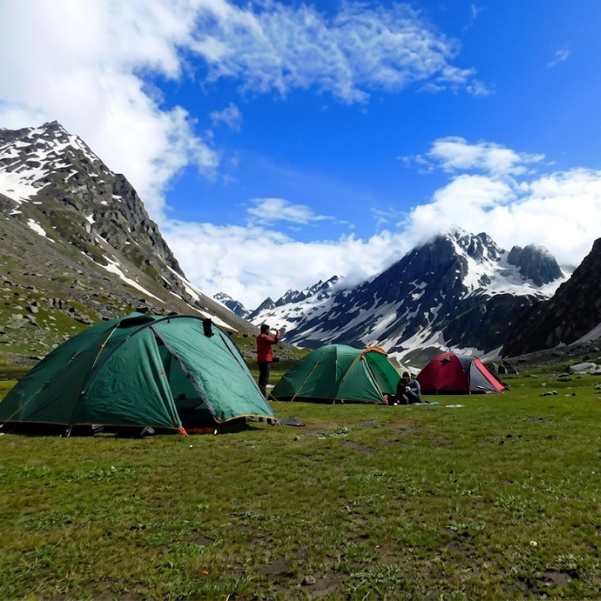
Chandratal by Bike Safety in 2026: Road Difficulty, Timing & Pillion Tips
Planning to ride to Chandratal by bike in 2026? This complete guide covers road difficulty, riding conditions, the best time to visit, safety precautions, water crossings, and pillion tips to help you enjoy one of Himachal Pradesh's most iconic high-altitude rides with confidence.
- Bike Trips
- Altitude & Health
- +1
 Chandratal
Where to Stay If Chandratal Camps Are Not Available in 2026
If Chandratal camps are not available in 2026, stay at nearby alternatives like Batal, Losar, or Kaza. Since camping is not allowed at the lake itself and designated camps operate a few kilometers away, these villages are the safest backup options for travelers planning a Spiti Valley trip.
- Itinerary
- Best Time to Visit
 Chandratal
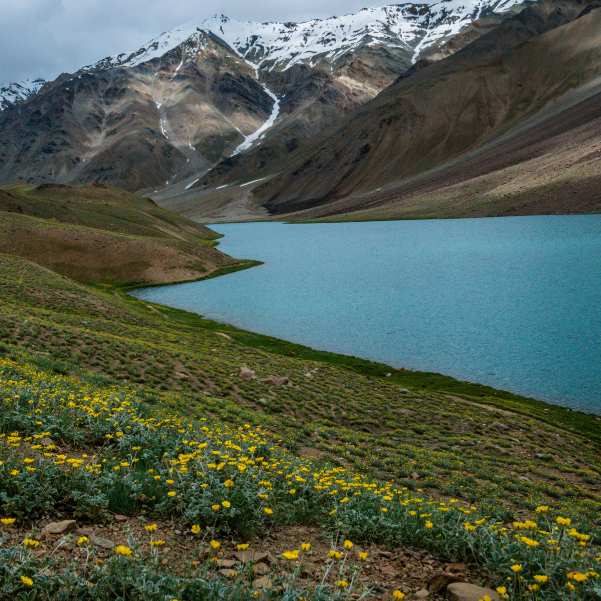
Is Chandratal Crowded in June 2026? Honest Crowd, Road and Camp Guide
Planning Chandratal in June 2026? Here’s an honest guide to crowds, road opening chances, campsite availability, lake access, and the best time to visit without chaos.
- Best Time to Visit