
How to Plan a Spiti Valley Trip with Senior Citizens Safely in 2026
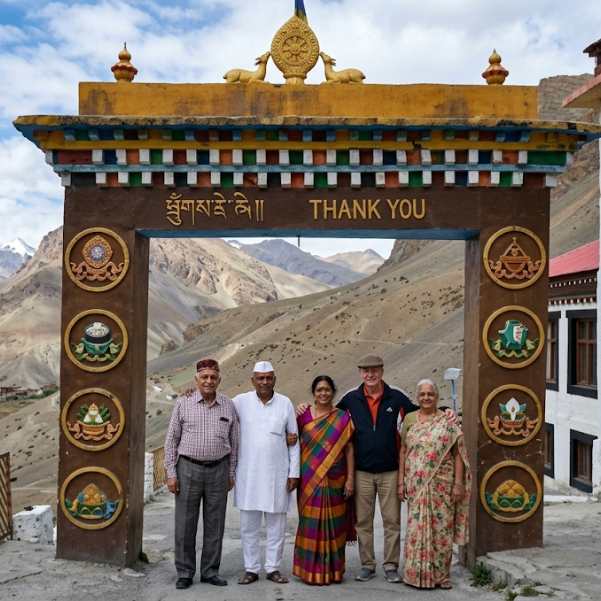
Taking your parents or in-laws to Spiti Valley is one of the most meaningful trips you can plan. But it is also one of the easiest to get wrong.
Spiti is not Shimla. It is not Manali. It sits at 12,000 to 15,000 feet, the roads are rough, medical help is hours away, and your body reacts differently to thin air no matter how fit you are.
Most travel blogs will tell you "anyone can go to Spiti." That is technically true. But whether someone should go, and how, depends entirely on how the trip is designed.
We have sent families with 60+, 65+, and even 70+ year old parents to Spiti over the years. The ones who had a great time all did one thing right: they planned a slow trip, entered from the Shimla side, and did not treat the itinerary like a race.
This guide by Travel Coffee covers everything you need to build a Spiti trip that works for older travellers without cutting out the best parts of the valley.
Quick Answer: Can Senior Citizens Visit Spiti Valley?
Yes, Spiti Valley is doable with senior citizens if you plan it right. Enter via the Shimla-Kinnaur route for gradual altitude gain over several days. Get a doctor's clearance before booking. Keep daily driving under 5 to 6 hours.
Use comfortable stays with attached washrooms and heating. Skip rushed routes and high-risk side trips like overnight camping at Chandratal unless everyone is doing well at altitude.
The Manali-Kaza entry and Chandratal overnight should be treated as optional, not mandatory, for elderly travellers.
Is Spiti Valley Really Safe for Senior Citizens?
The short answer is yes, but with conditions.
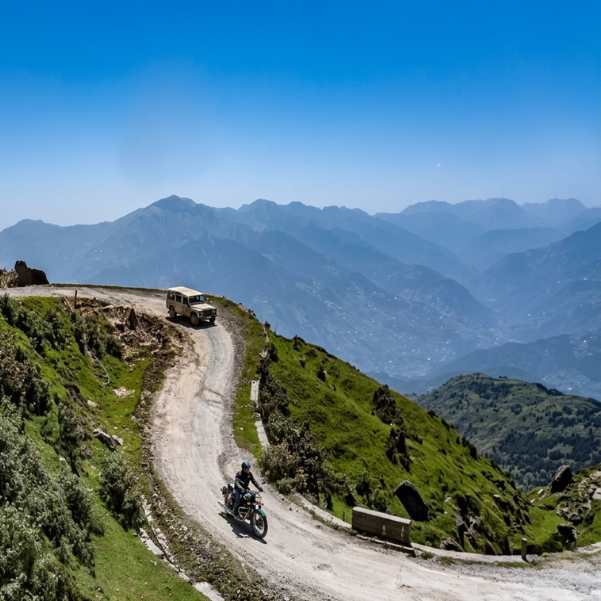
The main risks in Spiti are altitude, remoteness, and road quality. There is no crime concern. The locals are genuinely welcoming. The villages are peaceful. The issue is that your body behaves differently above 10,000 feet, and the nearest proper hospital is a full day's drive away.
What most families get wrong is assuming that because their parent walks daily or does yoga, they will handle Spiti fine. Physical fitness helps, but altitude does not care about your gym routine.
A healthy 65-year-old can develop a splitting headache at 12,500 feet. A 50-year-old smoker might feel fine. Altitude is unpredictable.
Age alone is not the problem. What matters more is whether someone has a stable heart, healthy lungs, and no condition that worsens with low oxygen. A fit 70-year-old with no cardiac history is a better candidate for Spiti than a 55-year-old with poorly managed blood pressure.
Set your expectations clearly before you start planning. This is not a relaxed hill-station holiday. The roads shake you up, the nights are cold, the air is thin, and the nearest comfort zone is hours behind you.
If everyone in the family understands that and is still excited, Spiti will reward you in ways few places can.
Who Should Avoid or Postpone a Spiti Trip?
Not every senior should attempt Spiti. This is not about being negative. It is about keeping people safe.
If your parent has severe COPD, unstable or poorly controlled asthma, severe ischemic heart disease, uncontrolled heart failure, pulmonary hypertension, or has had any serious cardiac event in the last 6 to 12 months, Spiti is not the right trip right now.
Anyone with conditions that already cause breathlessness at sea level will struggle at 12,000 feet, where oxygen levels are roughly 40% lower than in Delhi or Chandigarh. There is no sugarcoating this.
If walking from one room to another at home already causes fatigue or shortness of breath, high altitude will not make it easier. It will make it significantly worse.
Get medical clearance before you book anything. Tell the doctor exactly where you are going, the altitudes involved, and how many days you will be above 10,000 feet. A general "fit to travel" certificate is not enough. You need specific clearance for high-altitude travel.
For families with a parent who has well-managed hypertension or mild asthma with stable medications, Spiti is usually fine with a slow itinerary and proper precautions. But the conversation with the doctor needs to happen first, not after you have booked everything.
Which Route Is Safest for Senior Citizens: Shimla-Kinnaur or Manali-Kaza?
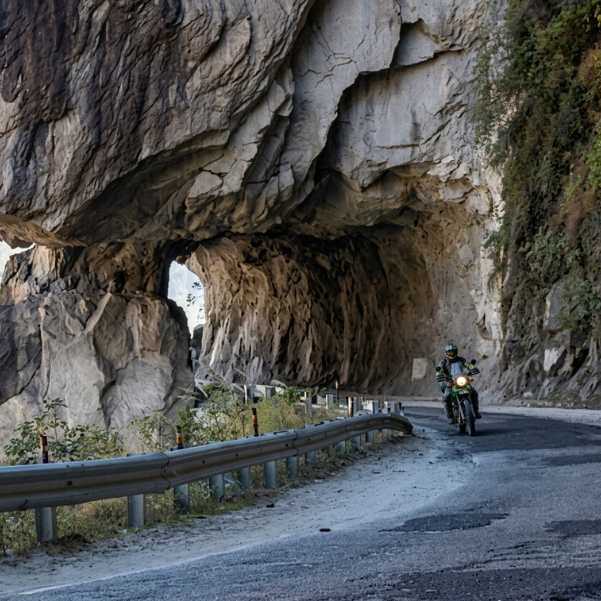
Shimla-Kinnaur is the only route we recommend for senior citizens. We say this to every family that calls us.
Here is why. The Shimla-Kinnaur route takes you from Shimla (2,200 metres) through Narkanda, Kalpa, Nako, and Tabo before reaching Kaza at about 3,800 metres. You gain altitude gradually over 3 to 4 days.
Your body gets time to adjust at each stop. By the time you reach Kaza, you have been sleeping at progressively higher altitudes and your system has had time to adapt.
The Manali route is a different story. You go through the Atal Tunnel, pop out in Lahaul, and suddenly you are at 3,000+ metres within hours of leaving Manali.
If you push towards Kaza the same day via Kunzum Pass, you cross 15,000 feet before your body has had any time to adjust. For a young, healthy traveller this can cause mild headaches. For a senior citizen, it can trigger serious altitude sickness.
In our experience, even young travellers who enter via Manali sometimes struggle on Day 1. For older travellers, the risk is simply not worth it when the Shimla route exists.
There is also a practical issue. In 2026, the Manali to Keylong stretch can open while the Keylong to Kaza road via Kunzum Pass remains closed well into June.
If you plan a Manali entry and Kunzum is not through, your entire trip falls apart. The Shimla route does not depend on any high pass opening.
If you are considering a Spiti Valley trip, the Shimla entry is the safest default. For the first few days, you can enjoy the Kinnaur valley at a comfortable pace before the landscape shifts to the raw, barren terrain of Spiti.
What Is the Best Senior-Friendly Spiti Itinerary?
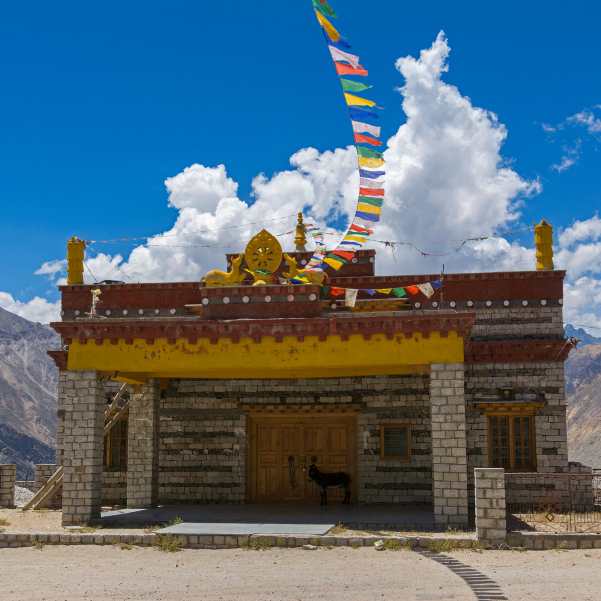
Best 9 to 10 Day Slow Itinerary via Shimla, Returning the Same Way
This is the safest default itinerary for senior citizens. It enters and exits via Shimla, avoids high passes entirely, and keeps daily driving under 5 to 6 hours.
Day 1: Arrive in Shimla. Rest, walk around the Mall Road if energy allows, sleep early.
Day 2: Drive to Narkanda or Rampur (3 to 4 hours). Gentle start, good road, easy altitude. Narkanda has apple orchards and mountain views. You are still below 3,000 metres.
Day 3: Drive to Kalpa (5 to 6 hours from Rampur). Kalpa sits across from the Kinner Kailash range. The view from the hotel balcony alone is worth the drive. Your body starts adjusting to altitude here at about 2,960 metres.
Day 4: Drive to Nako (4 to 5 hours). Stop at Nako Lake, visit the monastery, and rest. You are now at about 3,600 metres. This is an important acclimatisation night.
Day 5: Drive to Tabo (2 to 3 hours). Tabo Monastery is over 1,000 years old and sits in the middle of the desert-like Spiti landscape. The drive is short, the stay is comfortable, and you gain minimal altitude. One of our favourite spots for older travellers.
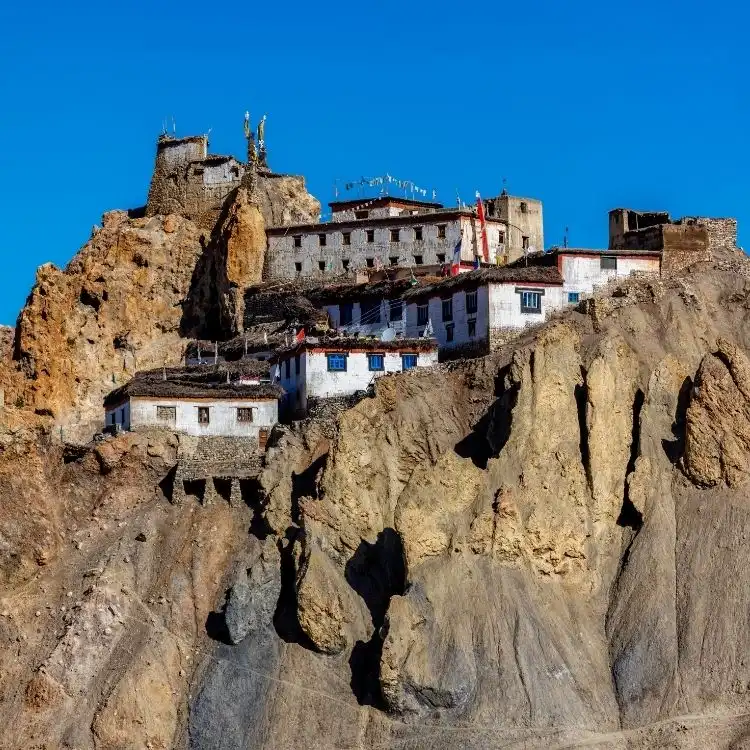
Day 6: Drive to Kaza (2 to 3 hours) via Dhankar. Stop at Dhankar Monastery for the views (short walk, but steep in parts, so optional for seniors). Arrive in Kaza by afternoon and rest.
Day 7: Rest and local sightseeing around Kaza. Visit Key Monastery (20 minutes from Kaza). If energy allows, visit Kibber village. Do not overdo it. This is the highest altitude of the trip and the day to take it slow.
Day 8: Start return. Drive to Tabo or Nako (3 to 4 hours).
Day 9: Drive to Kalpa or Rampur (5 to 6 hours).
Day 10: Drive back to Shimla (5 to 6 hours). Or stay overnight in Rampur if the drive feels too long.
This itinerary works because it gives two nights at medium altitude before reaching Kaza, includes a full rest day in Kaza, and returns via the same familiar route. No surprises, no high-pass gambles, no uncertainty about road openings.
What we always tell families: the return via the same route is not boring. You see the same mountains from a completely different angle, the light changes, and you notice things you missed on the way up.
Optional 11 to 12 Day Circuit Only If Health, Weather, and Roads Cooperate
If everyone in your group is feeling good at altitude by Day 6 or 7, and you have the time, you can consider adding a Manali exit via Kunzum Pass. This turns the trip into a circuit instead of a round trip.
From Kaza, you drive to Losar, then over Kunzum Pass (about 15,060 feet), and descend towards Manali via Batal, Gramphu, and the Atal Tunnel. This adds about 2 days.
Chandratal falls on this route. But for senior citizens, treat Chandratal as a day-visit decision, not a compulsory overnight. If the group is healthy, the weather is clear, and the road is in good shape, a quick visit to the lake from the parking area works.
Overnight camping at Chandratal is usually a poor fit for elderly travellers because of the cold, the altitude (14,100 feet), and the lack of any medical backup.
Families should keep a same-route return via Shimla as the backup plan. If anyone is feeling unwell, if Kunzum Pass is not reliably open, or if the weather forecast looks unstable, return via Shimla without guilt. The Manali exit is a bonus, not the point of the trip.
👉 WhatsApp us and we’ll plan your Spiti Valley trip around your comfort and travel dates
Which Places in Spiti Are Easiest for Senior Citizens, and Which Are Tiring?
Not every stop in Spiti demands the same physical effort. Here is what we have seen over hundreds of trips.
Comfortable base towns that work well for seniors include Kalpa, Nako, Tabo, and Kaza. These have guesthouses with attached washrooms, decent beds, and meals.
The walking required is minimal, the terrain is flat, and you can enjoy the views from your hotel or a short stroll.
Key Monastery
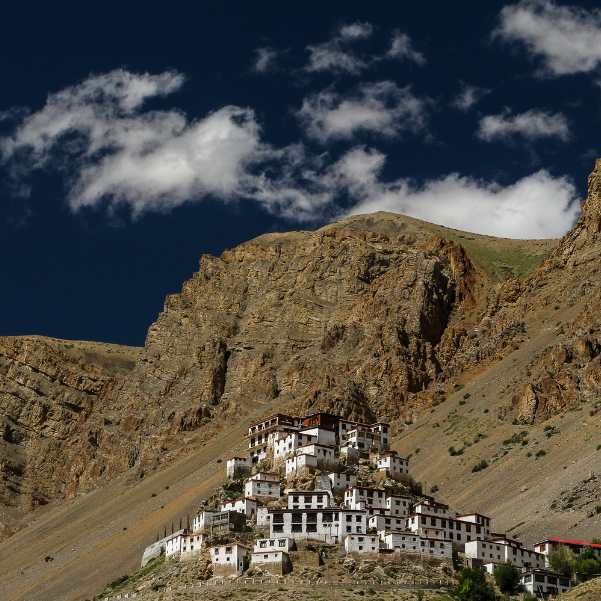
Key Monastery is manageable for most seniors. The drive from Kaza is 20 minutes, and there is a motorable road almost to the top. The last bit involves some steps, but you can take them slowly.
Kibber
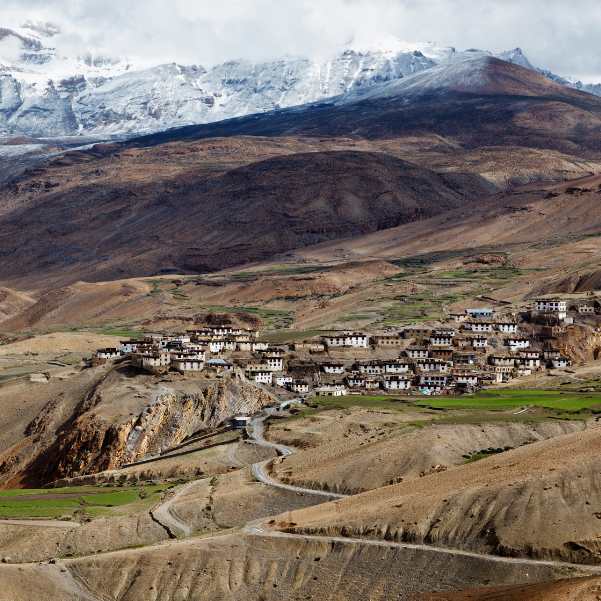
Kibber village is a short drive from Key and mostly flat once you are there. The views of the valley are extraordinary. If your parent can walk on uneven ground for 15 to 20 minutes, Kibber is worth it.
Dhankar Monastery
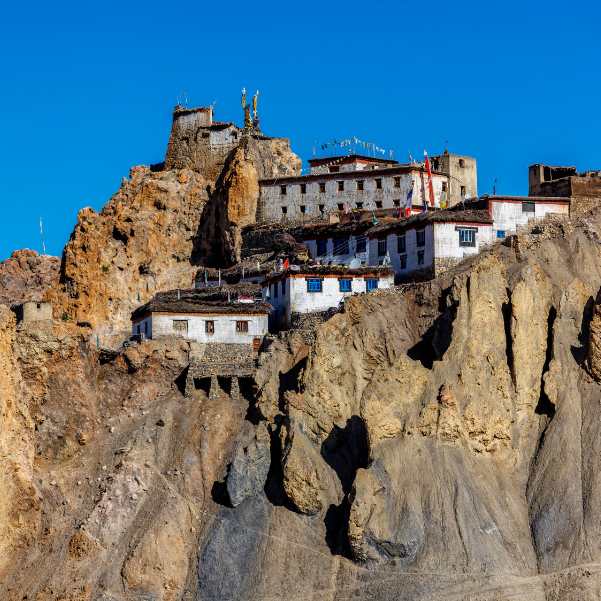
Dhankar Monastery is where you need to be careful. The old monastery sits on a cliff and involves a steep, uneven climb. If your parent has knee problems or balance issues, skip the climb and enjoy the views from the road instead.
Hikkim, Komik, and Langza
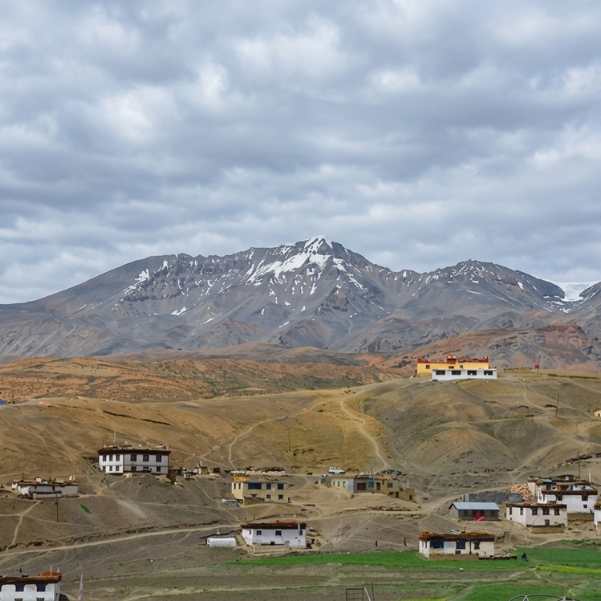
Hikkim, Komik, and Langza are popular villages above Kaza. They involve driving on rough, narrow mountain roads and some walking on uneven ground at 14,000+ feet.
For most senior travellers, these are tiring rather than enjoyable. Skip them unless your parent is genuinely fit and eager.
The real issue at high-altitude villages is not distance. It is the combination of uneven ground, gusty wind, thin air, and no handrails. A 200-metre walk at 14,000 feet feels like a kilometre when you are 65 and the wind is pushing against you.
Should You Include Chandratal with Senior Citizens?
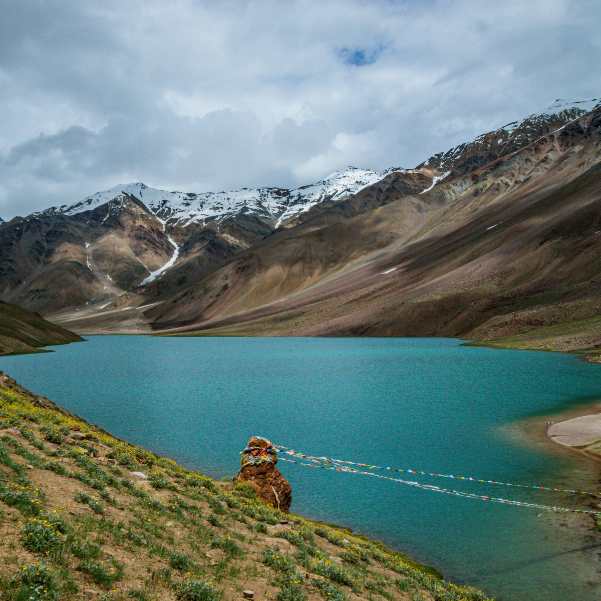
Direct answer: probably not as an overnight, and definitely not as a forced addition.
Chandratal Lake sits at 14,100 feet. The road from Batal to the lake is 14 km of unpaved, broken terrain with water crossings. Once you reach the parking area, it is another 1 to 2 km walk to the lake.
There are no medical facilities, no phone signal, and the camping is basic ; pit toilets, sleeping bags on the ground, temperatures dropping below zero at night.
For most senior citizens, this combination of altitude, cold, rough roads, and zero medical backup makes an overnight stay at Chandratal a poor fit.
We have seen families force the Chandratal overnight because it was "part of the itinerary" and spend the entire night worrying about a parent who could not sleep, had a headache, and was cold despite three blankets.
If your parent is doing well at Kaza altitude and the group wants to see the lake, a day visit from Batal or a nearby camp works.
Drive to the parking area, walk to the lake if the parent feels comfortable, spend an hour, and drive back to a proper stay at a lower altitude.
Skip Chandratal without guilt if comfort and safety are the priority. The rest of Spiti ; Key Monastery, the Kaza villages, the drive through the valley is more than enough for a lifetime trip.
For more on when the lake opens and whether it is worth including, our Chandratal opening dates and planning guide covers the full picture.
And if you are curious about the geography, we have explained whether Chandratal is technically in Lahaul or Spiti and why that matters for route planning.
How to Prepare Medically Before the Trip
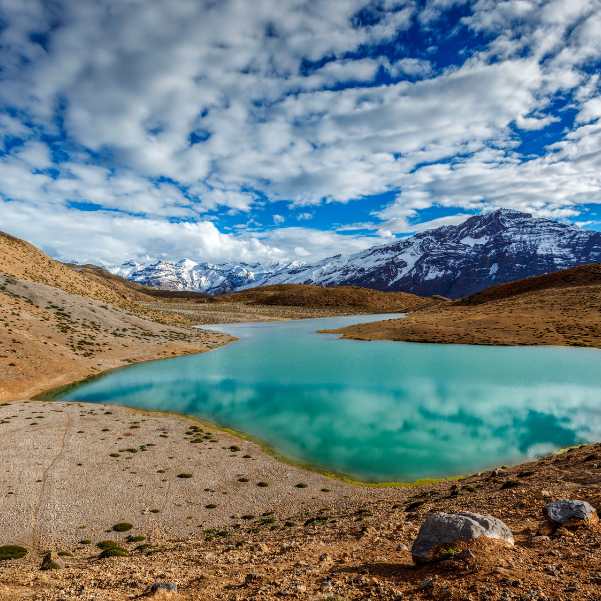
Start the medical conversation at least 4 to 6 weeks before departure. Do not leave it to the last week.
Visit the parent's regular doctor and tell them the trip involves staying at 10,000 to 13,000 feet for 4 to 5 consecutive days, with one possible day at 14,000+ feet. Ask specifically whether the altitude and low oxygen levels pose a risk given their existing conditions.
Get the doctor to review all current medications. Some blood pressure medications, blood thinners, and diabetes drugs may need dosage adjustments at altitude.
The doctor may also prescribe Diamox (Acetazolamide) as a preventive measure. Never start Diamox without medical advice.
Pack extra medication: enough for the full trip plus 3 to 4 extra days in case of delays. Roads in Spiti close unexpectedly, and you do not want to run out of blood pressure pills because a landslide blocked the road for 24 hours.
Carry a written medication list: drug names, dosages, timing, and the doctor's phone number. If something happens and a local health worker needs to help, this list saves critical time.
Bring a basic pulse oximeter. It costs ₹500 to ₹1,000 and tells you blood oxygen levels in seconds. At sea level, a healthy person reads 95 to 100%.
At Kaza altitude, 88 to 92% is normal. Below 85% with symptoms means you need to descend. The oximeter is a support tool, not a substitute for watching how someone actually feels.
How to Avoid Altitude Sickness in Spiti
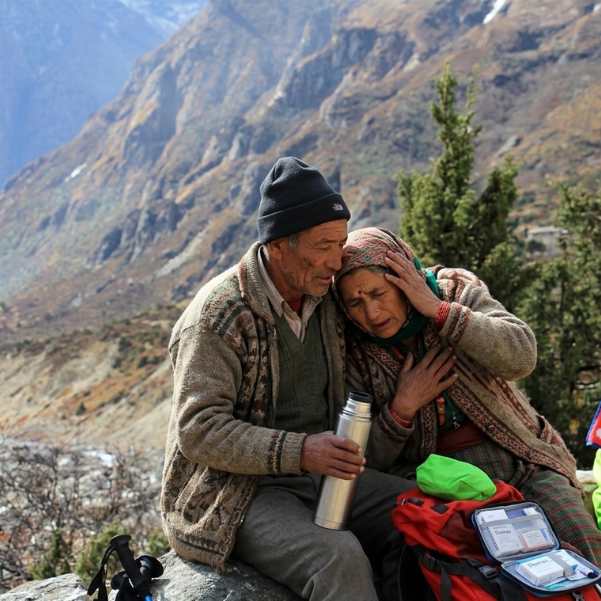
Altitude sickness does not care about age, fitness, or how many mountains you have seen before. It can hit anyone.
But the risk goes up sharply when you gain altitude too fast without giving your body time to adjust.
The Shimla-Kinnaur route handles most of the heavy lifting on this front. You gain altitude slowly over 3 to 4 days, sleeping at progressively higher points. By the time you reach Kaza, your body has had real time to adapt.
Beyond route choice, the rules are simple. Drink more water than you normally would. The dry mountain air dehydrates you faster than you realise. Aim for 3 to 4 litres a day.
No alcohol for the first 48 hours above 10,000 feet. Not even one drink. Alcohol makes altitude sickness worse.
Walk slowly. This is the advice every senior ignores because they feel fine in the morning. The thin air catches up with you mid-walk. If you are breathing harder than normal while walking at a normal pace, slow down.
Sleep is when altitude sickness often hits. If your parents wake up with a headache and nausea, that is a warning sign.
Mild symptoms usually ease with rest, fluids, and paracetamol. But if symptoms get worse instead of better, do not go higher.
The emergency rule is simple: if symptoms are not improving after 12 to 24 hours of rest, descend. Drop down to the last altitude where the person felt normal. Do not wait it out hoping it will pass.
What Should You Do If a Senior Feels Unwell at Altitude?
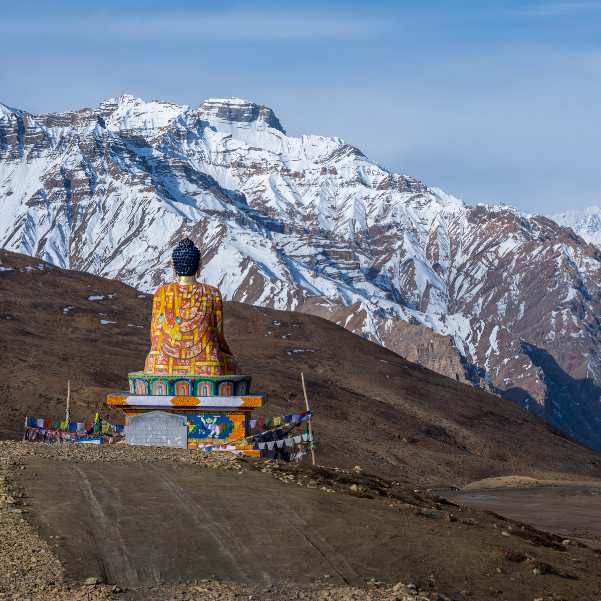
Know the red flags before you need them.
Mild symptoms
Mild symptoms include headache, mild nausea, loss of appetite, and trouble sleeping. These are common above 10,000 feet and usually pass within a day with rest and hydration. Give paracetamol for headaches. Keep the person warm and hydrated.
Serious symptoms
Serious symptoms that need immediate action include confusion or disorientation, loss of balance or coordination, breathlessness even at rest (not just during walking), persistent vomiting, and symptoms that keep getting worse despite rest.
If any serious symptom appears, stop all upward travel immediately. Rest at current altitude. If there is no improvement within a few hours, start descending. Even a drop of 500 to 1,000 metres can make a dramatic difference.
Do not wait until morning if symptoms are severe at night. Wake the driver, get in the vehicle, and drive to a lower point.
Kaza has a district-level Community Health Centre that can handle basic emergencies. For anything serious, you are looking at evacuation towards Reckong Peo or Shimla, which are a full day's drive away.
This is exactly why prevention through slow acclimatisation matters more than treatment.
Keep the local emergency helpline number (112) and the Lahaul-Spiti district police number saved in your phone. Our drivers carry these numbers and know the fastest routes to medical help, but every family member should have them too.
What Kind of Hotel and Vehicle Should You Choose for Senior Citizens?
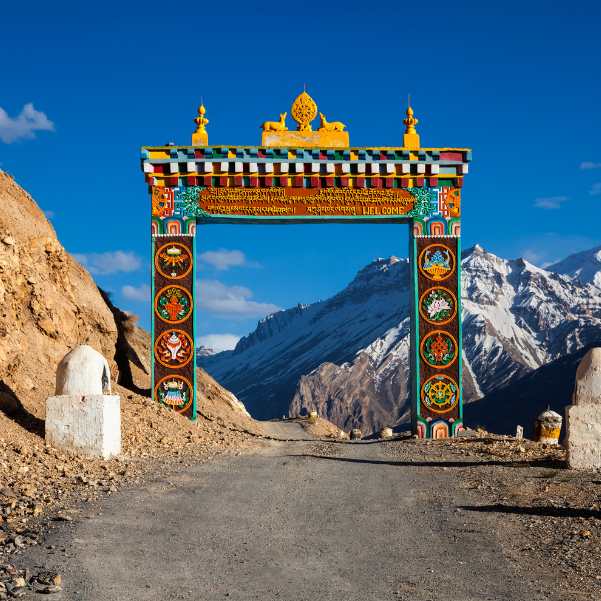
The difference between a comfortable Spiti trip and a miserable one often comes down to the stay and the vehicle.
For hotels and guesthouses, ask for attached washrooms (this is not guaranteed in Spiti, so confirm before booking), room heating or a reliable bukhari, ground floor or minimal stairs, extra blankets, and flexible meal timing.
Many guesthouses in Kaza and Tabo now offer rooms with these basics, but you need to ask specifically. The small dhaba in Tabo just past the monastery turn serves the best rajma chawal we have had in Spiti: warm, simple, and exactly what you want after a cold drive.
For the vehicle, a spacious SUV like a Toyota Innova Crysta, Mahindra Scorpio-N, or similar with comfortable rear seats is the minimum. Do not attempt this trip in a hatchback or a sedan. The roads will break the car and the passenger's back.
Hire a driver who knows the Spiti route. This is not a trip where you want someone navigating mountain roads for the first time.
An experienced mountain driver knows which stretches are rough, where the best washroom stops are, and when to slow down without being asked.
What we tell every family: travel only during daylight hours and take a break every 1.5 to 2 hours. Get out of the car, stretch, use the washroom, drink water.
Sitting in a bouncing SUV for 6 straight hours is hard on anyone. For a senior, it can cause serious back pain and fatigue that ruins the next two days.
Connectivity, Emergency Support, and Ground Realities in 2026
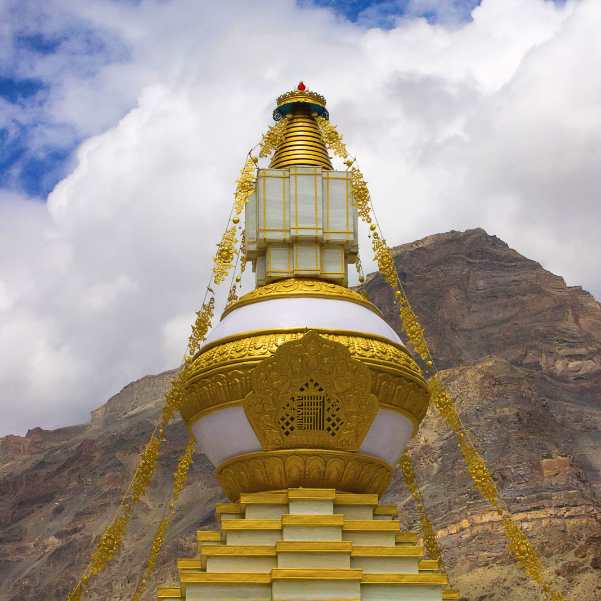
Mobile networks in Spiti are unreliable. BSNL and Jio have patchy coverage in parts of the valley.
You may get signal in Kaza town, lose it completely in Kibber, get it back briefly in Tabo, and have nothing at Nako. Do not depend on phone calls or WhatsApp for real-time coordination.
Download offline maps (Google Maps or Maps.me) before leaving Shimla. Save important phone numbers as screen shots, not just in your contact list.
Tell at least one person back home your full itinerary with dates and expected locations. If you are unreachable for more than 24 hours beyond plan, they should know whom to contact.
Satellite connectivity is not common among regular travellers, but if your parent has a serious medical condition, investing in a satellite communicator (like a Garmin inReach) is not a bad idea for a Spiti trip. It works where phones do not.
There is a Community Health Centre in Kaza, small government dispensaries in a few villages, and police posts at intervals along the route.
These handle basic situations. For serious emergencies, evacuation is the only option. This is the ground reality and every family should understand it before booking.
Permits, Road Status, and Travel Timing for 2026
Indian citizens do not need a special permit to visit most of Spiti Valley, including Kaza, Key, Kibber, Tabo, and Nako.
Foreign nationals need a Protected Area Permit (PAP) for parts of Spiti and Kinnaur. This can be arranged through a registered travel agent or obtained at certain district offices. Check the latest rules before departure, as the process changes periodically.
The Shimla-Kinnaur-Kaza route is usually open by late May to early June and stays open until November.
The Manali-Kaza route via Kunzum Pass typically opens between late May and mid-June, depending on snow clearance by BRO. Kunzum's opening date changes every year and cannot be predicted months in advance.
Recheck the official road status 2 to 3 days before departure. The Lahaul-Spiti District Administration posts updates. A road that was open on Monday can close by Wednesday after a landslide. Build your plan with this uncertainty in mind.
What Is the Best Time to Visit Spiti Valley with Senior Citizens?
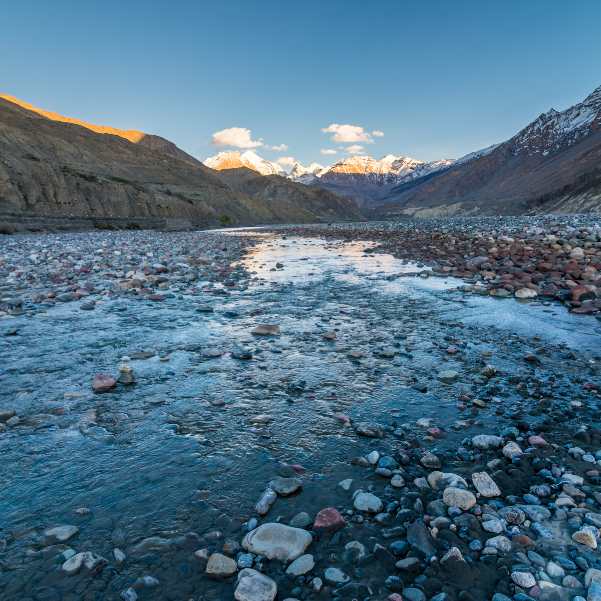
The safest window for senior travellers is July to mid-September. During this period, roads on the Shimla side are at their most stable, guesthouses are fully operational, daytime temperatures are comfortable, and the landscape is at its best.
Late June
Late June can work via the Shimla route if roads are confirmed open and stable. But early June is still unpredictable, especially for higher stretches.
October
October is possible but risky. Nights get bitterly cold, some stays start shutting down, and road conditions deteriorate. For a trip with senior citizens, the margin for error in October is too thin.
Winter travel
Winter travel (November to April) in Spiti is only possible via the Shimla route, and it involves snow, ice, sub-zero temperatures, and extremely limited infrastructure. It is a poor fit for most elderly travellers and we do not recommend it for families with seniors.
If you are flexible, mid-July to August gives you the warmest days, the most reliable roads, and the most options for comfortable stays.
How Much Does a Comfortable Spiti Trip with Senior Citizens Cost?
The cost of a senior-friendly Spiti trip depends on several factors, and giving a flat number without knowing your specifics would be dishonest.
Here is what changes the price.
Vehicle type and size: a larger, more comfortable SUV with a seasoned driver costs more than a basic Bolero.
Room quality: stays with attached washrooms, heating, and ground-floor access cost more than basic guesthouses.
Trip length: 9 days costs more than 7 days, but rushing a senior trip to save money defeats the purpose.
Buffer nights: adding one extra night in Kaza or Kalpa for rest increases the cost but dramatically improves the experience.
Chandratal or Manali exit: adding the circuit instead of returning via Shimla adds 2 days and associated costs.
A money-saving tip most agents will not share: the guesthouses in Nako and Tabo offer some of the best value in all of Spiti.
You get clean rooms, home-cooked meals, and genuine warmth from the hosts, often at half the price of Kaza stays. If your budget is tight, spend more nights at these stops instead of rushing to Kaza.
👉 WhatsApp us for a clear, customised Spiti price based on your dates, group size, and comfort level
Why a Customised Package Makes More Sense for Senior Citizens
A group tour follows a fixed schedule. It leaves at 6 AM whether your parent slept well or not. It drives for 8 hours because the itinerary says so.
It stops for lunch at places that suit the majority, not the person who needs a quieter, warmer meal.
For senior travellers, private pacing changes everything. If your parent had a rough night, you start late.
If someone needs an extra rest day in Kaza, you take it. If the doctor says skip Chandratal, you skip it without arguing with a group leader.
A customised private trip gives you route flexibility, buffer days, senior-ready stays (confirmed in advance, not assigned on arrival), and a driver who understands that an older passenger needs slower driving, more stops, and no shortcuts on bad roads.
We have designed Spiti trips for families with 60+ to 75+ year old parents. The itinerary looks different every time because every family is different. That is the point.
If you want a trip built around your parent's comfort, our Spiti Valley packages are a good place to start, or just reach out and we will build something from scratch.
Final Takeaway
Spiti Valley with senior citizens is one of the most beautiful family trips you can take. Key Monastery at sunrise, the desert-like silence of Tabo, the Kinner Kailash views from Kalpa; these are not experiences reserved for 25-year-olds with backpacks.
But the trip has to respect the body. Enter from Shimla. Gain altitude slowly. Rest when needed. Skip Chandratal if the risk is not worth the reward. Listen to the body, not the itinerary.
The families who come back happiest are the ones who went slow, packed warm, and gave their parents the time to actually enjoy where they were instead of rushing to the next stop.
👉 WhatsApp us for a customised Spiti itinerary based on your dates and route
Explore Our Curated Spiti Valley Tour Packages
 Group Tour10D/9N
Full Spiti Valley Circuit With Chandratal
1D Narkanda•1D Sangla+5
₹29,999₹32,999SAVE INR 3,000/ person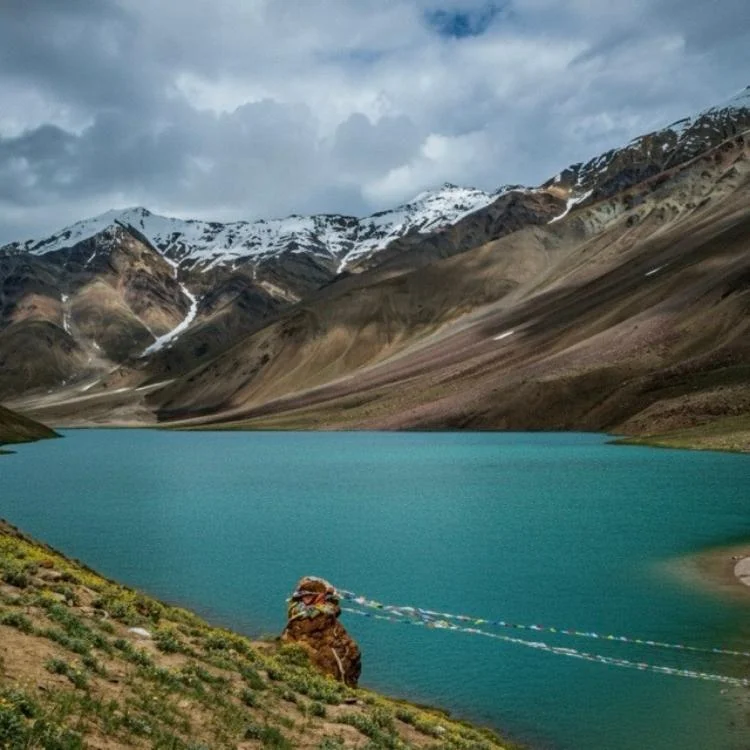 10D/9N
Shimla Spiti Manali Circuit With Chandratal
1D Narkanda•1D Sangla+5
₹45,999₹52,499SAVE INR 6,500/ person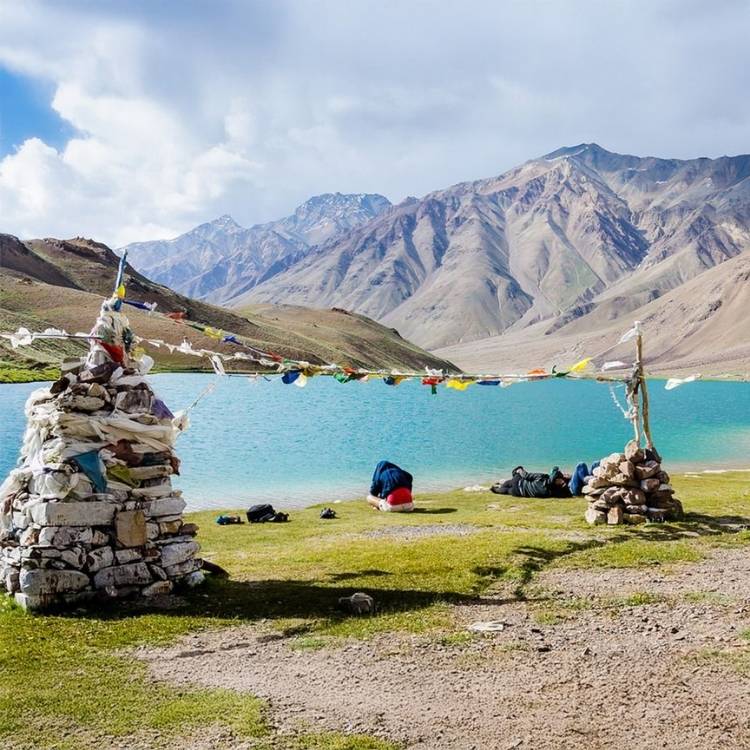 10D/9N
Summer Spiti Circuit With Chandratal
1D Narkanda•1D Sangla+5
₹29,999₹38,999SAVE INR 9,000/ person
Related topics
Frequently Asked Questions
Can a 60+, 65+, or 70+ year old person go to Spiti Valley?
Yes, if they are in reasonable health, get medical clearance, and follow a slow itinerary via Shimla-Kinnaur. We have helped families with 70+ year old parents complete comfortable Spiti trips. The key is pace, not age.
Is Spiti better than Ladakh for senior citizens?
For most seniors, Spiti via Shimla is easier than Ladakh. The altitude gain is more gradual, the distances are shorter, and you do not need to fly into 11,500 feet on Day 1 the way Leh flights do. Ladakh's passes are also higher and harsher.
Which route is better for elderly parents: Shimla or Manali?
Shimla. The Shimla-Kinnaur route gains altitude gradually over 3 to 4 days. The Manali route pushes you to high altitude within hours and involves Kunzum Pass at 15,060 feet. For seniors, the Shimla entry is significantly safer.
Can blood pressure patients visit Spiti Valley?
Yes, if the condition is well-managed and stable on current medication. Consult the doctor before the trip. Carry extra medication, a BP monitor, and avoid sudden exertion at altitude. The Shimla route's gradual ascent helps.
Can asthma patients visit Spiti Valley?
Mild, well-controlled asthma is usually manageable in Spiti. Severe or unstable asthma is a serious risk at 12,000+ feet where oxygen is low. Doctor clearance is mandatory. Carry inhalers with spare refills.
Is oxygen available in Kaza?
The Community Health Centre in Kaza has basic oxygen support. Some hotels and tour operators carry portable oxygen cylinders. Do not rely on finding oxygen in an emergency, prevention through proper acclimatisation is far more effective.
Is Chandratal safe for elderly travellers?
A day visit is manageable for fit seniors. An overnight camp stay is not recommended for most elderly travellers because of the extreme cold, 14,100-foot altitude, basic facilities, and lack of medical backup. Skip it if there is any doubt.
How many days are enough for a senior-friendly Spiti trip?
9 to 10 days minimum for a comfortable in-and-out trip via Shimla. Shorter trips mean longer daily drives and less rest time, both of which are hard on older travellers.
Do we need a permit for Spiti Valley in 2026?
Indian citizens do not need a permit for most of Spiti. Foreign nationals need a Protected Area Permit (PAP) for certain areas in Spiti and Kinnaur. Check the latest rules before your trip.
What if Kunzum Pass is closed?
If you entered via Shimla, return via the same route. Your trip is not affected. This is one of the biggest advantages of the Shimla entry, you do not depend on Kunzum opening to complete your trip.
Which are the best overnight stops for older travellers?
Kalpa, Nako, Tabo, and Kaza offer the best combination of comfortable stays, manageable altitude, and interesting things to see. Kalpa and Tabo are particularly pleasant for seniors who want a slower pace.
Is travel insurance worth it for a Spiti trip with parents?
Yes. Choose a policy that covers high-altitude travel and emergency evacuation. Medical evacuation from Spiti can be expensive and complicated. A good travel insurance policy gives you a safety net that costs very little compared to the potential expense of an uninsured emergency.
More about Lahaul and Spiti
 Lahaul and Spiti
Winter Spiti from Bangalore in 2026-27: Flights, Leave Days & Delhi 4x4 Departures
Planning a Winter Spiti trip from Bangalore in 2026-27? Explore flight options, Delhi pickup points, leave requirements, 4x4 group expeditions, travel costs and a practical itinerary to help you plan your Himalayan winter adventure.
- How to Reach
- Snow Travel
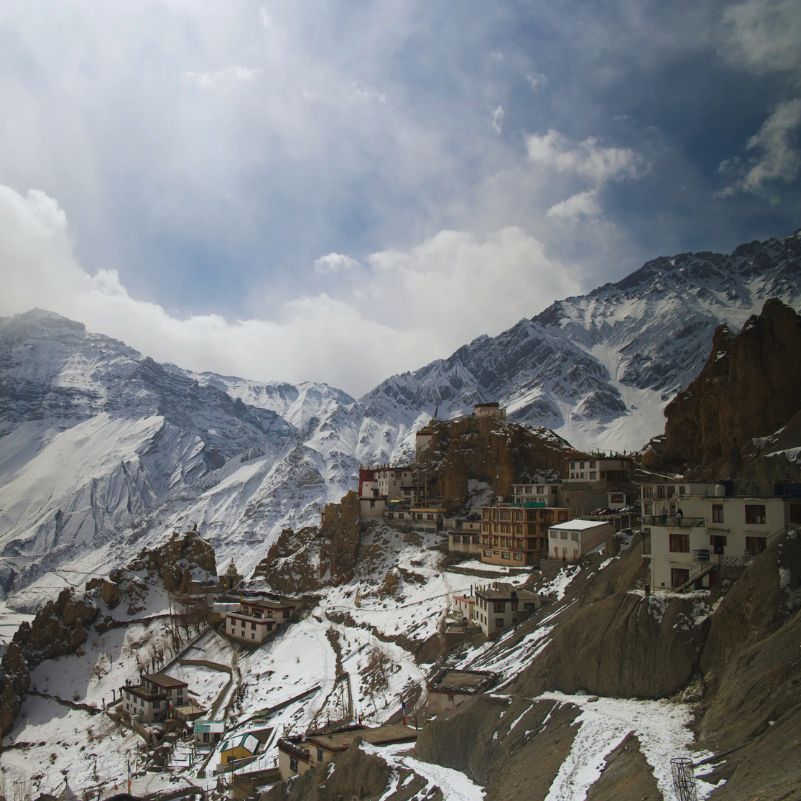 Lahaul and Spiti
What Does a Winter Spiti 4x4 Trip Really Cost in 2026-27? Package Price vs Total Holiday Budget
Planning a Winter Spiti 4x4 trip in 2026-27? Discover the real travel budget, including package prices, transport, meals, winter essentials and hidden expenses. Learn what your package covers, what costs extra and how to plan your Spiti Valley adventure without unexpected spending.
- First-Time Travellers
- Snow Travel
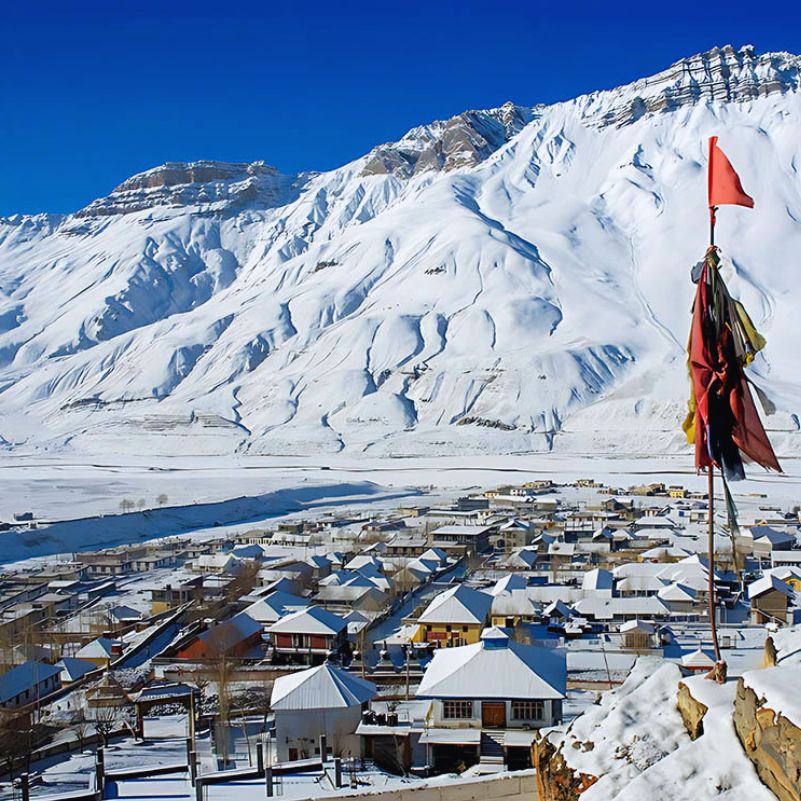 Lahaul and Spiti
How Many Leave Days Do You Need for a 9-Day Winter Spiti Trip in 2026-27?
Planning a 9 day Winter Spiti trip in 2026 to 2027 requires careful leave planning, especially for working professionals travelling from cities like Bangalore, Mumbai, Hyderabad and Delhi.
- Itinerary
- Snow Travel