
10 Romantic Things to Do in Spiti Valley for Couples in 2026
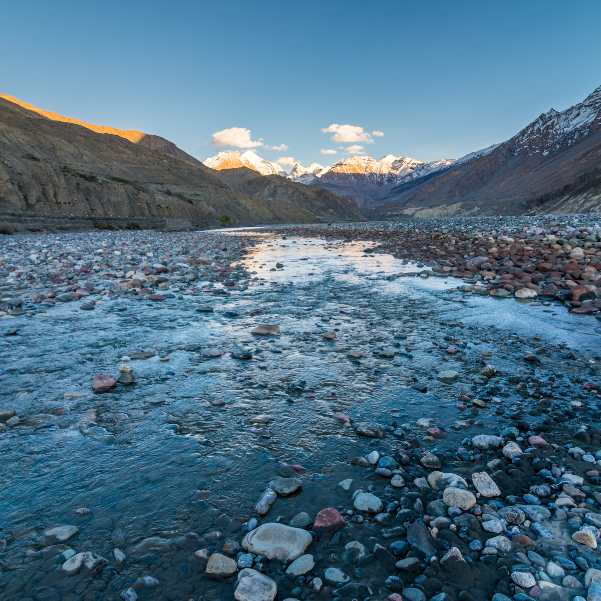
Spiti is not a honeymoon destination in the usual sense. No candlelit dinners by the pool, no infinity views from a luxury spa, no room service with rose petals.
What Spiti gives you instead is silence. Long drives where neither of you speaks for twenty minutes and it feels completely fine.
Stars so thick you forget what city skies look like. Monasteries older than almost any building you have ever stood inside.
This guide by Travel Coffee is for couples who want that kind of trip. We run Spiti circuits every summer, and the feedback from couples is almost always the same. They came for the landscape and left with something quieter.
Quick Answer
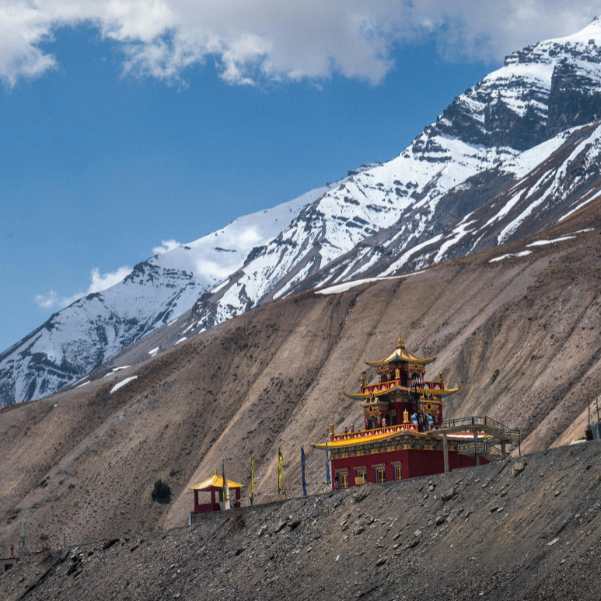
Spiti works for couples who want raw scenery, silence, starry nights, and slow days over luxury. The strongest picks are a sunrise visit to Key Monastery, a slow Langza-Hikkim-Komic morning, a late-afternoon stop at Dhankar, a quiet morning at Tabo, and one night at Chandratal for stargazing if the route is open.
The safest window for couples is mid-June to September 2026. Base yourself in Kaza for comfort, keep at least one buffer day, and do not try to see everything.
Is Spiti actually a good destination for couples?
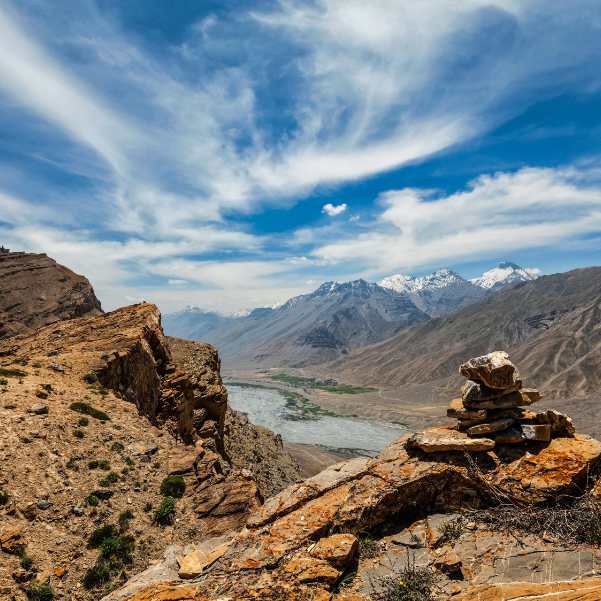
Here is the honest answer. Spiti suits couples who like the outdoors, do not need room service, and understand that the drive is half the experience.
If you want hot showers every night, a menu with twelve choices at dinner, and a spa treatment after a long day, Spiti will disappoint you.
The rooms are simple, the food is local, and "luxury" here means extra blankets and a private bathroom. Set expectations right and the trip becomes magical.
But if you and your partner enjoy long silences, bad roads that lead to good views, and sleeping in villages where the only sound is wind, this is one of the best trips you can do in India.
In our experience running couple trips here for years, the partners who enjoy Spiti the most are the ones who stopped trying to control the itinerary halfway through. Something about the landscape makes you let go.
One thing most couples get wrong on their first Spiti trip is trying to cover every famous village in six days. They end up tired, headachy, and barely remember the places they rushed through.
Slow wins here. Always.
What are the most romantic things to do in Spiti for couples?
Stay in a quiet homestay around Kaza or Rangrik and keep one slow evening free
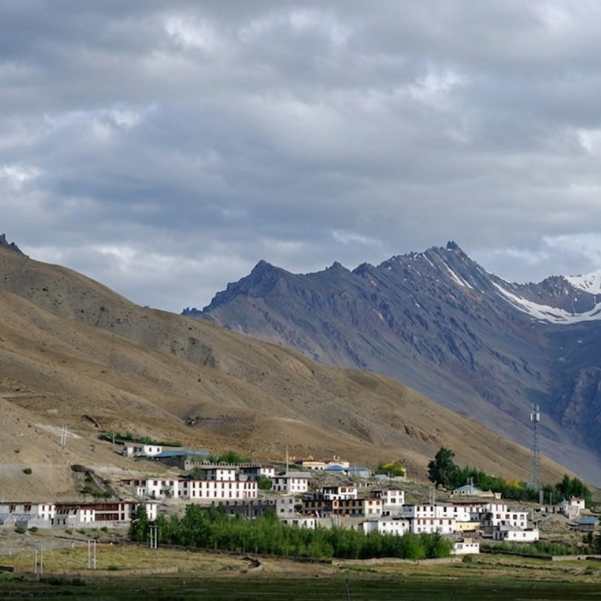
Kaza is the practical base for most Spiti couple trips. It has cafes, a market, petrol, network, and proper rooms.
You will come back here between drives, and you will want to. But the nicer move is to stay in Rangrik, just across the river from Kaza.
Quieter, fewer tourists, and the view of the Spiti River from a homestay balcony at sunset is one of those things you will remember years later.
Keep one evening completely free. No drive, no monastery, nothing planned.
Walk to a cafe, order butter tea (it is an acquired taste, be warned), and just sit. Our team always suggests this to couples and the response is always the same.
The unplanned evening ends up being the one they talk about most.
Start one morning with Key Monastery and the Key-Kibber-Chicham loop
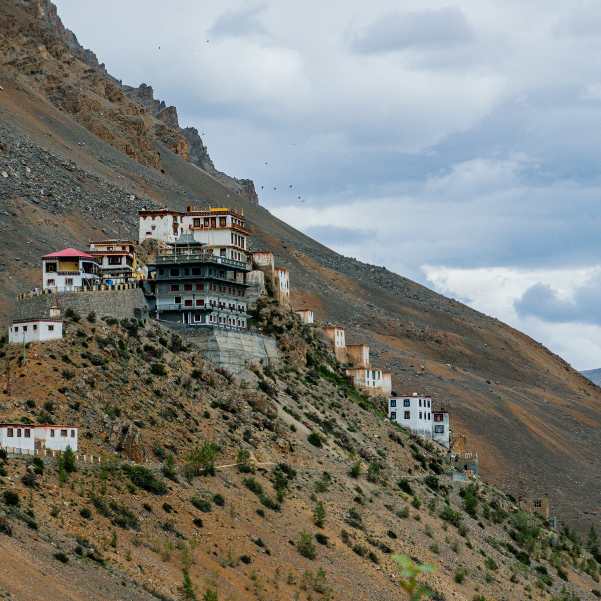
Key Monastery is about 12 km from Kaza and takes around 30 to 40 minutes by road. It is the largest monastery in the valley and sits at about 13,500 feet, perched on a hill like something out of a painting.
Leave by 6 AM. The light hits the monastery first, the valley is silent, and you will likely have the place almost to yourselves.
From Key, continue to Kibber. The district officially describes Kibber as the highest permanently inhabited village in the region connected by a motorable road, about 16 km from Kaza.
It feels exactly that remote. From Kibber, you cross the Chicham Bridge, often described as one of Asia's highest suspension bridges at around 4,037 metres.
Stop in the middle. Look down. Then look at each other. That is the moment.
Do the Langza-Hikkim-Komic circuit slowly instead of rushing it
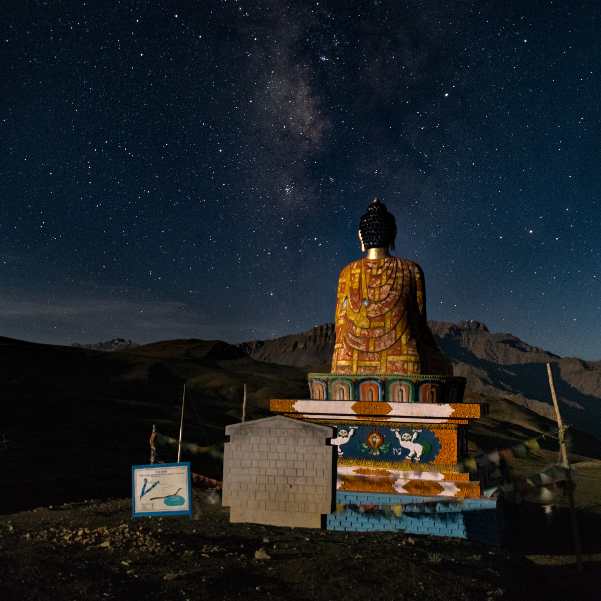
Most travellers do this entire loop in half a day and tick three villages off a list. Do not do that.
Langza has the Buddha statue that stares out at the Spiti Valley, a view you have probably seen on a thousand Instagram posts. In person it is better than the photos.
Spend an hour just sitting on the grass near it. Do not rush to the next village.
Hikkim comes next, where the very high-altitude post office sits at around 4,400 metres. It is often called the world’s highest post office, though the exact phrasing varies by source, so treating it as a widely claimed distinction is safer..
Superlative aside, the place has a small, quiet charm that photos never capture.
Komic is often described as the highest motorable village at around 4,587 metres. There is a small monastery, a tiny cafe, and enough altitude to remind you to drink water.
Spread this loop across four to five hours. Have chai in each village. Talk.
This is the kind of slow morning that couples actually remember.
Send each other a postcard from Hikkim
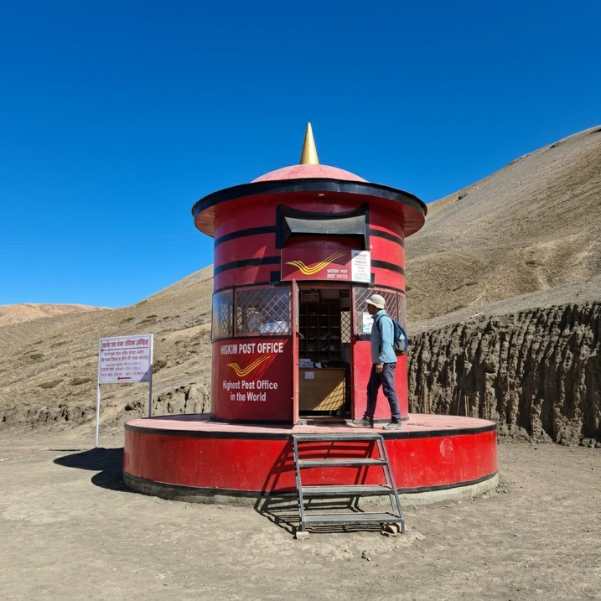
This is the single most couple-specific thing you can do in Spiti. Write each other a postcard at the Hikkim post office. Address it to your home.
Write something you would not say out loud. Something for your future selves to read on an anniversary three years from now.
The postcard takes weeks to arrive, sometimes months, and that slow delivery is part of the magic. In our experience, this is the one Spiti activity that couples mention in their trip feedback more than anything else.
A five-rupee card becomes a keepsake you will still have when the phone photos are long forgotten.
Plan a late-afternoon stop at Dhankar for cliffside views and a quieter mood
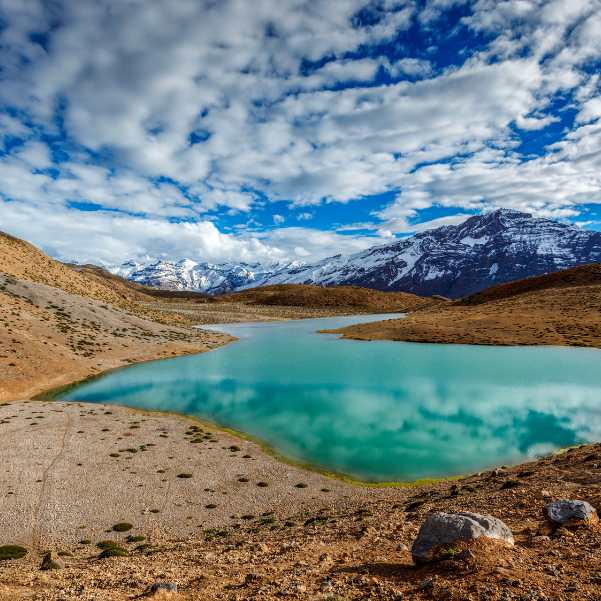
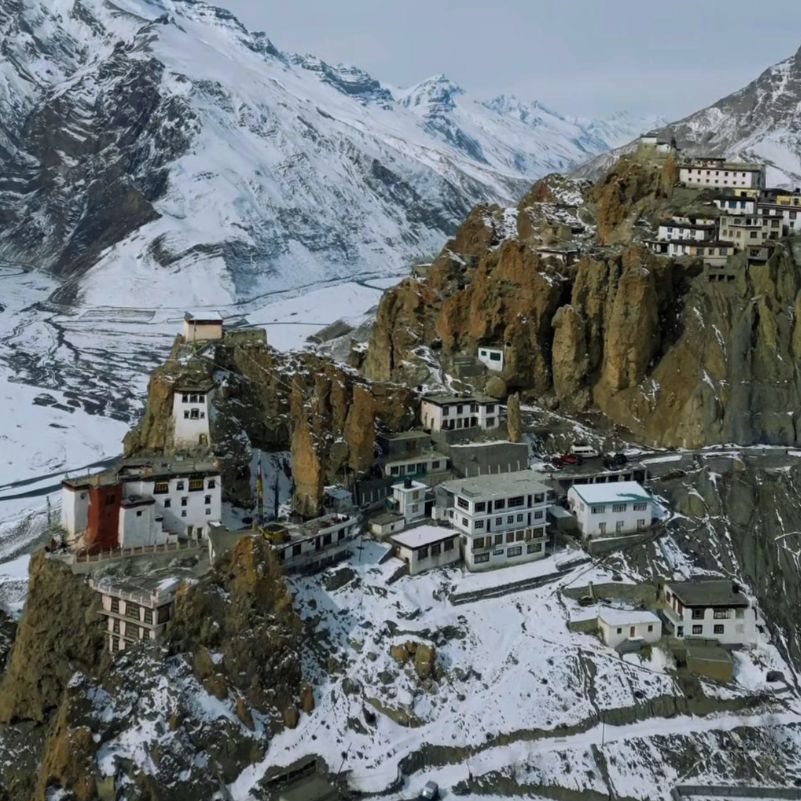
Dhankar sits at around 3,870 metres and is about 32 km from Tabo. The monastery hangs off a cliff, and from its edge you look down at the confluence where the Spiti and Pin rivers meet.
Arrive around 4:30 PM. The light is softer, most of the tour groups have moved on, and the wind drops.
You will have the viewpoint mostly to yourselves. This is a quieter, more intimate feeling than the busier stops at Key or Kaza.
Dhankar Lake is about a two-hour trek up from the village and only makes sense if both of you are properly acclimatised. For most couples on a first trip, the monastery view is enough.
Do not push the lake trek if anyone has even a mild headache. Altitude does not care how fit you are.
Spend a quiet morning at Tabo Monastery and the caves above it
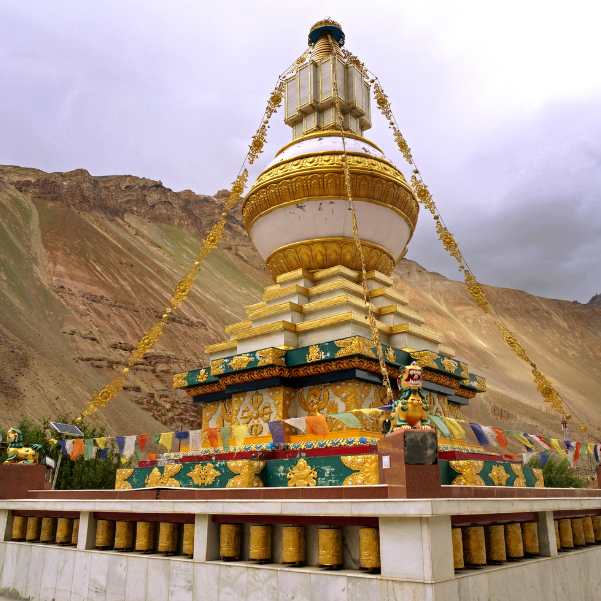
Tabo Monastery was founded in 996 AD and the complex includes 9 temples and 23 chortens. It is about 46 km from Kaza at around 10,004 feet.
The mood here is different from Key. Tabo feels older, quieter, and more devotional.
The murals inside the temples are over a thousand years old, and you are asked not to photograph them. Respect this. Phones stay in pockets.
Above the monastery, on the hillside, are old meditation caves. Walk up.
The climb takes about twenty minutes, and the view of the Tabo valley from up there is one of those moments that you will not need to say anything to each other.
For a place to eat after, try the small dhaba near the monastery gate that serves fresh thukpa and momos. The chhurpi (hard yak cheese) they sell is a local insider snack most tourists walk past without noticing.
Keep one Chandratal night for stargazing if the route is open
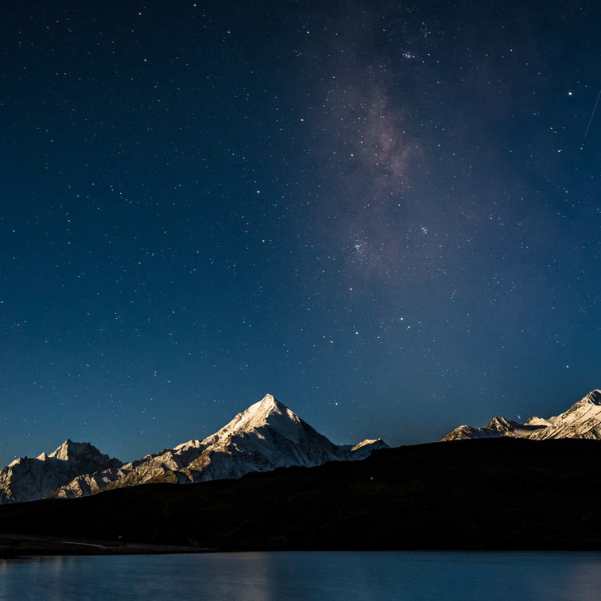
This one comes with real caveats. Chandratal is expected to open between late May and mid-June 2026, depending on snow clearance and road conditions.
It is not guaranteed. If conditions allow, a night at Chandratal is one of the most cinematic couple experiences in the Indian Himalayas.
The stars at this altitude with no light pollution are something most city couples have never seen. A stargazing facility has also been launched in Kaza to promote astro-tourism, which adds to the appeal.
Camping is generally done about 2 to 3 km before the lake, not on the lakeshore itself. The lake is protected, so camps are set up at a designated distance and you walk to the water.
We cover the full month-by-month picture in our guide on when Chandratal will open in 2026 if you want the detailed breakdown.
And if you are curious about whether Chandratal technically sits in Lahaul or Spiti, we answered that one separately too.
Do not build your entire trip around Chandratal. Treat it as the bonus that might happen.
If the route opens, you win. If it does not, your trip is still full.
Add Pin Valley if you want a quieter, less touristy day together
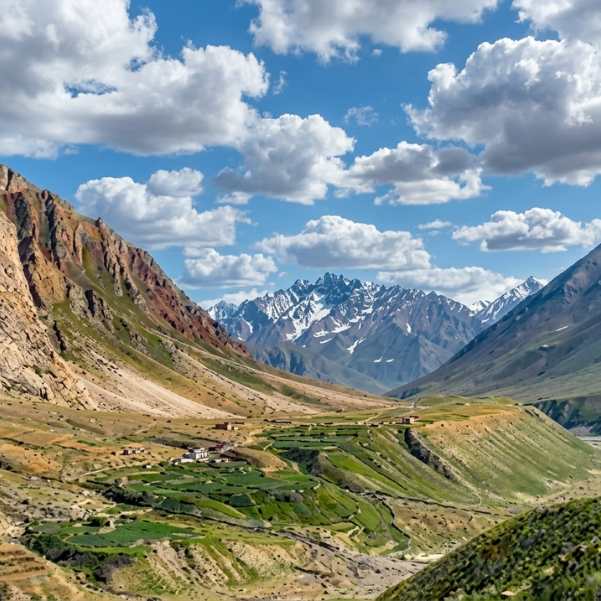
Pin Valley National Park is the only national park in Himachal situated in a cold desert area. It sits across the river from the main Kaza loop and feels like a completely different landscape.
Fewer jeeps, wider open spaces, and villages where nobody is trying to sell you anything. A day trip from Kaza to Mud village in Pin Valley is an easy, peaceful detour.
The UNESCO Cold Desert biosphere material lists the reserve with a 2025 nomination year and an altitude span of 3,300 to 6,600 metres. You will not cover that range in a day, but the sense of scale is part of what you come here for.
Keep one buffer day with no fixed plan
This sounds boring but it is one of the smartest things you can do as a couple in Spiti. Weather shifts. Altitude catches up. A landslide blocks a road for six hours.
A buffer day is your insurance. If nothing goes wrong, you use it for an unplanned afternoon in Kaza, a slow drive, or just reading in the sun.
Couples who keep a buffer day finish their Spiti trip relaxed. Couples who pack every day tightly finish it exhausted and slightly resentful of each other.
We see this every season. The buffer day is not a wasted day. It is the one that saves the trip.
>> WhatsApp our team and keep your Spiti trip relaxed, not packed.
Which places in Spiti feel best for couples?
Kaza or Rangrik
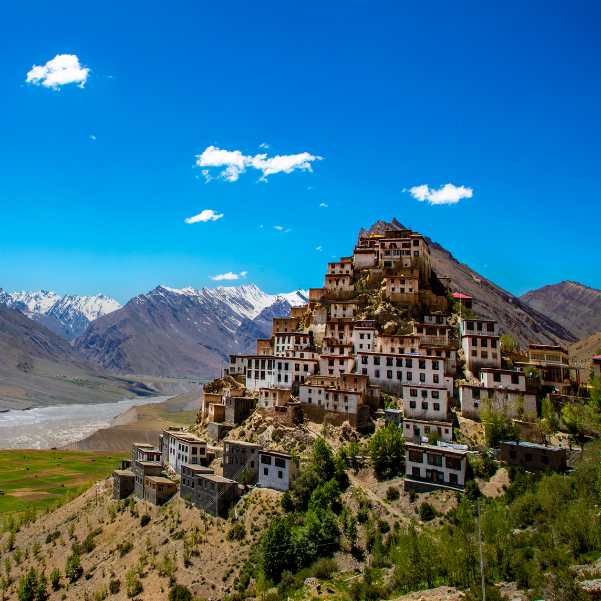
Kaza or Rangrik are the comfort picks. Rooms are decent, cafes are good, and you have the village lanes to wander in the evening.
Rangrik is the quieter of the two if you prefer peace over hustle.
Langza or Komic
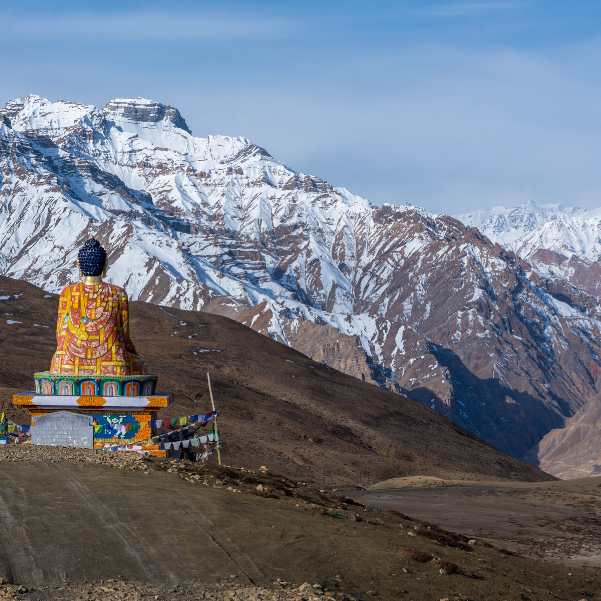
For silence, the Langza or Komic side wins. These villages sit above 4,000 metres, have almost no nightlife, and the quiet at sunset feels otherworldly.
Do not stay here if you are not acclimatised.
Tabo
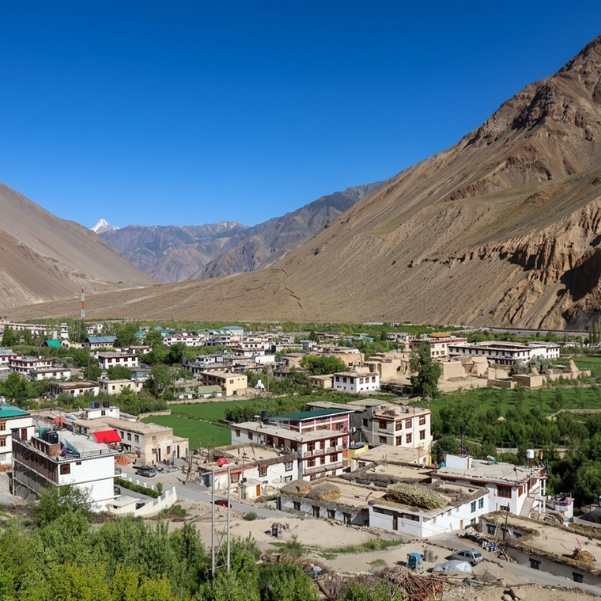
Tabo is the heritage pick. The monastery, the old murals, and the slow village rhythm make it feel like a retreat. Many couples spend two nights here and do not regret it.
Dhankar
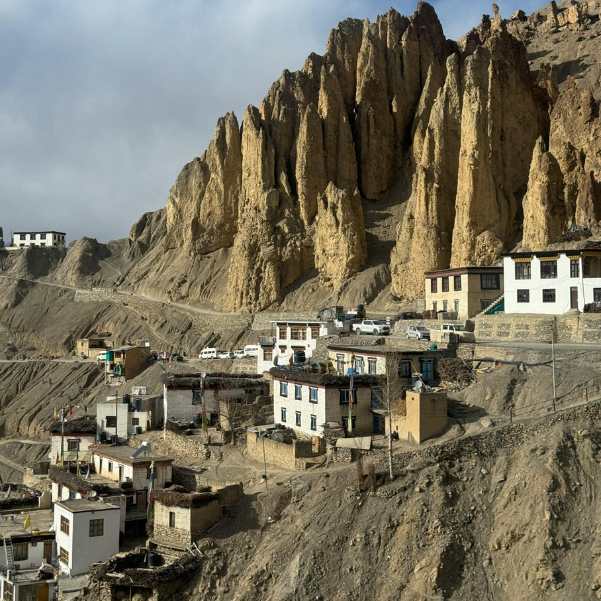
Dhankar is for dramatic views. The cliffside monastery and the river confluence below make it one of the most photogenic spots in the valley.
Most couples stop here for a few hours rather than stay overnight.
Chandratal
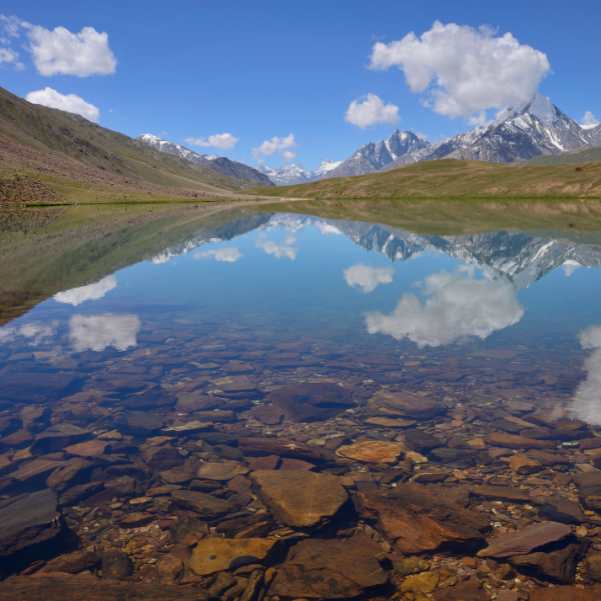
Chandratal is the seasonal wow factor. Only do this if the route is confirmed open and you are prepared for basic camping conditions.
Which route is better for couples in 2026: Shimla or Manali?
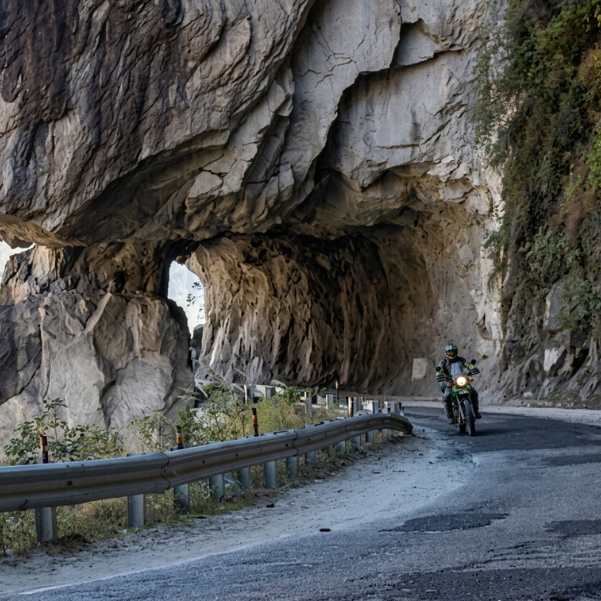
For first-time couples, the Shimla-Kinnaur-Spiti route is the better choice. You gain altitude gradually over four to five days, stopping at Narkanda, Kalpa, and Nako before reaching Kaza.
That slow rise is what prevents altitude sickness. Couples who enter from Manali often spend their first two days in Kaza with headaches because they jumped from 2,000 metres to over 4,000 metres in one day.
The Manali route is shorter and more dramatic, but it depends heavily on current road status. As of 20 March 2026, the district's official road status showed Delhi to Manali open, Manali to Keylong open, and Keylong to Kaza closed.
These conditions shift week to week. The smartest Spiti couple trips enter via Shimla and exit via Manali once the Kunzum side opens fully.
You acclimatise properly on the way in and get the dramatic Atal Tunnel drive on the way out. If you want Manali-only ideas, we have a separate page on Manali travel ideas that covers the region beyond just the Spiti crossover.
When is the best time to visit Spiti for couples in 2026?
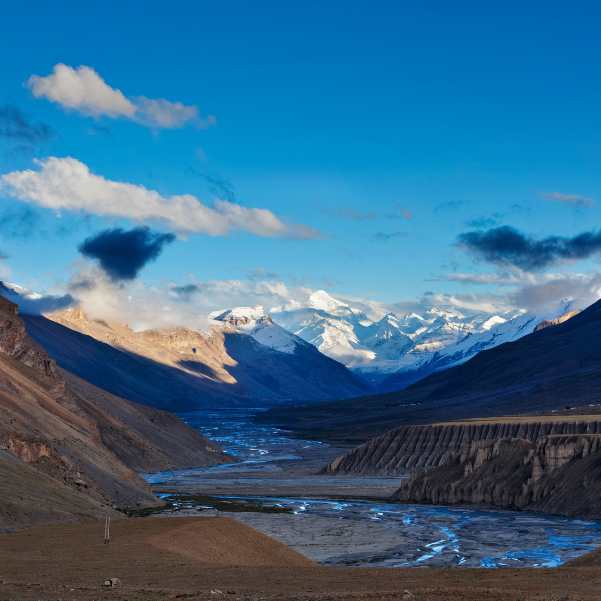
The official travel window for Spiti is April to October. For most mainstream couple trips, June to September is the safer planning answer, especially if Chandratal is part of the plan.
Early season
Early season (late May to mid-June) has dramatic snow-lined landscapes but real uncertainty. Roads may close for hours, camps at Chandratal may not be operational, and accommodation options are thinner.
Only suitable for flexible couples who can adjust plans on the road.
Peak summer
Peak summer (late June to August) is the most reliable window. Roads are stable, all villages and camps are open, and the valley is at its greenest.
August can bring landslide disruptions on the Manali approach, so keep buffer days.
September
September is our favourite month for couples. The monsoon pulls back, the sky becomes impossibly clear, and the landscape turns gold and brown.
The crowds thin out significantly. Nights get very cold but the days are crisp and beautiful.
October
October gets risky. Camps at Chandratal start shutting down around the first week. Early snowfall can close Kunzum Pass without warning.
Not ideal for a couple trip unless you are comfortable with uncertainty.
How many days do couples need in Spiti?
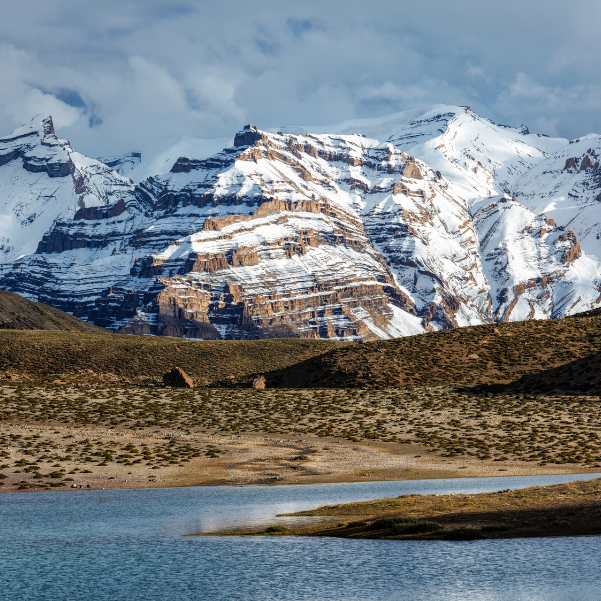
Seven to ten days is the sweet spot. Less than that and you will spend most of your time inside a car.
A five-day trip sounds doable on paper but is genuinely rushed. You land, you drive, you reach altitude, you have a headache, you take two photos at Key, and you start driving back.
Couples who try this almost always say they wish they had stayed longer.
Eight days is ideal for a Shimla-Spiti-Manali circuit with Chandratal. Ten days is perfect if you want to add Pin Valley, spend two nights at Tabo, and keep a proper buffer.
Our best-selling summer Spiti circuit with Chandratal runs nine days and eight nights, which covers the full loop without rushing.
That is for shared departures though, so private couple trips work out differently.
What does a Spiti couple trip cost in 2026?
The honest answer is that Spiti is not expensive by Himalayan travel standards, but it is not dirt-cheap either. The cost depends entirely on how you travel.
Budget couples who do shared transport, stay in homestays, and eat at dhabas can manage the trip comfortably. Shared transport from Manali to Kaza runs about ₹800 to ₹1,000 per person.
Budget rooms cost around ₹1,000 to ₹1,500 per night. Meals at local dhabas run ₹100 to ₹200 per plate.
Mid-range couples who want private cars, better rooms, and the odd splurge at a nicer cafe will spend more. Village homestays with meals included run about ₹1,200 to ₹1,500 per person per night and are genuinely comfortable.
Private-comfort couples who want a dedicated vehicle, handpicked stays, and a properly planned itinerary are looking at a different price bracket. This is usually what works best for honeymoons or anniversary trips because the logistics stop being your problem.
A small money tip most travel blogs miss. Fuel in Kaza is significantly more expensive than in Manali or Reckong Peo because it is hauled up manually.
If you are self-driving, fill up in Manali or Reckong Peo and top up only minimally in Kaza. Also skip the paid "scenic viewpoints" near Key and Dhankar that charge ₹50 to ₹100 for a photo.
The free viewpoints just up the road are better and less crowded.
>> WhatsApp our team and make your Spiti trip feel unhurried.
Where should couples stay in Spiti?
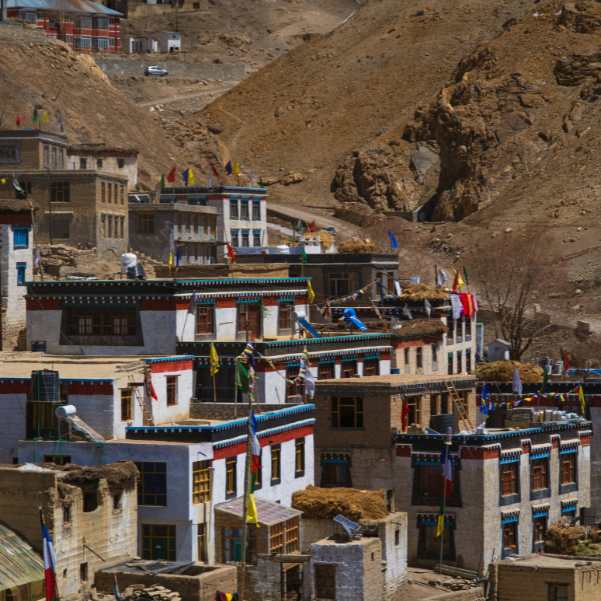
In Kaza, you have a mix of small hotels, boutique-style guesthouses, and simple homestays. Kaza is the only place with consistent network, hot water, and reliable power.
This is your comfort base.
In the smaller villages like Langza, Hikkim, Komic, Tabo, and Dhankar, your main option is homestays. These are family-run, very basic, and honestly the most memorable stays of the trip.
You share a meal with the family, sleep under thick blankets, and wake up to a view no hotel can give you.
Village homestays generally cost around ₹1,200 to ₹1,500 per person with meals included. They are not luxurious, but they are warm, clean, and run by people who genuinely seem happy you came.
For Chandratal, your only option is a seasonal camp in the designated camping zone, which opens once BRO clears the road. Rooms do not exist here.
Tents, basic bedding, and simple meals. That is it.
In our experience, the couples who had the best Spiti trips were the ones who mixed it up. Three nights in Kaza, one in Tabo, one in a village like Langza, and one at Chandratal if open.
That variety is what makes the trip feel complete.
What should couples know before planning a Spiti trip?
Acclimatisation is non-negotiable. Spiti's valley floor averages about 4,270 metres. That is serious altitude.
Spend at least one night at a mid-altitude stop like Kalpa or Manali before pushing to Kaza.
Permits are simple for Indians. You generally do not need a permit to enter Spiti. Foreign travellers may need permits on restricted Kinnaur-Spiti stretches.
For the Atal Tunnel-Rohtang-Koksar-Chandertal circuit, the Himachal e-Aagman system says an e-permit per vehicle is required. If you are going to Chandratal via this route, you will need to apply online before the trip.
Carry cash. ATMs in Kaza are unreliable, and village homestays almost never accept cards or UPI. Carry enough for the full trip plus a buffer.
Network is patchy. BSNL and Jio work in Kaza and parts of the main road. Airtel barely works.
Tell your families beforehand that you will be off-grid for chunks of the trip.
Monastery etiquette matters. Dress modestly, take your shoes off before entering, do not photograph murals inside prayer halls, and always walk around the prayer wheels clockwise.
On safety for first-time women travellers, we have written a separate guide on Spiti solo female safety that applies equally to couples figuring out which stretches are comfortable and which need planning.
Final thoughts for couples planning Spiti in 2026
Spiti is slow travel. That is both its weakness and its strength.
If you treat it like a road trip checklist, you will miss what makes it special. If you treat it like a quiet, scenic pause from regular life, it will give you more than you came expecting.
What we tell our couples, honestly, is this. Plan fewer things. Stay longer in each place. Keep at least one day completely empty.
Eat slowly. Talk less. Let the altitude and the silence do their work.
If you want help putting a trip together that actually has breathing room, reach out to our Himachal team. We have been running Spiti circuits for years, and we build each couple trip around what you actually want, not what a template says.
You can also browse our full range of Spiti Valley tour packages or look at our popular tours to see what other couples are booking this season.
Related topics
Frequently Asked Questions
Is Spiti Valley good for a honeymoon?
Spiti is good for couples who want quiet, scenery, and slow travel, not for couples who expect luxury resorts, room service, or a spa. If raw beauty matters more to you than polished amenities, Spiti is one of the most memorable honeymoon destinations in India.
What are the most romantic things to do in Spiti for couples?
A sunrise visit to Key Monastery, a slow Langza-Hikkim-Komic loop, writing postcards to each other at Hikkim, a late-afternoon at Dhankar, a quiet morning at Tabo, and one stargazing night at Chandratal if the route is open. A buffer day with no fixed plan is also one of the best gifts you can give yourselves.
Which month is best for a couple trip to Spiti?
September is our top pick for most couples. Clear skies, thinner crowds, golden landscapes, and stable roads. July is best for families and first-timers. June works if you want some snow in the landscape but are flexible about Chandratal access.
How many days are enough for a Spiti couple trip?
Seven to ten days is ideal. Five days feels rushed and leaves little room for altitude adjustment or road delays. Eight days is the sweet spot for a full Shimla-Spiti-Manali circuit with a Chandratal night included.
Is Chandratal open in June 2026?
Chandratal is expected to open between late May and mid-June 2026, depending on snow clearance. The Kaza side usually opens first. For camping, mid-June onward is the safer window. Always verify current road status before locking dates.
Can couples camp at Chandratal Lake?
Yes, but camping is done in a designated zone about 2 to 3 km before the lake, not on the lakeshore itself. Camps are basic tent setups with sleeping bags, blankets, and simple meals. Expect cold nights even in summer.
Do Indians need a permit for Spiti Valley?
Indian citizens generally do not need a permit to enter Spiti. However, for the Atal Tunnel-Rohtang-Koksar-Chandertal circuit, the Himachal e-Aagman system requires an e-permit per vehicle. Apply online before the trip.
Which route is better for couples: Shimla or Manali?
Shimla-Kinnaur-Spiti is better for first-timers because altitude rises gradually, which prevents altitude sickness. The Manali route is shorter and more dramatic but depends heavily on road status and season. The ideal Spiti couple trip enters via Shimla and exits via Manali.
Is Spiti expensive for couples?
Not compared to other Himalayan destinations. Budget couples can manage it on a tight spend using shared transport and homestays. Mid-range couples travelling privately will spend more, but Spiti does not have the high-end pricing of places like Ladakh or Bhutan.
Where should couples stay in Spiti: Kaza or village homestays?
Mix both. Use Kaza as your comfort base for network, cafes, and reliable rooms. Add one or two nights in village homestays in Langza, Tabo, or Komic for the quieter, more memorable experience. Chandratal has only seasonal camps.
Can couples do Spiti without self-driving?
Yes, and we actually recommend it for most first-time couples. Hiring a private driver or joining a small-group couple tour removes the stress of navigating high-altitude roads. You get to enjoy the landscape instead of watching for potholes.
Is Spiti safe for first-time women travellers and couples?
Spiti is one of the safer Himalayan regions for women travellers and couples. Villages are small and community-based, locals are respectful, and tourism here attracts a different crowd compared to busier hill stations. Basic altitude precautions apply to everyone.
More about Lahaul and Spiti
 Lahaul and Spiti
Winter Spiti from Bangalore in 2026-27: Flights, Leave Days & Delhi 4x4 Departures
Planning a Winter Spiti trip from Bangalore in 2026-27? Explore flight options, Delhi pickup points, leave requirements, 4x4 group expeditions, travel costs and a practical itinerary to help you plan your Himalayan winter adventure.
- How to Reach
- Snow Travel
 Lahaul and Spiti
What Does a Winter Spiti 4x4 Trip Really Cost in 2026-27? Package Price vs Total Holiday Budget
Planning a Winter Spiti 4x4 trip in 2026-27? Discover the real travel budget, including package prices, transport, meals, winter essentials and hidden expenses. Learn what your package covers, what costs extra and how to plan your Spiti Valley adventure without unexpected spending.
- First-Time Travellers
- Snow Travel
 Lahaul and Spiti
How Many Leave Days Do You Need for a 9-Day Winter Spiti Trip in 2026-27?
Planning a 9 day Winter Spiti trip in 2026 to 2027 requires careful leave planning, especially for working professionals travelling from cities like Bangalore, Mumbai, Hyderabad and Delhi.
- Itinerary
- Snow Travel