
Tso Moriri Lake
A 26 km high altitude lake in the Changthang plateau at around 4,522 metres, the largest Ramsar wetland entirely within India. Quieter and harder to reach than Pangong, about 220 km and 6 to 7 hours from Leh via Chumathang. Shoreline camping is banned under wetland protection. Stay in Korzok village.
- Altitude ~4,522 m / 14,836 ft at the lake
- ~220 km from Leh via Chumathang
- Ramsar wetland, no shore camping allowed
- Best window late May to late September
- Stay in Korzok village only
What makes it special
Tso Moriri is the quiet version of a Changthang lake trip. Less famous than Pangong, noticeably harder to reach, and somehow the more memorable of the two for most travellers who make it out this far. A long ribbon of blue water at around 4,522 metres on the Changthang plateau, roughly 26 km long, hemmed in by peaks over 6,000 metres, with one small Changpa village on its north west shore and essentially nothing else.
Why come here. Scale and silence. Pangong is bigger and more dramatic, but the Lukung end feels like a fairground on a July weekend. Here you rarely see more than a handful of vehicles on the road, Korzok village holds a few hundred people in summer including visitors, and you actually hear the wind through the grass. It is also the largest high altitude lake entirely within India, declared a Ramsar Wetland site in 2002, and officially one of only two breeding grounds outside China for the endangered black necked crane. That detail is not marketing copy, it is in the Ramsar citation.
Altitude honesty. The lake sits higher than Pangong, and the drive in is a long steady climb across Chumathang and Mahe rather than a single pass crossing. Most travellers who feel fine in Leh still feel the air change somewhere past Chumathang. Plan a minimum of three full nights in Leh before coming here, four if you flew in. If you have already done Pangong and acclimatised well, a direct route from there via Chushul and Loma usually works, but it is a long and remote day.
The Ramsar point, since it changes how you stay. The entire shoreline is a protected wetland reserve. Camping on the lake front is prohibited, and a wildlife check post at Mahe Bridge enforces the rule in practice. This is the biggest practical difference from Pangong, where lakeside camps line the south shore. Accommodation here is all in Korzok village on the north west shore, or at camp clusters set back from the water. No operator who follows the rules will pitch you a tent on the shoreline. If someone offers, treat it as a warning sign, not a treat.
Korzok and the Changpa, briefly. The village is the only permanent settlement on the lake, home to Changpa nomad families who have grazed pashmina goats and yaks on the Rupshu plateau for centuries. The 400 year old Korzok monastery on the western bank belongs to the Drukpa Kagyu lineage. The barley fields immediately below the village are often described as some of the highest cultivated land in the world. If you spend an evening here rather than rushing back to Leh, the Changpa are the reason. Slow conversations because the air is thin, livestock coming home at dusk, one small shop that closes when it feels like closing.
Permits in 2026, the short version. Indian citizens pay the Ladakh Environment and Development Fee online through lahdclehpermit.in, typically Rs 400 one time plus around Rs 20 per day, the same structure that covers Nubra and Pangong on the same trip. Foreign nationals need a Protected Area Permit arranged through a registered Leh agent, with the two travellers minimum rule on paper. If you are coming directly from Pangong via Chushul, a separate special route permit is required for the Chushul stretch and is arranged at the Leh DC office. Carry four or five paper copies. The check post at Mahe Bridge and the entry to Korzok both take one.
Who this place suits. Travellers who already love Ladakh and want the quieter side of it. Photographers, especially those who want clean light and no crowds in the frame. Bird watchers, genuinely, because this is one of the better wetland sites in the country. Second time Ladakh visitors who have already done Pangong and Nubra and want something less busy.
Who should think twice. First time Ladakh visitors on a short trip, because the drive is long and the altitude is unforgiving. Families with very young children and seniors with cardiac or respiratory conditions, because 4,522 metres is not the place to find out how your body handles high altitude. Pet owners, because Korzok is not set up for pets and the drive out is genuinely remote.
Quick answers
- Is Tso Moriri worth visiting in 2026?
- Yes, if you are on a second Ladakh trip or have time for the full circuit. The lake sits at around 4,522 metres on the Changthang plateau, about 220 km and 6 to 7 hours from Leh, with a handful of Changpa families living at Korzok village on the north west shore. It is quieter than Pangong, much less crowded, a Ramsar wetland reserve, and one of the better wildlife and birding sites in Ladakh. Not the obvious first choice for a short first trip, the clear choice for a slower second one.
- Do Indian and foreign travellers need a permit for Tso Moriri?
- Yes. Indian citizens pay the Ladakh Environment and Development Fee online through the official LAHDC Leh portal at lahdclehpermit.in, typically Rs 400 one time plus around Rs 20 per day wildlife fee. One payment usually covers Nubra, Pangong, Tso Moriri, and Hanle on the same trip. Foreign nationals need a Protected Area Permit through a registered Leh agent, minimum two travellers on paper. The direct route from Pangong via Chushul needs a separate special route permit arranged at the Leh DC office. Carry four or five paper copies.
- How many days do I need for Tso Moriri?
- Two days and one night is the honest minimum, and it is tight. Day one, drive from Leh via Chumathang and Mahe, reach Korzok by late afternoon, sunset at the lake, night at a village homestay or camp. Day two, dawn at the lake, breakfast, drive back to Leh or on to Tso Kar. Two nights at Korzok is the right pace if you want to slow down, catch the bird life, and walk the trails behind the village.
Quick facts
Everything you need to know at a glance.
At a glance
- Altitude
- Around 4,522 m / 14,836 ft at the lake surface by the most widely cited measurements. Korzok village on the north west shore sits slightly higher at about 4,550 to 4,595 m depending on source. Higher than Pangong, about 1,000 m above Leh.
- Location
- Rupshu valley of the Changthang plateau, far eastern Ladakh, roughly 220 km southeast of Leh. Korzok village on the north west shore is the only permanent settlement on the lake.
- Size
- About 26 km north to south, 3 to 5 km wide, up to around 40 m deep. Surface area around 120 km2. The largest high altitude lake entirely within India.
- Nearest base
- Korzok village on the lake. Chumathang, about 90 km before Korzok on the standard route, is the last meaningful settlement with food and fuel stops. Leh is about 220 km and 6 to 7 hours away.
- Open season
- Practical tourist window is generally late May to late September, with June to early September the sweet spot. The road from Leh to Korzok usually remains open through most of winter for military logistics, but almost all tourist accommodation is shut from late October to April.
- Timings
- No gate, no fixed hours at the lake itself. Check posts at Mahe Bridge and on entry to Korzok usually operate through daylight hours. The wildlife check at Mahe Bridge enforces the wetland camping rule.
- Permit and fees
- Indian citizens, online Environment and Development Fee via lahdclehpermit.in, typically Rs 400 plus around Rs 20 per day, covering Nubra, Pangong, and Tso Moriri on the same trip. Foreign nationals, Protected Area Permit through a registered Leh agent, group of two minimum on paper. Chushul route needs a separate special permit. Fees revise yearly, confirm before travel.
- Time needed
- Two days and one night from Leh is the honest minimum. Three days and two nights is the right pace for photography, birding, and a proper Changpa evening. The wider Ladakh circuit combining Nubra, Pangong, and Tso Moriri typically runs 8 to 10 days.
- Known for
- Largest high altitude lake entirely within India, Ramsar Wetland site, one of only two breeding grounds outside China for the endangered black necked crane, only breeding ground in India for bar headed geese, the 400 year old Korzok monastery, and the Changpa nomads of the Rupshu plateau.
- Difficulty
- Moderate. Altitude and the long drive are the real challenges, not physical effort. Walking around the village and short hikes behind Korzok are easy for acclimatised travellers. The altitude is higher than Pangong, so a fit body is not a substitute for proper acclimatisation.
On the ground
- Mobile network
- Patchy to non existent. BSNL postpaid works intermittently in Korzok village, and not reliably anywhere else on the route past Chumathang. Jio and Airtel are effectively dead. Plan to be mostly off grid for 24 to 48 hours.
- ATMs
- None that you should rely on. No reliable ATM after Leh on any approach. Carry at least Rs 7,000 to 10,000 per person in cash for the Tso Moriri leg. Camp payments, homestay bills, and the small village shop all run on cash.
- Fuel
- No fuel pump at Korzok. Chumathang has a small pump that may or may not be working. The last reliable pump on this route is Karu, 36 km from Leh. Fill up fully in Leh before leaving, and carry a 5 to 10 litre jerry can if you are self driving or on a motorcycle.
- Food
- Limited. Dhabas at Chumathang and Mahe on the drive in, Korzok village has the monastery cafe, a few simple village kitchens, and the camp dining tents. Homestay meals are the most reliable option, usually simple Ladakhi and Tibetan food. Carry snacks for the drive and some chocolate, altitude often kills appetite at meals.
- Parking
- Informal. Vehicles park at your camp or homestay in Korzok, and on open gravel areas near the monastery and the shore viewpoints. No charges in most places.
- Washrooms
- Basic. Korzok homestays and camps have bucket bathrooms or simple attached bathrooms, often with hot water on request at fixed evening timings. Along the drive, washrooms are limited to tea stops at Chumathang and Mahe. Carry tissues and hand sanitiser.
- Photography
- Allowed widely around the lake and the village. Do not photograph the Mahe Bridge check post interiors, army convoys, or the ITBP posts. For the Korzok monastery, ask before shooting inside prayer halls and never during active prayer sessions. Morning before 9 AM and evening after 4 PM give the cleanest light.
- Drones
- Strongly discouraged. The whole Changthang plateau is a sensitive border region, drones at Ramsar protected wetlands are also an ecological concern, and locals ask visitors to keep them grounded. Keep yours packed.
- Walking
- Easy in and around the village, moderate on the ridges behind Korzok. Short walks to the monastery, along the shore near the village, and up toward Korzok La viewpoint. No long trekking required for the core experience. Take all walks slowly because of altitude.
- Guided tours
- Most travellers reach Tso Moriri on a Nubra Pangong Tso Moriri package or a dedicated private taxi from Leh. A local Korzok guide for bird watching is worth hiring for half a day if wildlife is your reason for coming. Rates are modest, ask through your homestay.
Seasonal weather
- Late May to June15°0°Late May to June
- July to August22°5°July to August
- September to early October15°-3°September to early October
- November to April0°-25°Deep winter
Suitable for
- Couples — suitable
- Families — with some care
- Seniors — with some care
- Solo — suitable
- First-timers — with some care
- Pet-friendly — not suitable
How to reach Tso Moriri Lake
4 approach routes, with seasonal access.
From Leh via Chumathang and Mahe (standard route)
Generally open year round thanks to military logistics, though occasional closures after heavy snow. Practical tourist window is late May to late September.- Distance
- About 220 km
- Time
- 6 to 7 hours one way with stops
- Road
- Mostly tarred and in reasonable shape from Leh to Chumathang, rougher and partially broken from Mahe to Sumdo and the final approach to Korzok. Standard SUVs handle it comfortably.
- Last fuel
- Karu (36 km from Leh) is the last reliable pump. Chumathang has a small pump that is sometimes working. Fill up in Leh.
The default route for almost everyone. Leh to Karu on the Leh Manali highway, continue south through Upshi, Kumdok, and Kere along the Indus river to Chumathang (good lunch and hot springs stop), cross the Mahe Bridge wildlife check post, turn south to Sumdo, then climb the last stretch across Namashang La to Korzok on the lake. Leave Leh by 8 AM to reach Korzok by late afternoon. Lunch at Chumathang is the right break. Do not rush, the altitude rises steadily.
From Leh via Tso Kar and Puga
Typically June to late September. Taglang La and Polo Kongka La are higher and close earlier than the Chumathang route.- Distance
- About 260 km split across two days
- Time
- 8 to 10 hours if done in one day, usually split into two with a Tso Kar overnight
- Road
- Mostly tarred to Tso Kar with rough stretches near Taglang La. From Tso Kar to Sumdo is a mix of tarred and broken road, often slushy near Polo Kongka La.
- Last fuel
- Karu is the last reliable pump. No reliable fuel on the Manali highway side past Upshi either. Fill up completely in Leh.
The alternative that adds a second high altitude lake on the way. Leh on the Manali highway through Karu and Upshi, but instead of following the Indus at Upshi, continue on the Manali road to Rumtse, cross Taglang La pass, descend to the Moore Plains and Tso Kar for a night, then the next day cross Polo Kongka La and drop into Puga, continue to Sumdo, and meet the standard route for the final stretch to Korzok. Longer, rougher, but rewarding if you have the time. Good for kiang sightings on the Moore Plains.
From From Pangong to Tso Moriri via Chushul
Typically July to September when all passes are clear. Closed to civilians in winter and during periods of border sensitivity.- Distance
- About 320 to 330 km from Spangmik to Korzok
- Time
- 9 to 11 hours
- Road
- Mix of tarred and rough dirt, remote, sensitive border area, and sometimes closed at short notice. Plan only with a Leh operator who will check the morning of travel.
- Last fuel
- None between Pangong and Leh or Korzok. Top up in Leh and carry spare fuel.
The Changthang circuit that combines both big lakes on a single trip. Leh over Chang La to Pangong for a night at Spangmik, then continue east along the south shore past Man and Merak, through Chushul, Tsaga La, Loma, and Nyoma to Mahe Bridge, and then south to Korzok. Saves a return to Leh but the Chushul stretch needs a special route permit, and the road itself is remote, partially broken, and occasionally closed to civilians at short notice based on border conditions.
From Delhi or Manali via Leh
Same as standard route, late May to late September.- Distance
- Via Leh, the standard route applies
- Time
- Same as standard from Leh
- Road
- Same as the standard Chumathang route once past Leh.
- Last fuel
- Same as standard route once you are in Ladakh.
A less common alternative that avoids Taglang La on the way in. Leh to Upshi on the highway, then the Chumathang side road as standard up to the lake. This is effectively the same as the standard route described above. Most travellers who talk about driving directly from Manali are describing a route that splits at Leh itself, which is why we list it as a variant rather than a standalone.
Best time to visit
Season by season, so you can plan around the weather rather than hope.
- Recommended
Spring opening
Late May to mid June
Road clearing, thin crowds, cold nights, breeding birds arriving, one of the quieter windows of the year
- Day temperature
- ~10 to 15 C, cold wind on open shore
- Night temperature
- ~-2 to 5 C
- Crowds
- Low
- Accommodation
- Progressive opening through mid May to early June
- Wildlife
- Bird arrivals, kiang herds on the Moore Plains route
A transitional window that rewards travellers who do not mind the cold. Road from Leh clears early, but most Korzok camps open progressively through the second half of May, and by mid June all major stays are running. Nights still dip near freezing, daytime highs are modest. Birds start arriving for breeding in late May. Fewer crowds than peak summer, cleaner skies, and the wet meadows turn visibly green by late June.
- Recommended
Main travel window
Mid June to August
Warmest daytime temperatures, full infrastructure, peak crowds in July, Korzok Gustor festival typically in August
- Day temperature
- ~18 to 22 C
- Night temperature
- ~5 to 10 C
- Crowds
- Moderate to high, peak in July
- Accommodation
- All open, some fill out on peak weekends
- Road
- Most reliable, occasional brief closures on Chushul route after rain
The main season. Daytime highs reach around 20 C at noon, nights are manageable at 5 to 10 C, and all accommodation and services are running. July is the busiest window, especially on weekends. Mid August sees the Korzok Gustor festival at the monastery (dates vary by lunar calendar). Our honest pick inside this window is the second half of June and the second half of August, when crowds are lighter than the July school holiday peak and weather is still warm and reliable. Book better properties at Korzok two to three weeks ahead for July and August.
- Recommended
Autumn
September to early October
Clearest skies, cleanest light, quietest version of Korzok, big temperature swings day to night
- Day temperature
- ~13 to 18 C
- Night temperature
- ~-3 to 3 C, below zero by late September
- Crowds
- Low
- Accommodation
- Most open through mid October, then progressive closure
- Light
- Cleanest of the year, golden plateau grass
The best overall window if you care about light and quiet more than warmth. Skies clear, visibility is sharp, the plateau grass turns golden yellow, and road traffic thins out quickly after mid September. Nights drop fast, approaching zero by late September and dipping well below zero in the first week of October. Most camps close progressively through mid October. If you want clean light, the quietest version of Korzok, and genuinely uncrowded bird sightings, this is when to come. Carry a real down jacket.
Deep winter
Late October to April
Road technically open, lake partly frozen, tourist infrastructure closed, specialist winter trips only
- Day temperature
- ~-5 to 0 C
- Night temperature
- ~-20 to -28 C
- Lake state
- Partially to fully frozen from December to March
- Accommodation
- Nearly all shut, a few Korzok homestays stay open for winter operators
- Who it suits
- Experienced adventure travellers with specialist operators only
Off season in practical terms. The road from Leh to Korzok usually stays open through most of winter for military logistics, but almost all tourist accommodation is closed from late October to April, the lake freezes through parts of December to March, and temperatures drop to minus 25 C or lower at night. Winter trips here are specialist expeditions arranged through experienced Leh operators, not casual travel. If you are considering this window, treat it as adventure travel with medical contingencies, not a holiday.
Things to see & do
7 things worth your time at Tso Moriri Lake.
Watch dawn on the lake from Korzok
30 to 45 minutesThe single thing we would recommend to anyone who makes it out here. Wake up around 5:30, walk five minutes to a quiet spot on the north shore away from Korzok village, and watch the first light push down the peaks on the east side until it hits the water. The wind is usually not up yet, the lake is glassy, and you may have it entirely to yourself. Mornings here are the best visual moment of the day. Evenings are also good, but the drama is in the morning stillness.
Korzok monastery
30 to 45 minutesThe 400 year old gompa on the western bank above Korzok village, belonging to the Drukpa Kagyu school. A short walk up from the village centre, open through the day, and often nearly empty in the early morning. The prayer hall is small and modest compared to Thiksey or Diskit, the sense of place here is in the setting, with the lake below and the Mentok Kangri peaks behind. Dress modestly, remove shoes before entering, and do not photograph active prayer sessions without permission.
Bird watching at the wetland edges
2 to 3 hours, ideally at dawnOne of the few reasons to plan a trip here rather than Pangong. The wetlands around the lake are a major breeding area. The Ramsar site hosts black necked cranes in summer, the only breeding population in India for bar headed geese, plus brown headed gulls, great crested grebes, and ruddy shelducks around the shore. Best window is late June through August when chicks are visible. Bring binoculars. Stay on tracks, do not enter the marsh edges, and give breeding pairs wide space. A local guide from Korzok can point out crane nesting areas without disturbing them.
Short walks behind Korzok
1.5 to 2 hours round tripNot a formal trek, just the walks behind Korzok that take you above the village for views over the lake. The slope up toward Korzok La is gentle and can be done in an hour at this altitude if you take it slowly. Another option is the ridge south of the village, which gives you the entire length of the lake in one wide frame. Check with your stay on current conditions and take water. Altitude makes everything feel harder than it looks on the map.
Day trip to Kyagar Tso and the Salt Valley
Half a dayThe smaller lake about 50 km north of Tso Moriri in the Salt Valley, en route if you are taking the Tso Kar and Puga side. A quiet half day add on rather than a destination, good for photographs at golden hour and usually completely empty. The Salt Valley itself, where borax is still collected traditionally, is worth a slow drive through if your driver knows the spots. Not on everyone's itinerary, but a good use of a morning if you have the time.
Evening with a Changpa family, if your host can arrange it
1 to 2 hoursA few Korzok families still keep traditional rebo tents (yak hair tents used by Changpa herders) and will invite visitors in for butter tea or a simple meal if your homestay arranges it. This is not a paid cultural performance, it is a conversation in someone's home, so respect it accordingly. Bring a small thoughtful gift like dry fruits or good tea leaves, not cash. Ask through your host, not directly on the street.
Stargazing from Korzok
30 to 60 minutes after 9 PMAt this altitude, with almost no artificial light for a hundred kilometres in any direction, the sky is as good as it gets in India. The Milky Way is clearly visible with the naked eye on any moonless night between late May and September. Walk 200 metres away from the village lights, let your eyes adjust for ten minutes, and look up. Nights are cold, down to below freezing even in July. Wear everything you brought. A red filter torch saves your night vision if you need to move around.
Know before you visit Tso Moriri Lake
The practical bits, from people who have been.
What Tso Moriri actually isClosed basin high altitude lake, 26 km long and 3 to 5 km wide, around 4,522 m at the surface, in the Rupshu valley of the Changthang plateau. No photo zones, no noise, just the water and the wind.
Setting expectations helps this trip land better.
Tso Moriri is a closed basin lake, meaning it has no outflow. Water comes in from snow melt and three main glacier streams, and leaves only through evaporation, which is why the water turns slightly brackish. It is not a freshwater lake in the strict sense, though it is nowhere near as salty as Pangong.
Dimensions. Roughly 26 km north to south, 3 to 5 km wide, and up to about 40 m deep at the middle. The wider Ramsar reserve covers around 12,000 hectares, which includes the marshy edges and wet meadows where the breeding birds gather in summer.
Surroundings. The lake sits in the Rupshu valley, part of the Changthang plateau in far eastern Ladakh, with peaks above 6,000 m on both sides including Mentok Kangri and Lungser Kangri. On a clear morning the reflections off the still water are the reason many travellers come this far.
One thing to set expectations on. This is not a show lake. There are no photo zones, no painted props, no yellow scooter. The whole point of coming here is that there is nothing between you and the view except a small village and the wind.
The Ramsar rule, and why you cannot camp on the shoreRamsar wetland since 2002, shoreline camping banned, check post at Mahe Bridge enforces the rule. All stays are in Korzok village or at camps set back from the water.
This is the one practical thing that surprises travellers, and it deserves a clear explanation.
The rule. The lake and its shoreline are a legally protected Ramsar Wetland Conservation Reserve, designated in 2002. Camping on the shore, erecting structures, and driving vehicles close to the water are prohibited. A wildlife check post at Mahe Bridge (on the standard route from Leh) enforces it, and you will see signboards on the approach to Korzok spelling it out.
Why. The wetland is one of only two breeding sites outside China for the endangered black necked crane, and the only confirmed breeding ground in India for bar headed geese. Disturbance at the lake edge has knock on effects on nesting birds. The restriction is not bureaucratic, it is protecting a globally important habitat.
What this means for you. All accommodation is in Korzok village on the north west shore, or in licensed camp clusters set well back from the water. The best properties are simple but well run, and most have lake views from a distance rather than lake fronts. Any operator offering a tent pitched on the shoreline is breaking the rules, and we would not stay with them.
Small asks. Carry out everything you carry in. Do not feed the birds. Do not drive off the marked tracks near the water. Do not use soap or shampoo in streams that feed the lake. These are the obvious ones that the community has been asking visitors to respect for twenty years.
Altitude reality, and how to plan for itSleep altitude around 4,550 m is higher than Pangong. Three nights in Leh first, ideally with a Nubra stop. Do not rush into it. Serious symptoms mean immediate descent.
The big practical risk here is altitude, not the road or the permits. Worth reading carefully.
Where you will be. The lake surface at around 4,522 m, Korzok village around 4,560 m, and all of the overnight options sit above 4,500 m. That is higher than Pangong (about 4,350 m) and about 1,000 m above Leh. The drive in is a long steady climb rather than a single pass crossing, which is more benign in some ways but does not give your body the shock adjustment a pass gives.
The acclimatisation plan that works. Minimum three full nights in Leh before heading here. Four is better. A Nubra stop in between is ideal because Nubra is lower than Leh and acts as a gentle warm up. If you have done Pangong already, you are in a good place for the Tso Moriri leg. Do not fly into Leh and drive to Tso Moriri on day two, that is how altitude trips turn into medical situations.
Hydration and alcohol. Three litres of water minimum on the drive in. No alcohol for at least 24 hours before arrival and the first night at Korzok. Diamox only if your doctor has prescribed it after reviewing your history.
Signs that need action. Severe headache that does not respond to paracetamol, vomiting, confusion, breathlessness at rest, or coughing pink or frothy sputum. These are signs of high altitude cerebral or pulmonary oedema and require immediate descent, ideally to Leh altitude or lower. Korzok has a small basic health centre for first response, but serious cases need evacuation to Leh, which is a minimum six hours away.
Children and seniors. Children under seven and seniors with uncontrolled blood pressure, recent cardiac events, or significant respiratory issues should take medical advice specifically for high altitude travel. This is not a place to find out how your body handles 4,500 m.
Permit reality for 2026Indian citizens use the online Environment Fee at lahdclehpermit.in, foreigners need a Protected Area Permit through a Leh agent. Chushul route needs a separate special permit. Carry four paper copies.
The system is the same as Pangong and Nubra, but with one extra gotcha for the Chushul route.
Indian citizens. Apply online at lahdclehpermit.in for the Ladakh Environment and Development Fee. The structure is typically Rs 400 one time environment fee plus around Rs 20 per day wildlife fee, with an optional Red Cross contribution. One application usually covers Nubra, Pangong, Tso Moriri, and Hanle on the same trip. Ladakh UT residents and children under 12 are generally exempt from the fee but still need to carry ID.
Foreign nationals. Apply for a Protected Area Permit, not the EDF. Applications go through a registered Leh travel agent or the overseas section of the LAHDC portal. Minimum two travellers per application on paper. Some nationalities including Chinese and Pakistani passport holders need additional Ministry of Home Affairs clearance and should allow three to four weeks.
The Chushul gotcha. If you plan to reach here directly from Pangong via Chushul, Loma, and Nyoma, you need an additional special route permit. This is arranged in person at the Leh DC office, not online, and the Chushul Demchok stretch is occasionally closed to civilians at short notice based on border conditions. Plan it with a Leh operator who will check on the morning of travel, and keep a backup plan to return via Leh.
At the check posts. Main checks at Mahe Bridge (which also enforces the wetland camping rule) and on entry to Korzok. Carry at least four paper copies. Digital on your phone is accepted at most posts but paper is safer in the cold.
Keep in mind. Fees and the exact process can update at the start of each season. Confirm the current structure through your Leh operator or the LAHDC portal close to your travel date.
Where to stay and how to bookAll stays are in Korzok village or at camps set back from the lake. Homestays from Rs 500, mid range Rs 1,500 to 3,500, better camps Rs 4,000 to 9,000 with meals. Book ahead for July and August.
Korzok is the only permanent village on the lake, and it holds everything.
Homestays. Around Rs 500 to 1,500 per night including meals. These are rooms in family homes with shared bathrooms, simple Ladakhi food, and hosts who will usually sit with you for dinner. This is the right pick if you want the slow evening version of Tso Moriri. Dorjay Khangsar's homestay is a widely recommended budget pick, but there are plenty of good ones, ask around on arrival or book through your Leh operator.
Guesthouses. Around Rs 1,500 to 3,500 per night with attached bathrooms, some with lake view windows. Heating is minimal, hot water is on request with fixed evening timings. A good middle ground for couples and families who want privacy but not luxury.
Better equipped camps and lodges. Set back from the lake per the wetland rules. Around Rs 4,000 to 9,000 per night including dinner and breakfast. These are the options most tour packages use. Expect furnished cottages or better quality tents with attached bathrooms, basic heating, and a dining tent.
Booking reality. July and August weekends fill up two to three weeks ahead at the better properties. September is generally easier. May and early June can be tricky because not all places have opened for the season. Most bookings go through Leh operators who hold camp allocations, so a package booking often lands you a better room than an unknown direct booking.
Facilities note. Food options are limited outside your stay. Carry snacks for the drive. Power is generator based with limited evening hours. Bring a 20,000 mAh power bank.
Wildlife and birds, brieflyRamsar wetland with endangered black necked cranes, bar headed geese, and several other breeding water birds in summer. Kiangs and marmots around the shore. Hire a Korzok local guide for the crane areas.
One of the better reasons to plan a trip here, especially for second time Ladakh visitors.
Birds. The Ramsar reserve hosts breeding populations in summer of species you will rarely see this easily elsewhere in India. Black necked cranes (endangered, only two breeding sites outside China globally, one of them is here), bar headed geese (this is the only confirmed breeding ground in India), brown headed gulls, great crested grebes, ruddy shelducks, and a handful of other migratory water birds. Best window for sightings is late June to August when chicks are out. Do not approach breeding pairs, observe from a distance, and use binoculars rather than walking closer.
Mammals. Large herds of kiang (Tibetan wild ass) graze the Rupshu plateau and are genuinely easy to spot from the road. Himalayan marmots live in colonies near the shore. Tibetan wolves exist in the wider region but are rare to see. Argali sheep and blue sheep are around but also rare. Snow leopards are documented here but effectively never seen by tourists. Do not approach kiang herds, they spook fast.
Plants and the plateau ecosystem. The ground looks barren on first sight, but in July and August wet meadows around the lake turn light green, and low herbs like Caragana and alpine primulas bloom. The effect is subtle but changes the whole feel of the valley.
Practical for birders. A good local guide from Korzok can take you to crane nesting areas without disturbing them, and costs around Rs 1,000 to 2,000 for a half day. Worth it. Regular tour drivers typically do not know where the crane nests are.
Small things that will save your Tso Moriri tripCash from Leh, offline maps, real down layer, SPF 50, electrolyte sachets, binoculars, snacks, basic medication kit, 20,000 mAh power bank, and no alcohol the first night.
Small practical items that make a difference.
Cash. At least Rs 7,000 to 10,000 per person for the Tso Moriri leg. No reliable ATM anywhere on this route past Leh. Camp and homestay payments, guide fees, and the small village shop all run on cash.
Offline maps. Download the full Leh to Korzok stretch including the Tso Kar alternative and the Chushul connector in Google Maps or Maps.me before leaving Leh.
A real down jacket. Not a fleece. Nights even in July dip close to freezing, and September to October evenings go well below zero.
SPF 50 sunscreen and polarised sunglasses. UV at this altitude burns through cloud. The lake surface reflects it further.
Electrolyte sachets. Altitude dehydrates fast. Two litres of water a day is the minimum, three is better.
Binoculars if you care about birds. Even a modest 8x30 pair transforms the wetland walk.
Snacks for the drive. Between Karu and Korzok options are limited to small dhabas at Chumathang and Mahe. Altitude often kills appetite, small regular snacks work better than big meals.
Medication kit. Paracetamol, antacid, anti nausea tablets, electrolytes, a small crepe bandage. Diamox only if your doctor has prescribed it. Korzok has a small health centre for first response, but serious cases need Leh.
Power bank. 20,000 mAh minimum. Generator hours in Korzok are limited and unreliable.
A no alcohol night. Really. Skip alcohol on the way in and the first night at Korzok. Your body is adjusting, and alcohol makes altitude worse in a way that you feel at 2 AM.
Nearby attractions
Other places worth the detour.
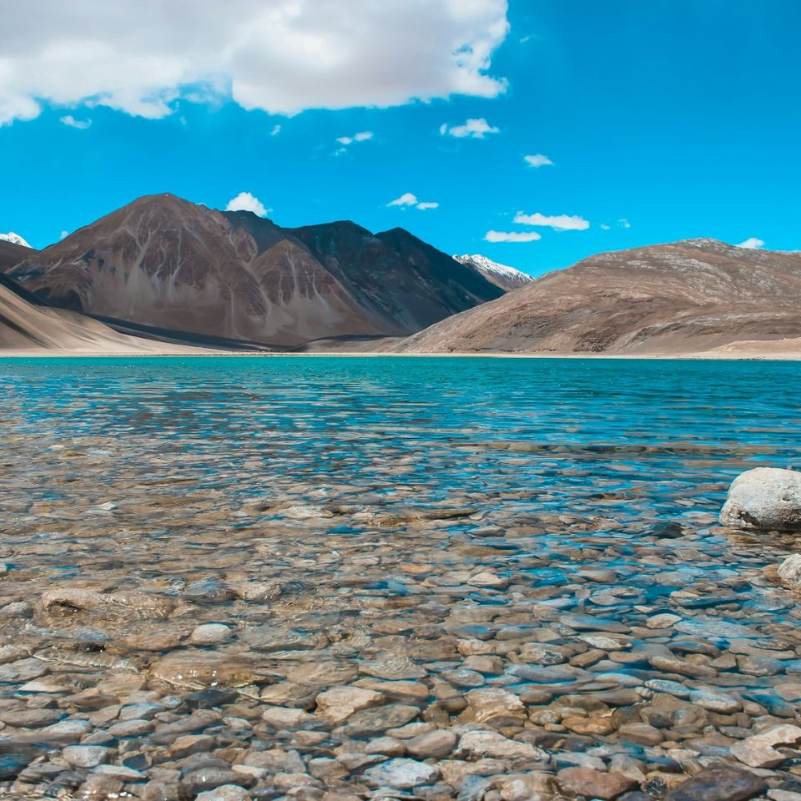
Pangong Lake
~240 km via Leh, or ~320 km direct via Chushul
The other big Changthang lake, bigger and more famous, on the India and China border. Most serious Ladakh itineraries combine Pangong and Tso Moriri, either by returning to Leh in between or taking the direct Chushul route that needs a special permit.
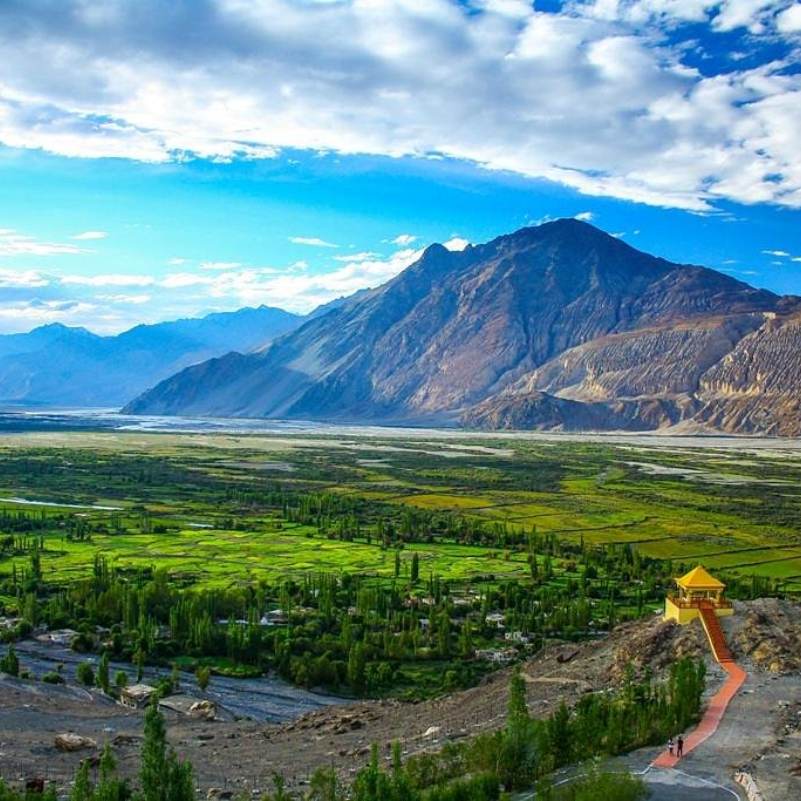
Nubra Valley
Separate leg of a Ladakh trip, via Leh
The broad green river valley north of Leh, with the Hunder sand dunes, Bactrian camels, Diskit monastery, and the Balti village of Turtuk. Lower altitude than Tso Moriri and a smart first leg on any wider Ladakh itinerary, which is why most travellers do the valley before coming this far east.
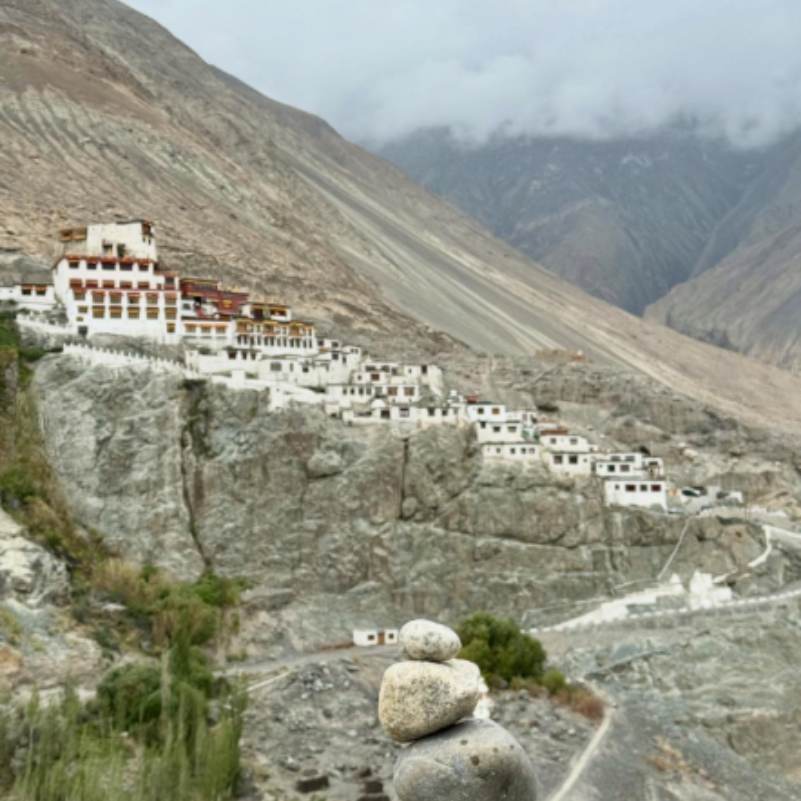
Diskit Monastery
Separate leg in Nubra, about 340 km via Leh
The oldest and largest gompa in Nubra Valley, with the 32 metre Maitreya Buddha on the ridge below. Completely different feel from the minimal Korzok monastery. A cultural complement to the quiet of Tso Moriri if your itinerary covers both sides of Ladakh.
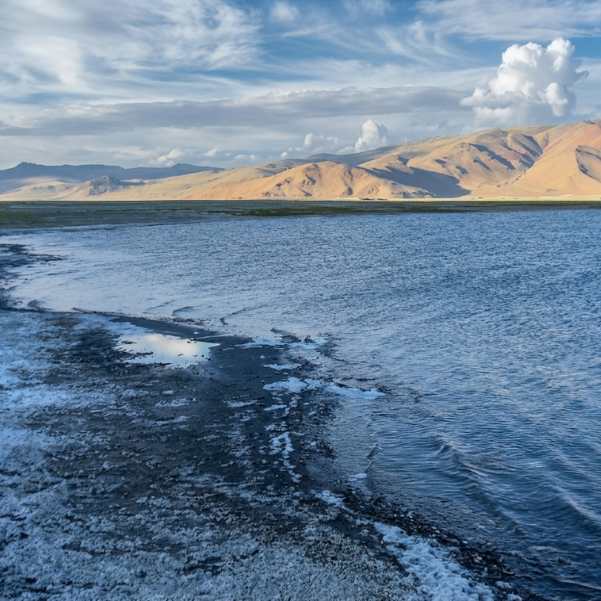
Tso Kar
~55 km northwest of Tso Moriri via Puga
The second Ramsar wetland in Ladakh, a smaller salt lake at around 4,530 m on the approach route via the Manali highway side. Famous for kiang sightings in the Moore Plains below it. Often combined with Tso Moriri as a two day loop, with one night at Tso Kar camps and one at Korzok.
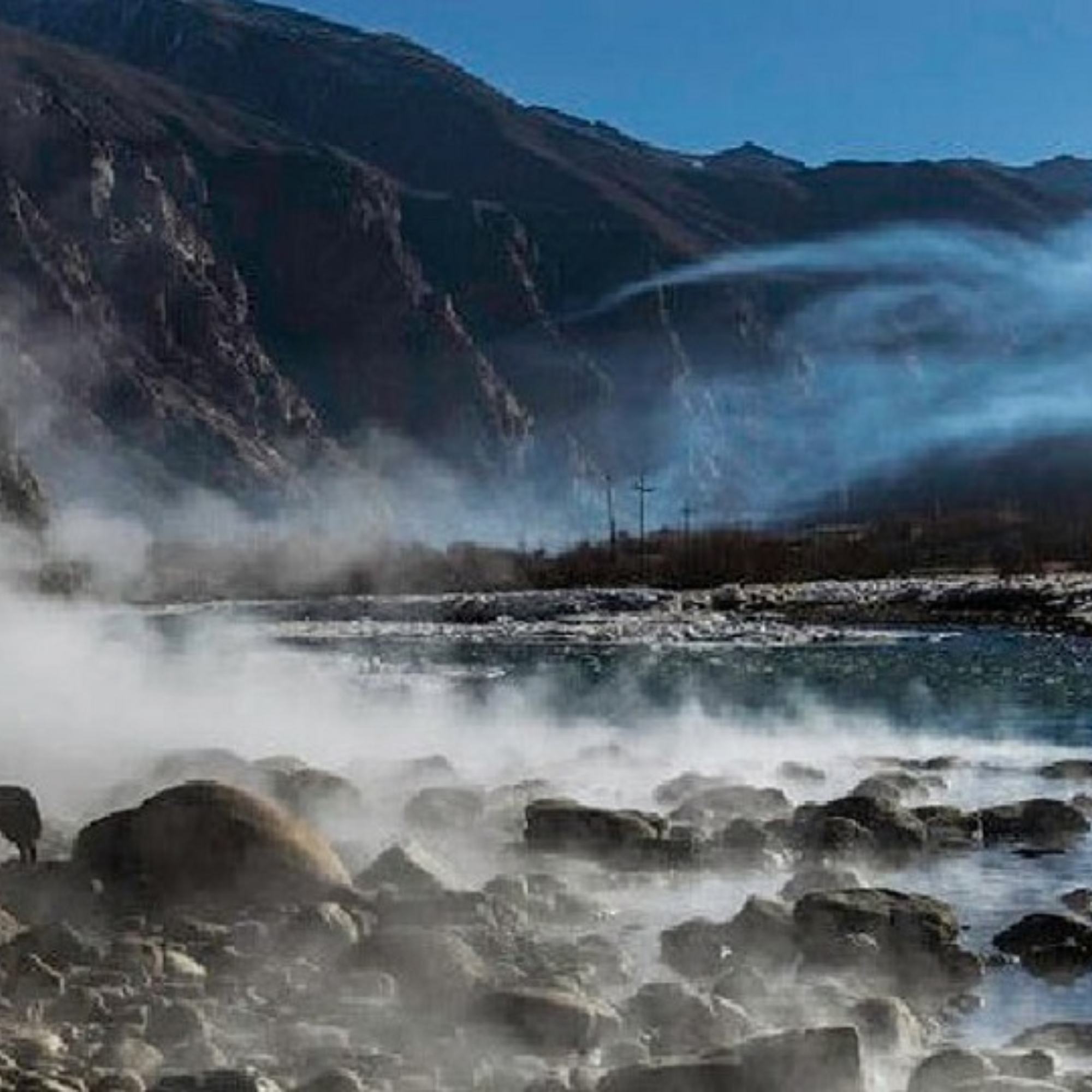
Chumathang Hot Springs
~140 km from Leh, ~90 km before Korzok
A small highland settlement on the banks of the Indus roughly halfway between Leh and Korzok, known for its natural hot springs and simple lunch stops. The obvious break on the drive in, and a decent place to stretch legs before the altitude climbs further.
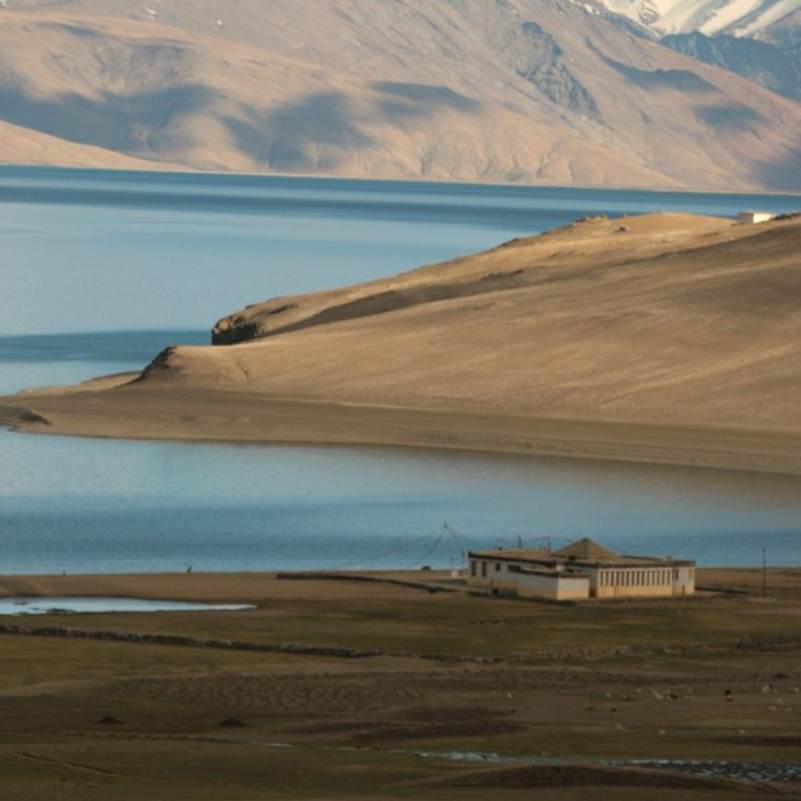
Kyagar Tso and the Salt Valley
~30 to 40 km north of Korzok
A small lake about 30 to 40 km north of Tso Moriri in the Salt Valley, sometimes called Lake of Joy. Quieter than Tso Moriri, quick to visit on a half day loop from Korzok if you are staying two nights and want something different on the second day.
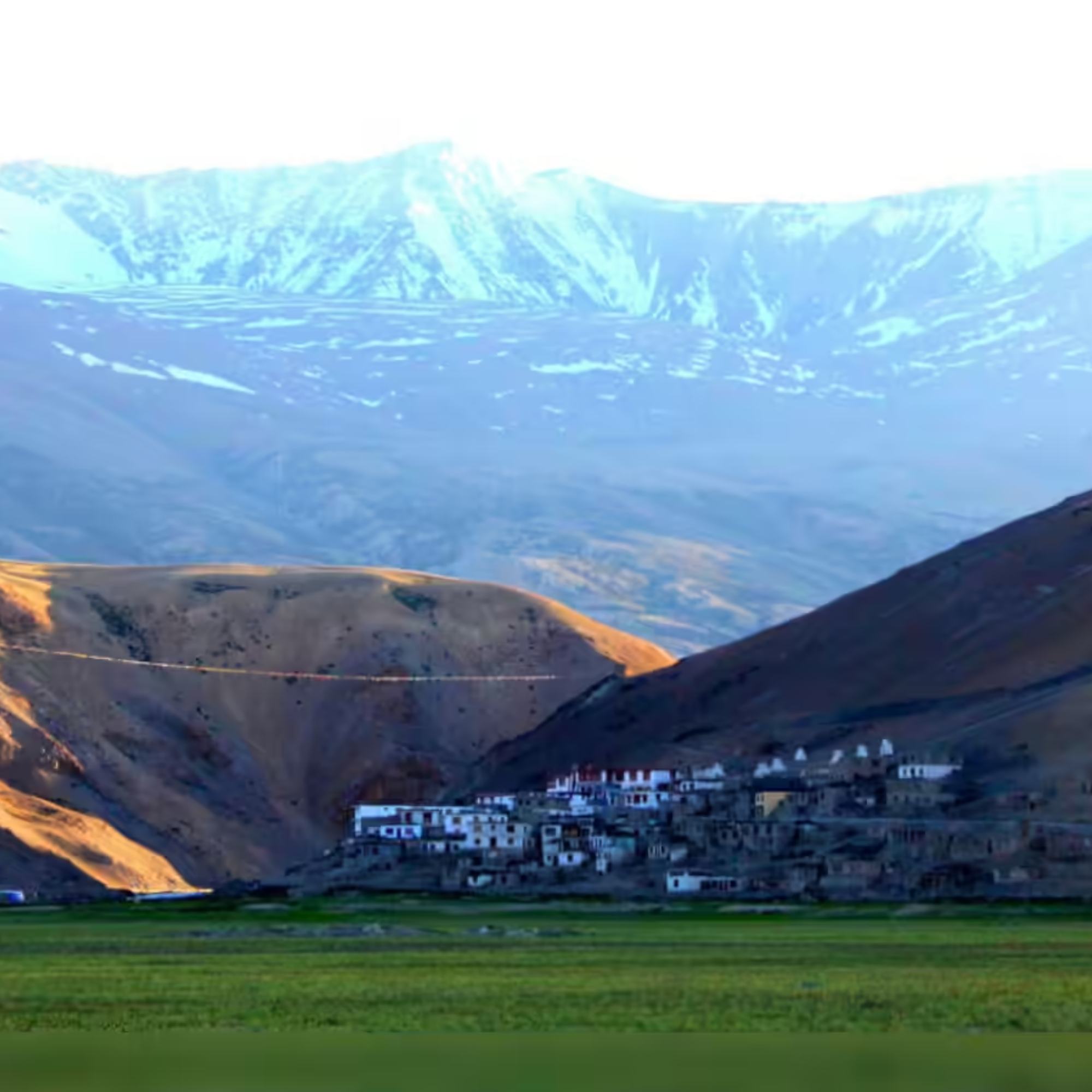
Korzok Monastery
At Korzok village on the lake
The village monastery on the lake itself, 400 years old and belonging to the Drukpa Kagyu school. A short walk from most Korzok stays, worth a 30 minute visit, very different in scale and tone from the big Nubra gompas. The real draw here is the setting rather than the architecture.
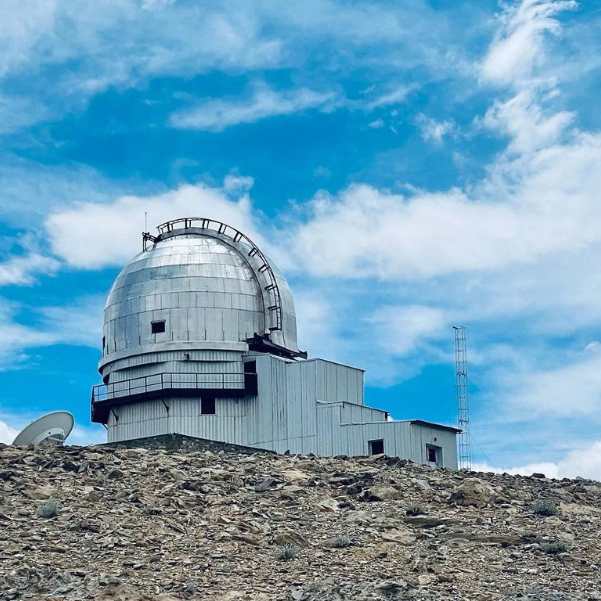
Hanle
~150 km east of Tso Moriri via Nyoma
The far corner of eastern Ladakh, known for the Indian Astronomical Observatory (one of the highest optical telescopes in the world) and some of the darkest skies in the country. An adventurous two day extension from Tso Moriri via Nyoma, with an additional special permit required. Only for travellers who have time and want the deep Changthang experience.
Our packages with Tso Moriri Lake
Curated trips that include a visit to Tso Moriri Lake.
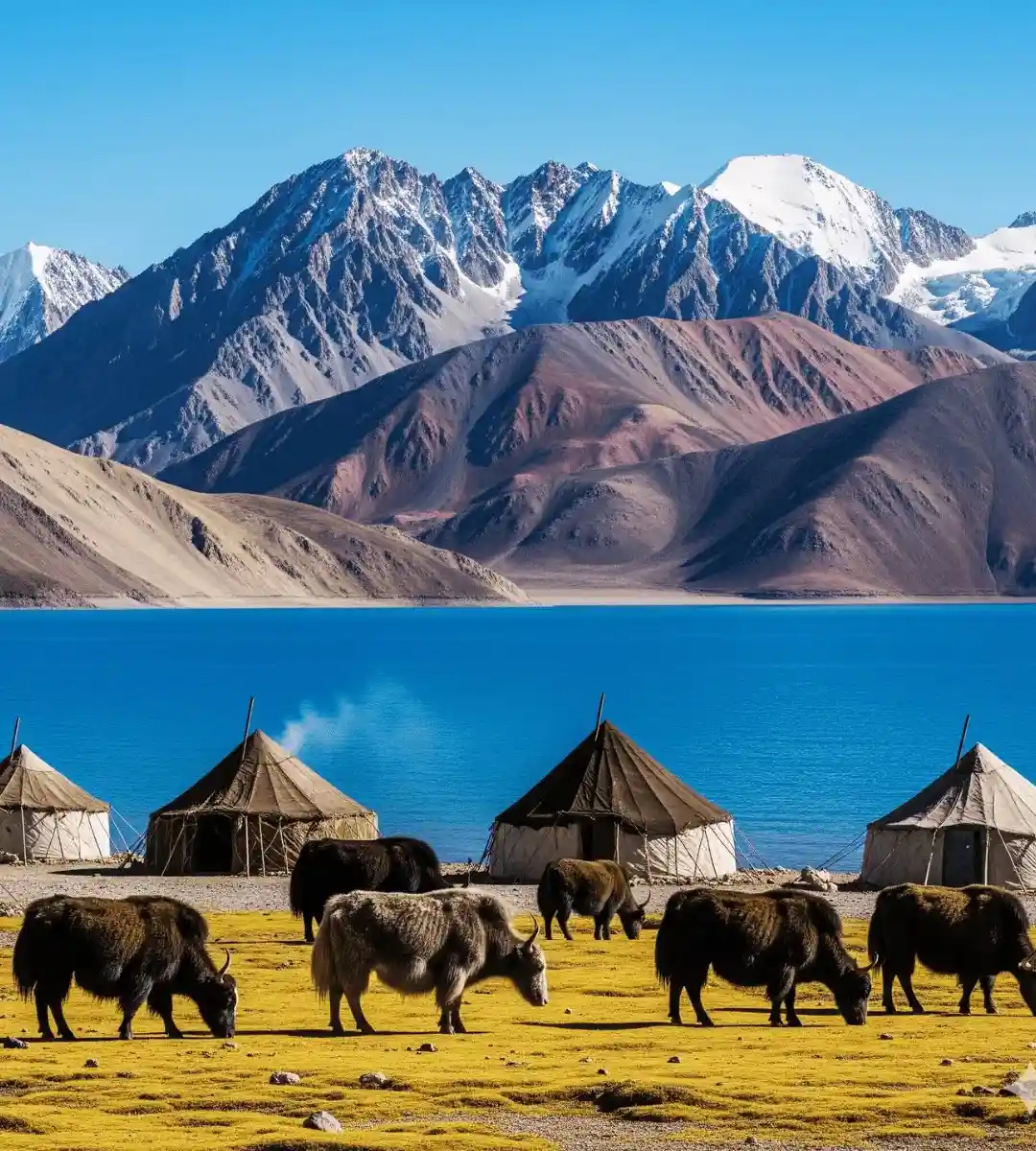 7D/6N
7D/6NBest Leh Ladakh Tour With Nubra Pangong and Tso Moriri
2D Leh•1D Nubra Valley+2
₹29,999₹37,999SAVE INR 8,000/ person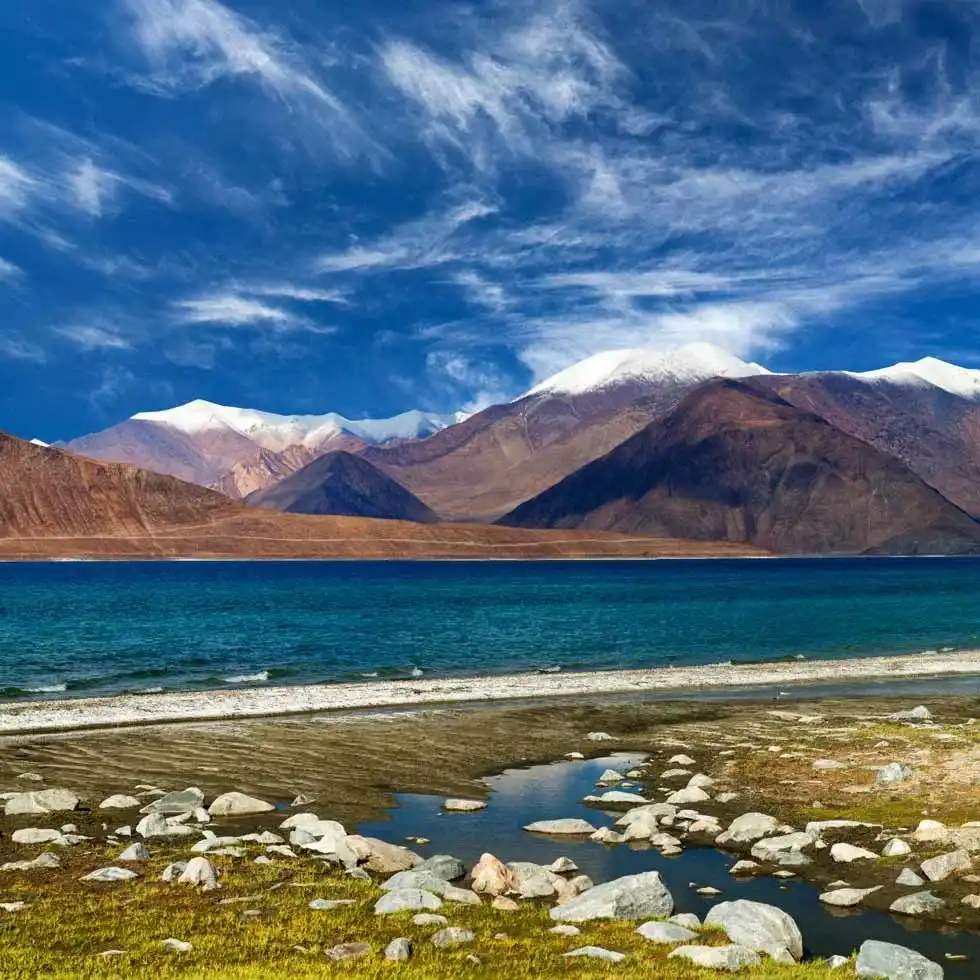 7D/6N
7D/6NLeh Ladakh Tour With Nubra Pangong and Tso Moriri
2D Leh•1D Nubra Valley+2
₹39,999₹47,999SAVE INR 8,000/ person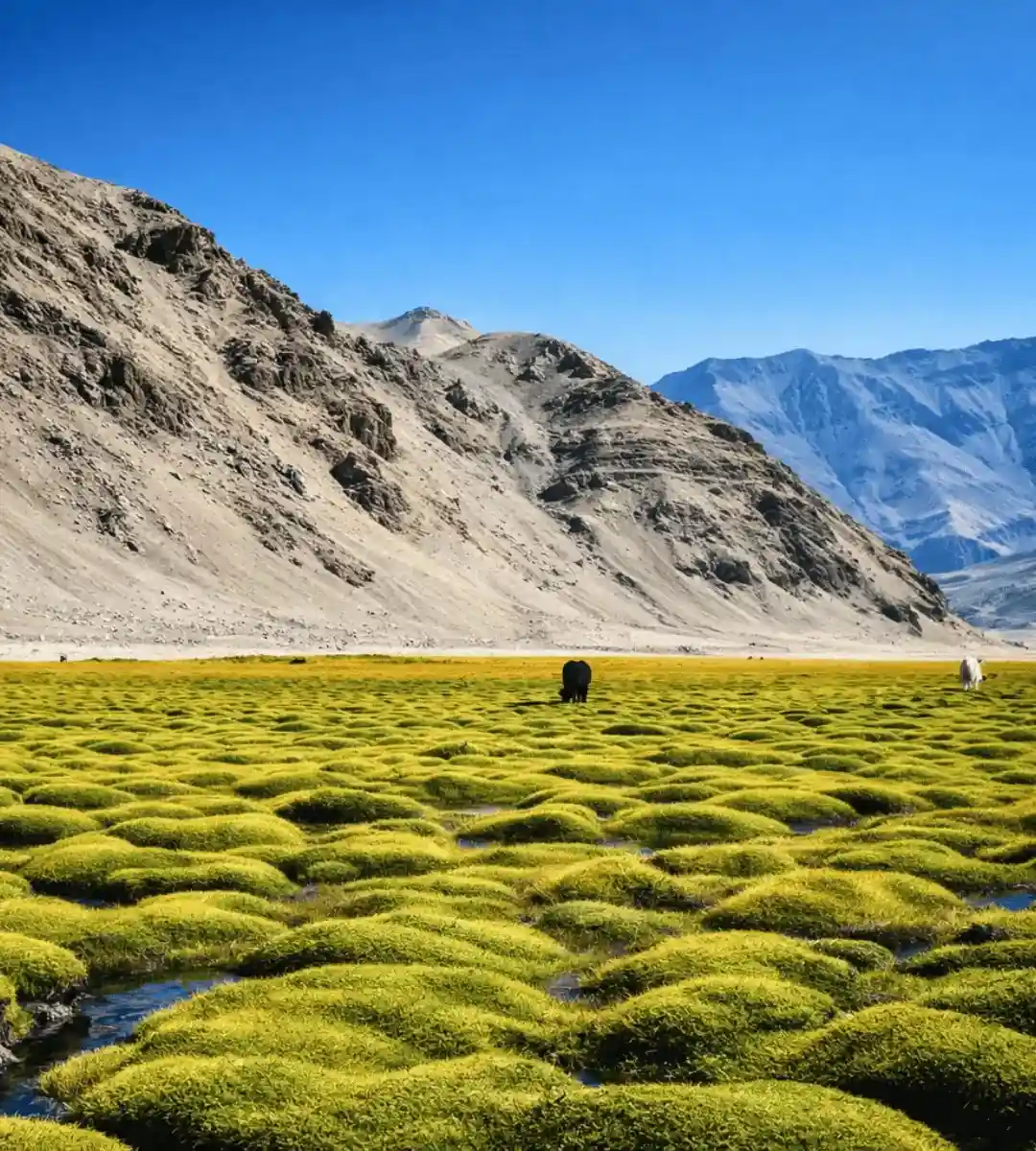 9D/8N
9D/8NUltimate Ladakh With Hanle Umlingla Puga Valley and Tso Moriri
2D Leh•1D Nubra Valley+3
₹36,999₹44,999SAVE INR 8,000/ person
Frequently Asked Questions about Tso Moriri Lake
What is the altitude of Tso Moriri Lake?
The lake surface sits at around 4,522 metres (about 14,836 feet) by the most widely cited measurements, with Korzok village and the wider wetland slightly higher at around 4,550 to 4,595 metres depending on the source. That makes Tso Moriri higher than Pangong (about 4,350 m) and about 1,000 m above Leh. Altitude planning matters here more than it does for Nubra or even Pangong.
How far is Tso Moriri from Leh and how long does the drive take?
Tso Moriri is about 220 km southeast of Leh via the standard Chumathang and Mahe route, a drive of roughly 6 to 7 hours with stops. Alternative routes via Tso Kar add distance and time, typically 240 to 260 km and 8 to 10 hours. Coming directly from Pangong via Chushul is longer still at around 320 km and needs a special route permit.
Do I need a permit to visit Tso Moriri?
Yes, for everyone. Indian citizens pay the Ladakh Environment and Development Fee online at lahdclehpermit.in, typically Rs 400 one time plus around Rs 20 per day wildlife fee, which also covers Nubra and Pangong on the same trip. Foreign nationals need a Protected Area Permit through a registered Leh agent, minimum two travellers on paper. The Chushul route from Pangong needs an additional special route permit. Carry four or five paper copies, the Mahe Bridge and Korzok check posts each take one.
What is the best time to visit Tso Moriri?
Late May to late September is the practical window. Mid June to August is the main season with warmer days and most accommodation open. September is our personal pick for clean light and very low crowds, but nights drop below freezing fast. Winter is possible only as a specialist trip, the road from Leh to Korzok usually remains open through most of winter but almost all stays shut, and the lake itself partly freezes.
Can I camp on the shore of Tso Moriri?
No. Shoreline camping is prohibited because the lake and surrounding wetland are a Ramsar protected reserve. A wildlife check post at Mahe Bridge enforces the rule. All accommodation is in Korzok village on the north west shore, or in camp clusters set back from the lake. If an operator offers a camp directly on the water, they are breaking the rules, and we suggest declining.
Where can I stay at Tso Moriri?
Korzok village is the only permanent settlement on the lake and has the full range of basic options. Homestays run around Rs 500 to 1,500 per night with meals, simple guesthouses around Rs 1,500 to 3,500, and a handful of better equipped hotels and set back camps around Rs 4,000 to 9,000 including dinner and breakfast. Facilities are modest, hot water is usually on request, and heating is limited. Book two to three weeks ahead for July and August weekends.
Is Tso Moriri safe for first time Ladakh travellers?
Yes, for most healthy adults, provided acclimatisation is done properly. Spend at least three full nights in Leh before heading up, ideally with a Nubra stop first to sleep lower and build up tolerance. Hydrate constantly, avoid alcohol on the way in and for the first night at the lake, and do not plan Tso Moriri for day two or three of a fly in trip. The altitude is higher than Pangong and the drive is longer, so take it seriously.
How many days do I need at Tso Moriri?
One full night at Korzok is the honest minimum. Day one, drive from Leh via Chumathang and Mahe, reach the lake by late afternoon, sunset walk, night at Korzok. Day two, dawn at the lake, breakfast, drive back to Leh or continue on to Tso Kar for a second night in the area. Two nights at Korzok is the right pace if you want to slow down, catch bird life, and walk the trails behind the village.
Is Tso Moriri better than Pangong Lake?
Tso Moriri is quieter, more remote, harder to reach, and (for our taste) more rewarding if you have already seen the obvious stops. Pangong is bigger, more photographed thanks to the 3 Idiots finale, and easier to do on a standard one week itinerary. If you can only pick one, pick Pangong for a first time Ladakh trip and Tso Moriri for a second visit. If you can do both, it is worth both.
Can I combine Tso Moriri with Nubra and Pangong on the same trip?
Yes, most of them do. Typical routes link Leh to Nubra via Khardung La, back to Leh, then out to Pangong via Chang La with a night at Spangmik, then on to Tso Moriri via Chushul (if the route is open) or back through Leh. Figure on 8 to 10 days for a comfortable version, 7 at a push. The Chushul shortcut between Pangong and Tso Moriri saves a day but needs a special route permit and can be closed to civilians without notice.
Is there mobile network, ATMs, and fuel near Tso Moriri?
Almost none. BSNL postpaid sometimes works intermittently in Korzok and not reliably anywhere else on the route past Chumathang. Jio and Airtel are effectively dead. Download offline maps in Leh and tell family you will be off grid for at least 24 hours. No reliable ATMs on this route, and the last fuel pump before Korzok is at Karu (36 km from Leh), with Chumathang having a small pump that may or may not be working. Fill up in Leh.
What wildlife can I see at Tso Moriri?
Yes, this is one of the better reasons to come. The Ramsar wetland is one of only two breeding grounds outside China for the endangered black necked crane, and the only confirmed breeding site in India for bar headed geese. Brown headed gulls, great crested grebes, and ruddy shelducks all nest in the summer months. Mammals include the kiang (Tibetan wild ass), Himalayan marmot, Tibetan wolf, argali sheep, and very rarely snow leopard. Best window for birds is late June through August.
Is Tso Moriri accessible in winter?
Yes, technically. The road from Leh to Korzok stays open through most of winter because of military logistics, and the lake partly freezes from December through March. However almost all tourist accommodation shuts from late October to April, temperatures drop to below minus 25 C at night, and services along the route are minimal. Winter visits here are specialist trips arranged through experienced Leh operators, not casual travel.
Related guides
Posts about Ladakh
- Manali to Leh Highway 2026: Every Pass, Stop and Distance
- Umling La Ladakh Guide 2026: Route, Altitude, Permit, Safety & Reality Check
- Turtuk Ladakh Travel Guide 2026: Balti Culture, Apricot Orchards and Why It Is Perfect for Families
- Offbeat Ladakh for Couples in 2026: Quiet Routes Beyond Pangong and Nubra
- Aryan Valley Ladakh Guide 2026: Dah, Hanu, Brokpa Culture, Route and Who Should Visit
- Hanle vs Tso Moriri vs Turtuk: Which Offbeat Ladakh Place Should You Choose in 2026?