
Tibetan Culture in McLeodGanj: Best Places, Monasteries, Food and Heritage Walk in 2026
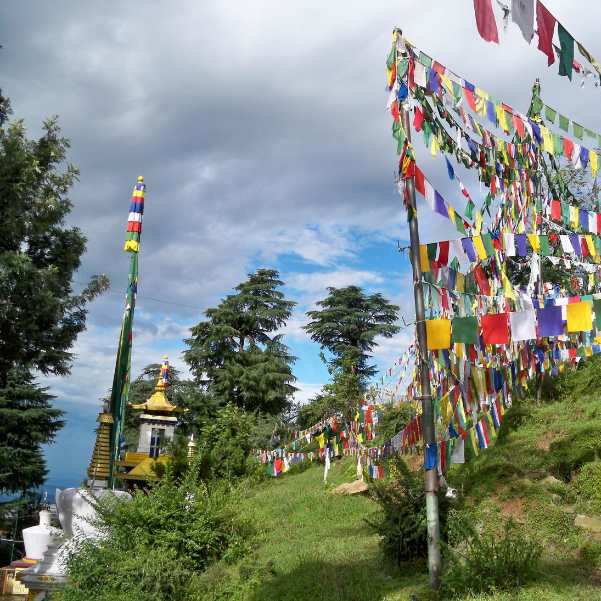
The first time you walk through McLeodGanj and hear Tibetan chants drifting out of a monastery while prayer flags snap in the wind above a narrow lane, you realise this is not just another hill town.
This is where Tibetan life continues in exile. The monasteries are not tourist attractions. The monks are not performers.
The food is not fusion. Everything here carries the weight of a culture that was uprooted and rebuilt, quietly, on a Himalayan ridge in Kangra district.
Most travellers come to McLeodGanj for the cafés and Triund. They walk past the most important Tibetan cultural sites in India without realising what they missed.
This guide by Travel Coffee is for the ones who want to actually understand what makes this place different.
Quick Answer
McLeodGanj is called Little Lhasa because of its large Tibetan population and the exile institutions that have operated here for decades.
If you have one day for Tibetan culture, start at the Tsuglagkhang Complex (the main Tibetan temple tied to His Holiness the Dalai Lama), then walk to Namgyal Monastery right next to it.
After that, head to the Tibet Museum and the Library of Tibetan Works and Archives at Gangchen Kyishong.
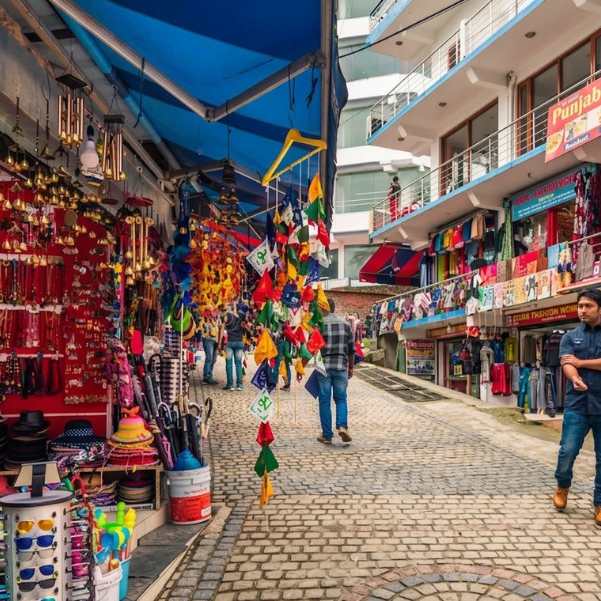
Spend your evening walking through the Tibetan market near the main square for handicrafts, prayer beads, and street food.
If you have a second day, Norbulingka Institute in Sidhpur is where you see Tibetan art and craft traditions up close. It is about 10 km from McLeodGanj, down towards Dharamshala.
That is the honest cultural core of this town. Everything else is a bonus.
Talk to our team on WhatsApp to plan a Dharamshala trip focused on real Tibetan cultural experiences.
👉 WhatsApp us for a Tibetan culture focused Dharamshala itinerary
Why Is McLeodGanj Called Little Lhasa?
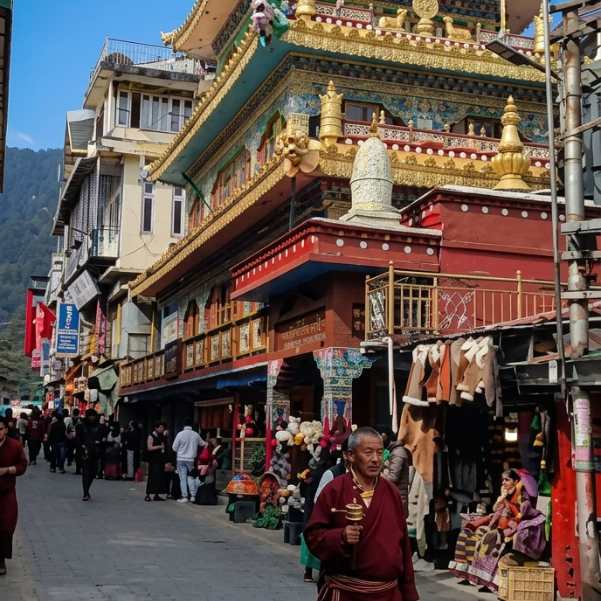
After the Tibetan exile began in 1959, thousands of Tibetans settled in this part of Himachal. Over the decades, McLeodGanj became the centre of Tibetan religious, political, and cultural life outside Tibet.
This is not a nickname someone invented for tourism. The town earned it because Tibetan monasteries, schools, libraries, museums, and government-in-exile offices all operate here.
Walk through the lanes near the main temple and the signs are in Tibetan. The conversations around you are in Tibetan. The smell from the kitchens is butter tea and thukpa.
What makes McLeodGanj different from, say, Majnu Ka Tilla in Delhi or the Tibetan settlement in Bylakuppe is the density of it all.
The spiritual headquarters, the preservation institutions, the living community, and the daily practice of faith all sit within walking distance of each other.
You do not need a guide to feel this. You just need to slow down and pay attention.
Where Can You Experience Tibetan Culture in McLeodGanj First?
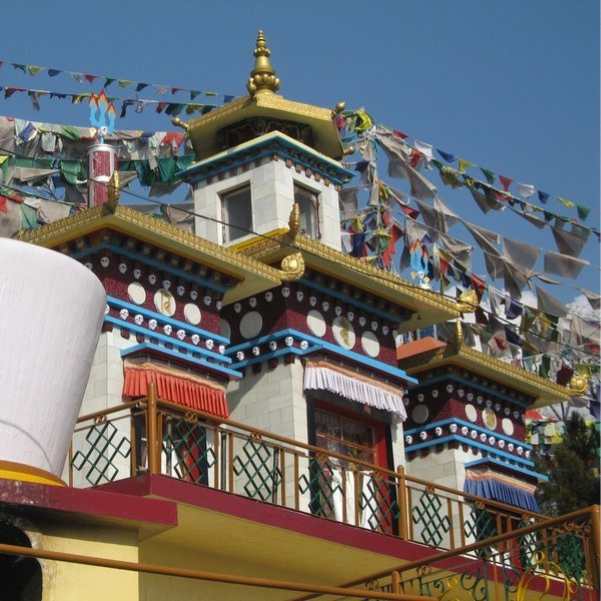
Start at the Tsuglagkhang Complex. Every time.
Most tourists enter, take a photo of the golden Buddha statue, spin a couple of prayer wheels, and leave in 20 minutes. That is sightseeing, not cultural experience.
What we always tell our travellers is to sit down somewhere in the complex for at least 15 minutes. Watch the Tibetan devotees doing kora (the circumambulation walk around the temple).
Notice how they move slowly, spinning every prayer wheel along the path. Listen to the low murmur of chanting from inside the prayer halls.
The rhythm of this place is completely different from the noisy main square just a few hundred metres away. If you rush through it, you miss the entire point.
Go in the morning. The light is softer, the crowds are thinner, and you are more likely to find monks in prayer rather than tourists posing for reels.
What Are the Most Important Tibetan Cultural Places to Visit?
Tsuglagkhang Complex and Dalai Lama Temple
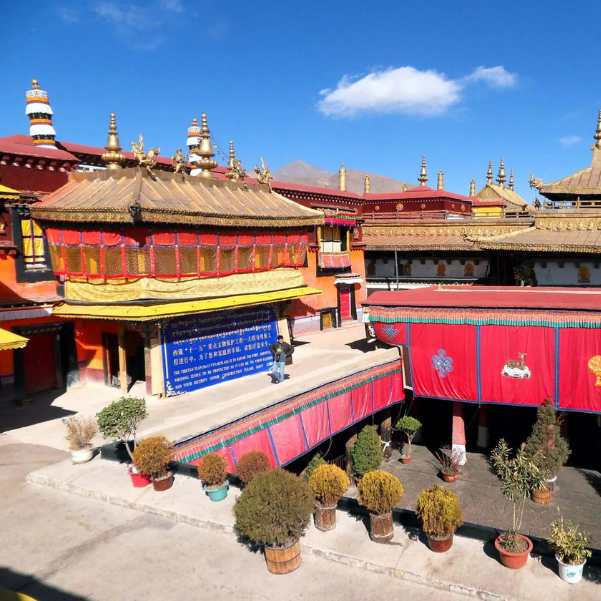
This is the emotional centre of McLeodGanj for most visitors. The complex houses the main temple, smaller prayer halls, and large images of Buddha, Avalokiteshvara, and Padmasambhava.
What most tourists get wrong here is treating it like a monument. It is not. This is an active place of worship.
Tibetan families come here daily. Monks study and pray here. The kora path around the complex is walked by devotees every single morning.
Our suggestion: do the full kora walk at least once. It takes about 15 to 20 minutes. The path is lined with prayer wheels, and you walk it clockwise.
Even if you are not Buddhist, the quiet focus of the people around you changes how the place feels.
Do not plan this as a 10-minute photo stop. Give it at least an hour.
Namgyal Monastery
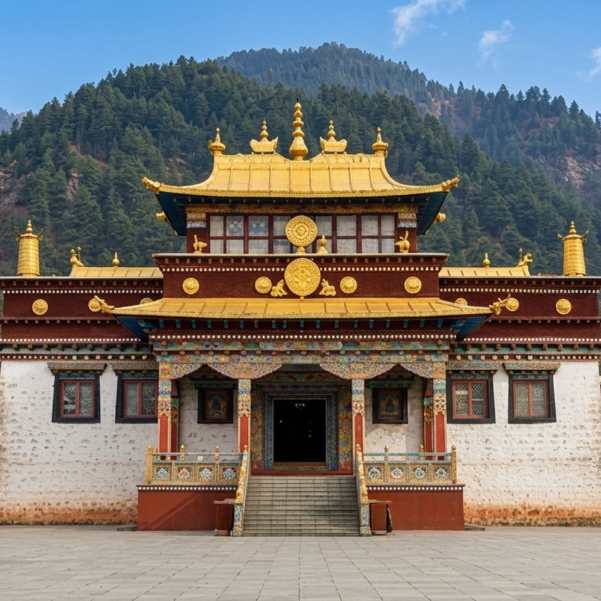
Namgyal Monastery is the personal monastery of His Holiness the Dalai Lama. It sits adjacent to the Tsuglagkhang Complex, and many visitors walk right past it without realising what it is.
This is one of the most meaningful stops for anyone trying to understand Tibetan Buddhist life in McLeodGanj. The monastery is a working institution where monks study, debate, and practice daily.
In our experience helping travellers plan Dharamshala trips, the ones who spend even 20 minutes sitting quietly inside Namgyal come away with a very different feeling than those who only visited the main temple.
There is something about the scale of it. It is smaller, more intimate, and you are closer to the actual practice.
Be respectful. Keep your voice low. Ask before taking close-up photos of monks or rituals. This is someone's place of worship, not a photography set.
Tibet Museum
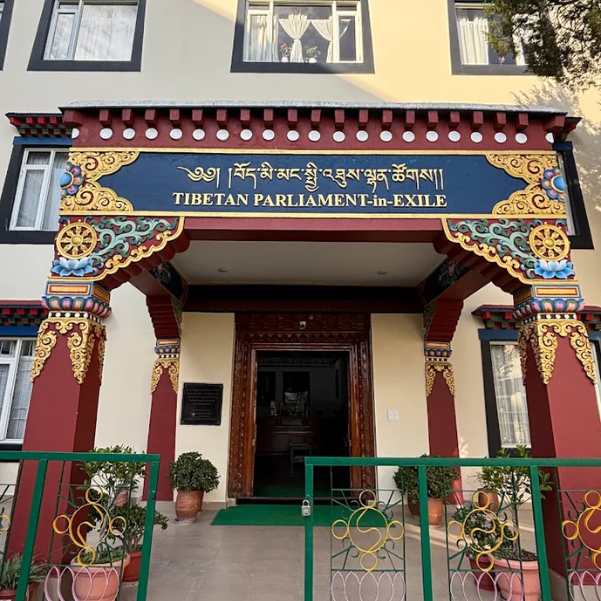
Here is something most travel blogs still get wrong: the Tibet Museum is no longer inside the Main Temple complex.
It has shifted to Gangchen Kyishong, which is near the Library of Tibetan Works and Archives, down the road from McLeodGanj towards lower Dharamshala. If you show up at the temple looking for the museum, you will waste time.
The museum was established in 1998 and documents the Tibetan experience of exile, resistance, and cultural survival. The exhibits are not flashy. There are no interactive screens or VR experiences.
What you get is photographs, personal accounts, and historical documents that tell you exactly what happened and why this community is here.
Official timings are 9:00 AM to 5:00 PM, with a lunch closure from 1:00 PM to 2:00 PM. Plan around that break or you will find the doors shut.
If you want to understand why McLeodGanj exists the way it does, this museum gives you that context better than any guidebook.
Library of Tibetan Works and Archives
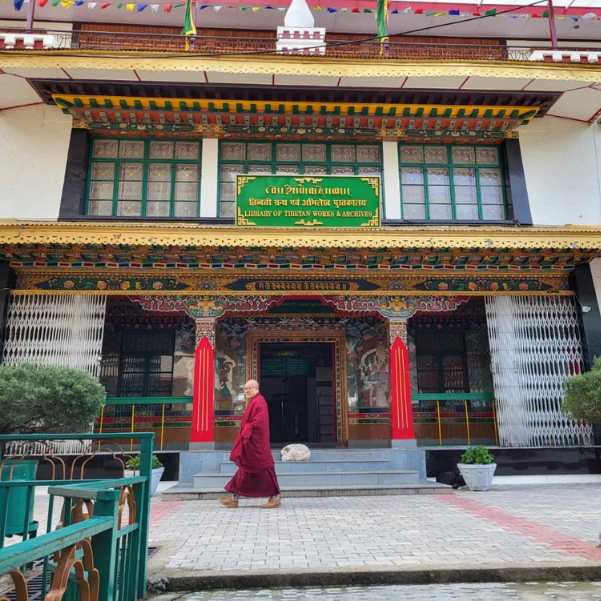
The LTWA sits near the Tibet Museum at Gangchen Kyishong. This is not a regular library. It is one of the most important Tibetan knowledge preservation centres in the world.
The library holds thousands of Tibetan manuscripts, books, and archival material. It also runs courses in Tibetan language and Buddhist philosophy.
Even if you are not a scholar, a short visit gives you an idea of how seriously this community treats the preservation of its own intellectual traditions.
Working hours are 9:00 AM to 5:00 PM with a 1:00 PM to 2:00 PM lunch break. The LTWA is closed on Sundays, 2nd, 3rd, 4th and 5th Saturdays, and gazetted holidays.
They publish an official 2026 holiday list, so check it before you plan your visit. Showing up on a closed day is a common mistake.
This is the kind of place that does not make it onto most Instagram itineraries, but it stays with you longer than any café view.
Norbulingka Institute
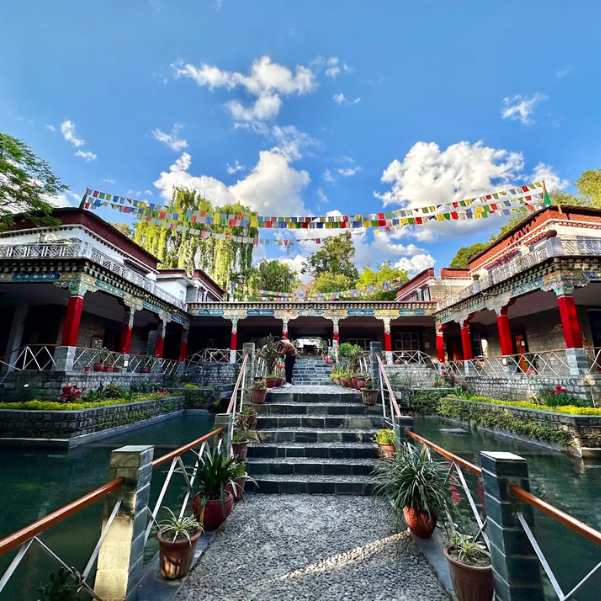
Norbulingka Institute is at Sidhpur, Dharamshala, about 10 km from McLeodGanj. It is a bit of a detour, but if Tibetan art and craft interest you, this is where you see them practised in real time.
The institute preserves traditional Tibetan art forms including thangka painting, woodcarving, and textile work.
The grounds are designed in traditional Tibetan architectural style, and the atmosphere is noticeably calmer than McLeodGanj.
Official visiting hours are 9:00 AM to 5:30 PM, and the institute says it is open 7 days a week.
We usually recommend Norbulingka for the second half of a day or as a separate half-day visit. Trying to squeeze it into a one-day McLeodGanj culture walk makes the day too rushed. If you have two days in the area, give Norbulingka its own morning or afternoon.
For a broader look at what to see in this area beyond the Tibetan cultural sites, our guide on the best places to visit in Dharamshala and McLeodGanj covers the full picture.
What Is the Best One-Day Tibetan Culture Itinerary in McLeodGanj?
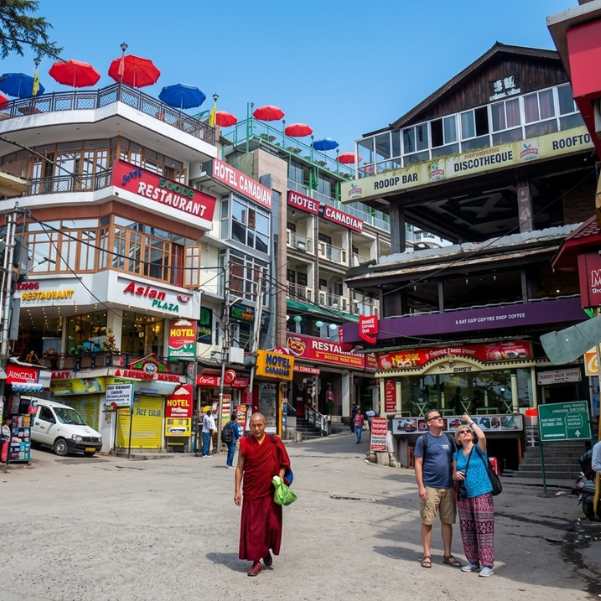
Here is a realistic culture-first day that does not feel rushed.
Start your morning at the Tsuglagkhang Complex. Arrive early, before the day-tripper crowds. Do the kora walk. Sit inside the prayer hall for a few minutes. Let the place settle in.
Walk next door to Namgyal Monastery. Spend 20 to 30 minutes here. Watch, listen, and take it in without hurrying.
After that, head downhill towards Gangchen Kyishong. The Tibet Museum and the LTWA are both here.
Give yourself at least an hour for the museum and 30 minutes for the library. Remember, both close for lunch between 1:00 PM and 2:00 PM, so time this accordingly.
Head back up to McLeodGanj by mid-afternoon. Walk through the Tibetan market near the main square.
Browse the shops selling prayer flags, singing bowls, Tibetan jewellery, and handmade crafts. This is not high-end shopping. It is slow, colourful, and a part of the culture.
End your day at a small Tibetan restaurant. Order a bowl of thukpa and sit. That is your one-day Tibetan culture walk in McLeodGanj, done properly.
If you have a second day, add Norbulingka Institute in the morning and spend the afternoon revisiting any spot you felt rushed at.
In our experience, the second day is where people actually stop taking photos and start absorbing.
What Should You Notice Beyond Monasteries?
The real texture of Tibetan culture in McLeodGanj is in the small things you notice between the big stops.
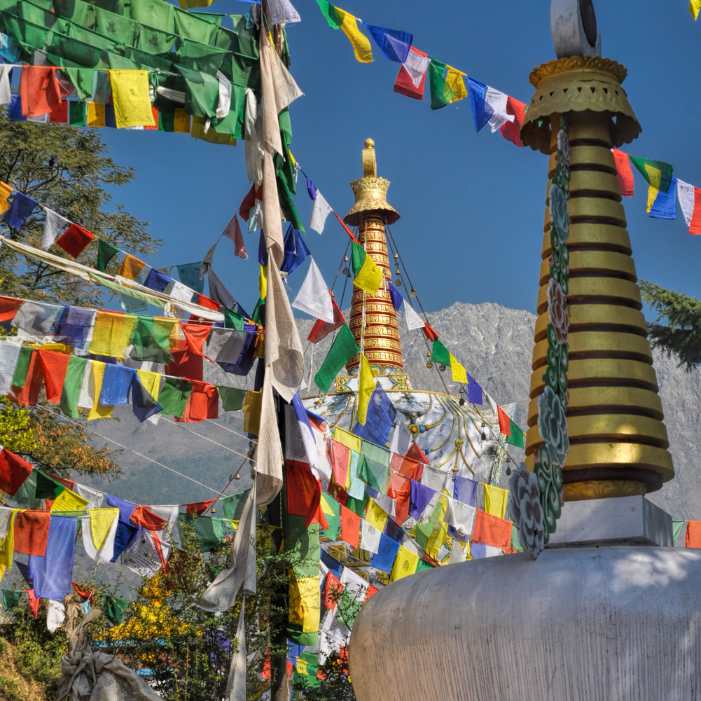
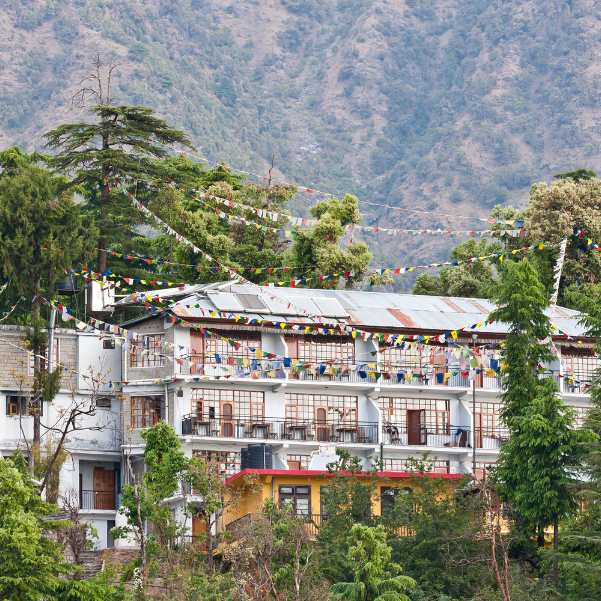
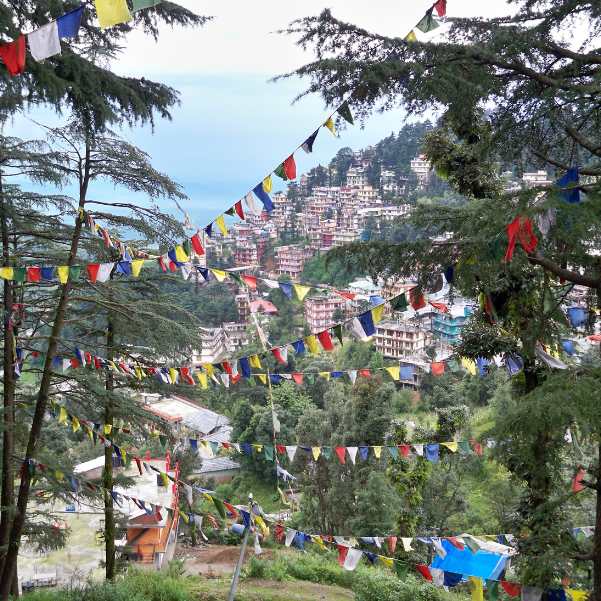
Prayer flags are strung across lanes, over rooftops, between trees. They are not decorations.
Each flag carries printed prayers that are believed to spread goodwill as the wind blows through them.
The faded, torn ones have been there longest, and locals leave them until they disintegrate naturally.
Mani wheels line the walls of temples and monastery compounds. Devotees spin them as they walk past, every single time. Watch how automatic the gesture is. That is not performance. That is daily life.
Look for the kora paths. These are circular walking routes around sacred sites. You will see Tibetans of all ages walking them, some with prayer beads, some with small hand-held prayer wheels. The kora at Tsuglagkhang is the most visible, but smaller paths exist elsewhere too.
Tibetan bookshops near the main square sell texts on Buddhism, Tibetan history, and philosophy. Some of these shops have been here for decades. The bookseller can usually tell you what is worth reading if you ask.
Murals on monastery walls depict Buddhist stories and Tibetan cosmology. Most visitors glance at them. Spend a minute looking closely and you will notice the detail and symbolism packed into every panel.
Chanting drifts out of monasteries at certain times of day. If you hear it, stop walking. Stand still for a minute. That sound is the reason this town feels different from every other hill station in Himachal.
What Tibetan Food Should You Try in McLeodGanj?
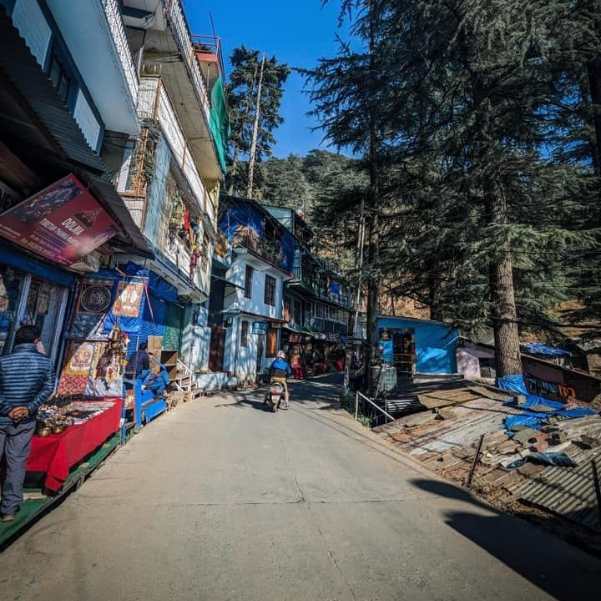
Tibetan food here is not fancy. It is warm, filling, and made for cold mountain weather.
Momos
Momos are everywhere, and yes, you should eat them. But skip the overcrowded spots near the taxi stand. Walk into the smaller Tibetan-run places in the lanes behind the main square.
The steamed vegetable momos at these family-run spots are better than anything the big restaurants serve, and they cost half the price.
Thukpa
Thukpa is a Tibetan noodle soup. On a cold evening in McLeodGanj, a bowl of thukpa does more for your mood than any scenic viewpoint. Order it with vegetables or chicken. The broth is the star.
Tingmo
Tingmo is a steamed Tibetan bread, soft and fluffy, served with a spicy vegetable stew. Most tourists do not know about it because it does not photograph well. But it is one of the most satisfying things you will eat here.
Butter tea
Butter tea (po cha) is an acquired taste. It is salty, not sweet, and made with yak butter. Try a small cup before committing to a full one.
Some people love it immediately. Others need a second visit to McLeodGanj before it clicks.
The point of eating Tibetan food here is not to review restaurants. It is to sit in a small kitchen-style eatery, watch the cook shape momos by hand, and eat something that has been made the same way for generations. That is the cultural experience.
One money-saving tip most travel blogs miss: skip the more touristy café stops for at least one meal and try a smaller Tibetan eatery in the inner lanes.
These places are often more budget-friendly than the better-known main-road cafés, especially for momos, noodles, and other simple dishes.
How Should Tourists Behave Respectfully in Tibetan Monasteries and Museums?
This is not complicated, but it matters.
Dress modestly. Cover your shoulders and knees. This is not a strict dress code like some temples, but it shows respect and monks notice.
Keep your voice low inside prayer halls and monastery compounds. Conversations at normal volume feel loud in spaces designed for silence.
Do not take close-up photos of monks without asking. Many are fine with it. Some are not. A quick nod or gesture asking for permission takes two seconds and avoids discomfort.
Walk clockwise around prayer wheels and kora paths. This is the direction of practice in Tibetan Buddhism. Going the other way disrupts the flow for devotees.
Remove your shoes where indicated. Follow any signs inside temples and museums. If someone on staff tells you not to touch something, do not touch it.
At the Tibet Museum, do not rush. The exhibits cover painful history. Give them the time and attention they deserve.
None of this requires special knowledge. Just pay attention, be quiet where quiet is expected, and treat every space like someone's home. Because for the Tibetan community here, that is exactly what these places are.
Is One Day Enough, or Should You Stay Two Days?
One day gives you the highlights. Tsuglagkhang, Namgyal Monastery, the Tibet Museum, LTWA, the Tibetan market, and a couple of good meals. If that is all your schedule allows, it works.
But in our experience sending hundreds of travellers to McLeodGanj, the ones who spend two days always come back saying the second day changed their understanding of the place.
Here is why. On day one, you are navigating, finding places, checking timings, and ticking things off. On day two, you sit longer at the monastery.
You go back to the museum section you rushed past. You have a real conversation at a Tibetan café. You wander without a plan and notice things you missed.
If culture is your main reason for visiting, two days is the honest recommendation. One for the landmarks, one for the feeling.
If you are combining McLeodGanj with other Himachal destinations, check out our Dharamshala tour packages for itineraries that give you enough time here without wasting days.
Practical 2026 Travel Tips Before You Go
Many old blog posts and even some travel agency websites still show the Tibet Museum inside the Tsuglagkhang Complex. That information is outdated.
The museum is now at Gangchen Kyishong, near the LTWA. If you plan based on old articles, you will end up confused and waste a chunk of your morning.
Always check official timings before leaving your hotel. The 1:00 PM to 2:00 PM lunch break at both the museum and library catches a lot of people off guard. Plan your visit for the morning or after 2 PM.
Dharamshala is about 10 km from McLeodGanj. The drive takes about 30 minutes depending on traffic.
If you are visiting Norbulingka or the LTWA, you are heading towards the Dharamshala side, not staying in upper McLeodGanj.
The nearest airport is Gaggal Airport, about 10 km from Dharamshala. Flights connect to Delhi but cancellations happen during bad weather.
The road from Delhi to McLeodGanj is roughly 500 km and takes about 10 to 12 hours by car.
If you are considering Triund as an add-on, keep in mind that permit requirements, camping permissions, and trekking rules change based on district orders and weather alerts.
For a broader Himachal circuit that includes Dharamshala alongside Shimla and other spots, our Shimla packages are a good starting point.
Here is a skip-this tip: you can get some of the best mountain views in McLeodganj for free from the kora path behind the temple, so think twice before paying extra for a photo setup near the market. Buy a cup of butter tea instead.
Where to Stay If Culture Is Your Main Focus
If your trip is built around Tibetan culture, stay near the main square in McLeodGanj. Everything from Tsuglagkhang to Namgyal Monastery to the Tibetan market is within walking distance. You can step out of your hotel and be at a monastery in five minutes.
The downside: the main square area is noisy, crowded, and the accommodation quality is average for the price, especially during peak season.
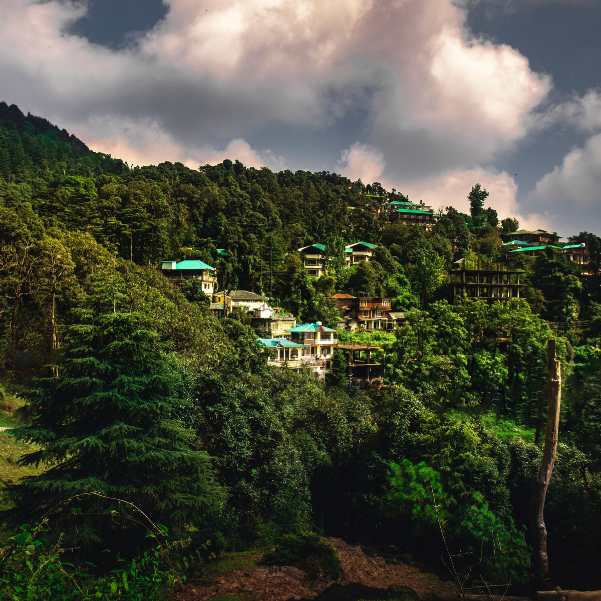
If you want quieter surroundings and do not mind a short auto or taxi ride to the temple area, staying in Dharamkot (uphill from McLeodGanj) or in lower Dharamshala are both good options. Dharamkot is popular with solo travellers and has a more relaxed vibe.
If Norbulingka Institute is high on your list, staying in Sidhpur or lower Dharamshala puts you closer to both the institute and the LTWA-Tibet Museum complex at Gangchen Kyishong. You lose walkability to the main temple area but gain a calmer base.
Our team usually recommends one night near the main square and one night lower down if you have two days. That way you get the best of both without burning time in traffic.
Browse our popular Himachal tours if you want a McLeodGanj stay combined with Manali, Shimla, or Dalhousie in one trip.
Final Takeaway
McLeodGanj is one of the few places in India where you can experience a living, breathing culture that is not packaged for tourists.
The monasteries are active. The monks are real. The food is daily, not seasonal. The museum tells a story that is still being written.
But you only get that experience if you slow down. Walk the kora. Sit in a prayer hall. Eat where the Tibetans eat. Ask questions at the bookshop.
Watch the prayer flag guy on the corner re-tie a faded set with the same care he has been doing it for years.
This is not a checklist town. It is a listening town.
If you want help putting together a McLeodGanj trip that gives you real time at these cultural sites instead of a rushed day-trip from Delhi, Talk to our team on WhatsApp, we plan these itineraries regularly. We know the timing gaps, the lunch closures, and the routes that work.
👉 WhatsApp us and get a McLeodganj trip planned with real cultural time, not a rushed itinerary
Explore Our Curated Dharamshala Tours
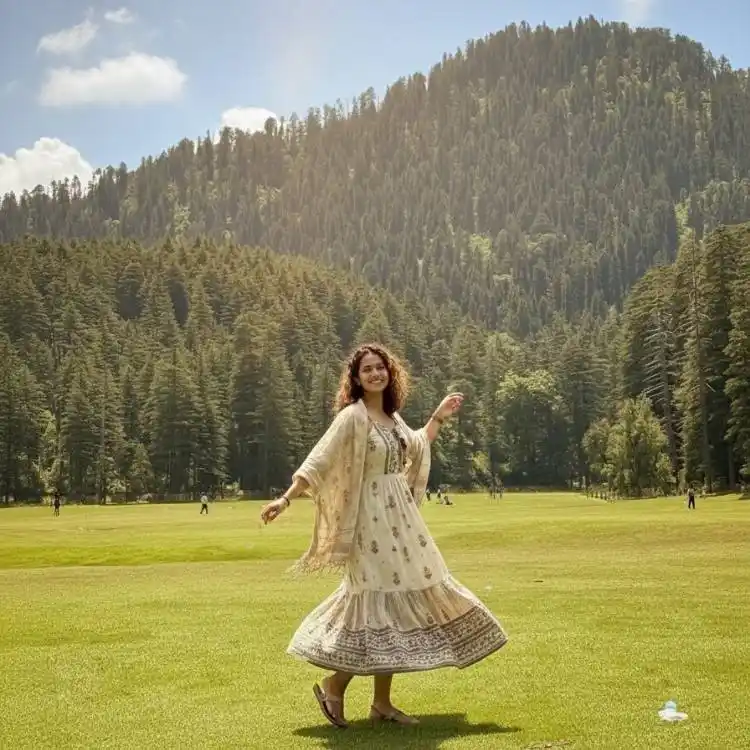 7D/6N
7D/6NDharamshala–McLeod Ganj, Dalhousie & Khajjiar With Amritsar
1D Delhi•2D McLeod Ganj / Dharamshala+3
₹23,999₹28,999SAVE INR 5,000/ person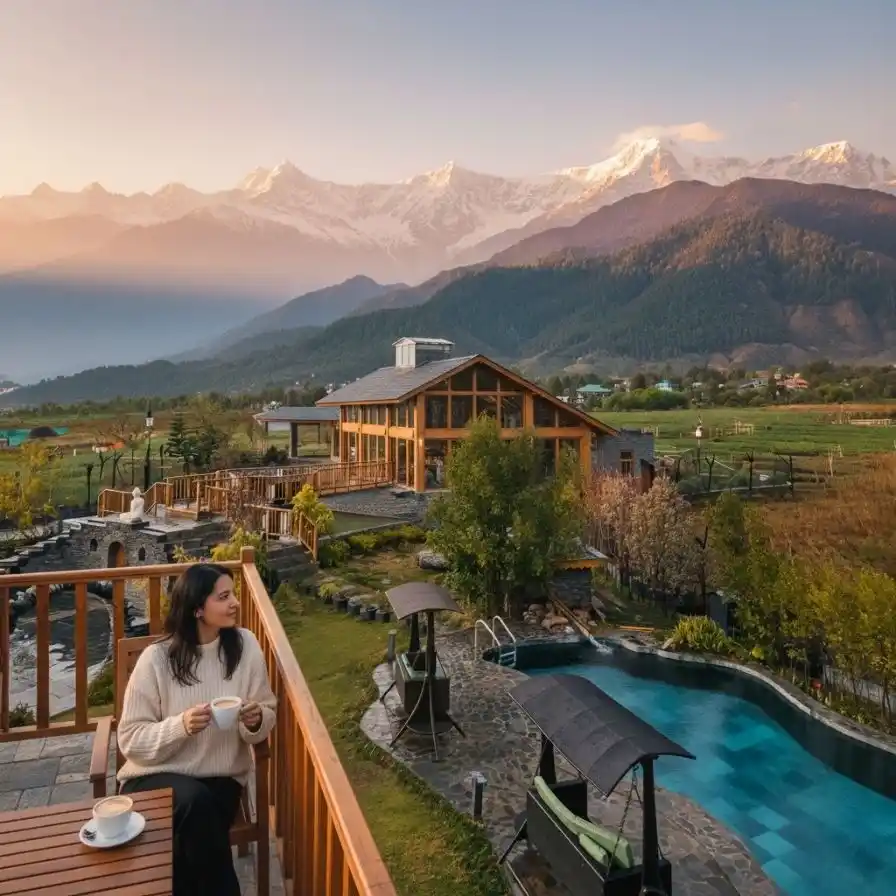 3D/2N
3D/2NDharamshala & McLeodganj Luxury Hideaway
1D Delhi•2D Dharamshala / McLeodganj
₹23,799₹29,999SAVE INR 6,200/ person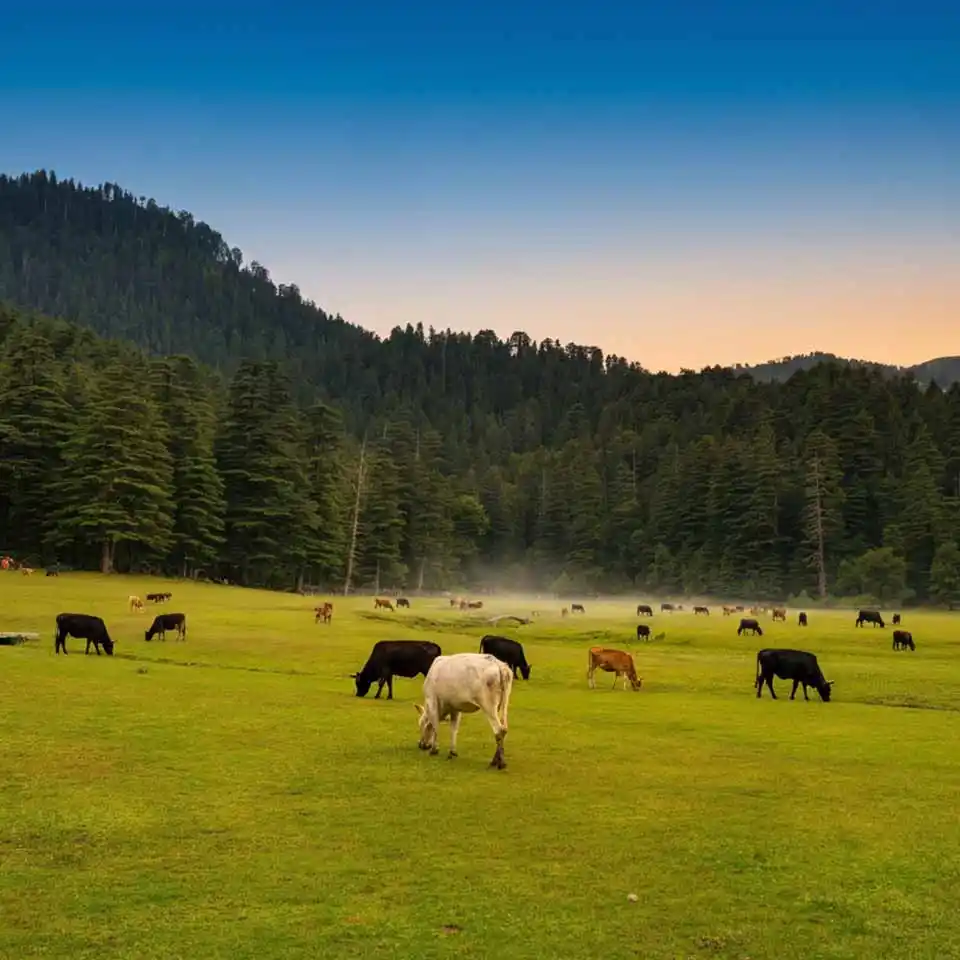 6D/5N
6D/5NDharamshala Dalhousie Khajjiar Meadow Circuit
1D Delhi•2D McLeodganj+1
₹19,999₹25,999SAVE INR 6,000/ person
Related topics
Frequently Asked Questions
Why is McLeodGanj called Little Lhasa?
McLeodGanj is called Little Lhasa because of its large Tibetan population and the presence of major Tibetan exile institutions, including monasteries, the Tibet Museum, and the Library of Tibetan Works and Archives. The Tibetan community has shaped the town's identity over decades.
What is the difference between Dharamshala and McLeodGanj?
McLeodGanj is part of the Dharamshala area in Kangra district. Dharamshala is the larger town about 10 km lower. McLeodGanj sits on the upper ridge and is where most Tibetan cultural sites and tourist activity are concentrated.
Which monastery is best in McLeodGanj?
Namgyal Monastery is the most significant because it is the personal monastery of His Holiness the Dalai Lama. For a first visit, combine it with the Tsuglagkhang Complex right next to it. Together, they give you the strongest sense of Tibetan Buddhist life in McLeodGanj.
Is the Tibet Museum inside the Dalai Lama Temple complex?
No. The Tibet Museum has shifted from the Main Temple complex to Gangchen Kyishong, near the Library of Tibetan Works and Archives. Many old blogs still place it at the temple. Check updated information before visiting.
Can tourists visit Namgyal Monastery?
Yes. Tourists can visit Namgyal Monastery. Dress modestly, keep your voice low, and ask before photographing monks. It is a place of active worship, so behave accordingly.
What is the best time to visit McLeodGanj for culture?
Cultural sites are open year-round, so any month works. However, if you want pleasant weather for walking between sites, March to June and September to November are the most comfortable. Monsoon months bring heavy rain and occasional road disruptions.
How many days are enough for McLeodGanj?
One day covers the main highlights. Two days give you a much deeper experience, including time for Norbulingka, the museum, and unplanned exploration. If culture is your priority, two days is what we recommend.
What Tibetan food should I try in McLeodGanj?
Start with steamed momos and thukpa. Try tingmo with vegetable stew if you want something different. Attempt butter tea at least once, it is salty, not sweet, and very traditional. Eat at the smaller Tibetan eateries near the temple area, not the main road cafés.
Is Norbulingka worth visiting?
Yes, especially if you care about Tibetan art, thangka painting, and traditional craftsmanship. It is in Sidhpur, about 10 km from McLeodGanj, so give it a separate half-day or combine it with the Tibet Museum and LTWA visit.
Are there dress rules for monasteries in McLeodGanj?
There is no strict enforced dress code, but modest clothing that covers shoulders and knees is expected. Shoes must be removed where indicated. This is common sense more than a formal rule, and monks and locals appreciate the effort.
Can I attend Dalai Lama teachings?
Public teachings happen periodically in Dharamshala. Registration is handled at the Main Tibetan Temple courtyard, with registration hours listed on DalaiLama.com as 9 AM to 1 PM and 2 PM to 5 PM. Check the official schedule well in advance because teachings are not held every week.
Is McLeodGanj good for a solo cultural trip?
Very much. The cultural sites are all walkable from the main area, the town is safe, and solo travellers often find it easier to sit quietly in monasteries and have conversations with locals.
More about Dharamshala
 Dharamshala
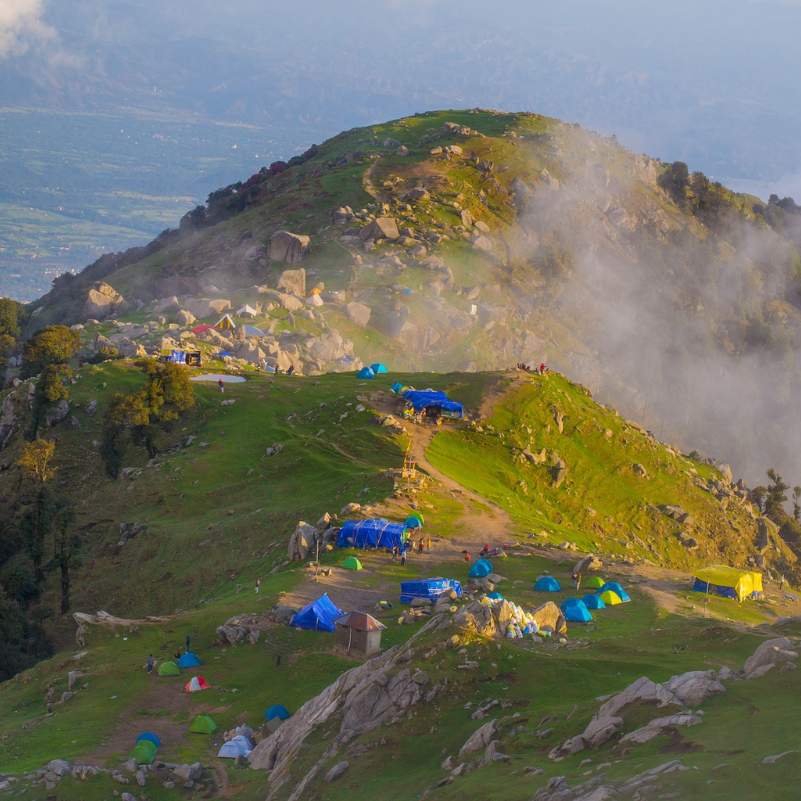
Trekking in Dharamshala: Every Major Trek Ranked (2026 Guide)
Planning to go trekking in Dharamshala in 2026? This complete guide ranks the region's best treks by difficulty, scenery, and experience, while covering ideal seasons, trail highlights, and practical planning tips for every type of trekker.
- Things to Do
 Dharamshala
Bir Billing Paragliding 2026: Complete Guide and How to Reach from Dharamshala
Planning to experience Bir Billing paragliding in 2026? This complete guide covers flight options, costs, the best season to fly, safety tips, and how to reach Bir Billing from Dharamshala for one of Himachal Pradesh's most iconic adventure experiences.
- Things to Do
- How to Reach
 Dharamshala
5 Days in Dharamshala and McLeodganj: A Slow Travel Itinerary for 2026
Planning 5 days in Dharamshala and McLeodganj in 2026? This slow travel itinerary combines iconic attractions, hidden local experiences, cafés, nature walks, and cultural stops to help you experience the region at a relaxed pace without rushing from one sight to another.
- Itinerary
- Things to Do