
Ladakh Trip Cost from Delhi in 2026: Real Budget for Flight, Road Trip, Bike and Packages
Everyone planning a Ladakh trip from Delhi eventually lands on the same question: how much is this actually going to cost me?
And the internet gives you everything from "₹15,000 budget trip" clickbait to "₹1,00,000 luxury packages" that make it sound like you need a second mortgage.
The truth sits somewhere in between, and the exact number depends on how you get there, who you travel with, and what kind of beds and meals you are comfortable with.
This guide by Travel Coffee breaks down every cost component we have seen across hundreds of Ladakh trip plans. Real numbers, real trade-offs, no made-up figures.
Quick Answer
A realistic Ladakh trip cost from Delhi in 2026 falls between ₹25,000 and ₹60,000 per person for most travellers. Budget backpackers in groups can push it down to the ₹25,000 mark.
Mid-range travellers flying to Leh and sharing taxis will spend ₹35,000 to ₹55,000. Comfort travellers wanting good hotels and private vehicles can cross ₹60,000 easily.
The biggest cost swings come from how you reach Leh (flight vs road vs bike), how many people share your taxi, what kind of hotels you pick, and how many days you spend.
A solo traveller on a rented bike from Delhi will spend very differently from a couple flying to Leh with a private cab.
How Much Does a Ladakh Trip from Delhi Actually Cost?
The broad ranges look like this.
A fly-to-Leh trip with local taxi sharing runs ₹40,000 to ₹55,000 per person for 7 to 9 days. This is the most common format for working professionals with limited leave.
A road trip using your own car or bike works out to ₹27,000 to ₹35,000 per person, but you need 12 to 15 days minimum, and the fuel, food, and extra hotel nights add up.
A rented bike trip from Delhi is the most expensive self-planned option at ₹48,000 to ₹60,000 per person once you factor in rental, fuel, gear, and the longer duration.
A shared taxi and public transport style trip costs ₹25,000 to ₹33,000 per person but needs patience, flexibility, and comfort with basic guesthouses.
A package from Delhi with transport, stays, and sightseeing ranges from ₹20,000 to ₹45,000 per person depending on inclusions, and whether flights are part of the deal or separate.
Solo travellers almost always pay more per person than groups of 3 to 6 because taxi costs, room costs, and even meal sharing works against you when you are alone.
In our experience running mountain trips, the single most common budgeting mistake people make is not accounting for Leh taxi costs. Those day rates add up fast, and we will get into the exact numbers below.
What Changes Your Ladakh Budget the Most?
Four things move the needle more than anything else.
Flights are the first big variable. A Delhi to Leh one-way ticket swings between ₹6,000 and ₹15,000 depending on when you book and which month you fly. Book 45 to 60 days early in shoulder season and you get the lower end.
Book last minute in July and you are paying top price. Return flights from Leh to Delhi show similar ranges, with some Air India fares starting as low as ₹4,210 one way on off-peak days.
Local taxi sharing is the second. A private Innova or XUV for the Nubra-Pangong-Leh circuit costs around ₹22,410 for 3 days. Split that between 2 people and it is ₹11,200 each.
Split it between 5 and it drops to ₹4,500 each. This single cost difference can change your entire trip budget by ₹5,000 to ₹7,000.
The hotel category is the third. A basic guesthouse in Leh costs ₹800 to ₹1,500 per night. A decent mid-range hotel costs ₹2,500 to ₹4,500. A good boutique property can cross ₹6,000. Over 6 to 7 nights, that gap adds ₹10,000 to ₹30,000 to your total.
The number of days is the fourth. More days mean more hotel nights, more meals, more taxi days. A tight 6-day trip and a relaxed 10-day trip can differ by ₹8,000 to ₹15,000 just on stay and food.
Road opening dates also play a role. The Srinagar-Leh highway usually opens around late March to mid-April, while the Manali-Leh highway is expected to open around mid-May to late May or early June in 2026.
If you plan a road trip before the Manali route opens, you might need to reroute through Srinagar, which changes your fuel, tolls, and overnight costs.
Ladakh Trip Cost from Delhi by Flight
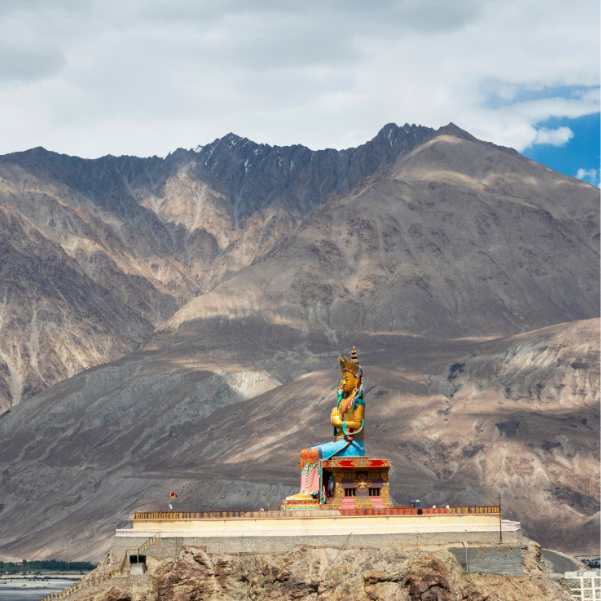
Flying is the fastest way in. The flight from Delhi to Leh takes about 1 hour 15 minutes and drops you straight into the mountains.
Here is what the budget looks like for a 5 nights 6 days trip by flight.
Return flights Delhi to Leh and back will cost ₹12,000 to ₹28,000 depending on season and booking timing.
Airport transfers in Leh run about ₹500 to ₹800 each way. Your biggest single expense after flights is local sightseeing transport.
A full day Leh local sightseeing taxi costs around ₹3,000. A day trip to Nubra Valley costs around ₹9,744 and a day trip to Pangong Lake costs around ₹10,470 for an Innova or XUV class vehicle. These are full vehicle costs, so sharing them brings per-person costs down sharply.
Hotels for 5 nights will run ₹5,000 to ₹25,000 depending on category. Food adds ₹500 to ₹1,000 per day depending on where you eat. Permits and environmental fees are a few hundred rupees (more on this later).
Total for a 5-night flight trip: ₹30,000 to ₹55,000 per person in a group of 2 to 4, and closer to ₹45,000 to ₹65,000 if you are solo and paying full taxi rates.
For a 6 nights 7 days trip, add one more hotel night and one more taxi day, which pushes the total up by ₹3,000 to ₹6,000 depending on your choices.
Flying saves you 2 to 3 days of travel time each way compared to driving. But it does not always save money because you still pay full taxi rates in Leh whereas road trippers sometimes save by using their own vehicle locally.
What flying really saves is leave days, and for most people with regular jobs, that matters more than ₹5,000 either way.
If you want to explore what an organised Ladakh trip looks like with local support, our Ladakh tour packages cover multiple formats.
Ladakh Trip Cost from Delhi by Road
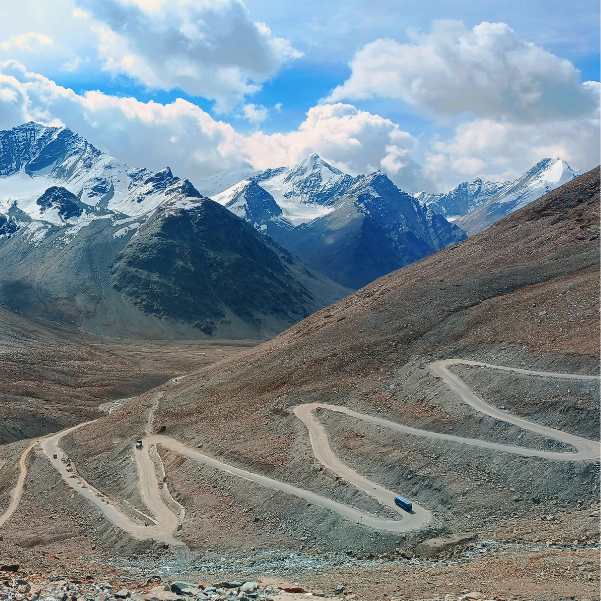
Road trips to Ladakh from Delhi are slower, rougher, and longer. But they are also the ones people talk about for years.
If you are driving your own car or riding your own bike, the per-person cost drops to ₹27,000 to ₹35,000 for a 10 to 14 day trip.
Your main expenses are fuel (₹8,000 to ₹12,000 one way depending on vehicle), highway tolls, hotels along the route (₹1,000 to ₹2,500 per night), food (₹500 to ₹800 per day), and permits once you reach Ladakh.
You will typically spend 2 days driving each way via Manali, with stops at Jispa or Sarchu. The Manali route passes through some of the most dramatic landscapes in India, but the road beyond Rohtang can be genuinely punishing.
If you are planning a road trip in late May or early June, it is worth checking whether Rohtang Pass is open before you commit.
Bus and shared transport travellers can do it for ₹25,000 to ₹33,000. HRTC runs buses from Manali to Leh during the season. The Delhi-Manali leg is cheap by Volvo or semi-sleeper.
In Leh, shared taxis and ride-sharing with other travellers at the taxi stand bring sightseeing costs down. The trade-off is time and comfort. You will wait around, adjust to other people's plans, and stay in whatever guesthouse is available.
The thing most people underestimate about road trips is the extra hotel nights. You need at least 4 extra nights compared to a flight trip (2 each way for the drive), and those add ₹4,000 to ₹10,000 to the total. Road trips save on airfare but spend it on sleep.
Ladakh Bike Trip Cost from Delhi
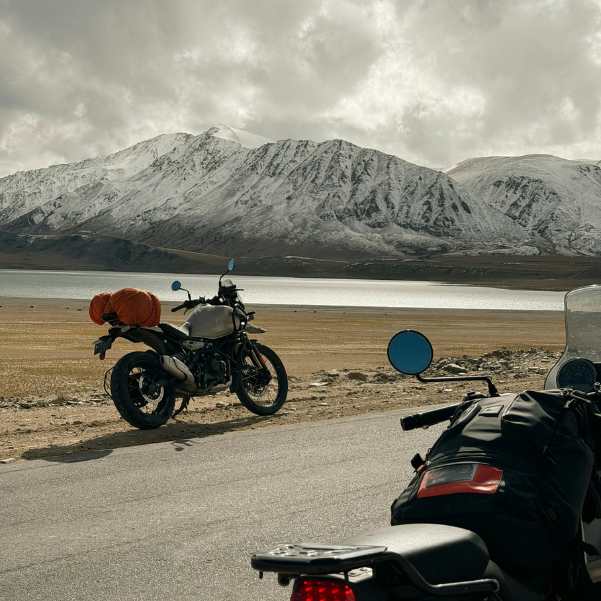
Riding a bike to Ladakh from Delhi is the dream for a lot of people. The cost depends entirely on whether you ride your own machine or rent one.
Renting from Delhi means you pick up the bike, ride to Ladakh, and return it in Delhi. Rental rates vary, but you are looking at ₹1,500 to ₹2,500 per day for a Royal Enfield Classic or Himalayan. Over a 12 to 15 day trip, that is ₹18,000 to ₹37,000 just for the bike.
Add fuel (about ₹6,000 to ₹8,000 for the common 1,200 to 1,400 km circuit), basic maintenance budget, riding gear if you do not own any, hotels, and food. Total comes to ₹48,000 to ₹60,000 per person easily.
Renting in Leh is cheaper if you are flying in. Daily rates in Leh run about ₹1,800 for a Classic 350, ₹2,500 for a Himalayan 410, and ₹3,500 for a BMW G310 GS or KTM 390 Adventure. You rent for 4 to 5 days, ride to Nubra, Pangong, and back.
This way the bike cost stays under ₹12,000 and your total trip cost stays closer to the flight-trip range.
What we always tell solo riders: budget an extra ₹3,000 to ₹5,000 as emergency cash. Punctures, chain issues, and unexpected hotel nights happen on mountain roads.
If you are riding with friends, the per-person cost drops because you share rooms and split backup vehicle costs.
Solo riders spend more than groups on every line item. A group of 3 to 4 riders sharing rooms and splitting repair costs brings the per-person budget down by ₹8,000 to ₹12,000 compared to a solo rider.
Ladakh Package Cost from Delhi
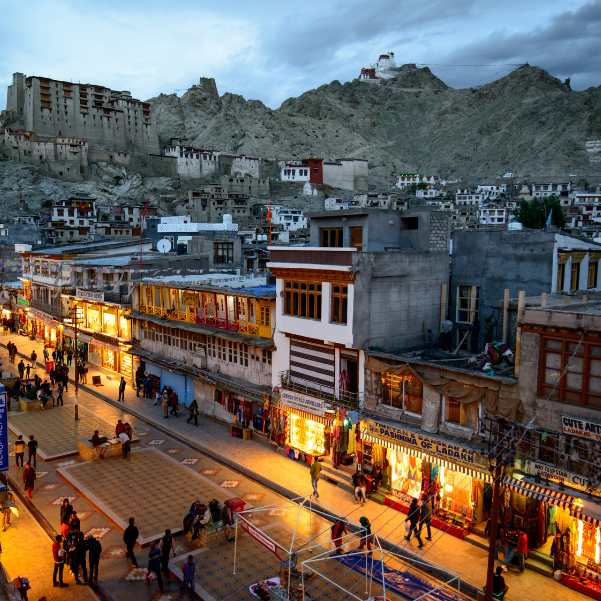
Packages are the most common way families and first-time visitors plan Ladakh. A typical Ladakh package from Delhi costs ₹20,000 to ₹45,000 per person for 5 to 7 days.
What packages usually include: hotel stays in Leh and at Nubra or Pangong, local sightseeing by private vehicle, meals (some include all meals, some only breakfast), permit assistance, and a local coordinator.
What packages usually exclude: flights (most are "land only"), personal expenses, tips, adventure activities like rafting or ATV rides, and extra meals beyond what is listed.
Some online platforms show Ladakh packages from Delhi starting at about ₹26,000 per person. You will also see listings around ₹30,499 per person on sharing basis with 5% GST extra.
Read the fine print carefully. "Per person on twin sharing" means the price assumes two people in a room. Solo travellers pay a supplement.
Who should choose a package? Families, first-timers, people who do not want to deal with taxi negotiations in a place they have never been, and travellers who have limited time and want a fixed plan.
Packages remove the stress of figuring out routes, permits, and vehicle reliability at high altitude.
Who should plan independently? Experienced mountain travellers, groups of friends who want flexibility, bikers, and people who genuinely enjoy the planning process.
Independent planning costs about the same as a mid-range package if you are in a group, sometimes even less.
If you want help putting a Ladakh plan together without locking into a rigid itinerary, talk to our team on WhatsApp. We can build something around your dates, group size, and comfort level.
👉 WhatsApp us and we’ll plan Ladakh around your comfort and timing
Line-by-Line Ladakh Budget Breakdown
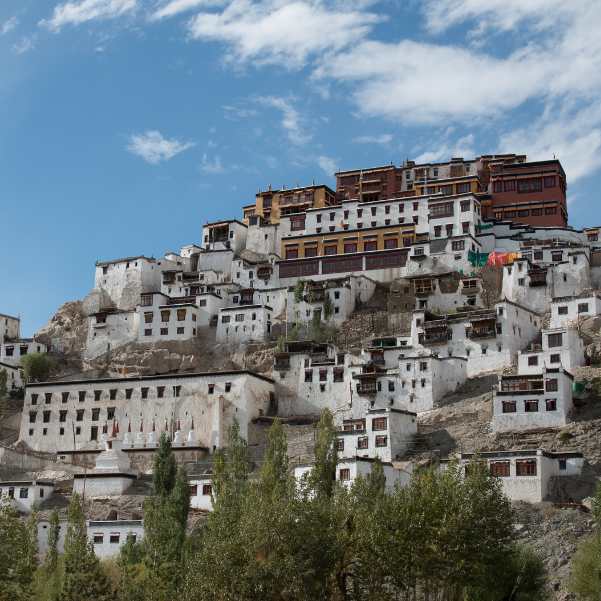
Here is where each rupee goes. These are per-person estimates assuming a group of 2 to 4.
Travel to Leh
Flights cost ₹12,000 to ₹28,000 return. By road from Delhi via Manali, fuel and tolls run ₹4,000 to ₹6,000 per person in a shared car, plus 4 nights of accommodation on the road at ₹1,000 to ₹2,000 per night.
Permits
The environmental fee is ₹400 per person. The wildlife fee is commonly quoted at ₹20 per person per day for protected areas like Nubra and Pangong. The Red Cross fee is around ₹50 to ₹100.
Pay online through the official permit portal before or after arriving in Leh. The total permit cost per person for a standard Nubra-Pangong circuit comes to roughly ₹500 to ₹700.
Local sightseeing transport
This is where group size matters most. Leh local full day sightseeing costs about ₹3,000 per vehicle. A Leh to Nubra day costs ₹9,744. Leh to Pangong costs ₹10,470.
The popular Nubra and Pangong via Shyok 3-day circuit costs ₹22,410. All rates are for an Innova or XUV class vehicle. Split between 4 people, the 3-day circuit is about ₹5,600 each. Split between 2, it is ₹11,200 each.
Always confirm these rates locally before booking, as they can shift slightly between seasons.
Hotels
Budget guesthouses in Leh cost ₹800 to ₹1,500. Mid-range hotels cost ₹2,500 to ₹4,500. Stays at Nubra and Pangong are usually camp-style setups costing ₹1,500 to ₹4,000 per night including meals. Over 6 nights, hotel costs range from ₹6,000 to ₹25,000.
Food
Leh has plenty of good restaurants. A full day of meals costs ₹500 to ₹1,000 depending on where you eat. Thukpa and momos at a local place cost ₹150 to ₹250. A proper meal at a tourist restaurant costs ₹400 to ₹600. On the road or at Nubra and Pangong, meals are usually included in camp stays.
Activities
River rafting at Zanskar confluence costs about ₹1,000 to ₹1,500. ATV rides and camel rides at Hunder cost ₹300 to ₹800. These are optional and add up only if you do multiple activities.
Emergency buffer. Always carry ₹3,000 to ₹5,000 extra. Medical supplies, oxygen cans (₹500 to ₹700 each), unexpected extra nights, and puncture repairs on the road all eat into this.
Fixed costs vs shareable costs. Flights, permits, food, and personal expenses are fixed per person. Taxi costs, hotel rooms, and sometimes even meals are shareable. This is why a couple splits about 30% better than a solo traveller, and a group of 4 to 6 splits even further.
Sample Budgets for Different Traveller Types
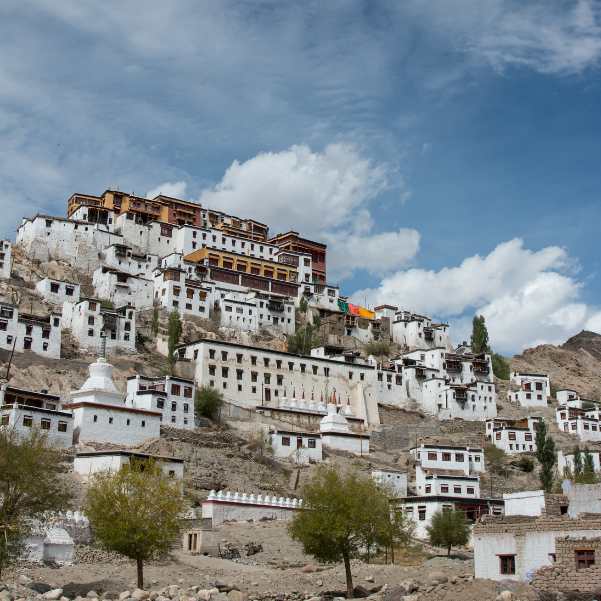
Budget Backpacker from Delhi
You fly on the cheapest ticket you can find, stay in ₹800 to ₹1,200 guesthouses, eat at local dhabas, and join shared taxis with other travellers.
You skip the private cab entirely and use the Leh taxi stand to find people heading to Nubra or Pangong on the same day. You carry your own snacks, drink chai instead of cappuccinos, and keep activities to one or two.
Realistic total: ₹25,000 to ₹33,000 for 7 to 9 days. The trade-off is flexibility and comfort. You might wait a day at the taxi stand for enough people to share a Pangong ride.
Couple Trip from Delhi
You fly to Leh, stay in decent mid-range hotels, hire a private vehicle for the Nubra-Pangong circuit, and eat at a mix of local places and good restaurants. You do one or two activities and buy some Ladakhi souvenirs.
Realistic total: ₹35,000 to ₹50,000 per person for 6 to 8 days. Couples split hotel rooms but pay full taxi rates for two, which is the biggest cost pressure.
Friends Trip of 4 to 6
This is where Ladakh becomes genuinely affordable. You share an Innova or Tempo Traveller, split hotel rooms (triple sharing in some places), and cook or eat group meals. The 3-day Nubra-Pangong circuit at ₹22,410 split 5 ways is just ₹4,500 each.
Realistic total: ₹25,000 to ₹40,000 per person for 7 to 9 days depending on hotel category. Friends trips get the best per-person value of any format.
Family Trip from Delhi
Families usually fly, stay in comfortable hotels, hire a private vehicle for the entire duration, and keep the itinerary relaxed with fewer long drives. Kids need extra food, warmer clothes, and possibly an oxygen can or two as backup.
Realistic total: ₹40,000 to ₹60,000 per person for 6 to 8 days. Families trade budget for safety and comfort, which is the right call at altitude.
Our team always recommends families keep at least one full buffer day in Leh for acclimatization before heading to Nubra or Pangong.
Is It Cheaper to Fly to Leh or Go by Road from Delhi?
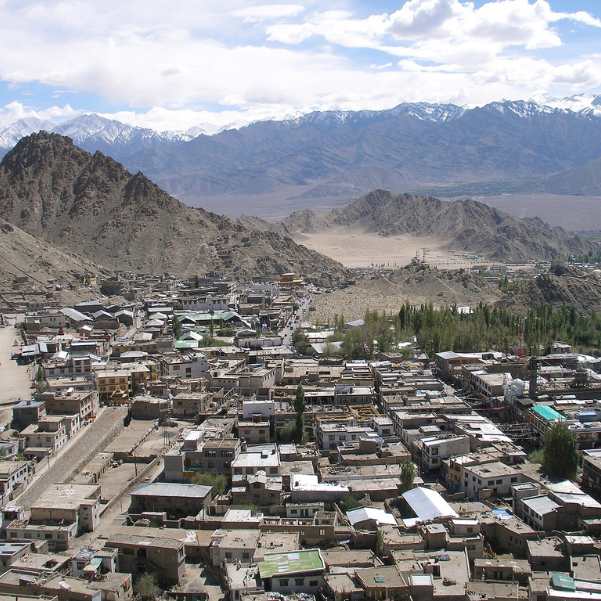
On paper, road trips look cheaper because you skip the ₹12,000 to ₹28,000 flight cost. In practice, they often cost the same or more once you add the extra 4 to 5 days of hotels, fuel, food, and the wear on your vehicle.
A flight trip of 7 days costs ₹35,000 to ₹55,000. A road trip of 12 to 14 days costs ₹27,000 to ₹45,000. The road trip is slightly cheaper in absolute rupees, but you spend 5 to 7 extra days to save that difference.
Where flying clearly wins: when you have limited leave, when you are traveling with family or elderly members, and when you want maximum time in Ladakh rather than on the road.
Where road trips make sense: when the journey itself is the point, when you are in a group of bikers or a self-drive crew, and when you have 12 or more days and genuinely want to experience the Manali-Leh or Srinagar-Leh highway.
One thing road trippers often forget: acclimatization. Flying into Leh at 11,500 feet is a shock to the body, but at least you rest for a day before doing anything.
Road trippers sometimes push through Tanglang La and Khardung La in a rush to "cover ground" and end up with altitude sickness that ruins the next 2 days. Slow and steady costs less in the long run because you do not lose days to headaches and nausea.
Best Time to Visit Ladakh If You Want to Save Money
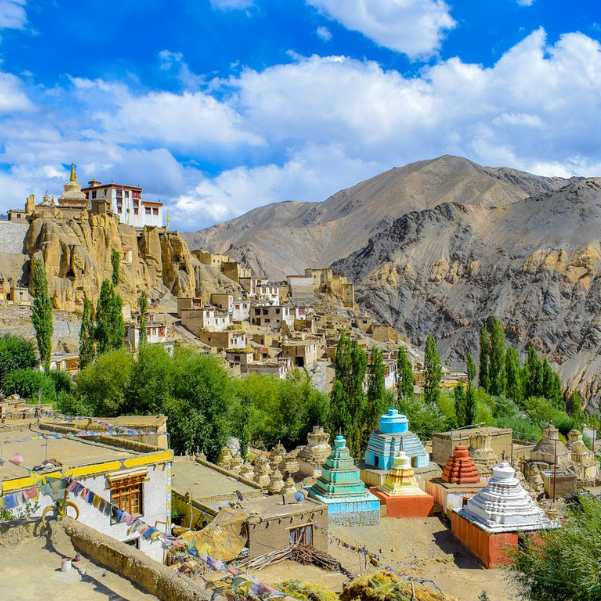
Peak season is July and August. Flight prices are highest, hotels are fully booked and charging top rates, and taxis are in heavy demand. A trip in peak July can cost 20 to 30% more than the same trip in June or September.
June and September are the sweet spots. Flights are cheaper, hotels negotiate, and the weather is excellent. June has the added bonus of snow-capped passes and dramatic landscapes.
September has clearer skies and fewer tourists. Both months give you the full Ladakh experience at a lower cost.
Late May and early October are shoulder windows. Roads may or may not be fully open, some hotels have not started the season yet, and options are limited. But for the flexible traveller, prices are at their lowest.
The cheapest flight months are typically March, April, and late September when tourist demand drops.
The catch is that road routes are closed in March and April, so your trip is limited to Leh local sightseeing and you miss Nubra and Pangong unless the Khardung La road is open.
What Permits and Extra Fees Do Delhi Travellers Need in 2026?
You need permits for Nubra Valley, Pangong Lake, Tso Moriri, and a few other restricted areas. These are not optional.
The environmental fee is ₹400 per person. The wildlife fee is ₹20 per person per day for areas under wildlife jurisdiction, like Changthang. The Red Cross fee is around ₹50 to ₹100.
You can apply for permits online through the official Ladakh UT tourism portal. The process is straightforward: fill in your details, upload documents, pay online, and get the permit as a PDF.
You can also get permits through your hotel or taxi operator in Leh, but doing it yourself saves a service charge.
Check the official portal for the exact current fee structure before your trip. These amounts have stayed stable recently, but small changes happen without much announcement.
Inner Line Permits are no longer required for Indian citizens visiting standard tourist areas, but the environmental and wildlife fees still apply.
6-Day and 7-Day Sample Cost Plans from Delhi
5 Nights 6 Days by Flight
This suits working professionals with limited leave. You fly in on Day 1, rest and do Leh local sightseeing on Day 2, drive to Nubra on Day 3, Nubra to Pangong on Day 4, Pangong back to Leh on Day 5, fly out on Day 6.
This itinerary is tight. It works but leaves zero buffer. If a flight gets delayed or you feel altitude sickness on Day 1, the whole plan gets squeezed.
Realistic cost: ₹30,000 to ₹45,000 per person in a group of 3 to 4, or ₹40,000 to ₹55,000 for couples.
6 Nights 7 Days by Flight
Same route but with an extra day. Use it as a buffer day in Leh at the start for acclimatization, or add a visit to Tso Moriri, or simply have a relaxed final day in Leh before flying out.
This is the format we recommend most for first-timers. That one extra day makes a real difference to how your body handles the altitude.
Realistic cost: ₹35,000 to ₹50,000 per person in a group, or ₹45,000 to ₹60,000 for couples.
9 to 10 Days by Road
You drive from Delhi to Manali on Day 1 (or take an overnight bus). Manali to Jispa or Sarchu on Day 2. Sarchu to Leh on Day 3.
Then 4 to 5 days exploring Leh, Nubra, Pangong. Then 2 days driving back. This format suits self-drive groups and bikers.
Realistic cost: ₹27,000 to ₹40,000 per person in a group of 3 to 5, with your own vehicle. Higher if renting.
Hidden Costs People Forget on a Ladakh Trip
This is the section we wish every travel blog wrote honestly. Here is what catches people off guard.
Buffer hotel nights. Flights get cancelled because of weather at Leh airport. Roads get blocked by landslides. You feel sick and need an extra rest day. Budget for at least 1 extra night in Leh at ₹1,500 to ₹3,000.
Snacks and chai. Mountain air makes you hungry constantly. Chai stops, Maggi at dhabas, biscuits, and water bottles add ₹200 to ₹400 per day that people never budget for.
Cash withdrawal fees. ATMs in Leh work, but they charge withdrawal fees and often have low limits. If your bank also charges, you lose ₹100 to ₹200 per withdrawal. Carry enough cash from Delhi to avoid this.
Oxygen cans. If anyone in your group struggles with altitude, a portable oxygen can costs ₹500 to ₹700 in Leh. Hotels and medical shops sell them.
Punctures and minor vehicle issues. On the Manali-Leh highway, a bike puncture can cost ₹300 to ₹500 at a roadside mechanic (if you find one). Car tyre fixes cost more. Budget ₹1,000 to ₹2,000 for this if driving.
Extra fuel on mountain roads. Your car or bike burns more fuel at altitude due to thinner air. On the Manali-Leh route, fuel consumption can be 15 to 20% higher than plains driving. Keep your tank full at every pump you see.
Last-mile transport. Getting from Pangong Lake shore to the camps, or from Leh airport to your hotel at odd hours, involves small unplanned vehicle costs. Budget ₹500 to ₹1,000 across the trip.
Shopping. Leh has beautiful Ladakhi handicrafts, pashmina, and prayer flags. Most travellers budget zero for shopping and end up spending ₹2,000 to ₹5,000.
From our years of planning mountain trips, we tell every traveller the same thing: your actual trip cost will be 10 to 15% higher than your planned budget. Build that buffer in from the start.
How to Cut Your Ladakh Trip Cost Without Ruining the Experience
Book flights 45 to 60 days early. This is the single biggest money-saving move. Early flight prices can be half of last-minute rates. Set a fare alert and book the moment prices look reasonable.
Travel in a group of 4 to 6. Taxi sharing is the most powerful cost reducer in Ladakh. Every extra person in the vehicle saves everyone else ₹2,000 to ₹5,000 over the trip.
Share taxis at the Leh taxi stand. If you are a solo traveller or couple, go to the Leh taxi stand in the morning and find other travellers heading to the same destination. This is common, accepted, and saves a lot.
Do not overpack your itinerary. Every extra destination means an extra day of taxi, hotel, and food costs. Focus on Leh, Nubra, and Pangong.
Skip Tso Moriri on a first trip unless you have 9 or more days. A shorter, focused trip costs less and feels more relaxed.
Stay in guesthouses instead of hotels. Family-run guesthouses in Leh are clean, warm, and often include breakfast. They cost half of what a hotel charges and the hospitality is usually better.
Eat local. Thukpa, momos, and dal-rice at local restaurants cost ₹150 to ₹250. Tourist-facing cafes charge ₹400 to ₹600 for the same quality. The best food in Leh is at the small places, not the fancy ones.
Skip the unnecessary activities. You do not need an ATV ride at Hunder to enjoy Ladakh. The landscapes, monasteries, and the drive itself are the experience. Choose one or two activities that genuinely interest you and skip the tourist traps.
For a curated list of trips that balance cost and experience, check our popular tours page. Or reach out to us directly if you want a custom plan built around your budget.
Should You Book a Ladakh Package or Plan It Yourself?
Packages work best when you want zero planning stress, when you are visiting a high-altitude destination for the first time, and when your group includes people who are not experienced mountain travellers.
The real advantage of a package is not the cost. It is that someone who knows the roads, the altitude, and the local logistics is handling the parts that can go wrong.
At 11,500 feet, things go wrong differently than they do in the plains. A flat tyre on the Manali-Leh highway is not the same as a flat tyre on NH-44.
Independent planning works best when you have done at least one high-altitude trip before, when your group is small and flexible, and when you genuinely enjoy the process of figuring things out. You save money on the package margin, but you spend it in time and mental energy.
If you are considering combining a Ladakh trip with a Spiti stop on the return, the route planning gets more complex.
The Chandratal opening dates matter because Kunzum Pass controls access, and it does not open on a fixed schedule.
Our Spiti Valley packages handle this routing for travellers who want both destinations in one trip.
The honest answer: if you have to ask "should I get a package or plan myself?", you should probably get a package. The people who plan independently already know they want to.
Final Verdict: What Is a Realistic Ladakh Budget from Delhi in 2026?
Here is the simplest way to think about it.
₹25,000 to ₹33,000 per person if you are a budget backpacker travelling by road or sharing everything, staying in basic guesthouses, and eating at local dhabas. This works for 7 to 10 days but requires flexibility and patience.
₹35,000 to ₹55,000 per person if you are flying to Leh, staying in mid-range hotels, sharing a private taxi in a group, and eating comfortably. This is the most common range for working professionals and couples. 7 to 9 days is the sweet spot.
₹55,000 to ₹90,000 per person if you want good hotels, a private vehicle, comfortable camps at Nubra and Pangong, and zero compromises. Families and comfort travellers typically land here.
The smartest thing you can do is fix your travel dates first, figure out your group size, and then work backwards from there to build a budget that is realistic.
Most people do it the other way around: fix a budget and then try to force a trip into it. That is how you end up skipping places you wanted to see or staying in rooms you do not enjoy.
If you want someone to look at your dates and group size and tell you honestly what it will cost, talk to our team on WhatsApp. We will give you a straight answer, not a sales pitch.
👉 WhatsApp us your dates and get a straight answer on your trip cost
Explore Our Curated Leh Ladakh Tours
 6D/5N
6D/5NBest Selling Leh Ladakh Tour With Nubra Valley and Pangong Lake
2D Leh•1D Nubra Valley+1
₹23,999₹28,599SAVE INR 4,600/ person 4D/3N
4D/3NLeh Ladakh Winter Getaway
1D Leh•1D Leh Local+2
₹19,999₹22,999SAVE INR 3,000/ person 6D/5N
6D/5NUltimate Leh Ladakh Tour Package with Nubra Valley & Pangong Lake
2D Leh•1D Nubra Valley+1
₹28,999₹35,999SAVE INR 7,000/ person
Related topics
Frequently Asked Questions
How much does a Ladakh trip from Delhi cost?
A realistic range is ₹25,000 to ₹60,000 per person depending on how you travel, how many people share costs, where you stay, and how many days you go for. Budget travellers in groups can manage the lower end. Comfort travellers and solo visitors land on the higher end.
What is the minimum budget for a Ladakh trip from Delhi?
Around ₹25,000 per person for a group trip using shared transport, budget guesthouses, and basic meals. This needs 8 to 10 days and a willingness to keep things simple.
Is it cheaper to fly or go by road to Ladakh?
Flying costs ₹12,000 to ₹28,000 return but saves 4 to 5 days of travel, hotel, and food costs. Road trips look cheaper on fuel but the extra days add up. For most people, the total trip cost ends up similar either way. Flying saves time, road trips offer the experience.
How many days are enough for Ladakh?
6 to 7 days if you fly. This gives you Leh, Nubra, Pangong, and a buffer day. 10 to 14 days if you go by road from Delhi. Fewer than 5 days by flight feels rushed and does not leave room for altitude adjustment.
Are there direct flights from Delhi to Leh?
Yes. Multiple airlines operate direct Delhi to Leh flights daily during the season. The flight takes about 1 hour 15 minutes. Prices range from ₹4,200 to ₹15,000 one way depending on season and demand.
What is the cost of a Ladakh bike trip?
On your own bike from Delhi, expect ₹27,000 to ₹35,000 per person for a 12 to 15 day trip. On a rented bike from Delhi, expect ₹48,000 to ₹60,000 per person. Renting a bike in Leh and riding locally costs ₹1,800 to ₹3,500 per day depending on the model.
How much does a private taxi cost in Leh?
Leh local sightseeing costs about ₹3,000 per day. Leh to Nubra one day costs about ₹9,744. Leh to Pangong one day costs about ₹10,470. A 3-day Nubra-Pangong circuit via Shyok costs about ₹22,410. All rates are for Innova or XUV class vehicles. Always verify locally before booking.
When is the cheapest time to visit Ladakh?
June and September offer the best balance of lower prices and full access. Flight and hotel prices peak in July and August. Shoulder months like late May and early October are cheapest but carry the risk of closed roads or limited services.
Do I need a permit for Nubra and Pangong?
Yes. You need permits for Nubra Valley, Pangong Lake, and other protected areas. The environmental fee is ₹400 per person. Wildlife fee is ₹20 per person per day. Apply online through the official Ladakh UT permit portal. No inner line permit is needed for Indian citizens for standard tourist areas.
How much cash should I carry in Ladakh?
Carry ₹10,000 to ₹15,000 in cash beyond what you have already paid for hotels and transport. ATMs exist in Leh but can run out of cash during peak season. Card acceptance is growing but unreliable outside Leh town. Nubra and Pangong are almost entirely cash-only.
Can I do Ladakh under ₹30,000 from Delhi?
Yes, if you travel in a group, use shared taxis, stay in budget guesthouses, eat at local places, and book flights early. Solo travellers will find it very hard to stay under ₹30,000 because taxi costs are not shareable. In a group of 4 to 6, it is realistic.
Is Ladakh good for a couple trip from Delhi?
Ladakh is excellent for couples. The landscapes, quiet monastery towns, and dramatic drives make it one of the most romantic road trips in India. A couple trip by flight costs about ₹35,000 to ₹50,000 per person for 6 to 8 days with comfortable stays and private transport.
More about Ladakh
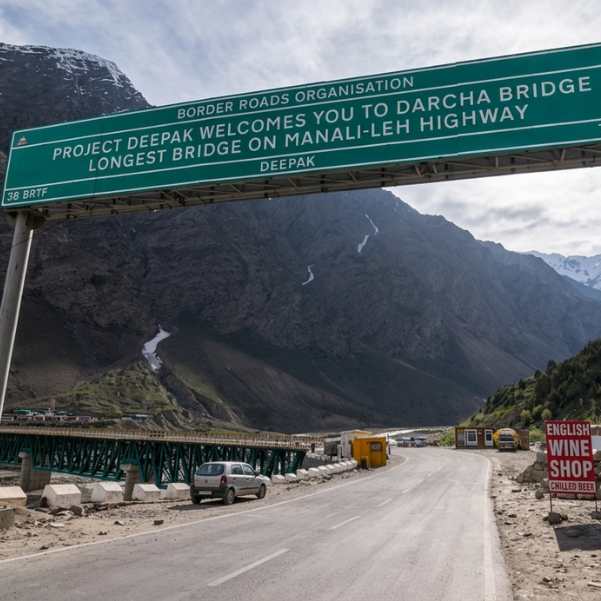 Ladakh
Manali to Leh Highway 2026: Every Pass, Stop and Distance
Plan your Manali to Leh Highway journey in 2026 with a complete guide to major mountain passes, overnight stops, route highlights, and distance. Discover key stops like Jispa, Sarchu, and Pang, along with famous passes including Baralacha La and Tanglang La.
- Road Trips
- How to Reach
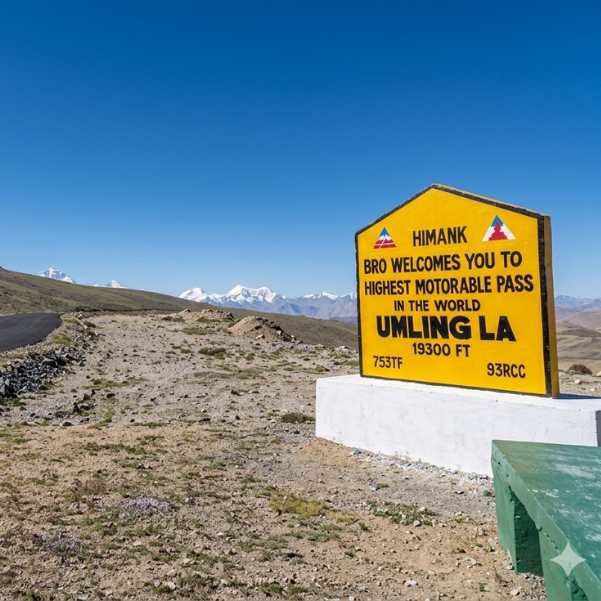 Ladakh
Umling La Ladakh Guide 2026: Route, Altitude, Permit, Safety & Reality Check
Planning to visit Umling La in 2026? This complete guide covers the route, altitude, permit requirements, road conditions, safety tips, and the realities of travelling to one of the world's highest motorable roads.
- Road Status
- Altitude & Health
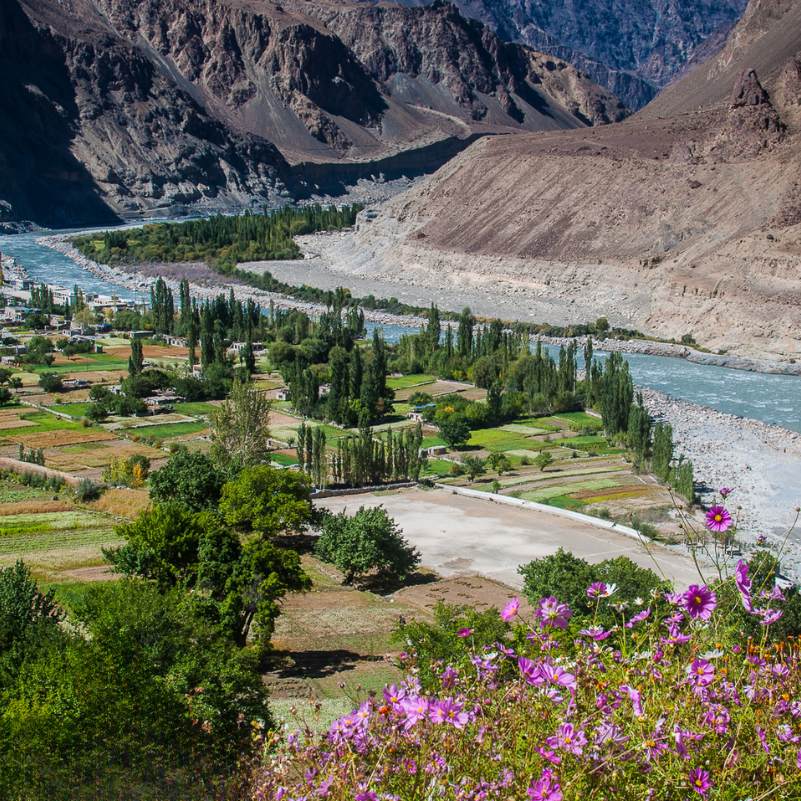 Ladakh
Turtuk Ladakh Travel Guide 2026: Balti Culture, Apricot Orchards and Why It Is Perfect for Families
Planning a trip to Turtuk? This 2026 travel guide explores the village's rich Balti culture, beautiful apricot orchards, top attractions, travel route, and why Turtuk is one of the best family-friendly destinations in Ladakh.
- Places to Visit
- Family Travel