
Kareri Lake Trek 2026: Complete Guide to Route, Difficulty and Best Time
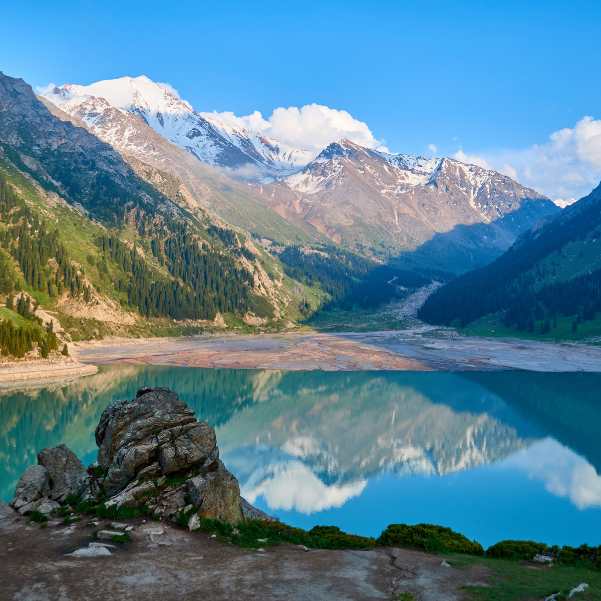
If you want a Himalayan lake trek that does not need months of training or a fat budget, the kareri lake trek is probably the best one near Dharamshala you can do right now.
It is a clear glacial lake sitting at 2,934 m in the Dhauladhar range, with snow peaks right behind it and far fewer people than Triund.
We have sent plenty of first-timers on this trail over the years, and the feedback is almost always the same. They expected a hard slog. They got tired legs, yes, but also one of the prettiest lakes they had ever seen.
Here is everything you actually need to plan it well.
Quick Answer: Kareri Lake Trek at a Glance
Distance: 13 km one way from Kareri Village, so 26 km round trip.
Altitude: 2,934 m at the lake.
Difficulty: Easy to moderate. Good for fit beginners.
Duration: 2 days is the standard and most comfortable plan.
Best season: May to June and September to November.
The trek starts from Kareri Village in Kangra district. You climb through pine forest, follow a river most of the way, cross a few streams, and reach the lake on day two.
Why Kareri Lake Trek Is One of the Best Treks Near Dharamshala
Most people in this area only know Triund. It is famous, it is close, and on weekends it gets packed like a local bus.
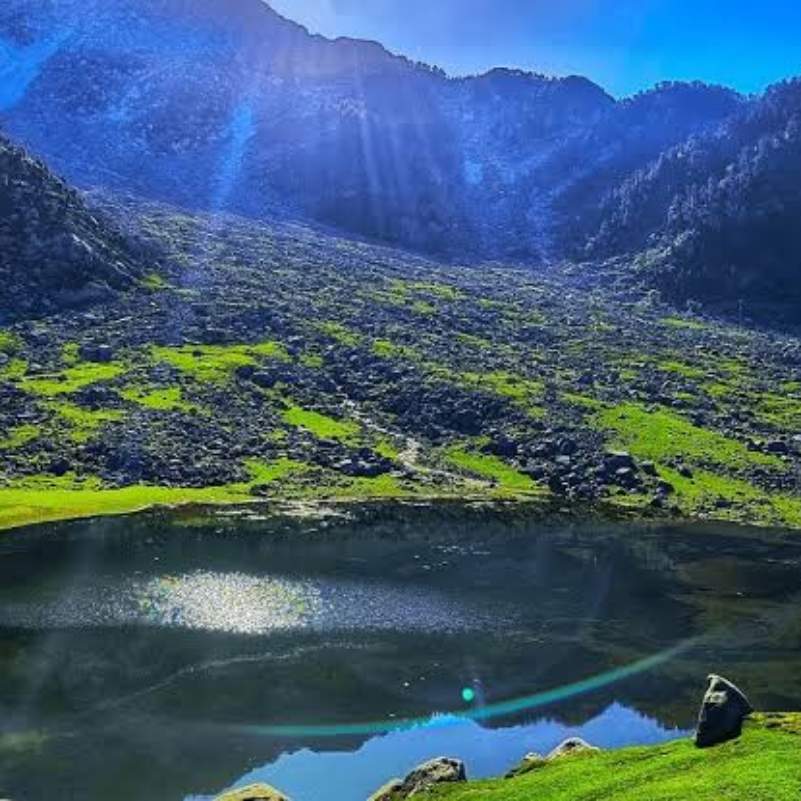
Kareri is the opposite. You walk for hours and sometimes see no one. The trail follows the Nyund stream almost the whole way, so you always have the sound of water next to you.
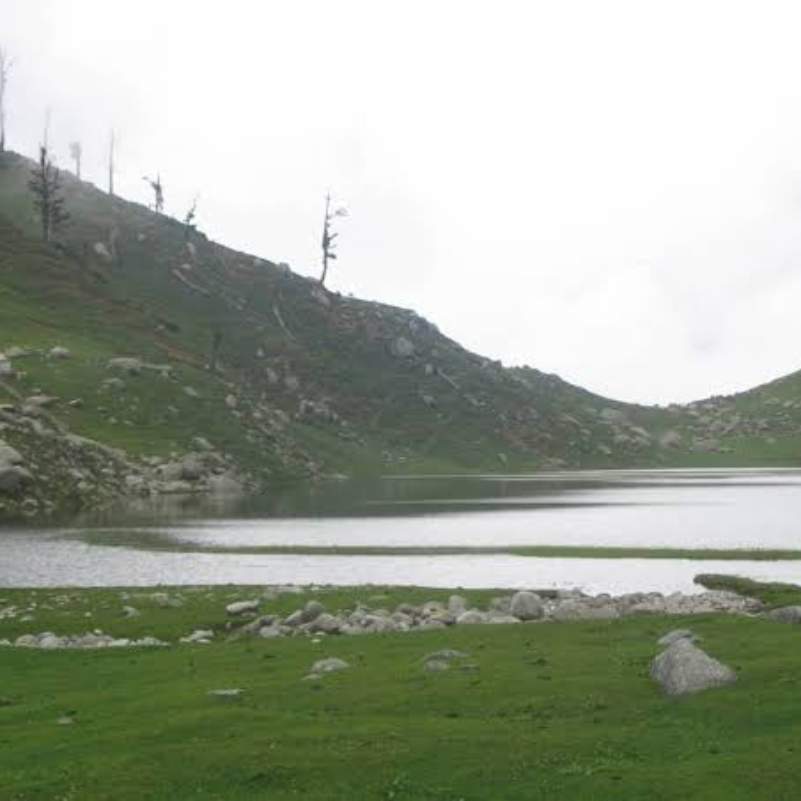
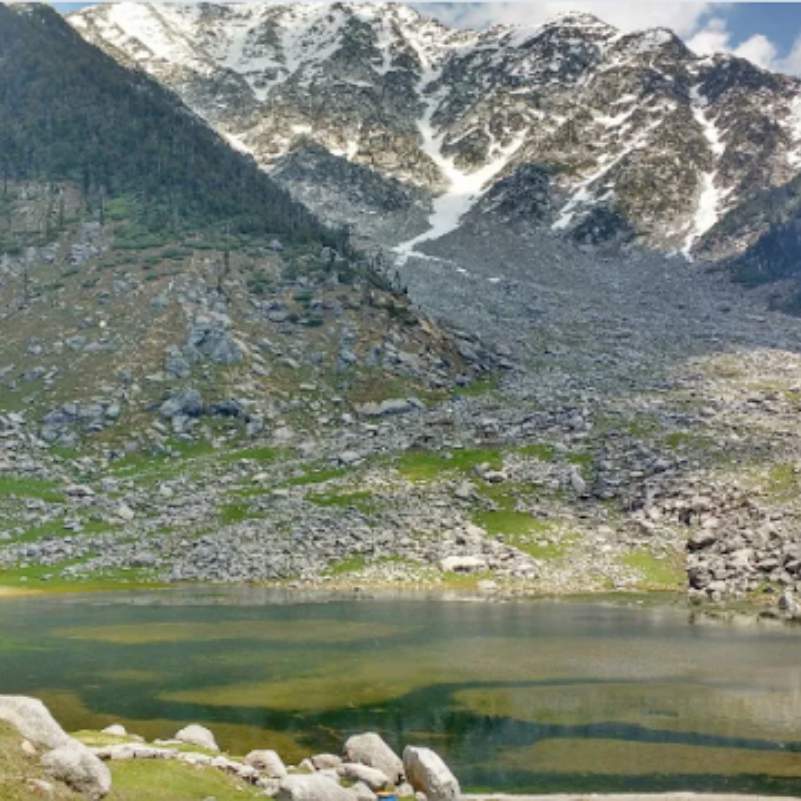
The lake itself is the payoff. On a clear morning the water sits dead still and you can see Minkiani Pass and the Dhauladhar wall reflected in it.
In our experience, travellers who have already done Triund and want something deeper always end up loving Kareri more. It feels like a real trek, not a day hike with a crowd.
If you want the whole region sorted with stays and a driver, our Dharamshala tour packages cover Kareri along with McLeodganj and the rest of the valley.
What Most Tourists Get Wrong
People treat Kareri like a one-day rush from Dharamshala. They drive up, start late, and try to touch the lake and come back the same day.
That is how you end up walking the last stretch in the dark, missing the lake at its best, and hating a trek that should have been a highlight.
Give it two days. Camp near the lake or stay at Reoti. The trek changes completely when you are not racing the sun.
Kareri Lake Trek Overview
Here is the trek in plain numbers so you can plan around it.
The lake sits in the Dhauladhar range in Kangra district, Himachal Pradesh, at 2,934 m.
The trail is 13 km one way from Kareri Village, which makes the full trek 26 km round trip.
Difficulty is easy to moderate, the kind of trail a reasonably fit first-timer can finish with breaks.
The standard plan is 2 days, starting and ending at Kareri Village. The best months to go are May to June and September to November.
Where Is Kareri Lake Located?
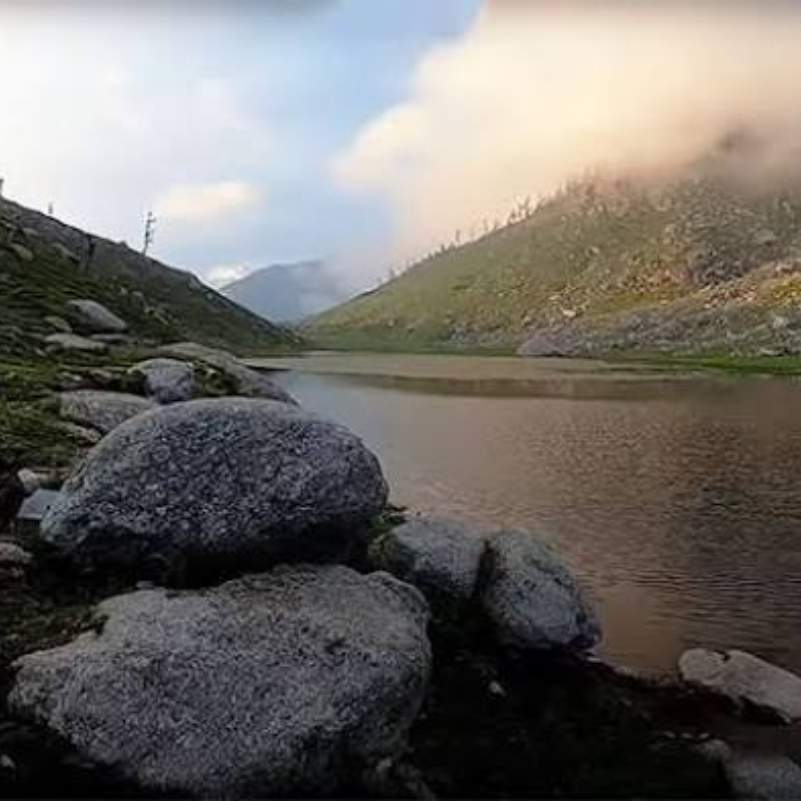
Kareri Lake is in Kangra district, tucked into the Dhauladhar range of Himachal Pradesh.
The trek base, Kareri Village, sits roughly an hour and a half by road from Dharamshala and McLeodganj.
This closeness is what makes it such a good weekend option. You can leave a Delhi or Chandigarh job on a Friday night, reach Dharamshala by morning, and be at the lake by the next evening.
The village is the last point with road access. After that, it is your legs and the trail.
Kareri Lake Trek Route Explained Step by Step
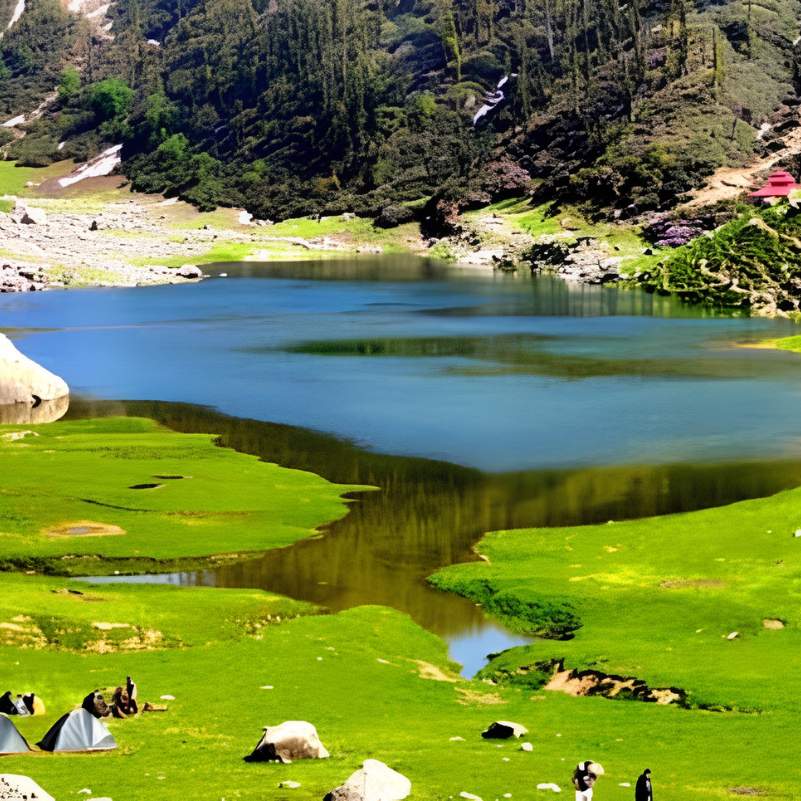
The route is simple to follow on most stretches because the river guides you. But the terrain changes a lot, so here is what each section feels like.
Dharamshala to Kareri Village
This part is by road, not on foot. You drive from Dharamshala or McLeodganj to Kareri Village, the trek base.
The road is narrow and twisty near the end, the usual Himachal hill road. A normal car can manage it in dry weather, but the last bit can get rough.
Most trekkers reach the village in the morning and start walking by 9 or 10 AM.
Kareri Village to Reoti
This is the first real walking section. The trail climbs gently through pine and oak forest, with the Nyund stream running alongside.
It is shaded for long stretches, which is a relief on warm afternoons. You cross the stream a few times on small bridges and stones.
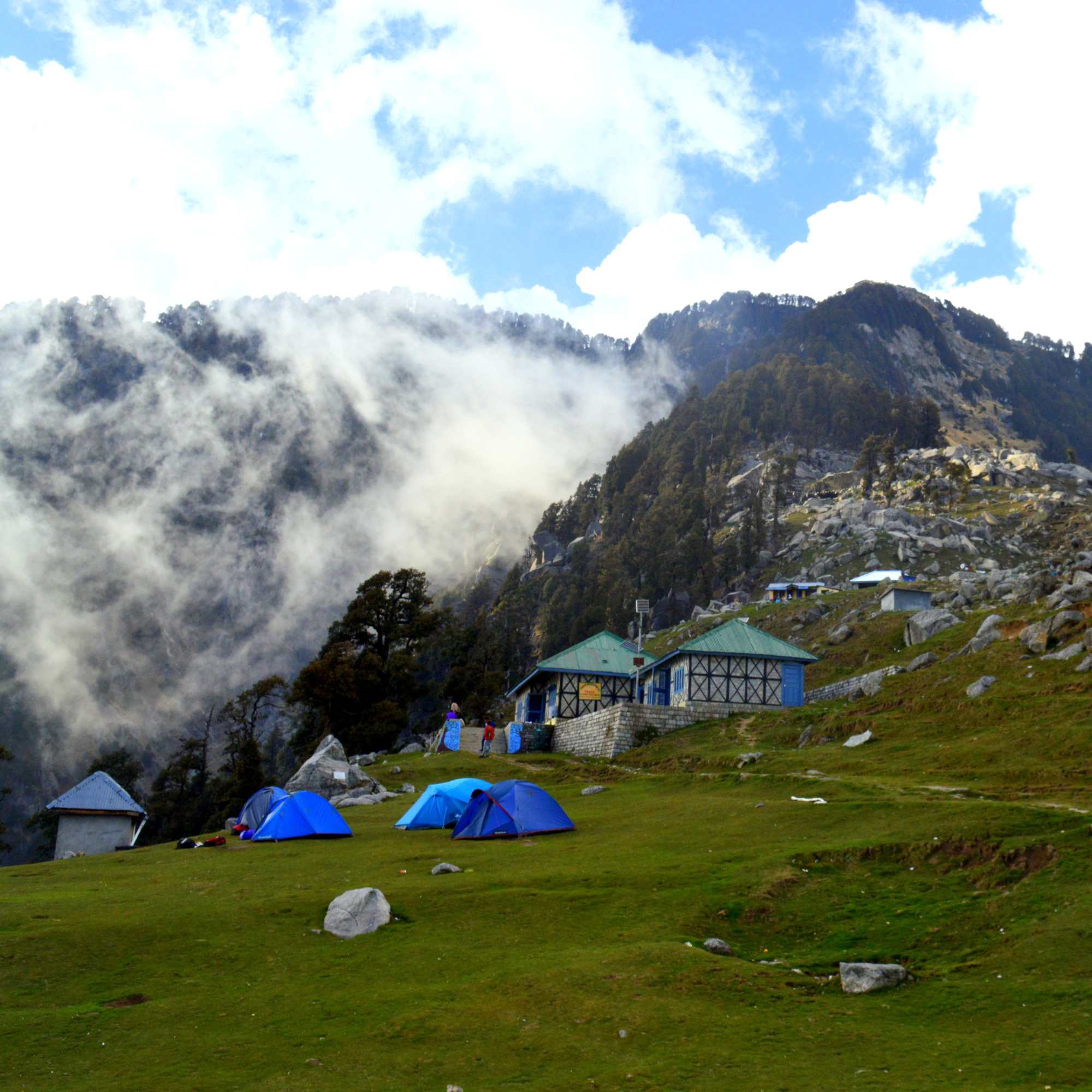
Reoti is a meadow clearing where many trekkers camp on night one. It is quieter than the lake and a good place to break the climb.
Reoti to Kareri Lake
This is the toughest part of the whole trek. The forest thins out, the climb gets steeper, and the air starts feeling lighter.
You move from forest into open meadow, then into rocky alpine ground as you near the lake. The last push to 2,934 m will have you stopping to catch your breath, and that is normal.
Then the ground flattens and the lake just appears in front of you. Still, clear, with the Dhauladhar peaks rising straight behind it.
Return Journey
Going down is faster but harder on the knees. The same trail you climbed now drops steeply, especially between the lake and Reoti.
Most people return all the way to Kareri Village on day two. Start early so you are off the steep sections well before dark.
Trekking poles help a lot on the descent. We tell our travellers to carry at least one, even if they skipped it on the way up.
Kareri Lake Trek Distance and Altitude
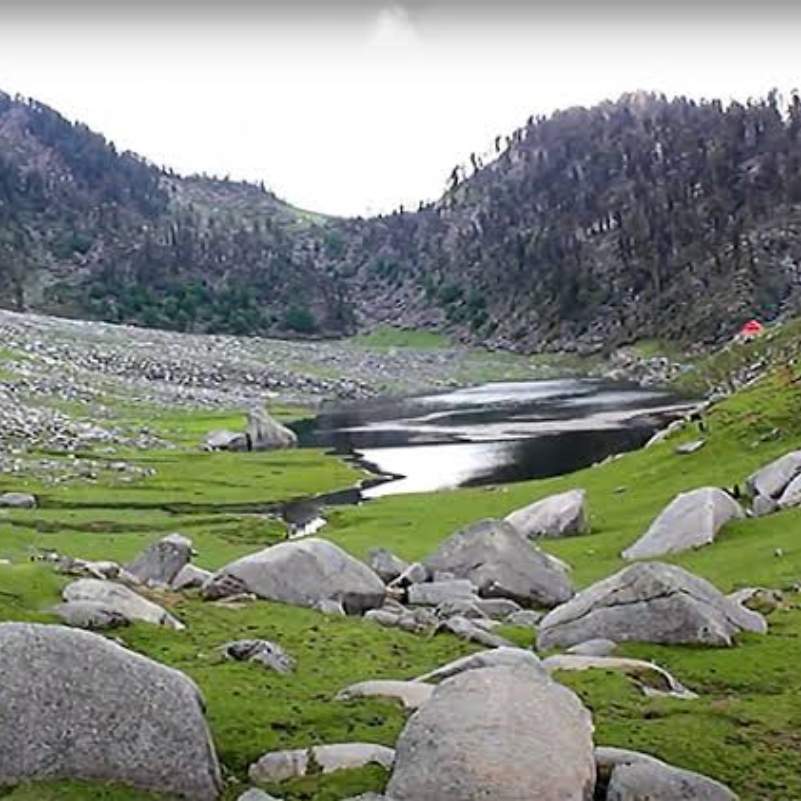
The numbers here are the ones that actually matter for planning.
The lake sits at 2,934 m. That is high enough to make you breathe harder, but not so high that altitude sickness is a big worry for most people.
The trail is 13 km one way from Kareri Village. So the full trek is 26 km round trip.
That distance over two days is very doable for a fit beginner. Split as roughly half each day, with the camp at Reoti or near the lake, it never feels brutal.
Kareri Lake Trek Difficulty Level
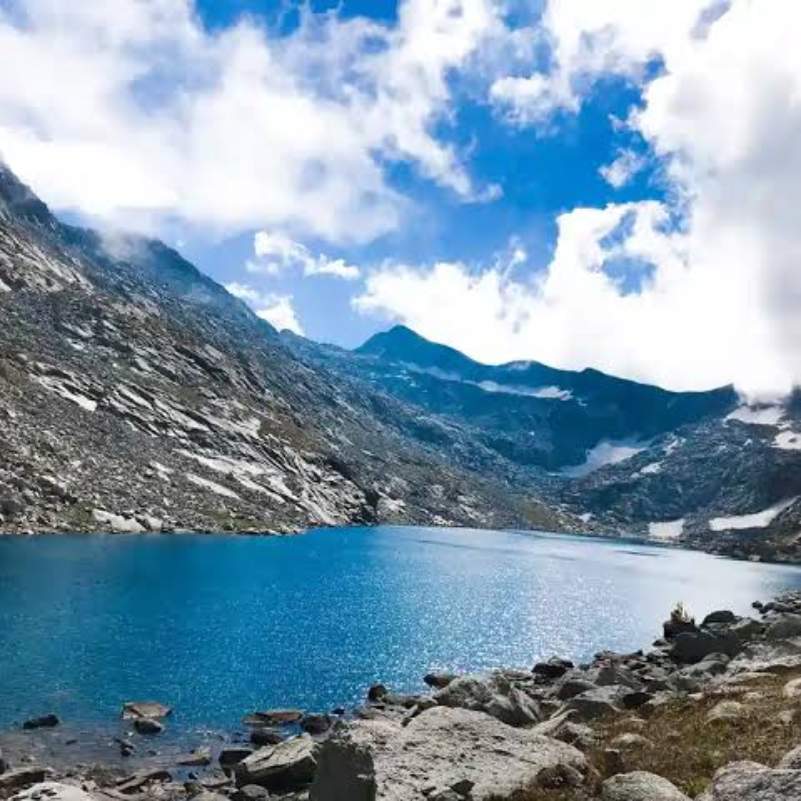
So is the kareri lake trek beginner friendly? Mostly, yes.
It is rated easy to moderate. The first half through the forest is gentle and well shaded. The difficulty is in the second half, the climb from Reoti to the lake.
You do not need to be an athlete. But you do need basic fitness. If you can climb six floors of stairs without stopping to gasp, you can do this trek.
The sections that feel hard are the steep rocky climb near the lake and the descent on day two. Both test your legs more than your lungs.
In our experience, the people who struggle are the ones who did zero prep. A couple of weeks of walking or stair climbing before the trip makes a huge difference.
Here is one honest warning
After rain, the trail turns slippery and the stream crossings get tricky. If it has been pouring, this trek stops being beginner friendly fast.
Best Time to Visit Kareri Lake Trek in 2026
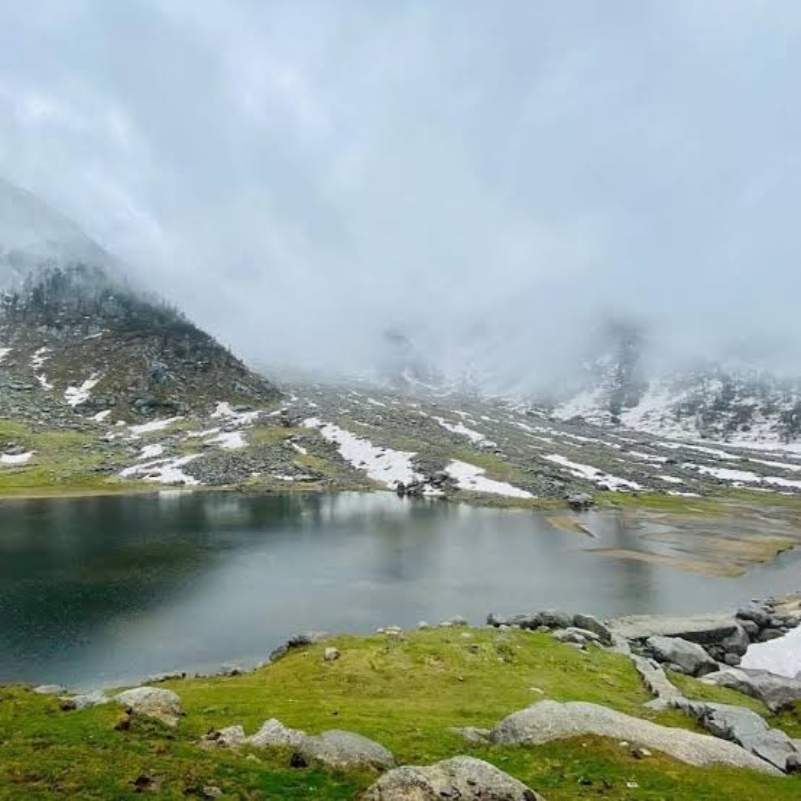
The trail behaves very differently across the year. Here is what each season gives you.
Spring (May to June)
This is one of the two best windows. The snow has mostly melted, the meadows turn green, and the lake is fully open.
Days are pleasant for walking and nights are cold but manageable. This is when we send most of our beginner groups.
Monsoon (July to August)
Skip this if you can. The trail gets slippery, the streams swell, and leeches show up in the forest sections.
Landslides can also block the approach road. The views are green but the risk and discomfort are not worth it for most people.
Autumn (September to November)
The other prime window, and many would say the better one. The air is crisp and clear, the skies are clean, and the crowds thin out after the summer rush.
The lake reflections are at their sharpest in autumn. If you want photos, this is your season.
Winter (December to March or April)
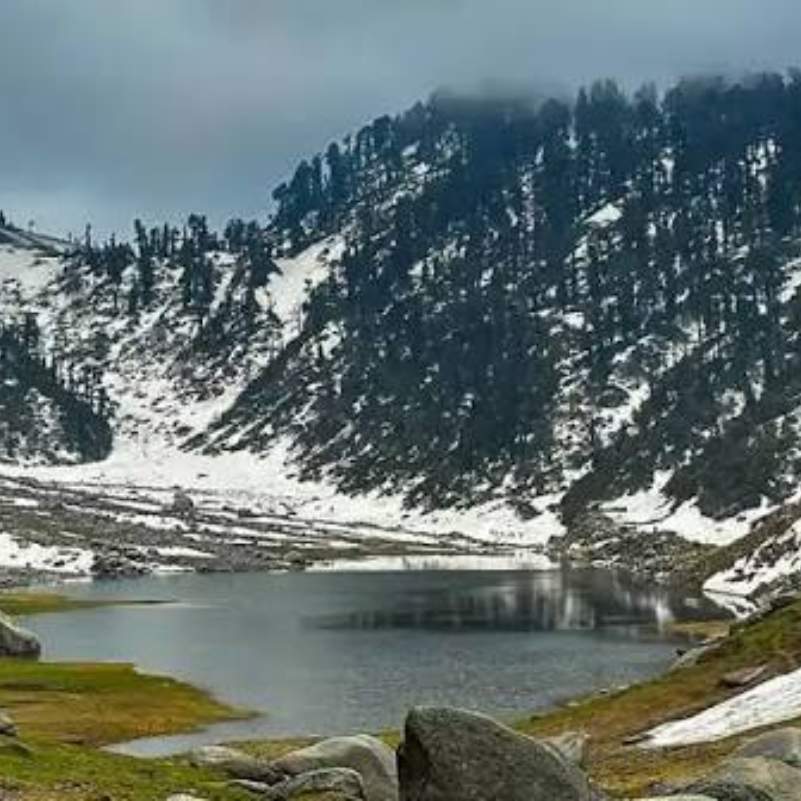
The lake stays frozen from roughly December to March or April. The whole landscape turns white and the trek becomes a snow experience.
It is stunning, but it is no longer a beginner trek. You need winter gear, snow experience, and ideally a guide. Treat winter Kareri as a serious mountain outing, not a casual weekend walk.
>>Plan your Kareri Lake adventure with experienced local guides. Message us today.
Kareri Lake Trek Itinerary (2 Days)
This is the plan we use for most groups. It gives you real time at the lake without killing your legs.
Day 1
Reach Kareri Village in the morning and start walking by 9 or 10 AM.
Trek through the forest along the stream and reach Reoti by afternoon. Set up camp, rest, and eat early.
Nights here are cold even in summer, so get into your sleeping bag before the temperature really drops.
Day 2
Start at first light. Climb from Reoti to Kareri Lake and spend the morning there.
Reach the lake before mid-morning if you can. After that, head back down all the way to Kareri Village.
By evening you are back at the village and can drive to Dharamshala. A long but satisfying day.
One timing tip from our drivers. Try to reach the lake before the late morning haze sets in. Early light gives you the clean reflections and the cold blue water. By noon the colour flattens out.
Can You Do Kareri Lake Trek Without a Guide?
Yes, many fit trekkers do it solo. The river guides you for most of the route, and the trail is fairly clear in good weather.
But here is the honest version. The section above Reoti can get confusing in fog or fresh snow, and there is no mobile signal to bail you out.
If it is your first Himalayan trek, take a local guide from Kareri Village. They know the stream crossings, the weather signs, and the safe campsites.
What we always tell first-timers is this. A guide is not about being weak. It is about someone who can read the mountain when the weather turns on you in twenty minutes.
If you are confident, fit, and the forecast is clean, going guideless is fine. In any doubt, take one.
Kareri Lake Trek Cost Breakdown
Costs swing a lot based on how you travel and whether you go solo or with an operator. Here is how to think about each piece.
Transport
This is your drive from Dharamshala to Kareri Village and back. A shared taxi is the cheapest, a private cab the most comfortable.
Stay
If you camp, your main cost is tent and sleeping bag rental or your own gear. A bed in Kareri Village homestay costs more but is warmer.
Food
Simple village meals and dhaba food are cheap. If you camp near the lake, you either carry food or pay a camp operator for meals.
Guide
A local guide from the village charges a daily rate. Splitting this across a group brings the per-head cost down a lot.
Here is a money tip most blogs miss. Share the taxi and the guide with other trekkers heading up the same morning. Ask around in Kareri Village. Splitting both can cut your trek cost nearly in half.
A quick scam warning
Some drivers at popular pickup points quote inflated rates for the village run, sometimes double the fair price. Fix the fare before you sit in the car, and ask a local what the normal rate is first.
Accommodation Options
You have three real choices for where to sleep, and each suits a different kind of trekker.
Kareri Village
The village has basic homestays and guesthouses. This is the warmest and most comfortable option, with a proper roof and home-cooked food.
It works well if you want to start fresh the next morning rather than camping the first night.
Reoti
Reoti is a meadow clearing partway up, popular for night-one camping. There are no buildings, just your tent and the open sky.
It splits the climb nicely and is quieter than the lake. Carry your own tent or rent one in the village.
Camping Near the Lake
Some trekkers camp near the lake itself, but the designated camping spots are set back from the water, not right on the shore.
It is the coldest and most exposed option. The reward is waking up to the lake at sunrise with no one else around. For that view, many say it is worth the cold night.
A food tip while you are in the village. The small dhabas in Kareri Village serve the last proper hot meal before you head up. Their rajma chawal and hot chai are exactly what you want before a climb. Eat well here, because there is nothing reliable until you are back down.
What to Pack for Kareri Lake Trek

Pack light, but pack smart. The cold after dark catches people off guard even in summer.
You want warm layers, which means thermals, a fleece, and a windproof jacket. A good sleeping bag is essential if you camp.
Carry sturdy trekking shoes with grip, not sneakers. The trail has loose rock and wet stream crossings.
Bring a rain jacket or poncho, a headlamp or torch, a power bank, sunscreen, sunglasses, and a cap. Add a basic medicine kit with paracetamol, ORS, and band aids.
Carry your own water bottle and purification tablets. The stream water looks clean but treat it before drinking.
Pack out everything you bring in. This valley stays beautiful only because trekkers carry their trash back down.
Mobile Network and Internet Availability
Do not count on your phone working up here. Network is patchy in Kareri Village and basically gone above it.
Jio and Airtel may catch a faint signal in the village on a good day. Past Reoti, assume zero connectivity.
Tell someone your plan before you lose signal. Download an offline map of the route so you are not relying on live GPS.
This silence is part of the charm, but only if you prepared for it. Sort out anything urgent before you leave the road.
Kareri Lake Trek vs Triund Trek
This is the question we get most. Both are near Dharamshala, so which one should you pick?
Triund is shorter, easier, and far more crowded. You can do it in a day, and on weekends the ridge fills up with people and tents.
Kareri is longer, a bit harder, and far quieter. You get a proper lake, real forest, and a sense of being away from the crowd.
If you only have a few hours and want a quick view, Triund wins. If you want a real two-day trek with a lake at the end, Kareri is the better trip.
We have run both for years, and travellers who want depth always thank us for pushing them toward Kareri. We covered the wider area in our guide to the best places to visit in Dharamshala and McLeodganj if you want to plan around the trek.
Here is one thing to skip
Do not waste a full extra day doing Triund as a warmup before Kareri unless you really have time to spare. If you are fit, go straight for Kareri and save the day for resting your legs after.
Important Safety Tips for 2026
The rules and realities changed a bit this season, so read this part carefully.
For 2026, daytime trekking is allowed from sunrise to sunset. You can trek freely during daylight hours.
Night trekking is prohibited. Plan your timing so you are off the trail before dark.
Prior police intimation is no longer required. That earlier hassle has been removed, so you can head up without the paperwork.
But trekking can be suspended during official weather warnings. If the authorities flag a storm or heavy rain, the trail closes. Always check before you start.
Beyond the rules, the basics still apply. Carry warm layers, do not push on if the weather turns, and turn back if anyone in your group feels seriously unwell.
The biggest real risk here is weather, not the trail. A clear morning can turn into rain by afternoon. When in doubt, descend.
How to Reach Kareri Lake Trek
Getting to the trek base means first reaching Dharamshala, then driving to Kareri Village.
From Delhi
The easiest way is an overnight bus to Dharamshala, which takes roughly 12 hours. From Dharamshala, drive to Kareri Village.
You can also drive yourself, but after a long night it is better to let someone else handle the hill roads.
From Chandigarh
Chandigarh to Dharamshala is shorter, around 6 to 7 hours by road. Buses and shared cabs run this route regularly.
From Dharamshala, continue to Kareri Village by taxi to start the trek.
From Dharamshala
This is the final leg. Drive from Dharamshala or McLeodganj to Kareri Village, the trek base, which takes around an hour and a half.
There is no direct public transport all the way to the trailhead, so a taxi or private vehicle is the practical choice.
Final Verdict: Should You Do the Kareri Lake Trek?
Do this trek if you are a fit beginner or an intermediate trekker who wants a real Himalayan lake without a hardcore expedition.
Do it if you are tired of the Triund crowds and want forest, river, and a quiet alpine lake instead.
Skip it, or take a guide and serious gear, if you are going in deep winter, if it is your first time at altitude and you are not fit, or if heavy rain is forecast.
The kareri lake trek rewards people who give it two days and respect the weather. Rush it in a single day and you will miss the best of it.
We have walked this trail in every season and sent hundreds of travellers up it. The ones who plan it right almost always call it their favourite Himachal trek.
>>Need help choosing the right season and trek plan? Talk to us on WhatsApp today.
Explore Our Curated Dharamshala & McLeodganj Tours Packages
 3D/2N
3D/2NDharamshala & McLeodganj Weekend Tour
1D Delhi•2D Dharamshala / McLeodganj
₹8,799₹17,880SAVE INR 9,081/ person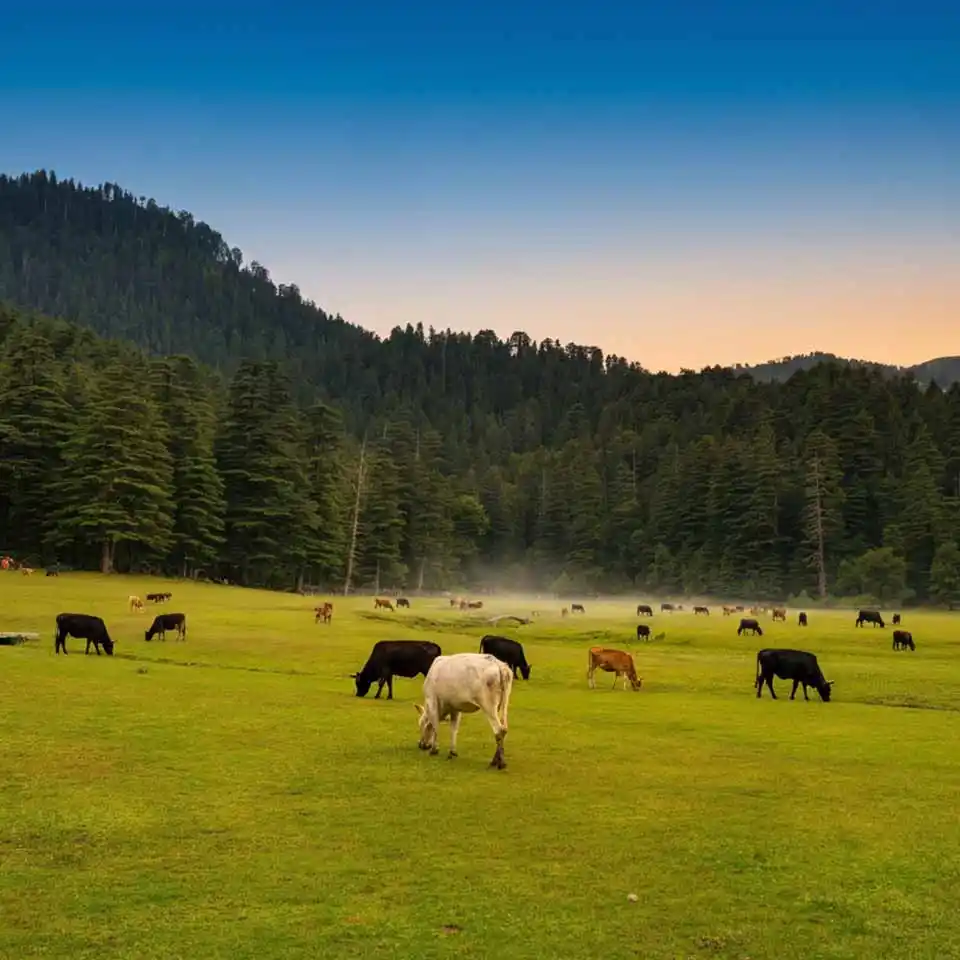 6D/5N
6D/5NDharamshala Dalhousie Khajjiar Meadow Circuit
1D Delhi•2D McLeodganj+1
₹19,999₹25,999SAVE INR 6,000/ person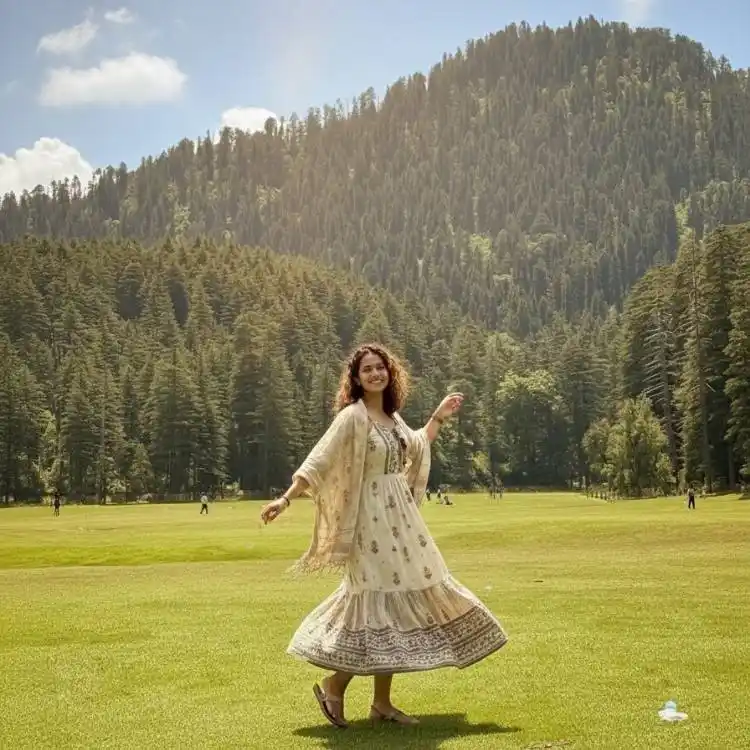 7D/6N
7D/6NDharamshala–McLeod Ganj, Dalhousie & Khajjiar With Amritsar
1D Delhi•2D McLeod Ganj / Dharamshala+3
₹23,999₹28,999SAVE INR 5,000/ person
Related topics
Frequently Asked Questions
Is Kareri Lake Trek difficult?
It is rated easy to moderate. The forest section is gentle, but the climb from Reoti to the lake is steep and tests your legs.
Can beginners do Kareri Lake Trek?
Yes, fit beginners can do it comfortably over two days. A couple of weeks of walking or stair climbing before the trip helps a lot.
How many days are needed?
Two days is the standard and most comfortable plan. You camp once at Reoti or near the lake and return on day two.
What is the altitude?
Kareri Lake sits at 2,934 m. It is high enough to make you breathe harder but low enough that serious altitude sickness is uncommon.
Does Kareri Lake freeze?
Yes. The lake stays frozen from roughly December to March or April, turning the whole area into a snow landscape.
Can I camp near Kareri Lake?
Yes, but the camping spots are set back from the shore, not right at the water. It is cold and exposed, but the sunrise view is worth it.
Is a guide required?
Not officially, and fit trekkers do it solo. But for first-timers or in bad weather, a local guide from Kareri Village is strongly recommended.
What is the distance?
The trek is 13 km one way from Kareri Village, so 26 km round trip.
Can I do it in one day?
You can rush it, but we do not recommend it. You risk walking in the dark and you miss the lake at its best. Two days is far better.
Which is better, Triund or Kareri?
Triund is shorter, easier, and crowded. Kareri is longer, quieter, and ends at a proper lake. For a real two-day trek, Kareri wins.
What is the best month to visit?
May to June and September to November are the prime windows. Autumn gives the clearest skies and sharpest lake reflections.
Is Kareri Lake safe for solo travellers?
In good weather and the right season, yes, many solo trekkers do it. Just inform someone of your plan, carry offline maps, and avoid the monsoon and deep winter alone.
More about Dharamshala
 Dharamshala
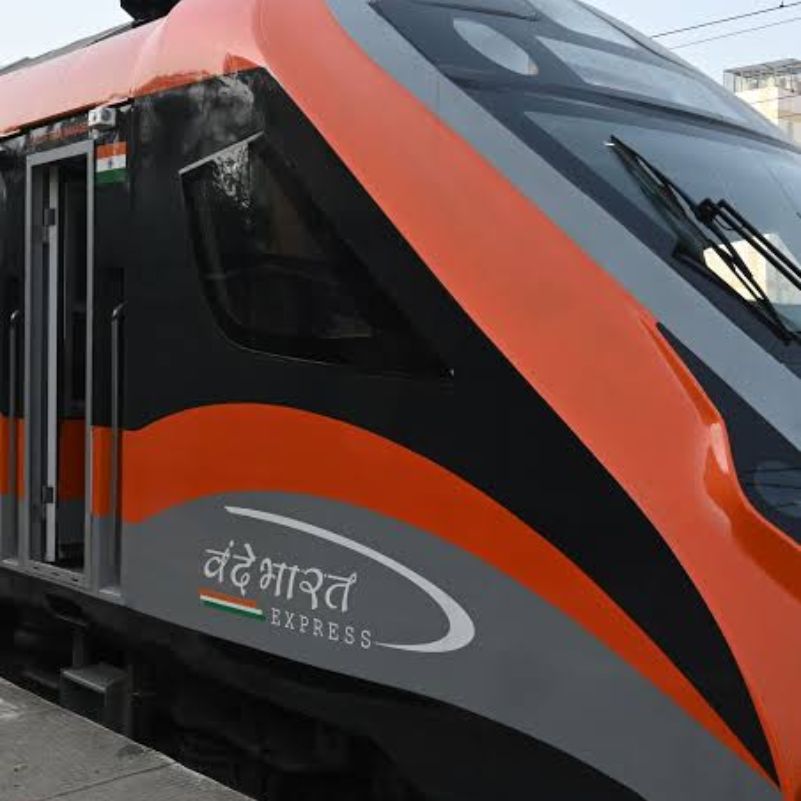
Delhi to Dharamshala by Vande Bharat in 2026: Amb Andaura Transfer & Return Guide
Planning to travel from Delhi to Dharamshala by Vande Bharat? Learn the best rail route, where to get off, and how to arrange your onward transfer to Dharamshala by taxi or bus.
 Dharamshala
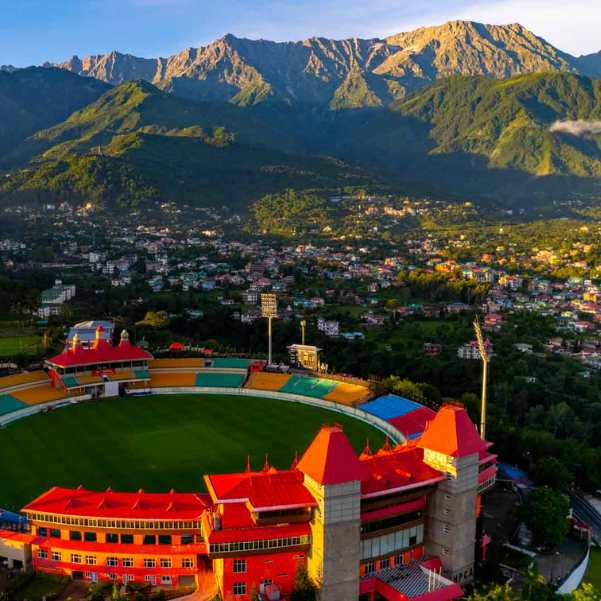
Dharamshala Group Trip with Friends 2026: Cabs, Rooms, Triund and Shared Costs
Planning a Dharamshala group trip with friends in 2026? Explore cab options, estimated travel costs, group budgeting tips, and practical ways to plan an affordable trip to Dharamshala and McLeod Ganj.
 Dharamshala
Dharamshala Trip Cancellation Due to Weather in 2026: Refunds, Rescheduling and What Happens Next?
Planning a Dharamshala trip in 2026? Learn when severe weather, heavy rain, snowfall, landslides or road disruptions may require you to cancel or postpone your trip, and what to check before travelling.