
Can You Visit Rohtang Pass While Pregnant? Safety & Tips
So you're pregnant and your family is planning a Manali trip. Everyone's excited about Rohtang Pass. And you're quietly googling "can I go to Rohtang Pass while pregnant?" at 11 PM.
You're not alone. This is one of the most common concerns expecting moms have when a Himachal trip comes up — and honestly, there's almost no proper information out there. Most travel blogs pretend pregnant travelers don't exist.
Let's fix that. Here's the straight answer, followed by everything you need to know.
The Honest Verdict: Skip It
We're not going to dance around this one. No, you should not visit Rohtang Pass while pregnant.
Rohtang Pass sits at 3,978 meters (about 13,050 feet) above sea level. The CDC recommends pregnant women avoid destinations above 12,000 feet. Rohtang crosses that line.
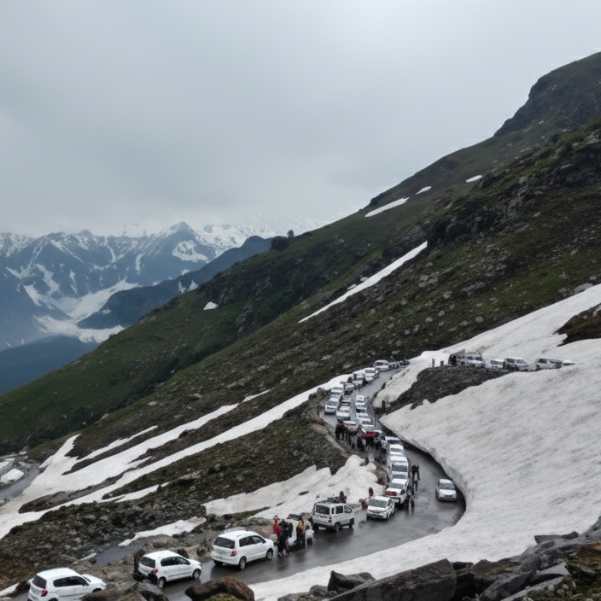
But altitude is only part of the problem. There are zero medical facilities at Rohtang. The nearest hospital is 2-3 hours away in Manali — often longer because of traffic jams. The road is bumpy, narrow, and stressful. There are no proper restrooms on the route. And the weather can turn without warning.
Even if your pregnancy is perfectly healthy, Rohtang puts you in a situation where if something goes wrong — even something minor — you're hours from help with no phone network. That's not a risk worth taking for a day trip.
The good news? You can still have a beautiful snow experience near Manali at lower, safer altitudes. We'll cover those alternatives below — they're genuinely lovely, and you won't feel like you missed out.
Why Rohtang Pass Is Tricky During Pregnancy
It's not just about the altitude number. Here's what actually makes Rohtang challenging for an expecting mom:
The altitude and oxygen levels. At nearly 4,000 meters, oxygen levels are noticeably lower than at sea level. You may feel breathless, dizzy, or nauseous — symptoms that can be hard to distinguish from regular pregnancy discomfort. Your body is already working harder to supply oxygen to your baby, and altitude adds extra strain on that system.
The road is rough. The 51-km drive from Manali to Rohtang takes 2-3 hours on narrow, winding, bumpy mountain roads. There are sharp turns, sudden jolts, and stretches with no guardrails. For someone dealing with morning sickness, back pain, or a sensitive pregnancy, this ride alone can be exhausting.
There are no medical facilities at Rohtang. None. The nearest hospital is back in Manali. If something goes wrong — even something minor — you're hours away from help, often stuck in traffic jams that can stretch for hours on the return journey.
The weather is unpredictable. Even in summer, temperatures at Rohtang can drop suddenly. Wind chill, unexpected rain, or even snow flurries can happen without warning. Getting cold and stressed at high altitude isn't ideal for anyone, especially during pregnancy.
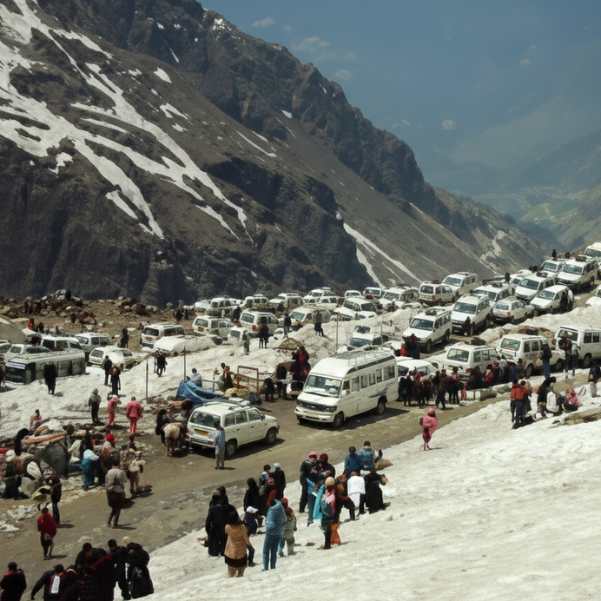
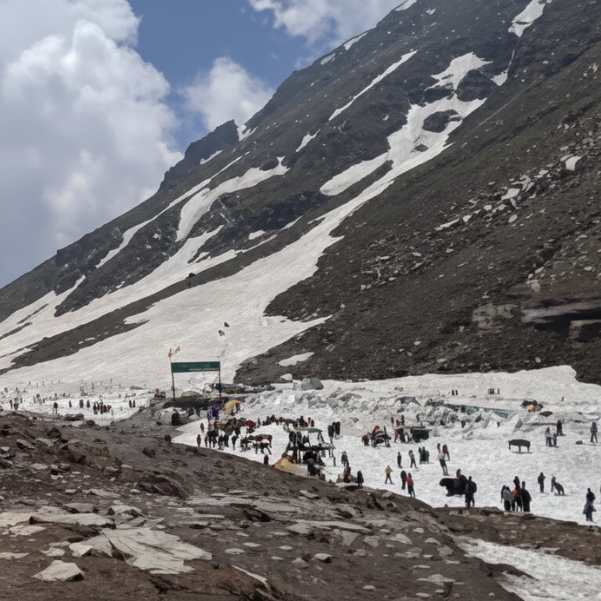
The crowds and physical strain. At peak times, you may need to walk 15-30 minutes from the parking area to the snow point. The terrain is uneven and slippery. There are no proper restrooms along the route — something that matters a lot when you're pregnant.
But What About the Second Trimester? Isn't That Safer?
You'll hear people say the second trimester (weeks 14-27) is the "safe window" for travel during pregnancy. And that's true — for most types of travel. Flying, road trips, beach vacations, lower hill stations — all generally fine with your doctor's okay.
But Rohtang isn't "most types of travel." It's a 13,050-foot altitude pass with no medical facilities, accessed by a rough mountain road, in a location with no phone network. The second trimester doesn't change those facts.
The first trimester carries the highest natural risk of miscarriage. The third trimester brings preterm labor concerns and physical strain. And even in the second trimester, the combination of high altitude, remote location, and rough roads makes Rohtang a poor choice.
If you want a hill station experience during your second trimester, there are wonderful options — Mussoorie, Coorg, Ooty, or even lower parts of Manali itself. Places with hospitals nearby, smooth roads, and moderate altitude.
Especially Don't Even Consider It If…
We've said skip it for everyone. But if any of the following apply to you, this is an absolute, non-negotiable no — even if someone in your family insists it'll be fine:
- You have pregnancy-induced hypertension or preeclampsia
- You've been diagnosed with placenta previa or low-lying placenta
- You have a history of preterm labor or premature delivery
- Your doctor has flagged intrauterine growth restriction (IUGR)
- You have asthma, heart disease, or any respiratory condition
- You have a history of recurrent miscarriage
- You're carrying twins or multiples
- Your pregnancy has been classified as "high risk" for any reason
- You're beyond 28 weeks
This isn't about being overly cautious. Rohtang is genuinely remote, the altitude is genuinely high, and medical help is genuinely far away. Even doctors in Colorado (a region with lots of high-altitude towns) report that preterm labor is the most common complication they see in pregnant visitors to high altitude areas.
If You Absolutely Insist — Minimum Precautions
Our recommendation is clear: don't go. But we also know some of you will still consider it, maybe because family pressure or trip logistics make it hard to opt out. If you've spoken to your OB-GYN in detail, they've reviewed your specific pregnancy, and they've given you an explicit green light — here are the bare minimum precautions:
Get there gradually
Spend at least 2 full days in Manali (which is at about 2,050 meters) before heading to Rohtang. This gives your body some time to adjust to the altitude. Don't fly into Kullu and drive straight to Rohtang the next morning.
Go early, come back early
Leave Manali by 6-7 AM. The roads are emptier, the weather is clearer, and you avoid the brutal traffic jams that happen in the afternoon. Plan to be heading back by 11 AM-12 PM at the latest.
Stay in the car as much as possible.
You don't have to trek to the snow point to enjoy Rohtang. The drive itself is stunning — snow-capped peaks, waterfalls, dramatic mountain scenery. Enjoy it from the comfort of your vehicle, stepping out only at safe, flat spots like Marhi or Rahala Falls.
Hydrate aggressively
High altitude + pregnancy = dehydration happens fast. Carry at least 2-3 liters of water. Sip constantly. Avoid tea and coffee at the roadside stalls — caffeine dehydrates, and hygiene at these stops is questionable.
Carry your own food
Pack light, nutritious snacks — dry fruits, crackers, fruits, juice boxes. Eating regular small meals helps prevent nausea and keeps your blood sugar stable. Don't rely on roadside dhabas.
Dress in warm layers
Even if it's hot in Manali, Rohtang will be cold. Wear thermals, a windproof jacket, warm socks, and sturdy shoes with good grip. Avoid renting snow suits from roadside vendors — they're often damp and unhygienic.
Hire an experienced local driver
Don't self-drive. The roads demand full attention and experience with mountain driving. A private taxi gives you the flexibility to turn back immediately if you feel unwell — something you can't do in a shared cab or tour bus.
Know your exit plan
If you feel dizzy, breathless, have a headache that won't go away, or experience any cramping or spotting — turn back immediately. Don't push through it. The only cure for altitude sickness is to descend to a lower elevation.
Carry your medical records
Keep a copy of your prenatal records, your doctor's phone number, and a list of any medications you're on. Also note down the contact for Lady Willingdon Hospital in Manali (the nearest facility with obstetric care) — just in case.
Skip the adventure activities
No skiing, no snow scooter rides, no sledging, no horse rides. The risk of a fall, sudden jolt, or impact is not worth it during pregnancy. Enjoy the scenery — that's the real attraction anyway.
What You Should Do Instead (These Are Actually Great)
This is the part most articles skip — and it's the most important part. You don't have to sit in the hotel while everyone else goes to Rohtang. These alternatives are genuinely beautiful, and some of them are honestly better experiences than fighting Rohtang's traffic jams:
Solang Valley (2,560 meters)
About 13 km from Manali. Much easier to reach, lower altitude, and you can still see snow during the season. There are proper parking areas and it's significantly less chaotic than Rohtang. A much more relaxed outing.
Gulaba (2,800 meters)
This is the checkpoint before Rohtang. During months when the pass is closed, this becomes a snow point itself. You get beautiful views, some snow, and you're still relatively close to Manali. No permit needed.
Atal Tunnel + Sissu
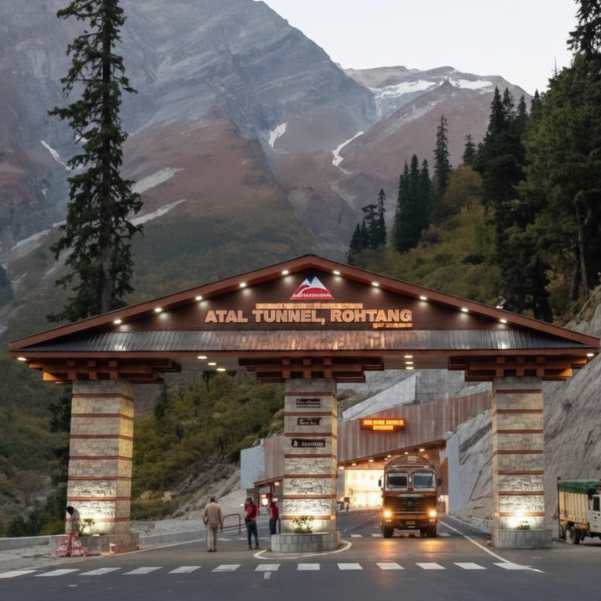
The Atal Tunnel (at about 3,000 meters at the south portal) takes you through to the Lahaul side in just 10 minutes. Sissu village on the other side has a stunning waterfall and gorgeous mountain views — all at a lower altitude than Rohtang and with a much smoother drive. No permit required.
Kothi & Rahala Falls
These stops on the way to Rohtang (before the Gulaba checkpoint) are scenic, accessible, and at moderate altitudes. You get a taste of the mountain beauty without the high-altitude exposure.
Any of these options give you beautiful photos, snow (in season), and mountain air — without the altitude risk, rough roads, and remoteness of Rohtang.
If Someone Is Pressuring You to Go
Sometimes it's not your decision alone. Maybe your in-laws planned the trip. Maybe your husband thinks "it'll be fine." Maybe you feel guilty making everyone change plans.
Here's what you can do: show them this article. Or better yet, call your OB-GYN together and ask these specific questions:
- At my current stage of pregnancy, is it safe for me to spend 3-4 hours at nearly 4,000 meters altitude with no medical facilities?
- Given the bumpy 2-3 hour mountain road, is there any risk of complications?
- What should we do if I develop symptoms at the pass and we're stuck in a traffic jam hours from the hospital?
Most doctors, when they hear the specifics of Rohtang — the altitude, the road, the remoteness — will advise against it. That's not being overcautious. That's being sensible.
Your family can visit Rohtang while you enjoy a relaxed day at a lower-altitude spot. You'll probably have a better time than they will — Rohtang's traffic jams and crowded snow points aren't exactly the serene mountain experience people imagine.
The Bottom Line
Rohtang Pass is breathtaking. But it's 13,050 feet of altitude with no hospital, no phone signal, and a rough mountain road. During pregnancy, that combination doesn't make sense.
This isn't us being dramatic. It's us being honest. The same trip will be ten times more enjoyable when you come back with your little one — Manali is one of the most family-friendly destinations in India.
For now, enjoy Manali's lower-altitude beauty. Solang Valley, the Atal Tunnel drive, Old Manali cafes, the Hadimba Temple walk, a riverside afternoon — these are all genuinely wonderful. You won't feel like you missed out. You'll feel like you made the smart call.
Take care of yourself. The mountains will wait.
Disclaimer: This article is for informational purposes only and is not a substitute for professional medical advice. Every pregnancy is different. Please consult your OB-GYN or healthcare provider before making any travel decisions during pregnancy.
Whatever you decide with your doctor, a Manali trip does not have to be built around the pass. Our Rohtang Pass tour packages can be planned with the Rohtang day left out entirely, keeping you on the lower Solang and Sissu side where the altitude gain is gentler, the drive is shorter, and medical help is far closer than it is at the top.
Related topics
More about Rohtang Pass
 Rohtang Pass
Rohtang Pass Altitude Sickness in 2026: Symptoms, Prevention and When to Turn Back
Planning a trip to Rohtang Pass in 2026? Learn the symptoms of altitude sickness, prevention tips, and when to turn back for a safe mountain journey.
- Altitude & Health
- First-Time Travellers
 Rohtang Pass
Best Places to Visit on the Way to Rohtang Pass in 2026
Discover the best places to visit on the way to Rohtang Pass in 2026, including Solang Valley, Rahala Waterfalls, Gulaba, Marhi, and more for an unforgettable Himalayan road trip.
- Places to Visit
- Road Trips
 Rohtang Pass
15 Rohtang Pass Mistakes to Avoid in 2026: Permits, Taxi Scams, Timing and Snow Rentals
Planning a Rohtang Pass trip in 2026? Discover 15 common mistakes to avoid, from permits and weather to packing and safety, for a smooth mountain adventure.
- First-Time Travellers
- Permits & Fees