
Tulip Garden Srinagar 2026: Opening Date, Timings, Tickets and Travel Guide
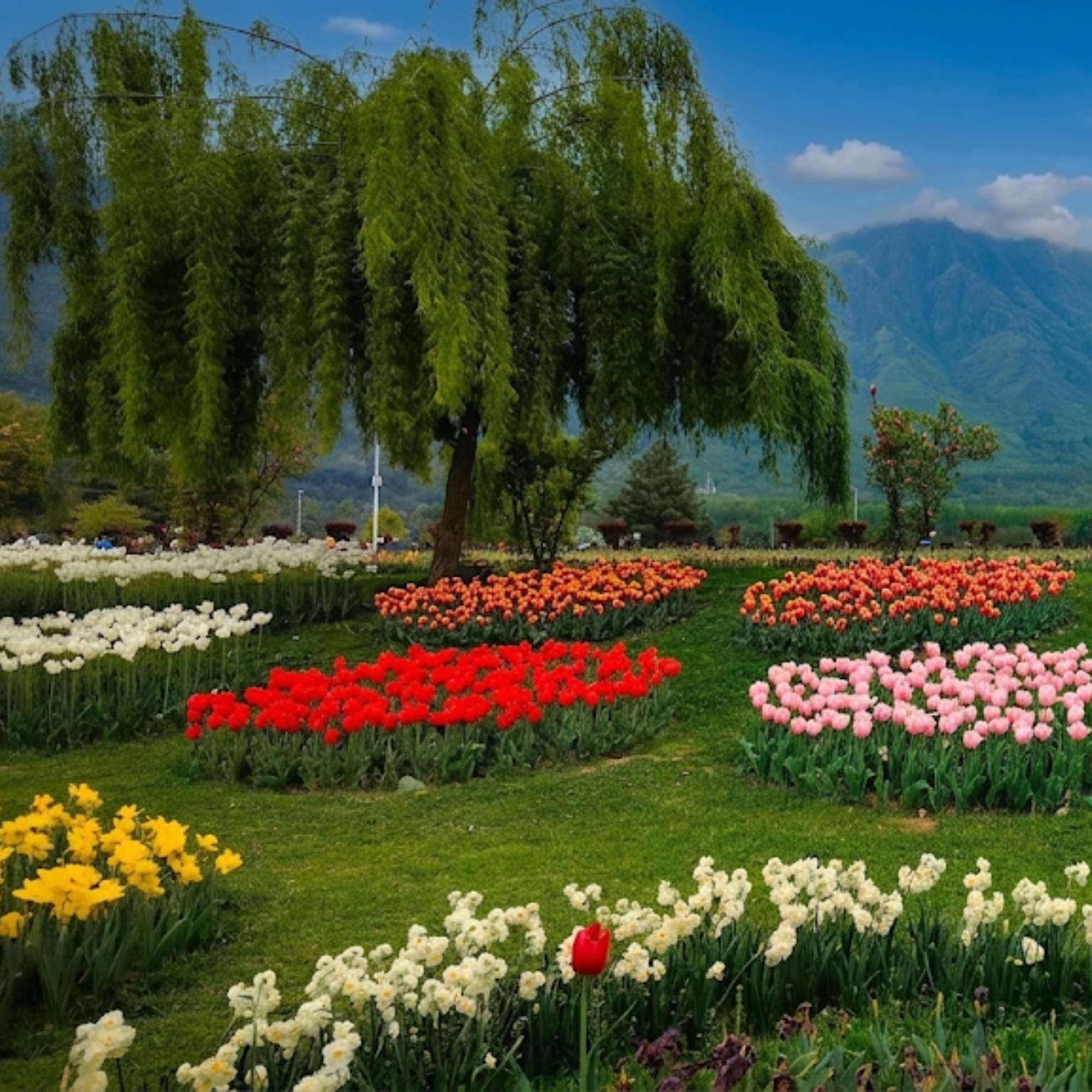
The Tulip Garden in Srinagar is one of Kashmir’s most popular spring attractions, known for its colourful flower beds, mountain backdrop and seasonal beauty. It usually opens for a limited period when the tulips are in full bloom, so the exact dates can vary with weather conditions.
This guide by Travel Coffee will help you understand the expected opening date, visiting timings, ticket information, best time to visit and practical travel tips. It also covers how to reach the garden and what to expect during your visit.
Quick Answer
Tulip Garden Srinagar opened for the 2026 season on 16 March 2026 and closed around mid-April 2026.
The display had roughly 1.8 million bulbs across more than 70 varieties, with reported daily hours of 9 AM to 7 PM.
The garden is currently closed. Check the official J&K Floriculture portal for the next opening date, daily timings and current entry fee.
Is Tulip Garden Srinagar open now in 2026?
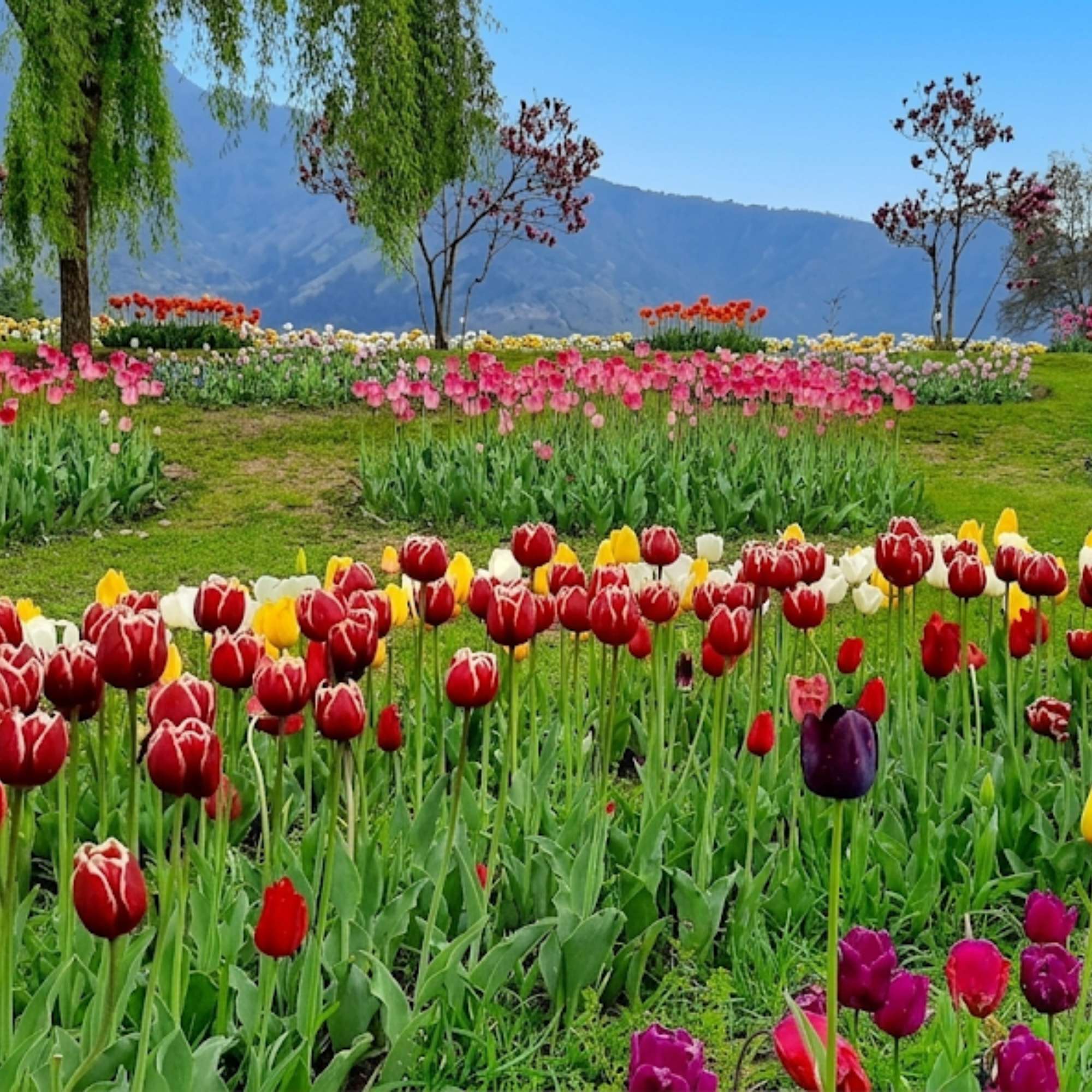
No. The 2026 tulip display finished around mid-April, so there are no tulips to see there today.
This garden is not a permanent attraction. It is a seasonal flower show that runs only while the bulbs are in bloom.
Spring temperature decides everything. A warm February pushes the flowers open early, and a warm April kills the colour faster than anyone expects.
That is why the season lasts weeks, not months. Once the petals drop, the gates close for the year.
The 2027 opening date has not been announced yet, so check the official J&K Floriculture updates before planning your visit.
If you are shaping a spring trip around Kashmir anyway, our Kashmir tour packages are built around what is actually running in that month.
What is Tulip Garden Srinagar and why is it famous?
Its official name and location
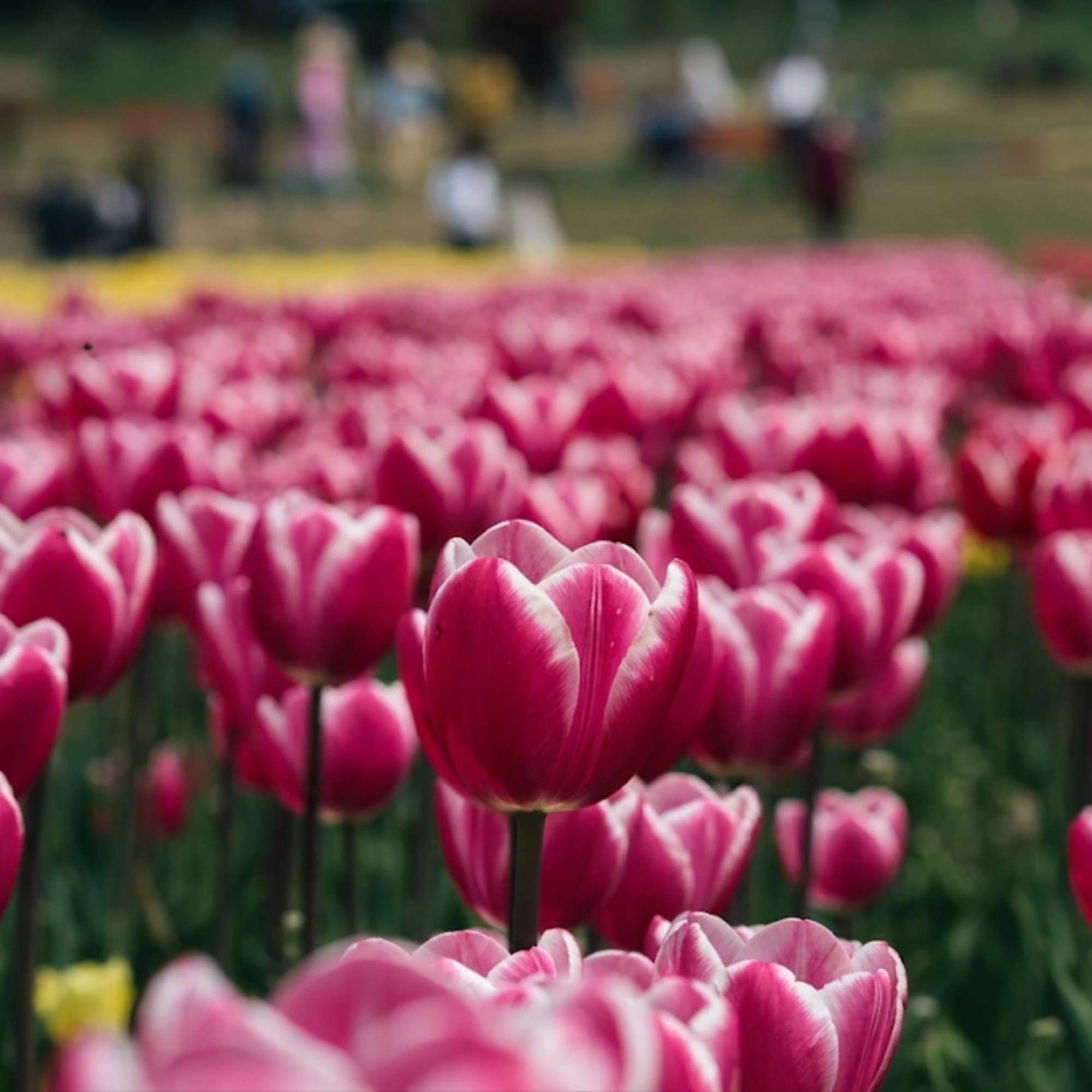
The full official name is the Indira Gandhi Memorial Tulip Garden. Most people just say tulip garden.
It sits at the foothills of the Zabarwan Range and looks straight out over Dal Lake in Srinagar.
Older signage and older articles call it the Model Floriculture Center. Locals still call it Siraj Bagh.
If your driver says Siraj Bagh, he is taking you to the right place. This confuses first-timers more than anything else.
Its size and seven-terrace layout
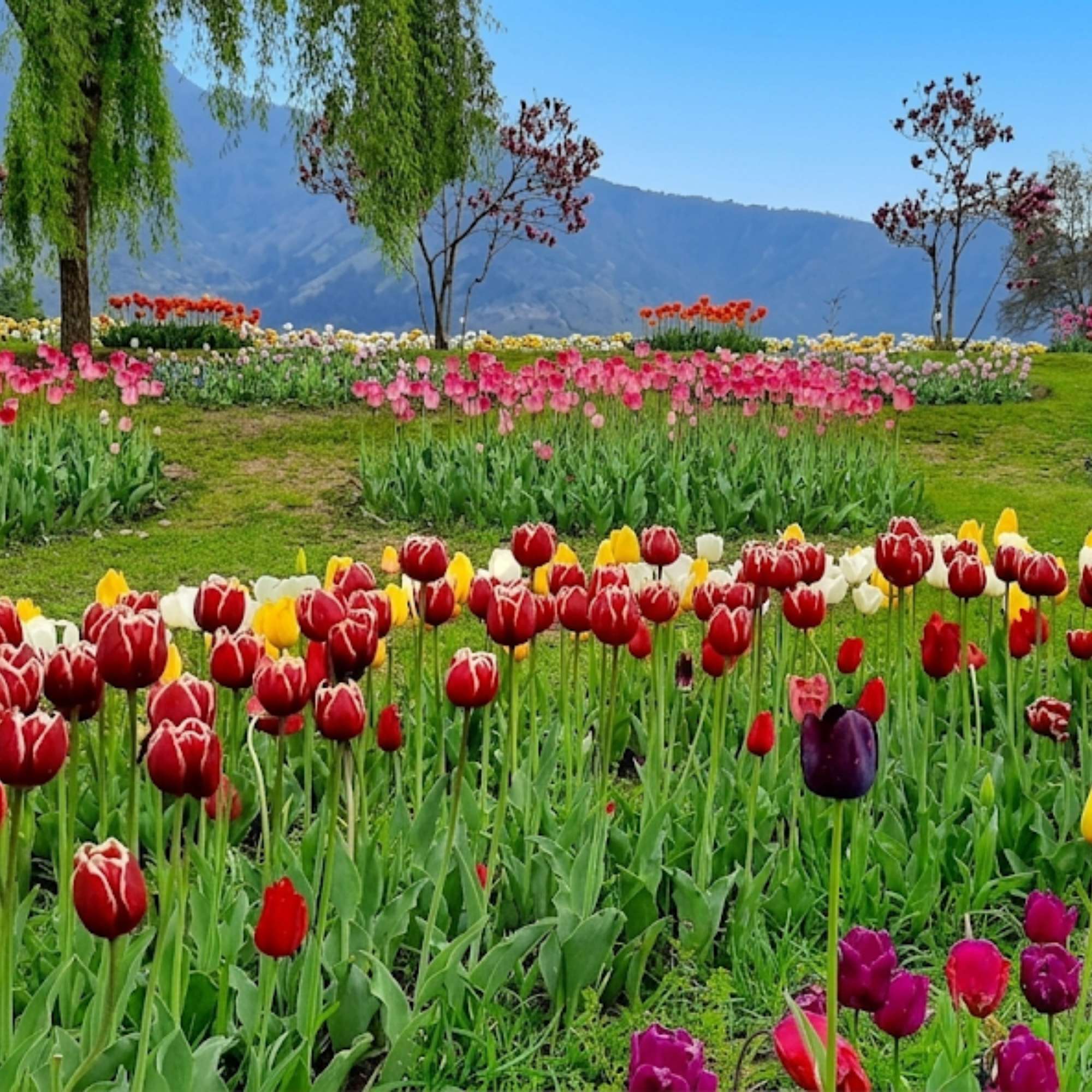
The government describes it as Asia's largest tulip garden. The area is roughly 30 hectares.
The garden is laid out across seven terraces on sloping ground.
That slope is the whole reason the photos look the way they do. You stand on an upper terrace and see rows of colour dropping away below you.
Behind the flower beds you get Dal Lake, and behind that, the hills. Very few flower gardens anywhere give you that kind of layered view.
Why it was developed
The government page dates the garden's establishment to 2007, created to support floriculture and tourism in Kashmir Valley.
The garden was established in 2007 as part of an effort to strengthen spring tourism and floriculture in Kashmir.
You will see 2008 mentioned in some later reports for the first public opening, so we are not going to state one year as final.
The bigger point is why it exists. Kashmir tourism used to properly start in summer, and this garden pulled the season forward by six weeks.
What were the Tulip Garden Srinagar opening dates and timings in 2026?
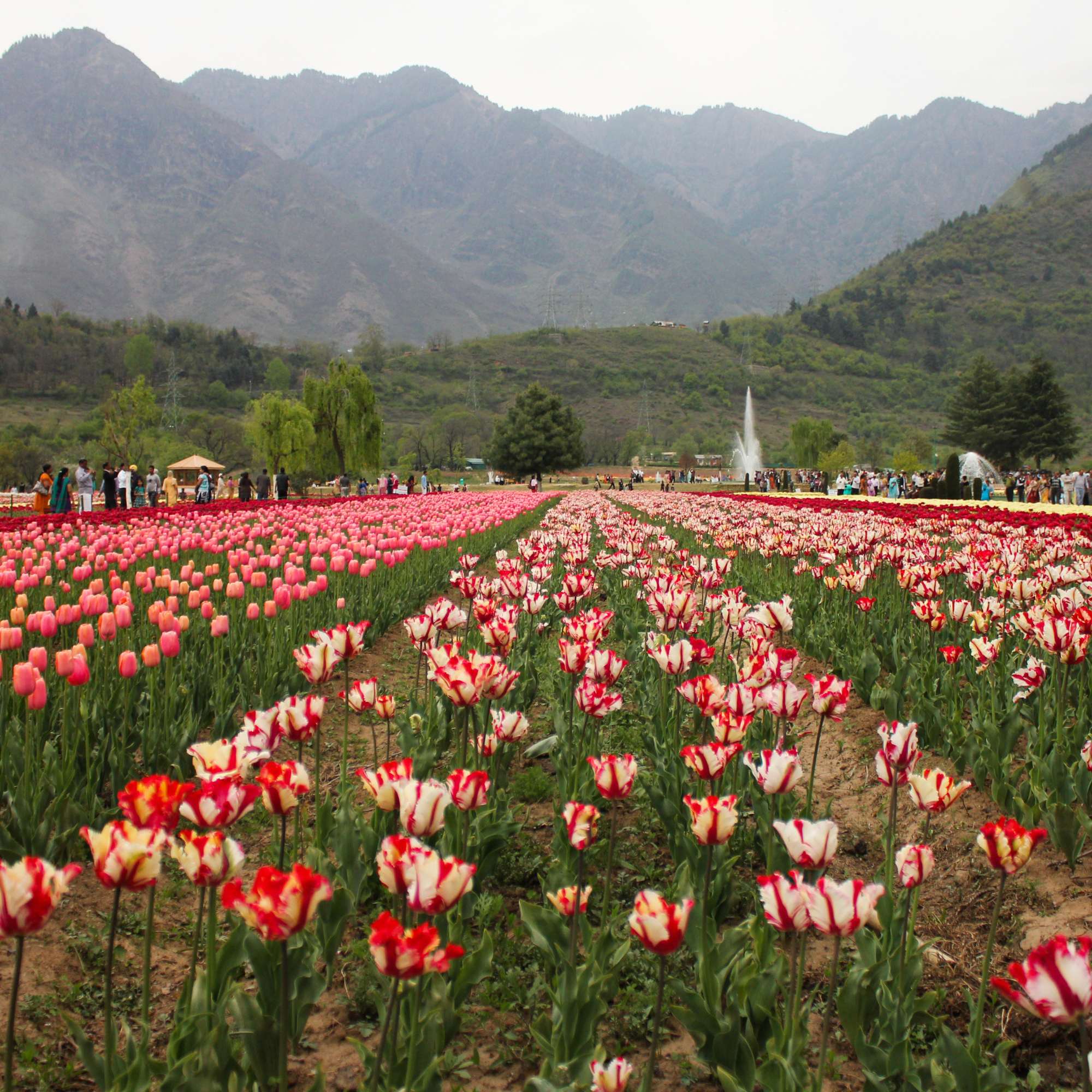
The garden opened on 16 March 2026.
That was earlier than usual. February ran warmer than normal, and the flowers moved ahead of schedule.
The reported daily hours through the 2026 season were 9 AM to 7 PM.
Reports indicate that the garden closed around mid-April 2026, though an exact official closing date was not published.
Here is what most tourists get wrong. They treat the tulip season like a fixed festival with printed dates, book flights in January, and then find the flowers already fading when they land.
The dates move every single year. Temperature, rain and how fast the blooms open and fade decide the window, not a calendar.
In our experience handling spring Kashmir trips, the travellers who are happy are the ones who booked flexible tickets and watched the announcement before locking anything.
What is the Tulip Garden Srinagar ticket price and how do you book?
Why the fee must be verified
We are going to be honest with you here. The published 2026 ticket prices do not agree with each other.
One group of sources reported ₹75 for Indian adults, ₹30 for children and ₹200 for foreign visitors.
Another source reported ₹120 for adults, ₹70 for children and ₹220 for foreign visitors.
A third listed ₹100 for adults, ₹50 for children and ₹400 for foreign visitors.
Check the official J&K Floriculture portal for the current adult, child and foreign visitor ticket prices before publication or travel.
Official online booking
The official booking form asks you to choose a category, your visit date, a visit time, the number of adults and children, and an identification type.
Keep your ID handy while filling it. The form wants the ID type at the booking stage, not at the gate.
The government form showed visit-time selections during booking. Do not confuse those slot options with the reported 9 AM to 7 PM operating hours.
Book through the official portal at https://eticket.webfront.in/jkfc/ or the details page at https://floriculture.jk.gov.in/garden/views/eticketdetails.php, or buy from the authorised counter.
Avoiding unofficial payment problems
Plenty of private travel businesses offer to book your tickets. Some are genuinely helpful.
But check two things before you pay anyone. First, that the amount matches the official fee. Second, that you are not sending money to a random WhatsApp number with no verifiable business behind it.
Here is the safety warning worth repeating. If someone asks you to transfer a ticket amount to a personal UPI ID and cannot show you an official confirmation, walk away.
Our team never asks travellers to send ticket money to a personal account. Nobody legitimate should.
When is the best time to visit Tulip Garden Srinagar?
Visiting early in the season
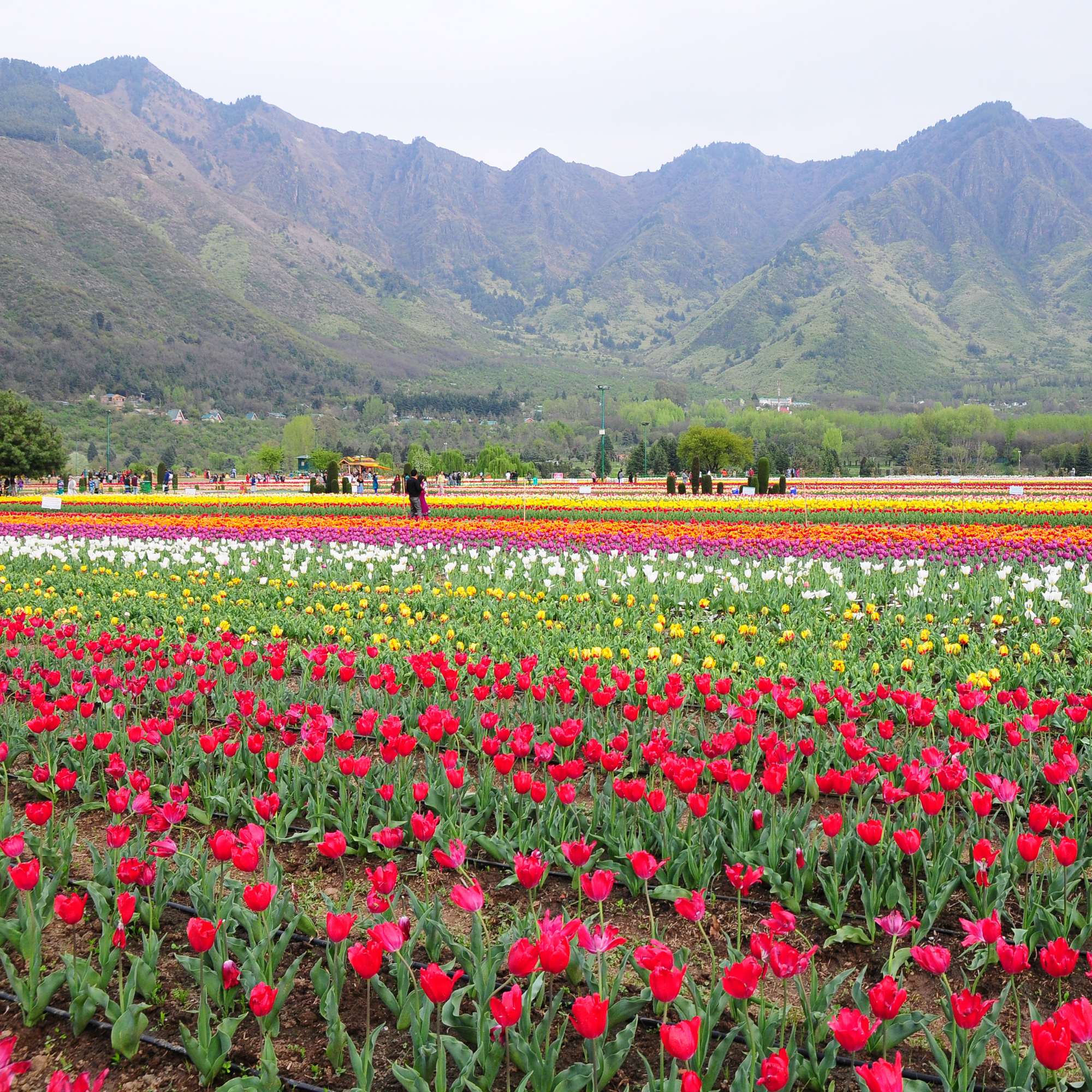
The first few days give you fresher individual flowers and lighter crowds.
The trade-off is coverage. Some sections may not have hit full colour yet, so a few terraces can look patchy.
We are not going to promise you that every terrace will be fully covered on opening week. That depends entirely on how the bulbs came up that year.
Planning for peak bloom
Early April is usually the most practical target if your whole trip is built around the tulips.
That is a pattern, not a guarantee. 2026 proved it.
Warmer weather in 2026 shifted the bloom earlier and shortened the useful viewing period. Anyone who planned for a standard early-April peak that year arrived late.
What we tell our travellers is simple. Pick your dates around the announcement, not around last year's calendar.
Visiting late in the season
Heat is what ends the show. Higher temperatures make the flowers lose colour and droop.
Do not build a May trip around seeing tulips. In 2026 the season had already finished by mid-April.
This is the honest negative about the place. It is spectacular for a few weeks and completely empty of tulips the rest of the year, and a lot of travellers find that out the hard way.
What could visitors see during the 2026 Tulip Show?
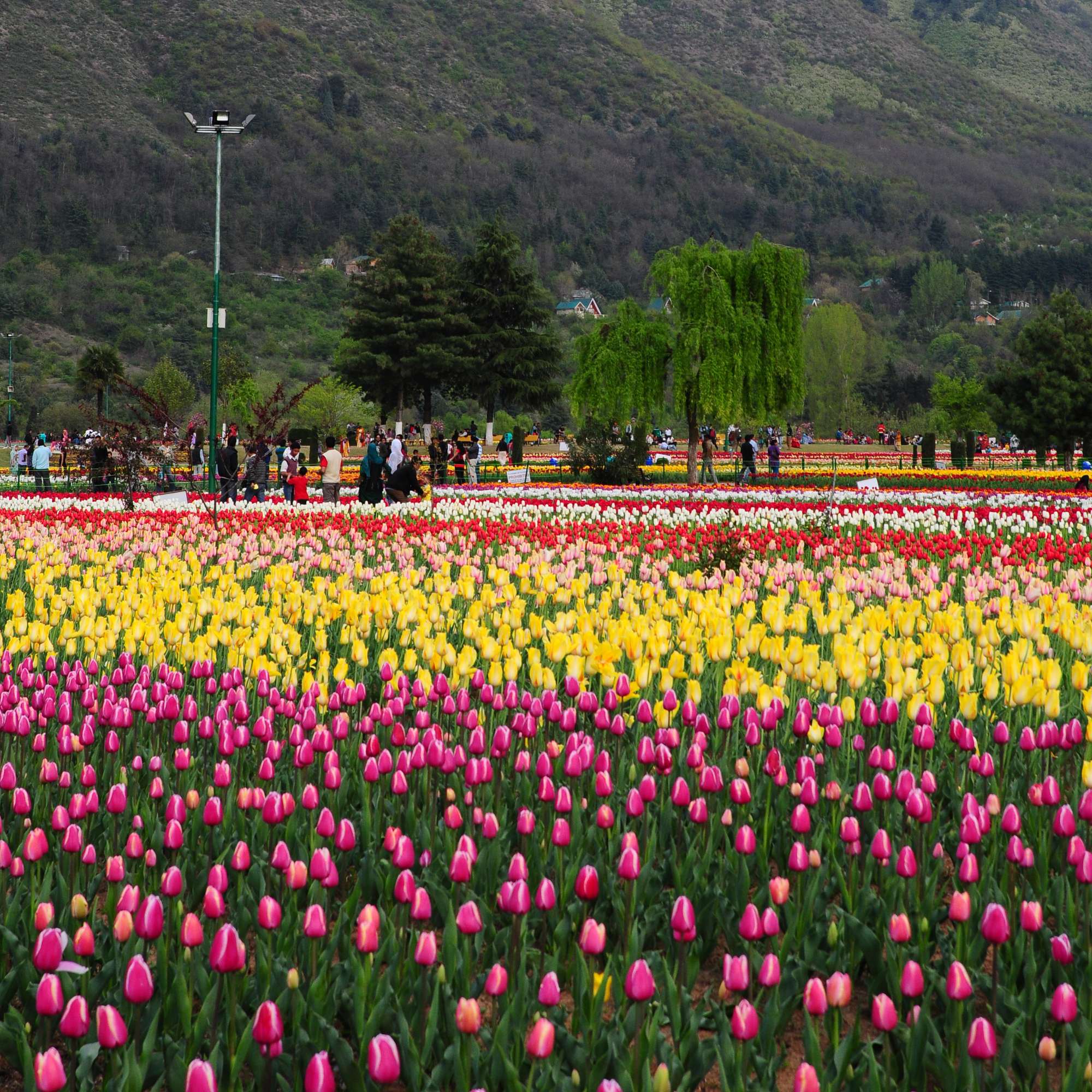
Roughly 1.8 million bulbs went into the ground for 2026.
The display carried more than 70 tulip varieties across the terraces.
The Floriculture Department increased the density of the flower beds that year to create a fuller, more solid block of colour.
They also added decorative spring planters and marked out designated selfie points around the garden.
The backdrop does most of the work though. Zabarwan hills on one side, Dal Lake below, flower rows in between.
Painting contests, photography activities and reel-making competitions were planned during the festival period.
Do not assume every activity ran every single day. These are festival-period events, and schedules shift.
How do you reach Tulip Garden Srinagar?
From Lal Chowk
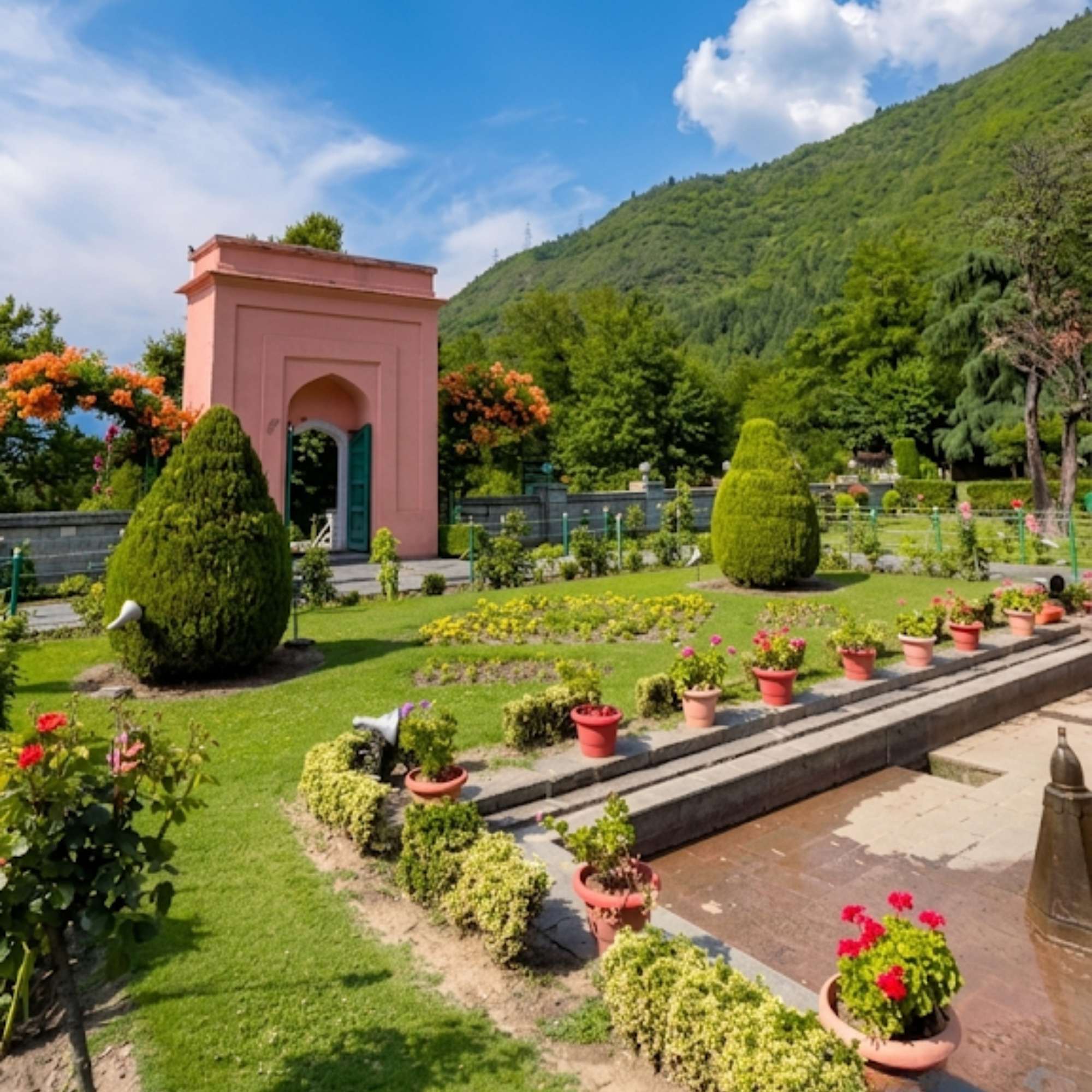
The official District Srinagar page gives the road distance from Lal Chowk as approximately 8 kilometres.
Travel time is the variable, not the distance. On peak tulip days that short run can take far longer than you expect because everyone is heading the same way at the same hour.
We are not quoting you a taxi or auto fare here, because rates move and we would rather you ask locally than trust a number from a blog.
From Srinagar Airport
Sheikh ul-Alam International Airport to the tulip garden is approximately 22 kilometres according to the official source.
We are not giving a fixed journey time. Airport-side traffic in season is unpredictable.
From Srinagar Railway Station
Srinagar Railway Station to the garden is approximately 18 kilometres.
Ignore the older articles telling you Jammu Tawi is your nearest railhead. That advice is out of date and it sends people on a much longer journey than they need.
Live road and traffic checks
Check the weather, any traffic restrictions and road conditions close to your travel date, not a month in advance.
Kashmir roads respond to rain quickly. A route that is fine on Monday can have restrictions on Tuesday, and those are usually temporary.
How much time should you keep for Tulip Garden Srinagar?

Keep roughly two hours for a relaxed visit. That is a practical estimate from how our travellers actually move through it, not an official limit.
A sensible sequence works like this.
Start at the entrance and walk the lower terraces first, where the beds are closest to eye level.
Move up towards the central viewpoints and the higher terraces, where you get the wide shots over the beds towards Dal Lake.
Then take your time on the pathways for photographs and walk slowly back down towards the exit.
Two hours covers the walking. It does not cover the entry queue, parking, or the traffic getting there and back.
Budget half a day for the whole outing on a busy day and you will not feel rushed.
What visitor rules should you know?
Visitors were officially asked to avoid littering and to follow traffic and civic guidelines around the garden.
Dustbins were installed through the garden, so there is no excuse for leaving anything behind.
Stay on the paths. Do not touch the flowers, and never step into a planted bed to get a photograph.
That last one is the rule people break most. One person stepping into a bed flattens flowers that took months to grow.
Rules on outside food, smoking, picnic mats and visit duration may change, so check the notices displayed at the entrance.
Commercial photography and filming may require prior permission. Confirm the current rules with the garden authorities before your visit.
Is Tulip Garden suitable for families, seniors and wheelchair users?
The seven-terrace layout sits on a slope. That slope is the thing to plan around.
Senior citizens and anyone with limited mobility should take breaks between terraces and ask at the gate for the easiest route through.
Gate staff know which path involves the least climbing. Ask before you start, not halfway up.
Wheelchair assistance has been available in previous seasons, but current availability may vary. Confirm the service at the main gate before your visit.
Families should keep children on the paths. Kids run straight into flower beds when nobody is holding a hand, and it happens constantly on busy days.
How can you avoid crowds and take better photographs?
Pick a weekday. That single choice changes the visit more than anything else you can control.
Arrive close to the official opening time, which was reported as 9 AM in 2026. Do not turn up at 6 or 7 AM expecting entry.
Here is a timing tip that saves you. The first hour after opening is the quietest stretch of the day, and the light is still soft on the beds.
Cloudy light is your friend for tulip photos. Hard midday sun blows out the reds and yellows, while overcast conditions hold the colour properly.
Take your wide shots from the higher paths where you can see the rows falling away. Get your close-ups from the path edge without leaning into the beds.
Use Dal Lake, the Zabarwan hills or the terraced rows themselves as your background. Those three give you every shot worth taking here.
Travellers have complained about heavy crowding on peak days. Patience and an early start are the only real fixes.
Here is the skip-this
Do not queue for the designated selfie points on a busy day. The same background is available fifty metres along the path with nobody in the frame.
Which places can you combine with Tulip Garden in one day?
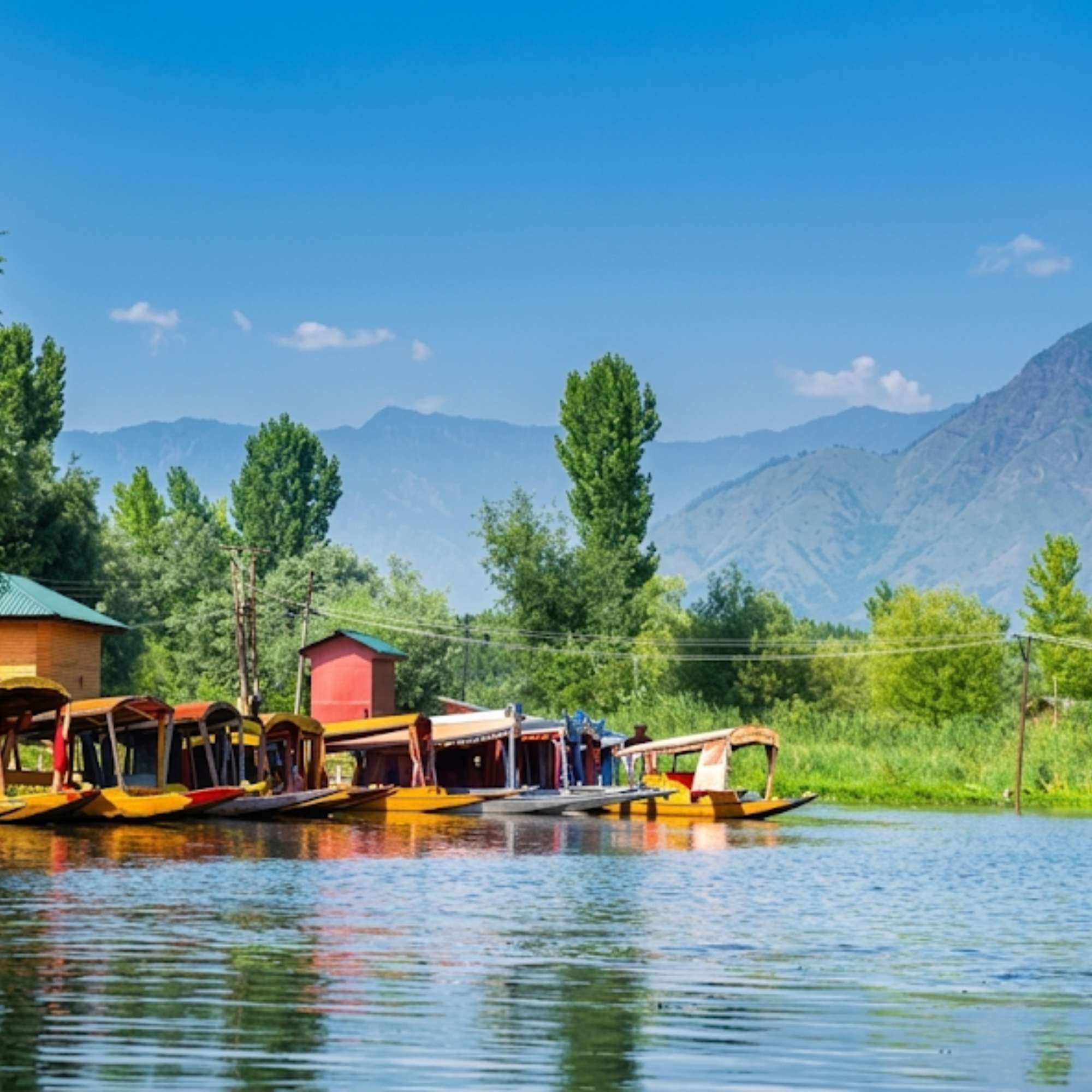
A sensible route runs the Botanical Garden, Chashme Shahi and Pari Mahal in the same zone, then Nishat Bagh, and finishes beside Dal Lake in the evening.
They sit close enough to each other that you are not crossing the city repeatedly.
These attractions are located within the same general area, but travel time between them depends more on traffic than distance.
Do not try to squeeze every Mughal garden into one day. We have watched travellers attempt it and enjoy none of them.
Two gardens plus the lake is a good day. Four gardens is a checklist.
What does a practical three-day Srinagar tulip itinerary look like?

Day one
Do the Tulip Garden inside its opening hours, ideally in the first hour after the gates open.
Pair it with either the Botanical Garden or Chashme Shahi, not both, unless you are moving quickly.
Finish the day at Dal Lake with an evening shikara ride. After a morning of walking terraces, sitting on water is exactly the right pace.
Day two
Cover Nishat Bagh, Shalimar Bagh and Hazratbal, with whatever Srinagar sightseeing fits comfortably around them.
Keep it to those three and leave gaps. A relaxed day with three places beats a stressed day with six.
Day three
Leave this day flexible. Pick a Kashmir day trip based on the weather that morning, the road conditions and what you actually want to see.
Our drivers decide this one on the day, not in advance. That flexibility is the whole point of keeping day three open.
If you want this shaped around your own dates, our customised Kashmir holiday plans work exactly this way.
How should you budget for a Tulip Garden trip?
Your costs break into five buckets: the entry ticket, local travel, accommodation, meals and any extra sightseeing you add.
We are not printing a ticket rate here, because the available sources conflict and we would rather you check the official portal than trust a wrong number.
We are also not inventing hotel, taxi, shikara or day-trip prices. Spring rates in Srinagar move with demand, and a figure written months ago is useless to you.
Accommodation is usually the largest single cost, and it climbs hardest during peak tulip weeks when everyone wants the same dates.
Local travel is the second biggest. If you are moving between gardens across three days, a day-basis vehicle usually works out better than booking rides one at a time.
Here is the money-saving tip most travellers miss. Ask for a per-day vehicle rate rather than per-trip, and do it before the tulip announcement goes out, because prices firm up the moment dates are confirmed.
What can you do if you missed the 2026 tulip season?
The tulip garden is not a year-round attraction, and there is no point pretending otherwise.
The 2026 season ended around mid-April. Do not expect the same display in May or later.
Wait for the official next-season announcement before booking flights specifically for the tulip display, as bloom dates change each year.
Kashmir outside the tulip window is still worth the trip. Dal Lake, the Mughal gardens, Gulmarg and Pahalgam do not depend on the bloom.
Our team runs plenty of Kashmir trips with no tulips involved at all, and the feedback is consistently good.
If you are thinking about a bigger Himalayan run later in the year, our Leh Ladakh tour packages cover the summer window when those roads open.
For a separate spring or summer mountain holiday closer to home, our Manali tour packages are the easier option.
The Honest Summary
Tulip Garden Srinagar is one of the best spring experiences in the country when you catch it right.
The problem is that catching it right is genuinely hard. The season is short, weather-sensitive and different every year.
The 2026 display has ended. Before planning your visit, check the next opening date and current entry fee through the official J&K Floriculture channels.
If you want help building a Kashmir trip around whatever is actually running when you travel, write to us. We would rather plan you a good trip in the wrong week than sell you the wrong week entirely.
👉 Find the Right Kashmir Tour Package for Your Dates
Related topics
Frequently Asked Questions
Is Tulip Garden Srinagar open now?
No. The 2026 tulip display ended around mid-April and the garden is closed for the season.
When did Tulip Garden Srinagar open in 2026?
The garden opened on 16 March 2026, earlier than usual because February ran warmer than normal.
Which month is best for Srinagar tulips?
Late March to early April is the normal planning window, but warm weather can shift the bloom earlier, as it did in 2026.
What were the reported 2026 opening hours?
The reported daily hours were 9 AM to 7 PM through the 2026 season.
How can Tulip Garden tickets be booked online?
Book through the official J&K Floriculture e-ticket portal at https://eticket.webfront.in/jkfc/ or buy from the authorised counter.
How long does the Kashmir Tulip Festival remain open?
The useful bloom window is short and weather-dependent. In 2026 it ran from 16 March until around mid-April.
Can visitors see tulips in Srinagar in May?
No. May is normally too late for this display, and it was too late in 2026.
How far is the garden from Srinagar Airport?
Approximately 22 kilometres according to District Srinagar. Travel time depends on traffic.
How far is it from Lal Chowk?
Approximately 8 kilometres according to District Srinagar, though peak-day traffic stretches that considerably.
Is a separate permit required?
A separate permit does not appear to be part of the standard booking process, but check the latest visitor requirements before travelling and carry valid government identification.
Is the garden wheelchair accessible?
Wheelchair assistance has been available in previous seasons, but current availability may vary. The garden is terraced and sloping, so confirm assistance at the entrance and plan for regular breaks.
More about Kashmir
 Kashmir
Kashmir Taxi Guide 2026: Local Union Rules, Cab Routes & Current Fare Logic
Planning to use taxis in Kashmir in 2026? Understand local union rules, popular cab routes, sightseeing restrictions and how taxi fares are generally structured across Srinagar, Gulmarg, Pahalgam and Sonamarg.
 Kashmir
Kashmiri Food Guide 2026: What to Eat in Srinagar, Pahalgam & Gulmarg
Discover what to eat in Kashmir in 2026, from traditional Kashmiri dishes and Wazwan to local snacks, breads and drinks. This guide covers food experiences in Srinagar, Pahalgam and Gulmarg for first time visitors.
- Things to Do
- Places to Visit
 Kashmir
SIM Cards in Kashmir 2026: Internet, ATMs, IDs & Tourist Essentials
Travelling to Kashmir in 2026? Learn about SIM card access, mobile internet, ATM availability, accepted ID documents and other essentials tourists should arrange before visiting Srinagar, Gulmarg, Pahalgam and Sonamarg.
- First-Time Travellers