
Do You Need a 4x4 for Ladakh in 2026? Route-Wise Guide for Hanle, Tso Moriri, Umling La & Zanskar
If you are trying to figure out whether you need a 4x4 for Ladakh, the honest answer is: it depends on where you are going and when.
A 4x4 is not mandatory for every route. But for the offbeat stuff like Hanle, Umling La and Zanskar, it changes from "nice to have" to "do not risk it without one."
We have sent travellers on these exact routes for years, and the single biggest planning mistake people make is picking one vehicle for "Ladakh" as if it were one road. It is not.
Quick Answer: Do You Need a 4x4 for Ladakh?
You do not need a 4x4 for every Ladakh route, but it is strongly recommended for offbeat drives, snow, slush, gravel, water crossings and remote zones with no rescue support.
Here is the route-wise verdict in plain words.
Hanle usually needs at least a high-clearance SUV, and a 4x4 is safer.
Standard Tso Moriri is doable in a high-clearance SUV in good, dry weather.
Umling La needs a 4x4 or a very strong high-clearance SUV with a local driver, and you should not attempt it in bad weather.
Zanskar via Shinku La often needs a 4x4, and there are sometimes 4x4-only advisories on the ground.
If you want the whole thing handled by people who drive these roads every season, our Ladakh tour packages come with local drivers who know which vehicle suits which route.
Why the 4x4 Answer Changes by Route, Month, and Driver
Ladakh is not one road. It is dozens of very different roads, and the right vehicle changes with the route, the season, the weather, ongoing roadwork, water crossings and how confident your driver is.
A dry September road and an early June slush track are two completely different experiences on the same map.
September gives you settled, mostly dry surfaces. Early June can throw snowmelt, slush and soft shoulders at you on the exact same stretch.
And do not assume blacktop means easy. A tarred road with broken patches, active diversions, loose gravel or black ice can be more dangerous than a clean dirt track.
In our experience, the people who get stuck are usually the ones who read one blog, saw the word "blacktop," and assumed the whole drive would be smooth.
What Does "4x4 Required" Actually Mean in Ladakh?
Let me break down the jargon in simple terms because this confuses a lot of first-timers.
A 4x4 (or 4WD) sends power to all four wheels, which helps when you are climbing loose gravel, crossing water or pulling out of slush.
AWD also drives all four wheels but is usually tuned more for road grip than rough off-road work.
A 2WD SUV powers only two wheels but can still have good ground clearance, which is what saves your underbody on rocky tracks.
High ground clearance simply means the gap between the road and the bottom of your car is large enough that rocks and ruts do not scrape or damage it.
Here is the part most people miss. A 4x4 badge helps with traction, but ground clearance, good tyres, engine torque and calm driving matter just as much.
In our experience, a careful local driver in a well-maintained Innova is often safer than an overconfident tourist in a brand-new Thar. The car matters. The hands on the wheel matter more.
Which Ladakh Routes Usually Do Not Need a 4x4?
For the classic circuit in dry peak-season conditions, you usually do not always need a 4x4.
Leh local sightseeing, Nubra via Khardung La, Pangong via Chang La and the standard Leh to Tso Moriri run fine on a high-clearance SUV when the weather is good.
A strong note here though. Real-time road status matters far more than any generic blog advice, including this one.
A landslide, a fresh snow spell or an active BRO diversion can turn an "easy" route into a 4x4-only one overnight. Always check the current status close to your travel date.
If you want trip ideas across the Himalayas before you lock your route, browse our popular Ladakh and Himalayan tours to see how we structure these drives.
Do You Need a 4x4 for Hanle Ladakh?
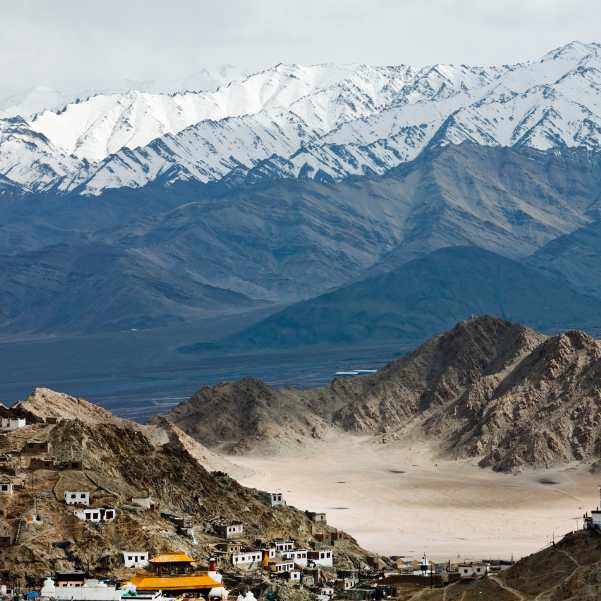
Hanle is remote, high and far from help. This is exactly the kind of place where vehicle choice stops being about comfort and starts being about safety.
Leh to Hanle via Chumathang, Nyoma and Loma
The Leh to Hanle distance is roughly 235 to 275 km depending on the route you take.
Drive time runs roughly 9 to 12 hours depending on road condition, stops and your vehicle.
A 4WD or SUV is recommended for this drive. Fuel planning is important, and mobile network becomes minimal beyond Upshi, so do not count on signal once you are past it.
Here is the clear verdict. A 2WD high-clearance SUV can manage in dry conditions with an experienced driver.
But a 4x4 is the safer call if the weather turns, if diversions are active, or if your driver is new to high-altitude roads.
Pangong to Hanle via Chushul, Tsaga and Loma
This route is reported around 176 km and can take 6 to 7 hours because of partly rocky terrain.
This is a more remote and permit-sensitive route than the standard Leh to Hanle drive. It runs close to sensitive border zones, so access rules shift.
We would not recommend this one for a low-clearance sedan or a nervous first-time mountain driver. The isolation alone is reason enough to take a capable vehicle and someone who knows the road.
One more thing worth checking. The Hanle-Chumar road was reported opened to tourists in September 2025 and is 91 km long, reportedly blacktopped by BRO. Current access must be marked before you plan around it.
Do You Need a 4x4 for Tso Moriri?
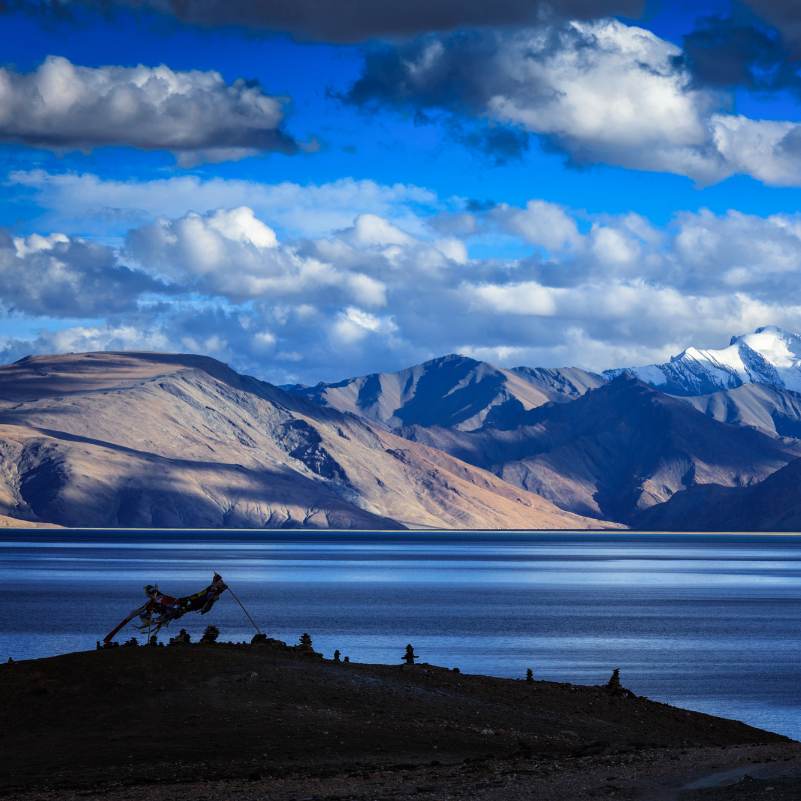
Tso Moriri is more forgiving than Hanle on the standard route, but it still has stretches that punish low cars.
Leh to Tso Moriri via Chumathang and Mahe
The standard route runs Leh, Karu, Upshi, Chumathang, Mahe, Sumdo, Korzok.
Distance is about 213 to 240 km depending on the route and source, and drive time is roughly 6 to 7 hours in normal conditions.
The road stays smooth until parts of Upshi. After Chumathang and towards Sumdo and Korzok, you hit unpaved and dirt-track sections.
A high-clearance vehicle is strongly recommended here. A sedan may manage in good conditions, but it is genuinely not the vehicle we would tell anyone to bring.
The thing most tourists get wrong on this route is assuming the smooth early section continues all the way. It does not, and the rough bit comes when you are already tired and at altitude.
Pangong to Tso Moriri Direct
This direct link is around 291 km and takes around 8 to 10 hours. It is mostly rough dirt tracks and needs a good car plus an experienced driver.
The verdict here is firmer. Take a 4x4, or at the very least a strong high-clearance SUV with a local driver.
This is not a casual shortcut between two lakes. People look at the map, see two famous lakes close together, and underestimate what sits between them. Do not.
What we always tell travellers planning this leg is to start very early and treat it as a full driving day, not a quick hop.
Do You Need a 4x4 for Umling La?
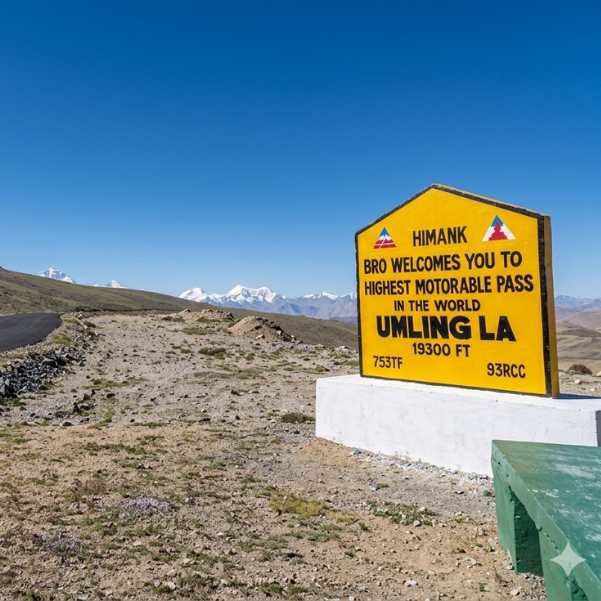
For Umling La, use a 4x4 or a very strong high-clearance SUV with a local driver. Do not attempt it in poor weather. That is the whole verdict in one line.
A bit of context on the altitude. Guinness lists Umling La at 5,798.251 m (19,024 ft), achieved by BRO, Project Himank and 753 BRTF on 9 November 2021.
Newer reports say BRO's Mig La road at 19,400 ft has surpassed it. This conflicts with the Guinness page, so we will not call Umling La the world's highest motorable road. Treat it as one of Ladakh's highest motorable roads.
Now the road reality. WanderOn reports that the last 52 km to Umling La is smooth blacktop.
But the route from Hanle has gravel roads and water crossings that need a high-clearance 4x4. So the smooth final stretch is not the part that decides your vehicle.
Unplugged Life warns that low-power vehicles may not reach Umling La safely, and that drizzle or snow can make the route genuinely dangerous.
Honest warning from us
This is a place where altitude, isolation and a weak engine combine badly. If your car struggles for power on climbs at sea level, it will struggle far more at 19,000 feet.
Do You Need a 4x4 for Zanskar?
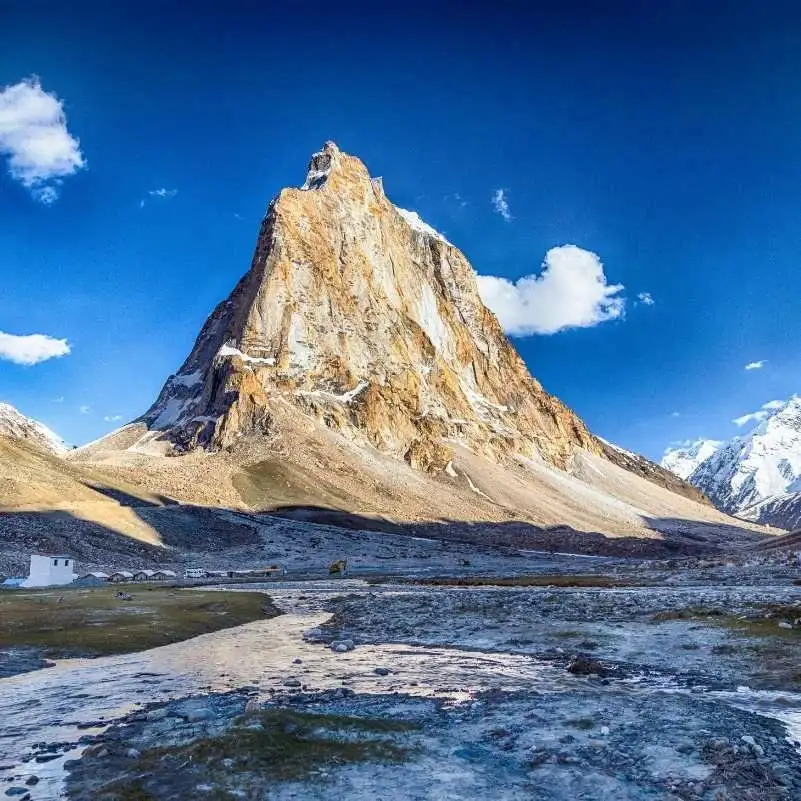
Zanskar is the route where 4x4 advisories actually appear on the ground, not just in blogs.
Darcha to Shinkula to Padum
The Padum-Darcha road officially reopened after winter closure on April 8, 2025.
A May 8, 2026 road update reported the Padum-Shinkula-Darcha route open, but only 4x4 vehicles were allowed near Shinku La.
Earlier updates also mention slippery snow and ice, with anti-skid chain advice in shoulder-season conditions.
The verdict is straightforward. For Zanskar via Shinku La, a 4x4 is strongly recommended and may actually be required depending on the current advisory.
Dheeraj's guide also recommends a 4x4 SUV for Manali to Leh via Zanskar and says sedans and hatchbacks are not recommended. We agree fully.
Padum to Leh via Nimmu or via Kargil
This section changes fast because of roadwork, blacktopping, weather and local advisories. So read this as a snapshot, not a promise.
A live third-party road status snapshot from June 25, 2026 showed Leh to Padum via Nimmo open with a time-bound, chain and 4x4 advisory.
The same snapshot showed Padum to Darcha open, and Leh-Manali open with a 4x4-only advisory. Mark all of this, because live road status must be checked again right before you travel.
If you are pairing Zanskar with the Manali side, our Manali route planning page helps you stitch the two together sensibly.
Route-Wise Vehicle Verdict for Offbeat Ladakh
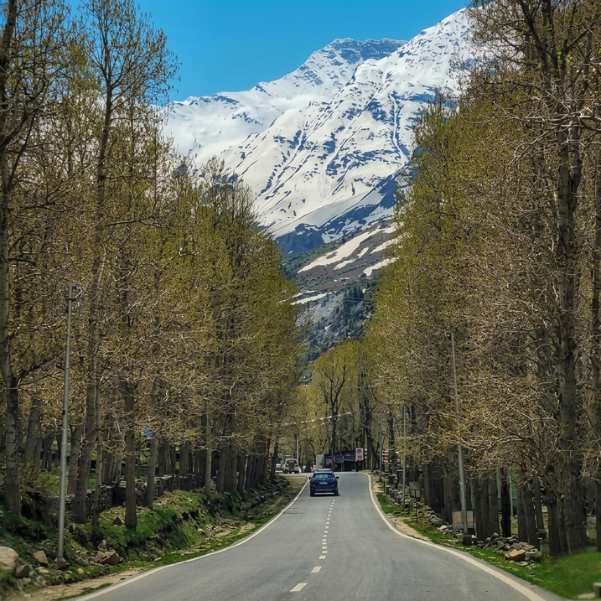
Here is the quick mental map for each route in plain language.
For Hanle, a high-clearance SUV is the minimum, and a 4x4 is safer.
For the standard Tso Moriri route, a high-clearance SUV is recommended, and a 4x4 is not always mandatory in good, dry conditions.
For Pangong to Tso Moriri direct, a 4x4 is strongly recommended.
For Umling La, a 4x4 is strongly recommended.
For Zanskar via Shinku La, a 4x4 is recommended and sometimes required.
For the classic Leh, Nubra and Pangong circuit, a high-clearance SUV is enough for most travellers in peak season, but weather and current road status get the final say.
Can You Take Your Own Car, Rental Car, or Outside Taxi in Ladakh?
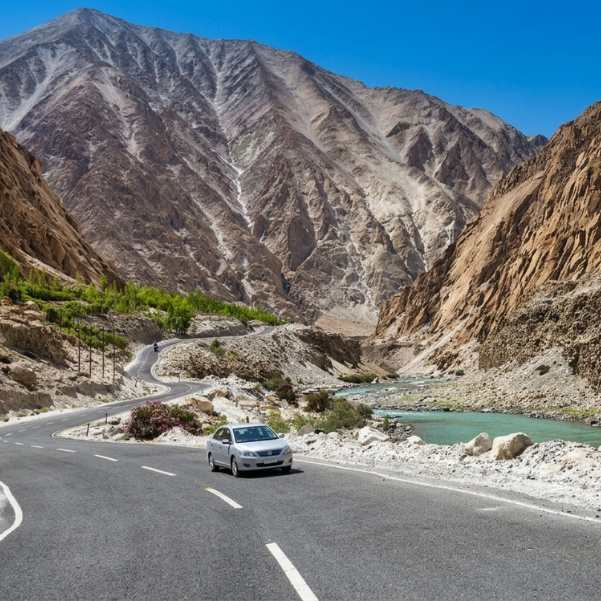
This is where a lot of self-drive plans fall apart at the checkpoint, so read carefully.
Outside self-drive rental cars are widely reported as not allowed for local sightseeing within Ladakh. If you rented a self-drive car in Manali or Delhi, expect problems using it for Ladakh sightseeing.
Your own private white-plate car is reported as allowed if it is registered in your name, your spouse's name or your parent's name.
Carry your RC, driving licence, insurance, PUC, ID and relationship proof if the registration is in a family member's name.
If the car is not in your name, carry an NOC, but mark acceptance of this as, because these rules are enforced on the ground and can change.
This gets enforced for real at checkpoints. Do not argue with the staff there. It rarely helps and can cost you hours.
The money-and-stress-saving tip most travellers miss is this. If there is any doubt about your vehicle being allowed, just hire a local Ladakhi taxi for offbeat routes. It is cleaner, legal and usually driven by someone who actually knows the road.
If you are coming in via Srinagar, our Kashmir approach to Ladakh options can help you plan the entry side too.
Permits, Fees and 2026 Rules You Must Check Before Driving
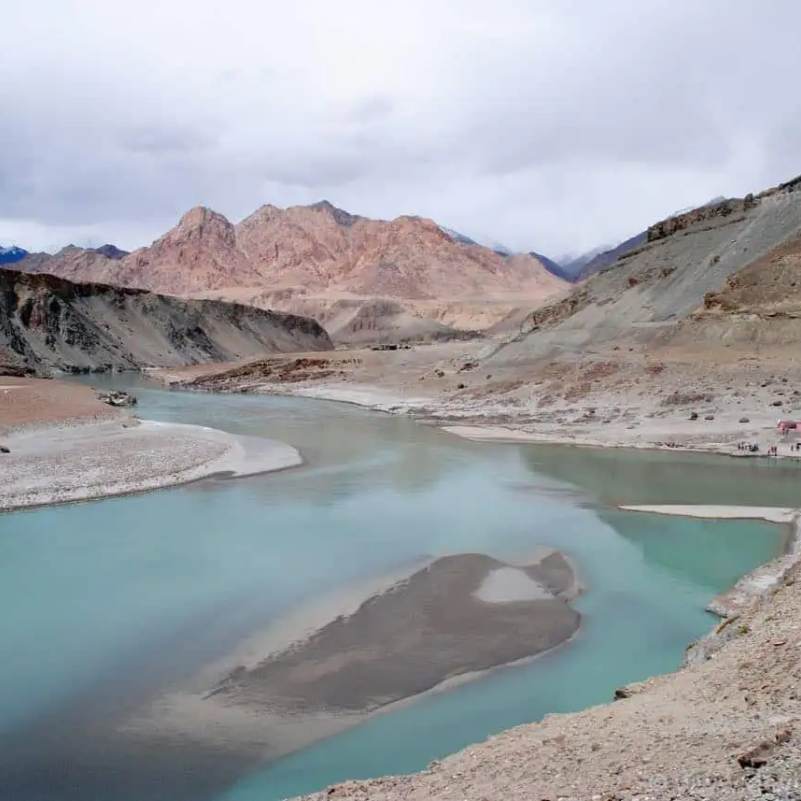
A few official rules decide whether your trip runs smoothly or stalls at a check post.
Domestic tourists can pay the required Leh tourist fee online and carry a PDF or hardcopy payment slip.
The official portal says domestic tourists no longer need to verify the payment contribution slip at the DM office. The payment slip is checked at the respective check posts instead.
The portal also says it is mandatory to show your Leh arrival boarding pass along with the permit or payment slip. So do not delete that boarding pass from your phone or bin the printout.
The green fee structure includes an environmental fee, a Red Cross Fund contribution and a wildlife fee.
On health, the official Leh district page says all tourists arriving in Leh must do at least 48 hours of acclimatisation before higher-altitude areas like Khardung La and Pangong. This is not red tape. It genuinely cuts your altitude sickness risk.
Routes near Hanle, Chushul, Umling La and the border side can have changing access rules. Foreign travellers need PAP handling and should verify route access with a registered local agent.
Vehicle Preparation Checklist for Offbeat Ladakh
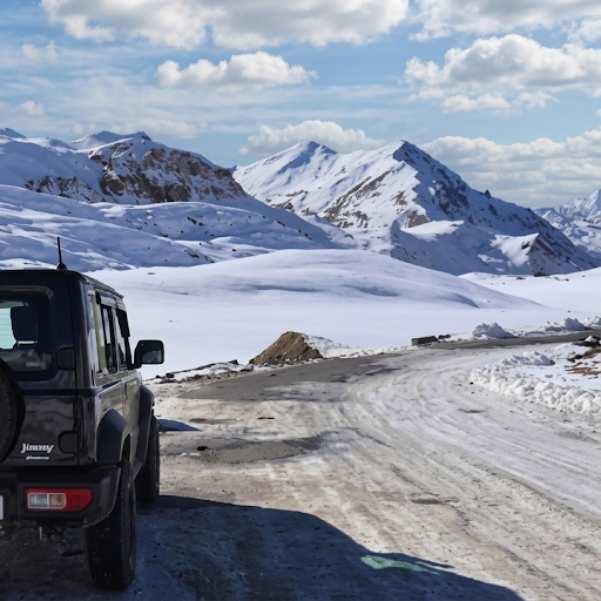
Whatever you drive, prep it like help is far away. Because on these routes, it is.
Start with tyres. Check tread, pressure and the spare, and carry a puncture kit, an air pump, a tow rope and a small shovel. A flat in the middle of nowhere is a long, cold wait otherwise.
Carry a battery jump starter, extra engine oil and coolant, and get the brakes inspected before you leave Leh. Underbody protection helps a lot on rocky stretches.
Pack offline maps because network drops out for long stretches, especially beyond Upshi.
Carry enough cash, since cards and UPI fail where there is no signal. Add warm layers even in peak summer, because nights at altitude get brutally cold.
For higher and more remote drives, carry some oxygen support, plus emergency food and water for at least a day longer than you think you need.
On fuel, plan ahead. For Zanskar via Darcha-Padum, one source says the last reliable pump is Tandi and recommends carrying 20 to 30 litres extra. Mark this, because fuel availability shifts and pumps can run dry.
Who Should Hire a Local 4x4 Instead of Self-Driving?
Some travellers really should not self-drive these routes, and there is no shame in it.
Hire a local 4x4 or local driver if you are a first-time mountain driver, travelling with family or older relatives, or heading to Umling La, Zanskar, or Pangong to Tso Moriri.
The same goes for shoulder-month travel, poor weather forecasts, foreign travellers, and anyone unsure about permits.
Our team recommends local drivers for Umling La and Zanskar because the risk there is not just road quality. It is altitude, isolation and changing access rules all at once.
A local driver reads the road, the weather and the checkpoint mood in a way no first-timer can. That is worth a lot when you are 19,000 feet up with no signal.
Final Verdict: Best Vehicle for Offbeat Ladakh
The best vehicle for offbeat Ladakh is a mechanically sound, high-clearance SUV with good tyres.
But the vehicle is only half of it. You also need a careful driver, correct permits, proper acclimatisation and current road updates. Get those right and most routes open up to you.
For Umling La, Pangong to Tso Moriri, Zanskar via Shinku La, and any risky shoulder-season drive, just pick a 4x4 without overthinking it.
For the classic circuit in good summer weather, a strong high-clearance SUV usually does the job. When in doubt, choose the more capable vehicle. Nobody has ever regretted having more grip on a Ladakh road.
Explore Our Curated Leh Ladakh Tours
 6D/5N
6D/5NUltimate Leh Ladakh Tour Package with Nubra Valley & Pangong Lake
2D Leh•1D Nubra Valley+1
₹28,999₹35,999SAVE INR 7,000/ person 6D/5N
6D/5NBest Selling Leh Ladakh Tour With Nubra Valley and Pangong Lake
2D Leh•1D Nubra Valley+1
₹23,999₹28,599SAVE INR 4,600/ person 4D/3N
4D/3NLeh Ladakh Short Getaway
2D Leh•1D Pangong Lake
₹16,499₹19,999SAVE INR 3,500/ person
Related topics
Frequently Asked Questions
Do you need 4x4 for Ladakh?
Not for every route. A high-clearance SUV handles the classic circuit in good weather, but a 4x4 is strongly recommended for offbeat routes, snow, slush and water crossings.
Is 4x4 required for Hanle Ladakh?
Not strictly required in dry conditions, but a high-clearance SUV is the minimum and a 4x4 is safer. Weather and active diversions can tip it towards 4x4-only.
Can a 2WD SUV go to Hanle?
Yes, a 2WD high-clearance SUV can manage Leh to Hanle in dry conditions with an experienced driver. If the weather turns or diversions appear, a 4x4 is the safer choice.
Do you need 4x4 for Tso Moriri?
Not always for the standard Leh route in good, dry weather, where a high-clearance SUV is enough. The Pangong to Tso Moriri direct route is rougher and a 4x4 is strongly recommended.
Can a sedan go to Tso Moriri?
A sedan may manage the standard route in good conditions, but it is not the vehicle we would recommend. The dirt sections after Chumathang towards Korzok are hard on low cars.
Do you need 4x4 for Umling La?
Yes, use a 4x4 or a very strong high-clearance SUV with a local driver. The route from Hanle has gravel and water crossings, and drizzle or snow makes it dangerous for weak vehicles.
Can Creta or Innova go to Ladakh?
For the classic circuit in peak season, a well-driven high-clearance vehicle often manages fine. For Umling La, Zanskar and Pangong to Tso Moriri, a 4x4 is the safer call.
Which is the best vehicle for offbeat Ladakh?
A mechanically sound, high-clearance SUV with good tyres and a careful driver. For the toughest routes, a proper 4x4 with a local driver.
Is Zanskar possible without 4x4?
Sometimes, but a 4x4 is strongly recommended and occasionally required near Shinku La. A May 8, 2026 update reported only 4x4 vehicles allowed near Shinku La.
Are outside self-drive rental cars allowed in Ladakh?
Outside self-drive rentals are widely reported as not allowed for sightseeing within Ladakh. Private white-plate cars in your own or close family's name are reported as allowed with matching documents.
What permits are needed for Hanle, Tso Moriri and Umling La?
These routes need inner-line permits and are permit-sensitive, with access rules that change near border zones. Verify the current requirement with a registered local agent before you travel.
Which month is safest for driving in Ladakh?
September is generally the most stable, with mostly dry roads and settled conditions. Early June can bring slush and snowmelt on high passes, so it needs more caution and a more capable vehicle.
More about Ladakh
 Ladakh
Manali to Leh Highway 2026: Every Pass, Stop and Distance
Plan your Manali to Leh Highway journey in 2026 with a complete guide to major mountain passes, overnight stops, route highlights, and distance. Discover key stops like Jispa, Sarchu, and Pang, along with famous passes including Baralacha La and Tanglang La.
- Road Trips
- How to Reach
- Ladakh
Umling La Ladakh Guide 2026: Route, Altitude, Permit, Safety & Reality Check
Planning to visit Umling La in 2026? This complete guide covers the route, altitude, permit requirements, road conditions, safety tips, and the realities of travelling to one of the world's highest motorable roads.
- Road Status
- Altitude & Health
 Ladakh
Turtuk Ladakh Travel Guide 2026: Balti Culture, Apricot Orchards and Why It Is Perfect for Families
Planning a trip to Turtuk? This 2026 travel guide explores the village's rich Balti culture, beautiful apricot orchards, top attractions, travel route, and why Turtuk is one of the best family-friendly destinations in Ladakh.
- Places to Visit
- Family Travel